
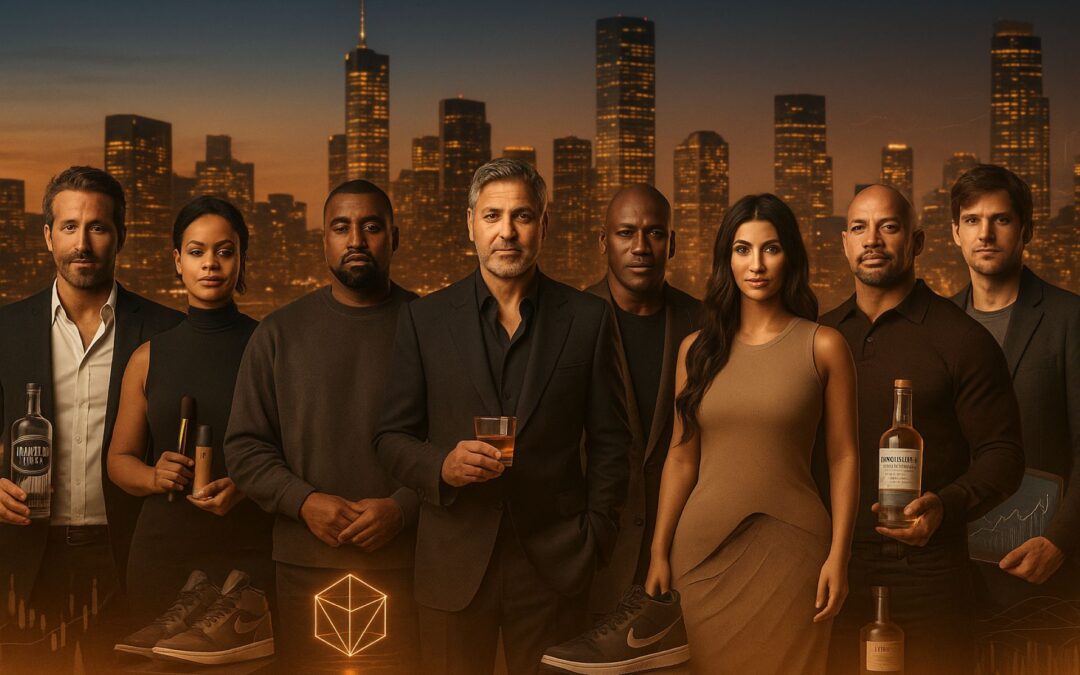
In the past, the path to wealth for celebrities seemed straightforward: star in hit movies, dominate the sports arena, or walk the runway as a supermodel. Fame alone could ensure a comfortable lifestyle. But today, the game has changed. The smartest celebrities aren’t just basking in their fame—they’re leveraging it to build billion-dollar businesses.
By stepping into the roles of entrepreneurs and CEOs, they’re proving that success in the spotlight can be just the beginning of a much larger empire. Here’s how some of the world’s most iconic stars are turning their fame into lasting financial legacies.
1. Ryan Reynolds – Aviation Gin
Ryan Reynolds’ foray into the business world began not with flashy endorsements, but with a savvy investment in Aviation American Gin. This was a strategic move that would not only bolster his financial portfolio but also significantly elevate his profile as an entrepreneur. While many celebrities make one-off product endorsements, Reynolds opted to take a hands-on approach, proving that he was more than just a pretty face attached to a brand.
In 2018, Reynolds acquired a minority stake in Aviation Gin, but his role went far beyond being just a passive investor. He immersed himself in the marketing and branding of the product, bringing his trademark wit and humor into the fold. Reynolds’ campaigns for the brand were infused with his comedic charm, making the gin feel more like a lifestyle choice than just another alcoholic beverage. His ad campaigns were a perfect reflection of his public persona—smart, self-deprecating, and effortlessly cool. The result was a gin that didn’t just sell drinks; it told a story and connected with consumers on an emotional level.
Reynolds didn’t stop at just marketing—he helped shape the brand’s identity. His authenticity and relatability allowed Aviation Gin to resonate deeply with a broad demographic. When Diageo, a global beverage giant, acquired the brand in 2020 for $610 million, Reynolds’ strategic role in the company’s success became clear. The acquisition was a testament to his business acumen, turning a seemingly simple investment into a billion-dollar exit. Reynolds’ success with Aviation Gin demonstrated that the best celebrity business ventures aren’t just about capitalizing on fame—they’re about adding value, creating real connections with consumers, and offering something distinct in a crowded market.
2. Rihanna – Fenty Beauty
Rihanna’s entry into the beauty world was a game-changer, and Fenty Beauty is widely recognized as one of the most successful celebrity ventures of the 21st century. While many celebrities have launched makeup lines, Rihanna’s approach was radically different—and the world noticed. Her primary insight was that the beauty industry had been failing to serve people with a wide range of skin tones. In 2017, Fenty Beauty launched with 40 shades of foundation, addressing a market gap that other companies had long ignored. This decision was more than just a business move; it was a cultural statement that resonated deeply with women everywhere.
Rihanna’s brand was never just about makeup; it was about empowerment, inclusivity, and self-expression. While other beauty brands had offered a limited selection of foundation shades, Fenty Beauty’s wide range of options helped women of all skin tones feel seen and celebrated. Rihanna’s personal involvement and authenticity were key to the brand’s success. She was not merely a spokesperson—she was the face of a movement within the beauty industry that focused on diversity and equality.
The success of Fenty Beauty was immediate, and by 2019, the brand was valued at over $2 billion, cementing Rihanna’s status not just as a pop icon but as a formidable businesswoman. Beyond makeup, Fenty Beauty also opened the door for Rihanna’s broader influence in the fashion and skincare industries. She wasn’t just selling beauty products; she was redefining what it meant to be beautiful in the modern world. Rihanna’s ability to turn her personal brand into a platform for social change while building a successful billion-dollar business shows how entrepreneurship, when done with authenticity and cultural awareness, can lead to monumental success.
3. Kanye West – Yeezy
Kanye West’s Yeezy brand is perhaps one of the most revolutionary celebrity business ventures in the history of fashion. When Kanye teamed up with Adidas to create the Yeezy line, he didn’t just enter the sneaker market—he redefined it. Prior to Yeezy, sneakers were largely seen as utilitarian items or sportswear. West, however, saw them as more than just footwear; he saw them as cultural symbols, a way to represent self-expression, luxury, and exclusivity.
What made Yeezy stand out wasn’t just the design—it was the entire cultural aura surrounding it. Kanye used his own status as a fashion icon and influencer to make Yeezy not just a product but a lifestyle. The sneakers were bold, minimalist, and often controversial, but they struck a chord with fans. Every release felt like an event, with lines around the block and sell-out drops in minutes. This phenomenon wasn’t just about sneakers—it was about creating a movement that was centered around individuality, style, and self-expression.
The financial success of Yeezy was staggering. At its peak, the Yeezy line was generating over $1.7 billion in annual sales, making it one of the most lucrative celebrity-led ventures in recent years. Kanye’s ability to design products that were both forward-thinking and culturally relevant turned Yeezy into a must-have brand. Yeezy showed that celebrity ventures don’t have to follow industry norms—they can break the mold and create something entirely new. Kanye’s unyielding belief in his vision, paired with his innate sense of cultural relevance, helped transform Yeezy into a billion-dollar empire. His journey with Yeezy proved that celebrity-driven brands could transcend mere consumer products and become cultural phenomena that leave a lasting legacy.
4. Serena Williams – Venture Capitalist Extraordinaire
While Serena Williams is undeniably a tennis legend, her entrepreneurial journey has been equally impressive. In addition to her athletic accomplishments, Williams has become one of the most successful and strategic investors in Silicon Valley. Her venture capital firm, Serena Ventures, focuses on providing funding to early-stage companies, with an emphasis on businesses that are founded by women and people of color. Her keen eye for promising startups has allowed her to build a portfolio that includes companies across various industries, from health and wellness to technology and e-commerce.
Serena Williams’ approach to investing is deeply personal. Having faced challenges as a woman and a person of color in a male-dominated sport, she understands the importance of diversity and inclusion in business. This focus has not only allowed her to discover companies with untapped potential but has also positioned her as a mentor and advocate for marginalized entrepreneurs. She doesn’t simply provide capital; Williams actively engages with the companies in her portfolio, offering advice, mentorship, and expertise gained from her own experiences as a high-performing athlete and businesswoman.
Williams’ portfolio includes investments in over 80 companies, such as the popular dating app Bumble and the home fitness platform ClassPass. Her involvement in these ventures has propelled their growth, making her one of the most successful celebrity investors in the business world. Her story demonstrates that the skills she honed on the tennis court—such as discipline, strategic thinking, and resilience—can be seamlessly applied to the business world. Serena Williams has proven that a well-calculated, hands-on investment strategy can lead to exponential growth and success, solidifying her place not only as a sports icon but as a formidable venture capitalist.
5. George Clooney – Casamigos Tequila
George Clooney’s venture into the alcohol industry is a prime example of how a celebrity can use their personal brand to build a successful business empire. In 2013, Clooney co-founded Casamigos, a tequila brand that quickly gained traction in a market already saturated with high-end liquor. What set Casamigos apart, however, wasn’t just the quality of the product—it was Clooney’s personal involvement and storytelling that elevated the brand.
Clooney, known for his charm and sophisticated image, crafted a narrative around Casamigos that resonated with consumers looking for authenticity and luxury. The brand was marketed as being handcrafted with the finest ingredients, and Clooney’s own story of casually creating the tequila with his friends in Mexico gave the product a personal touch. The authenticity behind the brand helped Casamigos stand out in a crowded market and contributed to its rapid success.
In 2017, Diageo, a global beverage giant, acquired Casamigos for a staggering $1 billion, solidifying Clooney’s success as a businessman. But beyond the financial gain, Clooney’s approach to business demonstrated the power of leveraging personal credibility and storytelling. His involvement in the brand wasn’t just about lending his name—it was about creating a product that reflected his values and image. Casamigos wasn’t just a tequila brand; it was a reflection of Clooney’s commitment to excellence, authenticity, and sophistication. This venture not only turned Clooney into a billionaire but also demonstrated how celebrity can be used to create a lasting impact in industries outside of entertainment.
6. Michael Jordan – Air Jordan
Michael Jordan’s partnership with Nike in 1984 forever changed the sports and fashion industries. What began as a simple endorsement deal turned into one of the most successful business ventures in history: the creation of Air Jordan. This iconic brand didn’t just sell sneakers; it sold a lifestyle, a symbol of excellence, and a piece of the legendary athlete’s identity. The Air Jordan brand became a manifestation of everything Michael Jordan represented—success, aspiration, and dominance.
The success of Air Jordan lay in its ability to tap into the cultural zeitgeist. As Jordan’s career soared, so did the popularity of his signature sneakers. Nike didn’t just want to create a product—they wanted to create a cultural phenomenon. The Air Jordan logo became synonymous with quality, performance, and style, making the sneakers a must-have for basketball fans and fashion-conscious individuals alike. What made the Air Jordan brand so successful was its ability to resonate with fans not just as a product, but as an embodiment of Michael Jordan’s legacy.
Today, Air Jordan is a billion-dollar brand that generates over $5 billion annually, proving the power of celebrity-driven business ventures. What Jordan did differently from other athlete endorsements was that he wasn’t just promoting a product—he became the product. His partnership with Nike set a precedent for what celebrity brand collaborations could achieve. The Air Jordan brand continues to dominate the market, with each new release adding to its legendary status. Michael Jordan’s business acumen and ability to transform his personal brand into a multi-billion-dollar empire have solidified his place as not only the greatest basketball player of all time but also a groundbreaking entrepreneur.
7. Dr. Dre – Beats by Dre
Dr. Dre’s contribution to the music and technology industries goes far beyond his skills as a legendary hip-hop artist and producer. His creation of Beats by Dre revolutionized the way people think about headphones. Before Beats, headphones were functional but not stylish; they were tools for audiophiles, but they didn’t carry much cultural significance. Dre saw an opportunity to change that. He didn’t just want to sell a product—he wanted to create a brand that would be as synonymous with style as it was with sound.
Beats by Dre was not just about selling high-quality headphones; it was about reshaping the narrative around music and technology. Dre infused the product with his persona—bold, innovative, and cutting-edge. He worked with designers to ensure that the headphones looked as good as they sounded. The result was a product that appealed not only to audiophiles but also to fashion-conscious consumers. Beats quickly became a status symbol, making headphones a must-have accessory in the same vein as luxury watches or high-end fashion brands.
In 2014, Apple acquired Beats by Dre for a staggering $3 billion, marking one of the most significant acquisitions in tech history. The deal proved that celebrity-driven businesses could not only compete with tech giants but also become integral parts of the industry. Dr. Dre’s success with Beats demonstrated that celebrities could transcend entertainment and use their influence to reshape entire industries. Dre’s ability to combine music, technology, and lifestyle has made Beats a lasting legacy, solidifying his place not only as a musical icon but also as a visionary businessman.
8. Kim Kardashian – SKIMS
Kim Kardashian’s SKIMS brand is a textbook example of how to take a personal brand and turn it into a billion-dollar business. While Kim was already a household name thanks to her reality TV fame and social media prowess, she recognized a gap in the shapewear industry. Many shapewear brands at the time only offered limited options, and most of the products were designed for a narrow demographic. Kim saw an opportunity to create a brand that would cater to all body types and skin tones.
Launched in 2019, SKIMS was not just another shapewear line—it was a brand built on inclusivity. Kardashian’s personal experience as a woman who struggled to find shapewear that both fit well and was comfortable gave her insight into what the market needed. She developed a wide range of sizes and colors, ensuring that SKIMS products could accommodate every body type. But the brand’s success wasn’t just about providing a product; it was about selling a lifestyle. Kim used her own image and personal brand to market the company, making it feel authentic and relatable.
SKIMS quickly became a household name, and by 2021, the brand was valued at over $1.6 billion. Kardashian’s approach to business—focused on authenticity, inclusivity, and solving a real problem—has made SKIMS a success far beyond just selling shapewear. It’s become a symbol of body positivity, and Kim has leveraged her status to make SKIMS a global brand. Today, SKIMS is one of the most successful celebrity-driven businesses, showing how personal branding, when done right, can build an empire.
9. Dwayne “The Rock” Johnson – Teremana Tequila
Dwayne “The Rock” Johnson’s success isn’t limited to his career in professional wrestling or Hollywood. The Rock has also built a thriving business empire, and his tequila brand, Teremana, is one of his most notable ventures. Teremana was launched in 2020 with a clear vision: to create a high-quality tequila that was accessible, authentic, and reflective of Johnson’s personal story. His journey from humble beginnings to becoming one of the most famous and successful entertainers in the world resonated deeply with consumers, and he used his narrative to build a brand that felt more personal than other celebrity alcohol brands.
What sets Teremana apart from other celebrity-backed spirits is its authenticity. Johnson made sure that the product was high-quality, handcrafted in small batches, and distilled using traditional methods. He didn’t just endorse the brand—he actively participated in its development, ensuring it reflected his values of hard work, integrity, and authenticity. Teremana’s story was deeply tied to Johnson’s personal ethos of perseverance, which resonated with millions of fans and consumers.
The brand has grown rapidly since its launch, and in 2021, Teremana became one of the best-selling tequila brands in the United States. Johnson’s relentless promotion of the brand—often done in his signature, approachable style—helped solidify Teremana as a leader in the tequila market. The Rock’s venture into alcohol is a prime example of how a celebrity can build a business that’s not just about their fame but about creating a product that delivers on quality and authenticity. Teremana is proof that with the right brand story, a celebrity can successfully enter a competitive market and carve out a lasting legacy.
10. Ashton Kutcher – Early-Stage Tech Investor
Ashton Kutcher might be best known for his acting career, but his savvy investments in tech startups have made him one of Silicon Valley’s most successful celebrity venture capitalists. Kutcher’s firm, A-Grade Investments, was one of the earliest to invest in companies like Skype, Airbnb, and Spotify—businesses that have since become some of the most successful tech companies in the world. His early bet on these companies paid off tremendously, turning him into a tech mogul in his own right.
Kutcher’s venture capital success is a testament to his ability to spot potential before it becomes obvious to others. Unlike many celebrities who make investments simply for financial gain, Kutcher was genuinely interested in technology and innovation. He took the time to learn about the industries he was investing in and used his celebrity status to help his portfolio companies succeed. For example, he was actively involved in the growth of Skype, which was sold to Microsoft for $8.5 billion. Similarly, his investments in Airbnb and Spotify turned out to be incredibly profitable, with both companies becoming industry leaders.
Kutcher’s approach to investing is strategic and hands-on. He doesn’t just write checks; he actively works with his companies, providing guidance and using his vast network to help them grow. This proactive involvement has made him one of the most respected celebrity investors in the world. His story shows that celebrities can successfully pivot from entertainment into entrepreneurship by making smart, forward-thinking investments and using their influence to help the businesses they believe in.
Conclusion
These celebrities have proven that fame can be a powerful tool, but it’s strategy and vision that truly create wealth. They didn’t just settle for being famous—they leveraged their influence to create lasting legacies in industries ranging from beauty and fashion to venture capital and alcohol.
Whether through creating innovative products, making strategic investments, or building businesses from scratch, these stars have redefined what it means to be a successful entrepreneur. By using their personal brands as a foundation, they’ve shown the world that with the right strategy, fame can be just the beginning of something much bigger.