
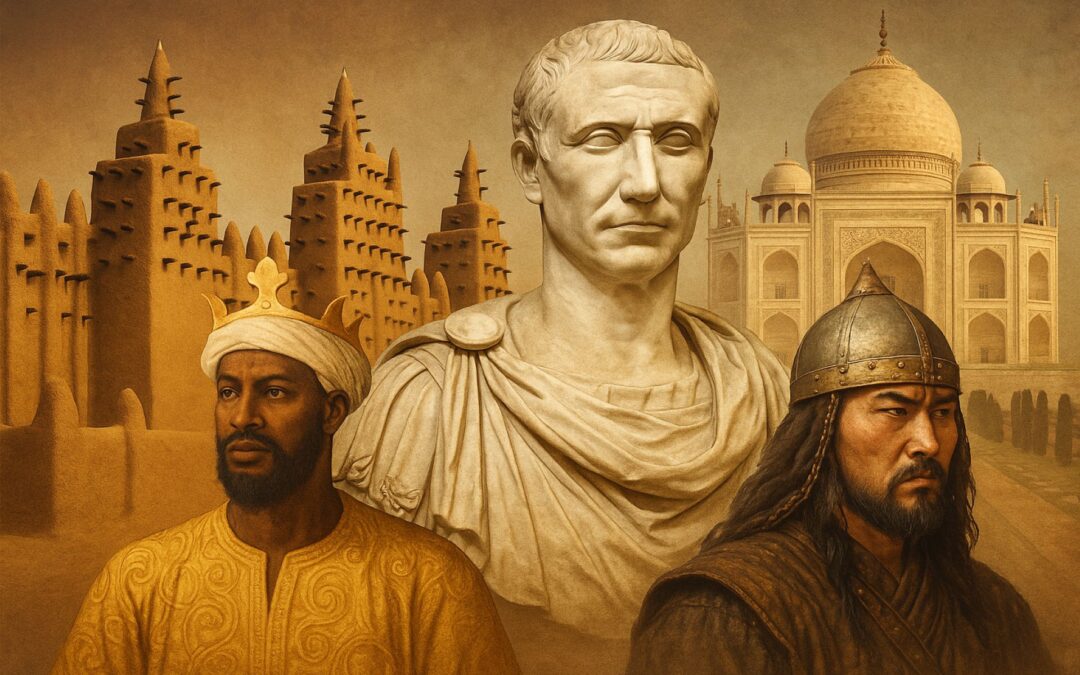
Throughout history, empires have risen and fallen, leaving behind legacies that continue to shape our world today. Despite their complexities and controversies, these ancient superpowers offer invaluable lessons in leadership, resilience, and cultural exchange. By delving into the strategies and innovations of empires like the Roman, Mongol, and Mughal, we uncover timeless principles that resonate in our personal and professional lives. Join us on a journey through history as we explore 15 profound lessons from the richest empires and learn how to apply them to thrive in the modern age.
1. Use Your Resources to Create Demand
The Mali Empire’s story is a testament to how controlling resources alone isn’t enough; creating demand for those resources is what turns potential into power. Sitting atop some of the richest gold mines and overseeing critical trans-Saharan trade routes, Mali possessed wealth in abundance. Yet, for gold to translate into influence, it had to be recognized as valuable by the wider world. Mansa Musa, the empire’s illustrious ruler, grasped this distinction intuitively.
When Mansa Musa embarked on his pilgrimage to Mecca in 1324, he didn’t just travel—he staged a spectacle of wealth. By lavishly distributing gold to locals, he sparked a ripple effect: inflation surged in cities he visited, signaling the empire’s immense riches. This ostentatious generosity drew merchants, investors, and scholars, all eager to engage with a land that appeared prosperous and stable. The demand for Mali’s gold and trade goods soared, elevating the empire’s status on the global stage.
This principle applies beyond gold or empires—it’s a blueprint for personal and professional success. Think about your own “resources”: your expertise, your network, your time, and your unique experiences. Merely possessing these assets doesn’t guarantee progress. The transformative step is to position them strategically so they become sought after. Creating demand might mean showcasing your skills through projects that solve real problems, building a reputation for reliability, or marketing your abilities in ways that resonate with your audience.
Consider this: in a crowded marketplace where many share similar skills, what makes you the obvious choice? It’s not just the skill itself but the narrative and context you build around it. Just as Mansa Musa’s gold became a symbol of wealth through deliberate action, your resources can become indispensable when you learn to create or amplify demand. The challenge lies in identifying niches where your strengths aren’t just present but shine, capturing attention and inspiring others to seek you out.
2. Learn and Play the Financial System Game
The Dutch Empire’s rise to prominence in the 17th century was not a stroke of luck but a carefully orchestrated revolution in finance. With the establishment of the Amsterdam Stock Exchange in 1602—the world’s first official securities market—the Dutch unlocked new avenues for raising capital. Stocks and bonds, previously esoteric financial tools, became accessible to a broader range of investors, fueling economic expansion and enabling ambitious ventures.
This innovation didn’t just create wealth—it redefined how wealth was created and distributed. The Dutch didn’t passively inherit this system; they educated themselves on its intricacies, learned to navigate risks, and embraced complexity. This financial literacy was a form of empowerment that allowed them to strategically leverage capital, multiply investments, and build an empire.
For modern individuals, understanding the financial system is no less critical. Whether you are an entrepreneur launching a startup or someone seeking to grow personal wealth, navigating funding sources is fundamental. Traditional loans offer security but may be restrictive; venture capital brings scale but demands equity; crowdfunding opens doors to community support but requires compelling storytelling. Each avenue carries its own risks and rewards.
The lesson is clear: don’t shy away from complexity or boredom. Immerse yourself in financial education. Learn the language of money—how interest works, what diversification means, the dynamics of markets. The more fluently you speak this language, the better you can strategize and seize opportunities. Ignorance in finance isn’t bliss—it’s a barrier. The more you engage, the more control you reclaim over your economic destiny.
3. Lead With a Clear Vision
Visionary leadership is the invisible engine behind empire-building. Empires like Rome and the Mongol Khanate didn’t merely expand by brute force; they were driven by leaders with profound foresight and clarity of purpose. Julius Caesar and Augustus crafted legal codes, social institutions, and infrastructure that outlasted their lifetimes. Genghis Khan unified disparate Mongol tribes under a singular vision, creating a cohesive entity stretching from Europe to Asia.
What made these leaders exceptional was their ability to look beyond the immediate horizon. Their vision wasn’t a static goal but a dynamic blueprint that guided strategy, motivated followers, and anticipated challenges. They balanced bold ambition with tactical flexibility, knowing when to hold firm and when to pivot.
Translating this into your life, vision is your compass amid complexity. It provides meaning to daily tasks and resilience against setbacks. Without it, you risk aimless drifting or reactive living. Crafting a vision requires deep self-reflection: What legacy do you want to create? What impact matters most? Who do you want to become?
Once defined, your vision becomes a filter for decisions, helping prioritize what aligns with your purpose. It inspires perseverance, attracting collaborators who share your passion. Leading yourself with vision means treating your goals as a mission, not a vague wish. It’s about designing your life with intentionality, knowing that every action is a brick laid toward your envisioned future.
4. Value Merit and Skills Over Nepotism
The success and longevity of empires often hinged on their ability to harness talent and competence rather than relying solely on birthright or connections. The Mongol Empire, despite its reputation for fierce conquest, was remarkably pragmatic in this regard. Leadership positions and military commands were awarded based on proven ability and loyalty, not aristocratic lineage. This meritocratic approach fostered efficiency and innovation, allowing the Mongols to outmaneuver larger, more established powers.
Similarly, China’s Tang Dynasty institutionalized merit through the civil service examination system—a rigorous testing process that ensured government officials were selected for their knowledge and abilities rather than their family background. This system elevated intellectual merit and cultivated a bureaucracy that was capable, effective, and relatively free of nepotistic influence.
In your own life, meritocracy is essential for genuine progress. Nepotism and favoritism may open doors, but they rarely sustain success or inspire respect. Surround yourself with people who have earned their roles through hard work and skill. Whether you’re hiring employees, choosing collaborators, or building friendships, prioritize those whose values, ambitions, and competencies match your own. This cultivates an environment of accountability and authenticity, where everyone is motivated to bring their best. Merit-based relationships breed trust and propel collective achievement.
5. Become Resilient Through Being Adaptable
Resilience is often misunderstood as mere endurance or stubbornness. But history’s most resilient empires teach a different story—resilience is dynamic adaptability in the face of change. The Byzantine Empire survived over a thousand years despite repeated invasions, internal strife, and plagues because it continually evolved. It engaged in strategic marriages to forge alliances, adapted military tactics to new threats, and used diplomacy to navigate shifting geopolitical landscapes.
The Mongol Empire, too, demonstrated extraordinary adaptability by rapidly adopting technologies, military innovations, and administrative practices from the cultures they absorbed. Rather than rigidly clinging to tradition, they embraced what worked and discarded what didn’t, turning conquest into sustainable governance.
Applying this lesson personally means cultivating flexibility—not just tolerating change, but leveraging it as a catalyst for growth. When confronted with setbacks, it’s natural to feel unmoored, but resilience grows when you respond with agility. Identify what can be modified, learn new skills if needed, and remain open to alternative paths. This mindset transforms challenges into stepping stones. Rather than breaking under pressure, adaptable resilience allows you to recalibrate your strategies and continue moving forward with renewed purpose.
6. Appreciate Different Cultures
The Mughal Empire’s legacy is rich not only because of its military might or wealth but because of its cultural integration. By blending Persian, Indian, and Islamic traditions in architecture, art, and administration, the Mughals created a syncretic society that celebrated diversity and fostered creativity. This cultural mosaic didn’t just tolerate differences—it leveraged them as a source of innovation and strength.
When encountering cultures different from your own, it’s common to default to comparing or judging differences harshly. But empires that thrived understood the value of empathy and openness. Appreciating other cultures broadens horizons and deepens emotional intelligence, key traits for personal and professional success. It encourages you to see challenges from multiple perspectives, often leading to more innovative solutions.
In today’s interconnected world, cultural appreciation enhances social skills, builds bridges across divides, and nurtures inclusive environments. Whether through travel, reading, or engaging in diverse communities, immersing yourself in other cultures cultivates humility and curiosity. It enriches your worldview and expands your ability to connect authentically with others, fueling creativity and collaboration.
7. Don’t Let Technology Speed Past You
One of the hallmark traits of enduring empires was their willingness to embrace and integrate new technologies to maintain an edge. The Tang Dynasty exemplified this during its golden age, with groundbreaking advancements in printing, medicine, engineering, and navigation. These innovations revolutionized Chinese society, expanding literacy through woodblock printing, improving public health, and enabling grand architectural feats. The Romans, too, were pioneers—building aqueducts that transformed urban water supply and constructing extensive road networks that accelerated military and commercial movement across vast territories.
The common thread is clear: empires that stagnated technologically often faltered, while those that seized the tools of progress thrived. Today, technology evolves at an unprecedented pace, reshaping industries and daily life alike. Letting this momentum pass you by risks irrelevance. Whether you run a business, work within an organization, or simply navigate your personal growth, staying abreast of technological trends is essential.
This doesn’t mean becoming an expert in every new tool overnight; rather, it’s about cultivating a mindset of curiosity and openness. Seek to understand how emerging technologies can improve your efficiency, creativity, or reach. Adopt new platforms and systems that streamline workflows or expand your impact. Age, background, or past experience should never be barriers. When you remain agile with technology, you position yourself not just to survive change, but to lead it.
8. Create Your Ideal Infrastructure
Wealth and resources alone cannot sustain growth without a solid foundation. The Mali Empire recognized this early, investing heavily in infrastructure that supported commerce, culture, and education. Their cities were not just centers of trade but hubs where mosques, learning institutions, and markets thrived. This deliberate cultivation of infrastructure attracted scholars, traders, and travelers, creating a self-reinforcing cycle of prosperity and influence.
Infrastructure extends beyond physical constructs—it includes the systems and environments that support your goals and wellbeing. At home, this might mean organizing spaces that promote productivity and relaxation, such as a clutter-free workspace or a restful bedroom. In work or creative pursuits, infrastructure can be the tools, routines, and networks that streamline your efforts and reduce friction.
Investing in infrastructure is about setting the stage so your talents and efforts aren’t squandered. Without it, you risk being overwhelmed by chaos and inefficiency. With it, you build resilience and capacity. Start by assessing what environments and systems either propel or hinder you. Then, take intentional steps to upgrade your infrastructure—whether it’s repairing your living space, adopting digital organization tools, or creating rituals that prime your mind and body for success. The better your infrastructure, the more seamlessly you can pursue and achieve your ambitions.
9. Your Main Form of Communication Should Be Calls
In an era saturated with emails, texts, instant messages, and countless communication platforms, the art of direct verbal communication is fading, yet it remains one of the most efficient ways to convey clarity and urgency. Historical empires like the Mongols and the British understood the vital importance of rapid, reliable communication despite lacking modern technology. The Mongols developed the Yam system—relay stations that sped messages across their vast territories—while the British Empire relied heavily on postal services and telegraph networks to coordinate global operations.
Today, we’re inundated with fragmented communication across multiple channels, which often leads to misunderstandings, delays, and overwhelm. A quick, well-timed phone call can cut through this noise. It enables real-time dialogue, immediate clarification, and a human connection that texts simply cannot replicate. When complex issues arise or swift decisions are needed, calls accelerate resolution and build rapport.
Mastering this form of communication means embracing the discomfort many feel about phone conversations and recognizing their power. Organize your communication methods: reserve calls for situations requiring clarity, relationship-building, or urgency. This focus reduces cognitive overload and creates more meaningful interactions. Whether managing a team, resolving conflicts, or collaborating on projects, prioritizing voice communication can be a game changer in achieving alignment and momentum.
10. Invest in Knowledge
Knowledge has always been the cornerstone of power and progress. The Mali Empire’s famed city of Timbuktu became a thriving intellectual hub where scholars from across Africa, the Middle East, and beyond gathered to exchange ideas and advance learning. Likewise, the Tang Dynasty fostered an environment that celebrated education, innovation, and cultural exchange, producing breakthroughs in fields as diverse as astronomy, medicine, and literature.
These empires understood that education wasn’t just about accumulating facts—it was about cultivating critical thinking, creativity, and the capacity to solve complex problems. This made their societies adaptable, innovative, and resilient.
In your own life, investing in knowledge is an ongoing commitment. It goes beyond formal schooling to include self-directed learning, mentorship, reading widely, and engaging in thoughtful conversations. The world changes rapidly; new ideas, technologies, and paradigms constantly emerge. By continuously expanding your intellectual horizons, you equip yourself to navigate these shifts effectively.
Lifelong learning fuels personal growth and opens doors to opportunities others may miss. It empowers you to make informed decisions, innovate in your field, and cultivate a mindset that thrives on curiosity. Whether through online courses, podcasts, books, or engaging with communities of practice, seek out ways to deepen your understanding. Remember, knowledge compounds over time, becoming an invaluable asset that underpins every other success.
11. Strive for Fairness
Fairness is more than an ethical ideal; it is the glue that binds societies and organizations together. Empires such as the reign of Ashoka the Great and the Achaemenid Empire under Cyrus the Great placed fairness and justice at the core of their governance. Ashoka’s embrace of Buddhism led him to promote policies prioritizing welfare, peace, and ethical treatment of subjects. Meanwhile, the Yasa code developed by Cyrus sought to reduce corruption and ensure equitable treatment regardless of people’s heritage or beliefs.
Such emphasis on fairness created trust and legitimacy, stabilizing vast and diverse populations. When people perceive justice and consistency in leadership, social cohesion strengthens, reducing dissent and fostering cooperation.
In personal and professional contexts, fairness cultivates respect and long-term relationships. This means applying your values consistently—whether you’re distributing responsibilities, giving feedback, or resolving conflicts. Double standards erode trust and breed resentment. People notice when consequences or rewards are unevenly applied.
Striving for fairness requires self-awareness and courage, especially when faced with difficult decisions or conflicting interests. Yet, it pays dividends by establishing credibility and fostering environments where people feel valued and motivated. By embedding fairness into your daily interactions, you build a foundation for trust, collaboration, and lasting success.
12. The Value of Strategic Planning
The expansive reach and longevity of the Ottoman and Roman Empires were no accidents. They thrived because their leaders combined visionary ambition with meticulous planning. The Ottomans balanced military prowess with deft diplomacy, carefully managing alliances and rivalries to protect and expand their borders. The Romans engineered infrastructure projects, legal frameworks, and governance systems with a detailed eye toward sustainability and control.
Strategic planning involves more than setting goals; it means anticipating obstacles, mapping out resources, identifying allies and potential hindrances, and preparing contingencies. A good plan acknowledges uncertainty and incorporates flexibility rather than assuming smooth sailing.
In your own pursuits, strategic planning transforms vague intentions into actionable roadmaps. For instance, if your goal is to improve health, plan beyond simply “exercising more.” Consider the people and environments that support or undermine your efforts, potential setbacks like travel or illness, and develop backup strategies. Anticipate challenges before they arise, and define who will encourage or impede you.
This comprehensive foresight prevents derailment from avoidable issues and allows you to allocate energy efficiently. It also increases confidence, knowing you have prepared for complexities. Strategic planning turns aspirations into achievable milestones and empowers you to navigate the unpredictable terrain of life with poise.
13. Learn About Arts and Culture
The Mughal Empire and the Tang Dynasty stand as monumental examples of how arts and culture enrich civilizations far beyond mere aesthetics. The Mughals gifted the world breathtaking architectural masterpieces like the Taj Mahal—an exquisite blend of Persian, Indian, and Islamic styles that symbolizes timeless beauty and technical brilliance. Meanwhile, the Tang Dynasty’s golden age saw poetry, painting, and calligraphy reach unparalleled heights, leaving a cultural legacy that still resonates through centuries.
Art and culture are more than decorative pursuits; they are the lifeblood of societal identity and collective consciousness. They shape how people think, feel, and connect. Arts often serve as the early indicators of societal shifts—revealing grassroots sentiments and pioneering new ideas before political or economic systems respond. Immersing yourself in culture broadens perspective, nurtures empathy, and sparks creativity, offering new ways to interpret and engage with the world.
For individuals, engaging with arts isn’t just about consumption but participation. Whether attending theater productions, visiting museums, exploring literature, or experimenting with creative crafts, these experiences deepen your understanding of human complexity and inspire fresh thinking. If you find your views narrowing or creativity stalling, turning to arts and culture can be a powerful catalyst for expanding your intellectual and emotional horizons.
14. Your Friends and Your Enemies Are Important
The longevity and influence of empires like Byzantium and Britain hinged on their deft use of diplomacy and alliance-building. They understood that survival was not solely about vanquishing enemies but managing relationships intelligently—negotiating, forming coalitions, and balancing power dynamics to maintain influence amid shifting global landscapes.
In your personal and professional life, cultivating this diplomatic mindset is crucial. Friends and allies provide support, encouragement, and collaboration opportunities. Enemies or rivals, on the other hand, reveal challenges and can even become unexpected partners when approached with openness. Understanding others’ perspectives and motivations enables you to find common ground and pursue solutions that benefit all parties rather than focusing on winning conflicts.
The goal is not domination but sustainable cooperation. Healthy relationships—whether with colleagues, family, or acquaintances—should minimize fear or avoidance and instead foster trust and mutual respect. Developing emotional intelligence, practicing active listening, and seeking win-win outcomes creates a network where collaboration flourishes. Managing both friends and foes with wisdom and grace builds resilience and expands your sphere of influence.
15. Create a Legacy
The Roman and British Empires both exemplify how intentional legacy-building can extend influence well beyond a ruler’s lifetime. The Romans left behind legal systems, architectural innovations, and cultural institutions that shape Western civilization to this day. Similarly, the British Empire’s legal frameworks, language, and governance models continue to impact nations worldwide.
Creating a legacy is about envisioning the long-term consequences of your actions—not merely the immediate gains. It involves investing in education, health, skills, and relationships that compound over time and ripple through future generations. Legacy is less about grandeur and more about meaningful impact: the values you embody, the knowledge you pass on, and the structures you help build.
This mindset encourages deliberate choices, even when benefits aren’t immediate or obvious. It calls for patience, discipline, and an orientation toward sustainability. By cultivating habits and relationships that endure, you craft a life story that you can look back on with pride, knowing you contributed to something larger than yourself. Legacy-building is a powerful motivator to live with purpose and to steward your resources wisely.
Conclusion
As we reflect on the rise and fall of empires, we glean insights that transcend time and geography. The lessons of strategic planning from the Ottomans, resilience from the Byzantines, and cultural integration from the Mughals remind us of the enduring power of innovation, adaptability, and ethical leadership. By embracing these principles, we can navigate today’s challenges with clarity and confidence, forging paths of success and leaving legacies that inspire future generations. Let us continue to learn from history and shape a future enriched by the wisdom of our predecessors.