
Embarking on an off-grid lifestyle is a bold and empowering choice, offering freedom from conventional systems and a deep connection with nature. However, transitioning to a self-sufficient way of living involves meticulous planning and preparation. Whether you’re dreaming of a serene life in the wilderness or aiming for greater independence from modern infrastructures, creating a comprehensive strategy is essential.
From financial planning and self-reliance to sustainable living practices and community building, this guide will walk you through 15 essential steps to ensure a successful off-grid journey. Prepare to transform your life with practical advice and actionable strategies that will make your off-grid dream a reality.
1. Build Your Off-Grid Nest Egg
Launching your off-grid empire without a substantial financial reserve is like setting sail without a compass or provisions. This nest egg isn’t merely a pile of cash—it’s the lifeblood that fuels every critical step toward autonomy. Off-grid living demands upfront capital to secure land, establish energy systems, create water infrastructure, purchase tools, and stockpile essentials. The size of this nest egg varies dramatically based on your vision—whether a minimalist cabin or a self-sustaining homestead with modern comforts.
Saving this capital requires relentless discipline and strategic sacrifice. It’s about transforming your current life into a launching pad rather than an endless trap. Start by cutting every unnecessary expense: downgrade your living situation, cook at home, forgo luxuries, and streamline transportation costs. Side hustles, freelance gigs, or part-time jobs can accelerate savings. Embrace the paradox of working harder inside the system to ultimately break free from it.
This phase is mentally grueling. It demands delayed gratification on an epic scale, resisting the constant pull of consumerism and instant pleasure. But the payoff is monumental—once your nest egg is secured, you hold the keys to escape recurring bills, predatory debts, and economic volatility. It transforms off-grid living from a fantasy into a viable, sustainable reality.
2. Escape the Healthcare System by Learning First Aid
Healthcare is one of the most insidious ties that bind us to centralized systems. Hospitals, pharmacies, insurance protocols—they are designed for densely populated areas, not isolated homesteads. To sever these ties, you must become a healthcare sovereign. This begins with mastering first aid skills that extend well beyond basic bandaging: wound care, infection prevention, splinting fractures, and recognizing critical symptoms. Such knowledge becomes the foundation for self-reliance when professional medical help is hours or days away.
Delve into the world of natural medicine—herbs, tinctures, poultices, and alternative therapies that have been used for millennia. Learn which plants can soothe pain, reduce inflammation, or fight infection. Stockpile a carefully curated selection of essential medications—antibiotics, anti-inflammatories, allergy treatments, and emergency supplies. This strategic reserve cushions you against minor illnesses and injuries that could escalate without prompt care.
Telemedicine is a crucial adjunct to your medical independence. With satellite internet and encrypted communication tools, remote consultations provide access to professional advice without physical presence. This hybrid model acknowledges that while you strive for autonomy, some emergencies require expert intervention. It balances self-sufficiency with pragmatic safety nets, reducing your dependence on the conventional healthcare labyrinth.
3. Research Land Like Your Life Depends on It
Your choice of land is arguably the most consequential decision on your off-grid journey. It dictates your access to vital resources, exposure to natural hazards, legal standing, and lifestyle quality. This isn’t a transaction; it’s a forensic investigation that demands tenacity, patience, and sensory immersion.
Begin by defining non-negotiables: how isolated you want to be, acceptable travel distances, proximity to services, and environmental conditions. Don’t be seduced by price alone—land that’s cheap for a reason often hides dangers like toxic soil, flood plains, unstable geology, or legal encumbrances. Investigate topography, soil composition, and water availability through professional reports or local expertise.
Spend extended time on candidate properties. Visit across seasons to observe flooding patterns, wildfire risks, and wildlife behaviors. Camp out to gauge practicalities like nighttime temperatures, noise, and accessibility. Assess road quality, easement rights, and potential for infrastructure development. Legal diligence is paramount—clarify zoning laws, property boundaries, and rights-of-way to avoid future disputes.
This exhaustive research transforms you from a hopeful buyer into a steward. You gain intimate knowledge of the land’s gifts and challenges, allowing you to design a homestead that harmonizes with nature rather than fights it. This is the crucible where dreams meet reality and where sustainable off-grid living begins.
4. Generate an Independent Income
Financial independence is the backbone of your off-grid empire. Disconnecting physically doesn’t mean severing your ability to generate wealth. Instead, it calls for creative redefinition of income streams that do not tether you to traditional offices or urban economies.
Digital technology offers unparalleled opportunities—remote freelancing, consulting, content creation, and e-commerce can generate steady income from anywhere. Satellite internet, portable solar setups, and efficient communication devices allow you to participate in global markets while living miles from the nearest town. Consider building a niche around off-grid expertise itself—offering courses, guides, or personalized coaching.
Agriculture is another potent income avenue. Surplus produce, eggs, honey, or handcrafted goods can be sold locally or shipped to distant markets. Farmer’s markets, online platforms, or community-supported agriculture (CSA) programs create channels to monetize your bounty. Diversifying income reduces risk and strengthens economic resilience.
Planning your financial model early reduces anxiety and provides a roadmap for sustainable living. A stable, independent income stream enables reinvestment into your homestead, emergency funds, and quality-of-life improvements. It liberates you from the precariousness that often accompanies off-grid dreams and anchors your autonomy in economic reality.
5. Use Systems and Tools to Stay Secure and Independent
Achieving true independence means thoughtfully assembling a network of systems that support your survival, comfort, and security without reliance on traditional infrastructures. Energy generation, water purification, waste management, and communication are the pillars that uphold your off-grid lifestyle, each demanding careful design and integration.
Energy systems, for example, must be reliable and redundant. Solar panels coupled with battery banks provide clean power, but incorporating wind turbines or micro-hydro generators adds resilience. Waste disposal requires eco-conscious strategies like composting toilets or greywater systems to maintain hygiene and soil health while minimizing environmental impact.
Connectivity is a nuanced challenge. While total disconnection might seem appealing, the reality of emergencies, weather forecasts, and financial transactions necessitates some digital engagement. Here, privacy tools such as VPNs encrypt your data, protecting your location and online activities, especially when using public Wi-Fi hotspots or satellite internet in vulnerable environments. This digital armor preserves your independence without exposing you to unnecessary risks.
Physical security also demands innovation. Remote homesteads can be targets for trespassers or wildlife. Installing motion detectors, secure fencing, and surveillance cameras creates a layered defense. These systems, combined with alert protocols, ensure you are warned of intrusions without constant vigilance. Ultimately, mastering these interconnected systems transforms your property into a fortress of self-sufficiency and safety.
6. Build Independent Equity in Your Property by DIYing It
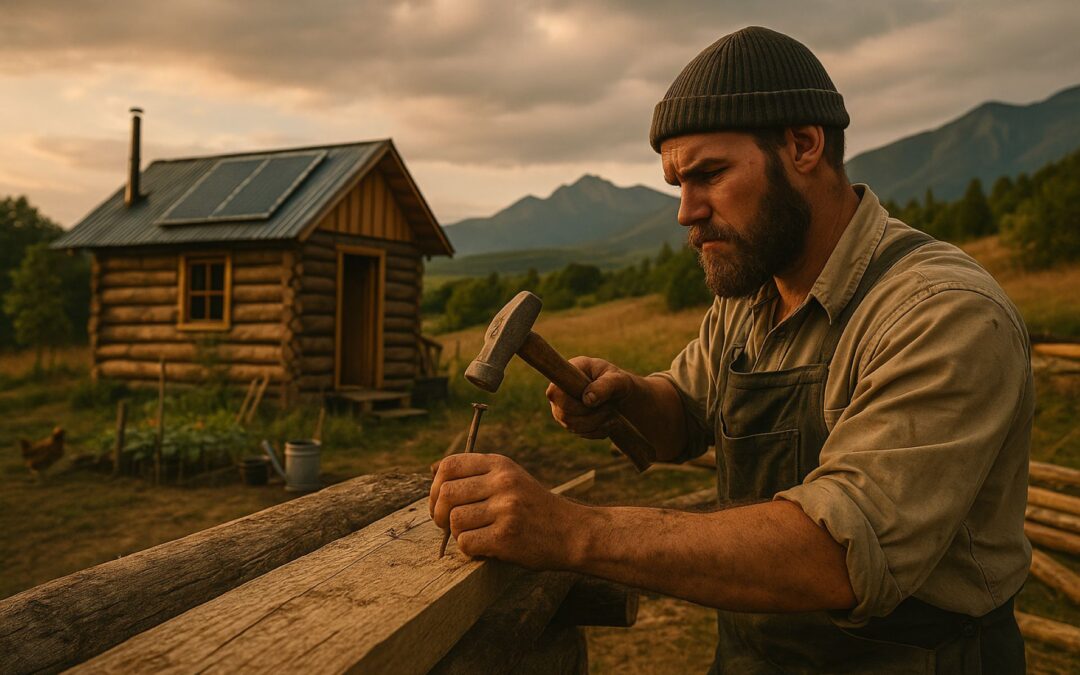
Financial freedom off-grid often depends on the ability to self-finance your property improvements. This means embracing the hands-on labor of building and maintaining your homestead. The DIY ethic not only saves money but deepens your mastery and ownership, transforming your property from a mere plot of land into a personalized sanctuary.
Constructing your home, outbuildings, fences, and infrastructure piece by piece teaches invaluable skills—carpentry, plumbing, electrical wiring—that become essential for troubleshooting and adapting as your needs evolve. Each nail hammered and beam raised strengthens your psychological and financial investment, fostering resilience and pride.
DIY also forces you into a patient, iterative mindset. Building off-grid is rarely linear; setbacks and mistakes are part of the process. This journey cultivates problem-solving abilities, creativity, and a profound connection to your environment. Moreover, it shields you from dependency on contractors, reducing costs and scheduling frustrations. Your sweat equity is a tangible manifestation of your independence, creating wealth in both assets and skills.
7. Stay Connected Even in Remote Locations
While solitude is often the allure of off-grid life, complete isolation is impractical and risky. Modern satellite internet technologies, such as Starlink, have revolutionized access to high-speed connectivity in the most remote locations, enabling you to maintain essential links without sacrificing your off-grid ethos.
This connectivity serves multiple critical functions: telemedicine consultations, emergency communication, weather monitoring, educational resources, and remote work capabilities. Solar-powered battery systems can sustain satellite dishes and communication devices sustainably, maintaining a digital lifeline without tethering you to fossil fuels or the grid.
Maintaining connectivity also supports mental well-being by enabling selective social interaction and information access. Balancing your desire for independence with smart technology use creates a hybrid lifestyle—rooted in nature but agile in the digital world. Mastering this balance ensures you remain informed and connected while preserving the sanctuary of your off-grid retreat.
8. Generate Your Own Power and Heat
One of the most profound transformations in off-grid living is reclaiming control over your energy and heating needs. Without municipal utilities, you must become your own power station, designing systems that capture, store, and efficiently utilize energy tailored to your environment.
Solar photovoltaic panels are the cornerstone technology, converting sunlight into usable electricity with continually improving efficiency. Coupling these with robust battery storage systems enables you to store excess energy for use during nighttime or cloudy days. Diversifying with wind turbines or micro-hydro generators harnesses alternative renewable sources, smoothing energy availability.
Choosing energy-efficient appliances specifically designed for off-grid use minimizes consumption, stretching your power budget. Backup generators fueled by propane or diesel offer crucial fail-safes during prolonged low-renewable periods, though reliance on them should be minimized.
Heating solutions require a return to elemental simplicity. Wood-burning stoves or fireplaces provide dependable warmth and a primal connection to your surroundings. Solar water heaters can supply hot water sustainably, reducing electrical load. Managing energy is an ongoing challenge that demands adaptability, foresight, and creativity—but it’s also deeply empowering, turning you from consumer into producer of your own comforts.
9. Source Your Own Water
Water is the essence of life, and securing a reliable, clean supply is paramount for off-grid survival. Unlike urban living where water flows endlessly from taps, off-grid homesteads must harvest and manage water with intention and engineering savvy. The primary strategy often begins with rainwater collection—installing catchment systems like sloped roofs funneling precipitation into storage tanks lined with filtration to remove debris and contaminants. The capacity of your tanks should consider local rainfall patterns and household usage to ensure sustainability during dry spells.
Beyond rainwater, drilling or digging a well taps into underground aquifers, providing a more consistent supply. This requires geological surveys, permits, and sometimes significant investment, but it often yields the most dependable water source. Testing well water regularly for contaminants like heavy metals or bacteria is essential to avoid health hazards.
Greywater recycling elevates water efficiency by capturing used water from showers, sinks, and laundry to irrigate gardens or flush toilets. This system reduces waste and conserves precious freshwater resources. To drink or cook with your water, robust filtration and purification systems—combining sediment filters, activated charcoal, UV sterilization, or reverse osmosis—are necessary to eliminate pathogens and toxins. Mastery over water sourcing and treatment transforms a fundamental vulnerability into a pillar of self-reliance.
10. Go Agricultural Revolution Style
Returning to the earth for sustenance reconnects you with ancient rhythms and profound self-sufficiency. Building a diverse and resilient garden is foundational, employing techniques like companion planting to naturally repel pests and enhance growth, crop rotation to maintain soil fertility, and intensive composting to recycle organic waste into nutrient-rich amendments. Selecting heirloom and native plant varieties boosts hardiness and adaptability to your unique microclimate.
Integrating small livestock multiplies your food sources and ecological balance. Chickens provide fresh eggs and pest control; goats contribute milk and manure for fertilizer; bees pollinate crops and yield honey—a natural sweetener with medicinal properties. Designing a closed-loop system where waste feeds the soil, soil feeds plants, and plants feed animals closes the sustainability circle.
Agriculture requires patience, observation, and willingness to experiment. Crops will fail, pests will invade, and weather will challenge you. Each setback is a lesson pushing you toward greater understanding and harmony with your land. This revival of agrarian skills anchors your independence in tangible abundance.
11. Go Hunter-Gatherer Style
To complement farming, embracing the hunter-gatherer model reconnects you with primal food sources and survival instincts. Foraging wild plants, berries, nuts, and mushrooms adds nutritional diversity and richness that cultivated gardens may lack. However, this demands deep botanical knowledge—distinguishing edible from poisonous species is life-critical. Local field guides, workshops, and mentors can accelerate your learning curve.
Hunting and fishing supplement your diet with protein from natural ecosystems. These skills require mastery of tracking, stealth, and ethical harvesting practices to ensure sustainability. Understanding animal behavior, habitat patterns, and seasonal migrations enhances success and minimizes ecological disruption.
Engaging with the wild landscape in this way heightens your ecological literacy and embeds you deeper into the cycles of nature. It’s a profound form of self-reliance that transcends modern conveniences, offering nourishment directly from the land’s bounty.
12. Upgrade and Elevate Your Survival Skills
Off-grid living demands continuous skill evolution and mental toughness. Beyond basic gardening and food procurement, you must develop competencies in navigation—using maps, compass, and natural indicators—to safely explore and understand your territory. Fire-making techniques, from traditional friction methods to modern igniters, become daily necessities for warmth, cooking, and signaling.
Water extraction skills expand beyond collection to include finding natural springs, digging catchment pits, and improvising filtration in emergencies. First aid proficiency grows to include wound management, splinting, and recognizing signs of serious conditions without immediate medical access.
Crop failure or animal loss is inevitable; your resilience depends on diagnosing causes—soil deficiency, pests, weather—and adapting strategies accordingly. Mental resilience is equally vital: managing frustration, uncertainty, and isolation without losing motivation or perspective.
Treat this as a marathon, not a sprint. Celebrate incremental victories, learn from setbacks, and maintain curiosity. Over time, these survival skills become second nature, embedding you firmly in the role of self-reliant steward of your off-grid empire.
13. Find an Alternative to Your Bank Account
Breaking free from the conventional financial system requires reimagining how you manage and store money. Traditional bank accounts tie you to centralized institutions that monitor and control your transactions, potentially compromising your financial sovereignty. To truly detach, explore decentralized financial tools that offer autonomy, privacy, and accessibility no matter where you are.
Cryptocurrency wallets, for example, enable peer-to-peer transactions without intermediaries. With just an internet connection and a secure device, you can store, send, and receive funds globally. However, this requires diligence in securing your private keys and understanding the volatility inherent to digital currencies.
In addition, alternative online banking platforms focus on privacy and low fees, often allowing you to operate accounts with minimal physical footprint. Pair these with encrypted VPNs to shield your location and usage patterns. This financial independence complements your physical detachment from urban systems and empowers you to conduct transactions on your terms, reinforcing your off-grid lifestyle with economic autonomy.
14. Be Willing to Live Between Two Lives
Transitioning to off-grid living is rarely a clean break—it’s a liminal existence between the familiar rhythms of your former life and the emergent reality of self-reliance. This in-between phase can be psychologically taxing as you navigate conflicting identities, loyalties, and emotions.
You may long for the comforts and social connections of your previous environment while simultaneously craving the freedom and authenticity off-grid promises. Doubts will creep in, fueled by uncertainty and the enormity of the undertaking. Relationships with loved ones might strain under the weight of your choices.
Accepting this duality rather than resisting it transforms it into a powerful motivational force. Use this tension as fuel to propel your preparations, deepen your commitment, and refine your vision. Over time, these two selves harmonize, giving birth to a resilient, grounded identity forged in transition—a hybrid strength uniquely suited to thrive both within and beyond conventional society.
15. Learn to Love Getting Your Hands Dirty
Off-grid life is an immersion in the tactile realities of existence. It’s about confronting the raw, physical labor and unpredictable challenges that come with owning and maintaining your land and livelihood. This includes building structures with your own hands, repairing damage wrought by weather, tending to animals’ health, and handling the inevitable messes—mud, manure, debris—that urban living often shields you from.
Developing a genuine appreciation for this hands-on engagement shifts your perspective from drudgery to empowerment. Each calloused hand and dirt-smudged face becomes a badge of honor, marking your active participation in creating and sustaining your empire.
This mindset embraces imperfection and embraces learning through doing. It fosters patience, perseverance, and humility. Loving the process grounds you in reality and connects you deeply to the land and life you’ve chosen. It’s not glamorous, but it is profoundly liberating.
Bonus: Get Comfortable Being Uncomfortable
Comfort has become a cultural narcotic—softening resilience and dulling adaptability. To succeed off-grid, you must recondition yourself to find strength in discomfort. Deliberately exposing yourself to controlled hardships—power outages, cold showers, cooking in low light—builds mental and physical fortitude.
These exercises simulate the inevitable challenges you’ll face, reducing fear and building confidence. Over time, discomfort loses its sting and becomes a familiar companion rather than an adversary. This cultivated toughness turns obstacles into opportunities, transforming your off-grid existence from a survival struggle into a fulfilling, empowered way of life.
Conclusion
Choosing an off-grid lifestyle is not merely about escaping the hustle and bustle of modern life; it’s about embracing a new way of living that prioritizes self-sufficiency, sustainability, and personal fulfillment. By following these 15 key steps—from building your financial nest egg to mastering essential skills and leveraging technology—you’ll equip yourself with the tools needed for a successful transition.
Remember, the journey to off-grid living is as much about personal growth and adaptation as it is about practical implementation. With careful planning, resourcefulness, and a resilient mindset, you’ll be well on your way to creating a fulfilling and independent life beyond the grid.