
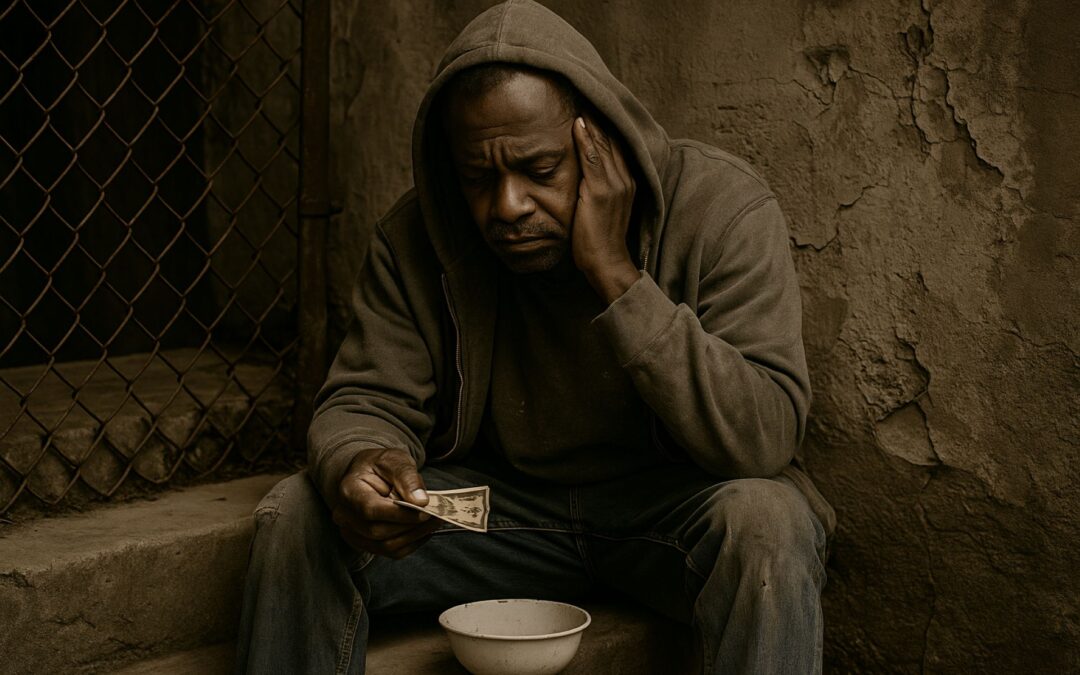
Poverty is not just a lack of money—it’s a complex, multi-layered condition shaped by both external circumstances and internal mindsets. While external factors like education, family background, and societal structures play significant roles in keeping individuals trapped in poverty, personal acceptance of these circumstances is just as powerful.
Breaking free from poverty requires not only changing one’s financial situation but also transforming the mindset that keeps individuals stuck in it. Understanding the rules that govern poverty—whether it’s the idea that hard work alone isn’t enough or the pervasive chains that limit opportunities—can provide clarity on how to overcome it.
In this article, we’ll explore the 15 essential rules of poverty, offering insights into why some remain stuck and how others break free.
1. Poverty is 50% Circumstances, 50% Acceptance of Those Circumstances
Poverty is often seen as a consequence of misfortune or external circumstances, but there is another significant factor that plays a role: the acceptance of those circumstances. The external conditions of poverty—such as being born into a low-income family, living in a community with few resources, or facing systemic inequalities—are undeniably powerful. However, the way a person internalizes these conditions can either perpetuate or mitigate their effects.
When someone accepts their circumstances as permanent and unchangeable, they may not take proactive steps to improve their life. This can manifest as a feeling of powerlessness, where the individual believes that no matter how hard they try, they cannot change their situation. This mindset is often a self-fulfilling prophecy. The longer someone accepts poverty as their unalterable fate, the less likely they are to take risks or pursue opportunities that could improve their life.
However, those who are able to change their thinking and view their situation as temporary and changeable can take active steps toward improvement. This shift doesn’t happen overnight, but it starts with recognizing that change is possible and that small, consistent actions can lead to significant results. For example, someone who sees education as a way to improve their situation may take evening classes, apply for scholarships, or engage in self-study. Over time, these efforts compound, and the individual begins to see improvement in their circumstances.
The key to breaking free from poverty lies in understanding that circumstances can be changed through persistence and strategic action, and that the first step in this journey is believing in the possibility of change.
2. Being Broke and Being Poor Are Two Different States of Being
It is essential to differentiate between being broke and being poor because these terms describe fundamentally different states of being. Being broke is a temporary situation. Everyone goes through phases in life where they don’t have enough money—perhaps due to unexpected expenses, job loss, or poor financial decisions. Being broke means that you may be struggling at a particular moment in time, but it does not mean that you are destined to remain in that state forever. A person who is broke can take immediate steps to improve their financial situation by budgeting, seeking better job opportunities, or cutting back on expenses.
In contrast, being poor is a deeper, more ingrained state. Poverty is not just about a lack of money; it encompasses a mindset that sees wealth as unattainable. People who are poor often internalize the idea that they cannot escape their situation. They may believe that their socio-economic position is determined by factors beyond their control, such as family background or societal structure, and thus feel powerless to change their situation.
The mindset of being poor often leads to inaction or resignation. It can manifest as a lack of ambition or faith in one’s ability to succeed. People trapped in poverty might see their dreams as unrealistic or unattainable, which can hinder their efforts to change. This mindset becomes a barrier to taking the necessary steps toward wealth creation, such as pursuing education, starting a business, or investing in self-improvement.
In contrast, someone who is broke but not poor will recognize that their current financial struggles are temporary. They will take steps to improve their situation and develop the belief that they can overcome their challenges. The key difference lies in the belief in one’s ability to change their financial circumstances. While being broke is a temporary setback, being poor is a long-term mindset that keeps individuals trapped in a cycle of deprivation.
3. Educated People Take Advantage of Uneducated People
In the modern world, education is one of the greatest tools for economic mobility. The most powerful people in society are often those who have access to knowledge and the ability to use it to their advantage. This is not just about formal education—knowledge, in today’s world, can take many forms, including technical skills, business acumen, or even the ability to navigate complex systems like the internet, finance, or politics. Those who are educated have access to opportunities and networks that uneducated people simply cannot tap into.
Education empowers individuals to understand and manipulate systems to their benefit. In the past, power was derived from physical strength or the control of land and resources. Today, the power is in the control of information. The ability to access, interpret, and apply knowledge effectively is what creates the distinction between the wealthy and the poor. Without access to education or the tools to navigate the complexities of modern life, individuals are left at a disadvantage. They are unable to take full advantage of opportunities that are available to others, such as better-paying jobs, entrepreneurial ventures, or social networks.
This disparity is particularly evident in communities that lack access to quality education. In many developing countries, for example, education is not a universal right, and people are left to fend for themselves in a world that increasingly rewards those with skills and knowledge. In the developed world, while education may be more accessible, there are still significant gaps in the quality of education that different communities receive. People who grow up in low-income areas with underfunded schools often lack the resources to learn the skills that could elevate them financially.
Ultimately, those who are educated are better equipped to navigate life’s challenges and opportunities, while the uneducated are often left at the mercy of systems they don’t fully understand. This creates a hierarchy in which the educated thrive, while the uneducated remain at the bottom of the socio-economic ladder.
4. Poor Parents Can’t Teach Their Children How to Be Rich
When parents struggle with poverty, they often cannot teach their children how to break free from it. This is because parents in poverty typically only know how to survive, not how to build wealth. They may have learned to manage scarcity, but they lack the knowledge and resources to teach their children the principles of wealth creation. This results in a situation where children grow up learning the survival strategies of their parents, rather than strategies for financial success.
For instance, poor parents may emphasize the importance of getting a job and making ends meet, but they often don’t have the knowledge to teach their children about saving, investing, or creating wealth. As a result, the next generation may also grow up without the tools necessary to escape poverty. This leads to generational cycles of poverty, where each new generation is taught to simply “get by” rather than to build financial security and wealth.
Furthermore, many parents in poverty hold onto limiting beliefs about money, such as the idea that money is scarce or that rich people are greedy. These beliefs are passed down to children, who may then adopt similar mindsets. This can perpetuate a cycle of self-limiting beliefs about wealth, which makes it harder to break free from poverty.
In contrast, wealthier parents typically teach their children about financial independence from an early age. They often emphasize the importance of education, entrepreneurship, investing, and building networks. Rich families pass down valuable lessons about managing money, creating opportunities, and navigating the world of finance. These lessons empower children to make decisions that will help them accumulate wealth and avoid the financial struggles that their parents faced.
Ultimately, parents in poverty can’t teach their children how to be rich simply because they don’t have the knowledge or resources to do so. The cycle of poverty continues when the lessons taught are centered around survival rather than wealth-building.
5. The Hardest Working Person in the World Likely Lives in Poverty
One of the most persistent myths about poverty is that it is simply the result of laziness. People often believe that if someone works hard enough, they will escape poverty. This could not be further from the truth. While hard work is undeniably important, it is not the sole determinant of financial success. There are many people working extremely hard, often in physically demanding or low-paying jobs, who remain in poverty.
The reason for this is that hard work alone does not provide the tools or resources needed to break the cycle of poverty. For example, people working in low-wage industries often put in long hours, but they don’t have access to the capital, education, or networks that are necessary to elevate their financial situation. Hard work, in this context, often leads to exhaustion but not to financial growth.
On the other hand, wealth is often built through strategic use of resources, knowledge, and opportunities. The richest individuals in the world did not accumulate their wealth solely by working harder than others; they built systems, created businesses, and leveraged opportunities. For instance, entrepreneurs may work hard, but they also focus on creating scalable systems that allow their efforts to yield exponential returns. The difference between hard work and financial success lies in the ability to utilize resources effectively, whether that’s through education, technology, or investment opportunities.
Furthermore, the hardest-working people in the world often face structural disadvantages that make it harder for them to get ahead. These may include systemic barriers like limited access to education, job discrimination, or geographic constraints. Hard work is valuable, but it needs to be accompanied by access to resources, opportunities, and support systems that allow individuals to leverage their efforts for long-term success.
6. Poverty Requires Company
Poverty doesn’t just affect individuals—it tends to foster collective experiences and behaviors that trap whole communities in a cycle of deprivation. A universal rule in society is that individuals with similar struggles tend to gravitate toward one another. While this is natural, it can create an environment where poverty becomes a shared experience that reinforces the very conditions keeping people in lower socio-economic statuses. Those trapped in poverty often seek comfort in others who share similar hardships, finding camaraderie in their shared struggles. This sense of unity, however, rarely translates into upward mobility. Instead, it often serves to solidify a collective acceptance of poverty.
The social dynamics in such environments can be limiting. Instead of pushing each other to pursue new opportunities or break free from financial constraints, individuals may become preoccupied with comparing their situations to others and feeling a sense of superiority or competition over those even less fortunate. This can result in a toxic environment where bitterness and frustration overshadow proactive solutions. The result is an entrenchment of the status quo—people in poverty remain isolated in their struggles, reinforcing the mindset that there is no way out.
On the other hand, individuals who have managed to escape poverty often surround themselves with others who share their ambition and drive. They network, collaborate, and challenge each other to grow, which accelerates their progress. This environment is rich in opportunities, where success is seen as something attainable and within reach. To break free from poverty, individuals need to seek out environments that challenge them and expose them to different ways of thinking, as these will be the places that foster growth and provide the encouragement needed to escape the cycle of poverty.
7. The Poor Look to Others to Help, but Never to Themselves
One of the most frustrating paradoxes of poverty is the reliance on others to pull individuals out of their circumstances, rather than the individual taking ownership of their situation. The mindset that someone else—whether it be a relative, a politician, or a philanthropist—will come to the rescue, perpetuates the cycle of poverty. While it is natural to wish for help, the truth is that real change comes when people take responsibility for their lives and actively work to improve their circumstances.
This reliance on others can be seen in various forms. It could manifest in waiting for government assistance, hoping for a windfall like winning the lottery, or relying on charities. While external support can provide temporary relief, it doesn’t lead to lasting change. In fact, it can deepen the dependency on others, creating a vicious cycle of waiting for someone else to take the first step.
Escaping poverty requires the realization that the power to change one’s circumstances lies within. Opportunity is everywhere, but it is up to individuals to prepare themselves to take advantage of it. This means seeking out education, building skills, and leveraging existing networks to open doors. Self-empowerment is key—when individuals stop waiting for others to save them and start taking active steps to better their own lives, they can begin to break the cycle of poverty.
The path to freedom involves taking control of one’s own future, accepting responsibility, and actively seeking ways to improve, no matter how small the steps may seem at first.
8. Poverty Ties You with More Than One Chain
Poverty is not just a lack of financial resources; it is often a multi-faceted set of constraints that bind individuals to their circumstances. These “chains” are not just economic—they are social, geographical, psychological, and physical barriers that prevent people from rising above their situation. Poverty often ties individuals down in ways that are not immediately visible, yet are deeply limiting.
One of the most obvious chains is the lack of access to education. In many impoverished communities, the educational system is underfunded and unable to provide the knowledge and skills necessary to help individuals escape poverty. This lack of education leads to fewer job opportunities and, ultimately, lower-paying jobs that keep people in a cycle of financial struggle.
Another significant chain is family dynamics. While family can be a source of support, in impoverished households, family members often share a similar mindset—one focused on survival rather than success. When parents, for example, don’t understand the concept of wealth-building or financial independence, they may inadvertently pass on limiting beliefs to their children. Additionally, familial obligations and the pressure to support family members can drain both emotional and financial resources, making it harder to break free.
Health is another chain that often ties people in poverty. Poor health—whether due to a lack of access to healthcare, chronic illness, or unhealthy living conditions—can limit a person’s ability to work or pursue opportunities that could improve their financial situation. Without proper healthcare or health insurance, medical bills can pile up, exacerbating the financial strain.
Other chains include geographical location, which limits access to jobs and opportunities, and lack of early employment opportunities, which prevent individuals from gaining the work experience needed to enter higher-paying fields. Addiction can also be a serious barrier, as it not only consumes financial resources but also hampers the ability to focus on long-term goals. These various chains reinforce the cycle of poverty, making it extremely difficult for individuals to break free.
To escape poverty, each of these chains must be addressed. It requires not only financial education but also access to healthcare, a supportive family environment, and opportunities to gain work experience or education. Breaking free from poverty requires breaking down each of these barriers one by one.
9. Good Luck and Poverty Go Hand-in-Hand
A common belief among those trapped in poverty is that their situation is purely the result of bad luck. This perception can be incredibly disempowering, as it suggests that no matter what they do, they will never be able to change their circumstances. While it’s true that some people may be born into difficult circumstances or face more challenges than others, the idea that luck is the determining factor in escaping poverty is a dangerous misconception.
People in poverty often fantasize about a sudden change in fortune—a lottery win, an inheritance, or some miraculous event that will pull them out of their financial struggles. However, these forms of “luck” are not a reliable strategy for success. In reality, most people who escape poverty do so through hard work, education, and strategic decision-making, not through a random stroke of luck. Waiting for something external to change is often a passive response that keeps people stuck in their situation.
The key to overcoming poverty is to focus on improving what is within your control. This includes investing in education, learning new skills, seeking out opportunities, and making small, deliberate changes over time. Overcoming poverty doesn’t happen overnight, but with consistent effort and a commitment to self-improvement, individuals can gradually improve their financial situation.
Good luck, if it comes at all, is usually the result of preparation meeting opportunity. People who are prepared—who have skills, knowledge, and a willingness to seize opportunities—are more likely to encounter “luck” than those who sit and wait for it to come to them. Rather than waiting for something to change, individuals should focus on changing themselves and their approach to life.
10. Entertainment Is How the Rich Keep the Poor Docile
One of the most effective tools the wealthy use to maintain their status and control is entertainment. The concept of “bread and circuses,” coined by the ancient Romans, refers to the practice of keeping the masses distracted and pacified with superficial pleasures, so they don’t focus on their real problems. In modern society, entertainment plays a similar role. Whether it’s endless hours of television, video games, or social media, the poor are often kept occupied with distractions that prevent them from thinking critically about their situation or taking action to improve their lives.
Entertainment provides an easy escape for those struggling with poverty, offering temporary relief from the harsh realities of life. However, these distractions don’t solve any problems—they only serve to numb the mind and delay necessary actions. People spend hours watching TV shows, scrolling through social media, or playing games, but these activities don’t provide any long-term benefits. They offer no tangible improvement to a person’s skills, knowledge, or financial situation.
In many cases, entertainment can become addictive, further robbing individuals of valuable time that could be spent learning, networking, or working toward personal goals. The wealthier segments of society understand this dynamic well. As long as the poor are distracted by entertainment, they are less likely to question the structures that keep them in poverty. They remain docile, content with temporary distractions rather than addressing the deeper issues in their lives.
Breaking free from poverty requires stepping away from mindless entertainment and focusing on activities that contribute to personal growth and development. This could mean investing time in learning a new skill, reading educational books, or engaging in activities that challenge the mind. By reclaiming time spent on empty distractions, individuals can begin to shift their focus to the actions that will lead to long-term success and financial independence.
11. Money Flees the Hands That Don’t Work for It
Money has a peculiar relationship with its owners—it tends to stay with those who understand how to work for it and grow it, but it often slips away from those who come into it easily or without effort. This principle can be observed in the phenomenon of people who unexpectedly come into wealth, such as through inheritance, lottery wins, or sudden business success, only to lose it all over time. This happens because money is not just about accumulation, but about management, understanding, and creation.
People who don’t work for their money often lack the knowledge and skills necessary to preserve and grow it. Without the discipline and experience of managing finances, individuals may make poor decisions when it comes to saving, investing, or budgeting. They may spend recklessly, buy things they don’t need, or rely on bad financial habits, which can lead to financial instability. This pattern reinforces the idea that wealth isn’t just about having money—it’s about understanding the principles behind it, such as value creation, risk management, and long-term planning.
In contrast, individuals who build their wealth over time—whether through entrepreneurship, investments, or savings—tend to have a stronger sense of how to use money effectively. They understand the power of compound growth, the importance of financial education, and the value of making strategic decisions. This makes it easier for them to not only preserve their wealth but also expand it over time. The fundamental difference lies in the experience and understanding that comes from working for your money. When individuals learn how to earn and grow their wealth, they become better stewards of it, ensuring that it stays within their grasp for the long term.
This is why many individuals who rise from poverty often do so by learning how to manage money effectively and building wealth systematically. Without this financial literacy and discipline, wealth tends to flee and leave those who are unprepared.
12. Debt and Consumerism Are the Modern Versions of Slavery
In the modern world, debt and consumerism serve as powerful tools that keep people in a state of perpetual financial servitude. Unlike traditional slavery, where individuals were owned and controlled by others, today’s form of slavery is more insidious. People are trapped not by physical chains, but by financial obligations—loans, credit card debt, and the constant pressure to consume more. These financial chains limit personal freedom and autonomy, making it difficult to break free from the cycle of poverty.
Debt, especially consumer debt, can be particularly harmful. The widespread availability of credit has made it easier than ever for individuals to borrow money to fund immediate desires—whether it’s a new car, the latest gadgets, or a luxurious vacation. However, this borrowing comes with a steep price: high-interest rates and long repayment periods. These debts, often accumulated in pursuit of fleeting pleasures, can quickly spiral out of control, leading to a state of constant financial anxiety and stress. People end up working not just to cover basic living expenses but to pay off debt, making it nearly impossible to build wealth or save for the future.
Similarly, consumerism perpetuates this cycle by creating a never-ending desire for more. Society conditions people to equate happiness and success with the acquisition of material goods. Advertisements, social media, and peer pressure reinforce the notion that happiness lies in owning the latest products or living a luxurious lifestyle. This constant desire to “keep up with the Joneses” forces people into debt as they attempt to match the lifestyles they see around them, all while failing to realize that wealth is not about acquiring things, but about having control over one’s financial future.
Debt and consumerism create a vicious cycle—people go into debt to acquire goods they don’t need, and as they work to pay off those debts, they remain financially shackled. To escape this modern form of slavery, individuals must resist the pressures of consumerism and embrace a more mindful approach to spending, focusing on saving, investing, and building wealth over time. Breaking free from debt means taking control of one’s financial future and rejecting the false notion that happiness is found in material possessions.
13. Poor Is the Most Expensive Thing a Person Could Be
Living in poverty often means incurring costs that the wealthy don’t have to contend with. Being poor is not just about not having money—it’s about the systemic costs that come with it. These costs are both financial and emotional, and they compound over time, making it even harder to escape the poverty cycle. While it may seem counterintuitive, being poor is often more expensive than being financially stable because the lack of resources creates higher costs in other areas of life.
For example, people living in poverty often pay higher prices for basic services and necessities. Without access to traditional banking, individuals may rely on payday loans, which come with exorbitant interest rates, or use check-cashing services that charge fees. Without insurance or access to affordable healthcare, they may face sky-high medical bills, leading to further financial strain. Simple things like needing a car repair or dealing with a broken appliance can lead to a situation where what could have been a small cost turns into a much larger one, simply because there is no buffer or savings to cover the expense.
Another example is in the realm of housing. Poor individuals are often forced to rent in neighborhoods with higher crime rates and lower-quality housing. They may not have access to affordable or safe housing options, which means they end up paying more for lower-quality living conditions. This can result in greater long-term health problems and a diminished quality of life, both of which carry their own costs.
Furthermore, being poor often means living in areas with fewer opportunities—whether that’s for education, employment, or social mobility. Without access to high-quality education, individuals may struggle to find better job opportunities, which limits their earning potential. This lack of opportunity means that people remain stuck in low-wage jobs, often requiring more hours of work to make ends meet.
Ultimately, poverty isn’t just a financial burden—it’s a system of hidden costs that compound over time. The longer someone remains in poverty, the more expensive it becomes, which makes it increasingly difficult to escape. Breaking free requires addressing these hidden costs, by finding ways to reduce financial strain, access better resources, and create opportunities for growth.
14. Those Who Say That Money Doesn’t Grow on Trees Have Never Planted Anything
Wealth creation is often seen as something mystical or out of reach for many, but in reality, money is just like fruit—it requires effort, patience, and careful cultivation. Just as fruit doesn’t appear without someone planting a seed and nurturing it, money doesn’t appear out of nowhere. It is the result of making wise investments, creating value, and consistently working toward long-term goals.
The concept of “money doesn’t grow on trees” is a mindset that discourages the idea of wealth creation. It implies that money is a scarce, limited resource, which can create a fear-based mentality that prevents individuals from taking risks or pursuing opportunities. However, the reality is that money—like fruit—is the result of deliberate actions and the ability to nurture resources over time. Whether it’s investing in education, starting a business, or saving for the future, wealth requires consistent effort and attention.
To create wealth, individuals must start by planting the seeds—whether that’s through investments, business ventures, or personal development. Just like a tree requires regular care, financial growth demands ongoing effort. This includes managing cash flow, saving, and reinvesting profits into new ventures or opportunities. It’s also about patience—just as a tree takes time to grow and bear fruit, wealth-building requires a long-term perspective. Immediate gratification and shortcuts—such as seeking quick wealth through gambling or get-rich-quick schemes—are often counterproductive and unsustainable.
The most successful people understand that wealth isn’t an accident—it’s something that requires time, effort, and strategic planning. By focusing on long-term goals, consistently making wise financial decisions, and nurturing the resources available, individuals can cultivate their own “financial trees” and watch their wealth grow.
15. Dying Poor Is a Choice
The final rule of poverty is that dying poor is a choice. While individuals may not have control over where they start in life, they do have control over how they choose to live it. There are many stories of individuals who have risen from extreme poverty to great wealth, demonstrating that escaping poverty is possible with the right mindset, strategies, and actions.
The key to escaping poverty lies in taking responsibility for one’s life and making intentional decisions that lead to financial success. It’s easy to blame external factors—such as family background, systemic inequality, or bad luck—for one’s circumstances, but ultimately, the ability to change lies in the hands of the individual. The 40 years between a person’s 20s and 60s offer plenty of time to make significant changes in life, whether that means pursuing education, starting a business, investing wisely, or making other strategic choices that build wealth.
However, escaping poverty is not easy, and it requires both effort and risk. The fear of failure can paralyze individuals, keeping them stuck in their current situation. But the truth is that staying in poverty is a choice, albeit an unconscious one for many. It’s about making the decision to change, to take action, and to believe in the possibility of a better future. Those who refuse to accept their fate and instead take ownership of their financial future have the power to transform their lives.
The most powerful tool anyone has in the fight against poverty is time. The years ahead offer ample opportunity to make choices that lead to greater financial freedom. By investing in themselves, learning new skills, and making strategic decisions, anyone can change the trajectory of their life. The power to escape poverty lies within each individual, and with determination and perseverance, it is possible to achieve financial independence and success.
Conclusion
Escaping poverty is not a matter of luck or circumstance alone; it’s a conscious, proactive choice that demands resilience, education, and a strategic mindset. The 15 rules of poverty outlined here show that while the road to financial freedom is undoubtedly challenging, it is not impossible.
By recognizing the deep connections among mindset, resources, and opportunities, anyone can begin the journey to break free from the cycle of poverty. Whether it’s through small daily steps, changing the way we think about wealth, or learning how to leverage knowledge and resources, the power to create a better future lies within each of us. The key is to recognize that poverty is not a permanent state, and with the right approach, anyone can rewrite their financial story.