
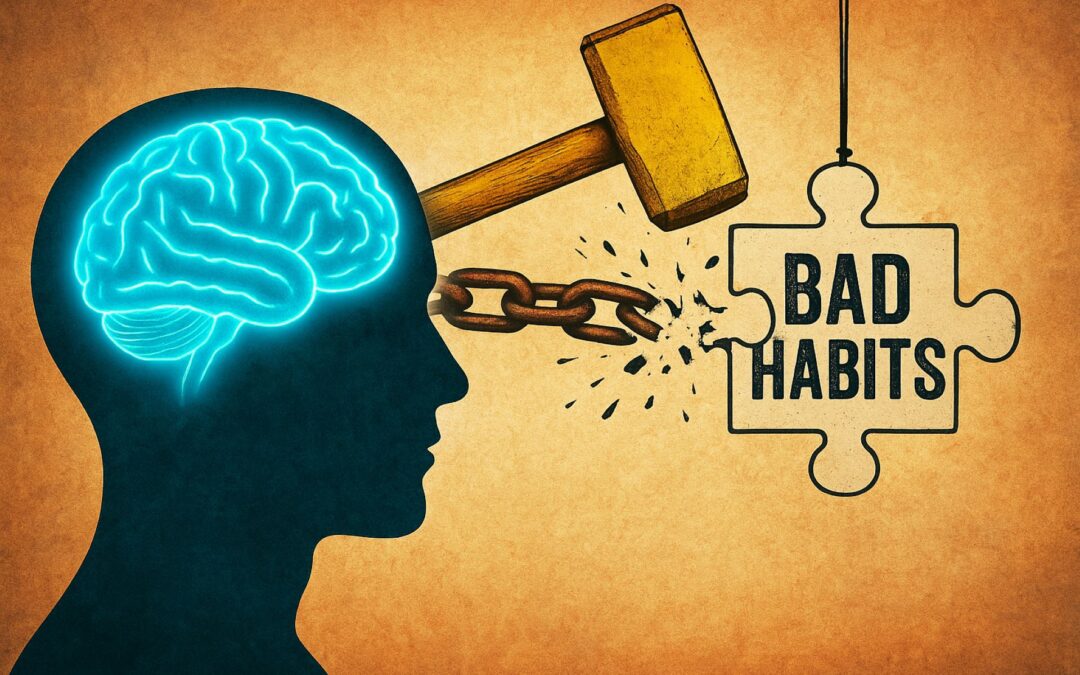
Breaking bad habits is a common struggle for many people, often resulting in frustration and feelings of defeat. Despite the best intentions, research indicates that about 90% of individuals fail when attempting to change their behavior. This high failure rate can be attributed to various factors, including the deeply ingrained nature of habits and the misguided methods typically employed to combat them.
However, understanding how our brains work and leveraging that knowledge can dramatically improve our chances of success. In this article, we will explore 15 powerful strategies to hack your brain, allowing you to dismantle bad habits and replace them with healthier alternatives. By employing these techniques, you can create lasting change and foster a more fulfilling lifestyle.
1. Hack Your Brain at the Right Point: Target the Subconscious
Most people attempt to break bad habits by sheer willpower, consciously telling themselves to stop or relying on motivation to “just do better.” This approach inevitably crashes into the wall of mental resistance because the conscious mind is an overactive, noisy hub saturated with distractions, conflicting thoughts, and emotional noise. It’s like trying to reboot a complex machine while it’s still running at full speed—chaos ensues and progress stalls.
The real key lies in bypassing this conscious mind fortress by targeting the subconscious, the part of your brain where habits truly reside. Your subconscious operates beneath the radar of your conscious awareness, managing automatic functions and ingrained behavioral patterns. It’s far less guarded and much more malleable during specific brainwave states—namely, during alpha and theta waves, which occur in moments of deep relaxation and light sleep.
Every day, your brain cycles through various wave states:
- Delta waves: the slowest, occurring during deep, dreamless sleep.
- Theta waves: associated with deep relaxation, daydreaming, and the moments just before sleep.
- Alpha waves: light relaxation and meditative states.
- Beta waves: active, alert, and focused waking consciousness.
The alpha and theta phases are golden windows for change because your brain is more receptive, less critical, and more likely to accept new programming without the defensive filters active during beta states.
To exploit this, practice mentally “slipping in” right after waking or just before drifting off. Visualize yourself already free from the habit, experiencing the emotions and sensations of success. Create detailed mental movies—what you’re doing, how you feel, the new routines replacing the old habit.
Because the subconscious does not discriminate between imagined and real experiences, these nightly and morning rehearsals gradually restructure your neural circuits, reinforcing new pathways while weakening the old. This method is subtle yet profound, allowing change to seed itself while your conscious mind rests.
2. Embrace Mistakes as Neural Pathway Disruptors
Conventional wisdom treats mistakes as setbacks or failures, but neuroscience reveals they are essential catalysts for change. Habits are encoded in the brain as stable neural pathways—well-traveled routes your brain uses to save energy. Interrupting these pathways requires creating “noise” in the system, and mistakes act as that necessary chaos.
When you slip up, you create a pause in the automatic flow of your habitual behavior. This pause is a critical moment for neuroplasticity—the brain’s ability to reorganize and form new connections. But the power of mistakes only activates if you respond constructively.
Instead of sinking into guilt or frustration, adopt an analytical mindset. After a misstep, dissect what led to it: Was it an emotional trigger? A situational cue? A lapse in planning? Gathering this “error data” is like troubleshooting software bugs; you’re identifying weaknesses in your current programming.
Your brain thrives on this trial-and-error feedback. Each mistake, combined with careful reflection, teaches your neural networks alternative pathways to pursue. Over time, this makes the brain more adept at predicting when old patterns might reemerge and equips it with strategies to avoid them.
This process reframes mistakes as stepping stones, not roadblocks. The difference between success and failure often comes down to how you treat these inevitable errors—whether you use them to recalibrate or allow them to derail your progress.
3. Use Emotional Priming to Set the Stage for Change
Habits are deeply tied to emotions because your brain uses feelings as signposts to decide which behaviors to repeat. Bad habits often deliver rapid emotional payoffs—like temporary relief from stress or boredom—that reinforce their continuation. This emotional shortcut appeals to the brain’s desire for quick fixes, even if they are ultimately harmful.
To interrupt this cycle, you need to prime your brain with the emotions associated with success and positive change. Emotional priming means intentionally rehearsing the feelings you want to experience once you’ve broken the habit. This rehearsal should be immersive and vivid: imagine the calmness of a focused mind, the pride in self-discipline, or the joy of freedom from dependence.
Because the brain cannot differentiate between real and vividly imagined emotions, this mental exercise rewires associations. Instead of bad habits being the sole source of comfort or reward, healthier alternatives begin to carry their own emotional weight.
Take procrastination as an example. Each morning, spend a few minutes visualizing yourself working calmly, making steady progress, and feeling accomplished. Let those emotions wash over you as though you’re already living that reality. This trains your brain to seek out the positive feelings linked to productivity rather than the short-lived relief of avoidance.
With consistent practice, emotional priming creates a powerful motivational backdrop. It nudges your brain toward new habits by linking them to rewarding emotional states, making change less about sacrifice and more about emotional gain.
4. Mentally Rehearse Specific Actions for Success
Visualizing the emotional payoff is crucial, but to truly reshape your habits, you must go a step further and mentally rehearse the concrete actions involved in breaking the habit. Habits are like neural dominoes arranged in fixed sequences; once one fires, it triggers the next in an automatic cascade. To reroute this cascade, you need to create an alternative sequence of neural activations—a new pathway your brain can follow.
This process involves constructing a detailed mental simulation, akin to directing a short film in your mind. Envision every step you would take to successfully resist the habit. Picture the environment—where you are, what’s happening around you. Anticipate obstacles that typically trip you up, such as emotional cravings, distractions, or external triggers, and mentally practice how you will respond.
It’s important to incorporate possible excuses or rationalizations you might tell yourself and rehearse your rebuttals. For instance, if you usually think, “I deserve this after a tough day,” pre-plan a compassionate but firm response like, “I’m taking care of myself in healthier ways.”
Because your brain doesn’t distinguish between vividly imagined and real experiences, this mental rehearsal lays down a blueprint that primes your brain for actual behavior change. When you encounter real-life situations, your brain recalls this rehearsal, making it easier to override old patterns and enact the new behavior. This cognitive pre-play increases confidence, reduces hesitation, and accelerates habit transformation.
5. Stop Forcing Change by Focusing on How Bad the Habit Is
A common but counterproductive approach to breaking bad habits is obsessively dwelling on their negative consequences. Reading articles, watching documentaries, or fixating on how destructive a habit is might seem motivating, but in reality, this often backfires.
Focusing on how bad the habit is tends to trigger feelings of guilt, shame, and anxiety—emotions that ironically reinforce the stress the habit seeks to soothe. This creates a vicious feedback loop: the more you berate yourself, the more stress you feel, which in turn strengthens the urge to engage in the habit for relief.
Moreover, mentally fixating on negatives consumes valuable cognitive resources and energy that could otherwise be directed toward building healthier behaviors. It keeps your attention locked on the problem rather than the solution.
Instead, shift your mindset to a gain-focused perspective. Ask yourself, “What will I gain by letting go of this habit?” Picture the improvements in energy, mood, relationships, or self-esteem. Frame change as an opportunity for enrichment rather than deprivation.
This positive framing reduces mental resistance, conserves emotional energy, and aligns your brain’s reward system with growth and possibility. When you focus on what you stand to gain, your motivation becomes intrinsic, powerful, and sustainable.
6. Take Back Control from Your Body’s Automatic Reactions
Habits become automatic because your brain learns to conserve energy by delegating routine behaviors to unconscious processes. This autopilot is efficient when habits serve your well-being, but disastrous when they reinforce harmful patterns. When a habit is triggered, your body often reacts before your conscious mind even registers what’s happening.
To regain control, you must disrupt these automatic reactions unpredictably. This means interrupting the script at unexpected moments, breaking the routine flow and forcing your brain back into conscious decision-making.
For example, if you find yourself habitually reaching for junk food while watching TV, challenge that pattern by changing your physical position, standing up suddenly, or switching activities. When your mind starts to rationalize in favor of the habit, step in with a deliberate, counterintuitive choice: say “yes” to a healthier option or a different action, even if your body protests.
Randomizing your responses—taking a new route on your walk, ordering different meals, or altering daily rituals—creates mental “static” that weakens the automatic pathway. This ongoing unpredictability reclaims the driver’s seat from your subconscious impulses and reinforces conscious self-mastery over your behavior.
7. Use Routines to Rewire the Neural Code
Habits are more than actions; they’re encoded as deeply ingrained neural circuits—like lines of code running behind the scenes. When a habit is established, neurons fire together in reliable sequences, strengthening the connections and making the behavior almost automatic. This “neural code” is stable but not immutable.
To reprogram this code, you need to disrupt the habitual sequence at its strongest links—usually the triggers or contextual cues that flip your brain into autopilot. One of the most effective ways to do this is by changing your environment or the location where the habit usually happens.
For example, if you habitually snack while watching TV on the couch, relocate your eating to a different spot, like the dining table. The new context sends a signal to your brain that this isn’t “snack time” anymore, jolting it out of autopilot. Similarly, if you tend to drink too much alcohol on the porch, take your glass to a less comfortable or less usual place, like the bathroom or kitchen. This subtle shift introduces an element of discomfort or novelty, which disrupts the familiar neural firing pattern.
Though these changes might feel awkward or even silly at first, that discomfort is the very mechanism that weakens the habitual connection. Your brain craves predictability and comfort, so anything that unsettles that equilibrium prompts it to re-evaluate the behavior. Over time, the old habit’s neural circuits lose their dominance, making room for new, healthier routines to take hold.
8. Identify the Emotional Triggers Behind Your Habits
No bad habit exists in isolation; it’s almost always a response to an emotional need or deficit. Whether it’s stress, loneliness, boredom, anxiety, or the desire for comfort, your habits serve as emotional regulators—even if in unhealthy ways.
To break free, you must become adept at spotting these emotional triggers. This requires pausing before you act and asking yourself: “What emotion am I feeling right now? What need is this habit trying to fulfill?”
Developing this emotional awareness transforms you from a passive reactor into an active participant in your behavior. Once you identify the underlying feeling, you can replace the habit with a healthier, simpler action that satisfies the same emotional need.
For instance, if stress triggers overeating, instead of reaching for snacks, try doing a quick physical reset like five squats and push-ups. The goal isn’t to become a fitness expert but to interrupt the automatic emotional-habit cycle with a deliberate, manageable alternative.
Repeatedly practicing this awareness and substitution weakens the emotional grip of the bad habit. It retrains your brain to respond differently to familiar feelings, gradually disarming the conditioned reflexes that drive destructive behaviors.
9. Shorten Your Emotional Reactions to Reduce Habit Formation
Strong emotional reactions leave deep imprints on your brain by associating specific memories with intense feelings—a process central to habit formation. The duration you linger in these emotional states, known as the refractory period, determines how entrenched these associations become.
If you replay negative experiences repeatedly, the emotional charge compounds, making the linked habit part of your personality or temperament. This emotional rumination can become addictive, providing a surge of energy or attention even though it’s ultimately harmful.
To break this cycle, practice consciously shortening the refractory period. When a painful memory or triggering thought arises, focus on extracting one or two clear lessons or insights from it. Then deliberately redirect your attention away from the emotional replay.
By doing this, you weaken the habitual reinforcement tied to that emotion. Over time, memories lose their grip on your feelings and behaviors, making it easier to disengage from habits that stem from past emotional pain.
This process isn’t about suppressing emotions but managing their duration and impact, allowing you to maintain emotional resilience and reduce the unconscious pull of bad habits linked to unresolved feelings.
10. Reprogram Your Brain’s Reward System
Your brain’s reward circuitry evolved to prioritize survival behaviors—eating high-calorie foods, reproducing, and seeking safety. In prehistoric times, these actions ensured survival in harsh environments where calories were scarce and danger was omnipresent. Today, however, this primal reward system can work against you, especially when it reinforces bad habits that offer instant gratification but long-term harm, like overeating junk food, excessive screen time, or substance use.
To outsmart this deeply embedded system, you must consciously rewire what your brain perceives as rewarding. The goal is to associate good habits with positive reinforcement strong enough to compete with the allure of your old behaviors.
Start by creating a tailored list of healthier rewards—activities or treats that provide a steady, sustainable dopamine release without the crash. These might include reading an inspiring book, taking a brisk walk in nature, listening to your favorite podcast, or enjoying a small creative project. The key is that these rewards should feel genuinely satisfying and accessible.
Every time you resist the bad habit, consciously select one of these positive reinforcements. Over time, your brain begins recalibrating its reward hierarchy, favoring the healthier behaviors linked with these new sources of pleasure.
Avoid direct comparisons between the immediate high of the bad habit and the subtler rewards of the new habits. Instead, treat your curated reward list as a non-negotiable menu of positive outcomes that your brain can expect consistently. This gradual retraining fosters lasting change by reshaping the neural valuation system that drives your motivations.
11. Be Curious, Not Critical
One of the greatest obstacles to breaking habits is the autopilot mode your brain slips into—a state where actions and thoughts become automatic, requiring minimal conscious attention. While autopilot conserves mental energy, it also keeps you locked into habitual patterns, often unhelpful ones.
Paying attention is vital, but sustained focus can feel draining or tedious. Curiosity provides a powerful, more enjoyable alternative. When you approach your environment and experiences with genuine curiosity, you activate higher cognitive functions that interrupt autopilot without exhausting your mental reserves.
Practicing curiosity can be as simple as engaging deeply with seemingly mundane details—a plant’s intricate leaf patterns, the tiny movements of bugs, or the varying textures of everyday objects. By fully immersing your senses and attention in these small observations, you stimulate your brain’s executive functions responsible for awareness and control.
This heightened state of engagement trains your brain to stay present and mindful of your thoughts, feelings, and behaviors. As a result, you become better equipped to notice when your mind drifts toward habitual responses and redirect yourself consciously.
Curiosity thus becomes an enjoyable, sustainable tool for reclaiming control over your actions, transforming the habit-breaking journey from a struggle into an exploration.
12. Accept That the Unknown Is Scary but Necessary
Your brain is wired for predictability and safety, evolved to avoid risks and unexpected change because, historically, unpredictability often meant danger. When you attempt to break a habit, you introduce uncertainty—a shift into unfamiliar territory that triggers the brain’s alarm system.
This fear of the unknown manifests as resistance, anxiety, and self-sabotage, often causing you to delay or abandon efforts at change. It’s akin to a pet fearing the vet’s office—though the experience is for its own good, the pet perceives it as a threat.
Recognizing that these feelings are protective but not accurate allows you to reframe discomfort as a natural part of growth rather than a sign to stop. The sensations of unease you experience are produced by your body to keep you safe in a predictable state, but ironically, they hinder your progress toward a healthier, more fulfilling life.
To overcome this, you must repeatedly lean into discomfort. With each exposure to unpredictability—whether trying a new routine, resisting a craving, or facing emotional discomfort—you train your brain and body to tolerate change.
Gradually, your body learns that the unknown is not a threat but a landscape for possibility. Resistance softens, and control shifts back to your conscious self. This acceptance transforms fear from an immobilizer into a motivator, empowering you to persist despite uncertainty.
13. Stop Starting Your Day in the Past
Most mornings, before you even open your eyes fully, your mind slips into replay mode—reliving memories from yesterday or even years ago. These mental reruns aren’t neutral; they come laden with emotions, often negative ones like regret, anxiety, or frustration. Starting your day anchored in these past moments effectively pulls you backward, setting a tone of stress or self-criticism that undermines your ability to make positive changes.
This habitual drift into the past is powerful because memories are tightly linked to emotions and physiological responses. When you recall a painful or challenging event, your brain releases the same neurochemicals as when it first happened, reactivating the associated feelings. It’s like emotionally living that moment all over again, right as your day is beginning.
To break this cycle, cultivate a morning ritual grounded in the present moment. Upon waking, consciously narrate your immediate experience as if you were a toddler discovering the world anew: “I’m waking up. My feet touch the floor. The air feels cool.” This simple practice anchors your attention to sensory input, disengaging the autopilot that pulls you into old narratives.
Once grounded, begin to introduce future-oriented thoughts that are framed with confidence and preparation, such as “I have a meeting today. I am ready.” By weaving positive intentions into your mental script, you prime your brain to anticipate success rather than rehearse past failures.
Over time, this mindful anchoring retrains your brain’s default morning startup, reducing the emotional baggage you carry and giving you a cleaner slate to build healthier habits throughout the day.
14. Don’t Wait for External Changes to Begin
It’s a common trap to postpone change, waiting for external conditions to improve—a less stressful job, a new relationship, or a more stable environment. This mindset, however, is a form of procrastination that deepens the entrenchment of bad habits.
Habits are primarily driven by internal emotional and psychological states rather than external circumstances. Stress, anxiety, or boredom can persist regardless of your environment. Waiting for these external variables to “fix themselves” means surrendering your agency and allowing the habit’s neural pathways to strengthen unchecked.
True change must begin internally, with small, deliberate actions that signal your brain you’re taking control. Even minimal progress—a single refusal of the habit, a brief moment of mindfulness—starts to rewire neural connections. These internal shifts create momentum that eventually influences your external world.
Moreover, initiating change despite chaos builds resilience and self-efficacy. It demonstrates to your brain and body that you are capable of adapting, reducing fear and resistance over time.
The sooner you start, regardless of conditions, the faster the habit breaks. Waiting only strengthens the habit’s grip and increases the difficulty of future change.
15. Use Meditation and Mindfulness to Fast Track Rewiring
Meditation and mindfulness are powerful accelerators in the habit-breaking process because they develop two critical mental faculties: metacognition and neural plasticity.
Metacognition is the ability to observe your own thoughts and impulses objectively, like watching clouds pass rather than being swept away by them. This perspective creates a mental “distance” between you and your habitual responses, allowing you to assess cravings and impulses without automatically acting on them.
Meditation also grants you access to brain states conducive to change. In meditative states, brain waves slow into alpha and theta rhythms, enhancing suggestibility and neuroplasticity—the brain’s capacity to form new neural connections. This creates ideal conditions for consciously inserting new thoughts, images, and intentions that replace old habitual patterns.
Unlike traditional meditation practices focused solely on silent observation, active meditative techniques engage you in creating specific mental scenarios—visualizing breaking habits, rehearsing new behaviors, and reinforcing positive emotions. This interactive process makes the practice more engaging and directly applicable to your goal of habit change.
Regular mindfulness practice strengthens your ability to catch impulses early, reduce emotional reactivity, and maintain focus on your goals. Over time, this sustained control shifts your identity away from being a passive slave to habit toward an empowered agent of your own behavior and life trajectory.
Conclusion
Embarking on the journey to break bad habits is not just about willpower; it’s about understanding the underlying mechanisms that drive our behaviors. By implementing the strategies outlined in this article, you can effectively rewire your brain, transforming negative patterns into positive ones.
Remember that setbacks are part of the process; each mistake provides valuable lessons that contribute to your growth. Embrace the challenges and celebrate your progress as you cultivate healthier habits that align with your goals. With patience, persistence, and the right mindset, you can overcome any obstacle and create a more empowered and fulfilling life. The power to change lies within you—unlock it!