
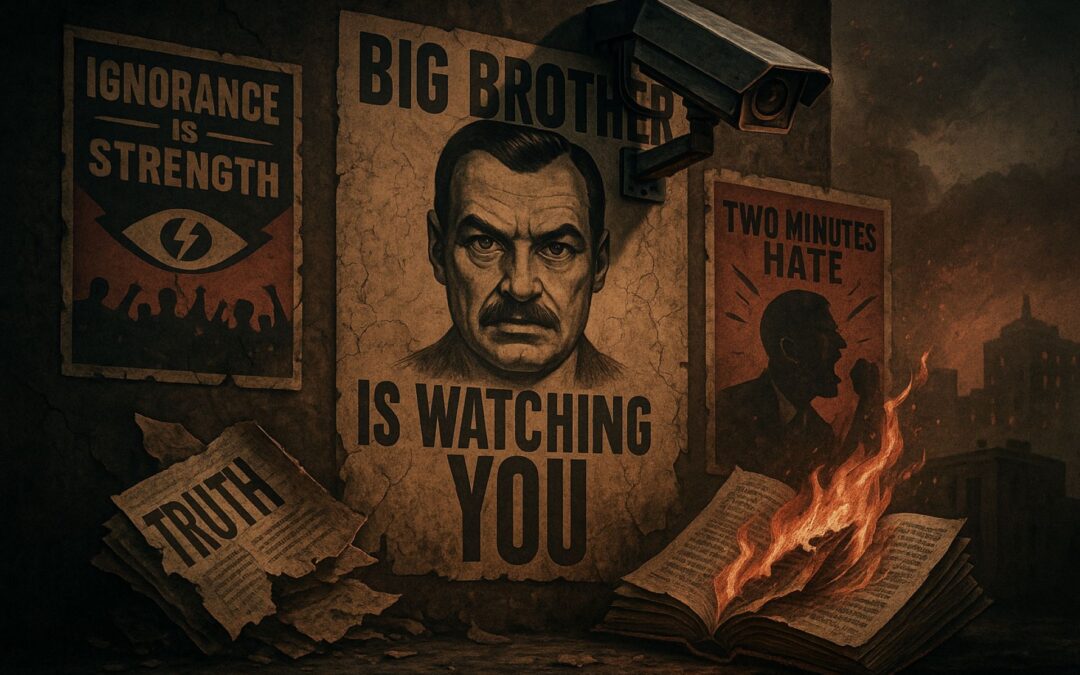
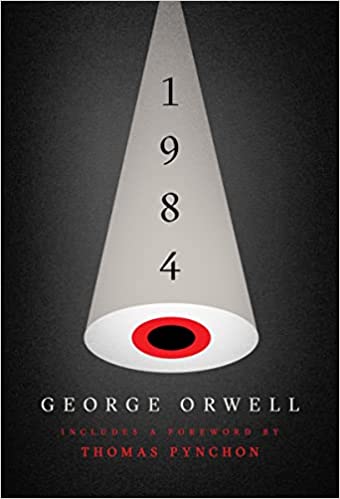
After Donald Trump’s 2016 inauguration, sales of George Orwell’s 1984 skyrocketed by an astonishing 10,000%, thrusting it back to the top of America’s bestseller lists. This surge was no mere coincidence but a reflection of collective anxiety over the state of truth and power in contemporary society. In an era often dubbed “post-truth,” Orwell’s dystopian vision resonates more urgently than ever, reminding us that the battle for reality is ceaseless.
Orwell’s Unwavering Faith in Truth as the Bedrock of Freedom
George Orwell’s 1984 is more than a dystopian narrative; it is a philosophical testament to the indispensable role of truth in sustaining human freedom. Orwell’s conviction was clear: without an objective, shared reality, the very foundations of individuality, justice, and liberty crumble. To him, truth was not merely factual correctness or historical accuracy—it was the essential substrate from which autonomy and moral agency arise.
In Orwell’s conceptual universe, truth is sacred because it anchors people in a reality they can trust and understand. When truth begins to unravel—when governments and institutions manipulate facts to suit their agendas—the individual’s capacity to discern, question, and resist becomes fatally compromised. The danger is not only the suppression of dissent but the eradication of the cognitive framework necessary to conceive of dissent at all.
This erosion of truth happens insidiously, often masked by repetition and the veneer of authority. Orwell observed how lies, when endlessly reiterated by the powers that be, gain legitimacy in the public psyche. The mechanism is psychological as much as political: repetition numbs critical faculties, blurs the lines between fact and fiction, and ultimately conditions acceptance.
Moreover, Orwell saw truth as intimately linked to justice. Without a shared reality, the concepts of right and wrong lose coherence; laws and policies become arbitrary tools wielded at whim rather than standards of fairness. In this way, the manipulation of truth becomes a tyrant’s ultimate weapon—one that strips away the individual’s very capacity for resistance by reshaping their understanding of reality.
Orwell’s personal experiences—his exposure to political propaganda, ideological conflicts, and authoritarian regimes—deepened his understanding of this dynamic. 1984 thus stands as a fierce indictment of any system that subjugates truth to power, a reminder that freedom is not simply the absence of chains but the presence of unvarnished reality.
The Two Minutes Hate: Harnessing Collective Rage as a Tool of Control
One of the most haunting and psychologically acute inventions in 1984 is the Two Minutes Hate, a daily orchestrated ritual designed to manufacture and channel collective animosity. Far from being a mere display of state-sponsored anger, this event is a meticulously engineered emotional blitzkrieg, intended to disrupt individuality and forge a uniform group identity steeped in rage and submission.
During these two minutes, citizens are exposed to propaganda images of the Party’s enemies—Goldstein, Eurasia, Eastasia—and are compelled to unleash a cathartic, almost primal hate. The ritual works on multiple psychological levels. First, it mobilizes raw emotion, a neurological shortcut that temporarily suspends rational thought. Anger floods the brain’s limbic system, diminishing the capacity for critical reflection and fostering an impulsive allegiance to the Party.
Second, the ritual transforms individual feelings into a collective experience. In the throng of hate-filled faces, personal identity dissolves into a shared consciousness. This mass emotional synchronization creates a powerful sense of belonging and purpose, albeit one rooted in fear and hostility rather than genuine community.
Third, the Two Minutes Hate serves as a cyclical reset valve for social tensions. By focusing hatred externally, the Party deflects potential dissent or introspection. The crowd’s frenzy acts as a psychological narcotic—an addictive dose of emotional release that, paradoxically, strengthens their bond to Big Brother and the Party.
This manipulation of collective emotion is not just fictional speculation but grounded in real-world tactics of authoritarian regimes. By turning citizens’ emotions outward against fabricated enemies, governments can fragment society, discourage independent thought, and stoke tribalistic loyalties that eclipse reasoned debate.
In the contemporary context, Orwell’s Two Minutes Hate finds chilling echoes in the media spectacles, viral outrage cycles, and politicized identity battles that dominate public discourse. It underscores how orchestrated rage, once unleashed, can become a potent instrument of social control—binding people not through conviction but through compulsive emotional contagion.
The Spanish Civil War: Orwell’s Crucible of Disillusionment
George Orwell’s experience in the Spanish Civil War was a watershed moment that profoundly shaped his political thought and literary vision. Volunteering to fight against fascism, Orwell entered the conflict fueled by a fierce idealism and a belief in a unified front against tyranny. Upon arriving in Barcelona in late 1936, he found a city brimming with revolutionary zeal and a palpable sense of communal purpose. Class distinctions seemed to dissolve as workers, peasants, and soldiers stood shoulder to shoulder, envisioning a society built on solidarity and egalitarian principles. Orwell described this initial period as a kind of republican utopia—a fleeting glimpse of humanity’s better angels in the midst of chaos.
However, this idealism soon collided with the brutal realities of factionalism and political intrigue. The Republican side was not a monolith but a fractious coalition of communists, socialists, anarchists, and various leftist groups, each fiercely protective of its ideology and power. The Soviet Union’s influence, exerted through Communist Party cadres, added a sinister dimension of control and repression. Orwell witnessed how these communist elements, under the guise of fighting fascism, engaged in ruthless purges and suppression of dissenting factions—including anarchists and Trotskyists—fracturing the very unity needed to resist Franco’s forces.
Orwell himself became a target, branded a “Trotskyite” and enemy of the state by Soviet-backed operatives. His near-fatal wound sustained in battle was overshadowed by the more profound injury to his political faith. The betrayal by supposed comrades and the manipulation of truth through propaganda crystallized for him the insidious capacity of totalitarianism—not just in fascist regimes but also within leftist movements claiming to fight for liberation.
This crucible of disillusionment forged the core themes of 1984. Orwell saw firsthand how ideological purity could be weaponized to justify cruelty and deception, how truth became malleable and subordinate to political expediency. The war’s chaotic mix of idealism and treachery exposed the fragility of freedom in the face of power-hungry factions. It impressed upon Orwell the vital necessity of safeguarding truth and individual conscience against all forms of authoritarian control.
His memoir Homage to Catalonia remains the most vivid and authoritative account of these dynamics, documenting not only the military conflict but the ideological warfare that ravaged the Republican cause. This experience seeded the dystopian vision of 1984, where propaganda, betrayal, and the obliteration of truth serve as instruments to maintain absolute power.
Newspeak and Doublethink: Language as a Weapon of Power
In 1984, Orwell illuminates the sinister relationship between language and power through the inventions of Newspeak and Doublethink—concepts that have since entered the lexicon as warnings about linguistic manipulation. These tools are not designed to enhance communication but to circumscribe thought, controlling not just what people say, but what they are capable of thinking.
Newspeak represents a systematic impoverishment of language. By eliminating synonyms, antonyms, and nuanced words, it reduces the range of expressible ideas. Concepts related to freedom, rebellion, or dissent are deliberately excised or rendered impossible to articulate. This linguistic engineering restricts cognitive horizons; if the words to think rebellious thoughts do not exist, the thoughts themselves become almost inconceivable. Newspeak thus serves as a preemptive strike against rebellion by attacking its very genesis in language.
Doublethink, on the other hand, is the mental discipline required to accept two contradictory beliefs simultaneously and fully believe both. This cognitive dissonance becomes a survival mechanism within the Party’s ideological framework. Citizens are trained to reconcile absurd paradoxes such as “war is peace” and “freedom is slavery,” enabling the Party to continually rewrite history and redefine reality without resistance.
Orwell’s insights were deeply informed by his work at the BBC Eastern Service during World War II, where he witnessed propaganda’s double-edged nature. Although he supported efforts to counter Nazi misinformation, Orwell recognized that even state-sanctioned propaganda involved simplifying complex truths, demonizing enemies, and sometimes manipulating facts. These experiences revealed how language could be co-opted to obscure reality and desensitize the public.
Terms like “collateral damage” exemplify euphemisms that sanitize the horrors of war, making mass suffering palatable or invisible. Similarly, Stalinist Russia’s euphemistic use of “cleansing” or “re-education” masked brutal purges. Orwell extrapolated these realities into the fictional Newspeak, warning that such linguistic distortions undermine not only truth but the very capacity for independent thought.
In today’s polarized societies, battles over language continue with the weaponization of terms like “woke,” “alt-right,” or “fake news.” These labels function less as descriptors and more as tools to divide, polarize, and shape social narratives—real-world echoes of Orwell’s chilling vision. Newspeak and Doublethink remain profoundly relevant, reminding us that control over language is control over reality itself.
Tuberculosis and Isolation: The Shadow of Mortality
George Orwell’s personal battle with tuberculosis (TB) during the 1940s profoundly shaped both the atmosphere and the emotional depth of 1984. At that time, TB was a dreaded disease—highly contagious, often fatal, and surrounded by fear and stigma. Patients were subjected to harsh, regimented treatments that often resembled imprisonment more than healing. Orwell’s experience of illness was marked by isolation, physical deterioration, and a profound loss of autonomy, all of which echo vividly in the novel’s depiction of confinement and control.
In Orwell’s era, TB patients were commonly sent to sanitariums, places of forced quarantine where they were cut off from normal social life. The regime in these institutions was strict: patients were often confined to beds, forbidden from engaging in stimulating activities like reading or writing, and closely monitored by medical staff. Orwell himself described these conditions as torturous, especially for someone of his intellectual temperament. The physical pain was compounded by an emotional and psychological loneliness that stripped away the small freedoms that sustain human dignity.
This sense of solitary suffering is mirrored in Winston Smith’s experience within the Party’s oppressive system. Winston’s deteriorating health, his confinement to a life dominated by surveillance and repression, parallels Orwell’s own bodily decline. The novel’s imagery of bleak rooms, bare walls, and the ever-present watchful eyes resonates with Orwell’s memories of his time in sanitariums—particularly the infamous Room 101, a place symbolizing ultimate psychological torture and isolation.
Moreover, Orwell’s confrontation with mortality imbues 1984 with a raw urgency. Writing from a remote island in Scotland, far removed from family and society and under the shadow of impending death, Orwell poured his fear, vulnerability, and resistance into the narrative. This personal context lends authenticity to Winston’s physical and mental unraveling, making the novel not just a political dystopia but a deeply human story about fragility, resilience, and the longing for connection.
The parallel between Orwell’s real-life isolation and Winston’s fictional entrapment creates a profound emotional undercurrent that intensifies the novel’s bleak vision. It reminds readers that oppression is not only external but internal, affecting body and mind alike. In this way, tuberculosis becomes more than a backdrop—it symbolizes the creeping, inescapable reach of totalitarian control into every aspect of human existence.
Big Brother and the Manufactured Enemy: Fear as a Means of Submission
Big Brother, the omnipresent and inscrutable figurehead of the Party in 1984, embodies absolute authority and surveillance. Yet Orwell intentionally leaves Big Brother’s actual existence ambiguous, transforming him into a symbolic construct rather than a flesh-and-blood leader. This ambiguity is a crucial aspect of his power—it is the idea of Big Brother, the feeling of constant observation and control, that dominates, rather than any individual personality.
Central to Big Brother’s strategy is the creation and manipulation of enemies. The Party maintains a perpetually shifting roster of adversaries—first Eurasia, then Eastasia, and the elusive figure of Goldstein, leader of the so-called Brotherhood resistance. These enemies, whether real or fabricated, serve as focal points for public hatred and fear. This manufactured animosity unites the populace under the Party’s banner and diverts attention from domestic failures or repression.
The function of the enemy is multifaceted. By constantly changing who is “the enemy,” the Party prevents citizens from developing stable allegiances or understanding the truth about geopolitical realities. The fear of external and internal threats justifies intrusive surveillance, violent repression, and the suspension of individual rights. This psychological warfare keeps the population in a state of heightened anxiety and dependency on Big Brother’s protection.
Orwell drew heavily on his own experiences witnessing betrayal and paranoia within authoritarian systems, including the political purges during the Spanish Civil War and Stalinist Russia. He recognized that fabricated enemies and conspiracy narratives were powerful tools for regimes to consolidate power, crush dissent, and enforce conformity.
In 1984, this dynamic plays out through an elaborate psychological mechanism: the population is simultaneously terrified of and loyal to an omnipresent authority that promises security in exchange for submission. The blurring of friend and foe, truth and falsehood, creates a society where trust is impossible, and resistance becomes not just dangerous but cognitively disorienting.
This portrayal is chillingly resonant with many modern political contexts, where shifting enemies, misinformation, and manufactured crises are exploited to rally support, silence critics, and perpetuate power. Orwell’s Big Brother warns of the terrifying efficacy of fear as a tool of submission, showing how it can erode not only freedom but the very capacity to perceive reality clearly.
The Ever-Relevant Defence of Truth
Throughout its multifaceted interpretations, 1984 has remained an enduring bulwark in defense of objective truth. Orwell’s dystopian narrative transcends the specifics of its Cold War context, evolving into a timeless meditation on the fragility of reality under the relentless assault of propaganda and ideological distortion. The novel’s potency lies in its exploration of how truth can be subverted to serve the interests of power, eroding the foundations of democratic society and personal autonomy.
Central to the Party’s control is the concept of doublethink—the ability to accept two contradictory ideas simultaneously. This mental gymnastics enables citizens to internalize blatant falsehoods as facts, such as “war is peace” and “freedom is slavery,” effectively immunizing them against rational critique or rebellion. This systemic cognitive dissonance erodes trust not only in external information but in individual perception itself.
The rise of 1984’s themes in recent decades reflects a disturbing reality: the proliferation of conspiracy theories, misinformation, and media echo chambers that create fragmented realities for different social groups. This phenomenon mirrors Orwell’s nightmare, where truth is no longer a shared reference point but a malleable construct shaped by ideological allegiance. In such an environment, facts become secondary to belief, and objective reality is sacrificed on the altar of tribal loyalty.
Orwell’s 1984 forces readers to confront the consequences of this fragmentation—social polarization, erosion of democratic discourse, and vulnerability to authoritarian manipulation. The novel is a stark reminder that freedom requires a common ground of truth, a shared reality that allows for informed debate, accountability, and justice.
Ultimately, 1984 stands as a rallying cry to defend truth as a non-negotiable pillar of human dignity and societal health. It urges vigilance against the seductive ease with which information can be twisted, distorted, or weaponized, insisting that the preservation of freedom depends on our collective commitment to reality.
A Glimmer of Hope Beyond the Dystopia
Despite the overwhelming bleakness that permeates 1984, Orwell offers a subtle but significant thread of hope woven into the narrative’s fabric. The novel’s appendix on Newspeak, written in the more familiar Oldspeak and in the past tense, provides a rare retrospective glimpse suggesting that the Party’s attempt to annihilate free thought through linguistic control ultimately faltered.
This appendix stands apart from the novel’s grim progression; it is presented as a scholarly treatise from a future era, indicating that Newspeak, and by extension the Party’s dominion over language and cognition, was not an unassailable final victory. The very existence of this document implies the survival of free expression, critical thought, and resistance beyond the regime’s collapse.
This ambiguity opens two divergent interpretations. On one hand, the appendix can be read as a beacon of optimism—that no matter how powerful and pervasive authoritarian control becomes, the human spirit and the complexity of language can outlast and overcome oppression. On the other, it may serve as a somber epitaph, chronicling the Party’s final triumph before eventual decline, reminding readers of the precariousness of freedom.
What remains unequivocal is Orwell’s urgent message: the dystopia of 1984 is not an inevitable destiny but a warning conditional on complacency. The nightmare scenario depends on our acquiescence, ignorance, or passivity. The future of truth, freedom, and human resilience hinges on active engagement, critical awareness, and the courage to challenge distortions of reality.
Thus, while 1984 unsettles and alarms, it also galvanizes. It invites readers to be vigilant custodians of truth and champions of liberty, to recognize that even in the darkest moments, hope is not extinguished—because it ultimately depends on us.
Conclusion
1984 remains an essential mirror reflecting the dangers of unchecked power and the fragility of truth. Orwell’s vision compels us to recognize that freedom is inseparable from the reality we share and defend. In a world where language can be weaponized, history rewritten, and emotions manipulated, the novel’s lessons are more urgent than ever. The fight for truth is not abstract or distant—it is a daily responsibility, demanding vigilance, courage, and critical thought. Ultimately, 1984 is not just a story about dystopia; it is a call to preserve the very essence of our humanity. The future it warns of depends on each of us—our choices, our voices, and our refusal to let falsehood prevail.