
Books are compressed lifetimes. Inside them lie decades of trial, error, and revelation—distilled into pages that can shift how we think, live, and work. But with so many titles clamoring for attention, where do you start? This collection offers a shortcut: twenty-two books that have left indelible marks on countless readers, each carrying a lesson strong enough to reshape your worldview.
From the brutal honesty of David Goggins to the quiet reflections of Marcus Aurelius, from Esther Perel’s reimagining of love to Oliver Burkeman’s sobering take on time, these works cover creativity, resilience, relationships, philosophy, productivity, and the search for meaning. They are not bound by genre—they are bound by impact. Each summary here is more than a teaser; it is a spark, meant to light the fire of curiosity.
If you’ve been waiting for the right book to shift your trajectory, you may find it in the pages that follow.
Big Magic by Elizabeth Gilbert
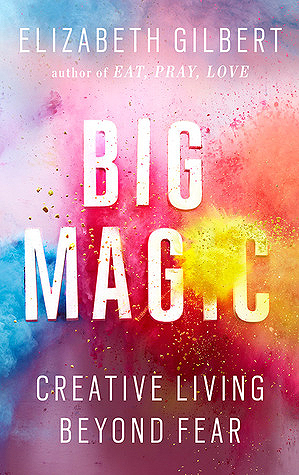
Elizabeth Gilbert’s Big Magic is a manifesto for anyone who has ever wanted to create but felt paralyzed by fear. She begins with a simple observation: the reason most people don’t pursue creative work is not because they lack ideas, talent, or opportunity. It’s because they’re terrified. Terrified of being unoriginal. Terrified of failure. Terrified that their work won’t matter to anyone else.
Gilbert insists that these fears are not abnormal—they are universal. Every creative person, from the amateur painter to the bestselling novelist, feels them. The difference is that some allow fear to decide for them, while others learn to live with fear as a permanent passenger. The point is not to eradicate it but to move forward despite it. Courage, in her framing, is not the absence of fear but the willingness to carry it with you while still making.
She encourages a radical shift in perspective: outcomes don’t matter as much as we think. Whether your book is adored or ignored, whether your art sells or collects dust, those judgments are not your responsibility. Your only task is to create—faithfully, consistently, and with as much integrity as you can muster. The audience’s role is to decide if they like it or not. Confusing the two is where paralysis begins.
One of her most liberating points is that inspiration rarely arrives when it’s convenient. It shows up uninvited, often when you are busy with ordinary life. The creative life, then, is about saying yes when the muse taps on your shoulder, even if the timing feels absurd. Waiting for the perfect plan, the perfect schedule, or the perfect opportunity is another disguise for procrastination. The right moment is never coming.
Gilbert’s philosophy reframes creativity from a torturous burden into a joyful collaboration. Ideas, she suggests, are almost alive—seeking human partners to bring them into the world. If you don’t answer their call, they move on to someone else. This perspective transforms art-making from a lonely struggle into an invitation to play. By saying yes, you accept the mess, the uncertainty, and the terror—but you also claim the exhilaration of living a creative life.
For anyone who’s been waiting for permission to start a project—a novel, a podcast, a painting—Big Magic tears up the permission slip. You don’t need approval. You don’t need certainty. You only need to begin.
Shoe Dog by Phil Knight
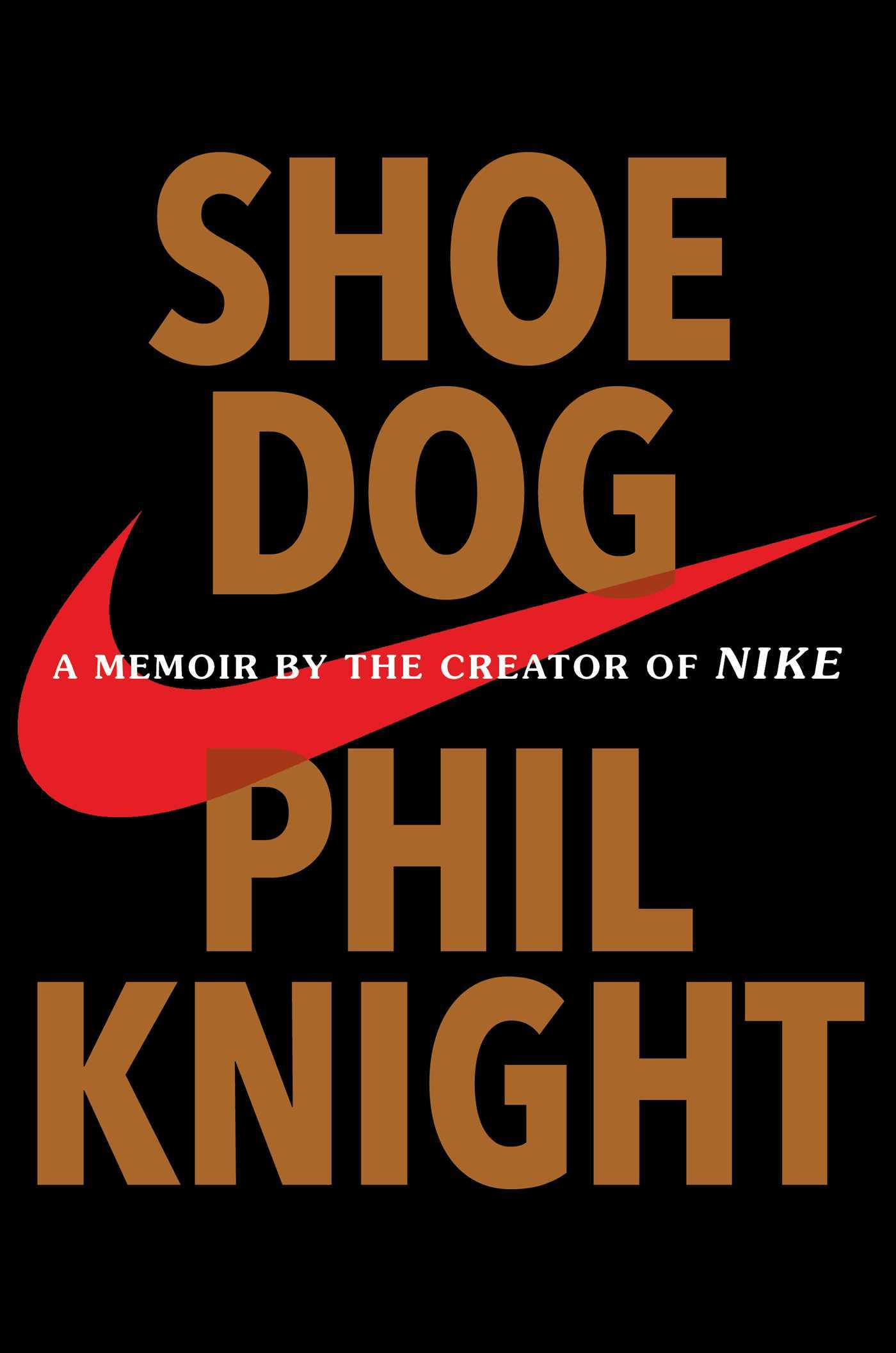
Phil Knight’s memoir Shoe Dog strips away the glossy narrative we often attach to billion-dollar companies. Today, Nike is synonymous with dominance, but its beginnings were fragile, chaotic, and dangerously unstable. Knight paints a picture of a company built not on certainty but on improvisation and sheer will.
In the early years, Nike (then called Blue Ribbon Sports) was constantly on the edge of collapse. Sales were growing, but cash flow lagged behind. Every year felt like a cliffhanger—millions of shoes sold, yet no money in the bank. Knight recalls begging banks for loans, negotiating with creditors, and dodging lawsuits that threatened to swallow the business whole. He even worked as an accounting professor on the side, funneling his salary into the company just to keep it afloat.
One of the most striking aspects of Shoe Dog is how vividly Knight describes the unpredictability of entrepreneurship. It wasn’t a story of steady progress or a polished strategy executed flawlessly. It was firefighting, surviving crises, and staying one step ahead of disaster. For more than a decade, Nike’s future could have gone either way.
Knight emphasizes that hard work, determination, and intelligence are crucial, but they aren’t enough on their own. The company’s survival often hinged on chance encounters, unexpected breaks, or strokes of luck. He admits that without a little fortune tipping the scales, Nike might never have made it. This honesty is refreshing in a genre often dominated by tidy formulas for success.
Another key theme is the importance of people. Knight repeatedly highlights the role of his team—the eccentric, passionate, sometimes volatile individuals who believed in the vision. Their commitment carried the company through years when logic suggested giving up. Shoe Dog shows that building something lasting is less about genius ideas and more about surrounding yourself with people willing to suffer alongside you for a dream.
The lesson from Knight’s journey is sobering: success is rarely smooth, linear, or predictable. It’s messy, exhausting, and often humiliating. What separates those who endure is not brilliance alone but the refusal to quit when everything seems to fall apart. Nike was born in chaos, raised in uncertainty, and ultimately forged by resilience.
Can’t Hurt Me by David Goggins

David Goggins’s Can’t Hurt Me is less a memoir and more a gauntlet thrown at the reader’s feet. His story begins at rock bottom: overweight, depressed, and working a dead-end job exterminating cockroaches. He was far from the image of a warrior. Yet, through an almost sadistic level of discipline, he transformed himself into a Navy SEAL, ultramarathoner, and an icon of human endurance.
The foundation of his philosophy is the mind’s capacity to lie. Goggins discovered that the voice that screams “I’m done” is not a signal of true exhaustion but a protective mechanism. In his reckoning, when your body feels broken and your willpower depleted, you’ve only used about 40% of your potential. That remaining 60% is locked behind a wall of mental resistance. His “40% Rule” is the essence of his transformation, and it reshaped his approach to every challenge.
He didn’t come to these realizations through comfort but through suffering. He endured SEAL training, not once but multiple times after injuries forced him to start over. He ran 100-mile ultramarathons on fractured feet. He became the only man to complete SEAL training, Army Ranger School, and Air Force Tactical Controller training. Each achievement was less about physical ability and more about shattering the illusions of limitation.
What makes Can’t Hurt Me stand apart from typical motivational books is that Goggins doesn’t pretend to be exceptional by nature. He wasn’t gifted; he was broken. He had a learning disability, grew up in an abusive household, and was terrified of water—hardly the profile of a Navy SEAL. His greatness was carved out through pain, through callousing his mind in the same way one callouses skin against friction.
To hammer the message home, the book doesn’t just tell stories—it issues challenges. Each chapter ends with an assignment designed to push readers beyond their comfort zones. Goggins doesn’t want passive admiration; he wants transformation. He dares you to harden yourself against excuses, to confront the lies of your mind, and to test the 40% rule in your own life. It’s not inspirational fluff—it’s a brutal call to arms against mediocrity.
Mating in Captivity by Esther Perel

Esther Perel’s Mating in Captivity begins with a provocative question: why do couples who love each other deeply so often lose their sexual spark? For decades, relationship advice has promised that intimacy and passion naturally go hand in hand. Perel dismantles this assumption, arguing that love and desire are not the same force but competing ones.
Love thrives on safety, predictability, and stability. Desire, by contrast, feeds on novelty, risk, and mystery. When couples prioritize closeness and familiarity above all else, they inadvertently smother the very conditions that sustain eroticism. The paradox is striking: the very intimacy that nurtures love often extinguishes passion.
Perel urges couples to rethink how they approach long-term relationships. Passion doesn’t disappear because something is wrong; it disappears because we forget to cultivate distance. Too often, we treat our partner like a known quantity, assuming there is nothing left to discover. But desire requires curiosity, the sense that the person beside you remains partly unknowable.
She illustrates this with vivid examples from her therapy practice. Couples who complain of boredom or lack of sex often cling too tightly, confusing love’s comfort with passion’s fire. Her advice isn’t to abandon intimacy but to balance it with space. Couples who reignite their desire are those who allow each other room to breathe, to maintain individuality, and to remain surprising.
The core message is liberating: relationships don’t collapse because passion fades; they collapse because couples fail to nurture the mystery that desire craves. Passion is not about endlessly discovering something new but about choosing to remain curious about what we think we already know. By reframing relationships as stories still being written rather than solved equations, Perel shows how love and desire can coexist, not as opposites but as complementary forces.
The Courage to Be Disliked by Ichiro Kishimi and Fumitake Koga
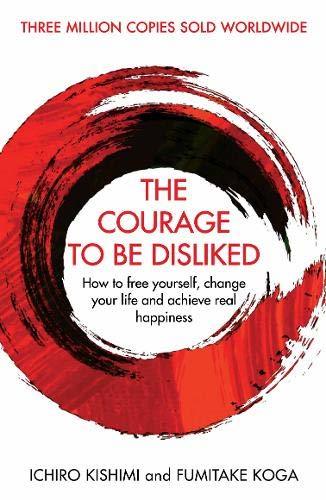
The Courage to Be Disliked is built on a deceptively simple but profoundly unsettling premise: your past does not define you. The book takes the form of a dialogue between a frustrated young man and a calm philosopher, echoing the Socratic tradition. The student insists that life is unfair, that trauma and circumstances lock people into patterns they cannot escape. The philosopher, drawing on the psychology of Alfred Adler, pushes back with a radical claim: our suffering stems not from the past itself but from the interpretations we continue to attach to it.
Adler’s perspective is empowering, but also uncomfortable, because it removes excuses. Anxiety, for example, is not an unavoidable inheritance from childhood. It is a choice—conscious or unconscious—to protect oneself from rejection, failure, or responsibility. In Adlerian thought, people often cling to limitations because those limitations shield them from risk. To step into freedom is terrifying, because it means accepting responsibility for one’s own life rather than blaming fate, parents, or circumstance.
A key practice in the book is the “separation of tasks.” Too often, people carry burdens that are not truly theirs, living under the pressure of making their parents proud, managing a partner’s reactions, or keeping everyone around them happy. The philosopher argues that the only task you are responsible for is your own—living according to your values. Others’ responses belong to them. By disentangling these tasks, you free yourself from the suffocating need to please.
The book’s title captures its essence. Having the courage to be disliked doesn’t mean becoming indifferent, arrogant, or cruel. It means relinquishing the fantasy of universal approval. The truth is that living authentically will inevitably draw criticism, because not everyone will agree with your values or your choices. The freedom lies in realizing that disapproval does not diminish your worth. To embrace this is to choose growth over popularity, integrity over compromise.
Meditations by Marcus Aurelius
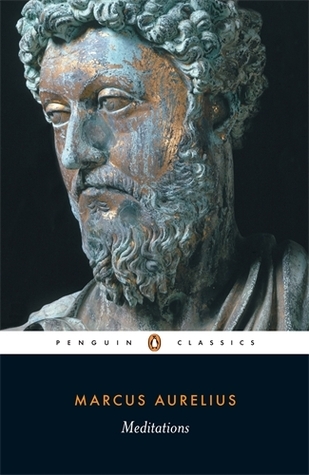
Marcus Aurelius’s Meditations is one of the most remarkable works in history—not because an emperor wrote it, but because it was never meant for anyone else to read. These private journals, scratched out during campaigns and crises, reveal the struggles of a man who ruled one of the largest empires the world has ever seen, yet still wrestled with grief, betrayal, illness, and anxiety.
At its heart, Meditations is a manual for self-mastery. Marcus constantly reminds himself to focus on what is within his control—his thoughts, actions, and judgments—and to release what is not. He warns against rage, self-pity, and the illusion of permanence. External events—wars, plagues, political treachery—could not be dictated, but his response to them could. He grounds himself in the discipline of the Stoics, urging patience, humility, and perspective.
The book is striking for its humility. Marcus Aurelius was the most powerful man in the world, yet his writings expose vulnerability rather than triumphalism. He chastises himself for lapses in virtue, reminds himself not to be distracted by vanity, and prays to remain calm under insult. Far from grandiose, his words are startlingly relatable, as if he were an ordinary man reminding himself not to lose his temper in traffic.
Two millennia later, the lessons remain piercingly relevant. Life is unpredictable and often brutal, but peace comes not from bending events to our will, but from bending ourselves to meet them with steadiness. The emperor’s wisdom is a reminder that no title, no power, no achievement can protect us from human struggle. What matters is cultivating an inner citadel strong enough to withstand whatever storms rage outside.
Principles by Ray Dalio
Ray Dalio’s Principles is both a personal memoir and an operating system for decision-making. After decades of trial and error, he distilled his successes and failures into a set of guiding principles that shaped not only his life but also Bridgewater Associates, the world’s largest hedge fund. The book is not about luck or genius. It is about building a system that allows you to make consistently better decisions over time.
Dalio argues that life is a stream of problems, and each problem is an opportunity to extract a principle. When you succeed, write down why. When you fail, study the cause and turn it into a principle to prevent repetition. Over decades, this practice builds an arsenal of hard-won wisdom. He insists on distinguishing principles from rules: rules are rigid and blind, while principles adapt to context. A rule might say “Never take risks.” A principle would say, “Take calculated risks while balancing potential upside with potential downside.” The latter requires reflection and judgment.
His process follows a repeatable cycle. First, identify what you want. Second, confront the obstacles in the way. Third, design a plan to get around them. Fourth, execute relentlessly. Fifth—and most critically—reflect and refine. The final step is where growth happens, as you codify new principles that strengthen your foundation. Most people stumble here, Dalio warns, because they repeat mistakes without extracting the lesson.
One of his most controversial ideas is “radical transparency.” At Bridgewater, every meeting was recorded. Employees were encouraged to critique even the CEO. Feedback was constant, unvarnished, and often brutal. To outsiders, it seemed harsh; to Dalio, it was liberating. Transparency eliminated politics, hierarchy, and dishonesty, allowing truth to rise above ego. That culture, abrasive as it was, helped create a $150 billion company.
But Dalio’s larger message is that you cannot live on borrowed principles. His worked for him because they came from his experiences. Yours must come from yours. Extract your own lessons. Write your own operating system. Life will never stop presenting problems, but if you turn each one into a principle, you ensure that every stumble becomes a stepping stone.
The Burnout Society by Byung-Chul Han

Byung-Chul Han’s The Burnout Society is a piercing critique of modern culture. In earlier centuries, society was organized around discipline: obey rules, follow authority, stay in line. Freedom, when it came, was a rebellion against this rigid order. Today, however, the chains are invisible. We live in an age of achievement, where no one forces us to work endlessly—we force ourselves.
Han argues that modern individuals have internalized the demands of productivity. The old oppressor has vanished, replaced by the voice in our own heads whispering “do more, achieve more, be more.” Social media, self-improvement culture, and hustle ideology all amplify this compulsion. The result is paradoxical: we appear free, yet we are enslaved to our own drive for perfection.
This relentless striving breeds exhaustion. Anxiety, depression, and burnout are not personal failings, Han suggests, but symptoms of a society addicted to achievement. In a culture where everyone must be a winner, failure becomes intolerable and rest feels like guilt. The human being is transformed into a “self-exploiting subject”—a worker who whips themselves harder than any external master ever could.
The remedy, Han provocatively claims, is not relaxation but boredom. True freedom arises when we allow ourselves to disconnect, to linger in silence, to embrace monotony. Boredom creates the mental space for reflection and renewal. In contrast, filling every idle moment with productivity or distraction only deepens the cycle of fatigue.
What makes The Burnout Society powerful is its recognition that the enemy is not external oppression but internalized compulsion. We are both prisoner and jailer. To break free, we must question the very value system that equates worth with output. Han invites us to reclaim the forgotten art of stillness, to resist by doing nothing, and to rediscover life outside the race for constant achievement.
The Course of Love by Alain de Botton

Alain de Botton’s The Course of Love is not a fairytale but a reality check about what it means to remain in love once the initial spark fades. Most love stories end at the beginning—when the couple confesses their affection, gets married, or finally finds happiness together. De Botton’s novel begins where those stories stop. It follows Rabih and Kirsten, two ordinary people whose romance unfolds not in grand gestures but in the everyday negotiations of a long-term relationship.
In the early stages, their love feels effortless. They fall hard and fast, intoxicated by the magic of discovery. But as the years pass, routine settles in. They marry, buy a home, raise children, and the enchantment wanes. Intimacy morphs into familiarity, and familiarity breeds not comfort but dullness. Small irritations pile up, conversations lose their sparkle, and sex becomes predictable. This, de Botton insists, is not failure—it is the natural course of love.
When Rabih eventually cheats, it is not out of lust or betrayal but from desperation to feel alive again. Kirsten is devastated but doesn’t walk away. Instead, the couple turns to therapy, confronting the disillusionment that so many relationships encounter but few speak about openly. Through painful honesty, they begin to rebuild, discovering that true love is less about passion and more about endurance. It is not about perpetual bliss but about choosing, repeatedly, to remain when leaving might seem easier.
De Botton reframes love as an education. A relationship is not a static state of being but a lifelong curriculum in patience, forgiveness, and resilience. The real achievement is not finding someone who never disappoints, but building a bond strong enough to withstand disappointment. Happily ever after, he suggests, is a dangerous illusion. Real love is choosing again and again, even when it hurts, even when the magic is gone, even when you must re-invent desire from scratch.
The Trial by Franz Kafka
Franz Kafka’s The Trial is a chilling portrait of what it feels like to be trapped in a system you cannot understand or escape. The protagonist, Joseph K., wakes one morning to find himself accused of an unnamed crime. He is arrested, interrogated, and thrust into a legal labyrinth where no one will tell him what he did wrong. Instead of clarity, every encounter only deepens his confusion.
The genius of Kafka’s work is that the story is not about guilt or innocence but about the absurdity of bureaucracy itself. Joseph K. scrambles to navigate the system—meeting officials, seeking answers, trying to argue his case—but every step leaves him more entangled. Logic collapses under the weight of contradictory rules and faceless authority. His struggle is not against one corrupt person but against an entire machine, vast and indifferent.
This nightmare feels familiar because it mirrors real life. We all experience the Kafkaesque when trapped in endless paperwork, phone menus, or institutional indifference. Waiting hours at the DMV, being bounced from department to department, or trying to correct a clerical error that no one takes responsibility for—these are modern echoes of Joseph K.’s plight. Kafka’s vision resonates because it reflects how easily human beings can be reduced to pawns in systems too large to comprehend.
The word Kafkaesque has since entered our vocabulary to describe these moments of suffocating absurdity. What makes the novel so unsettling is its lack of resolution. Joseph K. never learns what crime he is accused of, and he never escapes. The story ends as it begins—in confusion. Kafka’s point is stark: in modern society, systems often dictate our lives more than individual choices. And when faced with those systems, we are often powerless, trapped in a maze without an exit.
Transcend by Scott Barry Kaufman
Scott Barry Kaufman’s Transcend is both a revival and a reinvention of Abraham Maslow’s classic theory of human motivation. Most people know Maslow through the famous “hierarchy of needs” pyramid, but Kaufman points out that Maslow never drew that pyramid at all. The rigid structure we learned in school—survival at the bottom, self-actualization at the top—was a misinterpretation that oversimplified Maslow’s ideas.
Kaufman reframes needs not as a ladder to be climbed step by step, but as nutrients to be balanced, like vitamins. You don’t outgrow your basic needs once you’ve “moved up.” Instead, safety, belonging, esteem, exploration, love, and purpose are always present, but in different proportions at different times. A secure home may matter more one year; creative fulfillment may matter more the next. Growth doesn’t come from checking boxes sequentially but from finding harmony between competing needs.
To illustrate this, Kaufman offers a new metaphor: the sailboat. The hull represents security needs—safety, stability, and connection. The sail represents growth needs—exploration, creativity, and transcendence. A hole in the hull makes sailing precarious, but even with cracks, the boat can still catch wind. In the same way, you don’t need to have perfect conditions to pursue higher growth. Even amid struggle, you can experience moments of transcendence and meaning.
Perhaps the most profound element of Transcend is its focus on self-transcendence rather than self-actualization. Maslow himself emphasized this late in his career, but it was overlooked in popular culture. True fulfillment, Kaufman argues, comes not from obsessing over personal achievement but from dissolving the ego—feeling connected to something larger than yourself. That might be nature, art, community, or spirituality. These “peak experiences” remind us that growth is not about the self alone but about integration with the wider world.
In the end, Kaufman invites readers to stop obsessing over reaching a mythical “top” of the pyramid. The goal is not arrival but wholeness—becoming a complete, integrated human being who sails forward with both stability and aspiration, embracing both the light and the shadow of existence.
Crime and Punishment by Fyodor Dostoevsky
Fyodor Dostoevsky’s Crime and Punishment is not just a novel about murder—it is an x-ray of the human conscience. The story follows Raskolnikov, a young, impoverished student in St. Petersburg who believes that extraordinary people—like Napoleon—are above morality. He convinces himself that some lives matter more than others, and that if a man of genius breaks the law for a greater good, it is not really a crime.
To test his theory, he kills an old pawnbroker, a woman he regards as greedy and parasitic. But the moment the act is done, his intellectual justification crumbles. The murder does not liberate him; it destroys him. Guilt, paranoia, and self-loathing consume him. He isolates himself, lashes out, and spirals into mental torment. The brilliance of Dostoevsky is that the punishment begins not with the law but with Raskolnikov’s own conscience.
The novel is a meditation on the seduction of dangerous ideas. Raskolnikov’s reasoning—that some people are “great” and can operate outside morality—is disturbingly relatable. Many of us flirt with similar thoughts in smaller ways: “The rules don’t really apply to me,” or, “The ends justify the means.” Dostoevsky shows how this line of thinking, when followed to its logical conclusion, can lead to corruption, cruelty, and tragedy. Evil doesn’t always begin with monsters; it often begins with ordinary minds seduced by seemingly rational thoughts.
What elevates Crime and Punishment beyond philosophy is Dostoevsky’s exploration of redemption. Amid the torment, Raskolnikov encounters Sonia, a humble prostitute whose faith and compassion offer him a path toward grace. Through suffering, humility, and the acceptance of guilt, Raskolnikov begins to rediscover his humanity. The novel suggests that no matter how far one strays, redemption remains possible—but only by facing truth, not escaping it.
Dostoevsky forces the reader to wrestle with timeless questions: Are morality and justice universal, or are they merely social constructs? What does it mean to be guilty? And can redemption ever erase wrongdoing? The novel’s endurance lies in its refusal to offer easy answers—only the unsettling mirror of our own potential for both corruption and renewal.
Flow by Mihaly Csikszentmihalyi

Mihaly Csikszentmihalyi’s Flow is a cornerstone of positive psychology and a profound exploration of what makes life truly worth living. Through decades of research, Csikszentmihalyi interviewed artists, athletes, musicians, surgeons, and even factory workers to uncover the conditions that made them feel most alive. What he found was not wealth, status, or even love—it was a state of total absorption in an activity, where time distorts, the ego dissolves, and the act itself becomes the reward. He called this state “flow.”
Flow is not random. It requires three key conditions: clear goals, immediate feedback, and a balance between challenge and skill. Too easy, and boredom creeps in. Too hard, and anxiety takes over. But when the task stretches you just enough to test your abilities without breaking them, something magical happens. You slip into a rhythm where thought and action merge seamlessly. Athletes call it “the zone.” Musicians call it “the pocket.” Gamers call it “just one more level.”
Csikszentmihalyi’s insight is that flow is not merely pleasurable—it is essential. People who regularly experience flow report the highest levels of happiness and life satisfaction, more than lottery winners or vacationers. Happiness isn’t found in leisure or idleness, but in active engagement. Struggle, when it hits the sweet spot, becomes joy.
Even more powerful is the realization that flow can be designed into your life. Work tasks can be reframed with clear goals and feedback loops. Hobbies can be chosen to stretch your skills instead of numbing your mind. Even mundane activities—cooking, gardening, exercising—can be transformed into opportunities for flow if approached with intention. Csikszentmihalyi reveals that happiness is not something to be chased, but something that emerges when we lose ourselves in meaningful challenges.
At its core, Flow teaches that the best moments in life are not passive or effortless. They are the ones where we are stretched to our limits, immersed so deeply in the present that we forget ourselves entirely. Fulfillment, paradoxically, comes not from escaping effort but from embracing it fully.
Bird by Bird by Anne Lamott
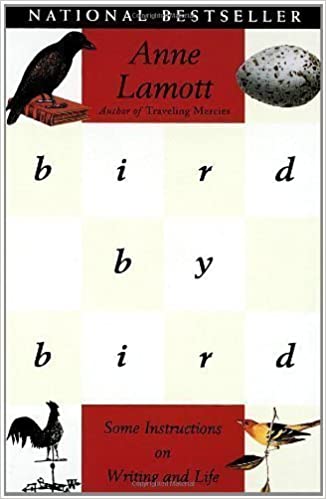
Anne Lamott’s Bird by Bird is often described as a book about writing, but it is more accurately a book about how to face the chaos of doing hard, creative work. It is witty, irreverent, and brutally honest about the messiness of the creative process. Lamott strips away the romanticized notions of art and insists that creation begins with disaster—with what she famously calls the “shitty first draft.”
The concept is liberating. We are conditioned to believe that great work emerges fully formed from the minds of geniuses. Lamott dismantles this myth, reminding us that masterpieces are almost always the product of repeated failure, revision, and patience. The messy first draft is not a flaw in the process—it is the process. Expecting brilliance too soon leads only to paralysis. Allowing yourself to write badly, on the other hand, opens the door to discovery.
Lamott also emphasizes the importance of narrowing your focus. The book’s title comes from her father’s advice to her younger brother, who once panicked over a massive school report on birds. “Bird by bird, buddy,” her father said. “Just take it bird by bird.” The metaphor extends to creative work and life itself. Overwhelm disappears when we break daunting tasks into small, manageable steps.
Beyond writing, Lamott addresses the deeper anxieties of self-doubt, comparison, and perfectionism that plague all creators. She urges readers to lean into vulnerability, to laugh at their own failures, and to keep showing up even when the work feels unbearable. Creativity, she insists, is not about achieving perfection but about persisting long enough for something beautiful to emerge from the rubble.
Ultimately, Bird by Bird is less a technical manual and more a spiritual companion for anyone who struggles with beginnings, setbacks, or the weight of their own expectations. It teaches that grace is found not in flawless execution but in persistence, humility, and the willingness to create in the face of imperfection.
The Happiness Hypothesis by Jonathan Haidt
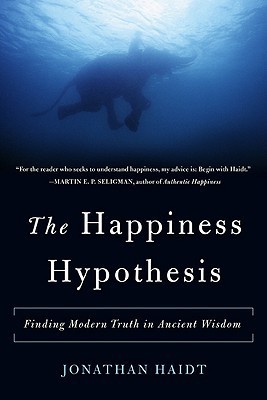
Jonathan Haidt’s The Happiness Hypothesis is a marriage between ancient wisdom and modern science. Haidt begins with a question: what if the answers to happiness have been with us for thousands of years, whispered by philosophers and spiritual teachers, only waiting for empirical validation? His book takes ideas from the Buddha, Confucius, Plato, and the Stoics, and tests them through the lens of psychology and neuroscience. What emerges is a striking realization—most of their insights hold up remarkably well.
One of the most powerful lessons comes from Buddhism: attachment breeds suffering. Haidt shows how modern studies on “hedonic adaptation” confirm this truth. People adapt quickly to positive changes—new jobs, new houses, even lottery wins—and soon crave more. Clinging to outcomes only traps us in cycles of dissatisfaction. The Stoics taught a similar lesson with negative visualization: by imagining loss, they practiced gratitude for what remained. Modern research now proves that anticipating setbacks increases appreciation in the present.
Haidt also introduces one of the book’s most enduring metaphors: the rider and the elephant. The rider represents reason, the logical planner making strategies for life. The elephant represents emotion—massive, instinctual, often impossible to control. The rider may tug on the reins, but if the elephant decides to bolt, logic is powerless. Happiness, therefore, depends not on dominating the elephant but on training it, aligning emotion and reason rather than letting them battle endlessly.
The book doesn’t stop at affirming ancient ideas; it updates them. Practices such as meditation, cognitive behavioral therapy, and even pharmacology become tools for training the elephant, bringing science into partnership with philosophy. Haidt argues that the key to happiness is not eradicating emotion but harmonizing it with reason. The happiest people are those who have cultivated habits that make the elephant want to walk the same path the rider intends.
What makes The Happiness Hypothesis compelling is its humility. It doesn’t promise eternal bliss but a set of practical, time-tested strategies for living well. By blending wisdom across centuries, Haidt shows that happiness is not an unsolved mystery. It is a skill, grounded in ancient truths and sharpened by modern science.
The Stranger by Albert Camus
Albert Camus’s The Stranger is a stark exploration of alienation and the absurdity of life. At its center is Meursault, an ordinary man whose indifference to societal norms sets him apart. When his mother dies, he doesn’t cry. He doesn’t perform grief, doesn’t pretend to feel what he does not. Days later, he is swimming, laughing, and making love, as if nothing has changed. To society, his apathy is monstrous.
The real rupture comes when Meursault commits an inexplicable act of violence—shooting a man on a beach, almost casually. His subsequent trial is less about the murder and more about his character. The court obsesses over the fact that he didn’t weep at his mother’s funeral, that he failed to show the emotions expected of him. His honesty—his refusal to fake feelings—becomes his greatest crime. He is condemned not for the bullet but for his authenticity.
Camus uses Meursault to embody his philosophy of the absurd. Life, he argues, has no inherent meaning. Humans endlessly construct narratives—religion, morality, tradition—to mask this void. But when someone refuses to play along, when they strip away the pretenses, society recoils. Meursault’s fate reflects the cost of refusing to live a lie. His punishment is as much existential as it is judicial.
Yet, in his final moments, Meursault finds freedom. He accepts the absurdity of life and embraces it. Facing execution, he feels at peace, recognizing that meaninglessness is not despair but liberation. By refusing to impose false significance on existence, he experiences clarity: life is what it is, and that alone is enough.
The Stranger endures because it speaks to anyone who has felt out of place in a world obsessed with conventions and appearances. It forces us to confront uncomfortable questions: How much of our behavior is genuine, and how much is performance for others? And if we were to live with total honesty, could we bear the cost?
The Evolving Self by Robert Kegan

Robert Kegan’s The Evolving Self turns the traditional idea of adulthood upside down. We often imagine that once we reach adulthood, our development is complete—that the mind is fully formed and all that remains is the accumulation of knowledge. Kegan argues otherwise. Human growth doesn’t end with adolescence; it continues throughout life, unfolding in distinct stages that fundamentally reshape how we interpret the world.
At the earliest stage, we are ruled entirely by impulses. A child doesn’t pause to reflect; desire and action are inseparable. The next stage brings awareness of others’ minds, enabling negotiation and manipulation. Here, the child realizes that people have perspectives, but those perspectives are simply obstacles or tools to be used for one’s own ends. In adolescence and early adulthood, most of us enter a stage where our identity becomes bound up with relationships and roles. We see ourselves through the eyes of others—son, daughter, employee, friend. Our self is defined by belonging.
But Kegan explains that true maturity begins only when we learn to author our own values. At this stage, the individual can separate from external expectations and build an internal compass. Morality, identity, and purpose no longer depend on family or culture but on self-authored principles. Yet there is an even rarer stage: the realization that even this self-authored identity is only one possible construction. People who reach this point can juggle multiple perspectives at once, holding contradictions without losing coherence.
Most adults, Kegan warns, remain stuck in stage three—the stage of defining oneself by external approval. This is why midlife crises occur: people wake up one day to realize they have lived lives designed by others’ expectations. Transitioning to higher stages is painful, like dismantling the very software that has guided your mind. It is, Kegan says, like performing surgery on yourself while still awake. But this transformation is necessary for true freedom.
By mapping these stages, The Evolving Self offers a profound framework for understanding personal and social conflict. Parents locked in stage three may never understand children striving for self-authorship. Leaders trapped in the need for approval may never achieve authentic vision. Kegan’s work reveals that growth isn’t about what we know but about evolving the very structures of our knowing.
Four Thousand Weeks by Oliver Burkeman
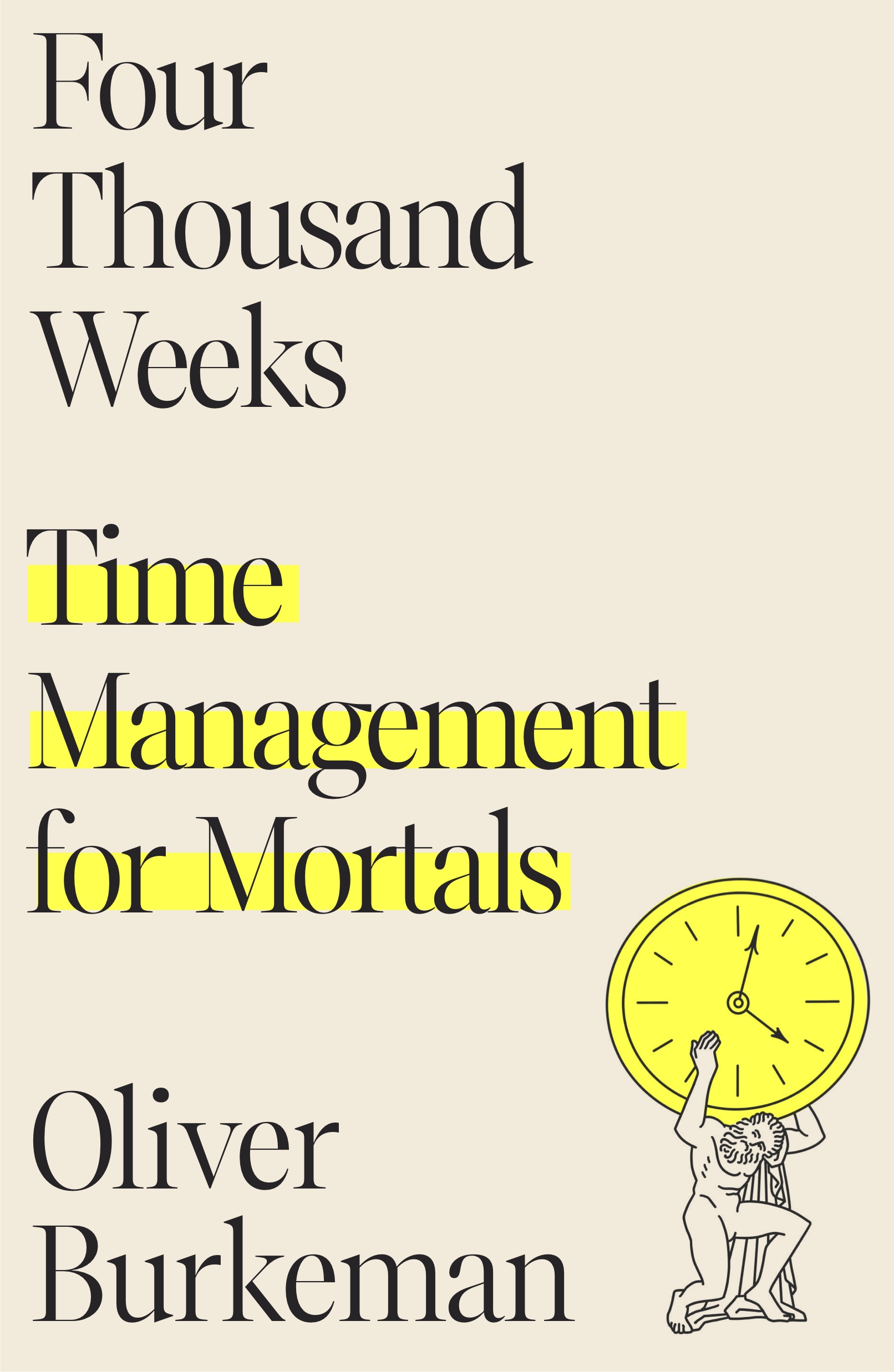
Oliver Burkeman’s Four Thousand Weeks confronts us with a blunt calculation: if you live to eighty, your life consists of about four thousand weeks. That’s it. The brevity of this number forces a confrontation with how we use time. Productivity gurus often sell the illusion that if you manage your time well enough, you can fit everything in. Burkeman argues the opposite—you will never fit everything in, and accepting this fact is the first step toward meaning.
Burkeman himself once fell into the trap of “clearing the decks.” He delayed meaningful projects—like writing—because he wanted to first eliminate the small, nagging tasks. Answer emails, run errands, tidy the desk, then, at last, focus on the big work. But the decks never clear. There is always another small task waiting. His revelation was that procrastination wasn’t laziness; it was fear. Fear of confronting the discomfort of important work, fear of imperfection, fear of facing the reality that time is finite.
The book dismantles the fantasy of total control over time. We cannot master it; we can only choose how to invest it. Burkeman suggests that true productivity is not about efficiency but about prioritization. To live well, you must let go of countless possibilities. Every yes is also a thousand silent no’s. The tragedy of life is not that it ends, but that so much of what could have been will remain undone.
Instead of resisting this limitation, Burkeman urges us to embrace it. He reframes finitude as freedom. If you cannot do everything, then you are free to focus on what matters most. A meaningful life is not one of endless accomplishments but one of deliberate choices. In this light, four thousand weeks is not a cruel limit but a gift. The scarcity of time is what makes each week precious.
Four Thousand Weeks is not another time-management hack—it is a meditation on mortality and meaning. It tells us that the only sane response to life’s brevity is not to sprint faster but to slow down, to stop pretending we can win against time, and to devote ourselves to what truly matters before the weeks run out.
The Pathless Path by Paul Millerd
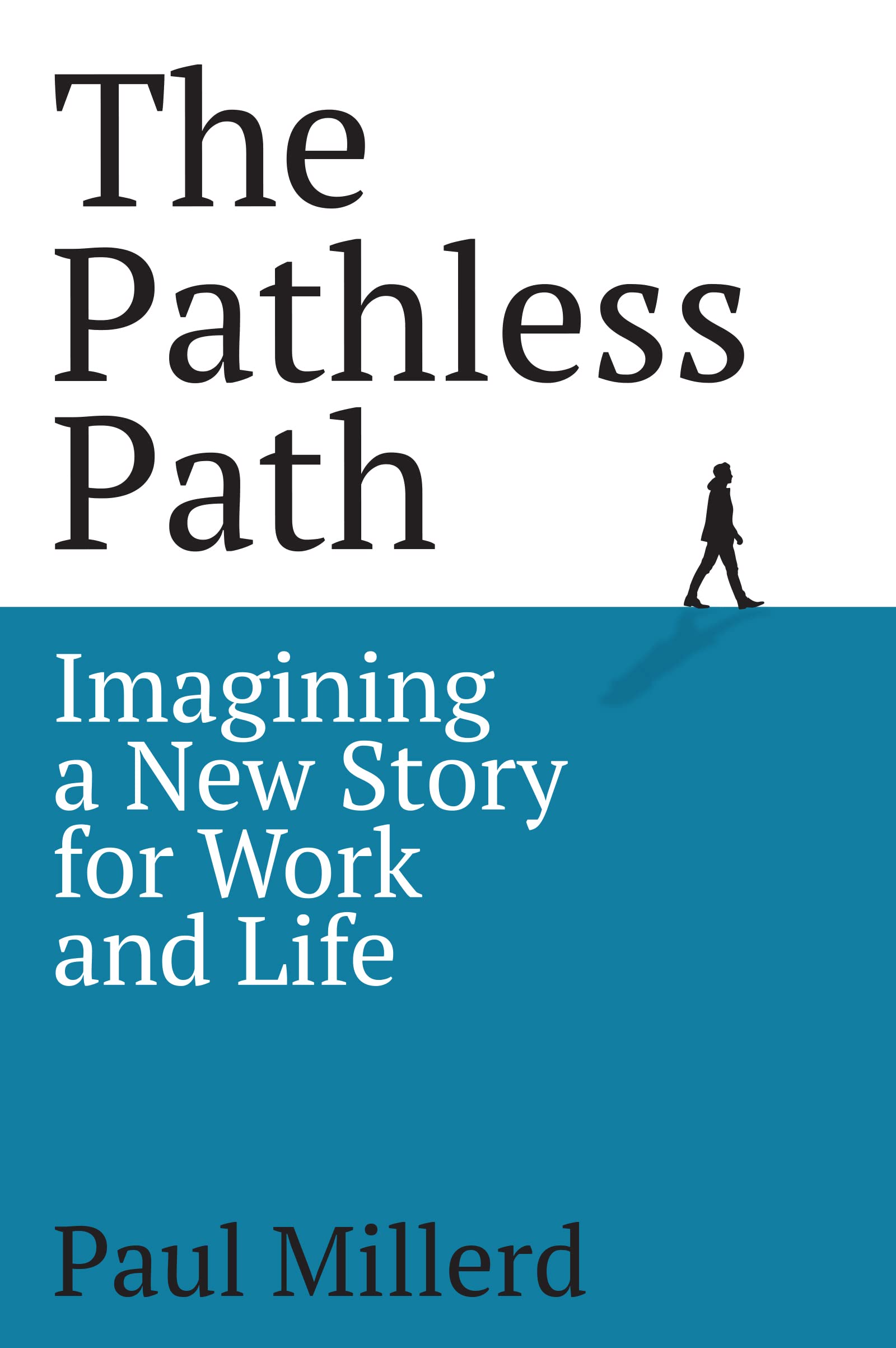
Paul Millerd’s The Pathless Path is a book for anyone who has ever woken up in the middle of their so-called “successful life” and wondered, Whose script am I following? Millerd himself lived the dream on paper: a prestigious consulting job, a six-figure income, a clear ladder to climb. But inside, he was hollow. The money and recognition dulled him instead of lighting him up. A health crisis forced him to pause—and in that pause, he asked a radical question: what if the default path was never mine to begin with?
The “default path,” as he calls it, is the one society hands us. Get a degree, land a stable job, climb the ranks, accumulate wealth and status, and retire at the end of it. It’s safe, predictable, and externally rewarded. Yet for many, it is also suffocating. The “pathless path” is Millerd’s alternative. It is uncertain, messy, and devoid of guarantees—but it is yours. It means building a life not around titles or paychecks but around curiosity, play, and personal meaning.
Millerd’s own leap was dramatic: he quit his high-paying job, embraced uncertainty, and reoriented his life around creativity and exploration. But he is careful to say that not everyone needs to burn their old life to the ground. The pathless path can begin with small experiments—a side project, a creative pursuit, or a step away from the metrics of external validation. Over time, those experiments can accumulate into a life that feels self-authored rather than socially scripted.
The book emphasizes that living without a script is not easy. Uncertainty is terrifying, especially when the default path offers ready-made markers of success. But Millerd argues that uncertainty is the price of authenticity. To walk the pathless path is to accept that there are no guarantees—only the possibility of creating a life that feels alive. His message is less about rejecting work altogether and more about redefining it. Work is not a means to an end; it is an expression of who you are.
Ultimately, The Pathless Path is a call to examine whether the life you are living is truly yours. It challenges you to trade certainty for meaning, external approval for inner resonance, and a script written by others for one authored by yourself.
The Road Less Traveled by M. Scott Peck
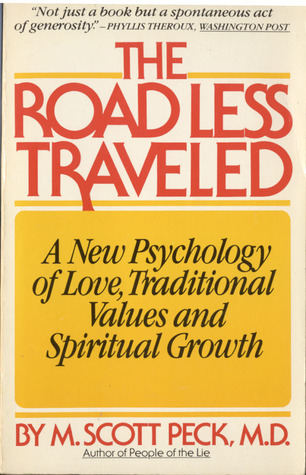
M. Scott Peck opens The Road Less Traveled with a blunt truth: “Life is difficult.” It’s a jarring beginning because it strips away illusions. Yet Peck’s point is paradoxical: once you accept this truth, life becomes easier. Difficulty becomes unbearable only when you expect it to be otherwise.
Peck, a psychiatrist, noticed that most psychological suffering does not come from life’s hardships themselves but from the refusal to face them. People avoid necessary pain—delaying decisions, numbing themselves with addictions, distracting with busyness—only to compound their suffering. Growth, he argues, requires embracing legitimate pain rather than running from it. Avoidance may offer temporary relief, but it multiplies the burden over time.
He identifies four tools for confronting life’s challenges. The first is delaying gratification—choosing long-term rewards over immediate pleasure. This discipline, though simple, is the foundation of maturity. The second is acceptance of responsibility. Blaming others or fate may feel comforting, but it keeps us powerless. The third is dedication to truth. Peck insists that we must continuously update our understanding of reality, even when it is uncomfortable, because lies eventually collapse under their own weight. The fourth is balance—the ability to hold opposing demands in tension without resorting to extremes.
What makes The Road Less Traveled transformative is its spiritual undertone. Peck views discipline and responsibility not just as psychological tools but as gateways to spiritual growth. By facing pain honestly, we don’t just build resilience—we expand our capacity for love, compassion, and wisdom.
The title itself reflects the book’s central challenge. The “road less traveled” is not glamorous; it is the path of effort, honesty, and discipline. It is harder in the short run but richer in the long run. The book insists that fulfillment cannot be found in shortcuts. Only by walking this demanding path do we discover life’s deeper meaning.
The Inner Game of Tennis by Timothy Gallwey
Timothy Gallwey’s The Inner Game of Tennis begins with a deceptively simple observation: in moments when we perform at our best, we are not consciously “trying harder.” We are simply allowing ourselves to act. The harder we strain, the more we sabotage ourselves. This paradox forms the foundation of Gallwey’s philosophy—not just for tennis, but for performance in any aspect of life.
Gallwey distinguishes between two “selves.” Self 1 is the conscious mind, the critic, the voice that constantly evaluates, corrects, and worries. Self 2 is the unconscious mind, the body’s natural intelligence, capable of extraordinary precision when left unhindered. Most people fail not because they lack skill, but because Self 1 interferes with Self 2, overloading performance with anxiety and micromanagement.
On the tennis court, this looks like a player berating themselves for every missed shot, overthinking their grip, or replaying mistakes in their head while the next ball is already on its way. In life, it looks like over-preparing for an interview, forcing charm on a first date, or choking under pressure in a presentation. The harder Self 1 tries to control, the more Self 2 stumbles.
The solution is not apathy but trust. Gallwey suggests quieting Self 1 by focusing on awareness rather than judgment. Instead of obsessing over whether a shot is “good” or “bad,” simply notice where the ball lands. By observing without critique, you allow Self 2 to naturally self-correct. Over time, the body and mind align, and performance becomes fluid, almost effortless.
What makes this lesson universal is that it applies far beyond sports. In creative work, leadership, or even social interaction, the same dynamic plays out. Trying too hard blocks authenticity. Letting go creates space for natural competence. The Inner Game of Tennis teaches that mastery isn’t about more effort but about removing interference—silencing the inner critic so that your true abilities can shine through.
Thinking in Systems by Donella Meadows
Donella Meadows’s Thinking in Systems is like putting on glasses that reveal the hidden architecture of reality. Systems, she explains, are everywhere: ecosystems, economies, organizations, even personal habits. A system is simply a collection of interconnected parts that generate patterns of behavior over time. Once you learn to see systems, the world looks different—less like chaos and more like a set of underlying structures.
The critical insight is that systems create their own behavior, independent of the individuals within them. This means that problems we often attribute to “bad people” are often the result of bad systems. A toxic workplace, for example, may not be the fault of a single difficult employee but the structure of incentives, feedback, and culture that breed negativity. Replace the people without changing the system, and the same behavior will reappear.
Meadows introduces the concept of leverage points—places within a system where a small shift can produce big results. Most people push on the wrong levers. They focus on surface-level changes, like swapping personnel or altering rules. Real transformation, she argues, comes from deeper interventions: changing the goals of the system, redesigning feedback loops, or even shifting the underlying paradigm. For instance, addressing climate change requires more than regulating emissions; it demands rethinking our relationship with growth, consumption, and nature.
On a personal level, systems thinking exposes why habits are so hard to change. If you continually fall into toxic relationships, it may not be a matter of willpower but a system of beliefs and feedback loops that draw you into the same patterns. Once you recognize the system—your triggers, responses, and reinforcements—you can redesign it rather than blaming yourself endlessly.
Perhaps the most unsettling aspect of Thinking in Systems is that once you adopt this lens, simple explanations lose their appeal. You begin to see that everything is interconnected, and solutions are rarely straightforward. But therein lies its power. Systems thinking equips you to anticipate unintended consequences, identify real leverage, and design lasting change. It transforms frustration into clarity. Once you see the systems, you cannot unsee them—and you are far better equipped to shape them.
Conclusion
Life is short—about four thousand weeks, as Oliver Burkeman reminds us—and every book we read is an investment in how we spend those weeks. These twenty-two works are not merely intellectual exercises; they are tools, mirrors, and companions for navigating the chaos of existence.
Some challenge you to confront your excuses. Others invite you to soften into love, reframe success, or embrace boredom as resistance. Together, they remind us that growth doesn’t come from waiting for perfect conditions but from stepping forward, experimenting, and allowing ourselves to be reshaped.
The path to wisdom isn’t linear, nor is it finite. These books are waypoints, not destinations—signposts for building a life that is courageous, examined, and authentically yours. The only real question is: which one will you pick up first?