
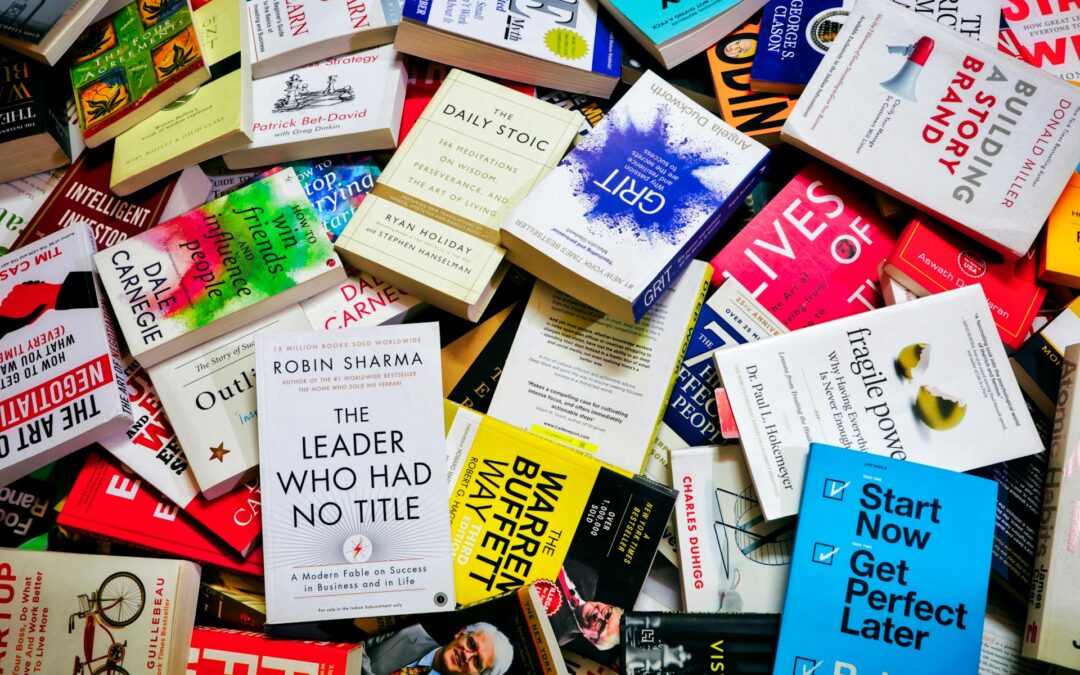
In a world flooded with self-help books and productivity hacks, finding truly transformative advice can be a challenge. Yet, there are some timeless ideas that have withstood the test of time, offering invaluable insights on how to navigate life’s complexities, achieve personal growth, and build meaningful connections.
From mastering deep focus to understanding the deeper psychology of our behaviors, these books offer profound lessons that challenge our perceptions and encourage us to rethink how we approach success, relationships, and our own happiness.
In this article, we dive into a curated selection of powerful books that have reshaped the way we think, behave, and live, providing a roadmap to becoming the best version of ourselves. Get ready to explore lessons from Deep Work, The Power of Now, Fooled by Randomness, and more—each one offering a unique perspective on how to thrive in an increasingly chaotic world.
Atomic Habits – James Clear
James Clear’s Atomic Habits focuses on the simple but profound idea that small, incremental changes in behavior, over time, can lead to significant improvements in your life. Clear draws on research from neuroscience and psychology to explain why habits are so powerful and how tiny adjustments can have a cumulative effect that creates remarkable results. His approach is not about making big leaps or sweeping changes, but about creating sustainable systems that reinforce positive behavior.
One of the key takeaways from Atomic Habits is the idea of the “compound effect”—the notion that small improvements, repeated consistently, accumulate over time. Clear emphasizes that trying to change too much at once often leads to burnout and frustration. Instead, he advocates for focusing on small, achievable goals, which will eventually lead to significant transformation. For example, making just a 1% improvement every day may seem trivial in the short term, but over the course of a year, this small change can compound to an enormous difference.
Another fundamental idea in the book is the concept of systems versus goals. Clear argues that while setting goals is important, it’s the systems—the daily routines and processes—that help you achieve those goals. Goals provide direction, but systems create the environment in which those goals can be consistently achieved. For instance, if your goal is to run a marathon, focusing solely on the goal can be demotivating, especially when progress feels slow. However, if you build a system that includes regular training, proper nutrition, and recovery, running becomes a part of your lifestyle, not just a distant objective.
The final key idea in Atomic Habits is the importance of identity in habit formation. Clear explains that habits are more likely to stick when they are tied to the identity you want to cultivate. It’s not enough to simply say “I want to exercise more”—you need to reframe your identity to align with that behavior. For instance, if you begin to see yourself as a “healthy person,” the actions that support health, like exercising or eating nutritious food, will become a natural part of your routine. Changing your identity from “I am someone who struggles with exercise” to “I am someone who enjoys being active” can shift your behavior in powerful ways.
By breaking down the process of habit formation into manageable, actionable steps, Atomic Habits offers readers a practical and accessible way to make lasting changes in their lives. The book provides a roadmap to overcoming bad habits and replacing them with positive ones, all through the power of small, consistent actions.
The Expectation Effect – David Robson
David Robson’s The Expectation Effect explores the powerful impact that our beliefs and expectations have on our lives. Drawing on cutting-edge research from psychology and neuroscience, Robson demonstrates how the mind can influence reality in ways that we don’t always recognize. This phenomenon, known as the expectation effect, suggests that our beliefs about what will happen in the future can, in fact, shape the outcomes of those events. Whether it’s in the realm of health, performance, or relationships, our expectations can have a profound influence on the course of our lives.
One of the most compelling aspects of The Expectation Effect is the concept of the placebo effect. When people believe that a treatment will work, their bodies often respond as if it does, even if the treatment is inert. This illustrates the powerful connection between mind and body—our expectations can trigger real physiological changes. Robson explains that the placebo effect is not just confined to medical treatments; it extends to everyday situations where belief and expectation play a role in shaping outcomes. For instance, people who expect to perform well in a job interview or on a test are often more likely to succeed because their confidence boosts their performance.
Robson also explores how expectations can influence physical health. People who believe they are more likely to recover from an illness or injury tend to heal faster and more effectively than those who are pessimistic about their chances of recovery. This underscores the importance of cultivating a positive mindset, especially when dealing with health challenges. Robson explains that adopting a mindset that anticipates success can improve the likelihood of achieving it, while a mindset rooted in doubt can create self-fulfilling prophecies of failure.
The book also delves into the broader implications of the expectation effect on relationships and social interactions. People who expect others to be kind or supportive are more likely to experience positive interactions, while those who expect rejection or hostility may inadvertently create situations that reinforce their negative beliefs. Robson highlights how our expectations shape the way we perceive the world and interact with others, offering valuable insights into how we can consciously cultivate expectations that lead to more fulfilling and successful experiences.
Ultimately, The Expectation Effect shows that by changing the way we think about ourselves and the world around us, we can unlock a new level of potential. By consciously setting positive expectations, we can improve our health, relationships, and overall well-being. Robson’s work offers a roadmap for harnessing the power of belief to transform our lives.
The Upside of Stress – Kelly McGonigal
Stress is often viewed as something to avoid at all costs, but in The Upside of Stress, Kelly McGonigal challenges this conventional wisdom by presenting stress as a potentially beneficial force. McGonigal argues that the way we perceive stress—whether as a threat or as a challenge—can significantly impact its effects on our health and well-being. Far from being a purely negative experience, stress can serve as a powerful motivator, enhancing focus, resilience, and performance when channeled in the right way.
One of the key ideas in The Upside of Stress is the distinction between “good” stress and “bad” stress. McGonigal explains that not all stress is created equal. Stress that is experienced as part of a meaningful challenge—such as preparing for an important presentation or tackling a difficult project—can increase energy and focus, helping you rise to the occasion. This type of stress is often referred to as “eustress,” and it has been shown to improve cognitive function and enhance motivation. On the other hand, chronic stress caused by uncertainty, lack of control, or negative experiences can be harmful, leading to burnout and negative health outcomes.
McGonigal suggests that our relationship with stress is more important than the stress itself. Those who view stress as a harmful force often experience greater health risks, while those who reframe stress as an opportunity for growth and learning are more likely to experience its benefits. She introduces the idea of “stress reappraisal,” which is the practice of changing the way we think about stress. Rather than seeing stress as something that will harm us, we can learn to view it as a signal that we care about something deeply and that we are ready to rise to the challenge. By reframing stress in this way, we can reduce its negative effects and use it as a tool for personal development.
Another critical aspect of The Upside of Stress is McGonigal’s exploration of how stress affects our physical and mental health. She highlights research that shows how stress can have positive effects on the heart and immune system when it is perceived as a challenge, as opposed to a threat. For example, people who experience stress during exercise tend to have better cardiovascular health than those who do not experience stress. The key, McGonigal argues, is to embrace stress in the right context and use it to propel us forward rather than letting it overwhelm us.
Ultimately, The Upside of Stress encourages readers to change their mindset around stress. Instead of fearing it or trying to eliminate it, McGonigal suggests that we should embrace stress as a natural part of life and use it to enhance our performance, health, and growth. By understanding the power of stress and learning how to harness its positive effects, we can transform how we respond to life’s challenges and become more resilient in the face of adversity.
So Good They Can’t Ignore You – Cal Newport
In So Good They Can’t Ignore You, Cal Newport takes aim at the pervasive advice that we should “follow our passion” in order to find career fulfillment. This advice has become so ingrained in popular culture that it has led many people to chase after nebulous concepts of passion, often to their detriment. Newport, however, argues that passion is not something to be discovered; it is something that develops over time as a result of hard work and skill-building. The key to long-term career satisfaction and success, Newport asserts, is not to chase after passion but to focus on becoming exceptional at what you do.
One of the book’s central ideas is the concept of “career capital.” Newport posits that passion in any field arises not from a sudden burst of interest or intrinsic desire, but from building a high level of skill that sets you apart. When you master a craft, your passion for it deepens, and you gain the kind of career capital—skills, expertise, and reputation—that makes you valuable and irreplaceable. The idea here is simple: once you’re highly skilled at something, the work becomes more rewarding, and passion naturally follows. This skill-building approach allows you to thrive in your chosen field, regardless of whether or not you initially had a deep passion for it.
Another key takeaway from So Good They Can’t Ignore You is the importance of developing rare and valuable skills. Newport argues that in today’s competitive job market, simply following your passion won’t guarantee success. Instead, you need to focus on acquiring skills that are both in high demand and difficult to replicate. It’s through the acquisition of these rare skills that you position yourself for success. The book encourages readers to avoid the trap of jumping from one passion to the next and instead focus on honing their craft to a level of excellence that will eventually make others take notice.
Newport’s argument is not to dismiss passion altogether, but to put it in its proper place within the context of career development. Passion, he asserts, is often the byproduct of achieving mastery and becoming really good at something. By focusing on the acquisition of career capital, you give yourself the best chance to find work that is meaningful, fulfilling, and ultimately aligned with your long-term goals.
The Innovator’s Dilemma – Clayton Christensen
In The Innovator’s Dilemma, Clayton Christensen addresses a paradox that has plagued the business world for decades: Why do some of the most successful and well-established companies fail, even when they seem to be doing everything right? The answer, Christensen argues, lies in what he calls “disruptive innovation.” These are innovations that initially seem insignificant or irrelevant to dominant companies in an industry but eventually disrupt the entire market, rendering the incumbent players obsolete.
Christensen begins by explaining the concept of sustaining innovation, which involves making improvements to existing products and services. These innovations cater to the needs of the company’s current customer base and are usually incremental. However, sustaining innovations, while important for maintaining a competitive edge, are not enough to maintain long-term dominance. The real danger lies in disruptive innovations, which often begin as inferior alternatives that attract a different, underserved customer segment. These innovations may not initially appeal to the high-end market but eventually improve in quality, reach, and affordability, overtaking the incumbent’s products and capturing the mainstream market.
A prime example of this phenomenon is the story of Kodak, which Christensen uses to illustrate the concept. Kodak, a company that dominated the photography industry for decades, was one of the first to develop digital camera technology. However, because their business model was deeply invested in traditional film, Kodak chose not to pursue digital technology aggressively, fearing it would cannibalize their profitable film business. As a result, they missed out on the digital camera revolution and were overtaken by companies like Canon and Sony. Kodak’s downfall was not due to a lack of innovation but because they were too focused on sustaining their existing business model, ignoring the disruptive potential of digital cameras.
Christensen’s central thesis is that companies often fail to innovate disruptively because their success in sustaining innovations makes them complacent. They become overly focused on their existing customers and products, which blinds them to emerging technologies that may initially seem unprofitable or irrelevant. To avoid falling into this trap, Christensen advises companies to create separate divisions or teams that can focus on disruptive innovations without the constraints of the existing business model. These teams should be allowed to experiment, innovate, and develop new technologies without the pressure of maintaining the status quo.
The Innovator’s Dilemma offers a compelling explanation for why even the most successful companies can falter when faced with disruptive change. It also provides a roadmap for how companies can proactively embrace disruptive innovations, ensuring long-term success in an ever-evolving marketplace. The book is not just for business leaders but for anyone interested in understanding the dynamics of innovation and the factors that drive industry transformations.
Influence – Robert Cialdini
In Influence, Robert Cialdini explores the psychology behind the ways in which people are persuaded, and how certain principles of influence can be used to manipulate decision-making. Cialdini’s book is a comprehensive guide to understanding human behavior and the subtle ways in which our actions can be influenced by external factors. Drawing on decades of research in social psychology, Cialdini distills the principles of persuasion into six key principles: reciprocity, commitment, social proof, authority, liking, and scarcity.
The principle of reciprocity is one of the most powerful tools of influence. It’s based on the simple idea that people feel obliged to return favors or kindness. For example, if someone gives us a gift or does us a favor, we are more likely to reciprocate. This principle is often used in marketing, where companies offer free samples or discounts, prompting consumers to feel an obligation to make a purchase. Reciprocity taps into our deeply ingrained social norms and can be used to trigger cooperative behavior in social interactions.
The commitment principle is another important concept in Cialdini’s framework. This principle suggests that once people commit to something—especially in writing or publically—they are more likely to follow through with it. The act of committing increases our sense of consistency and makes us more likely to behave in ways that align with our initial choice. This principle explains why businesses often ask customers to make small, initial commitments, such as signing up for a free trial, in order to increase the likelihood of a full purchase later on.
Social proof is the concept that people are more likely to engage in behavior that they see others doing, especially when they are unsure of what to do in a particular situation. This principle is why product reviews and testimonials are so effective in persuading people to make purchases. If others have had a positive experience with a product or service, we are more likely to trust and follow suit. Social proof can be particularly powerful in ambiguous or unfamiliar situations, where we look to others to guide our actions.
The principle of authority highlights how people tend to trust and follow individuals or institutions that are perceived to have expertise or authority. This is why endorsements from experts or respected figures are so influential in marketing and advertising. Whether it’s a celebrity endorsement or a recommendation from a well-known scientist, authority figures can significantly impact our decisions and perceptions.
Liking refers to the fact that we are more likely to be influenced by people we like or who are similar to us. This principle explains why companies often hire charismatic salespeople or use attractive spokespersons in their advertisements. People who are likable or share common traits with us can more easily persuade us to comply with their requests.
Finally, the principle of scarcity operates on the basic human fear of missing out. When people perceive that something is in limited supply or is available for a short period, they tend to place more value on it. This principle is often seen in limited-time offers, flash sales, and exclusive memberships. Scarcity triggers a sense of urgency, making people more likely to act quickly in order to secure the desired product or service before it is gone.
Influence is an essential read for anyone interested in understanding human behavior and the science of persuasion. Whether you’re in sales, marketing, or simply want to become more aware of the factors influencing your own decisions, this book provides a detailed and practical exploration of the psychological triggers that shape our choices. Cialdini’s work not only helps us become more persuasive but also makes us more aware of the subtle techniques used by others to influence our decisions.
The 4-Hour Workweek – Tim Ferriss
Tim Ferriss’ The 4-Hour Workweek is a revolutionary guide that challenges traditional ideas about work, wealth, and how we spend our time. Ferriss proposes that the key to living a rich and fulfilling life is not to work more hours, but to work smarter by rethinking our approach to work and redefining what “wealth” really means. Instead of aspiring to the traditional model of working long hours in a corporate job until retirement, Ferriss suggests that we should aim to create lives of freedom and flexibility, even with modest amounts of money.
One of the central concepts in the book is the idea of “lifestyle design.” Ferriss argues that, in order to live a fulfilling life, you must stop subscribing to the idea that you need to follow the traditional 9-to-5 grind. Rather than accumulating wealth by working long hours at a desk, Ferriss encourages readers to design their lifestyles around the things they love, such as travel, experiences, and personal growth. This involves redefining success—not as accumulating material wealth, but as gaining control over your time and living according to your own values.
The book introduces the concept of the “New Rich” (NR), a group of individuals who prioritize time and mobility over traditional wealth accumulation. According to Ferriss, the New Rich are not the ultra-wealthy, but people who use their money strategically to buy time and experiences. He emphasizes leveraging technology, outsourcing tasks, and automation to reduce the amount of time spent on low-value activities. By outsourcing work and using tools like virtual assistants, Ferriss shows how you can achieve more in less time. This principle is encapsulated in his concept of “mini-retirements,” where you can take extended breaks throughout your life, traveling or pursuing personal passions, rather than waiting until retirement.
A core pillar of The 4-Hour Workweek is the idea of “The DEAL” framework: Definition, Elimination, Automation, and Liberation. The first step, Definition, involves understanding what you truly want in life and designing your goals around those desires. Elimination is about cutting out unnecessary tasks—Ferriss introduces the 80/20 rule, which states that 80% of your results come from 20% of your efforts. By focusing only on the most impactful tasks, you can eliminate distractions. Automation teaches readers how to streamline their lives and businesses through technology and outsourcing. The final step, Liberation, is about freeing yourself from the constraints of a physical office and traditional work hours by transitioning to remote work or building systems that allow you to work from anywhere.
Ultimately, The 4-Hour Workweek advocates for a radical shift in how we view work and life. It challenges readers to question their assumptions about what constitutes a successful life and offers a blueprint for breaking free from the rat race. Through this approach, Ferriss demonstrates how it is possible to live a life filled with freedom, excitement, and purpose, without waiting until the end of your career to enjoy it.
Dopamine Nation – Anna Lembke
Dopamine Nation by Anna Lembke explores the science of dopamine—the neurotransmitter responsible for feelings of pleasure and reward—and how modern society has become overstimulated by it. Dopamine drives our desires and motivates our actions, but in the digital age, it is often hijacked by the constant stream of stimuli that flood our senses. From social media notifications to the addictive nature of technology, Lembke argues that our brains are overwhelmed by dopamine in a way that was never intended by evolution.
Lembke begins by explaining the biological basis of dopamine, describing how it works to reinforce behaviors that lead to rewards. When we experience pleasure—whether it’s from food, sex, or even a “like” on social media—dopamine is released, making us feel good and reinforcing the behavior that led to the reward. This feedback loop encourages us to repeat pleasurable actions. However, in the modern world, this process is constantly triggered by external stimuli, leading to overstimulation and, in some cases, addiction. With access to limitless entertainment, instant gratification, and other dopamine-driven activities, many people experience a kind of “dopamine overload.”
One of the key themes in Dopamine Nation is the idea that excessive dopamine release can lead to harmful behaviors, such as addiction, compulsive spending, overeating, or substance abuse. Lembke discusses how the pursuit of instant pleasure can lead to negative consequences for mental and physical health, causing a cycle of highs and lows that can be difficult to break. The book explains how behaviors that were once seen as indulgent or excessive—like binge-watching television or scrolling through social media—have now become normalized, contributing to a widespread sense of dissatisfaction and addiction.
Lembke proposes a solution to this dopamine overload: dopamine fasting. This concept involves deliberately abstaining from activities that trigger dopamine release in order to reset the brain’s reward system. By taking breaks from addictive behaviors such as social media, junk food, or video games, people can regain control over their dopamine levels and develop a healthier relationship with pleasure and reward. This idea of moderation is not about completely eliminating enjoyment from life, but about finding balance and reducing the constant stimulation that fuels addiction.
The book also emphasizes the importance of creating a more mindful and intentional environment, where people can cultivate healthier habits and reconnect with activities that provide more sustained, long-term satisfaction. Lembke advocates for embracing discomfort and making conscious choices to engage in activities that require effort and patience, such as exercise or creative work. These activities may not provide the immediate rush of dopamine, but they foster long-term well-being and happiness. Dopamine Nation is both a cautionary tale and a guide for reclaiming control over our impulses in an increasingly overstimulated world.
Denial of Death – Ernest Becker
Ernest Becker’s Denial of Death is a profound exploration of how the fear of death shapes human behavior and drives much of what we do in life. Written near the end of Becker’s life, the book delves into the existential crisis that comes with the awareness of our mortality and how humans attempt to deny or transcend this reality through various mechanisms. Becker draws on influences from existential philosophy, Freudian psychology, and Zen Buddhism to argue that our awareness of death is the ultimate motivator in human existence.
Becker introduces the concept of “immortality projects,” which are the ways in which people attempt to achieve significance and permanence in life. These projects can take many forms, such as building a legacy, creating art, having children, or even pursuing power and wealth. According to Becker, these immortality projects serve as a defense mechanism against the terror of death, providing individuals with a sense of meaning and purpose that transcends their fleeting existence. However, these projects also come with a dark side, as they can lead to obsessive behaviors, irrational fears, and destructive actions when individuals become too attached to their need for immortality.
Becker argues that much of human behavior—both good and bad—is driven by the desire to deny our mortality. For example, people often engage in violent or aggressive behaviors, not because of inherent evil, but because they feel a need to protect their self-image or preserve their place in society. Nationalism, religion, and ideologies can all become ways of dealing with the fear of death, as individuals align themselves with larger causes that offer a sense of continuity beyond the individual self. While these pursuits can provide comfort, they can also lead to conflict, suffering, and destruction when unchecked by a more balanced understanding of mortality.
One of the central themes of Denial of Death is the idea that death is the “invisible elephant in the room” that most people try to ignore or suppress. However, Becker contends that the denial of death leads to psychological dysfunction, as people are unable to confront the inevitable and make peace with their mortality. He suggests that true freedom and personal growth come from embracing the reality of death and accepting the impermanence of life. By acknowledging our vulnerability and accepting our finite nature, we can live more authentically and with greater emotional resilience.
Becker’s work challenges readers to confront the reality of death head-on and to rethink the way they live their lives. It calls for a shift in perspective—one that allows us to recognize that meaning and fulfillment come not from attempting to escape death, but from living in full awareness of its presence. Denial of Death is a powerful meditation on the human condition and the ways in which we navigate the complexities of life in the face of inevitable mortality.
The Paradox of Choice – Barry Schwartz
In The Paradox of Choice, Barry Schwartz explores the surprising and counterintuitive concept that more choice can actually lead to less satisfaction, anxiety, and decision fatigue. Schwartz’s central thesis is that while we often believe that having more options will make us happier, the opposite is often true. In modern society, we are constantly bombarded with an overwhelming array of choices—from which phone to buy, to which career path to take, to what brand of cereal to choose. This abundance of options, Schwartz argues, can lead to paralysis, regret, and dissatisfaction.
One of the core ideas in the book is the concept of “maximizers” versus “satisficers.” Maximizers are individuals who strive to make the best possible decision and are driven by the desire to maximize their outcomes in every area of life. They meticulously research options, weigh pros and cons, and compare every possibility in an effort to find the absolute best choice. On the other hand, satisficers are people who are content with making decisions that are “good enough” and do not feel the need to exhaustively evaluate every option. According to Schwartz, while maximizers may believe that they are making more informed and thoughtful choices, they are often less happy and more anxious than satisficers because the constant pursuit of perfection leads to dissatisfaction and a fear of missing out on something better.
Schwartz also delves into the psychological effects of having too many choices. When faced with an abundance of options, people often feel overwhelmed and uncertain. Instead of enjoying the process of making a choice, they become paralyzed by the fear of making the wrong decision. This is particularly evident in consumer culture, where individuals may feel a sense of regret or dissatisfaction even after making a purchase because they are constantly aware of other alternatives they could have chosen. The constant bombardment of choices can also lead to an inflated sense of importance placed on decisions, causing individuals to feel that each choice must be carefully scrutinized and considered in depth.
The book further explores how the abundance of choice affects our expectations. Schwartz argues that when we have too many options, we set ourselves up for unrealistic expectations, which ultimately diminishes satisfaction. People may expect their decisions to be perfect, which leads to disappointment when the reality doesn’t match the ideal. As a result, they may become obsessed with finding the “perfect” choice, never quite satisfied with the outcome.
Ultimately, Schwartz advocates for embracing the idea of “good enough” and suggests that simplifying choices can lead to greater happiness. By reducing the number of options we encounter and focusing on what truly matters, we can alleviate the stress and anxiety that come with decision-making. The book encourages readers to embrace contentment in their choices, emphasizing that reducing the pressure of perfectionism can lead to a more fulfilling and satisfying life.
Rich Dad Poor Dad – Robert Kiyosaki
Rich Dad Poor Dad by Robert Kiyosaki is a foundational book in the realm of personal finance that contrasts the mindsets and financial strategies of two key figures in the author’s life: his biological father (the “Poor Dad”) and his best friend’s father (the “Rich Dad”). Through this comparison, Kiyosaki aims to challenge conventional wisdom about money and wealth, offering a new perspective on financial independence that is grounded in investing, entrepreneurship, and financial education.
One of the central ideas in Rich Dad Poor Dad is the difference between assets and liabilities, and how understanding this distinction is crucial to building wealth. Kiyosaki explains that the poor and middle class often focus on earning a high salary and buying liabilities—things like a house or car that lose value over time—while the wealthy focus on acquiring assets, which generate income. Kiyosaki emphasizes that to build long-term wealth, you need to prioritize acquiring income-generating assets, such as investments in real estate, stocks, and businesses, over accumulating things that only incur expenses.
Kiyosaki also critiques the traditional model of education and career advancement. He points out that schools often teach students to become good employees, focusing on subjects like math, science, and language, but they do not teach financial literacy. According to Kiyosaki, this lack of financial education leaves many people ill-prepared to manage money, invest wisely, and make their money work for them. Instead of following the traditional path of getting a good job, working hard, and saving for retirement, Kiyosaki argues that financial education is essential to gaining control of one’s finances and achieving true wealth.
The book encourages readers to think like entrepreneurs, to take calculated risks, and to seek out opportunities for investment and wealth-building. Kiyosaki explains how wealth is not simply about earning a large income, but about learning to leverage your assets, minimize liabilities, and create a steady stream of passive income. He advocates for cultivating the mindset of a “rich” person—one who seeks financial independence through smart investments and wealth-building strategies—rather than the mindset of a “poor” person, who works for a paycheck and spends money on depreciating assets.
Kiyosaki’s Rich Dad Poor Dad emphasizes that financial freedom comes from acquiring financial knowledge, taking ownership of one’s financial future, and making decisions based on opportunities rather than fears or conventional norms. By reshaping the way we think about money, assets, and work, Kiyosaki believes that anyone can escape the cycle of working for money and instead, make money work for them. The book challenges long-held beliefs about money and offers an alternative approach to financial success that prioritizes financial education, risk-taking, and strategic investing.
Man’s Search for Meaning – Viktor Frankl
Viktor Frankl’s Man’s Search for Meaning is one of the most profound and influential books of the 20th century. Frankl, a Holocaust survivor and psychiatrist, reflects on his experiences in Nazi concentration camps and the lessons he learned about the human spirit and the search for meaning in life. Through his firsthand experiences of suffering, loss, and dehumanization, Frankl found that the key to surviving extreme adversity lies not in avoiding suffering, but in finding a deeper purpose in life, even amidst the most unbearable circumstances.
Frankl introduces his psychological theory known as logotherapy, which centers on the belief that the primary human drive is not pleasure (as Freud suggested) or power (as Adler proposed), but rather the search for meaning. Frankl argues that when individuals find meaning in their suffering, they are more likely to endure hardships and emerge stronger. He draws on his own experiences in Auschwitz to demonstrate that prisoners who had a sense of purpose—whether through a desire to reunite with loved ones, to complete unfinished work, or to contribute to a greater cause—were far more likely to survive the horrors of the concentration camp than those who gave in to despair.
Frankl’s exploration of meaning is not just about finding a grand purpose or achieving greatness. He highlights that meaning can be found in the smallest of actions, even in moments of suffering. For example, Frankl found meaning in his ability to choose his attitude toward the brutal conditions of the camp. Despite the unimaginable physical and emotional torment he endured, he retained the freedom to choose how he would respond to his situation. This personal freedom, even in the face of oppression, was a powerful form of resilience.
One of the most famous ideas in Man’s Search for Meaning is the notion that “he who has a why to live can bear almost any how.” Frankl’s belief is that if we have a sense of purpose—something that drives us forward, even in the most difficult times—we can endure hardships and overcome despair. This philosophy extends beyond the extreme conditions of the Holocaust to everyday life. Frankl encourages readers to reflect on their own lives and identify what gives them a sense of purpose, even in times of struggle or suffering.
Frankl also offers a powerful critique of modern society’s search for happiness through materialism and external validation. He suggests that the pursuit of external achievements or pleasures may leave us feeling empty if they are not connected to a deeper sense of meaning. Instead, he encourages individuals to seek fulfillment not through external accomplishments, but by aligning their actions with their values and inner purpose.
Ultimately, Man’s Search for Meaning is a testament to the resilience of the human spirit and the transformative power of finding meaning in life. Frankl’s work continues to inspire millions of people worldwide to live with purpose, embrace suffering as a part of the human experience, and find meaning in all aspects of life. The book is both a personal memoir and a philosophical guide to living a more meaningful and fulfilling life, regardless of the circumstances one may face.
How to Win Friends and Influence People – Dale Carnegie
Dale Carnegie’s How to Win Friends and Influence People is one of the most influential self-help books of all time, and for good reason. First published in 1936, the book has stood the test of time by providing simple yet profound principles for improving relationships, building rapport, and influencing others. The book’s core message is that success in life, both personally and professionally, is largely determined by the ability to interact effectively with others. Carnegie’s work focuses on the human need for appreciation, the importance of genuine interest in others, and the fundamental human desire to feel heard and valued.
One of the central principles Carnegie emphasizes is the importance of making people feel important. This is not just about flattery or superficial compliments, but about genuinely acknowledging the other person’s value. People are inherently self-interested, and when we make others feel important and appreciated, they are more likely to be drawn to us and to listen to our ideas. This could be as simple as remembering someone’s name and using it in conversation, as Carnegie suggests. A person’s name, he argues, is the sweetest sound to their ears, and using it shows respect and recognition.
Another key concept in the book is the power of active listening. Carnegie argues that people are often too focused on talking about themselves, and in doing so, they miss the opportunity to connect with others. Instead of dominating the conversation, he advises readers to listen actively and attentively, encouraging the other person to talk about themselves and their interests. This simple technique builds rapport and trust because people are more likely to feel connected to those who show genuine interest in them.
Carnegie also introduces the concept of avoiding direct criticism and condemnation, which can instantly create defensive reactions. Instead, he suggests offering constructive feedback in a way that emphasizes positive reinforcement and the person’s ability to improve. For example, when providing criticism, it’s better to praise the individual’s effort first, then gently point out areas of improvement, followed by more positive feedback. This approach fosters a sense of encouragement rather than resentment, making others more receptive to change.
The book also discusses the power of showing appreciation without ulterior motives. Carnegie points out that everyone likes to feel valued, and a sincere compliment or recognition for a job well done can go a long way in strengthening relationships. By recognizing others’ achievements and showing gratitude, you not only make them feel good but also build strong bonds that benefit both parties.
Ultimately, How to Win Friends and Influence People provides timeless advice on human interaction, urging readers to focus on the needs and feelings of others in order to forge meaningful relationships. The principles outlined in the book are not just about winning people over or manipulating them, but about genuinely connecting with others, fostering mutual respect, and creating a positive influence in all areas of life.
Start with Why – Simon Sinek
Simon Sinek’s Start with Why introduces a concept that has since become a cornerstone of leadership, organizational culture, and personal motivation: the idea that great leaders and organizations begin with a clear understanding of “why” they do what they do. Sinek’s central thesis is that the most successful leaders and organizations don’t just focus on what they do or how they do it, but on the deeper purpose—the “why”—that drives them.
The book introduces Sinek’s concept of the Golden Circle, a simple but powerful framework for understanding the dynamics of leadership and motivation. The Golden Circle is made up of three concentric circles: What is the outer circle, representing what a company or individual does; How is the middle circle, representing how they do it; and Why is the inner circle, representing the core belief or purpose that drives everything. Sinek argues that most organizations and individuals start with the outer circle—the “what”—focusing on what products or services they offer and how they deliver them. However, the most successful leaders and companies start with Why—they begin by clearly articulating their purpose and vision, and everything else flows from that foundation.
Sinek uses the example of Apple to demonstrate the power of starting with why. Apple’s success is not just about the products they create (the what) or the way they manufacture them (the how). Rather, Apple’s enduring appeal comes from its why: the company’s core belief in challenging the status quo and thinking differently. Apple communicates this message consistently through its branding, marketing, and innovation, creating a deep emotional connection with its customers. By clearly articulating their why, Apple has built a loyal following that feels aligned with the company’s purpose.
The book also highlights the importance of inspiring trust and loyalty through a shared sense of purpose. Sinek argues that people don’t buy products or services—they buy the why behind them. When organizations and leaders clearly communicate their purpose and values, they inspire people to believe in the vision and become part of it. This, in turn, creates lasting relationships and deep engagement, both internally with employees and externally with customers.
For leaders, Sinek stresses that starting with why is critical for building a strong organizational culture and motivating teams. Leaders who understand their why can inspire others with a sense of purpose, helping them align their efforts toward a common goal. This sense of purpose provides clarity, direction, and meaning, which fosters resilience and passion in the face of challenges.
Ultimately, Start with Why is a call to action for leaders, organizations, and individuals to explore their deeper motivations and clarify the purpose that drives their work. By starting with why, individuals and organizations can create a powerful sense of direction, inspire others, and achieve long-term success. This approach goes beyond mere success—it fosters fulfillment, connection, and impact.
The Coddling of the American Mind – Jonathan Haidt & Greg Lukianoff
The Coddling of the American Mind by Jonathan Haidt and Greg Lukianoff examines the growing trend of emotional fragility and the decline of resilience in American society, particularly among young people. The authors argue that the rise of “safetyism”—the belief that people should be protected from all sources of discomfort, pain, or emotional distress—has led to a generation of individuals who are less capable of handling adversity and more prone to anxiety, depression, and social division.
The book explores the cultural changes over the past few decades that have contributed to this phenomenon. One of the primary factors, according to the authors, is the rise of helicopter parenting, where parents overprotect their children and shield them from any potential harm, both physical and emotional. This overprotective style of parenting has led to children who are less equipped to navigate challenges on their own, creating a generation that is ill-prepared for the difficulties of adult life.
Haidt and Lukianoff also discuss the rise of safetyism in educational and social contexts, where the idea that “words are violence” and “trigger warnings” are used to prevent students from encountering ideas or experiences that might cause emotional discomfort. The book argues that this cultural shift has led to a generation that is increasingly unable to tolerate opposing viewpoints or manage uncomfortable emotions. By avoiding difficult situations and suppressing free speech in the name of emotional safety, the authors believe that we are weakening the ability of young people to develop the mental toughness required to thrive in an increasingly complex and challenging world.
The authors also examine the role of social media in exacerbating the problem. Platforms like Twitter and Facebook, where people can engage in quick, often anonymous exchanges, have contributed to a culture of outrage and outrage culture. This constant exposure to negative and often exaggerated news, along with the amplification of divisive issues, has led to heightened levels of anxiety, depression, and a sense of social disconnection among young people.
The book emphasizes the importance of teaching resilience and the ability to face adversity head-on. Haidt and Lukianoff argue that instead of shielding individuals from discomfort, society should teach people how to embrace discomfort, challenge their beliefs, and engage in constructive conflict. Developing emotional resilience, the ability to listen to opposing viewpoints, and the strength to deal with adversity are key skills for mental well-being and success in life.
The authors propose several solutions to this growing problem, including a return to traditional educational practices that foster independence, critical thinking, and the ability to confront difficult ideas. They also stress the importance of parents allowing their children to experience natural consequences, which is essential for developing problem-solving skills and emotional maturity. By encouraging the next generation to become more resilient and less dependent on external protections, Haidt and Lukianoff believe that we can foster a healthier, more emotionally balanced society.
Ultimately, The Coddling of the American Mind is a powerful critique of contemporary cultural trends and offers a compelling argument for the importance of resilience, emotional intelligence, and the ability to navigate life’s challenges with strength and courage.
The Revolt of the Public – Martin Gurri
In The Revolt of the Public, Martin Gurri explores the dynamics of modern political activism and the rise of populism, particularly in the age of social media. Gurri argues that the internet, and specifically social media, has revolutionized the way people engage in political and social discourse, creating a new kind of public revolt that is decentralized, spontaneous, and often anti-establishment. This “revolt” is fueled by the discontent of the general public, who feel alienated from traditional political institutions and the elites that have traditionally held power.
One of the central arguments of Gurri’s book is the idea of the “collapse of authority”. In the past, power and influence were concentrated in institutions—such as governments, corporations, and the media—that controlled information and discourse. However, with the rise of the internet and social media platforms, anyone with access to these tools can now disseminate information, organize movements, and challenge established authority. This has led to the erosion of trust in traditional institutions, as people are increasingly skeptical of the information they receive from official channels. Gurri argues that the flood of information available to the public has created a new type of public sphere, one in which the voice of the masses is amplified, often in opposition to the established powers.
The book examines the ways in which this new, digital public sphere has contributed to the rise of populist movements around the world. The protests and movements that have emerged in recent years—from the Arab Spring to Occupy Wall Street to the global rise of right-wing populism—are all manifestations of this new type of revolt. Gurri highlights how social media enables individuals to bypass traditional media gatekeepers and directly engage in political discourse. The result is a fragmented and chaotic public sphere, where competing narratives and voices clash, making it increasingly difficult for authorities to maintain control.
Gurri also delves into the performativity of modern political protests. Unlike past movements that were carefully organized and often had clear goals and demands, many of today’s protests are more about expression and visibility than about proposing solutions. The use of social media allows people to organize and participate in protests with minimal effort and without the need for a formal structure. While this has democratized political engagement, it has also made it more difficult for traditional political institutions to engage with or respond to these movements in a meaningful way.
The book explores the implications of this shift for the future of democracy and governance. Gurri argues that the lack of trust in institutions and the rise of public dissatisfaction could lead to significant political instability. However, he also acknowledges that the new form of political engagement can empower marginalized groups and foster greater political participation. Ultimately, The Revolt of the Public is a provocative exploration of the way the digital age is reshaping the public’s relationship with power, authority, and political systems, creating a new world where the revolt of the public is an inescapable force that cannot easily be ignored.
Getting the Love You Want – Harville Hendrix
In Getting the Love You Want, Harville Hendrix takes a deep dive into the psychology of romantic relationships, specifically focusing on how childhood experiences shape our understanding of love and intimacy. Hendrix, a renowned therapist and relationship expert, introduces the concept of the “love map,” which is the unconscious blueprint for affection and intimacy that is developed in early childhood. This love map is influenced by the relationships we observe growing up, particularly those with our parents, and it shapes how we later form romantic relationships as adults.
According to Hendrix, many of us unconsciously seek out partners who fit into our love maps, repeating patterns and dynamics from our childhood experiences. These dynamics can lead to a cycle of unconscious attraction, where we choose partners who trigger old wounds and unresolved emotional needs. For example, someone who grew up in a household where affection was sparse might unconsciously seek out a partner who is similarly distant, replicating the emotional environment they are familiar with, even though it may lead to frustration and dissatisfaction. The goal of Hendrix’s work is to help individuals and couples become aware of these unconscious patterns and break the cycle of dysfunctional relationships.
A core concept in Getting the Love You Want is the idea of imago therapy, which Hendrix developed. Imago therapy helps individuals recognize how their early childhood experiences—both positive and negative—shape their expectations and behaviors in romantic relationships. In this process, partners learn to identify the “imagos” or unconscious images of their parents or primary caregivers that they carry into their relationships. Understanding these images allows couples to communicate more effectively and empathetically, breaking free from the cycle of hurt and miscommunication.
The book provides concrete strategies for improving communication and emotional connection in relationships. One key practice is the “Imago Dialogue,” a structured form of communication where one partner speaks, and the other listens, repeating back what they’ve heard to ensure understanding. This process creates a safe space for partners to express their feelings without fear of judgment or rejection, promoting deeper intimacy and emotional closeness.
Hendrix also discusses the importance of healing emotional wounds through partnership. According to him, romantic relationships offer a unique opportunity for personal growth and healing. When partners engage in conscious, loving interactions, they can help each other heal past emotional wounds, offering support, empathy, and unconditional love. This process of mutual healing creates a stronger, more resilient bond, and can lead to a deeply fulfilling relationship.
Ultimately, Getting the Love You Want is about creating conscious, loving partnerships by understanding and addressing the unconscious patterns that influence our behavior. Hendrix’s work encourages individuals to be aware of their emotional needs, communicate openly with their partners, and break free from the limitations of their childhood programming. By doing so, they can create relationships that are not only more fulfilling but also more aligned with their deepest emotional needs.
The Psychology of Money – Morgan Housel
The Psychology of Money by Morgan Housel explores the psychological factors that influence how we think about money and make financial decisions. Unlike traditional finance books that focus on technical strategies or investment advice, Housel’s book dives into the human side of finance—how our emotions, biases, and personal experiences shape our attitudes towards wealth, risk, and financial security. Housel emphasizes that our financial behaviors are often irrational and driven by psychological factors rather than logical reasoning or statistical analysis.
One of the central themes of The Psychology of Money is the idea that wealth is not about what you earn but about what you keep. Housel argues that people often confuse income and wealth, believing that higher earnings lead to greater wealth. However, accumulating wealth is more about saving, investing wisely, and avoiding lifestyle inflation than it is about earning a high salary. Many people, Housel suggests, live beyond their means, spending their income on luxury items and status symbols, which erodes their ability to build lasting wealth. True financial security comes from making thoughtful decisions about saving and investing, rather than relying on a high income to cover overspending.
The book also explores the role of risk and uncertainty in financial decision-making. Housel explains that many people underestimate the role of luck and randomness in financial outcomes. For example, some investors attribute their success to skill, while overlooking the role that luck played in their achievements. Similarly, people who experience financial setbacks often focus on external factors, such as the economy or bad luck, rather than acknowledging that risk is an inherent part of any investment strategy. By understanding the role of randomness and uncertainty, individuals can make better financial decisions and avoid overconfidence in their ability to predict future outcomes.
Another key idea in the book is the importance of long-term thinking. Housel argues that one of the biggest mistakes people make is focusing on short-term gains and trying to time the market. Instead, he advocates for a long-term approach to wealth building—one that emphasizes patience, consistency, and compounding returns. The power of compounding is one of the most important forces in personal finance, and Housel explains how small, consistent investments can grow into substantial wealth over time. He also discusses how our inability to visualize long-term outcomes often leads us to make impulsive decisions, such as cashing out investments too early or failing to stick to a long-term financial plan.
Housel also explores the psychological aspects of wealth inequality and the emotional challenges that come with both extreme wealth and poverty. People often feel pressure to keep up with others’ wealth, leading them to make financially irresponsible decisions. On the flip side, the fear of losing money or not having enough can lead people to hoard wealth, even at the expense of enjoying life. Housel’s book highlights how our relationship with money is often shaped by emotions like fear, envy, and pride, and how understanding these emotional drivers can help us make better financial choices.
Ultimately, The Psychology of Money teaches that managing money is not just about acquiring technical knowledge; it’s about understanding our own psychology and emotions when it comes to wealth. By recognizing the biases, fears, and emotional triggers that drive our financial decisions, we can develop a healthier, more rational relationship with money and build lasting financial security. Housel’s book provides a framework for thinking about money in a way that encourages long-term growth, thoughtful decision-making, and a deeper understanding of the factors that influence our financial lives.
Outlive – Peter Attia
Peter Attia’s Outlive is a comprehensive exploration of how modern healthcare, despite its advancements, has largely failed to address the underlying causes of chronic diseases. These diseases—such as heart disease, diabetes, cancer, and Alzheimer’s—are responsible for a significant portion of deaths globally, and Attia argues that most of them develop slowly over time, well before any symptoms appear. Through this lens, Outlive is not just a book about living longer, but about living better, focusing on how we can prevent and even reverse chronic conditions by taking a proactive approach to health.
One of the central premises of Outlive is the need for preventative health measures, rather than relying solely on treatment after the fact. Attia highlights how the current healthcare system is largely designed to treat acute diseases rather than prevent the onset of chronic conditions, which often develop unnoticed over decades. The focus, he argues, should shift from disease management to disease prevention, which requires a deep understanding of the physiological mechanisms that underlie these conditions. For instance, he emphasizes the importance of identifying early risk factors such as elevated blood sugar levels, blood pressure, or cholesterol, and addressing them before they lead to more severe complications.
A significant portion of Outlive is dedicated to the concept of longevity medicine, which Attia defines as a holistic approach to maintaining health throughout the lifespan, with the goal of extending not just life expectancy, but health span—the period of life during which we remain physically and mentally healthy. The book covers the four pillars that Attia believes are crucial for longevity: exercise, nutrition, sleep, and emotional well-being. He explains how exercise is the most effective way to maintain metabolic health, prevent aging-related diseases, and enhance cognitive function. Similarly, Attia dives into the science of nutrition, discussing how different dietary strategies, including fasting and specific macronutrient balances, can reduce inflammation and promote better health outcomes.
Attia also emphasizes the role of sleep in maintaining health, particularly in preventing diseases like Alzheimer’s and cardiovascular conditions. He outlines the ways in which sleep deprivation affects the body’s hormonal systems, immune responses, and mental clarity, offering actionable tips on improving sleep quality. The emotional and psychological aspects of health are addressed through the importance of maintaining a positive mental outlook and managing stress, which can have profound effects on both physical and mental health. In Attia’s view, emotional well-being is integral to the longevity equation, as chronic stress and emotional turmoil can accelerate aging and contribute to disease.
The book doesn’t just stop at the conventional methods of exercise and diet but takes a deeper dive into the cutting-edge technologies and interventions that are being explored in the field of longevity. Attia delves into topics like genetic testing, metabolic optimization, and experimental treatments that aim to slow aging and improve the body’s ability to fight diseases at a cellular level. While some of these interventions are still in the research phase, Attia provides an overview of the potential benefits they offer for those looking to maximize their health.
Outlive is ultimately about taking control of your health with science-backed, data-driven strategies. It encourages readers to embrace a long-term approach to well-being by understanding the ways in which lifestyle choices directly influence health outcomes, and how we can all make informed decisions to live not just longer, but more vital, meaningful lives.
Stumbling on Happiness – Dan Gilbert
In Stumbling on Happiness, Harvard psychologist Dan Gilbert challenges conventional wisdom about happiness, arguing that our minds are not as adept at predicting what will make us happy as we might think. Gilbert’s exploration into the nature of happiness reveals that people often misjudge the factors that contribute to their well-being and overestimate their ability to predict how they will feel in the future. Through a combination of psychological research and personal anecdotes, Gilbert debunks many of the myths about happiness that have been ingrained in popular culture.
One of the central ideas in Stumbling on Happiness is the concept of the “psychological immune system.” Gilbert explains that just as the body has an immune system to fight off illness, our minds have a system that works to protect us from emotional pain. This psychological immune system helps us maintain a baseline level of happiness even in the face of adversity. For example, when people experience setbacks—such as a breakup or a career disappointment—they often bounce back over time and find new ways to feel good about their lives. This ability to “reframe” negative events and find meaning or comfort in them is a key reason why people often overestimate the long-term impact of negative events. We tend to adapt to changes in our lives more than we expect, and we are often better at managing our emotions than we think.
Gilbert introduces the concept of “affective forecasting,” which refers to the process by which we predict how we will feel about future events. Humans are notoriously bad at predicting how future experiences will affect their happiness. We may think that landing a dream job, buying a new house, or finding a perfect partner will lead to lasting happiness, but research shows that these events often don’t bring as much lasting joy as we expect. Our minds have a tendency to focus on the positive aspects of future events while neglecting potential downsides, leading to inflated expectations.
Another critical idea in the book is that happiness is often more about perspective and expectations than about external circumstances. While material possessions or achievements may bring temporary pleasure, it is how we frame our experiences that determines our overall happiness. Gilbert explains that when we imagine what will make us happy, we often neglect to consider how adaptable we are as humans. People’s happiness levels tend to return to a baseline over time, a phenomenon known as “hedonic adaptation.” This means that even major life events, like winning the lottery or experiencing a traumatic event, tend to have less of an effect on long-term happiness than we anticipate.
Gilbert’s writing also explores the role of memory in shaping our happiness. Our memories of past events are not as accurate as we might think, and the way we remember experiences can be influenced by factors like emotional intensity or the way we interpret them. As a result, we may look back on experiences with a sense of nostalgia or regret, even if our actual feelings at the time were more complex. This subjective recall of past emotions plays a significant role in shaping our overall sense of well-being.
Ultimately, Stumbling on Happiness encourages readers to become more aware of the cognitive biases and emotional blind spots that influence their judgments about what will bring them joy. By understanding the limitations of our ability to predict happiness, Gilbert suggests that we can make better choices in life—focusing more on present enjoyment and realistic expectations rather than chasing fleeting or illusory goals.
Thinking in Bets – Annie Duke
In Thinking in Bets, professional poker player Annie Duke offers a framework for making better decisions in uncertain and high-stakes situations. Drawing on her experience as a professional poker player, Duke shows how the principles of poker can be applied to decision-making in everyday life, especially in environments where outcomes are uncertain, and success is not guaranteed. The core idea in the book is that we should stop thinking in terms of black-and-white outcomes (right or wrong, success or failure) and instead approach decision-making as a process of evaluating probabilities.
One of the key concepts in Thinking in Bets is the idea that decisions are not always outcomes. In traditional decision-making models, we often equate good decisions with good outcomes and bad decisions with bad outcomes. However, Duke argues that the best decisions are those that are based on sound reasoning and probabilities, not just on the results that ultimately occur. In poker, for example, a player can make the best possible bet with a strong hand and still lose if the cards don’t come out in their favor. On the other hand, a player can make a poor decision and still win. The outcome does not necessarily reflect the quality of the decision.
Duke emphasizes the importance of probabilistic thinking—approaching decisions with an understanding that life is full of uncertainty and that we cannot always predict or control outcomes. In this approach, we evaluate the likelihood of various outcomes and make decisions based on the most probable course of action, rather than hoping for a perfect result. This is a mindset shift from focusing on winning or losing to focusing on maximizing the expected value of our decisions. By thinking in terms of bets, we accept the inherent uncertainty of life and focus on improving our decision-making process.
The book also discusses decision-making biases, such as confirmation bias (the tendency to seek out information that supports our preexisting beliefs) and the winner’s curse (the phenomenon where people overvalue their own successes after a win). Duke explains how these biases can distort our thinking and lead us to make suboptimal decisions. One of the keys to overcoming these biases is to embrace uncertainty and seek out diverse perspectives and information before making decisions. She also recommends using pre-mortems—a technique where we imagine that a decision has failed and then work backward to understand why it failed—helping us avoid mistakes and better anticipate potential risks.
Ultimately, Thinking in Bets is about making decisions that are informed by logic, probabilities, and a clear understanding of risk, rather than being swayed by emotions or the fear of failure. By applying the principles of probabilistic thinking to everyday decisions, Duke argues that we can improve our judgment and increase our chances of success, both in poker and in life. The book provides actionable insights into making smarter, more confident choices, even in the face of uncertainty and risk.
Mindset – Carol Dweck
Carol Dweck’s Mindset explores the profound impact that our beliefs about our abilities can have on our success and overall well-being. Dweck, a renowned psychologist, identifies two primary types of mindsets: the fixed mindset and the growth mindset. These mindsets shape how we approach challenges, setbacks, and success, not only in our personal lives but also in our professional and academic pursuits.
The fixed mindset is the belief that our abilities, intelligence, and talents are static traits that cannot be significantly changed. Individuals with a fixed mindset believe that their success is based on inherent talent, and they often avoid challenges that might reveal their limitations. Failure, for them, is seen as a reflection of their lack of ability, leading to a fear of failure and a tendency to give up when faced with obstacles. They are often focused on proving their worth, which can make them defensive or anxious about their performance.
In contrast, the growth mindset is the belief that abilities and intelligence can be developed through effort, learning, and perseverance. People with a growth mindset are not discouraged by failure but see it as an opportunity to learn and improve. They embrace challenges because they recognize that these experiences help them grow. Dweck’s research shows that individuals with a growth mindset are more likely to achieve their goals because they are persistent, open to feedback, and believe in their capacity to improve over time.
One of the central themes of the book is that our mindset is not fixed—it can be cultivated and nurtured through deliberate practice and a willingness to change how we think about our abilities. For example, instead of praising children for being “smart” or “talented,” Dweck advocates for praising them for their effort and persistence. This type of encouragement helps children develop a growth mindset, which encourages them to embrace learning and challenges, rather than avoiding failure for fear of damaging their self-esteem.
Dweck also explores how these mindsets affect relationships, leadership, and organizational culture. In the workplace, leaders who foster a growth mindset create an environment where employees feel encouraged to take risks, experiment, and learn from their mistakes. This creates a culture of innovation and improvement, as opposed to a fixed mindset environment where employees may feel they must always perform at their best to avoid criticism or failure. In personal relationships, individuals with a growth mindset are more likely to be supportive, forgiving, and willing to work through conflicts, believing that relationships can grow and evolve over time.
Ultimately, Mindset is not just a book about personal success—it’s a guide to reshaping our beliefs about ability and achievement. Dweck’s work has had a profound impact on education, sports, business, and personal development, as it challenges the conventional wisdom that talent alone leads to success. Instead, Mindset offers a framework for understanding how effort, resilience, and the belief in the potential for growth can transform our lives and lead us to greater accomplishments.
Thinking, Fast and Slow – Daniel Kahneman
Daniel Kahneman’s Thinking, Fast and Slow is a comprehensive exploration of the two systems that govern human thinking. Kahneman, a Nobel laureate and pioneering psychologist, introduces the concept of System 1 and System 2—two modes of thinking that shape our decisions, judgments, and actions.
System 1 is fast, automatic, and intuitive. It operates quickly and effortlessly, drawing on our instincts, experiences, and mental shortcuts (known as heuristics) to make decisions in a split second. For example, when you recognize a familiar face or instinctively react to a sudden loud noise, you’re using System 1. While this system is highly efficient and works well in familiar, everyday situations, it can also lead to cognitive biases and errors. System 1 tends to favor simplicity and speed over accuracy, which can sometimes result in faulty judgments.
System 2, on the other hand, is slow, deliberate, and analytical. It is engaged when we need to think carefully, solve complex problems, or make decisions that require more thought and effort. System 2 is the mode we use when doing math, evaluating long-term consequences, or planning for the future. While System 2 is more accurate and thoughtful, it requires more mental energy and effort, which is why we often avoid engaging it unless absolutely necessary.
Kahneman’s central thesis is that while System 1 is essential for making quick, everyday decisions, it is often prone to biases that lead us astray. These biases include availability bias (where we judge the probability of an event based on how easily examples come to mind), anchoring bias (where we rely too heavily on the first piece of information we encounter), and confirmation bias (where we search for information that supports our preexisting beliefs). Kahneman explores how these biases shape everything from our financial decisions to our relationships to our political opinions.
The book also addresses how System 2 can be influenced by the automatic responses of System 1. For example, our intuitive judgments may lead us to adopt incorrect or biased beliefs, and we may use the slow, deliberative System 2 to justify those beliefs rather than challenge them. Kahneman highlights how people often fail to recognize the influence of cognitive biases in their decision-making processes, leading to overconfidence and flawed judgments.
One of the key lessons in Thinking, Fast and Slow is the importance of being aware of the biases and errors that arise from System 1 thinking. Kahneman suggests that by actively engaging System 2 and taking the time to think more deeply and critically, we can improve our decision-making and avoid common pitfalls. He also emphasizes the importance of using external tools and strategies—such as checklists, statistics, and deliberative thought processes—to counterbalance the biases of System 1.
Ultimately, Thinking, Fast and Slow is a fascinating exploration of the human mind and the cognitive processes that shape how we perceive the world and make decisions. Kahneman’s work has profound implications for fields such as economics, business, healthcare, and psychology, as it provides insight into the ways in which we can improve our thinking, make better choices, and understand the hidden forces that guide our behavior.
On the Genealogy of Morals – Friedrich Nietzsche
Friedrich Nietzsche’s On the Genealogy of Morals is one of his most influential works, offering a deep and provocative critique of traditional moral values and their origins. Nietzsche explores the evolution of moral concepts, particularly focusing on the distinction between master morality and slave morality, two opposing systems of values that have shaped Western thought and society.
Master morality, according to Nietzsche, is the moral code of the strong, the powerful, and the elite. It values qualities such as strength, power, pride, and achievement. Master morality is rooted in the idea that those who are capable of creating value and living life on their own terms deserve to have dominion over others. This moral framework is embodied in the aristocratic classes and is often associated with the pursuit of greatness, creativity, and excellence. Nietzsche believes that master morality is life-affirming, as it encourages individuals to embrace their potential, take risks, and assert their will to power.
Slave morality, on the other hand, emerges from the resentment and weakness of the oppressed and marginalized. According to Nietzsche, slave morality arises from the ressentiment of those who are powerless and oppressed. It values qualities such as humility, meekness, and self-sacrifice. Slave morality is based on the idea of “goodness” as something that arises from suffering, and it often praises the virtues of submission and obedience. Nietzsche argues that slave morality, with its emphasis on self-denial and compassion, has become dominant in Western culture, particularly through the influence of Christianity. It celebrates qualities that suppress human potential and creativity, leading to a denial of life and vitality.
Nietzsche explores how these two moral systems have come into conflict throughout history and shaped the course of Western civilization. He suggests that Christianity played a pivotal role in the rise of slave morality, particularly through its emphasis on suffering, humility, and meekness. Nietzsche critiques the moral framework of Christianity for promoting values that he believes undermine human flourishing and the pursuit of greatness. He argues that Christianity’s focus on the afterlife, as well as its doctrines of sin and redemption, has fostered a culture of guilt, self-sacrifice, and the suppression of individual desires.
In On the Genealogy of Morals, Nietzsche also examines the concept of guilt and its origins. He traces the development of guilt back to early human societies, where it was used as a tool of social control. Nietzsche argues that the sense of guilt and moral responsibility, which became ingrained in the human psyche through religious and cultural institutions, has led to a destructive internalization of self-punishment and repression.
One of Nietzsche’s most famous ideas in the book is the “will to power”, which he sees as the fundamental driving force of human life. According to Nietzsche, life itself is about the assertion of power and the overcoming of obstacles. The will to power is not just about dominating others but about striving to become the best version of oneself and fully embracing one’s potential. Nietzsche believes that individuals who embrace this philosophy of strength and self-overcoming can transcend the moral constraints of slave morality and create new values that are life-affirming and liberating.
On the Genealogy of Morals challenges traditional moral values and encourages readers to question the origins of their beliefs. Nietzsche’s work has been profoundly influential in philosophy, psychology, and the arts, as it forces us to reconsider the morality that shapes our lives and to explore the possibility of creating a new moral framework based on strength, creativity, and individual empowerment.
Zen Mind, Beginner’s Mind – Shunryu Suzuki
Zen Mind, Beginner’s Mind by Shunryu Suzuki is a classic work on Zen Buddhism, offering profound insights into the practice of Zen and the importance of approaching life with a fresh, open perspective. Suzuki’s teachings emphasize the concept of “beginner’s mind”—a mindset that is free from preconceptions, judgment, and the constraints of habitual thinking. This “beginner’s mind” is essential for anyone seeking a deeper understanding of Zen practice and the nature of reality itself.
The core message of the book is that we should approach life with the same openness, curiosity, and receptivity as a beginner—someone who is not bound by preconceived notions or assumptions. “Beginner’s mind” does not mean literal inexperience or ignorance, but rather the ability to approach every experience as if it is new, without the mental clutter of past experiences. Suzuki emphasizes that the essence of Zen practice is not in the pursuit of extraordinary experiences but in cultivating presence and awareness in the ordinary, everyday moments of life.
Suzuki contrasts the “beginner’s mind” with the “expert’s mind”, which he views as closed, rigid, and judgmental. The expert’s mind is filled with preconceived notions, assumptions, and expectations, which can prevent one from seeing things as they truly are. When we approach situations with a mindset of already knowing what to expect, we limit our ability to learn, grow, and experience life fully. The beginner’s mind, however, remains open and humble, ready to embrace each moment without trying to control or judge it.
In Zen practice, meditation (zazen) is a fundamental way to cultivate this open and receptive state of mind. Suzuki explains that Zen meditation is not a technique for achieving enlightenment or gaining something external, but a means of quieting the mind and being fully present. The act of sitting in meditation—without striving for a specific outcome—helps practitioners let go of the constant chatter of the mind and tap into a deeper state of awareness. In this space of stillness, one can experience the world directly, without the filters of past experiences, desires, or judgments.
The book also delves into non-dual awareness, a concept central to Zen and many other spiritual traditions. This perspective teaches that the separations we make between self and other, mind and body, subject and object are ultimately illusions. Suzuki presents the idea that everything is interconnected, and by releasing the distinctions we create, we can experience the unity of all things. This non-dual awareness is often described as emptiness or suchness, a state where one sees the world without the filters of ego or attachment.
Another significant teaching of Suzuki’s is the importance of practice over results. In Zen, there is a deep emphasis on the process itself, rather than any anticipated outcome or personal gain. Whether one is meditating, studying, or engaging in daily life, the key is to engage with each moment with complete sincerity and attention, without concern for success or failure. By focusing on the practice itself, one cultivates mindfulness, humility, and wisdom in all aspects of life.
Zen Mind, Beginner’s Mind invites readers to embrace a life of openness, simplicity, and awareness. Suzuki’s teachings urge us to let go of our intellectual preconceptions and engage with the world from a place of non-attachment and spontaneity, allowing for a deeper connection with ourselves, others, and the world around us. It is a timeless exploration of how we can bring Zen practice into our everyday lives, helping us to find peace and clarity in the present moment.
Better Angels of Our Nature – Steven Pinker
In The Better Angels of Our Nature, Steven Pinker offers a sweeping historical analysis of the decline of violence over long periods of human history. Pinker argues that, contrary to popular belief, the world is actually becoming less violent. Despite the often alarming headlines we encounter in the media, Pinker presents compelling evidence that, over the long term, global rates of violence—whether in the form of war, crime, or cruelty—have decreased significantly. This thesis runs counter to the pessimistic view that human nature is inherently violent, and that the world is only getting more dangerous.
One of Pinker’s central ideas is that violence has declined in large part due to the development of more effective institutions that help regulate and prevent violent behavior. These include the rise of the nation-state, the rule of law, and the establishment of human rights protections. The state’s monopoly on the use of force, along with the spread of democratic governance and institutions, has led to a significant reduction in violent conflict. As governments have become more stable and legitimate, the need for individuals and groups to take justice into their own hands has diminished.
Pinker also identifies several cultural shifts that have contributed to the decline of violence. For instance, the spread of enlightenment values, including reason, empathy, and the promotion of human rights, has fostered a cultural atmosphere that discourages violent behavior. The increasing importance placed on individual rights and the dignity of human life, as well as the widespread rejection of practices such as slavery, torture, and corporal punishment, have played a significant role in reducing violence.
Another important factor, according to Pinker, is economic development. As societies become wealthier and more interconnected, there is a stronger incentive to cooperate rather than engage in conflict. The expansion of trade, the rise of literacy, and the growth of education have all fostered greater mutual understanding and tolerance. Pinker argues that as people’s lives improve economically and socially, they are less likely to resort to violence, as they have more to lose and are more invested in peaceful, productive pursuits.
Pinker’s argument is not just about the reduction of violence but also about the expansion of peace and prosperity. He highlights the significant improvements in public health, education, and human rights, and shows how these advancements have created a more peaceful and secure global environment. Pinker also discusses the decline of warfare over the centuries, showing that despite the dramatic conflicts of the 20th century, there has been a general trend towards fewer wars and fewer battle-related deaths.
Despite this progress, Pinker acknowledges that violence is not eradicated and that many challenges remain. He points to ongoing issues such as terrorism, civil wars, and genocide as evidence that there is still much work to be done. However, the central message of The Better Angels of Our Nature is that, on a large scale, humanity has made remarkable progress in reducing violence, and that this progress can be understood as part of a broader historical trajectory towards greater peace and understanding.
Ultimately, Pinker’s book challenges the common narrative that the world is becoming increasingly dangerous and violent. It offers a more optimistic and evidence-based view of human history, emphasizing the power of reason, cultural evolution, and institutional progress in reducing violence and promoting peace. The Better Angels of Our Nature provides a deeply researched and thought-provoking perspective on the forces that have shaped our world and continue to guide our path toward a more peaceful future.
Fear and Trembling – Søren Kierkegaard
Søren Kierkegaard’s Fear and Trembling is a profound philosophical exploration of the nature of faith, sacrifice, and the paradox of religious belief. Written in 1843, the work is one of Kierkegaard’s most famous contributions to existential philosophy, addressing the deeply personal and often conflicting aspects of religious devotion. The book centers around the Biblical story of Abraham’s willingness to sacrifice his son, Isaac, at God’s command, an act that Kierkegaard uses to examine the complexities of faith and the tension between the ethical and the religious.
The central theme of Fear and Trembling is the “leap of faith”—the idea that true religious faith requires an individual to make a radical, irrational decision that goes beyond reason and ethical principles. Kierkegaard uses the story of Abraham’s near-sacrifice of Isaac to illustrate this point. Abraham, according to the Biblical narrative, is asked by God to sacrifice his beloved son. Despite his love for Isaac and the moral implications of such an act, Abraham obeys God’s command, demonstrating absolute faith. Kierkegaard uses this story to explore the tension between the ethical (the moral obligations that govern human actions) and the religious (the individual’s personal relationship with the divine, which may require acts that defy ethical reasoning).
For Kierkegaard, faith is not simply a matter of intellectual belief or moral righteousness. It requires a paradoxical commitment—a willingness to surrender oneself to the divine, even in the face of absurdity and contradiction. The leap of faith involves embracing the unknown and the incomprehensible, acknowledging that one’s understanding of the world and ethical obligations may be in conflict with divine will. This act of faith is isolating, Kierkegaard argues, because it cannot be justified by reason or ethical reasoning. It is a deeply personal decision that cannot be shared or fully understood by others, making it both a source of spiritual fulfillment and existential anxiety.
In Fear and Trembling, Kierkegaard introduces the concept of “the knight of faith”, a figure who exemplifies the highest form of religious devotion. The knight of faith is someone who, like Abraham, is willing to take a leap into the absurd and act on a divine command that transcends reason. The knight of faith does not seek justification for their actions but acts out of pure trust in God. This figure represents the highest expression of religious commitment, one that is entirely based on individual conviction and personal sacrifice, rather than social or ethical approval.
The book also explores the anguish and dread that accompany the leap of faith. Kierkegaard argues that true faith is not a tranquil or easy state but one that is fraught with fear and trembling. The individual must confront the absurdity of their belief and the radical uncertainty of the leap they are taking. This existential tension—between the ethical and the religious, between reason and faith—forms the heart of the book. Kierkegaard’s analysis reveals that true religious commitment involves a paradoxical and deeply personal relationship with the divine, one that cannot be reconciled with conventional moral or intellectual standards.
Ultimately, Fear and Trembling is a meditation on the nature of faith, the conflict between ethics and religion, and the profound inner struggle that accompanies the decision to place one’s trust in something beyond human comprehension. It challenges readers to confront the paradoxes of belief and to recognize the tension between the finite and the infinite, the rational and the irrational. Kierkegaard’s work continues to influence existential thought and religious philosophy, providing a powerful exploration of the personal and often painful nature of true faith.
Deep Work – Cal Newport
Cal Newport’s Deep Work explores the concept of focused, undistracted work and the importance of cultivating this ability in an increasingly distracted world. Newport’s core argument is that in today’s age of constant digital interruptions, people are losing their ability to engage in deep, meaningful work, which is crucial for producing high-quality results and achieving long-term success. He defines “deep work” as professional activities that are performed in a state of distraction-free concentration, pushing cognitive capabilities to their limit, and producing high-value output. These activities require intense focus and often lead to new insights, significant achievements, and lasting improvements in skill.
Newport contrasts deep work with shallow work, which he describes as tasks that are non-cognitively demanding, often performed while distracted, and typically easy to replicate. Shallow work includes things like responding to emails, attending meetings, and browsing the internet—tasks that may seem urgent or important but do not contribute meaningfully to professional growth or success. Newport argues that most people today spend a disproportionate amount of time on shallow work, allowing distractions like social media, notifications, and multitasking to consume their time and energy. As a result, they often fail to make significant progress on their most important, high-value tasks.
One of Newport’s key points is that the ability to perform deep work is becoming increasingly rare, yet it is also becoming more valuable in the modern knowledge economy. With more people relying on automation, outsourcing, and artificial intelligence for routine tasks, those who can focus deeply and produce high-quality work will have a competitive advantage. Deep work, according to Newport, is the key to mastering complex skills, creating breakthrough innovations, and achieving extraordinary results.
Newport offers practical strategies for cultivating deep work in our daily lives. One of the strategies is time blocking, where individuals schedule specific blocks of time each day for focused, undistracted work. By creating these uninterrupted periods of time, individuals can consistently engage in deep work and make meaningful progress on important projects. Newport also advocates for embracing boredom and resisting the urge to constantly check your phone or email. By training yourself to tolerate boredom and build your attention span, you can improve your ability to concentrate for longer periods of time and increase your capacity for deep work.
Another important strategy is working with greater intensity during shorter periods. Newport suggests that rather than trying to maintain an average level of productivity throughout the day, you can aim for intense, focused work during specific periods, followed by breaks or leisure activities. This approach helps to avoid burnout and ensures that you are consistently producing high-quality work without sacrificing mental health.
Newport also discusses the importance of embracing downtime. While it might seem counterintuitive, he argues that rest and recovery are essential for maintaining high levels of productivity. Engaging in activities like exercise, hobbies, and spending time with family and friends can help refresh your mind and provide the mental clarity needed for deep work. Newport emphasizes that downtime is not wasted time; rather, it enhances creativity and problem-solving by giving your brain the opportunity to rest and process information.
Deep Work is a call to reclaim our ability to focus deeply, cut through distractions, and engage in work that matters. Newport’s book serves as both a warning about the dangers of a distracted world and a guide for how individuals can take control of their time and attention to achieve extraordinary success.
The Power of Now – Eckhart Tolle
Eckhart Tolle’s The Power of Now is a transformative guide to understanding the importance of being fully present in the moment. Tolle argues that much of human suffering is a result of our tendency to dwell on the past or worry about the future, rather than living fully in the present. The book’s central teaching is that true peace, happiness, and spiritual fulfillment can only be found in the present moment, and that the key to achieving this is to quiet the mind and cultivate a state of awareness and mindfulness.
Tolle introduces the concept of the “mind,” which he defines as the constant stream of thoughts, judgments, and mental chatter that occupy our consciousness. According to Tolle, the mind is often disconnected from the present moment, constantly ruminating on the past or anticipating the future. This mental activity creates a false sense of self, or ego, which Tolle argues is the root of much of our suffering. The ego thrives on identification with external circumstances, such as our achievements, possessions, or roles in society, and it causes us to believe that our happiness depends on these things.
Tolle emphasizes that the ego is an illusion and that true freedom and peace come from transcending the egoic mind. By learning to disidentify from the ego and its constant chatter, we can access a deeper sense of inner stillness and presence. This inner stillness allows us to experience life more fully and with greater clarity. Tolle describes this state of being as a form of “presence,” where we are fully engaged in the present moment, without being distracted by past regrets or future anxieties.
One of the key teachings of The Power of Now is the concept of “observing the mind.” Tolle suggests that we can cultivate presence by becoming aware of our thoughts and emotions without identifying with them. Instead of reacting to our thoughts and emotions, we can simply observe them as they arise and pass away, allowing us to detach from the mental patterns that cause suffering. This practice of mindful observation creates a sense of spaciousness in the mind, where peace and stillness can naturally emerge.
Tolle also introduces the idea of the “pain-body,” which he describes as an emotional energy field that is formed by past emotional pain and trauma. The pain-body is activated when we experience negative emotions, such as anger, fear, or sadness, and it often leads us to act from a place of unconscious reactivity. By becoming aware of the pain-body and its triggers, we can prevent it from taking control of our emotions and actions. Tolle encourages readers to observe the pain-body without judgment, allowing it to dissipate and freeing ourselves from its influence.
In addition to mindfulness, Tolle also emphasizes the importance of acceptance and surrender. He teaches that the more we resist the present moment, the more we create suffering for ourselves. By accepting what is, without judgment or resistance, we can experience a profound sense of peace and ease. Tolle argues that life is constantly unfolding in the present moment, and by surrendering to it, we align ourselves with the flow of life, experiencing a sense of unity and connection with all things.
The Power of Now is a guide to spiritual awakening and inner peace. Through its teachings, readers are encouraged to step out of the past and future, letting go of the ego, and embracing the profound simplicity of the present moment. Tolle’s book has inspired millions of people to experience deeper levels of mindfulness, presence, and self-awareness, making it a transformative work for anyone seeking to live a more peaceful and fulfilling life.
The Blank Slate – Steven Pinker
Steven Pinker’s The Blank Slate is a groundbreaking work in the field of psychology and human nature, where Pinker explores the idea that human beings are born as a “blank slate”—empty vessels waiting to be shaped entirely by environmental influences, such as culture, upbringing, and society. This concept of the blank slate has been a central tenet in various fields, including philosophy, psychology, and social science, for centuries. However, Pinker challenges this idea, arguing that human nature is not entirely shaped by external factors but is also deeply influenced by biological and evolutionary factors.
Pinker’s central thesis is that the human mind is not a tabula rasa, or blank slate, but rather a complex, evolved organ shaped by genetic inheritance. While he acknowledges that the environment and culture play important roles in shaping behavior and personality, Pinker argues that humans are also influenced by innate predispositions that are a product of evolution. These genetic predispositions are the result of millennia of natural selection and have shaped our behavior in ways that are often unconscious and outside our control.
One of the primary arguments in The Blank Slate is that our understanding of human behavior and psychology must incorporate both nature and nurture—not as opposing forces, but as complementary aspects of human existence. Pinker critiques the idea that humans are blank slates, capable of being molded into any shape by external influences alone. He points out that this view has led to harmful policies and ideologies, such as the belief that social inequalities are purely the result of environmental factors and can be corrected through social engineering. Instead, Pinker advocates for a more balanced approach, recognizing the role of biology in shaping human behavior, while also acknowledging the importance of culture and environment.
Pinker explores the implications of his argument for a variety of societal issues, including political ideology, social inequality, and moral values. For instance, Pinker discusses how the nature versus nurture debate has influenced political discourse, with some arguing that social problems, such as poverty or crime, can be solved by altering the environment, while others emphasize the need to understand the genetic and evolutionary roots of behavior. Pinker’s work challenges the simplistic view that human beings are entirely shaped by their upbringing or social conditions, proposing instead that human behavior is the product of both evolutionary biology and environmental factors.
The book also delves into the controversial topic of genetic determinism and the ways in which our genetic makeup influences traits such as intelligence, aggression, and empathy. While Pinker does not argue that genetics determine everything, he points out that there are innate predispositions that shape our behavior and how we relate to others. For example, evolutionary psychology suggests that some aspects of human behavior, such as cooperation, competition, and sexual attraction, are deeply rooted in our biology and have evolved to ensure survival and reproduction.
Ultimately, The Blank Slate is a thought-provoking challenge to one of the most enduring myths about human nature. By integrating insights from genetics, psychology, and evolutionary biology, Pinker offers a more nuanced understanding of human behavior, one that acknowledges both the biological and environmental influences that shape who we are. The book encourages readers to reconsider the traditional narrative of the blank slate and provides a compelling argument for the importance of understanding the inherent nature of humanity in order to address social, political, and moral issues more effectively.
Fooled by Randomness – Nassim Nicholas Taleb
Nassim Nicholas Taleb’s Fooled by Randomness is a powerful exploration of how humans perceive patterns, probabilities, and randomness in the world around them. Taleb, a former options trader and risk analyst, draws on his personal experiences in the financial markets to argue that people are frequently misled by randomness, often attributing patterns and successes to skill, knowledge, or strategy, when in fact, these outcomes are largely the result of chance. This phenomenon is particularly evident in the world of finance, where many individuals mistakenly believe that they can predict market movements and make consistently successful decisions, despite the inherent uncertainty and randomness of financial markets.
One of the key ideas in Fooled by Randomness is the illusion of control. Taleb argues that people have a natural tendency to believe that they can control outcomes, even in situations where randomness plays a dominant role. This is especially true in areas like investing, where individuals often believe that their success is due to their own abilities, when in fact, it may be largely due to luck. Taleb uses the example of a successful trader who consistently makes profitable trades—only to later discover that their success was due to random market fluctuations rather than skill. He calls this the survivorship bias, where we only see the success stories of individuals who have survived the randomness of the market, while ignoring those who have failed.
Taleb also explores the problem of overconfidence and how it distorts our understanding of risk. In an attempt to explain why people tend to overestimate their knowledge and abilities, Taleb draws on the work of psychologists and behavioral economists, showing that individuals often perceive patterns where none exist. This cognitive bias can lead people to make reckless decisions, particularly in high-stakes environments, because they believe they have the ability to predict future outcomes. For example, an investor may feel confident in their stock-picking abilities, even though their past success could simply be the result of random market movements.
The book also critiques the use of statistical models and forecasting techniques, which, Taleb argues, are often unreliable because they fail to account for the underlying randomness in many systems. He points out that many of these models are based on assumptions of normal distribution, which are inadequate in capturing the extreme events or black swan events—rare and unpredictable occurrences that can have a massive impact on the world. Taleb advocates for a more robust understanding of uncertainty, where we acknowledge the limits of our knowledge and prepare for the unexpected, rather than assuming that we can predict the future with any degree of certainty.
In Fooled by Randomness, Taleb encourages readers to adopt a more pragmatic approach to risk, one that embraces uncertainty and randomness rather than trying to eliminate it. He suggests focusing on creating strategies that can withstand the randomness of the world, rather than attempting to predict specific outcomes. One of the key strategies he discusses is anti-fragility, or the idea that systems, individuals, and organizations can benefit from volatility and randomness. Instead of being fragile, and prone to collapse under stress, we can learn to thrive in uncertain environments by adopting strategies that allow us to adapt and grow in the face of randomness.
Ultimately, Fooled by Randomness is a warning about the dangers of overestimating our ability to control outcomes and the need to embrace uncertainty. Taleb’s work challenges readers to reconsider their beliefs about skill, success, and risk, urging them to recognize the role of randomness in shaping the events of our lives and to make decisions with a greater appreciation for uncertainty.
Seven Principles for Making a Marriage Work – John Gottman
John Gottman’s The Seven Principles for Making a Marriage Work is a seminal book that draws on decades of research and observation of married couples to identify the key behaviors and strategies that lead to successful, long-lasting marriages. Gottman, a leading psychologist and relationship expert, presents practical advice for couples seeking to improve their relationships, strengthen their emotional bonds, and navigate the challenges that inevitably arise in a long-term partnership. The book is based on Gottman’s Sound Relationship House Theory, which provides a comprehensive framework for understanding the essential components of a healthy marriage.
The first principle in Gottman’s book is “enhance your love maps.” This principle emphasizes the importance of truly knowing and understanding your partner on a deep emotional level. Love maps are the mental representations that couples have of each other’s inner worlds—their thoughts, feelings, desires, and dreams. According to Gottman, couples who have a strong foundation of love maps are better equipped to navigate life’s challenges because they are attuned to each other’s needs and emotions. The idea is that by regularly checking in with each other, learning about each other’s experiences, and staying curious about one another, couples can maintain a strong emotional connection.
The second principle is “nurture your fondness and admiration.” Gottman argues that successful couples have a deep sense of respect and appreciation for one another. In strong marriages, partners see each other in a positive light and express admiration and affection. This principle emphasizes the importance of positive reinforcement—couples should make an effort to regularly acknowledge each other’s strengths and qualities, and to show appreciation for the things that their partner does. This positive focus helps to create a buffer against negativity and builds a sense of security and emotional safety in the relationship.
The third principle is “turn toward each other instead of away.” This principle speaks to the importance of emotional responsiveness in relationships. When one partner makes a bid for connection—whether through a simple comment, question, or gesture—the other partner has a choice to either turn toward them, engaging with them emotionally, or to turn away, ignoring or dismissing the connection. Gottman’s research shows that couples who consistently turn toward each other, offering support, affection, and attentiveness, are more likely to have successful, fulfilling marriages. Turning toward each other is about creating small moments of connection that build trust and emotional intimacy over time.
The fourth principle is “let your partner influence you.” Gottman stresses that successful couples are those who are open to each other’s opinions, feelings, and influence. This means that both partners should be willing to compromise, listen to each other’s perspectives, and make decisions together. In healthy relationships, both individuals have an equal voice and respect each other’s autonomy and judgment. Gottman suggests that when one partner consistently resists influence, it can lead to a power imbalance and create distance between the couple.
The fifth principle is “solve your solvable problems.” Not all issues in a marriage can be resolved, and Gottman encourages couples to differentiate between problems that are solvable and those that are perpetual, or ongoing. Solvable problems are issues that can be addressed through communication, compromise, and problem-solving, such as household chores or financial management. Perpetual problems are deeper, more ingrained issues, like personality differences or divergent values. Gottman advises couples to approach solvable problems with respect and patience, focusing on cooperative solutions rather than creating conflict or resentment.
The sixth principle is “overcome gridlock.” This principle addresses the perpetual problems in marriage—those conflicts that seem to have no resolution. Gottman argues that gridlock occurs when partners are stuck in positions that are deeply important to them but in direct opposition to one another. The key to overcoming gridlock is not to force a resolution but to understand the underlying dreams, needs, and values that are driving the conflict. By exploring the deeper emotional layers of the disagreement, couples can find common ground or learn to live with their differences in a healthy way.
The seventh and final principle is “create shared meaning.” Successful couples don’t just have shared goals and values—they also create shared meaning in their relationship. This principle is about developing a sense of purpose, mission, and identity as a couple. Gottman suggests that couples who work together to build a shared vision for their lives—whether through creating rituals, traditions, or mutual goals—are more likely to experience deep fulfillment and connection. This principle highlights the importance of building a shared emotional foundation that adds richness and depth to the relationship.
Overall, The Seven Principles for Making a Marriage Work provides couples with actionable strategies for building stronger, more resilient relationships. By cultivating a deeper understanding of one another, improving communication, and addressing both solvable and perpetual problems with empathy and respect, couples can create a lasting bond that thrives over time.
The Subtle Art of Not Giving a F*ck – Mark Manson
Mark Manson’s The Subtle Art of Not Giving a Fck* is a refreshing and irreverent approach to personal development that challenges the traditional self-help industry’s obsession with positivity, success, and achievement. Manson argues that in a world where we are constantly bombarded by messages about how to “win” at life, it’s essential to focus on what truly matters and let go of the superficial concerns that drain our energy and attention. The book’s central message is that life is full of struggles and challenges, and the key to happiness is not in avoiding them, but in choosing the struggles that are worth caring about.
Manson begins by discussing the concept of “caring less”. In a world that constantly demands our attention, people often find themselves overwhelmed by the need to be successful, loved, and admired. The key to a fulfilling life, according to Manson, is not to care about everything but to focus your attention on the things that truly align with your values. This means letting go of societal pressures and superficial desires, such as the pursuit of fame, wealth, or perfection, and instead, prioritizing the things that bring genuine meaning to your life.
One of the book’s key ideas is the concept of “the feedback loop from hell.” Manson explains that when we focus too much on avoiding failure or discomfort, we create a vicious cycle where our fear of negative outcomes only leads to more anxiety and self-doubt. Instead of trying to avoid problems, Manson encourages readers to embrace the discomfort that comes with tackling meaningful challenges. By accepting that life is inherently difficult and that struggles are inevitable, we can begin to develop a healthier mindset that allows us to face challenges head-on without becoming overwhelmed by them.
Manson also discusses the importance of accepting responsibility for our choices and actions. He argues that while we can’t always control our circumstances, we do have control over how we respond to them. This principle of taking responsibility is liberating because it shifts the focus from blaming others or external events to recognizing that we are the ones who create meaning and change in our lives. By owning our choices, we become empowered to change our situation and live in alignment with our values.
In the book, Manson encourages readers to stop trying to please everyone or live up to other people’s expectations. He argues that boundaries are crucial for mental and emotional well-being. This means saying no to things that don’t serve us and being willing to disappoint others in order to prioritize our own growth and happiness. Rather than trying to be perfect or universally liked, Manson suggests that we should focus on being authentic and living true to our own values, even if it means making unpopular choices.
The Subtle Art of Not Giving a Fck* is a bold and unapologetic guide to living a more meaningful, authentic life. Manson challenges readers to reframe their approach to life by focusing on what truly matters, letting go of unrealistic expectations, and embracing the inevitable struggles that come with personal growth. Through its humor, blunt language, and practical advice, the book offers a refreshing perspective on how to navigate life’s challenges without getting bogged down by trivial concerns.
Conclusion
As we navigate the complexities of modern life, the insights from these life-changing books offer invaluable tools for growth, focus, and resilience. Whether it’s learning to embrace deep work, cultivating presence in the moment, or understanding the role of randomness in our decisions, these books provide frameworks that challenge conventional thinking and encourage us to live more purposefully.
By applying the principles outlined in these works, we can enhance our mental clarity, improve our relationships, and better manage the inevitable challenges that arise. In a world that often feels overwhelming, the wisdom found in these books serves as a reminder that meaningful change begins with the choices we make in how we approach our work, our relationships, and ourselves. The journey towards personal growth is ongoing, but with the right mindset and guidance, we can continue to evolve into the best versions of ourselves.