
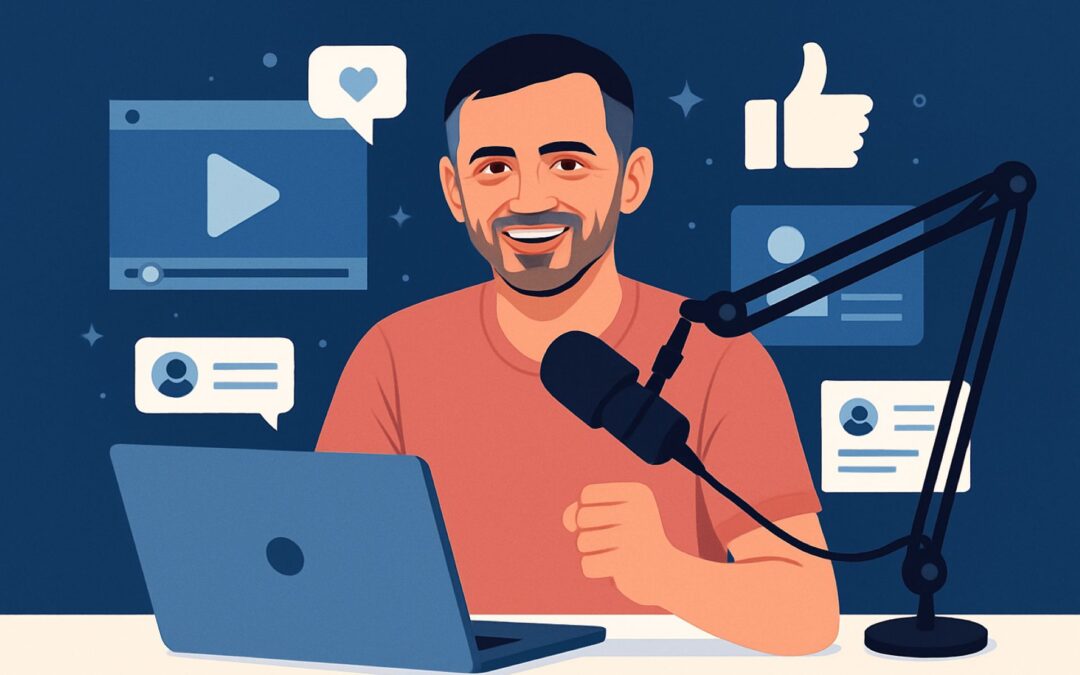
In a world where everyone is competing for attention, your greatest asset isn’t your product, your resume, or your marketing budget—it’s you. The digital era has made identity the new currency. Every tweet, post, and video you create either builds or erodes your credibility. The line between business and personality has vanished; people no longer buy just what you sell—they buy who you are.
That’s what personal branding is really about. It’s not a marketing tactic or a side hustle. It’s the full expression of your story, values, and voice across every platform where you exist. It’s the bridge between passion and profit, between obscurity and opportunity. When built with authenticity, it can turn trust into equity, creativity into community, and your name into your greatest business.
The internet didn’t just level the playing field—it erased it. You don’t need permission to build something meaningful anymore. You just need to show up as yourself, consistently and unapologetically.
It Was Never About the Wine
Wine Library TV wasn’t born out of a desire to sell more bottles—it was born from a desire to build something much bigger: trust. When Gary Vaynerchuk sat down in front of the camera for the first time, it wasn’t as a salesman. It was as a human being who loved wine, loved people, and loved sharing what he knew. That distinction—between selling and sharing—is what defined everything that followed.
Yes, the show talked about wine. Yes, there were links to purchase the bottles online. But that was secondary, even incidental. The point wasn’t to turn views into transactions; it was to turn authenticity into equity. Gary understood something that most marketers still struggle to grasp—when people trust you, they’ll eventually trust what you sell. But if they feel you’re only there to push a product, the connection collapses.
That’s why he built a system to protect his integrity. Every time he featured a wine, he deliberately stocked only fifteen or fewer cases in his store. If the wine sold out, so be it. He didn’t rush to restock or inflate prices. He wanted to make sure that nobody could accuse Wine Library TV of being a disguised commercial. He wanted viewers to know that his reviews weren’t influenced by profit margins. In fact, he often recommended wines that competitors carried, sending business elsewhere simply because they were good. That honesty, that willingness to prioritize trust over sales, made him stand out in an industry obsessed with prestige and exclusivity.
The result was something far more valuable than a bump in revenue—it was brand equity. People began walking into Wine Library not just to buy wine, but to meet the man behind the screen. They wanted to experience the energy, the honesty, and the enthusiasm they saw online. Some came simply to say thank you. That kind of connection can’t be bought with ads; it’s earned, sip by sip, word by word, truth by truth.
Gary’s story is a reminder that your brand isn’t built in boardrooms or through marketing campaigns. It’s built in the moments when you choose authenticity over convenience. It’s when you stop chasing short-term wins and start playing the long game—where trust, consistency, and transparency become the real currency.
In a world addicted to metrics—followers, clicks, conversions—he played a different game: reputation. He wasn’t optimizing for sales; he was optimizing for belief. Because when people believe in you, they’ll buy from you forever. And that’s the kind of wealth that never runs dry.
The Power of Personal Branding
The internet has changed everything, but one truth remains timeless: people don’t buy products—they buy people. They buy trust. They buy story. They buy the emotion behind the message. That’s the foundation of personal branding.
Your personal brand isn’t a logo, a slogan, or a curated feed—it’s the digital expression of who you are. It’s your reputation made visible, your personality made scalable. Every video, post, and podcast you put out is a brushstroke on that canvas. The challenge isn’t to invent something new—it’s to show the world what already exists within you.
In the early 2000s, personal branding was reserved for celebrities. It was Oprah on daytime television, Howard Stern on the radio, Emeril Lagasse shouting “Bam!” on Food Network. These figures didn’t just entertain; they built empires around their identities. They didn’t sell generic content—they sold themselves. Their quirks became their currency. Their authenticity became their marketing strategy.
But today, that same power is available to everyone. Social media demolished the gatekeepers. You don’t need to beg for airtime or spend millions on ad campaigns. You can turn a camera on yourself, speak your truth, and build an audience from scratch. The playing field has never been this level.
Look at how people like Ashton Kutcher or Kerry Rhodes leveraged their platforms. Kutcher was already famous as an actor, but social media allowed him to expand his influence far beyond Hollywood. He became a digital entrepreneur, a thought leader, a connector. Rhodes, an NFL player, used Twitter not just to talk football, but to share his perspective, humor, and values—turning a career in sports into a multifaceted personal brand.
Then there’s the new wave of creators—people who weren’t household names at all but built enormous communities through authenticity and consistency. Justine Ezarik (iJustine), Chris Sacca, Dave Morin, Kevin Rose—none of them waited for permission to be seen. They didn’t need network executives or publicists. They picked up a camera or opened a laptop, created valuable content, and connected directly with people who cared.
That’s the power of personal branding—it collapses distance. It removes friction. It gives anyone the chance to transform a passion into a platform. When your audience feels like they know you, they root for you. They want to see you win. And that emotional investment is worth more than any ad budget.
Still, the essence of personal branding isn’t about numbers—it’s about depth. You can have ten thousand followers who barely know you or a thousand who would go to bat for you. Quality trumps quantity. Real engagement, real conversations, real trust—that’s what matters. Ironically, even though Gary often reminded people that follower counts mean little, decision-makers in the media and business world still pay attention to them. So when the numbers look good, doors open. But the only reason those numbers matter is because of what they represent—attention.
And where attention flows, opportunity follows.
That’s why personal branding isn’t optional anymore. Whether you’re an artist, a real estate agent, or a software developer, your reputation precedes you. It’s your modern-day résumé, your track record in real time. If you’re not shaping it intentionally, someone else will do it for you.
In the end, your personal brand is a promise—a declaration of who you are, what you stand for, and how you deliver value. When it’s rooted in authenticity, it becomes unstoppable.
Building My Brand
Gary Vaynerchuk’s personal brand didn’t emerge from a marketing brainstorm or a polished PR plan—it came from frustration. He grew up in the wine business, surrounded by the old guard of experts, critics, and connoisseurs who spoke a language the average person couldn’t understand. He would attend $1,000-a-head tastings filled with industry veterans, all swirling, sniffing, and spitting with perfect precision. They’d talk about “rose petal bouquets” and “silky finishes,” using phrases that made wine sound like something reserved for the elite.
Gary’s experience told him something different. He saw regular customers walk into the store every day—people who loved wine but felt alienated by the snobbery surrounding it. They wanted to enjoy it, not decode it. So he did something revolutionary: he decided to speak human.
When he tasted wine, he didn’t reach for jargon—he reached for memory. He’d say, “This one tastes like Big League Chew,” or “That reminds me of a Whatchamacallit bar.” Critics might have rolled their eyes, but the audience? They got it. Suddenly, wine didn’t seem intimidating anymore. It seemed fun. Relatable. Accessible.
That was the birth of his brand: the everyman’s wine expert. The guy who could stand toe-to-toe with sommeliers but never made you feel small. He wasn’t just selling wine—he was translating a culture. He turned an exclusive industry into an inclusive experience, giving people permission to enjoy what they liked, not what they were told to like.
But authenticity, by its nature, divides. Some viewers thought his energy was refreshing; others found it obnoxious. He used a New York Jets spit bucket on camera, had toys scattered across his table, and spoke with a loud, animated style that felt more like a sports show than a wine review. Some critics dismissed him as unprofessional. Others hailed him as a disruptor. Either way, people couldn’t ignore him—and that’s the point of a personal brand.
After a few years, Gary realized he’d earned something even more valuable than audience attention: trust. So, in 2007, he made his next move. He pivoted from wine to business—his true passion. He began releasing videos about entrepreneurship, branding, and hustle culture. Many expected him to lose his following. Instead, he expanded it. Why? Because people weren’t following the “wine guy.” They were following Gary. They believed in him.
That pivot set the stage for everything that came after—his book deals, his keynote speeches, and his company, VaynerMedia. He proved that when you build a brand based on authenticity and substance, you can evolve endlessly without losing your core audience.
At its heart, his success came down to a few simple truths:
- He knew what he was talking about. Expertise builds confidence. Confidence builds authority.
- He told the truth, even when it hurt. Audiences forgive mistakes, not deceit.
- He played the long game. No shortcuts, no overnight hype—just consistent, genuine value.
For all his charisma, Gary’s power didn’t come from theatrics—it came from trust. His show worked not because it entertained, but because it educated. People didn’t just watch for fun; they watched because they learned something, felt something, and, above all, believed something.
In a digital world filled with copycats and noise, that kind of authenticity is a rare commodity. And once you have it, you never have to sell again—because your brand does the talking for you.
Opportunity Lies in Transparency
The modern consumer has x-ray vision. They can see through pretense, detect manipulation, and sniff out insincerity faster than ever before. In the age of the internet, transparency isn’t a luxury—it’s a survival tactic.
In the past, businesses could hide behind slogans, gatekeepers, and PR spin. Not anymore. One bad review, one misleading claim, one poorly handled incident—and the truth spreads like wildfire. The lines between public and private, company and individual, have dissolved. Everything is visible, and everyone is watching.
That’s why honesty is now the most powerful marketing strategy there is. Gary Vaynerchuk built his reputation on radical transparency. When he tasted a wine that was bad, he said so. On camera. Publicly. He didn’t sugarcoat, spin, or dodge. If something “tasted like horse crap,” he’d call it out. It wasn’t about pleasing winemakers—it was about respecting his audience.
Did it make him popular with every producer? Of course not. But it made him trustworthy. And in business, trust is everything. Consumers know when they’re being sold to—and they resent it. But when someone speaks truthfully, even brutally, it cuts through the noise like a beam of light.
Transparency doesn’t just apply to the wine industry—it applies everywhere. Imagine a real estate agent who stopped hiding behind glossy language and told the truth about every property. Picture them sitting in their car, filming a quick video: “This house is rough. It’s got red shag carpet and antler chandeliers, but if you’ve got vision, it’s a solid investment.” That agent might lose a few listings early on—but in the long run, they’d become the most trusted voice in town.
Because trust, once earned, compounds. The honest agent doesn’t just sell homes; they sell credibility. The transparent entrepreneur doesn’t just make money; they make meaning.
That’s the magic of transparency: it builds authority without self-promotion. It turns skepticism into loyalty. When people know they can believe you, they stop questioning your motives. They start advocating for you.
And that’s how modern branding works. Not by shouting louder, but by being clearer. Not by pretending to be perfect, but by being real.
Transparency attracts authenticity, and authenticity attracts opportunity. When you own your truth—good, bad, and messy—you remove every weapon your critics could use against you. You become untouchable, not because you’re flawless, but because you’re honest.
Gary once said, “If you’re that good, people will find you.” But the reverse is also true—if you’re that honest, people will trust you. And in today’s economy, trust is the ultimate competitive advantage.
Trust Your Own Palate
There’s a dangerous myth in the world of personal branding—the belief that to succeed, you must imitate someone else who already has. People look at those who’ve “made it” and try to replicate their tone, style, or strategy, believing that if they just follow the same steps, they’ll arrive at the same destination. But that’s not how it works. You can’t build a powerful personal brand by photocopying another person’s identity. You must develop your own flavor—your own palate.
Gary Vaynerchuk’s success came from total self-awareness. He knew who he was, what he loved, and how he wanted to communicate. He didn’t try to sound sophisticated or polished just because the wine world demanded it. He didn’t pretend to be calm, soft-spoken, or refined to appeal to “serious” critics. He embraced his raw, fast-talking, New Jersey energy—the same intensity that made him seem brash to some and magnetic to others.
He also knew his medium. Writing wasn’t his strength. He could have hired ghostwriters, paid for polished blog posts, and passed them off as his own. Many celebrities and business figures do that, but he refused. If the content didn’t come from him—his words, his tone, his energy—it wasn’t authentic. And authenticity was the nonnegotiable pillar of his brand. So, instead of forcing himself to fit into the world of written blogging, he waited for a platform that matched his DNA. When video took off, he jumped in headfirst and never looked back.
That decision changed everything. He didn’t have to fake polish or professionalism. His charisma and honesty translated naturally on camera. The lens became his amplifier. And because his content reflected his real personality, it resonated deeply with his audience.
Your job is to do the same. Don’t mimic someone else’s strategy—study your own temperament. What medium makes you come alive? Where do your ideas flow effortlessly? Maybe it’s the written word, where you can think deeply and edit carefully. Maybe it’s audio, where your voice carries your conviction. Maybe it’s visuals, where your creativity thrives through design or storytelling.
Whatever it is, build your brand there. Don’t force yourself into someone else’s formula. Because people can sense inauthenticity from miles away. They can feel when something’s genuine and when it’s staged.
The most magnetic personal brands in the world aren’t perfect—they’re consistent. They’re rooted in identity. You don’t need to act like Gary, sound like Oprah, or write like Tim Ferriss. You just need to be you—unfiltered, unpolished, unmistakably you.
When your content is authentic, people connect with you emotionally. And once they connect, they share. Once they share, your influence grows. That’s how trust is built. That’s how reputation compounds. Your voice is your brand’s fingerprint—and no one can replicate it.
Word of Mouth on Steroids
Before the digital revolution, word of mouth was the gold standard of marketing. It was slow, organic, and profoundly human. A friend told another friend about a great restaurant or an honest mechanic, and that trust transferred instantly. There were no analytics, no impressions, no click-through rates—just one person vouching for another.
Today, that same principle still drives success, but the scale has exploded beyond imagination. Word of mouth has evolved into something exponentially more powerful—word of mouse. The moment someone shares your post, retweets your idea, or mentions your name online, they’re broadcasting your brand to hundreds, thousands, even millions of people.
And here’s the beauty: these audiences aren’t random. They’re opt-in. Every follower has chosen to hear from that person, which means when they share your content, it comes preloaded with trust. It’s personal recommendation—on steroids.
That’s why Gary Vaynerchuk calls social media “the modern-day dinner table.” It’s where conversations happen, where reputations are built, and where brands are made or broken in real time. One viewer might watch your video, laugh, and send it to ten friends. One fan might write a glowing comment that inspires hundreds to check you out. One influential follower might repost your insight to their own massive network—and suddenly, your message explodes.
The secret isn’t to chase virality. The secret is to build relationships. People don’t share because something is popular—they share because it made them feel something. It informed them, entertained them, or inspired them. In a world where attention is fragmented, emotional resonance is the most valuable currency you have.
Think about it: a single tweet about your work can travel across industries, time zones, and cultures in minutes. A blog post that resonates can keep bringing traffic years later. A video clip can outlive the product it promoted. Every piece of content has infinite shelf life and infinite reach, as long as it’s rooted in authenticity.
The digital landscape has turned ordinary individuals into powerful broadcasters. You don’t need billboards or prime-time ads—you need trust and consistency. When people believe in your message, they’ll share it for you.
That’s what “word of mouth on steroids” really means. It’s not about manipulating the algorithm—it’s about earning loyalty at scale. You don’t buy it. You earn it, one genuine interaction at a time.
Everybody’s Doing It
The truth is, you already have a personal brand—whether you realize it or not. The moment you go online, you’re broadcasting who you are to the world. Every comment, every post, every profile picture—it all tells a story. The question isn’t if you have a brand; it’s whether you’re controlling the narrative.
When you share a photo on Instagram, when you write a tweet, when you comment on someone’s post, you’re shaping how people perceive you. Maybe you think it’s just casual interaction, but to others, it’s data—it’s insight into your personality, your professionalism, your values. That’s how digital branding works: everything is public, everything is permanent, and everything matters.
If you’re creative, your social profiles are your portfolio. If you’re analytical, your insights on LinkedIn are your résumé. If you’re entrepreneurial, your content is your track record. The internet doesn’t just reflect your identity—it magnifies it.
And here’s the shift that most people haven’t fully grasped: the traditional résumé is dying. A PDF full of bullet points and job titles can’t compete with a living, breathing online presence that demonstrates your actual value. Employers, clients, and investors don’t want to read what you’ve done—they want to see it.
Imagine two candidates applying for the same job. One has a polished résumé. The other has an online presence where they’ve been sharing thoughtful industry commentary for years—videos, posts, and collaborations. Who do you think gets the callback? The second one doesn’t just look qualified—they look proven.
That’s why personal branding is no longer optional. Even if you work for a company, even if you love your job, even if you think you’re “not in sales”—you are. You’re selling yourself every day: your ideas, your perspective, your reputation.
Gary Vaynerchuk often says that every tweet, post, or comment is a small piece of your résumé. The collection of your online interactions paints a clearer, more authentic picture of who you are than any bullet-point summary ever could. If you get laid off tomorrow, your personal brand can open doors that would have stayed locked otherwise.
The world now rewards visibility. When people know your name, trust your character, and respect your voice, you don’t chase opportunities—they chase you. That’s why it’s vital to start building now, before you need it.
You don’t need to be an influencer or a CEO. You just need to be intentional. You need to share your ideas, your experiences, your insights—because the digital world is listening. Whether you’re an artist, a coder, a teacher, or a manager, you are your own media company.
Your digital footprint is your future’s foundation. Build it with care, honesty, and consistency. Because in a world where everyone has a platform, the only question that matters is—what are you using yours to say?
Conclusion
Your personal brand is your legacy in real-time—a living, breathing narrative that grows with every interaction you have. It’s the proof of your intent, the echo of your passion, and the fingerprint you leave on every space you touch online.
In a world flooded with content, authenticity is the ultimate filter. You don’t need to be the loudest, smartest, or flashiest. You just need to be real. People will find you. They’ll trust you. They’ll follow you. Because honesty, once amplified, becomes unstoppable.
So, don’t wait for the perfect timing or the perfect platform. Start where you are. Share what you love. Build what feels true. The tools are free. The gatekeepers are gone. The only thing left to do is step forward and make your name mean something.