
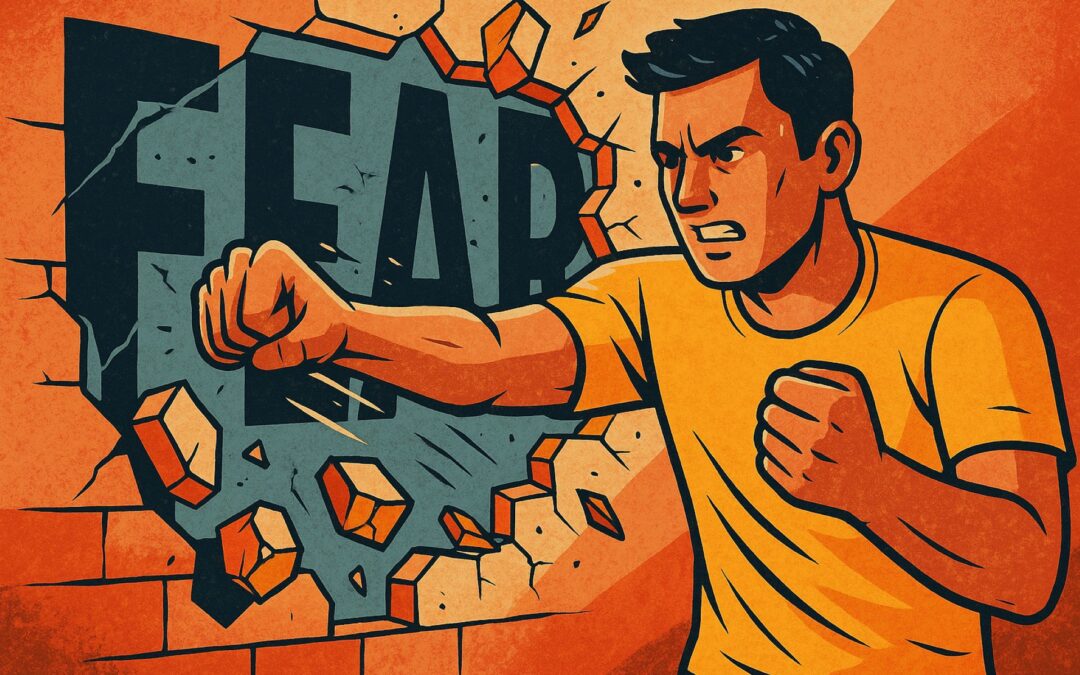
There’s no shortage of information on how to build something extraordinary. Align intent, authenticity, passion, patience, speed, work ethic, attention tracking, platform mastery, and content creation — and you’ve got the framework for success. But knowing what to do isn’t the problem. It’s doing it. Most people don’t fail because they lack the formula. They fail because they never begin.
Every day, people talk about starting their own business, launching their podcast, or building their brand. Most never take the first step. And when asked why, they reach for excuses that sound reasonable — but are really disguises for fear.
The Myth of “No Time, No Money, No Chance”
The most dangerous illusion in the modern world is the belief that you need ideal conditions to start. That you need free time, financial backing, or permission from someone who’s already made it. People keep waiting for the “right” circumstances as if success arrives by appointment. But here’s the truth: no one ever started ready. Every single person who built something worthwhile began in chaos, uncertainty, and discomfort.
When people say, “I have a full-time job,” what they really mean is, “I’m afraid of the exhaustion that comes with chasing two dreams.” And yes, it’s exhausting — that’s what separates contenders from spectators. The people who make it work use the margins of their day: the early hours before the commute, the late nights after dinner, the small pockets of stillness others waste scrolling. They aren’t waiting for freedom — they create it through sacrifice. Success doesn’t demand balance in the beginning; it demands obsession.
And the classic excuse — “I don’t have any money.” You don’t need money to start; you need resourcefulness. The internet has made entry almost free. You can record on your phone, sell from your bedroom, or design from a borrowed laptop. Most of the entrepreneurs who “crushed it” started with borrowed Wi-Fi and ideas scribbled on the backs of receipts. They traded cash for creativity, investing sweat instead of capital. When you lack funds, your imagination becomes your funding.
Then there’s the parental refrain: “I have kids.” Yes, and that’s exactly why you should be building something meaningful. Every late night, every moment of risk, every leap of faith — your children are watching. You’re not just shaping your career; you’re sculpting their understanding of possibility. They’ll remember how you faced fear more than how you followed rules. Don’t use your kids as a reason to stop — let them be the reason you can’t afford not to try.
“My industry has too many rules.” So what? Rules are scaffolds — useful at first, but restrictive when left unchallenged. The giants of every field weren’t rule-followers; they were reformers. The ones who were told, “That’s not how it’s done,” and replied, “Then I’ll do it differently.” Every saturated industry is waiting for the next rebel with the audacity to disrupt it. The moment you stop obeying the industry manual is the moment you start writing your own.
“I have an idea for an app, but I don’t know how to code.” Neither did most founders when they began. They googled, they failed, they found co-founders, they experimented. The point isn’t knowing everything — it’s being willing to learn anything. Your lack of knowledge isn’t a wall; it’s a door labeled “enter here.”
“My parents don’t get it. My friends won’t understand.” Of course they won’t — because vision always looks like delusion until it works. People resist what threatens their comfort, even when it’s someone else’s dream. You don’t need their validation; you need your conviction. The people who once rolled their eyes at your “weird ideas” will eventually call them genius.
And the most self-sabotaging one of all: “I don’t have time.” Time is not found — it’s forged. Everyone has twenty-four hours. The difference lies in priorities. Some choose to binge shows; others choose to build legacies. Time, like money, is an investment. The question isn’t whether you have it. The question is what you’re trading it for.
Look deeper, and you’ll see all these excuses share a single root: fear of starting small. People want to appear accomplished without ever being seen as beginners. They want the highlight reel without the awkward bloopers. But every empire begins as a rough draft. Every expert was once an amateur willing to look ridiculous in public.
The truth is, every reason you give for not starting has already been disproven by someone who had less and did more. Broke single parents, immigrants with accents, teenagers with borrowed equipment, retirees with decades “behind them.” The difference between them and you isn’t circumstance — it’s commitment. They didn’t wait for clarity. They created it through motion.
You don’t need a perfect plan to begin. You just need to begin perfectly aware that conditions will never be perfect. Because once you move, momentum becomes your mentor.
The Fear Beneath the Excuses
Excuses are never really about logistics — they’re about fear. Fear cleverly disguises itself as practicality. It whispers in your mind: “Be realistic. Wait until the timing’s better. Think it through.” But the truth is, fear doesn’t protect your potential — it suffocates it.
When you strip every excuse down to its core, you find one of three primal fears:
- The fear of failure.
- The fear of wasting time.
- The fear of seeming vain or self-promotional.
Each of these is an emotional parasite that feeds on hesitation. Let’s dissect them.
Fear of failure is the loudest. It hides under the illusion of “caution.” People say they don’t want to fail — but what they really dread is being seen failing. Failure in private feels tolerable. Failure in public feels fatal. They imagine the judgment, the gossip, the “I told you so’s.” They picture themselves as the punchline of their own ambition — and so they never act.
But here’s the paradox: failure only feels permanent when you refuse to learn from it. The moment you use it as data instead of defeat, it becomes fuel. Those who fail forward don’t crumble — they compound.
Then comes the fear of wasting time. This one sounds mature. Responsible. Logical. “What if I put in years and it doesn’t work?” But what’s more wasteful: two years chasing a dream that doesn’t pan out, or fifty years doing something you hate because you never tried? People forget that every second spent hesitating is time already wasted. The fear of wasting time is the thing that wastes it most.
Finally, the fear of seeming vain — the social one. “What if people think I’m full of myself?” “What if they think I’m just trying to be famous?” We’ve been conditioned to equate visibility with arrogance. But confidence isn’t vanity — it’s clarity. It’s knowing who you are and daring to show it. The ones who fear looking self-absorbed are often the ones with the most to offer.
These three fears are masters of disguise. They’ll masquerade as logic, humility, or even responsibility. They’ll whisper that you’re being sensible when, in truth, you’re just scared. But understanding their pattern is half the battle. Once you name them, they lose their grip.
Behind every “I can’t” is an “I’m afraid.” Behind every “not now” is a “not ready.” And behind every “someday” is a “never,” waiting patiently for you to make it true.
Fear is the architect of mediocrity. It builds walls out of imaginary limits and convinces you they’re real. But when you push against them — when you take that first trembling step — you’ll realize they were made of air all along.
The only thing standing between you and the version of yourself that crushes it isn’t skill, money, or timing. It’s the courage to do it afraid.
Fear of Failure
Failure isn’t what terrifies people. Exposure is. It’s not the stumble that hurts—it’s the imagined audience watching you fall. The fear of failure is rarely about the act itself; it’s about the humiliation that might follow.
People will say, “I don’t want to lose money,” or “I don’t want to waste effort.” But dig deeper and you’ll find what they’re truly saying is, “I don’t want others to see me lose.” We’ve been conditioned since childhood to equate failure with shame. To fail in school meant red marks and disappointed faces. To fail in public means mockery, pity, or judgment. But that’s the illusion. Because in real life, failure is not a verdict—it’s a signal.
Every person you admire has failed publicly, often spectacularly. They didn’t avoid failure; they built careers on its lessons. The truth is, failure isn’t fatal unless you let it define you. The only permanent loss is quitting before you learn the lesson it came to teach.
The people who make it are not fearless. They’re fluent in failure. They’ve learned its rhythm—the fall, the sting, the recalibration, the rise. It becomes less of a monster and more of a mirror, reflecting where they still need to grow. You’ll never outsmart failure, but you can outlast it.
The hardest part is ignoring the noise. Your family might question your judgment. Friends might think you’ve lost it. Even strangers on the internet will have opinions about your choices. But opinions don’t pay bills. They don’t create legacies. The people judging you aren’t ahead of you—they’re the ones who stopped moving.
Here’s the paradox: the moment you stop fearing failure, your chances of success multiply. Because fear makes you cautious, and caution kills creativity. The person willing to look foolish, to take hits, to start over—that’s the person the world eventually calls brave.
Rodrigo’s Leap
Rodrigo Tasca’s story is what happens when someone stops negotiating with fear. He wasn’t living in a Manhattan loft with investors and polished gear. He was in Florida, sleeping in his parents’ house, working out of his bedroom. From the outside, it looked like regression. But internally, it was reinvention.
He didn’t wait for a big break—he made one. He’d won a GoPro at a holiday raffle years before and used that single tool to practice filming. He took every free gig he could find, often shooting entire events for exposure. He taught himself editing through YouTube tutorials and online classes, staying up until dawn to refine his craft.
For months, his work earned him nothing but fatigue and skepticism. But every free project built a foundation of trust and a library of proof. His portfolio grew. His skills sharpened. Slowly, he transformed from a guy “playing with cameras” into a brand—Tasca Studios.
That rebrand changed everything. Suddenly, people who ignored him before wanted to work with him. In a single year, he went from unpaid labor to charging over $1,000 a day. His bedroom studio became a legitimate business. His sister joined him full-time.
Rodrigo didn’t conquer fear by waiting for courage—he built courage through action. He failed publicly, adapted privately, and emerged stronger. His story reminds us that failure is not the end. It’s the first draft of success.
Fear of Wasting Time
This one’s insidious because it sounds rational. “What if I put years into this and it doesn’t work?” It’s a fair question—but the answer depends entirely on how you define work.
If success means instant money or recognition, then yes, most things will feel like a waste. But if success means growth, mastery, and momentum, then nothing is wasted. Every failed business idea teaches you what not to repeat. Every creative project that falls flat sharpens your instincts. Every hour spent experimenting compounds into a deeper understanding of what matters.
People overestimate the risk of trying and underestimate the cost of waiting. Waiting erodes energy. Waiting kills momentum. Waiting convinces you that potential is permanent when it’s actually perishable. The clock doesn’t pause for hesitation—it punishes it.
When you tell yourself, “I don’t want to waste time,” what you often mean is, “I don’t trust myself enough to recover from losing it.” That’s not a time problem. That’s a confidence problem.
For those under 35, this fear is particularly absurd. You have time to fail, recover, and try again multiple times over. You could spend two full years pursuing a project that collapses, and you’d still be young enough to pivot into an entirely new field. The risk isn’t wasting time—it’s wasting youth waiting for certainty.
And for those over 35, the perspective is even more powerful. You’ve already experienced the dull ache of doing something you don’t love. You’ve seen how quickly years vanish when you trade passion for security. The worst-case scenario isn’t that you fail. It’s that you succeed at something that doesn’t matter.
Trying something new—building a business, starting a channel, learning a skill—might feel risky. But in the long term, it’s the safest investment you can make. Time spent on growth compounds forever. Time spent avoiding it decays instantly.
Sean’s Second Act
Sean O’Shea is living proof that it’s never too late to start over. At forty, he was parking cars for a living, watching his dreams of being a professional musician evaporate. He was surrounded by celebrities, but none of their spotlight reached him. By his own admission, he was in a “bad space”—burned out, underpaid, and uncertain of his purpose.
Then came the dogs. Two rescues—wild, aggressive, impossible to control. They weren’t just pets; they were metaphors for his chaos. When he realized he couldn’t fix them without fixing himself, he began studying everything—dog psychology, behaviorism, personal growth. He didn’t just train the dogs. He trained his mindset.
His transformation was slow, painful, and deeply personal. Yet the results were astonishing. He went from being the neighborhood guy who got dragged across the park by his dogs to the one neighbors admired for his calm control. People began asking for help. Then paying for it.
Sean turned his mess into a message. He launched a business, The Good Dog, documenting his methods and sharing his lessons online. He recorded raw videos—no fancy lighting, no marketing polish—just honesty. He shared his failures, frustrations, and breakthroughs. The transparency resonated.
Within a few years, he went from parking cars to running an international dog training business with two studios, a podcast, and over $600,000 in annual revenue. People flew from around the world to learn from him.
Sean’s story shatters the myth of wasted time. Eleven years spent parking cars didn’t disqualify him—they equipped him with discipline, humility, and perspective. Every “lost” year was actually research in patience. When opportunity finally arrived, he recognized it because he’d spent a lifetime preparing unconsciously.
The truth is, time isn’t wasted when you’re moving toward something that matters. Even detours have direction when you walk them with intention.
Fear of Seeming Vain
This one cuts deep — because it’s not just fear, it’s conditioning. Most of us were raised to be modest, to stay humble, to never “show off.” We were taught that good work speaks for itself. But in today’s world, that’s a myth. Good work doesn’t speak for itself — you do. And if you’re not willing to speak up, someone less talented but louder will steal the conversation.
The fear of seeming vain is the fear of visibility. It’s the inner conflict between wanting to be seen and being terrified of what being seen might invite — criticism, misunderstanding, mockery. You think, What if they think I’m full of myself? What if they laugh at me? What if they don’t care?
But the truth is, the people who will think that are the ones who’ve never tried to create anything themselves. The ones too scared to stand in front of a camera, to post something raw, to put their name on their work. The world doesn’t belong to the loudest — it belongs to the most authentic.
When people call you vain, what they’re really saying is, “You remind me of what I’m not doing.” Your courage reflects their complacency. Your voice exposes their silence. And that makes them uncomfortable.
In 2009, when Gary Vaynerchuk first wrote Crush It!, he was criticized for being “self-promotional.” For glorifying personal brands and social media presence. People called it narcissism. But who’s laughing now? The market has proven the truth — visibility builds credibility. Connection builds business. Those who embraced their voice early are now thriving, while the ones who mocked them are still debating whether it’s “too much.”
Self-promotion isn’t arrogance — it’s awareness. You’re not inflating your ego; you’re amplifying your impact. The difference lies in intent. Arrogance says, “Look at me.” Authenticity says, “Here’s what I’ve learned — maybe it can help you too.”
So what if you look like a fool for a while? Everyone does when they start. The first videos are awkward. The first podcast sounds stiff. The first Instagram post feels uncomfortable. But no one becomes iconic without first being embarrassing. The greatest entrepreneurs, creators, and thought leaders all began by cringing at their own beginnings.
Visibility is vulnerability. It’s the willingness to risk being misunderstood for the sake of being remembered. You will be judged either way — so you might as well be judged for showing up.
The truth is, hiding your potential doesn’t make you humble — it makes you unavailable. People can’t learn from you if they can’t find you. The audience you’re afraid to face is the same audience waiting to be moved by your story.
Stop worrying about what people will think of your camera, your captions, your content. Nobody cares as much as you think they do. The ones who matter will appreciate your honesty; the ones who don’t were never your audience anyway.
Remember: everyone looks like an amateur before they look like a pioneer. Everyone looks like a narcissist before they look like a visionary. If you’re afraid of seeming vain, it means you care deeply — and that’s exactly the kind of person who should be seen.
Fear Is a Compass
Fear isn’t a warning sign — it’s a roadmap. It’s the emotional GPS that points directly toward the things that will grow you. The stronger the fear, the more likely you’ve found the path that matters.
Think about it: fear only shows up when something meaningful is at stake. You don’t get nervous about mediocrity. You get nervous about potential. Fear isn’t there to stop you; it’s there to signal that you’re about to cross into new territory.
Most people interpret fear as “turn back.” High performers interpret it as “go forward — this is where the treasure is buried.” The difference between stagnation and evolution lies entirely in how you read the signs.
Fear of failure? It’s your cue to act. Fear of wasting time? It’s your cue to refocus. Fear of vanity? It’s your cue to speak. Each form of fear is a compass needle spinning toward the next frontier of your personal development.
When you avoid fear, you don’t just avoid pain — you avoid transformation. The safest paths are the ones that lead nowhere. Growth demands discomfort. Fear is the toll you pay at the gates of greatness.
If you’re terrified to start that YouTube channel, launch that product, or post your story online — that’s your sign. Because if it didn’t matter, you wouldn’t care. The very fact that you’re scared means the stakes are real.
Fear sharpens you. It humbles you. It forces preparation, awareness, and focus. People who live without fear aren’t brave — they’re blind. Bravery is moving forward because of fear, not in spite of it.
Fear also strips away illusions. When you step into something that terrifies you, you meet your rawest self — the one without the mask of comfort. You start hearing your real voice, not the one built for approval. Fear burns away pretense and leaves only purpose.
The key is not to fight fear, but to repurpose it. When it whispers, “You can’t,” translate it as, “You must.” When it says, “What if you fail?” reply, “What if I don’t?” When it tells you, “You’re not ready,” remind it, “Neither was anyone else who succeeded.”
Fear is not a chain. It’s a challenge. It’s not a signal to retreat; it’s a call to expand. Every entrepreneur, artist, or dreamer who made history had to make peace with the tremor in their chest.
If you’re not afraid of your next step, it’s probably too small. Fear is proof that you’re still alive, still growing, still pushing the edge of your identity.
When you learn to walk toward it — not around it — you’ll realize that fear was never your enemy. It was your compass all along, pointing you to exactly where you were meant to go.
Set Your Mind to Success
Before any strategy, tactic, or platform comes mindset — because mindset is the architecture that holds everything together. Every piece of advice, every “how-to” guide, every success framework collapses if it rests on a weak mental foundation. If your mind isn’t wired for endurance, even the best plan will crumble under pressure.
Success doesn’t begin when you get followers or funding. It begins when you decide — really decide — that failure is not final, that progress is not optional, and that self-doubt is just noise to be managed, not obeyed. Once that mental switch flips, everything else becomes execution.
The modern entrepreneur doesn’t need to ask for permission. We’re in the most democratized era of creation in history. The playing field is wide open. Yes, it’s crowded — but it’s far from closed. People act like it’s too late to start when in truth, we’re still at the beginning of this digital age. There are new frontiers being built every year — new platforms, new audiences, new tools. The only people who get left behind are the ones too afraid to jump in early and look stupid for a while.
Every creative revolution begins with a few brave souls willing to look unpolished. Those are the pioneers. They don’t wait until their content is perfect or their brand is refined. They start where they are, with what they have, and they improve publicly. The difference between those who “talk about doing” and those who “crush it” is not timing — it’s tolerance for embarrassment.
When you set your mind to success, you also set your mind to pain. Because progress hurts. It hurts to be ignored. It hurts to be criticized. It hurts to care deeply and get no validation. But that pain is the entrance fee to mastery. You can’t skip it — you can only outlast it.
Courage doesn’t feel like courage when you’re living it. It feels like anxiety. It feels like doubt. But one day, you’ll look back and realize that those shaky steps were the most important ones you ever took.
The people who seem fearless aren’t immune to fear — they’re disciplined in their response to it. They’ve trained their brains to move forward anyway. They’ve built systems for resilience — morning routines, gratitude practices, accountability partners, and relentless consistency. Success is 80% psychology, 20% execution.
You will never feel fully ready. You’ll never know exactly what to say or how to start. That’s normal. Success doesn’t demand readiness; it demands motion. The act of moving — posting that video, making that call, writing that pitch — creates clarity. Action breeds information, and information breeds improvement.
If you wait to feel confident before you act, you’ll never move. But if you act before you feel confident, confidence will follow.
Mimi’s Rise
Mimi Goodwin’s story is the embodiment of resilience through reinvention. Born into trauma, she faced more pain before adulthood than most face in a lifetime. Sexual abuse, homelessness, domestic violence — her story could have ended in silence. But instead of letting those chapters define her, she turned them into a furnace for strength.
Her escape came through creativity — sewing. A craft she’d picked up as a child beside her aunt in Puerto Rico became her therapy, her escape, her purpose. What started as a hobby evolved into a lifeline. She sewed through the pain, one stitch at a time, piecing together not just fabric, but her identity.
When she started her blog, Mimi G Style, she didn’t have a team or capital. Just talent, determination, and a refusal to stay invisible. She combined fashion with storytelling, showing people that making something with your hands could also rebuild your confidence.
She began posting tutorials, sharing her patterns, and offering free lessons. Her honesty and warmth resonated with women worldwide. Her content wasn’t just about clothing — it was about reclaiming power. Every video said, You can create something beautiful out of the pieces you have left.
The response was explosive. What began as a one-woman blog became a global movement. Her following grew into hundreds of thousands. Brands wanted to collaborate. She hosted conferences, launched her own pattern line, and became a mentor to women who saw themselves in her journey.
When Project Runway called, she didn’t just represent her brand — she represented every woman who’d been overlooked. She walked onto that set not as a survivor, but as a symbol of self-made empowerment.
And yet, Mimi didn’t stop there. She noticed a gap in the market — a lack of diversity in the sewing and fashion community. So she created Sew Sew Def, a digital magazine that celebrated inclusivity in design. Her mission wasn’t just business — it was representation.
Mimi’s rise wasn’t linear. It wasn’t glamorous. But it was real. It was built on years of faith, discipline, and a deep belief that her story — no matter how broken — had value. That’s what setting your mind to success looks like: seeing possibility in every setback, purpose in every pain, and opportunity in every rejection.
The Final Truth
Here’s the brutal truth: you are both the lock and the key. No one is holding you back. No system, no person, no algorithm. Just you — your hesitation, your excuses, your fear.
Every external obstacle is conquerable once the internal one is removed. Time, money, education — these are logistics. Courage is the only true currency. The day you stop blaming circumstances and start taking ownership, everything changes.
The people who make it big aren’t always the most talented. They’re the ones who refuse to stop. The ones who show up every day, even when no one’s watching. The ones who publish when no one reads. The ones who keep talking when no one listens. Because they know that silence today doesn’t mean irrelevance — it means incubation.
You’ll get hate. You’ll get mocked. You’ll be misunderstood. But that’s proof you’re doing something that matters. The only people who get criticized are the ones visible enough to be noticed.
Social media didn’t make the world cruel — it just amplified what was already there. The hate, the jealousy, the insecurities — they’ve always existed. But so have creativity, resilience, kindness, and truth. The difference is, now you get to decide which side of that spectrum you want to contribute to.
You can spend your energy defending your ego, or you can spend it building your empire. The choice is yours.
The world doesn’t reward hesitation. It rewards momentum. The person who acts — imperfectly, passionately, relentlessly — always beats the one who plans forever. The winners aren’t the ones who have it all figured out. They’re the ones who started before they did.
So publish the post. Launch the idea. Pitch the client. Share your story. Make the call. The next step isn’t going to come from more thinking — it’s going to come from movement.
Every time you act, you chip away at the myth of limitation. Every time you push forward, you remind the world — and yourself — that potential doesn’t die; it just waits for permission.
And the only permission you’ve ever needed was yours.
Because in the end, no one’s stopping you. Not luck. Not money. Not timing.
Just you.