
Every day, your life is being negotiated—not just by others, but by your own impulses, distractions, and emotions. You may think you’re in control, but how much of your time is truly yours? How many hours slip away in pointless obligations, digital noise, and emotional turbulence disguised as productivity?
The Stoic philosopher Seneca once wrote that we waste much of life without realizing it—caught in “pointless grief, foolish joy, greedy desire, and social amusements.” His warning wasn’t a relic of ancient times; it was prophecy. In an age obsessed with busyness, attention has become the new currency, and most people are bankrupt without knowing it.
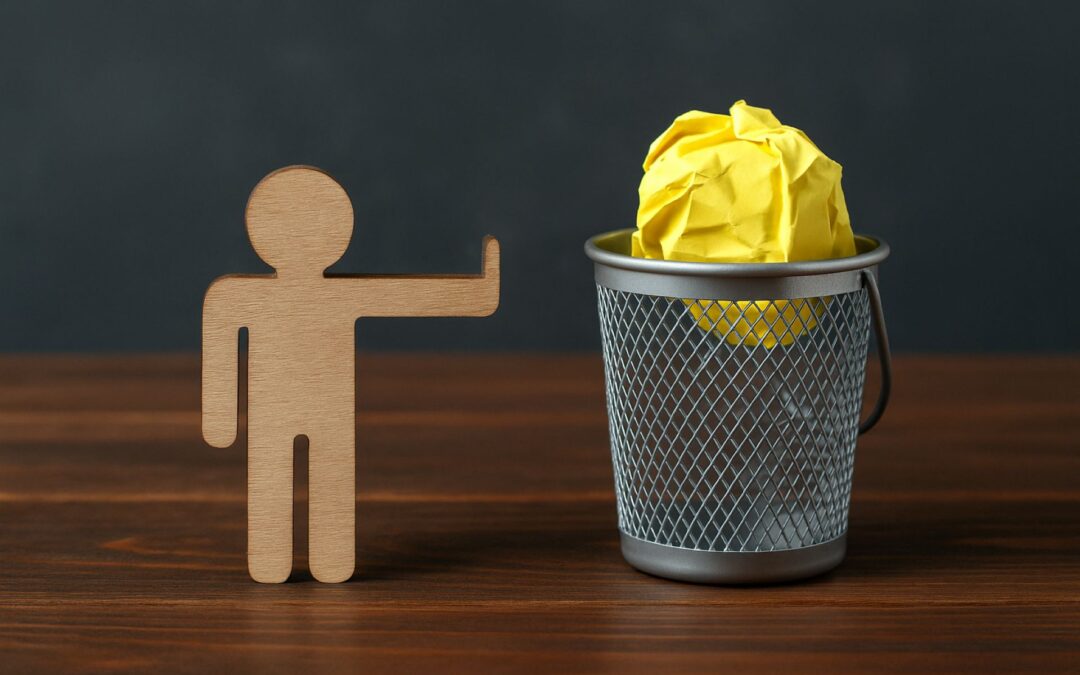
To live freely, you must learn a difficult art: the art of refusal. You must become ruthless to the things that don’t matter. Not cruel, but discerning. Not detached, but deliberate. Because until you decide what deserves your focus, the world will decide for you—and it won’t be kind.
“How many have laid waste to your life when you weren’t aware of what you were losing, how much was wasted in pointless grief, foolish joy, greedy desire, and social amusements—how little of your own was left to you. You will realize you are dying before your time!”
—SENECA, ON THE BREVITY OF LIFE, 3.3b
The Silent Thief of Time
Time is the one currency that, once spent, can never be replenished. Yet, paradoxically, it’s also the currency we treat with the least reverence. We guard our money, our possessions, our reputations—but when it comes to time, we hand it out freely to anyone or anything that asks. We waste it on endless digital scrolls, pointless arguments, shallow entertainment, and emotional indulgences that add nothing to our lives.
The tragedy is that this loss doesn’t come all at once. It happens in small, invisible withdrawals—a few minutes here, a few there—until one day you look back and realize an entire year has dissolved into mediocrity. Like a slow leak in a ship’s hull, it’s not the storm that sinks you, but the steady trickle you failed to notice.
Modern life is engineered to make you forget this. Every platform, every notification, every advertisement is built to hijack your attention. They sell you urgency, and you buy it with your peace. You think you’re consuming content, but it’s actually consuming you. Time is traded for triviality, and the exchange rate is always unfavorable.
Seneca warned against this millennia ago, yet his words ring even truer today. The issue isn’t that life is short; it’s that we act as though it were infinite. We schedule our dreams for “someday.” We say we’ll start that project, read that book, travel to that place—when things calm down. But things never truly calm down; distractions just change form.
Awareness is the antidote. When you start noticing how effortlessly time escapes through the cracks of your daily routine, you begin to treat it as sacred. You start to question where your minutes go, who gets them, and whether those exchanges are worthy of your existence. You begin to realize that busyness is not productivity, that socializing is not connection, and that motion is not progress.
Life is not about squeezing in more—but about cutting out what doesn’t matter. The silent thief of time isn’t chaos; it’s compromise. Every time you choose convenience over purpose, you surrender a fraction of your potential. The only way to stop the theft is to start guarding your attention as fiercely as a miser guards gold.
The Courage to Say “No”
There is immense courage in a simple, firm no. It’s one of the smallest words in the English language, yet few have the strength to utter it without guilt or hesitation. We fear rejection. We fear disappointing others. We fear being seen as cold, arrogant, or unkind. So we overcommit. We say yes to plans we don’t enjoy, work that doesn’t fulfill us, and people who drain our energy—just to avoid discomfort.
But every time you say yes to something unimportant, you’re silently saying no to something that is. You’re saying no to rest, reflection, and progress. You’re saying no to yourself.
This inability to decline is often disguised as kindness or ambition. We convince ourselves that we’re being helpful, cooperative, or open-minded. But in reality, we’re being complicit in our own exhaustion. We live under the tyranny of “should”—I should help, I should attend, I should agree—and we end up living lives that don’t belong to us.
The art of saying no is not rebellion; it’s self-preservation. It’s the conscious recognition that your time is finite and your energy limited. Each “no” is a declaration that you won’t be swayed by every wave that crashes against you. It’s how you define the borders of your life.
Of course, it comes with resistance. People who benefited from your lack of boundaries will call you difficult. They’ll accuse you of being selfish or detached. Let them. The truth is, selfishness and self-respect often look similar from the outside. Only one of them leads to peace.
Learning to say “no” consistently, calmly, and without apology is an act of liberation. It’s how you reclaim authorship over your days. It’s how you stop living reactively and start living deliberately. The goal isn’t to reject everything—it’s to protect what’s sacred. When you stop scattering your attention on the trivial, what remains is a life aligned with purpose.
The Hidden Cost of Emotional Busyness
Not all distractions are external. Some of the most dangerous ones live quietly inside your head. Emotions, when left ungoverned, can drain you more completely than any task or person ever could. Anger, envy, excitement, obsession—each seems harmless at first, even natural. But together, they fracture your focus, scatter your thoughts, and consume your clarity.
We underestimate how much energy emotional turbulence demands. A few minutes of irritation can ruin hours of focus. A lingering resentment can cloud days of productivity. The mind, when left unchecked, becomes a battlefield of competing impulses—each one clamoring for your attention, each one pretending to be urgent.
This is what emotional busyness looks like: constantly reacting, endlessly overthinking, habitually worrying. You’re not living—you’re managing chaos. The Stoics called this slavery of the mind. They believed true freedom wasn’t about controlling the world but mastering one’s internal responses to it.
Anger demands an audience. Envy feeds on comparison. Anxiety thrives on imagined futures. When you refuse to entertain them, they weaken. When you observe them without reacting, they dissolve. That’s the essence of emotional discipline—not denial, but distance.
Cultivating this emotional clarity requires practice. Meditation, journaling, and solitude aren’t just self-care—they’re strategy. They help you slow the mental storm, examine your thoughts, and separate what deserves your attention from what doesn’t. Over time, you begin to recognize patterns: the triggers that rob you of peace, the narratives that keep you small, the indulgences that masquerade as passion.
When you master your emotions, you reclaim enormous amounts of energy. You stop being tugged around by every passing feeling and start directing your life with quiet precision. Emotional busyness is a tax you no longer have to pay. And in that stillness, productivity, peace, and power all return to their rightful place—under your command.
The Impositions That Consume Life
Most people live as if they’ve signed a lifetime lease with distraction. They mistake activity for achievement, social obligation for connection, and routine for purpose. The tragedy isn’t that they’re lazy—it’s that they’re busy doing the wrong things. Every day becomes a performance, a sequence of tasks dictated not by meaning but by momentum.
We tell ourselves we’re “keeping up.” But with whom? With what? Every “yes” we give to meaningless obligations is a quiet surrender of autonomy. You start the day with your time as your own, and by sunset, it’s been auctioned off to errands, expectations, and empty chatter. It’s not that people intend to waste your life; they simply have different priorities for it.
The subtle impositions are the most dangerous. They rarely announce themselves as distractions. They arrive disguised—as opportunities, as favors, as harmless commitments. The colleague who wants “just five minutes” of your time. The friend who insists you attend a gathering you don’t care about. The social expectation to be reachable, responsive, perpetually available. Each one by itself seems small, but collectively, they eat away at the edges of your life until there’s nothing left but obligation.
And the most insidious of all are self-imposed demands—the invisible scripts you follow out of habit or fear. The compulsion to prove your worth. The reflex to please. The dread of missing out. You spend your life chasing approval that no one will remember and maintaining appearances that no one truly values.
To live intentionally, you must declare war on these impositions. Audit your commitments with ruthless honesty. Ask yourself: Does this serve my highest values, or does it merely preserve my comfort? The answer will often sting. It will require withdrawing from people, declining invitations, and breaking traditions that no longer serve you. But this pruning is not cruelty—it’s clarity.
Freedom does not come from doing more; it comes from doing less, better. The moment you stop trying to meet everyone’s expectations, you create space to meet your own.
Reclaiming the Yes That Matters
Once you begin saying “no” to what’s meaningless, something beautiful happens—your “yes” becomes powerful again. It’s no longer a reflex or a form of politeness. It’s a deliberate act of alignment. When you reclaim your time and attention, you rediscover the rare joy of wholehearted participation—the feeling of saying yes to something that genuinely matters.
“Yes” should feel sacred, not habitual. It’s a contract between your intention and your energy. Each “yes” you give should be a statement of purpose—whether it’s to a project, a relationship, or a challenge. It means, this deserves my focus, my presence, my best self. Anything less is a theft of meaning.
But this recalibration doesn’t happen overnight. After years of overextension, your instincts are blunted. You may feel guilty for refusing things that once defined your busyness. You may mistake stillness for stagnation. Yet over time, you’ll notice the shift: fewer commitments, but deeper ones. Less noise, but richer sound.
When you protect your “yes,” you protect your energy. You reserve your enthusiasm for pursuits that stretch you, not drain you. You begin to measure life not by how much you do, but by how alive you feel while doing it.
There’s a sharp difference between a full life and a fulfilled one. The former is cluttered with tasks; the latter is curated with intention. A full life keeps you occupied. A fulfilled life keeps you awake.
So, say yes—to mastery, to growth, to moments that elevate your mind and nourish your spirit. Say yes to long walks, deep conversations, good books, and silence. Say yes to things that carry you closer to who you’re becoming, not further into distraction. The more selective your yes becomes, the more valuable your time feels. And when you finally look back, you’ll realize you didn’t just live longer—you lived better.
The Ruthless Art of Living
Ruthlessness, in this context, is not cruelty—it’s precision. It’s the discipline to cut away the unnecessary so the essential can shine. The truly fulfilled are not those who have everything, but those who have edited everything that doesn’t belong.
Most people live like hoarders of commitments—collecting experiences, relationships, possessions, and ideas without discernment. They fear letting go, mistaking abundance for meaning. But accumulation without clarity only leads to noise. A crowded life is a confused one.
The Stoics understood this centuries ago. They practiced subtraction as a form of wisdom. Epictetus reminded his students that the essence of philosophy is learning what to disregard. Marcus Aurelius wrote about trimming away needless thoughts, keeping only what aligns with virtue and purpose. Even artists, in their craft, know this truth: what makes a sculpture beautiful is not what’s added, but what’s removed.
To live ruthlessly is to approach your existence like an artist chiseling marble. You strip away the nonessential—habits that dull your edge, relationships that drain your vitality, obligations that dilute your focus. What remains is form, strength, and truth.
But this discipline demands courage. It means walking away from comfort, refusing conformity, and confronting your attachments. It means being misunderstood by those who equate stillness with idleness, solitude with loneliness, and simplicity with lack. Yet beneath that misunderstanding lies freedom—the kind that few ever experience.
The ruthless are not unfeeling; they are awake. They understand that a short, well-lived life is infinitely better than a long, wasted one. They trade excess for excellence, noise for nuance, chaos for clarity.
And perhaps this is the greatest paradox: the more ruthless you become with what doesn’t matter, the more tender you become toward what does. You show up fully for the few things that deserve you—your craft, your loved ones, your inner peace. You stop scattering yourself thin across the trivial and instead pour yourself deeply into the meaningful.
That is the true art of living—not to have more time, but to make the most of the time you already have.
Conclusion
Life becomes infinitely lighter when you stop carrying what isn’t yours. When you say no to distractions, to needless emotions, to the endless noise demanding your attention, you begin to reclaim the rarest luxury of all—clarity.
The ruthless art of living isn’t about withdrawal from the world; it’s about engaging with it on your own terms. It’s about trimming the excess so that what remains—your work, your relationships, your purpose—can finally breathe.
So, be ruthless in your choices and intentional in your commitments. Say “no” often, but say it with grace. Protect your peace as fiercely as your dreams. Because in the end, the quality of your life will never be measured by how much you did, but by how little you wasted.
This article is a part of the Daily Stoic Series based on Ryan Holiday’s book.