
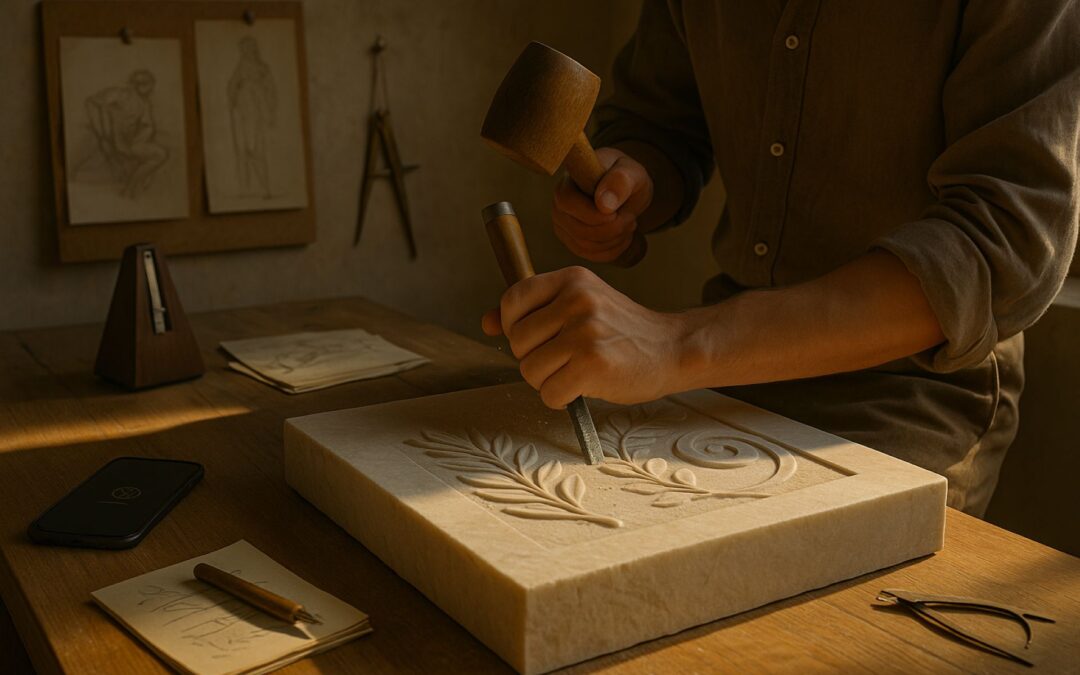
Every human life begins as a pursuit of pleasure. We chase it through comfort, novelty, and ease, mistaking it for happiness. Yet somewhere along the way — through effort, failure, or craft — we discover that pleasure is not found in what we consume but in what we create. The more we discipline ourselves, the more our desires refine.
“One can have no smaller or greater mastery than mastery of oneself.”
—Leonardo da Vinci
The things that once delighted us begin to feel trivial, while the once-difficult begins to feel deeply fulfilling. This is the invisible evolution that Robert Greene describes: the transformation of pleasure from indulgence into mastery. True joy, it turns out, is not freedom from effort — it is the harmony born of effort made meaningful.
Daily Law: See the fruits of discipline and skill as the richest pleasures of all.
Mastery, II: Submit to Reality—The Ideal Apprenticeship
The Seduction of Immediate Pleasure
The modern world has perfected the art of instant satisfaction. Every surface, every sound, every swipe is designed to promise a moment of delight. Pleasure is now available on demand — from the buzz of a notification to the quick thrill of a purchase, from the dopamine spark of digital approval to the sugary comfort of convenience. We no longer wait for pleasure; we expect it. Yet the more accessible it becomes, the less power it holds. The high fades faster, the craving returns sooner, and our threshold for contentment rises with every indulgence.
What we call “pleasure” in this context is often little more than stimulation — a rapid flicker across the senses that leaves the soul untouched. It’s the kind of pleasure that soothes rather than strengthens, that distracts rather than deepens. It numbs the discomfort of growth, shielding us from the friction that mastery requires. Over time, this endless consumption of ease corrodes our ability to feel genuine satisfaction. We lose the capacity for anticipation, the sweetness of delay, the pride of effort. Pleasure, stripped of its struggle, becomes hollow.
The paradox is that the pursuit of comfort breeds restlessness. When the mind grows accustomed to ease, even small challenges feel unbearable. We start interpreting stillness as boredom, focus as fatigue, and effort as punishment. But these states are not punishments — they are the conditions under which depth is born. The athlete who trains, the musician who practices, the thinker who wrestles with ideas — they all enter discomfort willingly because they understand its hidden reward: a more profound and lasting pleasure that cannot be purchased or streamed.
To chase constant pleasure is to remain spiritually poor. It is to consume the surface of life while starving its depth. The mind that seeks perpetual novelty loses its ability to savor; it flits from one sensation to the next, tasting everything, absorbing nothing. It becomes like a bee that lands on every flower but gathers no nectar. The antidote to this emptiness is not abstinence, but awareness — a deliberate slowing down of desire. To look beyond the first wave of pleasure and ask: What will this give me after the feeling fades?
The mature mind begins to sense the emptiness behind quick delights and feels drawn toward something quieter, deeper, and infinitely more rewarding — the kind of pleasure that grows from discipline, creation, and control. This is not a rejection of joy, but a refinement of it. The instant pleasures that once governed us become background noise to a richer harmony: the pleasure of self-mastery.
The Alchemy of Effort
Effort is the crucible through which pleasure is purified. At first, it feels harsh — a denial of ease, a rebellion against comfort. The body resists, the mind protests. But every deliberate act of persistence, every moment we push past fatigue or frustration, alters us on a cellular level. The brain begins to associate struggle with progress, pain with potential. What once felt like burden begins to feel like nourishment. This is the alchemy that transforms effort into joy.
The craftsman sanding a rough piece of wood, the pianist repeating a single scale until it dissolves into instinct, the writer rewriting the same paragraph until every word breathes — each of them is engaging in the same sacred exchange. They trade the shallow pleasures of distraction for the deeper fulfillment of refinement. The hours of practice, repetition, and failure are not wasted; they are invested. Each act of focus sharpens perception, turning what was once ordinary into something luminous.
Effort does something profound to the self: it creates intimacy with reality. When you labor over a thing, you begin to understand its nature — its weight, texture, and resistance. A sculptor learns not just to shape marble but to listen to it. A coder learns the logic hidden in patterns. A thinker learns the terrain of doubt. Through effort, we stop skimming the surface of life and start inhabiting it. What was once an external task becomes an inner conversation.
This transformation extends beyond skill — it reshapes character. The discipline required to persist through difficulty cultivates humility, because it reminds us of how much we do not yet know. It breeds patience, because it reveals that progress has its own rhythm. And it inspires confidence, because each small mastery becomes a private proof of power. Over time, pleasure shifts its allegiance — away from fleeting entertainment and toward the satisfaction of seeing one’s abilities expand.
Effort also deepens gratitude. When something is hard-earned, we savor it more fully. The musician who has fought through years of scales hears more music in a single note than the casual listener ever could. The pleasure is not in the applause, but in the mastery itself — in knowing that what once seemed impossible now lives in one’s hands. The work, once a source of strain, becomes a sanctuary.
There comes a point when discipline ceases to feel like effort at all. It turns into rhythm, into devotion. The mind that once sought shortcuts now finds contentment in process. The act of striving becomes indistinguishable from pleasure. This is the deepest transformation — when work is no longer a means to reward but becomes the reward itself. In that moment, effort ceases to be the price of pleasure; it becomes its purest form.
When Boredom Becomes a Signal
Boredom is often mistaken for emptiness, but it is closer to hunger — a subtle call from the mind for something more nourishing than what it’s being fed. We treat it as a nuisance, a state to be escaped, but boredom is one of the most honest emotions we have. It tells us that our capacities are underused, our curiosity is unfed, and our energies are misdirected. The restless feeling that surfaces when nothing seems engaging is not proof that life is dull — it’s proof that we’ve outgrown the current level of challenge.
The tragedy is that modern life offers endless ways to silence boredom without ever satisfying it. We reach for the nearest screen, scroll through noise, switch tabs, or chase novelty. These are distractions dressed as solutions. They quiet the symptom while starving the cause. The mind, denied depth, begins to deteriorate. It forgets how to focus, how to wait, how to imagine. In a world where attention is fragmented, boredom is not the problem — it is the cure.
When boredom arises, the disciplined individual listens rather than flees. They treat it not as an enemy but as information. It is a diagnostic signal from the inner self: a message that the mind is capable of more than what it’s currently doing. It’s the artist realizing the work no longer challenges them, the professional sensing their growth has plateaued, the student feeling the dull ache of stagnation. Those who heed this signal redirect their energy — they seek harder problems, deeper questions, higher forms of mastery. Those who ignore it numb themselves with novelty and remain stuck in the same loop, mistaking distraction for change.
Great thinkers, creators, and innovators have always understood this paradox. They have used boredom as a gateway. Friedrich Nietzsche wrote that “boredom is the unpleasant calm that precedes a great creative act.” Isaac Newton discovered gravity while sitting alone in an orchard, a mind unoccupied enough to notice the fall of an apple. Even Marcus Aurelius, surrounded by the duties of empire, found meaning in repetition and silence, turning his private reflections into Meditations. Boredom, when accepted with patience, becomes a space where the imagination can breathe again.
But to experience boredom fruitfully requires discipline — the willingness to endure a temporary void. The ego resists it because boredom feels like insignificance. Yet the wise recognize that this feeling is simply the shedding of shallow attention. It is the cleansing period before depth begins. Like soil resting before spring, the idle mind is gathering strength.
If we can resist the reflex to fill every quiet moment, we reclaim one of our most powerful faculties: curiosity. Out of boredom comes wonder. Out of stillness comes invention. Out of patience comes mastery. The apprentice who stays with the dull task, the musician who repeats the same passage, the monk who returns to the same breath — all are learning to endure boredom until it transforms.
In the end, boredom is not the absence of pleasure — it is the threshold of it. The mind that has learned to sit with stillness discovers a new flavor of joy: the satisfaction of depth. To master boredom is to master one’s own restlessness, to turn a once-feared void into fertile ground for growth. It is the silent whisper of evolution, calling us beyond comfort toward creation.
The Redefinition of Pleasure
At a certain stage in the pursuit of mastery, pleasure itself undergoes a quiet metamorphosis. What once excited you now feels shallow; what once seemed dull now holds immense satisfaction. It is not that the world has changed — it is that you have. Discipline has recalibrated your senses. The fleeting highs of consumption no longer impress. You begin to crave something steadier, something that nourishes rather than numbs. Pleasure stops being an escape and becomes a form of engagement — a deep immersion in the act of creation, in the rhythm of effort made graceful through repetition.
This redefinition is not imposed by morality or self-denial; it happens naturally through experience. The person who practices long enough begins to notice that the most rewarding moments arise not from indulgence, but from alignment. When the mind, body, and will work in unison toward something meaningful, the feeling that emerges is richer than any quick delight. It’s not excitement but absorption — a state of flow where time dissolves, ego fades, and one’s purpose feels inseparable from one’s being. The ancient philosophers called this eudaimonia — the pleasure of living in harmony with one’s highest nature.
There is an irony here: as we grow more disciplined, we actually become more sensitive to joy. The palate refines. The subtler textures of life — the pause between musical notes, the grain of wood beneath a craftsman’s hand, the elegance of a well-formed idea — become sources of quiet ecstasy. These are not loud pleasures. They do not glitter or boast. They require attention, patience, and care — qualities that only effort can cultivate.
Mastery, then, is not a path away from pleasure but a journey into its deeper forms. To the untrained mind, discipline looks like repression. To the master, it is liberation. The dancer who has practiced for years can express freedom in a single movement because every muscle obeys her intent. The calligrapher finds bliss in the stroke of a brush because his precision makes room for grace. The mind that once chased stimulation now finds delight in control — not the control of the world, but of the self.
This evolution changes one’s relationship with time. Instant pleasure burns quickly and dies. The pleasure of mastery endures and accumulates. It carries no guilt, no craving for more. It grows stronger through use, like a fire that feeds on discipline instead of desire. The individual who has tasted this understands that pleasure divorced from effort is a mirage — bright, inviting, but vanishing at the touch. Real pleasure is alive. It expands the self rather than disperses it.
And so the pursuit of pleasure becomes something entirely different — not a chase, but a cultivation. The goal is not to feel good, but to become good at feeling. To experience the world not as a series of appetites, but as an unfolding art of attention. When you redefine pleasure in this way, you are no longer a consumer of moments but a creator of meaning. You cease to be at the mercy of pleasure; you become its master.
In this final stage, pleasure and discipline fuse into one. What was once a choice between comfort and effort disappears. The two are no longer opposites but partners in harmony. To work is to feel alive; to focus is to feel free. The reward is no longer external but internal — a lasting serenity that comes from knowing you are using yourself fully. This is the richest pleasure of all: the joy of mastery, the satisfaction of self-command, and the quiet radiance of a life lived in alignment with one’s purpose.
Conclusion
Pleasure, when untamed, enslaves. But when cultivated through discipline, it liberates. To master a skill, to endure boredom, to persist through repetition — these are not denials of joy but its foundations. Every act of focus reveals a subtler layer of satisfaction, until the boundary between work and pleasure dissolves entirely.
The ordinary becomes sacred; the simple, profound. The self that once sought stimulation now finds peace in patience. To redefine pleasure is to reclaim power over desire itself. It is to discover that the sweetest moments in life arise not from escape, but from engagement — from the steady flame of mastery burning quietly within.
This article is part of The Daily Laws Series based on Robert Greene’s book.