
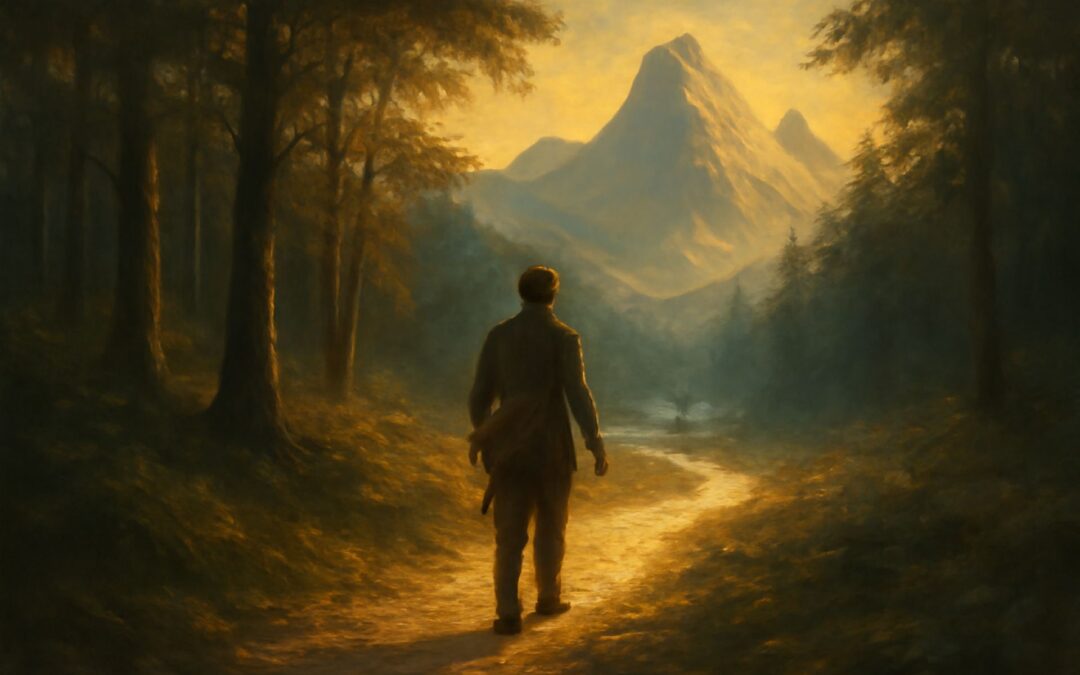
Patience is bitter, but its fruit is sweet.
— Aristotle
In the fast-paced world of creative expression, the pressure to produce quickly and gain instant recognition is ever-present. The temptation to rush through the creative process, seeking immediate results, can be overwhelming. Yet, true mastery and originality are not born out of haste but from patience and perseverance.
Creativity, at its core, requires time—time to learn, experiment, fail, and grow. In this article, we explore how impatience can hinder your creative journey and how embracing patience and the long view can lead to true mastery and authentic self-expression.
Daily Law: Take the long view. By being patient and following the process, individual expression will flow out of you naturally.
Mastery, V: Awaken the Dimensional Mind—The Creative-Active
The Dangers of Impatience in the Creative Process
Impatience is a natural instinct, especially in a world that rewards quick results and fast innovation. The pressure to be successful overnight, to have our ideas recognized and applauded immediately, can overwhelm even the most talented creators. It often feels as though the faster we produce, the more we’re moving forward. This rush is especially evident in the creative process, where new trends and technologies can lure us into thinking that the quicker we can create, the more ahead we’ll be. However, this haste often leads to a disservice—not only to our work but to our growth as artists.
When we allow impatience to drive our work, we often skip over the crucial steps that allow for true innovation. Creativity, at its core, is an exploration—a journey of discovery that takes time. It’s not about pumping out products for instant satisfaction but about developing something meaningful and profound. Impatience pushes us to cut corners, to take shortcuts that ultimately diminish the quality of our work.
At its worst, impatience can cause us to overlook the process of mastering our craft. Creativity isn’t just about having an idea or expressing yourself. It’s about understanding the medium, the technique, and the tools at your disposal. It’s about acquiring a deep knowledge of the conventions and techniques of your field before ever thinking of deviating from them. Rushing through this stage can mean you lack the technical vocabulary to express yourself effectively. Without this foundation, what might seem like a burst of creativity is often just a jumble of ideas, lacking coherence or depth.
When we skip the learning phase, we end up with work that is superficial and derivative. Impatience often leads us to mimic others, to take their formulas and repackage them as our own, thinking we’re being creative. But true creativity isn’t about copying or imitating—it’s about creating something unique, something that reflects your voice and vision. Without the patience to develop your own understanding of the craft, you are left with a hollow imitation, lacking the authenticity that resonates with an audience.
Even worse, audiences can sense this inauthenticity. People have a remarkable ability to detect when something has been rushed or forced. They can tell when a piece of work lacks substance, when it feels more like an attempt to get attention than a genuine expression of creativity. This is why so many creators who rush their work find themselves ignored or dismissed, while those who take the time to learn and perfect their craft find their audience growing. The truth is, art cannot be rushed, and audiences are often more discerning than we give them credit for. They can tell when something has been made with passion, time, and effort, and they respond accordingly.
Rushing the creative process also fosters a sense of dissatisfaction. Instead of finding joy in the journey, creators become fixated on the end result, which they hope will bring them validation and praise. This leads to a cycle of unfulfilled expectations and disappointment. The desire to achieve immediate results detracts from the intrinsic joy of learning and creating. In the rush to finish, we forget that the journey itself—filled with challenges, failures, growth, and reflection—is what truly nurtures our creativity.
This is why impatience is such a dangerous force in the creative process. It clouds our judgment and leads us down a path of shallow, uninspired work. In order to create something that will resonate with others and stand the test of time, we must be willing to embrace the slow, methodical process of learning, refining, and growing. Only through patience can we cultivate the skills necessary to create work that is not only original but deeply meaningful.
The Path to Mastery: Embracing Patience
Mastery is not something that can be achieved overnight. It is a journey that unfolds over years, and often even decades, requiring an unwavering commitment to patience and self-improvement. In the creative process, this means embracing the slow, sometimes frustrating path of learning, practice, and refinement. It’s about prioritizing growth over immediate recognition and valuing the depth of knowledge and skill that comes only through time.
Patience in the creative process doesn’t mean idly waiting for inspiration to strike or simply hoping for talent to manifest. It’s an active form of patience—one that requires deliberate action and continuous effort. It’s about dedicating yourself to mastering the technical skills of your craft, understanding its history, and internalizing its rules before you ever think about breaking them. This may seem tedious in the beginning, but it’s the foundation that allows you to create with authenticity and originality.
The first step toward mastery is immersing yourself fully in your field. You need to be willing to spend hours learning the basics, honing your skills, and understanding the nuances of your chosen discipline. Whether you’re a writer, an artist, a musician, or any other type of creator, the basics are always the same. Mastery starts with learning the conventions, techniques, and tools that define the craft. These are the building blocks that will support your growth as an artist. Without them, your work is more likely to be unstable and unfocused, lacking the rigor necessary for true expression.
What often discourages many creators is the initial monotony of this phase. The act of repetition, of continuously refining your technique, can feel like an unremarkable pursuit. There’s no immediate reward, no flashy outcome to celebrate. However, this is the essence of patience in creativity: the understanding that mastery takes time and that every hour spent practicing, learning, and improving adds to your eventual success. The more you immerse yourself in the process, the more confident you will become in your abilities.
As you progress, your understanding of the craft deepens. What once seemed like tedious practice becomes an enjoyable exploration. You begin to recognize patterns, uncover new techniques, and make discoveries that lead to breakthroughs. This is when the real transformation occurs—when you move beyond technical proficiency and begin to experiment with new ideas, styles, and forms of expression. You start to understand the deeper elements of your craft, the subtleties that make it unique, and your place within it.
But even at this stage, patience remains essential. As you push the boundaries of your work, you must be willing to fail and learn from those failures. Creative breakthroughs rarely come on the first attempt. Every mistake is a step forward in your journey, a valuable lesson that brings you closer to your true potential. It’s during these moments of struggle and failure that the most significant growth happens. The willingness to keep going despite setbacks is a hallmark of those who achieve mastery.
The journey to mastery is also about finding your own voice. While learning from others and understanding established conventions is crucial, it’s equally important to explore and personalize what you’ve learned. This is where the true creativity emerges. Once you’ve internalized the basics, you have the freedom to take risks, experiment, and express your individuality. Patience allows you to develop a unique style that isn’t just an imitation of others but a reflection of your own experiences, ideas, and perspectives.
In time, this personal style becomes your signature, something that sets you apart from others in your field. Your work stops being about following trends or chasing approval; it becomes a genuine reflection of who you are as an artist. Mastery is not just about technical skill—it’s about the ability to combine that skill with your authentic voice to create work that resonates deeply with others.
Ultimately, the path to mastery is one of perseverance and continuous self-improvement. It requires you to embrace the slow, deliberate process of growth, understanding that each step, no matter how small, brings you closer to realizing your full potential. Mastery is not a destination but a lifelong journey, and the more patient you are with it, the more rewarding it will be. The greatest works of art, the most profound expressions of creativity, are born from this commitment to patience and practice.
Daily Law: The Long View
The concept of the “long view” serves as both a strategy and a mindset, one that allows creators to distance themselves from the immediate rush for recognition or instant success. It reminds us that creativity and mastery unfold over time. Rather than focusing on short-term rewards or quick results, the long view encourages you to invest in the gradual process of development, where growth is measured by progress, not immediate applause.
Taking the long view means resisting the temptation to compare your progress with others. In a world of social media and instant content sharing, it’s easy to fall into the trap of comparing your work with those who seem to have achieved success faster or more visibly. But this comparison is often misleading. The public-facing results of others’ work represent only a tiny fraction of their true journey—one that is often filled with setbacks, failures, and years of quiet effort. The long view helps you to keep your focus on your own path, to understand that your timeline may look different from others’, and that this difference is not only okay but essential for your creative growth.
The long view helps you embrace delayed gratification. In a culture obsessed with speed, it’s easy to grow frustrated by the slow pace of progress. However, creativity thrives when given time. Every brushstroke, every word written, every piece of music composed adds to the final work, and each effort contributes to your overall growth as an artist. If you’re focused solely on the end product, you miss out on the joy of the journey, which is where much of the value lies. By focusing on the process rather than the outcome, you begin to cultivate the deep satisfaction that comes from knowing that your work is evolving organically.
This mindset also reinforces the importance of persistence. There will be times when you feel discouraged or wonder if your efforts are truly leading to something meaningful. The long view encourages you to keep moving forward, even when immediate results aren’t visible. It’s a reminder that all those small steps add up over time, that consistent work is what leads to breakthroughs and success. Without patience, we are prone to quitting too early, abandoning projects that may have become significant if only given the proper time to mature.
Moreover, the long view fosters resilience in the face of failure. Creative endeavors are not linear, and setbacks are inevitable. The road to success is often paved with mistakes, criticisms, and moments of doubt. The key is to see each of these challenges not as a dead end, but as a necessary part of the creative process. The long view shifts your perspective on failure, helping you to see it as a stepping stone toward your ultimate goal, rather than a reason to abandon the project altogether. Every failure teaches you something valuable, bringing you one step closer to your authentic expression.
By taking the long view, you also learn to appreciate the incremental nature of growth. The process is not about sudden, dramatic transformations but about steady, continuous improvement. Small, consistent actions—whether it’s writing a page a day, sketching a new idea, or learning a new technique—compound over time, creating work that reflects years of thoughtful development. The long view keeps you anchored to the understanding that mastery takes time and that true creative expression cannot be rushed.
Ultimately, this perspective removes the pressure of trying to achieve something extraordinary right away. Instead of fixating on the need to make a “splash,” you begin to appreciate the slow, deliberate crafting of something with lasting value. The long view allows you to see beyond the immediate moment and into the future, where your work will have had the time to evolve and mature. It’s the process of becoming, rather than the idea of arriving.
The long view also nurtures a sense of contentment with where you are in your journey. It frees you from the constant pressure of “what’s next” and allows you to fully engage with the current stage of your work. Instead of rushing toward the next milestone or success, you learn to savor the act of creation itself, finding joy in each moment along the way. With patience, you start to trust that the natural evolution of your craft will bring the results you desire—and more importantly, that these results will be authentic and fulfilling.
Conclusion: The Power of Mastery Through Patience
The path to creativity and mastery is not one of shortcuts or quick fixes. It is a journey that demands patience, persistence, and a deep commitment to the craft. By embracing the long view, you allow yourself the freedom to grow organically, free from the pressures of comparison and immediate success.
When you take the time to master your craft and focus on the process, you will ultimately produce work that is meaningful, unique, and deeply fulfilling. True creative expression is a product of patience—only by taking your time and trusting the journey can you unlock your full potential as an artist.
This article is part of The Daily Laws Series based on Robert Greene’s book.