
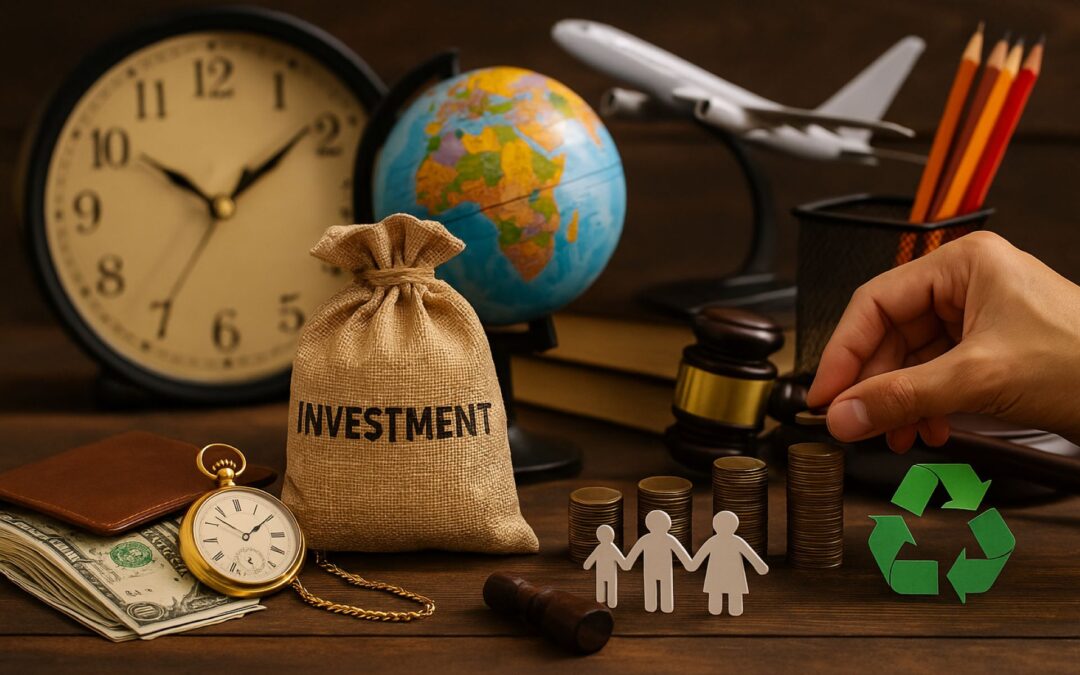
As your financial situation improves and wealth begins to accumulate, a fascinating transformation takes place in how you view the world. Money, once solely a tool for survival and security, evolves into a means of freedom, exploration, and impact. The shift in your worldview as you grow wealthier is subtle, yet profound, affecting not only your perspective on money but also your approach to relationships, time, and personal fulfillment. From embracing calculated risks to shifting the focus from material wealth to meaningful experiences, the changes are both personal and expansive. In this article, we will explore 15 key ways your worldview changes as you get richer, and how these transformations shape not just your lifestyle, but the legacy you leave behind.
1. Money Transitions From Necessity to Freedom
In the early stages of financial growth, money is predominantly a means of survival and security. It’s about meeting your immediate needs: a roof over your head, food on the table, healthcare, and education. Your primary focus is ensuring that you’re financially stable, removing the worry of debt and financial anxiety from your daily life. The goal is simple—reach a level of financial independence where you no longer need to depend on others or live paycheck to paycheck.
However, as your wealth grows beyond these foundational goals, your relationship with money begins to change. Once the basics are taken care of, money evolves from something necessary for survival into a tool that unlocks opportunities for freedom. With wealth, you gain the ability to make choices that align with your passions and interests. You can take risks, explore new ventures, and invest in projects not because they are lucrative, but because they are meaningful to you.
This shift is critical because it represents the freedom to define your own life. For instance, a wealthy person might start a small business—perhaps a restaurant or a boutique coffee shop—not to turn a profit but simply because they love the idea and the process. These ventures become about enjoying the journey rather than obsessing over financial returns. The freedom to pursue personal interests without the burden of financial insecurity allows you to live a life driven by intrinsic motivation rather than external pressures.
This freedom also extends to the way you spend your time. Wealth gives you the luxury of time—time to travel, to explore, to rest, or to spend with loved ones. Time becomes a commodity more valuable than money itself, and you begin to allocate it in ways that are more enriching, fulfilling, and aligned with your deeper sense of purpose. Money no longer controls you; you now control the choices that money affords.
2. Risk Becomes a Gateway, Not a Threat
The concept of risk changes dramatically as wealth grows. For most people, risks are something to be avoided. The common mentality is to play it safe and ensure that everything you’ve worked for is protected. This mindset is especially crucial during the early stages of life when you’re trying to secure a stable financial foundation. People fear taking risks because they don’t want to jeopardize the stability they’ve built.
However, as you build wealth, you start to understand that risk is not the enemy—it’s a necessary component of growth and innovation. Wealth brings a new perspective: taking risks is essential for achieving greater rewards. Without stepping out of your comfort zone and taking calculated risks, you cannot hope to achieve breakthroughs or extraordinary success. In fact, playing it safe in the long term can result in stagnation, where opportunities pass by unnoticed because you’re too cautious.
The wealthy understand that risk is inherently tied to progress. If there’s no risk, there’s little room for change. By carefully evaluating and embracing risk, you position yourself to seize opportunities that others might overlook. For example, many successful entrepreneurs have ventured into uncharted territories, taking risks that paid off handsomely—often through sheer innovation, determination, and resilience.
Yet, risk isn’t just about launching businesses or investing in the stock market. It’s about personal growth as well. It’s about pushing yourself to learn new skills, challenge your assumptions, and overcome fears. As your wealth grows, you start taking risks in your relationships, your career, and your personal development, knowing that the potential for higher rewards always comes from some form of risk. In fact, wealth allows you to take risks without the constant fear of failure, because you have the resources to recover and try again if things don’t work out.
3. Time Becomes a Precious Resource
As financial security becomes a reality, the way you view time transforms completely. In your earlier years, time might feel like an endless resource—you work hard, and you focus on achieving goals within a fixed time frame, often just to ensure financial stability. You measure time based on how long it’s been since you started something or how much longer it will take to finish a task. In the early stages of life, time is often viewed as something you can afford to waste because you’re constantly working toward building a future.
However, as you gain wealth, your perception of time shifts from a fixed, transactional commodity to something far more valuable. Time, once abundant and easily dismissed, becomes a finite resource that’s constantly depleting. The reality of mortality becomes more pronounced, and you begin to realize that your time on this earth is limited. Every second that ticks by is one you can never get back.
This realization changes the way you approach both work and life. Time is no longer something you have in abundance, and you begin to use it more strategically. You start to measure time by its value—not in terms of how much you can accomplish but in terms of how you spend it and what you achieve through it. It’s no longer just about crossing off tasks on a to-do list; it’s about spending time on what truly matters.
For the wealthy, this often means prioritizing activities and people that align with their core values and long-term goals. It’s about taking a step back from the daily grind to think about what truly adds value to your life. Whether it’s dedicating more time to your health, spending more time with loved ones, or diving deeper into passions and hobbies, time becomes a luxury you cherish and allocate intentionally. You begin to see it as a precious resource that cannot be replenished, leading to a profound shift in how you organize your life.
4. Social Circles Evolve From Necessity to Choice
Early on in life, your social circles are shaped largely by proximity and circumstance. You grow up surrounded by family and classmates, and as you move through different stages of life, your social circles evolve. You bond with people because they share similar environments—whether it’s being neighbors, classmates, or colleagues. These relationships often feel more like obligations than deliberate choices. You don’t have much control over who enters your social circle; it’s determined by where you are in life and the circumstances that bring people together.
But as wealth accumulates, you begin to have the luxury of selecting your social circle intentionally. You no longer have to spend time with people simply because of geographic proximity or mutual obligations. The wealthier you get, the more you can afford to focus on quality over quantity in your relationships. Social circles become deliberately curated. You seek out people who inspire you, challenge your perspectives, and share your goals and values.
This shift leads to a more evolved form of networking. You begin to seek out relationships that are based on shared aspirations and interests, not just shared locations. You no longer wait for people to come into your life by chance; you actively engage with people who bring value to your personal and professional growth. This shift also means that your social circle becomes more global. Wealth allows you to connect with like-minded individuals around the world, creating networks that transcend borders and geographic limitations.
Furthermore, the way you relate to your existing circles changes. You may choose to distance yourself from relationships that no longer serve your higher aspirations, not out of malice but out of the recognition that your time and energy are valuable resources. You start to prioritize relationships with people who elevate you and whose values align with your own, helping you grow in ways that are mutually beneficial.
5. The Satisfaction of Helping Others Expands
In the early stages of wealth accumulation, helping others often feels like a noble act or a charitable responsibility. When resources are scarce, every dollar counts, and the thought of giving away anything can feel daunting. The act of giving is often linked to immediate personal satisfaction—whether it’s through small gestures of kindness or donations to causes that feel close to home.
However, as wealth grows, so does the ability and desire to help others on a larger scale. The wealthy realize that their capacity to give is no longer constrained by their own financial limitations. Rather than just giving to charity or individuals in need, wealth enables them to make a more profound, lasting impact. They are no longer limited to giving what they can afford; instead, they can create lasting change, whether by supporting large-scale initiatives, creating scholarships, or funding projects that improve entire communities.
This ability to give on a larger scale brings a deep sense of fulfillment. Wealthy individuals experience joy not just from helping one person, but from knowing that their resources can positively influence entire populations or causes. For instance, helping to bring clean water to a village, providing medical supplies to underserved regions, or building schools in impoverished areas offers a sense of satisfaction that far outweighs the act of simply donating money. There is a unique fulfillment in knowing that your resources are improving lives in ways that will outlast your lifetime.
This newfound ability to give also alters how you perceive your role in the world. Wealth isn’t just about acquiring more—it becomes about contributing to the greater good and leaving a legacy that transcends monetary value. The more wealth you accumulate, the greater the sense of responsibility you feel to make the world a better place for others.
6. Your Focus Shifts From Earning to Investing
In the beginning stages of financial growth, the primary focus is on earning a paycheck. Most people are concerned with how much money they make, how much they can save, and whether they can balance these two factors to maintain a stable life. Earning becomes the central objective, with money flowing in directly from a job or business, and each paycheck provides the necessary funds to cover daily expenses and maybe even save a little for the future. Early wealth-building strategies often revolve around hard work, job promotions, and savings.
However, as wealth accumulates, a dramatic shift occurs: the focus moves from earning to investing. The affluent quickly realize that earning money alone doesn’t generate true wealth—investing is the key. Earning money through a paycheck or business income is limited to the amount of hours you can work or the number of clients you can serve. But investing allows money to grow exponentially without requiring your direct involvement. Whether it’s through stocks, real estate, businesses, or intellectual property, the wealthy begin to see the power of assets—things that appreciate over time and can generate passive income.
Investing becomes a lifestyle, and rather than focusing on how much you earn from work, you begin to concentrate on how much your assets are earning for you. The idea of working for money fades as investing becomes the primary vehicle for generating wealth. With investment, you’re able to let your money work harder than you ever could by simply working for a salary. Instead of worrying about job security or promotions, the wealthy shift their attention to nurturing and expanding their investments. These assets, whether in the form of stocks, businesses, or real estate, provide returns that sustain and grow your wealth over time. The concept of wealth now revolves around growing and managing your investments rather than your direct labor.
7. You Develop a Taste for Craftsmanship
As wealth grows, so does the appreciation for craftsmanship in all aspects of life. In the earlier stages of life, material purchases may have been driven by trends or superficial desires—owning the latest gadgets, the most fashionable clothes, or the most impressive cars. These purchases were often based on the desire to signal status or fit in with societal expectations. For many, luxury goods were seen as symbols of success, a reflection of achieving a higher socioeconomic status.
However, as wealth deepens, a subtle transformation in taste and preferences begins to take place. The focus shifts from acquiring things that are merely expensive or trendy to appreciating things that are truly well-made. Wealth allows you to move past the allure of mass-produced, disposable goods and into the world of artisanal, hand-crafted items that carry intrinsic value. This shift may manifest in your interest in high-quality, bespoke clothing, rare art pieces, or limited-edition collector’s items. It’s not about showing off wealth; it’s about valuing quality, artistry, and the skill that goes into creating something unique.
This appreciation for craftsmanship extends beyond material items and into the experiences and services you purchase. You begin to recognize the value in products that are made with care, attention to detail, and a deep understanding of the craft. Whether it’s the work of a skilled carpenter, a renowned chef, or a designer with years of experience, you develop a deeper respect for the time, effort, and knowledge that goes into creating something truly exceptional. The pursuit of quality becomes more about the longevity and uniqueness of an item rather than its price tag. In a way, wealth makes you a connoisseur—not just of luxury goods, but of life itself, where everything you consume has a story and a purpose behind it.
8. Business and Politics Intersect
As you accumulate wealth, you begin to see that business and politics are not separate entities; they are deeply intertwined, especially when operating on a global scale. While politics may have once seemed like an abstract or distant concern, for wealthy individuals, it becomes an area of active engagement. With financial success often comes the power to influence or navigate political environments that shape the policies, regulations, and business practices that impact your enterprises.
Wealthy individuals and business owners are frequently required to engage with government bodies, both at the local and international levels. This might be through lobbying for favorable legislation, negotiating for tax incentives, or advocating for policies that benefit their industries. As your business expands and influences larger markets, the need to understand the political landscape becomes a critical skill. Politics shapes markets, regulations, and public perception, so having the ability to understand and influence this realm is vital to long-term success.
Business owners and wealthy individuals learn to navigate these waters carefully, understanding the importance of compromise, negotiation, and long-term strategy. In some cases, political decisions might directly affect the profitability or viability of a business. For example, a tax law change can impact your bottom line, or government regulations on environmental practices can change the way you operate. Wealth brings with it the ability to shape and be shaped by these forces, which is why wealthy individuals often see business and politics as two sides of the same coin. The ability to influence both can determine the success or failure of a business venture, and understanding the intricacies of political environments becomes just as important as managing your business operations.
9. Your Health Takes on a New Meaning
For most people, health is often something taken for granted in the early stages of life, especially when financial stability is a constant concern. As you work hard to make ends meet, health might take a backseat to more pressing matters like securing a job, paying bills, or building savings. Routine doctor visits, exercise, and proper nutrition may seem like luxuries that can be postponed when there’s simply no time or money to spare.
However, as wealth increases, a profound shift occurs in how you view and approach health. With financial freedom, you’re no longer worried about paying for medical bills or basic health coverage; instead, you can access the best medical professionals, wellness experts, and fitness regimes. But it’s not just about staying disease-free—it’s about optimizing your health to maximize your quality of life and longevity. You begin to realize that your health is directly linked to the enjoyment of life, and with wealth, you can take proactive steps to safeguard it.
This often means hiring personal trainers, nutritionists, wellness coaches, and even lifestyle consultants to ensure that you are performing at your peak, both physically and mentally. A healthy body becomes not only a reflection of personal care but a critical asset that allows you to continue enjoying your wealth and personal accomplishments. More than that, wealth enables you to take a holistic view of health—mental well-being, emotional stability, and physical fitness all become interconnected. Rather than simply avoiding illness, you start viewing health as an investment that ensures you can enjoy your wealth for years to come.
As wealth allows for more access to health resources, it also shifts the focus from merely looking good to feeling good. Your health becomes a vital component of your overall well-being and success. A deep understanding grows that without health, wealth is meaningless. You no longer see healthcare as a reactive measure to fix problems but as a proactive, preventive measure to maintain a high quality of life.
10. Learning Becomes a Lifelong Pursuit
In the early stages of your financial journey, education is often something you pursue with a specific end goal in mind—typically to secure a job or career that will provide the income necessary to sustain your lifestyle. Formal education, such as a degree, vocational training, or certification, becomes a key stepping stone to securing a stable job and earning a steady income. Once you graduate, you may stop actively pursuing new knowledge because the focus is on establishing yourself financially.
However, as wealth grows, you realize that learning is not a finite process—it’s an ongoing journey that continues for a lifetime. Wealthy individuals often adopt a mindset that places great value on continuous learning, understanding that knowledge is the fuel that propels them forward in both their personal and professional lives. You no longer view education as a means to an end, but as a lifelong pursuit that enriches your understanding of the world, sharpens your skills, and helps you adapt to new challenges.
For the wealthy, the pursuit of knowledge is constant. Whether it’s through reading books, attending seminars, listening to podcasts, or hiring personal mentors, learning becomes an essential part of their everyday life. They don’t stop after earning a degree—they actively seek to expand their horizons by learning about various topics, from business and finance to philosophy, art, or technology. This commitment to ongoing education helps them stay at the cutting edge of their industries, adapt to emerging trends, and remain competitive in an ever-evolving world.
Additionally, wealthy individuals understand that learning extends beyond formal education and encompasses experiential knowledge as well. It’s about learning from life experiences, business ventures, travel, and interactions with others. The wealthy seek out new perspectives and actively engage in conversations that challenge their beliefs and push them to think in new ways. Education is no longer about preparing for a job; it becomes about preparing for life and enhancing the way you approach challenges, opportunities, and innovation. This relentless pursuit of knowledge is a key factor in sustaining wealth and personal growth.
11. Your Legacy Takes Center Stage
As your wealth grows, you begin to shift focus from acquiring more to creating something that will endure beyond your lifetime. While early stages of wealth accumulation are about securing your own future and enjoying the fruits of your labor, the wealthier you get, the more you start thinking about your legacy. A deep sense of responsibility to future generations often takes root, and you begin to ask, “What will I leave behind?” This shift is not only about financial inheritance but about making a lasting impact on the world around you.
For many wealthy individuals, legacy becomes about creating something that stands the test of time. Whether it’s a family business, philanthropic endeavors, or contributions to society, the idea of leaving behind something meaningful drives many decisions. Wealth allows you to set up charitable foundations that tackle significant issues—such as poverty, education, or healthcare—without being constrained by the need for immediate financial returns. You might establish scholarships, fund research projects, or create opportunities for underprivileged communities to access resources they otherwise wouldn’t have.
This legacy doesn’t just extend to giving money away. Wealthy individuals often think about how they can mentor the next generation, pass on valuable knowledge, and empower others to succeed. Their businesses may be structured in such a way that future generations can carry on their work, or they might support causes and institutions that will have a far-reaching impact long after they’re gone. Ultimately, creating a legacy that extends beyond financial wealth becomes one of the most fulfilling aspects of becoming affluent.
12. Power and Influence Are Realized
Once your wealth reaches a certain level, you begin to realize the sheer power and influence that comes with it. Money opens doors, gives you access to influential people, and provides platforms where your voice can be heard. You move beyond being just a consumer of goods and services to becoming a player in the global arena. As wealth increases, your decisions begin to influence markets, industries, and even societies.
At a personal level, wealth gives you the ability to shape your environment. You can choose who you interact with, what you invest in, and how you want to contribute to the world. But it also extends to the broader landscape—where you can influence the direction of industries, shape public policy, and have a say in the issues that matter most to you. You might sit on boards of large corporations, advise governments on key decisions, or fund initiatives that drive innovation and social change. Your influence can be used to advance causes, build companies that make a difference, or promote sustainability and ethical business practices.
This newfound influence brings with it responsibility. Wealth isn’t just about enjoying power for its own sake—it’s about using it thoughtfully and responsibly. As you become more influential, you begin to understand that the choices you make, both personally and professionally, have ripple effects that impact not only your life but the lives of many others. This realization prompts wealthy individuals to think carefully about how their wealth can contribute to a larger vision for the world. Whether it’s supporting global initiatives, driving environmental change, or promoting social justice, influence becomes a tool for driving positive transformation.
13. Sustainability Becomes a Core Value
As wealth accumulates, a profound awareness of environmental sustainability and social responsibility often takes root. While sustainability may have been seen as a niche concern in the early stages of life, when financial stability is more urgent, it becomes increasingly important as wealth grows. The more affluent you become, the more you realize that every action you take—whether in business, consumption, or lifestyle—has an impact on the planet and society at large.
This realization triggers a deeper understanding of the need for long-term thinking. You begin to consider the future of the planet in the choices you make today. For the wealthy, sustainability often means investing in renewable energy, eco-friendly technologies, and businesses that prioritize environmental and social well-being. Whether through direct investments, supporting green businesses, or adopting sustainable practices in your personal life, wealth gives you the ability to fund and support initiatives that create a positive impact on the planet.
The wealthy also start to consider the ethical implications of their consumption and production. It’s no longer just about having the latest luxury items—it’s about acquiring goods and services that are ethically sourced, environmentally friendly, and socially responsible. Many wealthy individuals shift from being passive consumers to being active advocates for sustainable practices. They understand that with great wealth comes the power to influence industries and shape the marketplace, making sustainability not just a personal choice but a broader societal responsibility.
14. Appreciation for Cultural Diversity Deepens
With wealth often comes the opportunity to travel and experience different cultures and communities. Early in life, your worldview is shaped by the environment in which you grow up. But as your financial resources expand, so do your opportunities to experience the richness of the world’s cultural diversity. Wealth provides access to global experiences—whether it’s through international travel, living abroad, or engaging with people from different backgrounds.
The more affluent you become, the more you develop an appreciation for diverse cultures and perspectives. You learn to value differences, not as barriers, but as opportunities to grow, connect, and expand your worldview. You begin to see the interconnectedness of the world’s peoples, understanding that no culture, no nation, and no community exists in isolation. Your wealth allows you to immerse yourself in various customs, arts, languages, and philosophies, deepening your respect and understanding for people who may have very different lives from your own.
This understanding goes beyond enjoying the surface-level experiences of different cultures, such as food or fashion. It’s about appreciating the history, struggles, triumphs, and complexities that shape each culture. Wealth allows you to learn directly from those who represent these cultures, whether it’s by supporting local artisans, investing in cultural preservation efforts, or simply gaining a deeper knowledge through books, art, and personal relationships. Through this exposure, you realize that diversity is not just something to be tolerated but something to be celebrated and embraced.
15. Fulfillment Shifts From Material to Meaningful
When wealth first enters the picture, the pursuit of material goods often becomes a significant driver. The allure of luxury cars, expensive vacations, designer clothes, and lavish homes is undeniable. In the early stages of wealth, these material acquisitions feel like the culmination of hard work and the physical manifestation of success. However, as you grow wealthier, a subtle shift takes place: material possessions no longer provide the same level of fulfillment.
Wealthy individuals often find that after a certain point, the thrill of acquiring more “stuff” starts to wear off. Once all your immediate desires are satisfied and you’ve achieved a comfortable level of financial security, you realize that the real joy in life comes not from material wealth but from meaningful experiences. The focus shifts to cultivating happiness through relationships, personal growth, and contributing to the well-being of others. The pursuit of meaning and purpose overtakes the pursuit of luxury.
For some, this shift results in an increased focus on family and personal connections. For others, it means dedicating their time and wealth to causes that resonate deeply with them, whether it’s philanthropic efforts, community involvement, or global initiatives. Some might choose to retire from the fast-paced business world and focus on personal passions like art, writing, or travel. Wealth becomes a tool not just for accumulating things, but for creating a life that aligns with deeper values. In essence, fulfillment starts to come from experiences, connections, and personal growth, rather than from what you own.
This transformation can lead to a more balanced, less materialistic approach to life. The recognition that happiness is not tied to the number of possessions but to the quality of your experiences allows you to live a richer, more purposeful life, one that isn’t defined by external markers of success but by internal satisfaction. The pursuit of meaning becomes the ultimate goal, and the material world, though still enjoyed, no longer holds the same significance.
Conclusion
The journey to wealth is more than just a financial pursuit; it’s a path of self-discovery and evolution. As your wealth grows, so does your perspective on the world around you. You begin to see money not as a finite resource to be hoarded, but as a tool for freedom, influence, and meaningful impact. The changes in your worldview—from embracing risk to focusing on legacy—are not just about accumulating more, but about living a life that aligns with your deeper values. Ultimately, the true reward of wealth is not just in the material goods it can buy, but in the opportunities it provides to make a lasting, positive difference in the world.