
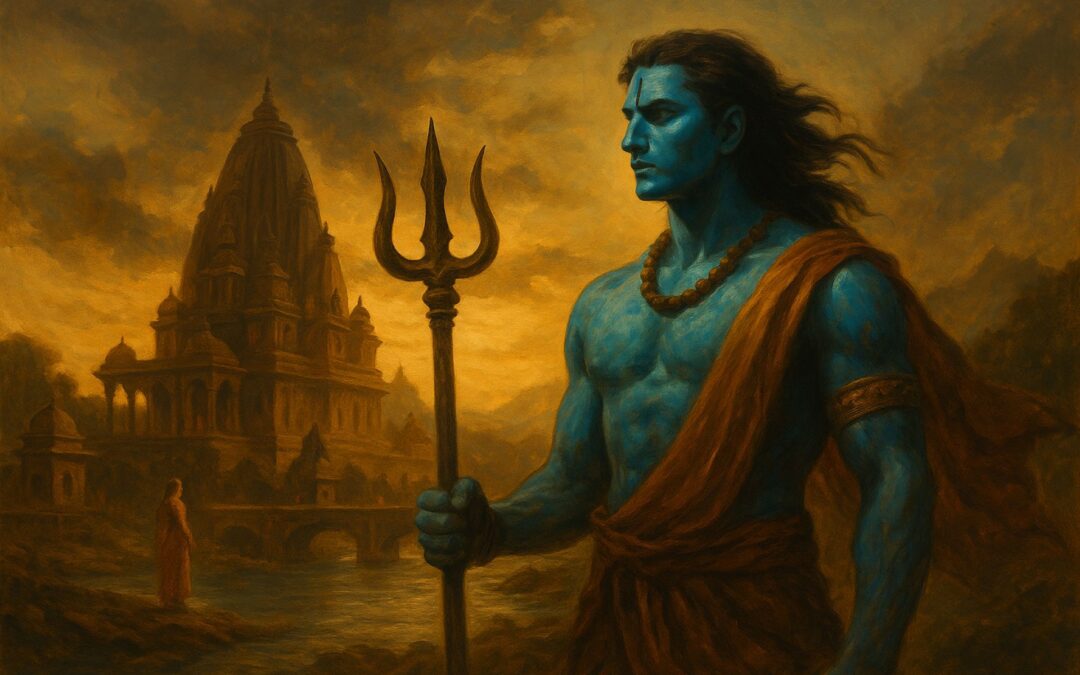
Overview: A Myth Reborn in Mortal Flesh
There was once a man who lived in the icy silence of Mount Kailash — a tribal warrior named Shiva, neither god nor legend, but a leader of men bound by survival and instinct. The world around him, ancient yet strangely advanced, was divided between two mighty civilizations: the disciplined Meluhans and the free-spirited Swadweepans. Between them lay suspicion, decay, and prophecy — and into that fragile balance walked a man whose destiny would eclipse his understanding.
Amish Tripathi reimagines the god Shiva not as an immortal deity but as a flesh-and-blood human being, thrust into myth by circumstance and moral choice. The book begins not in celestial realms but in the raw terrain of human doubt, where faith, duty, and power collide. Through Meluha — a near-perfect empire built upon the ideals of order and righteousness — Tripathi paints the paradox of civilization itself: that the pursuit of perfection often demands a surrender of freedom.
Yet, beneath the grandeur of palaces and the hum of divine technology lies a deeper story — one about transformation. Shiva’s journey from cynicism to conviction mirrors the eternal question that haunts every human soul: What does it mean to be good? His evolution into the Neelkanth, the prophesied savior of Meluha, is less about divinity bestowed and more about divinity discovered — born of moral clarity, courage, and the willingness to question what others call sacred.
The world of Meluha is both majestic and brittle — its rivers engineered by gods, its people ruled by codes that leave no room for imperfection. It is a civilization on the brink of decay, clinging to the idea of dharma even as its heart grows hollow. Shiva’s arrival becomes the mirror through which Meluha must confront its own corruption, and the myth of the Neelkanth becomes the story of man’s timeless struggle between law and conscience.

Plot Summary: The Journey of the Ordinary Man Who Became God
Before legend, there was a man — uncertain, flawed, and human. The Immortals of Meluha traces Shiva’s transformation from a tribal warrior of the Himalayas into the Neelkanth, the prophesied savior of a crumbling civilization. The narrative unfolds through distinct movements — from exile and discovery to revelation and awakening — each marking the gradual erosion of myth into moral truth.
The Exile from Kailash
Far from the grand empires of the plains, at the roof of the world where snow swallows sound, lived the Gunas — a small, battle-hardened tribe struggling to outlast each season. Their leader, Shiva, is no god here — just a man of instinct and honor. His life is governed by three duties: protect his people, preserve their dignity, and find a reason for their endless fight for survival. The Gunas are locked in an age-old feud with the Pakratis, a rival tribe as fierce as they are desperate. Each raid brings death, each victory feels hollow.
Shiva, despite his reputation as a formidable warrior, yearns for something beyond the cycles of vengeance. He is haunted by questions no one else dares ask: What does it mean to live when every dawn feels borrowed? What is the purpose of fighting without peace? His closest friend, Bhadra, sees the restlessness in him but can offer no answer — only loyalty and shared silence beside the evening fires. The mountains are beautiful but merciless, and in their shadow, Shiva’s spirit begins to ache for change.
Into this bleak existence rides a stranger — Nandi, a Meluhan soldier with the bearing of both discipline and faith. He brings an offer that sounds almost mythic: to resettle the Gunas in the land of Meluha, a kingdom beyond the mountains, where order reigns, and people live long, righteous lives under the Code of Lord Ram. The Meluhans, he explains, are descendants of the Suryavanshis, a people whose civilization thrives on virtue, law, and perfection. Nandi speaks with devotion, painting Meluha as the promised land where hunger, disease, and chaos are but distant memories.
The Gunas listen in wonder. To them, Nandi’s world sounds like heaven. But Shiva is skeptical — perfection always hides a cost. Still, his tribe is weary. Each season’s survival takes more than the last, and he cannot ignore the hope shining in their eyes. For perhaps the first time in years, Shiva allows himself to believe in something beyond struggle. After a tense battle with the Pakratis, where the Gunas win but suffer heavy losses, he realizes that the mountains will never yield peace. In a decision that feels both surrender and rebirth, Shiva accepts Nandi’s offer.
The migration south is a test of endurance. The tribe crosses frozen passes and treacherous ridges, leaving behind the only home they have ever known. Along the way, Shiva observes Nandi’s faith — his meticulous discipline, his reverence for duty — and senses that Meluha is more than a land; it is an idea, an attempt to civilize destiny itself. As they descend from ice into valley, the very air changes. For the first time in his life, Shiva sees rivers that run in straight lines, fields arranged with perfect geometry, and cities that seem carved by purpose, not chance.
The people who once fought for food now stand awed before abundance. For Shiva, though, the feeling is more complex. Beneath wonder lies unease — an awareness that a civilization built on perfection must pay a hidden price. But he cannot yet see what it is.
The Land of Meluha
Meluha presents itself as the pinnacle of human order — a realm where every life has meaning, every task is sacred, and every deviation is sin. It stretches across the Saraswati basin, an empire so precise that even the rivers appear to obey geometry. The people wear simple, uniform clothes, their behavior measured, their expressions serene. Crime is nearly nonexistent, disease unknown. The Somras, a drink concocted by Meluhan scientists, is said to grant long life and divine health. To Shiva and his people, who have survived on raw meat and glacier water, it seems nothing short of magic.
They are welcomed as honored guests. King Daksha, the ruler of Meluha, is a man of vision and ambition — charming, intelligent, and convinced of his civilization’s divine mission. He greets Shiva with a mixture of respect and calculation. In Daksha’s eyes, the Gunas’ arrival is not chance but destiny. His kingdom, though prosperous, is under pressure — its moral code rigid, its enemies growing bold, and its faith wavering. The Meluhans have long awaited a savior, one foretold in prophecy: a foreigner marked by a blue throat, who would destroy evil and restore balance. Daksha looks upon Shiva and wonders if fate has delivered that very man.
The Gunas are resettled in a fortified refuge where they adapt to Meluhan ways. The days are tranquil — almost too tranquil for a warrior used to the roar of storms. The people worship order as divine law, and discipline is a way of life. Shiva, however, feels the dissonance between their calm and his own restless energy. Meluhan perfection, he begins to sense, is not peace but control.
Then comes the night that changes everything. During a festival, Shiva and his people are offered Somras. The drink, cool and metallic, burns as it slides down his throat. Within hours, he is overcome by excruciating pain — fever, convulsions, visions. His people panic as doctors rush in, unable to explain the violent reaction. Shiva writhes for days on the edge of death until the fever breaks. When he finally wakes, the world is hushed around him. The physicians, Nandi, and even Daksha stare in shock — Shiva’s throat has turned an unnatural, luminous blue.
The camp erupts in reverence. Priests fall prostrate; soldiers bow; messengers race to Devagiri to spread the word: The Neelkanth has arrived. The prophecy has been fulfilled. The savior of Meluha stands among them. Shiva, still weak and bewildered, insists that it must be a mistake — a side effect, not a miracle. But faith does not bend to logic. Within days, his name becomes legend.
Daksha declares celebrations throughout the empire, temples are adorned, and the priests of the Lord Ram’s lineage sing hymns in Shiva’s honor. Meluha, long starved for divine reassurance, finds new purpose in the blue-throated stranger. But for Shiva, this sudden transformation feels hollow. He has done nothing to earn their devotion, yet he is being worshipped for existing. He looks upon the fervor and sees both beauty and danger — the power of belief and its blindness.
Beneath the applause of Meluha’s perfect world, he feels the tremor of something broken. He cannot name it yet, but it echoes in his dreams — a voice asking whether perfection built on unquestioning faith can truly be good.
The Birth of a Legend
The fever has faded, but Shiva’s unease lingers. In the space of a few days, he has gone from an unknown immigrant to the living embodiment of prophecy. Everywhere he walks, the Meluhans bow. Priests sing hymns to him; artisans carve his likeness in temples; the common folk speak his name in prayer. Children leave flowers where he steps. Yet Shiva, a man raised in the harsh equality of the mountains, cannot reconcile such worship with his humanity. He tries to reason with them, insisting that he is no god, only a man. But Meluha’s people have long awaited a sign to anchor their faith, and they will not let logic unravel their hope.
King Daksha, ever the strategist, sees opportunity. Meluha’s faith in the Neelkanth could unify the nation, strengthen his rule, and renew morale against the growing threat of the Chandravanshis. He begins to position Shiva not merely as a divine symbol but as a political cornerstone — the savior who will protect Meluha’s purity and order. Public ceremonies, grand processions, and temple dedications multiply. Shiva endures them with patient discomfort, smiling when he must, though he feels increasingly like a puppet of devotion.
Among those who treat him without reverence are Nandi, whose loyalty never becomes servility, and Ayurvati, the chief healer, whose curiosity outweighs superstition. But the most profound connection Shiva forms is with Princess Sati, Daksha’s daughter. Their first encounter occurs during a morning practice session at the training grounds near the Saraswati River. Sati moves with the fluid grace of a warrior — precise, composed, yet shadowed by melancholy. When Shiva greets her, she replies with formality and distance. Later, Nandi reveals the reason for her detachment: she is Vikarma — marked by law as impure, burdened with the supposed sins of a past life. The Meluhans, for all their enlightenment, cling to this cruel superstition.
Shiva is furious. To him, the notion that a person can be condemned by a previous existence is absurd, a violation of natural justice. His anger deepens his fascination with her. What kind of society could treat someone so noble with such quiet cruelty? He begins to seek her company, under the pretense of asking about Meluhan customs. Over time, his respect transforms into admiration, and admiration into love. Sati resists — bound by her vow to live alone — yet Shiva’s sincerity disarms her. Unlike the courtiers and priests who bow before him, he treats her as equal, never flinching at the label that isolates her.
Their growing bond does not go unnoticed. Daksha, torn between his political ambitions and fatherly affection, warns Shiva that the Vikarma law cannot be broken. But Shiva, unshaken by doctrine, replies simply: “If the law is unjust, it should be broken.” That quiet defiance becomes the first crack in Meluha’s façade of perfection.
In the meantime, Meluha’s reverence for the Neelkanth transforms daily life. Pilgrims travel from distant provinces to glimpse him. Philosophers debate whether his arrival marks the dawn of a new Satya Yuga — an age of truth. And yet, in private, Shiva struggles to understand what makes him worthy of their belief. One evening, watching the calm flow of the Saraswati, he asks Nandi, “What if I’m not the one they think I am?” Nandi smiles and replies, “Then you will become him by doing what is right.”
Through that simple truth, Shiva begins to grasp what faith truly means — not blind acceptance, but moral responsibility. The Neelkanth is not a god sent to destroy evil, but a man called to define it.
The Threat of the Chandravanshis
Meluha’s peace fractures soon after. The empire’s borders tremble under the shadow of war. Reports flood into Devagiri — raids on villages, caravans disappearing, a sacred Somras facility at Mount Mandar attacked and burned. Survivors claim to have seen the Chandravanshi insignia: the crescent moon.
The Meluhans react with outrage and fear. To them, the Chandravanshis of Swadweep are their moral opposites — impulsive, indulgent, and chaotic. The Suryavanshis pride themselves on order, restraint, and adherence to dharma, while the Chandravanshis, they believe, follow emotion and pleasure. It is a conflict as old as philosophy itself: discipline versus freedom, structure versus spontaneity. To Daksha, however, it is simpler — an existential threat.
He calls an emergency council, where scholars, priests, and generals argue about strategy. The priests declare the raids a test from the gods, proof that the Neelkanth has come to fulfill his destiny: to destroy evil. Daksha seizes on this fervor. He pleads with Shiva to lead the Meluhan army — not just as a general, but as divine commander.
Shiva hesitates. He has fought many wars, but never for conquest or ideology. The simplicity of tribal combat — survival, defense, honor — is gone here. This war is moral, abstract, painted in shades of good and evil he no longer trusts. Still, he cannot refuse the people who have placed their faith in him. With a heavy heart, he agrees to lead.
The campaign that follows is vast and disciplined. The Meluhan army moves like clockwork — perfectly trained, technologically advanced, and united by belief. Shiva’s leadership style is different: he eats with his men, laughs with them, and listens to their fears. His presence transforms the soldiers’ morale, not through divine charisma but through humanity. Even the stoic Parvateshwar, commander of Meluha’s forces and a man of unwavering devotion to Lord Ram, begins to respect him.
The first major battle takes place near Kashi, at a fortified Chandravanshi outpost. The clash is brutal, thunderous with drums and fire. Shiva’s strategies — using decoys and terrain advantage — lead the Meluhans to victory. But in the aftermath, when he meets captured Chandravanshi prisoners, he is struck by their confusion. They do not see themselves as evil; they speak of their own gods, their own version of dharma, and claim that the Meluhans oppress them. The words unsettle Shiva deeply. Could two nations, each convinced of their righteousness, both be wrong?
When he voices these doubts, Daksha dismisses them with political ease: “Evil always believes it is good, my lord. That is why it must be destroyed.” Yet Shiva cannot let go of what he has seen — the humanity in the supposed villains. The war that was meant to confirm his divinity only magnifies his moral uncertainty.
In the following weeks, Sati tends to the wounded while Shiva isolates himself, questioning everything. The Meluhans celebrate him as a hero, the savior who has vanquished darkness. But Shiva no longer believes in their binary world. He sees the Chandravanshi prisoners praying to gods of light, not shadow. He hears their songs of courage and sorrow, and they sound too human to belong to monsters.
The victory that was supposed to affirm prophecy instead fractures it. The Neelkanth, heralded as the destroyer of evil, begins to suspect that evil itself is a matter of perspective. The question that will haunt him — “What is evil?” — takes root here, deep and unrelenting.
The Search for Truth
The drums of victory fade, but peace refuses to settle. Shiva finds no glory in conquest — only unease. The prisoners of war from Swadweep, far from being the monsters Meluhan propaganda had painted, speak of their own version of dharma, their own sense of justice. They pray to gods of light, just as the Suryavanshis do. To Shiva, their fear and pain feel indistinguishable from those of his own soldiers. A terrible suspicion begins to form in his heart: perhaps the war between Meluha and Swadweep is not a war between good and evil, but between two civilizations convinced of their own virtue.
Even as he tries to silence these thoughts, more disturbances arise. The once serene kingdom now whispers of unseen enemies — of Nagas, deformed warriors who strike swiftly and vanish without trace. They are blamed for assassinations, disappearances, and sabotage across the empire. To the Meluhans, the Nagas are embodiments of sin — cursed beings born with deformities as punishment for ancestral crimes. To Shiva, the explanations sound too simple, too convenient. His instinct tells him that the truth is far more complicated.
The first time Shiva truly sees the Nagas is when they ambush a royal convoy traveling from Mount Mandar. Their movements are flawless — disciplined, almost graceful. They kill without rage, without cruelty, like soldiers following purpose. Their attacks focus not on civilians but on specific targets connected to the Somras, Meluha’s sacred drink of immortality. The precision of these strikes, and their connection to Somras production, gnaws at Shiva’s mind.
Back in Devagiri, Ayurvati, the chief healer and one of the few who dares to question Meluhan dogma, confides in him. She has begun to notice strange illnesses — mutations and unexplained deformities among newborns in regions near the Somras facilities. She suspects that the waters used in making the elixir might be poisoning the rivers downstream. The same substance that grants Meluhans health and longevity may be cursing others with disfigurement. The thought horrifies Shiva. If true, it means that Meluha’s perfection, its ordered beauty, is built upon unseen suffering.
As he wrestles with this revelation, tragedy nearly strikes. Sati is attacked by a Naga during a ritual near the Saraswati River. The masked assassin moves with supernatural skill but spares her at the last moment, retreating instead of killing. Shiva, who arrives moments too late, is torn between fury and confusion. Why would a creature of darkness hesitate? Why save the very woman he was sent to kill?
That night, Sati finally reveals a secret she has long buried — one that exposes the quiet cruelty of Meluha’s laws. Years ago, she had a child, born from a union she cannot speak of. The baby was taken from her the moment he came into the world because she was Vikarma. The child was declared impure, removed from her arms, and sent away, likely to die in obscurity. She had lived every day since with that wound hidden behind her composure. Shiva listens, his heart heavy with rage — not at her, but at the merciless order that could sanctify such pain.
Her confession becomes a turning point. For Shiva, it confirms what his instincts had warned him all along: Meluha’s pursuit of perfection is inhuman. The Suryavanshis’ obsession with purity and righteousness blinds them to compassion. Their law, though divine in intent, has become tyranny in practice.
But the problem runs deeper than politics. The Meluhans are not evil; they are simply certain. Their faith in their system is absolute, and that is precisely what makes it dangerous. In their minds, every action — even cruelty — is justified if it preserves order. Shiva realizes that evil is not chaos or deformity, but unexamined righteousness.
From that moment, the Neelkanth’s mission changes. He will no longer fight wars dictated by others. He will uncover the truth — of the Somras, of the Nagas, of Meluha’s illusion of divinity. The savior who once sought to fulfill prophecy now seeks to dismantle it.
The Alliance and the Awakening
In the midst of political tension and moral confusion, love becomes Shiva’s anchor. His connection with Sati deepens into an unbreakable bond, tested by the weight of law and the expectations of a civilization. When he asks for her hand, King Daksha’s court erupts in outrage. The Vikarma law forbids marriage for those marked impure, and even the high priests condemn the union. But Shiva, who has faced war and prophecy, refuses to bow to a rule that denies love.
The standoff becomes a quiet revolution. Daksha, torn between his affection for his daughter and his fear of losing divine favor, finally relents — not because he understands Shiva’s reasoning, but because he believes the Neelkanth’s divinity exempts him from mortal law. The marriage takes place in Devagiri, a grand yet strangely intimate ceremony attended by nobles, soldiers, and citizens alike. It becomes a symbol of change — a moment when faith bends to humanity. Sati, radiant and resolute, steps into the role of both consort and conscience, the human heart of Meluha’s god.
Their marriage brings brief calm but not peace. Even as festivities continue, troubling news spreads: the Chandravanshis, too, revere the Neelkanth. Their scriptures foretell the same savior who will destroy evil — except they believe he will deliver them from Meluhan oppression. Two civilizations, each claiming moral superiority, both await the same figure to annihilate the other. The irony is unbearable. The symbol of salvation has become the seed of conflict.
Shiva’s mind spirals into conflict. He feels used, not by malice but by faith itself. Daksha and his councilors see him as a divine instrument; the Chandravanshis see him as a divine threat. No one sees him as a man. In sleepless nights, he begins to ask questions no priest dares voice: Can good and evil truly be separated? Is righteousness still holy when it causes pain?
His reflection finds answer only in Sati, whose calm understanding steadies him. She reminds him that faith need not be blind — that to question belief is not to betray it, but to purify it. Her strength grounds him, and her compassion becomes the moral compass that Meluha itself has lost.
Determined to understand the Chandravanshis firsthand, Shiva travels westward with a small delegation to seek dialogue. What he finds is not a land of depravity but a society of contrasts — freer, more emotional, and less bound by ritual. Their people live passionately, guided by a looser interpretation of dharma. When Shiva speaks with their leaders, he is stunned to learn that they see Meluha as the true oppressor — a self-righteous power imposing its will in the name of virtue.
The revelation crushes the last remnants of his certainty. He returns to Meluha a changed man, no longer willing to accept any single side’s claim to righteousness. When he shares his doubts with Daksha, the king responds with political frustration: “A leader cannot afford confusion, Lord Neelkanth. The world needs clarity, even if it is an illusion.” To Shiva, that line is the confession of Meluha’s flaw — the empire would rather protect its myth than face its truth.
As internal unrest grows, more Naga attacks strike key outposts. Their pattern, Shiva notices, aligns with the Somras distribution network. The dots begin to connect — the Nagas are not random assassins; they are pursuing something tied to Meluha’s greatest secret. Every revelation tightens the moral knot around him.
And yet, amid the turbulence, a quiet awakening dawns. Shiva begins to understand that to be divine is not to command belief, but to carry doubt with grace. Faith is easy when the world is clear; wisdom begins only when it becomes complicated. He now sees his destiny not as the destroyer of evil, but as the one who will redefine it.
The Naga Confrontations
The order that once defined Meluha now trembles at the edges. Fear travels faster than truth. Whispers of the Nagas—deformed warriors of myth, cloaked and silent—spread across the empire. Farmers say they strike only at night. Priests claim they are the cursed children of sinners. But Shiva has learned to distrust legends born from fear. He begins to see a pattern in the chaos: the Nagas never attack ordinary citizens, only specific targets—officials tied to the Somras production and the empire’s military hierarchy. Their violence is methodical, their purpose deliberate.
The most devastating blow comes when a Naga squad infiltrates Mount Mandar, the heart of Meluha’s science. The attack cripples Somras supply lines and leaves the council in panic. Daksha interprets it as divine confirmation that evil has declared war against righteousness. But Shiva, haunted by what he has seen in both Meluha and Swadweep, begins to suspect something deeper—an unspoken link between the empire’s perfection and the Nagas’ existence.
While the priests prepare rituals of purification, Shiva demands investigation. His insistence unsettles Daksha, who prefers symbols to scrutiny. Frustrated, Shiva takes matters into his own hands. He studies the battle reports, the timings of attacks, and the precision of the strikes. A troubling realization takes root: the Nagas know Meluha’s routes and secrets too well. They are not foreign marauders; they are Meluha’s own shadow.
Then fate intervenes with cruelty and precision. During a military campaign along the western borders, Shiva’s convoy is ambushed by Naga warriors. Their leader, tall and masked, moves with terrifying elegance. The skirmish is brutal, a blur of steel and silence. In the chaos, an arrow—an agnibaan, a fire-tipped missile—streaks toward Shiva. Sati leaps into its path. The explosion throws her backward, flames devouring her garments as Shiva screams her name. His soldiers rush to extinguish the fire, but the image sears itself into his memory: the woman who saved his life now fighting for hers.
The attack breaks something inside him. The pain of almost losing Sati ignites a rage he cannot contain. He vows to hunt down every Naga responsible, but even his fury cannot smother the question gnawing at his conscience: Why did they not finish the kill? For warriors so precise, the act felt incomplete, almost symbolic.
Days later, as Sati recovers, the attacks intensify near the capital. One evening, as dusk descends over Devagiri, Shiva and his companions attend a prayer ceremony at the great temple. The chants are low, the incense thick, the air heavy with unease. Out of the shadows, a masked Naga emerges—tall, hooded, with eyes that glint like obsidian. The temple guards freeze; Shiva’s hand goes instinctively to his sword. The Naga does not strike immediately. Instead, he moves toward Sati with an unsettling calm. She throws a dagger—swift and precise—but he catches it midair and ties it to his wrist in a strange ritual gesture, as if binding himself to the act rather than avoiding it.
For a heartbeat, the temple holds its breath. The Naga takes a step closer. Shiva shouts her name and lunges forward, drawing his blade. The Naga’s eyes flick to him—something like sorrow flickers there—then the figure turns and vanishes into the darkness. By the time the soldiers regroup, the intruder is gone, leaving behind silence and confusion.
The city erupts in panic. To Daksha and his council, it is proof that the forces of evil now seek to destroy the Neelkanth’s divine union. But to Shiva, the encounter feels different. That look in the Naga’s eyes—the hesitation, the mercy—does not belong to a mindless killer. It hints at familiarity, recognition, perhaps even regret. The mystery deepens. Who are these beings who know Meluha so intimately? Why do they hunt those connected to the Somras and now Sati herself?
For the first time, Shiva feels that the answers he seeks will not be found in Meluha’s temples or scrolls, but in the lands beyond—where the Nagas live, and where the truth no longer hides behind divinity.
The End of Certainty
The temple attack shatters what little peace remains. The Meluhans, frightened and desperate, tighten their grip on faith. The priests declare the Naga intrusion a holy omen: the Neelkanth must now destroy evil once and for all. Daksha calls for an even greater war, urging Shiva to lead a crusade against both the Chandravanshis and the Nagas. But Shiva is no longer the man who arrived from Kailash in search of shelter. He has seen too much—war waged in the name of righteousness, love constrained by dogma, faith corrupted by power. The empire that once dazzled him with its perfection now feels brittle, hollowed out by its own certainty.
He begins to understand the cruel paradox of Meluha: in its relentless quest for purity, it has lost compassion; in its devotion to order, it has strangled truth. The Suryavanshis are not evil—but they are blind, incapable of seeing the suffering their perfection inflicts. For all their temples and rituals, they cannot face the possibility that their “divine” way of life might itself be the cause of corruption.
In the wake of the Naga’s appearance, Shiva’s doubts crystallize into conviction. He decides he will no longer be a pawn of prophecy. He will follow truth, wherever it leads. The people may call him Neelkanth, but he knows now that the real battle is not between gods and demons, nor between Suryavanshi and Chandravanshi. It is a battle within every man—the war between obedience and conscience.
The final pages unfold like a storm held in breath. Shiva stands by Sati’s side outside the temple as the night air trembles. The moonlight glints off the blade in his hand. The sound of retreating footsteps fades into the dark—the Naga is gone, but the promise of confrontation remains. Shiva’s gaze follows the path into the unknown, his eyes no longer those of a doubter, but of a seeker. The answers he seeks lie beyond Meluha’s walls, in the shadowed lands where monsters and truths are born together.
The book ends there—suspended between revelation and pursuit. The world calls him divine, but Shiva now understands the burden of being seen as a god when he is still trying to be a man. The Naga’s face, the tremor in Sati’s voice, and the echo of unanswered questions haunt him. There is no triumph, no resolution—only awakening.
The Neelkanth’s legend has begun, but his faith has ended. And as the last line closes with “To be continued…”, the reader, like Shiva, stands on the precipice of a new journey—toward the dark forests of truth and the gods who hide within them.
Character Analysis: The Faces of Faith and Doubt
The strength of The Immortals of Meluha lies not only in its mythic scope but in the humanity of its characters. Each person reflects a facet of belief — the struggle between order and compassion, between what is divine and what is simply human. Through them, Amish builds a world where gods are men and men are bound by the laws they create.
Shiva: The Reluctant God
At the heart of the story stands Shiva, not as a deity descended from heaven, but as a man rising toward divinity through choice. He is impulsive, curious, fiercely moral — a soldier searching for meaning beyond the sword. His journey begins as that of an outsider: skeptical, irreverent, and deeply human. When Meluha crowns him as the Neelkanth, he becomes the canvas onto which an entire civilization projects its hopes.
But Shiva’s greatness lies in his resistance to blind faith. He refuses to accept destiny without question, examining everything — laws, rituals, morality — with the same ferocity he once reserved for enemies on the battlefield. His blue throat, the supposed mark of godhood, becomes a metaphor for the poison of responsibility: the weight of being worshipped by those who no longer think for themselves.
Shiva’s moral evolution defines the book’s emotional spine. His doubts are not weakness; they are his strength. By the end, he has learned that divinity is not bestowed but earned — not through miracles, but through the courage to question what others call sacred.
Sati: The Strength of Grace
Sati, Daksha’s daughter and Shiva’s eventual wife, embodies both discipline and rebellion. A woman condemned as Vikarma, she lives within the strictest boundaries of Meluhan law, yet defies it every moment by carrying herself with dignity and silent defiance. Her life is an act of resistance against the society that labels her impure.
Her relationship with Shiva unfolds as a moral awakening. She challenges his impulsiveness while learning from his compassion. Through her, the novel humanizes Meluha’s rigid perfection — showing how goodness can exist even within flawed systems. Her courage in combat, her compassion for the weak, and her quiet endurance mark her as the book’s moral compass.
Sati’s transformation is subtle but powerful: from shame to self-respect, from submission to agency. Her union with Shiva is more than romance — it is a symbolic reconciliation between law and love, between the order of Meluha and the freedom of the human spirit.
Nandi: The Heart of Devotion
Loyal, sincere, and unshakably optimistic, Nandi represents faith in its purest form — belief without dogma. He is a soldier of Meluha, yet unlike its priests and kings, his devotion is humble and personal. To him, Shiva is divine not because of prophecy, but because he chooses to do good.
Through Nandi, Amish shows the nobility of genuine faith — the kind that inspires action rather than obedience. His loyalty grounds Shiva’s uncertainty and bridges the cultural gap between the free-spirited tribesman and the rule-bound Meluhans. Nandi is the friend every leader needs: honest, steadfast, and without agenda.
King Daksha: The Architect of Order
Daksha, the visionary king of Meluha, is both admirable and tragic. He is a ruler who genuinely believes in his system, yet his faith in order blinds him to compassion. He sees the world through the lens of rules and hierarchies — a moral engineer who confuses structure with righteousness. His pursuit of perfection gives Meluha its strength, but also its decay.
Daksha’s interactions with Shiva expose the arrogance of certainty. He worships the Neelkanth not out of spiritual surrender but political necessity — hoping to use divine authority to reinforce his fragile empire. In him, the novel finds its critique of leadership: that even the well-intentioned can become tyrants when they mistake control for virtue.
Parvateshwar: The Loyal Soldier
If Shiva is the seeker of truth, Parvateshwar is its contrast — a man bound to duty even when it contradicts conscience. As Meluha’s supreme commander, he embodies the soldier’s dilemma: loyalty to the state versus loyalty to the self. Initially skeptical of Shiva’s divinity, he serves nonetheless, because obedience is his creed.
Parvateshwar’s respect for Shiva grows from discipline, not belief. Their dynamic captures the novel’s central moral tension — whether righteousness is a matter of command or conviction. His evolution is quiet but profound; by the end, his admiration for Shiva’s integrity begins to outweigh his devotion to Meluha’s code.
Ayurvati: The Voice of Reason
Ayurvati, the chief healer, stands apart from both priests and warriors. She represents knowledge and compassion — the pursuit of truth through observation rather than faith. Her curiosity about the Somras and her openness to science make her one of Shiva’s earliest allies in questioning the foundations of Meluhan society.
Through her, the novel subtly contrasts science with belief. Where Meluha’s priests interpret symptoms as divine will, Ayurvati searches for cause and cure. She becomes a quiet revolutionary, reminding Shiva — and the reader — that reason and empathy are as sacred as any ritual.
The Nagas: The Shadowed Mystery
Though they appear briefly, the Nagas dominate the novel’s undercurrent. To Meluha, they are monsters; to Shiva, they are the embodiment of mystery. Their discipline, precision, and moral ambiguity challenge the reader’s—and Shiva’s—understanding of evil.
The Nagas serve as the mirror of Meluha’s hypocrisy. Everything the Suryavanshis hide — imperfection, deformity, consequence — takes shape in them. They are the literal children of a civilization that cannot admit its flaws. Their emergence at the novel’s end is both a threat and an invitation — calling Shiva to seek truth beyond Meluha’s narrow definitions of purity.
Themes and Motifs: Duty, Destiny, and the Burden of Divinity
At its core, The Immortals of Meluha is a meditation on the nature of goodness — how civilizations define it, how individuals pursue it, and how faith can both illuminate and blind. Beneath its mythic battles and divine prophecies, the novel wrestles with timeless human concerns: duty versus choice, law versus conscience, faith versus doubt. Each theme flows into the next like rivers converging into one moral current — the question of what it truly means to be divine.
Duty and the Weight of Righteousness
Meluha is built upon the foundation of dharma — the idea that every person must serve the greater order. Its people live not for themselves but for the perfection of the whole. In theory, this creates harmony; in practice, it breeds oppression. Every law, every ritual, every act of worship exists to preserve a single truth: that order is sacred.
Against this backdrop stands Shiva, a man of instinct and compassion, not doctrine. His arrival in Meluha becomes a test of dharma itself. Through him, the novel explores the cost of blind duty. The Meluhans are moral, yet mechanical — unable to see when righteousness becomes cruelty. Shiva’s defiance, his refusal to accept laws that violate empathy, exposes a hard truth: that duty without conscience is the most dangerous form of faith.
This tension is mirrored in characters like Parvateshwar, who fights for duty even when he doubts its justice, and Sati, who obeys laws that condemn her until love frees her from obedience. Together, they embody the paradox at the heart of Meluhan virtue — that goodness can become tyranny when it forgets its purpose.
Destiny and the Myth of the Chosen One
The prophecy of the Neelkanth drives the novel’s plot, but Amish subverts its traditional meaning. Destiny, in Meluha, is not a gift — it is a trap. The moment Shiva’s throat turns blue, his freedom vanishes. He is no longer a man but a symbol, forced into the shape of a legend he never asked to play. The more Meluha worships him, the less human he becomes.
Through this, the book critiques the very idea of divine destiny. It asks whether fate is chosen or imposed — whether the gods we revere are truly called by heaven, or simply crowned by human desperation. Shiva’s struggle becomes that of every person burdened by expectation: the search for authenticity beneath the weight of labels.
By the end, destiny is redefined. The Neelkanth is not born divine — he becomes divine by questioning destiny itself. Prophecy, then, is not prediction but invitation: a challenge to rise beyond one’s role.
The Burden of Divinity
Amish’s greatest inversion is in how he portrays divinity as a burden rather than a blessing. Shiva’s transformation is less spiritual ascension than moral entrapment. He becomes the object of blind faith, worshipped by those who no longer think for themselves. Through his eyes, we witness how faith, when unchecked, turns gods into tools and believers into captives.
Every gesture of reverence isolates him further. The people call him Lord, but Shiva longs for conversation, not prayer. He does not command thunder; he struggles with loneliness. His blue throat — the visible mark of divinity — symbolizes the poison of leadership, the suffering that comes with embodying others’ ideals. It recalls the mythic image of Shiva consuming the world’s toxins to protect creation, but in this retelling, the poison is psychological: expectation, guilt, and moral responsibility.
Faith and Doubt
Where Meluha thrives on certainty, Shiva thrives on questioning. His skepticism is not rebellion but reverence of a higher kind — a belief that truth must survive interrogation. Through him, the novel redefines what it means to be faithful. Faith without doubt is slavery; faith that survives doubt is conviction.
The dichotomy between Nandi’s unwavering belief and Shiva’s relentless inquiry becomes the philosophical tension that drives the narrative. The novel suggests that divinity lies not in perfection but in self-awareness — in the willingness to confront uncertainty without surrendering to despair.
Order and Chaos
Meluha’s obsession with order and the Chandravanshis’ embrace of freedom form the novel’s great civilizational contrast. Neither side is wholly right or wrong; both carry the seeds of destruction within their extremes. Through Shiva’s eyes, Amish argues that balance, not dominance, sustains the world.
The rivers, the cities, the laws — all symbols of Meluhan order — are juxtaposed with the unpredictability of human emotion. Sati’s love, Shiva’s laughter, even the Nagas’ silent discipline all stand in opposition to the rigidity of Meluha’s design. The novel ultimately positions chaos not as the enemy of order, but as its necessary counterpart — the force that keeps perfection from stagnating into decay.
The Search for Truth
Threaded through every battle and ritual is Shiva’s private pilgrimage — not toward victory, but toward understanding. What began as a quest for peace becomes a philosophical journey toward the heart of morality itself. Each revelation pushes him further from certainty and closer to wisdom.
By the novel’s end, truth stands revealed not as an absolute, but as an evolving clarity — a living thing, like the rivers Meluha has tried to tame. The cliffhanger that closes the story is not just narrative suspense; it is thematic closure. Shiva has reached the edge of knowledge and must now cross into the unknown, where truth awaits beyond law, prophecy, and faith.
Setting and Atmosphere: The Sacred Order of Meluha and the Chaos Beyond
Amish’s Meluha is more than a backdrop — it is a living metaphor. The empire itself becomes a character, as rigid and magnificent as the ideals it embodies. Every wall, every river, every law reflects the central paradox of the novel: the human yearning for order in a world that resists perfection. Through vivid detail and mythic scale, the setting transforms from geography into philosophy — a landscape where morality is engineered and the divine is administered like governance.
Meluha: The Civilization of Order
The Empire of Meluha, nestled along the banks of the Saraswati River, is envisioned as the apex of human discipline. Its cities gleam with symmetry; its streets are laid out in exact proportions; its irrigation canals hum with quiet precision. Everything functions with mechanical grace, reflecting the Suryavanshi belief that righteousness is measurable, quantifiable, and enforceable. The empire’s orderliness is not accidental — it is sacred. The Code of Lord Ram governs every aspect of life, from marriage to mourning, ensuring that chaos never touches Meluhan soil.
To the newly arrived Shiva, it is both awe-inspiring and disconcerting. Coming from the rugged unpredictability of Mount Kailash, he is overwhelmed by Meluha’s design — a world without randomness, without noise, without cracks. Yet beneath its harmony lies an unnatural stillness, as though the people have traded freedom for peace. The perfection feels rehearsed. Even the smiles of its citizens seem choreographed, each person a cog in an enormous moral machine.
The architectural imagery amplifies this duality. Temples rise in perfect proportion to palaces, symbolizing the unity of religion and state. The waters of the Saraswati — considered divine — flow in channels engineered by human hands, turning nature itself into an emblem of obedience. The empire’s cleanliness, its longevity, its meticulous rituals — all mask an invisible rot: the arrogance of a people who believe they have mastered goodness.
Devagiri: The Heart of Control
At the center of this civilization stands Devagiri, Meluha’s capital, a city of stone and geometry. Its towers gleam in the desert sun; its plazas resound with chants of faith and the tramp of disciplined feet. It is a city that never sleeps, because perfection, once built, demands constant vigilance. Here, the laws of Ram are not suggestions but lifeblood — etched into the city’s architecture and the people’s souls.
To Shiva, Devagiri feels like a mirror held up to humanity’s ambition — glorious yet suffocating. The city’s grandeur conceals its fragility. In the same plazas where citizens kneel in worship, dissent dies in silence. Even joy feels regulated, filtered through propriety. It is in Devagiri that Shiva first confronts the emotional emptiness behind Meluha’s moral success. The empire has achieved peace, but at the cost of spontaneity — a perfection that demands constant suppression of the imperfect.
Mount Mandar: The Temple of Science and Sin
If Devagiri is the empire’s soul, Mount Mandar is its brain. The mountain houses the laboratories where the Somras, Meluha’s elixir of immortality, is brewed. Here science and spirituality blur into one. The Somras is treated as divine, the drink of gods, but its production is industrial — pipes, furnaces, and formulas. It is both miracle and mechanism.
Mount Mandar’s aura shifts as Shiva’s understanding deepens. At first, it represents progress — the triumph of knowledge over decay. Later, it becomes a symbol of corruption: a shrine to humanity’s hubris. The Somras, once thought to preserve life, may be the source of the very deformities that create the Nagas. Thus, Mandar embodies the book’s central paradox — the moral cost of perfection.
The Northern Tribes and the World Beyond
In contrast to Meluha’s order, the northern tribal lands — home of the Gunas — pulse with life’s raw unpredictability. The air is thinner, the people rougher, the world simpler. The mountains around Mount Kailash are wild, ungoverned, and free — everything Meluha is not. The Gunas live by instinct, not law. They make mistakes, suffer, and adapt. When the Meluhan emissaries arrive, they find savagery; what they truly encounter is freedom.
Amish uses this contrast to heighten the thematic tension between chaos and order. The Himalayas represent natural harmony, born of balance rather than control. Meluha, in its arrogance, has forgotten this balance. Shiva’s journey southward thus mirrors humanity’s moral migration — from innocence to civilization, from simplicity to complexity, from instinct to ideology.
The Shadowed Frontier: The Lands of the Nagas
Though glimpsed only briefly, the territories associated with the Nagas loom over the novel like an unseen storm. They are the “other” side of civilization — jungles and river deltas veiled in mist and mystery. To Meluhans, they are cursed lands; to Shiva, they are the place where truth hides. The Nagas’ domain symbolizes everything Meluha denies — deformity, secrecy, imperfection, and consequence.
In the final chapters, when the masked Naga appears in Devagiri’s temple, the atmosphere turns electric. The polished marble of the city collides with the shadow of the unknown. The sterile calm of Meluha gives way to chaos — the chaos of questions. That intrusion is not merely physical but spiritual: the wild, uncontainable truth stepping into the sanctum of man-made divinity.
The Emotional Climate
Amish’s world-building is not just visual but moral. The atmosphere of Meluha feels like that of a monastery disguised as a nation — serene on the surface, suffocating beneath. Every festival, every prayer, every act of devotion carries an undertone of anxiety: the fear of imperfection. The citizens of Meluha are good people, yet they live in quiet terror of being impure.
This emotional texture — the calm tension of a society that worships order — pervades every scene. Even the romance between Shiva and Sati unfolds against this oppressive stillness, their love feeling like rebellion not because it is forbidden, but because it is spontaneous. Through such contrasts, Amish paints a civilization teetering between transcendence and collapse.
The Broader Atmosphere: Civilization as Allegory
The world of The Immortals of Meluha is not ancient India frozen in myth; it is a mirror held to the modern world. Its atmosphere of control, its worship of perfection, its fear of imperfection — all echo the human tendency to equate morality with conformity. Meluha’s physical cleanliness and architectural precision reflect not purity but denial, a refusal to confront the messiness of the soul.
By the novel’s end, when the Naga intrudes upon this immaculate world, the setting itself seems to awaken. The sterile air cracks open, letting in the wind of uncertainty — the first breath of truth.
Tone and Style: The Language of Legend Reimagined
Amish Tripathi’s The Immortals of Meluha reinvents the mythic cadence of epic storytelling by bringing it down to earth — from divine scripture to human speech. The tone is both reverent and accessible, blending the grandeur of legend with the immediacy of modern thought. The novel reads like an ancient tale remembered through a contemporary lens: cinematic, direct, and emotionally sincere.
A Modern Epic Voice
The prose carries the weight of myth yet breathes with the clarity of modernity. Amish avoids the archaic, instead opting for language that bridges past and present — plain enough to invite modern readers, elevated enough to sustain a sense of awe. His sentences often end in quiet reflection rather than flourish, echoing Shiva’s own philosophical uncertainty.
The tone balances reverence and rebellion. When describing Meluha’s laws and rituals, the narration feels sacred, methodical, and rhythmic — mirroring the civilization’s obsession with perfection. But when seen through Shiva’s eyes, that rhythm fractures into irony and frustration. This oscillation creates the novel’s tonal heartbeat: the tension between the divinely ordered world and the human heart’s refusal to fit within it.
The Cinematic Imagination
Amish writes with visual immediacy. Scenes unfold like frames in a historical epic — precise, panoramic, and charged with atmosphere. The arrival at Meluha, the fever of the blue throat, the temple confrontation — each is described not merely as event but as spectacle. The use of sensory contrast is deliberate: the raw white wilderness of Kailash versus the golden geometry of Devagiri; the serenity of Meluha’s rivers against the chaos of battlefields.
Action scenes are brisk and kinetic, more reminiscent of modern adventure fiction than classical epic. Yet Amish never allows spectacle to eclipse spirit. His battles are driven by moral tension, not bloodlust. Every clash reflects an idea — order versus freedom, faith versus questioning — turning physical combat into philosophical dialogue.
Mythic Rhythm, Human Cadence
Though rooted in legend, the novel’s dialogue feels distinctly contemporary. Characters speak plainly, even wittily, stripping mythology of its distance. This stylistic choice humanizes divinity — gods and kings talk like people you could argue with. The effect is subtle but powerful: it dismantles the pedestal on which mythology often stands, making it participatory rather than preachy.
At the same time, Amish infuses narrative rhythm with ritualistic pacing — repeating images, mirrored conversations, and symbolic gestures that echo oral tradition. Shiva’s laughter, Sati’s silence, the recurring image of rivers — all create a pulse reminiscent of scripture, yet accessible in its clarity.
Irony and Reflection
Underneath the grandeur lies quiet irony. Meluha, presented as utopia, reveals itself as a moral labyrinth. The tone alternates between admiration and critique, inviting readers to marvel and question simultaneously. Amish’s narration never fully commits to either awe or cynicism; instead, it sustains a reflective middle ground, mirroring Shiva’s evolution from wonder to wisdom.
Moments of introspection are written with a lyrical restraint that borders on the meditative. When Shiva doubts his destiny or mourns the cruelty of Meluha’s laws, the tone softens — language slows, sentences elongate, emotion outweighs plot. These passages ground the myth in moral realism, ensuring that even the grandest ideas remain tethered to human feeling.
The Voice of the Seeker
Ultimately, the narrative voice aligns with Shiva’s temperament — questioning, compassionate, occasionally impulsive, always sincere. It is not the voice of a prophet but of a seeker who stumbles toward truth through empathy. This voice gives the novel its moral center: humble before mystery, unafraid of contradiction.
The story’s tone evolves in step with Shiva’s transformation. It begins with curiosity and awe, shifts into moral conflict, and ends in quiet awakening. The tonal arc mirrors the novel’s philosophical journey — from certainty to doubt, from divinity to humanity.
Emotional Resonance and Simplicity
What makes the style effective is its simplicity. Amish avoids ornate prose or academic density. His storytelling thrives on emotional directness: grief, love, anger, and wonder are expressed without disguise. Yet within that simplicity lies a deliberate rhythm — short, emphatic sentences followed by reflective pauses, a pattern that echoes the beats of oral recitation.
This clarity does not weaken the mythic aura; it democratizes it. By allowing readers to understand and question alongside Shiva, Amish transforms mythology from distant legend into living philosophy. The style, therefore, becomes the message: divinity belongs not to the unreachable, but to the imperfect who dare to ask.
Symbolism and Imagery: The Private Language of the Gods
Amish Tripathi weaves a tapestry of recurring symbols — rivers, colors, weapons, rituals, and bodies — each carrying layers of meaning that evolve with Shiva’s own understanding. The imagery of The Immortals of Meluha transforms mythic iconography into philosophical metaphor, turning every object and landscape into part of a moral conversation.
The Blue Throat: The Mark of Burden
The most enduring symbol in the novel is Shiva’s blue throat, the sign that transforms him from man to god. In mythology, it recalls the Neelkanth — the god who drank poison to save creation. In this retelling, the symbolism becomes more human: the blue throat is the color of consequence.
When Shiva’s throat turns blue after consuming the Somras, it represents the absorption of civilization’s sins — the physical manifestation of responsibility. The Somras, hailed as divine elixir, also becomes the novel’s most ambiguous symbol: both the source of life and the seed of corruption. The blue hue thus captures the paradox of leadership — to embody the purity others demand, one must first swallow the poison of their delusions.
The image also marks the beginning of isolation. From that moment, Shiva belongs to no one — not the Gunas, not Meluha, not even himself. The blue throat glows as both gift and wound, a symbol of divine expectation that slowly becomes a prison.
The Somras: Immortality and Decay
The Somras, the miraculous drink that sustains Meluha’s longevity, is the novel’s central metaphor for human ambition. It represents the triumph of science, discipline, and devotion — and yet, its perfection hides moral contamination. The drink that promises eternal life pollutes the rivers downstream, creating the deformed Nagas and sickening neighboring lands.
Amish uses the Somras as a moral fulcrum. It symbolizes humanity’s endless pursuit of permanence — our refusal to accept decay as natural. By making the source of immortality also the origin of corruption, the novel suggests that the desire to escape death leads inevitably to spiritual death. The Somras thus becomes a cautionary emblem: perfection purchased through suffering is not progress, but hubris disguised as virtue.
Rivers and Flow: The Movement of Truth
The rivers of Meluha — especially the sacred Saraswati — serve as a recurring metaphor for truth and its distortion. They are the lifeblood of the empire, controlled and engineered to ensure order. Yet their waters also carry the residue of the Somras, spreading hidden decay across the land.
For Shiva, the river becomes a mirror of civilization itself — beautiful and disciplined on the surface, toxic beneath. The act of channeling and purifying the rivers parallels the empire’s attempt to purify human nature. Both are noble in intent but destructive in consequence. By the end of the novel, the river’s symbolism transforms from sanctity to irony: what once sustained life now carries the evidence of moral failure.
Fire and Water: The Dual Nature of the Divine
Throughout the novel, fire and water appear as elemental opposites — Shiva’s constant companions in his transformation. Fire signifies destruction, purification, and anger — it burns through falsehood and fear. Water, by contrast, represents healing, renewal, and emotional clarity. Shiva’s journey oscillates between these two forces: he fights with fire and reflects beside water.
The agnibaan that wounds Sati, the firelit rituals, the molten glow of the Somras vats — all remind us that fire, like truth, consumes indiscriminately. Meanwhile, the quiet moments beside the Saraswati or the icy waters of Kailash anchor Shiva’s humanity. Together, these symbols reflect his inner duality: warrior and philosopher, destroyer and healer.
Architecture and Geometry: The Cage of Perfection
Meluha’s cities and temples, described in meticulous geometric order, embody the civilization’s obsession with control. Every structure is flawless — straight lines, exact symmetry, measured beauty. But that very symmetry becomes a metaphorical cage. The empire’s architecture reflects its mindset: the belief that moral virtue can be designed, standardized, and enforced.
The contrast between Meluha’s angular rigidity and the organic wildness of the mountains mirrors the story’s moral geography. The further Shiva travels from perfection, the closer he moves toward truth. By the end, the pristine towers of Devagiri feel like monuments to denial — beautiful but suffocating.
Masks and Faces: The Truth Beneath Identity
The Nagas’ masks serve as haunting symbols of concealment — literal and metaphorical. Their covered faces represent Meluha’s refusal to confront imperfection. To the Meluhans, the masks embody fear; to Shiva, they signify secrecy and shame.
When the masked Naga confronts Sati at the novel’s end, it becomes a moment of symbolic symmetry: the hidden truth of Meluha finally stares back at its unblemished reflection. The mask is not merely a disguise — it is the empire’s conscience, forced to wear anonymity because truth no longer fits its definitions of beauty.
The Vikarma Bracelet: The Chains of Guilt
The Vikarma bracelet worn by Sati is one of the novel’s most quietly powerful symbols. Made of simple metal, it represents social condemnation — the physical mark of impurity. Yet, as the story unfolds, it transforms into an emblem of grace. Sati wears it not as shame but as remembrance — a reminder of compassion for those bound by unjust laws.
When Shiva marries her, the bracelet ceases to symbolize sin and becomes a relic of endurance. It captures one of the book’s deepest truths: that moral strength often resides in those whom society calls unclean.
The Mountain and the Plains: The Geography of the Soul
Amish uses geography as spiritual metaphor. The mountains of Kailash signify innocence, simplicity, and balance — untouched by civilization’s corruption. The plains of Meluha, in contrast, represent complexity, ambition, and moral compromise. Shiva’s descent from the mountains to the plains mirrors humanity’s fall from natural harmony into structured morality.
The journey thus becomes inward as much as outward. The more Shiva descends into civilization, the further he travels from peace — yet the closer he comes to wisdom. The terrain itself becomes the map of enlightenment: truth must be rediscovered only after losing it.
The Color White: The Illusion of Purity
White dominates Meluha — in architecture, clothing, rituals — symbolizing purity and virtue. Yet Amish uses it ironically. The whiteness of Meluha is not innocence but denial. It hides stains rather than cleansing them. As the novel progresses, the color shifts in meaning, from serenity to sterility. By the time the blue of Shiva’s throat appears, it cuts through the empire’s monochrome world like truth slashing through illusion.
The color symbolism culminates in contrast: white for unexamined perfection, blue for conscious imperfection. The divine, Amish suggests, belongs not to the spotless but to those who bear the marks of struggle.
Moral and Philosophical Reflection: The Meaning of Goodness and the Birth of Doubt
At its philosophical core, The Immortals of Meluha is not about gods but about the making of gods — the transformation of ordinary morality into myth. Amish Tripathi uses Shiva’s journey to explore one of the oldest moral dilemmas: what happens when virtue becomes law, and when order demands the sacrifice of freedom? Through this reimagined legend, the novel examines how faith, power, and morality intertwine — and how even goodness can decay when left unquestioned.
The Fragility of “Good”
Meluha defines itself as the land of the good, a civilization perfected through discipline and devotion to the ideals of Lord Ram. Its citizens are honest, industrious, and pious. Yet, beneath that order lies fear — the fear of deviation, of impurity, of questioning. Amish subtly suggests that a society obsessed with goodness often loses sight of compassion. Meluha’s morality, like its architecture, is flawless but fragile. It cannot tolerate cracks — or difference.
The novel’s greatest irony is that its villains are not evil men but good men certain of their goodness. King Daksha truly believes his laws protect virtue; Parvateshwar obeys them out of duty; the priests enforce them out of faith. Their intentions are noble, yet their actions wound. By stripping morality of empathy, Meluha turns virtue into dogma.
Through Shiva’s eyes, we see that goodness divorced from understanding becomes tyranny. Evil, in this world, is not chaos or sin — it is the refusal to question righteousness.
The Birth of Moral Relativity
When Shiva first arrives, he accepts Meluha’s moral order at face value. The system seems fair, the people kind, the society stable. But war and experience unravel this illusion. The Chandravanshis — painted as immoral, indulgent, chaotic — reveal themselves to be human, not demonic. They love, pray, and believe in their own sense of right. The realization is transformative: evil, Shiva understands, is often just “good” seen from another perspective.
This moral relativity becomes the novel’s central revelation. It redefines the traditional war of light versus dark into something far more human — the battle between truth and certainty. In questioning the very concept of evil, Shiva elevates morality from obedience to awareness. His journey thus becomes the archetype of enlightenment: wisdom born not from divine revelation, but from doubt.
Faith, Law, and the Cost of Perfection
Meluha’s devotion to law is both its triumph and its downfall. Its citizens obey not because they fear punishment, but because they fear chaos — a deeper, more spiritual anxiety. The Code of Lord Ram provides structure, but it also suffocates. Every decision, from love to mourning, is prescribed.
Shiva’s arrival exposes the cracks in this moral machinery. His compassion for the Vikarma, his respect for Sati’s autonomy, his refusal to punish prisoners without understanding — each act challenges the foundations of Meluhan order. Yet he never preaches rebellion; his is a moral revolution through empathy. By asking why rather than how, Shiva restores meaning to Meluha’s mechanical morality.
The novel thus raises a subtle but profound question: Is a society truly moral if its people are good only because they cannot be otherwise?
The Humanization of Divinity
Amish’s greatest philosophical contribution lies in how he humanizes godhood. In most mythologies, the divine is flawless; here, it is a process of becoming. Shiva’s divinity is not bestowed — it is earned through introspection, courage, and compassion. His doubts, mistakes, and temper do not diminish him; they make him worthy of reverence.
By turning Shiva into a man who learns rather than commands, the novel reclaims spirituality from dogma. It suggests that the divine resides not in omnipotence but in moral clarity — the ability to act with conscience in a world that prefers rules.
This redefinition of godhood is not merely narrative innovation; it is a philosophical act of rebellion. In making the god fallible, Amish gives readers permission to see themselves as capable of divine moral growth. The message is simple but radical: every human being has the potential to become godlike through ethical awareness.
The Poison of Blind Belief
The blue throat, symbol of Shiva’s godhood, also serves as a warning. By accepting Meluha’s faith uncritically, Shiva becomes both savior and prisoner. The people worship him not for who he is but for what they need him to be. Their faith turns him into a symbol, stripping him of his humanity.
This is the novel’s critique of religion — not of belief itself, but of belief without balance. Faith, when untempered by reason, breeds dependency; reason, when divorced from faith, breeds arrogance. The ideal, Amish suggests, lies in harmony — a faith that questions, a reason that reveres.
Shiva’s struggle mirrors that of every moral leader: the more people worship him, the less they listen to what he actually says. Divinity, in this sense, becomes an ethical burden — a test of whether truth can survive its own popularity.
The Evolution of Dharma
Traditional dharma (righteous duty) in Meluha is static — written, fixed, divine. Shiva transforms it into something living: a dharma of compassion. His version of morality adapts to circumstance and feeling. He does not seek to destroy Meluha’s order; he seeks to humanize it. By doing so, he bridges the gap between cosmic order and individual conscience.
This evolution marks the true revolution of the novel. It is not a rebellion against civilization, but an awakening within it — a recognition that order must serve humanity, not the other way around.
The Awakening of Doubt
By the novel’s end, Shiva’s doubts have become his strength. What began as confusion matures into wisdom: the understanding that questioning is sacred. The confrontation with the Naga at the temple’s end symbolizes the intrusion of the unknown — the truth that Meluha’s perfection has always concealed. The Neelkanth, once seen as a destroyer of evil, becomes instead a destroyer of illusions.
The moral of The Immortals of Meluha is not that good must triumph over evil, but that good must constantly redefine itself. When faith grows stagnant, doubt is not its enemy — it is its renewal.
Author and Context: Amish Tripathi and the Modern Rebirth of Myth
Amish Tripathi’s The Immortals of Meluha marks a quiet turning point in Indian storytelling — the moment when mythology stepped out of temples and into living rooms, reborn as moral fiction for a modern age. Before this book, most Indian mythological literature either retold ancient tales in reverent tones or analyzed them through scholarly distance. Amish broke that boundary. He wrote mythology as a novelist, not a preacher. He spoke of gods as men, of faith as curiosity, and of perfection as illusion — transforming legend into living philosophy.
Born in 1974, Amish was not trained as a writer but as a banker. His fascination with history, theology, and moral philosophy eventually found voice in a simple question: What if the gods were not born divine — what if they became divine through their deeds? That question, quietly radical in a culture that often accepts divinity as inheritance, became the foundation of the Shiva Trilogy. The idea emerged not from rebellion against religion, but from reverence for its ethical core — the belief that righteousness, like greatness, must be earned.
When The Immortals of Meluha was released in 2010, it was an anomaly — self-published, unendorsed, and written in plain, modern prose. Yet it resonated deeply with a generation of readers standing between science and spirituality, ancient identity and global ambition. The novel’s success was meteoric not because of marketing, but because it offered something missing in contemporary Indian thought: a mythology that could be reasoned with. Shiva’s world felt both ancient and familiar — a mirror for a society seeking meaning amid modern complexity.
Amish’s reimagining of Shiva as a tribal warrior rather than a celestial being reframed divinity as a moral state, not a supernatural one. His universe runs on principles of cause and consequence rather than miracle — the Somras as biochemistry, the Nagas as victims of genetic mutation, the laws of Ram as moral philosophy codified into governance. In his hands, mythology becomes historical realism; the miraculous becomes metaphor. The divine, he insists, is simply the human perfected by choice.
This rehumanization of mythology arrived at a moment when India itself was wrestling with questions of modernity and identity. Meluha — flawless, hierarchical, and disciplined — reflected the national yearning for order. Shiva, the outsider who questions everything, embodied the spirit of individual inquiry emerging in a younger, more self-aware generation. The clash between divine law and moral freedom became the story of a society redefining what it means to be good.
Stylistically, Amish stripped myth of its austerity. His prose is direct, cinematic, and emotionally grounded. He writes like a storyteller by the fire, not a priest on a pulpit. The dialogue is simple but philosophical, infused with a sense of wonder that feels both epic and intimate. This clarity is deliberate: he wanted his mythology to speak not in the language of gods, but of people.
The book’s impact extended beyond literature. It reawakened mythological fiction in India, spawning an entire genre where ancient epics could be retold with modern reasoning. But Amish’s work remains singular because of its moral focus. He does not glorify war or miracle; he glorifies understanding. His Shiva destroys not with weapons but with questions.
In the end, The Immortals of Meluha is less a story about a god and more a treatise on becoming — on how men and civilizations evolve through introspection. Amish reminds his readers that faith need not exclude reason, that order without empathy collapses into cruelty, and that the sacred is not a gift but a responsibility. Through him, Indian mythology reclaims its most vital truth: that even gods must learn what it means to be human before they can teach humanity what it means to be divine.
Key Quotes and Interpretations: Words That Capture the Spirit of Meluha
“A person becomes a Mahadev not when he desires power, but when he embraces responsibility.”
This line distills the moral architecture of The Immortals of Meluha. In Amish’s retelling, divinity is not a birthright but a choice. Shiva’s transformation from tribal warrior to Mahadev reveals that greatness begins not in might, but in moral will — in the acceptance of burden, not the pursuit of glory.
“Good and evil are two sides of the same coin. One cannot exist without the other.”
This reflection defines the book’s central tension. Amish dismantles the illusion of moral absolutes, showing that both the Suryavanshis and Chandravanshis believe themselves righteous. Through Shiva’s eyes, goodness becomes relative, shaped by perception rather than decree. The line captures his awakening — that wisdom begins only when certainty breaks.
“The Somras is divine only if used wisely. Everything divine can become evil when taken beyond its limits.”
Here, the Somras transcends plot and becomes philosophy. It symbolizes humankind’s obsession with permanence — our desire to control decay, even at moral cost. The statement reveals the book’s warning: that unchecked virtue can curdle into corruption, and that progress without humility poisons its own creation.
“If the law is unjust, it is your duty to break it.”
This quiet declaration encapsulates Shiva’s rebellion against blind order. In defying the Vikarma law, he rejects obedience as a moral virtue. The line redefines dharma not as conformity, but as conscience — a call to act when systems fail compassion.
“A great civilization is not built on the absence of evil, but on the strength to rise above it.”
Through this insight, Amish reframes moral perfection. He argues that the worth of a society lies not in its purity, but in its resilience — its capacity to learn, adapt, and forgive. Meluha’s flaw is its denial of imperfection; Shiva’s strength is his embrace of it.
“Faith is not about logic. It is about believing even when you know you shouldn’t.”
This paradox reflects the tension between reason and faith that shapes Shiva’s inner journey. True belief, Amish implies, does not silence doubt — it coexists with it. Faith is not the end of questioning, but its companion.
“Evil is not born. It is created when good people stop questioning.”
The novel’s moral thesis crystallizes here. Evil, in this universe, is not an external force but a human failure — the quiet complicity of those who mistake obedience for virtue. Shiva’s awakening lies in this realization: that to destroy evil is not to fight others, but to awaken them.
Each of these lines carries the soul of The Immortals of Meluha — where philosophy replaces prophecy, and godhood emerges not from divine inheritance but from moral awareness. Together they affirm Amish’s central idea: that the greatest act of faith is not worship, but understanding.
One-Paragraph Moral Summary: The Human Path to Divinity
At its heart, The Immortals of Meluha is a story about the evolution of goodness — from rule to reason, from faith to understanding. It teaches that divinity is not bestowed by heaven but carved through the discipline of conscience. Shiva’s journey from mountain warrior to Mahadev mirrors humanity’s own moral pilgrimage: the courage to question what is sacred, to balance order with compassion, and to recognize that evil begins not with malice, but with silence. In Amish’s reimagined world, godhood is neither miracle nor myth — it is the daily labor of awareness, the quiet choice to think, feel, and act rightly even when perfection demands obedience.