
What have you experienced that I haven’t that makes you believe what you do? And would I think about the world like you do if I experienced what you have?
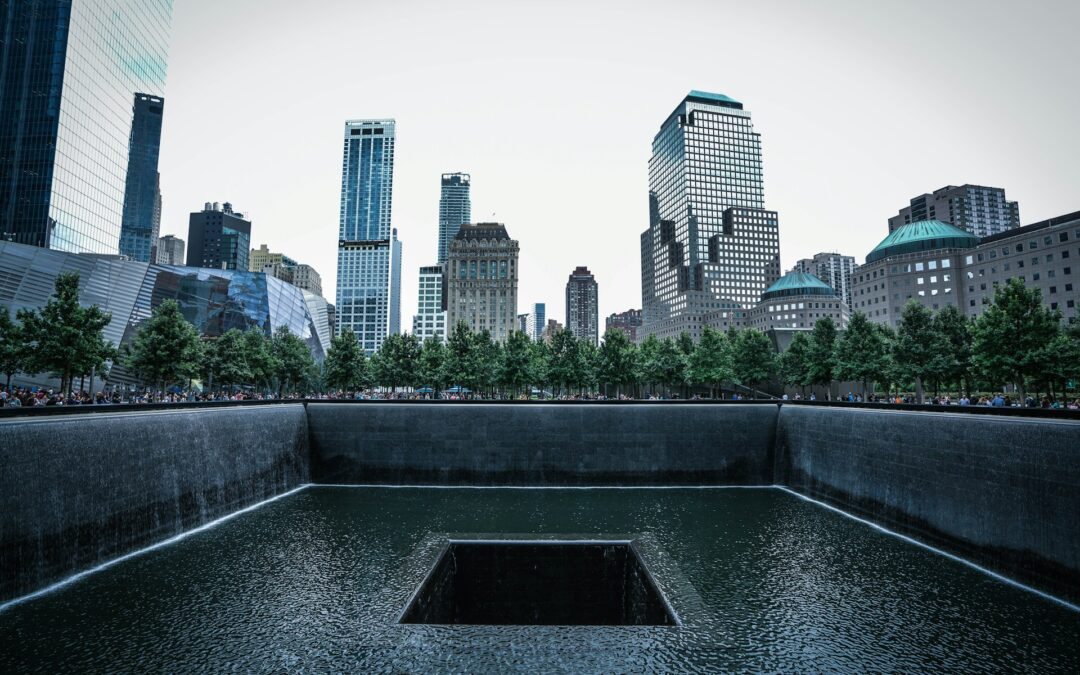
Drive past the Pentagon in Washington, D.C., and you’ll find no visible trace of the plane that crashed into its walls on September 11, 2001. The structure stands resilient, repaired, and restored—no scars evident to the casual observer. Yet, just three minutes down the road at Reagan National Airport, the scars of 9/11 are glaringly present. Shoes off. Jackets off. Belts off. Toothpaste out. Hands up. Empty your water bottle before security. The trauma etched itself not only into infrastructure but into protocols, behaviors, and collective consciousness.
Herein lies a poignant truth about human nature: wounds heal, but scars last.
Throughout history, individuals and societies rebuild, adapt, and move forward, yet the invisible imprints of trauma linger. These scars subtly, yet indelibly, influence how we perceive risk, reward, opportunity, and purpose. They shape our collective and individual psyche long after the physical damage is repaired.
Understanding this is critical: people who have lived through different experiences than you will inevitably think differently. Their goals diverge, their outlooks shift, and their values transform. What appears as disagreement is often merely a conversation between disparate worlds — a clash of perspectives rooted in experience, not ignorance.
Let’s explore some defining moments in history where the weight of personal experience recalibrated entire populations’ worldviews.
The Eastern Front: A Crucible of Loss and Rebirth
The Eastern Front during World War II was not just a battlefield; it was a catastrophic crucible of human suffering and endurance on an almost unimaginable scale. Over the course of four harrowing years, more than thirty million lives were extinguished—an immense toll equivalent to the population of a major modern state like California. This region, which comprised the Soviet Republic’s dozen or so territories, housed about 10 percent of the world’s population in 1940. By the war’s end in 1945, nearly 14 percent of that population had been annihilated. Such staggering loss permeated every corner of life, leaving behind a landscape scarred physically and culturally.
Entire villages—some 70,000 in total—were razed, transformed from vibrant communities into desolate ruins. The sheer scale of destruction rendered entire ecosystems of life unrecognizable. Yet beneath this devastation, a remarkable story of human resilience unfolded. By the 1960s, much of the overt physical damage had been repaired or erased. Industrial complexes rose from the ashes, infrastructure was reconstructed, and social order gradually re-established itself. The postwar period saw the total population not only rebound but actually surpass prewar numbers within less than a decade, signaling an extraordinary regenerative capacity.
Japan’s postwar trajectory amplifies this narrative of recovery and reinvention. In 1946, Japan was barely producing enough food to sustain its population, averaging a mere 1,500 calories per day per person—a starvation-level diet barely supporting survival. Fast forward just over a decade: Japan became an economic dynamo, boasting one of the world’s fastest-growing economies by 1960. Its GDP exploded from $91 billion in 1965 to an astonishing $1.1 trillion by 1980, propelled by technological innovation and manufacturing prowess that rivaled, and in many sectors surpassed, Western economies.
But while the infrastructure, industries, and economies healed, the psychological scars—the subtle yet profound imprints of trauma—persisted long after. These scars transformed how individuals and societies approached risk, shaped ambitions, and redefined what opportunities felt attainable. The physical wounds might fade, but the psychological echoes of devastation reverberated across generations, coloring decisions and attitudes with a cautious, often guarded hue.
Scars Etched in Mind and Body
The aftermath of trauma is not confined to visible destruction or economic loss; it extends deep into the human psyche and physiology, etching scars that endure beyond the scope of immediate recovery. Research spanning thousands of individuals who endured World War II reveals how the invisible wounds of conflict manifest in lifelong consequences.
A study encompassing twenty thousand survivors from thirteen different countries illustrated that those who lived through the war were 3 percent more likely to develop diabetes in adulthood and had a 6 percent higher risk of suffering from depression. These statistics illuminate the profound interplay between psychological stress and physical health. Trauma, particularly chronic or extreme, can alter bodily systems, contributing to ailments that surface years or decades later.
Yet the scars of trauma penetrate even further—shaping social behavior and subjective well-being. Survivors were statistically less inclined to marry, and when they did, they reported diminished satisfaction with their lives compared to those untouched by the war’s ravages. This suggests that trauma shapes not only individual health but also interpersonal relationships and emotional fulfillment.
The legacy of such scars was encapsulated eloquently by historian Frederick Lewis Allen in his 1952 reflections on the Great Depression. He described a generation gripped by a “constant lurking fear of worse things yet,” many of whom had endured actual hunger and deprivation. This cohort grew skeptical of the classic American dream epitomized by the Horatio Alger myth—the belief that sheer ambition and hard work inevitably lead to success. Instead, they adopted a worldview favoring security over ambition, stability over risk-taking.
This deeply ingrained craving for security manifested in an affinity for safe, unadventurous jobs, social insurance, and pension plans. For these survivors, ambition was tempered by the harsh lessons of scarcity and loss. The psychological imprint of hardship shaped economic behaviors and life choices, producing a cautious, often conservative approach to the future. These scars—while invisible—molded entire societal attitudes and economic patterns for decades to come.
History’s Blind Spot: The Intangibles of Trauma
When we examine history, we often focus on tangible elements—cities rebuilt from rubble, economies rebalanced, political borders redrawn. These measurable facets offer clear markers of recovery and progress. Yet, lurking beneath these visible indicators lies a profound blind spot: the intangible human experiences that escape easy quantification. Moods, fears, hopes, grudges, personal goals, emotional triggers, and collective expectations—the very fabric of human consciousness—are rarely captured in historical records but profoundly influence how societies evolve post-trauma.
These psychological and emotional residues operate beneath the surface like an unseen current, shaping decisions at individual and societal levels. They color the lens through which people interpret their world, affecting political ideologies, economic behavior, and cultural norms. For example, two countries might both rebuild their infrastructures and economies after a war, but their populations could develop dramatically different outlooks—one embracing risk and innovation, the other clinging to caution and conservatism—because of differing emotional legacies.
The intangible scars can foster suspicion, erode trust, or spark renewed hope. They can dictate whether a population rallies behind ambitious reconstruction efforts or retreats into insularity and protectionism. These hidden dimensions are why history often feels like a perplexing labyrinth of repeated mistakes, surprising alliances, and unexpected conflicts, defying purely rational explanations.
Furthermore, the intangibles of trauma are often transmitted intergenerationally. Children raised in households shaped by scarcity, loss, or fear absorb not only stories but the emotional residue that informs their perceptions and behavior. This subtle inheritance can perpetuate cycles of caution or risk aversion long after the original wounds have faded.
Understanding these invisible influences is crucial to making sense of history’s seemingly erratic patterns. It highlights the limitations of purely material or political analyses and underscores why recovery from trauma is never simply about rebuilding structures or reviving economies—it is also about healing the complex inner worlds of people.
Pavlov’s Dogs and the Flood of Trauma
Ivan Pavlov’s experiments with classical conditioning are foundational in psychology: he famously demonstrated that dogs could learn to associate a neutral stimulus—such as a bell—with food, producing a salivary response upon hearing the bell alone. This work illuminated the mechanics of learned behavior, showing how repeated pairings forge automatic reactions.
However, a lesser-known episode in Pavlov’s research reveals the profound and lasting impact of extreme trauma on learned behavior and personality. In 1924, Leningrad was struck by a catastrophic flood that engulfed the city and inundated Pavlov’s laboratory and kennels. The floodwaters rose rapidly, forcing Pavlov’s dogs to swim for their survival; some drowned, while others endured harrowing physical and psychological stress.
What transpired after this disaster was extraordinary: many surviving dogs lost their previously conditioned reflexes. Eleven days after the floodwaters receded, Pavlov observed that the dogs no longer responded to the bell by salivating. Instead, they became restless, refused food, and exhibited marked personality changes. The trauma had effectively erased learned behaviors that had been deeply ingrained over years.
Pavlov interpreted these changes as evidence that extreme environmental stressors can induce profound and prolonged disturbances in nervous system functioning. Such experiences can cause neuroses and psychoses, not only in animals but, by extension, in humans as well. This observation aligns with what we now understand about post-traumatic stress disorder (PTSD) and other trauma-related conditions.
The story of Pavlov’s dogs underscores a crucial insight: trauma doesn’t simply impose temporary discomfort or anxiety. It can fundamentally alter an organism’s psychological makeup, extinguishing previous patterns of behavior and replacing them with new, often unpredictable ones. This helps explain why individuals who endure catastrophic events frequently display shifts in personality, behavior, and worldview.
This phenomenon also sheds light on the limits of conditioning and learned habits in the face of overwhelming stress. It reveals how deeply trauma can “reset” expectations, instincts, and coping mechanisms, with consequences that ripple throughout a person’s life. The flood was more than a natural disaster; it was a psychological watershed that forever altered the inner lives of those it touched.
When Experience Reshapes Expectations
Human beings often operate under the comforting illusion that they can compartmentalize past trauma—that wounds, no matter how deep, will eventually fade into forgetfulness. Yet, when confronted with catastrophic or life-altering experiences, this illusion shatters. Such experiences have the power to permanently recalibrate our mental frameworks, resetting what we expect from the world and from ourselves.
Oliver Wendell Holmes captured this truth with striking elegance: “A mind that is stretched by new experience can never go back to its old dimensions.” This metaphorical stretching isn’t gentle; it is a transformation that irrevocably changes how one perceives risk, security, and opportunity. The old assumptions no longer hold, replaced by a new set of parameters shaped by survival, loss, or fear.
The generation that lived through the Great Depression provides a vivid case study. Having witnessed economic collapse, mass unemployment, and widespread hunger, their relationship with money and security was fundamentally altered. Saving was not just prudent but existential; taking on debt was perceived as a dangerous gamble with potentially ruinous consequences. Risk tolerance plummeted, replaced by an almost obsessive craving for financial safety nets.
What’s notable is that these behavioral changes were not fleeting reactions but lifelong patterns. Even as the economy recovered and prosperity returned, this generation’s financial conservatism endured. This is exemplified in a 1936 Fortune magazine article describing the college students of that era as “fatalistic,” cautious, and unadventurous—a stark contrast to the more optimistic outlook one might expect from youth.
This reshaping of expectations extends beyond economics. Traumatic experiences can hardwire caution in relationships, career choices, and social interactions. They influence how individuals weigh the probability of future catastrophes and adjust their ambitions accordingly.
The psychological principle at work is that the brain’s internal model of the world updates based on experience. When the data fed into that model is dominated by trauma or hardship, the new “normal” incorporates a heightened sensitivity to danger, scarcity, and uncertainty. This recalibration is adaptive—it enhances survival under threat—but it can persist long after the immediate danger has passed, influencing decision-making in less perilous contexts.
Postwar Europe’s Craving for Security
In the wake of World War II, Europe was a continent laid waste—both physically and emotionally. Unlike the United States, which emerged relatively unscathed and poised for economic expansion, European nations faced the daunting task of rebuilding amidst devastation. This reality bred a pervasive yearning for stability, predictability, and security that shaped politics, economics, and social policy for decades.
Hamilton Fish Armstrong’s 1947 description of postwar Europe captures the grim daily reality:
“Every minute is dedicated to scrounging enough food, clothing and fuel to carry through the next 24 hours. There is too little of everything… too few houses to live in and not enough glass to supply them with window panes; too little leather for shoes, wool for sweaters, gas for cooking, cotton for diapers, sugar for jam, fats for frying, milk for babies, soap for washing.”
This relentless scarcity produced a collective trauma that transcended individual suffering, embedding itself in national psyches. The economist John Maynard Keynes foresaw that war-torn countries would develop an insatiable craving for social and personal security—a prediction that came true as European nations instituted comprehensive welfare states designed to shield citizens from the caprices of fate.
These welfare systems extended far beyond mere economic policy; they represented social contracts born from the recognition that the old certainties had been shattered. Unemployment insurance, universal healthcare, and pensions became not just benefits but promises of protection against future upheaval. In many ways, these programs functioned as psychological scaffolding, propping up a population traumatized by years of uncertainty and loss.
Historian Tony Judt emphasized that postwar Europe’s embrace of the welfare state was a response to the crisis of displacement and dislocation wrought by war. For millions uprooted from homes, bereft of community and security, the state became the sole provider of hope and stability.
Michael Howard, a prominent military historian, observed the intrinsic link between war and welfare: conflict generates vulnerabilities that necessitate collective safety nets. The trauma of conflict erodes individual resilience, making state intervention not only desirable but essential.
In this crucible of collective hardship, European societies recalibrated their expectations. Individualism was tempered by a newfound appreciation for social solidarity. The scars of war cultivated a cultural and political ethos where security took precedence over risk, where cautious governance replaced laissez-faire ideals.
This postwar craving for security shaped Europe’s political landscape for decades, influencing everything from electoral politics to economic regulation. It demonstrated how deeply collective trauma can steer societal values, priorities, and institutions, forging new paths in the quest for stability amid uncertainty.
When Experience Divides Generations and Worldviews
Traumatic events don’t just leave marks on individuals; they carve deep fissures between generations and create divergent worldviews that persist long after the original crisis fades. These divides are often subtle but profound, shaping attitudes, behaviors, and even political and economic decisions in ways that can be difficult for others—especially younger generations—to grasp fully.
Consider the inflationary turmoil of the 1970s and 1980s, a period when soaring prices, stagflation, and economic uncertainty dominated public consciousness. Baby boomers, who came of age during this era, internalized a visceral fear of inflation that shaped their financial habits and life choices. They learned early on that money’s purchasing power was fragile, savings could be eroded, and economic stability was never guaranteed. This lived experience forged a cautious, skeptical generation attuned to the dangers of economic instability.
Contrast this with subsequent generations who grew up in comparatively stable economic climates. Millennials and Gen Z, for instance, have rarely confronted inflation rates approaching those highs and may view money and investment with different assumptions. This generational gap affects everything from spending habits to political preferences, with younger people sometimes seeming complacent or naive about risks that loom large for their elders.
A similar rift exists among entrepreneurs in the technology sector. The dot-com crash of the late 1990s decimated many startups and investors, imprinting a lasting wariness on those who lived through the collapse. These survivors became characterized by a cautious approach to risk and skepticism toward hype cycles. Meanwhile, younger entrepreneurs, many too young to remember or even born after the crash, often embrace risk with a different mindset, propelled by the successes of the digital age’s later waves.
Psychologically, two predictable patterns emerge following a major shock:
- The assumption that the event is not a one-off but an ongoing trend, likely to grow worse. Survivors anticipate a future dominated by the trauma’s recurrence, skewing their forecasts toward pessimism and caution.
- A conviction in the certainty of these forecasts, despite the original event’s improbability or unpredictability. This confidence often ignores historical precedents or statistical probabilities, leading to entrenched beliefs resistant to counterevidence.
These psychological effects create a gulf in perception between those who experienced the trauma firsthand and those who did not. This divergence can fuel misunderstanding, mistrust, and conflict in personal relationships, workplaces, and political arenas.
Understanding these generational divides is crucial for bridging communication gaps and fostering empathy. Recognizing that differences in worldview often stem not from ignorance or willful blindness but from the differing weight of lived experience is a vital step toward dialogue and mutual respect.
The Roots of Disagreement
At its core, many disagreements—whether political, social, or personal—stem less from differences in facts and more from fundamentally different experiences shaping how people interpret those facts. When two individuals clash over an issue, the question to ask is often not “Who is right?” but “What have you experienced that I haven’t?”
This simple yet profound inquiry exposes the foundational role of experience in belief formation. Our perspectives are filtered through the prism of what we have lived, endured, and learned. Events that leave deep emotional imprints shift priorities, values, and expectations in ways that are often invisible to others.
Yet confronting this truth is difficult. It demands humility—the willingness to admit that one’s own viewpoint is conditioned by limited experience and may not be universally applicable. This admission challenges deeply held convictions and can feel like a loss of intellectual or moral authority.
Because of this discomfort, people often default to simpler, more defensive postures. They label opposing views as ignorant, ill-intentioned, or irrational, rather than engaging in the difficult work of empathy and curiosity. This dynamic fuels polarization and entrenches conflict.
Ironically, the modern information age—with unprecedented access to diverse viewpoints and data—has not reduced disagreement but intensified it. As Benedict Evans astutely notes:
“The more the Internet exposes people to new points of view, the angrier people get that different views exist.”
Exposure to divergent opinions triggers defensive reactions rather than openness, often because these views challenge the core experiences and identities that underpin personal beliefs.
Ultimately, disagreement is less about the content of what is said and more about the unseen histories that shape how people hear and interpret it. Since experiences are inherently varied and often immutable, disagreement is an enduring feature of human interaction.
Recognizing this reality does not resolve all conflicts, but it fosters a more compassionate and patient approach. It encourages us to ask not just “Why don’t you agree with me?” but “What has shaped your view in ways I may never fully understand?” It invites curiosity, bridges divides, and honors the complex, scarred humanity beneath every conviction.
Scars Last — As Ever, So Always
The wounds of experience heal with time. Societies rebuild. Markets recover. Life, relentlessly, marches forward.
But scars remain etched beneath the surface—permanent markers shaping attitudes, fears, hopes, and decisions. They tether individuals and generations to their past, crafting the unseen contours of disagreement and understanding.
This dynamic is as old as humanity itself. It’s as constant as the rising sun.
Same as it’s ever been.
Same as it will always be.
Same as it ever was.