
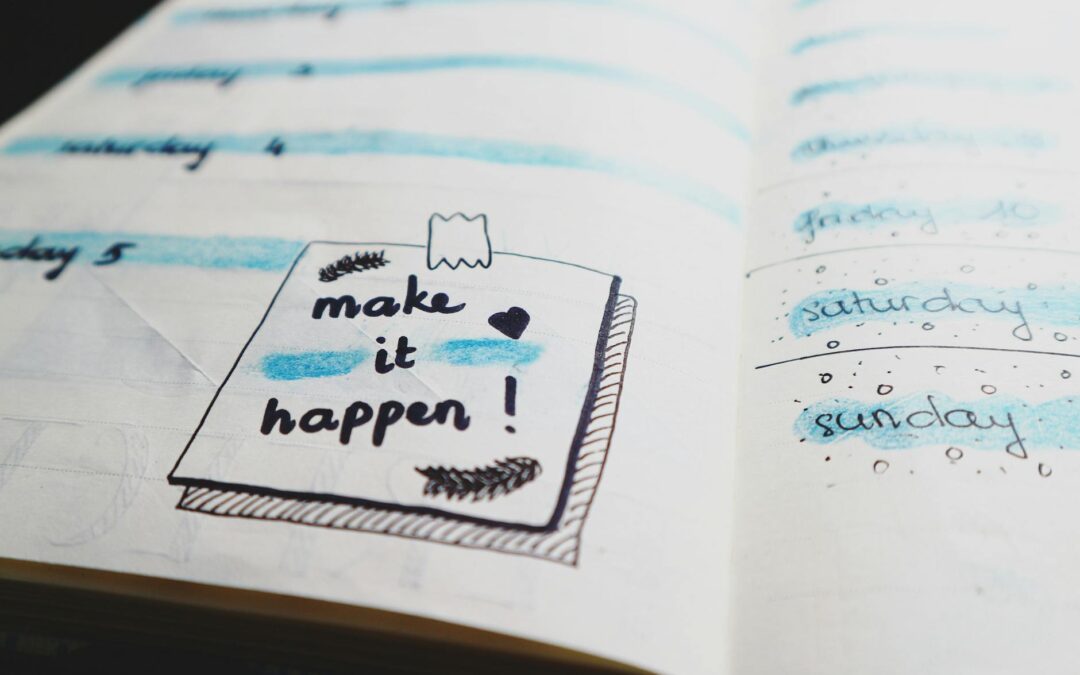
Every January, we convince ourselves that a new life is only one resolution away. We buy planners, sign up for gyms, and promise to reinvent everything from our diet to our mindset. But by February, reality sneaks back in—late-night snacks, skipped workouts, and half-finished projects remind us that change isn’t born from lofty declarations. Real transformation comes not from grand resolutions, but from practical rituals, guiding themes, and small, deliberate adjustments that actually stick.
This year isn’t about becoming a brand-new person—it’s about refining the one you already are. By managing perfectionism instead of surrendering to it, loosening the death grip on control, anchoring yourself in everyday purpose, and designing environments where good habits thrive, you can create momentum that lasts longer than a few calendar weeks. 2025 doesn’t have to be about dramatic reinvention; it can be the year you quietly, steadily build a foundation you’ll stand on for decades.
The Ritual of the Reset
The start of a new year feels ceremonial, almost sacred. It’s the psychological equivalent of a clean slate, a fresh page waiting for new ink. We treat January like a reset button, even though the mechanics of life don’t change overnight. Midnight strikes, fireworks fade, and we’re still the same person we were on December 31st. Yet there’s something powerful in the symbolism. The illusion of a fresh start can motivate us in ways ordinary Tuesdays never could.
Humans thrive on rituals because they punctuate the endless flow of time. Birthdays, anniversaries, and holidays serve as markers—reminders to reflect, celebrate, or mourn. The New Year is no different. It offers a socially reinforced pause where billions collectively ask: Am I heading in the right direction? This pause is invaluable. Without it, routines calcify. We drift into autopilot, often unaware of how far we’ve veered from what matters.
But the reset is not about radical reinvention. The danger lies in expecting fireworks to change habits that require firewood—slow, steady, daily fuel. January 1st doesn’t carry magical powers, but it provides a rare window to assess. Reflection, not resolution, is the true power of this season. By interrogating the past year’s patterns—celebrating wins, acknowledging failures, and confronting blind spots—you create space for intentional recalibration. Without that conscious inventory, another year slips by, and inertia wins again.
Themes, Not Resolutions
Resolutions are intoxicating because they promise transformation. “This year I’ll run a marathon,” “I’ll quit sugar,” “I’ll read fifty books.” They sound bold, definitive, heroic. But that clarity is a double-edged sword. One missed run, one slice of cake, or one skipped chapter feels like failure. The rigidness of resolutions creates brittleness: once cracked, they tend to shatter. It’s no wonder gyms are packed in January and ghost towns by March.
Themes offer a more durable framework. Instead of demanding perfection, they allow for fluctuation, adaptation, and course correction. A theme is broad, directional. Consider the difference: a resolution says, “I will run a marathon.” A theme says, “This is my year of building endurance.” The first collapses under injury or exhaustion; the second adjusts. Endurance can mean running, yes, but also hiking, swimming, or simply committing to move more consistently.
Themes work because they are expansive, not restrictive. They act as a compass rather than a contract. They orient you without punishing detours. A theme like progress over perfection reframes the journey. It encourages finishing imperfect projects instead of abandoning them. A theme like connection over distraction nudges you to prioritize calls with family over doomscrolling, without prescribing exactly how many calls or how many minutes.
Most importantly, themes anchor identity. Instead of chasing isolated achievements, you begin to embody a way of living. The process becomes self-reinforcing because every small choice aligns with the larger story you’re writing for the year. It’s less about a singular victory and more about tilting your trajectory toward a life that feels coherent, sustainable, and meaningful.
Wrestling with Perfectionism
Perfectionism seduces with the promise of excellence, but its true currency is paralysis. It whispers, don’t start until you’re ready, and convinces you that progress without flaw is worthless. What begins as a desire to do things well mutates into chronic hesitation. Drafts sit unfinished, projects remain in limbo, and opportunities pass by unseized. Perfectionism is not ambition sharpened—it is ambition shackled.
The danger lies in how insidious it feels. Perfectionists often mistake their avoidance for diligence: “I’m just not ready yet,” “I’ll launch when it’s perfect,” “I need more time.” Yet time rarely delivers clarity. Instead, it erodes momentum. Over weeks, months, or years, the compulsion to get everything “just right” results in nothing being right at all.
The way forward isn’t eradication—perfectionism is too ingrained for that. The task is to manage it, to blunt its edges. This requires deliberate counter-moves. One tactic is the “75% rule”: commit to sharing or shipping something once it feels three-quarters complete. This forces movement and normalizes imperfection as part of progress. Another tactic is “public declaration.” Announce intentions early, not for external pressure, but to defang the fear of judgment. Vulnerability dilutes perfectionism’s grip.
Equally vital is reframing mistakes. A botched attempt is not proof of incompetence—it’s evidence of action. Every imperfect effort is a brick in the foundation of mastery. By shifting the focus from flawlessness to forward motion, perfectionists can transform paralysis into practice. The goal is not spotless execution, but consistent expression.
Learning to Let Go of Control
If perfectionism paralyzes, the lust for control suffocates. Control provides the illusion of safety: if every variable is managed, nothing can go wrong. But life doesn’t bend to our will, and attempts to dominate every outcome breed exhaustion and resentment. In creative work, the consequences are even more dire. Playing it safe, repeating proven formulas, or policing every detail might protect reputation in the short term—but it slowly kills innovation.
The need for control often emerges from fear: fear of criticism, fear of loss, fear of chaos. Micromanagement becomes a shield, but it’s a brittle one. Teams suffocate under it, relationships fracture, and creativity stalls. Leaders, creators, and even parents who cling too tightly often find themselves burnt out, lonely, and stagnant.
Letting go doesn’t mean recklessness. It means trust. Trust in others’ competence. Trust in the process of iteration and adaptation. Trust in yourself to survive missteps without unraveling. Delegation is one of the purest forms of letting go: allowing someone else to shoulder responsibility, even if they do it differently than you would. In art or business, it also means taking risks—trying projects that might flop, exploring ideas that may alienate some audiences.
There is also a deeper layer: control over image. Many people trap themselves by clinging to an old identity, repeating past “hits” because they fear alienating fans, friends, or peers. But refusing to evolve is the slow death of relevance. The courage to pivot—to risk unpopularity in pursuit of authenticity—is the hallmark of growth.
Letting go is not about surrendering standards. It’s about loosening the chokehold on outcomes and learning to live in the space where unpredictability reigns. That space is uncomfortable, yes, but it is also where creativity, resilience, and genuine connection flourish.
Purpose Is Closer Than You Think
When people talk about “finding their purpose,” they often imagine a grand revelation—a moment when the clouds part, trumpets sound, and destiny is revealed in bold letters. This myth is intoxicating but paralyzing. It convinces us that meaning must come from extraordinary achievements: writing a bestseller, launching a groundbreaking company, or saving the planet. Yet most people who live with a profound sense of direction don’t stumble upon a lightning bolt moment. They build purpose slowly, brick by brick, through ordinary commitments.
Research highlights three surprisingly simple sources of purpose: kinship, affiliation, and status. Kinship refers to caring for family—children, parents, siblings, or chosen family. Affiliation is about friendships and social bonds, the quiet comfort of belonging. Status, often misunderstood, isn’t always toxic ambition. It can mean recognition for contributing to your community, being the “reliable one” in your circle, or the “helper” among your peers. These may not sound like mountaintop callings, but they anchor lives with meaning.
Purpose isn’t passive; it grows where you plant it. You don’t need to abandon your job to start a nonprofit in order to matter. You can nurture purpose by mentoring younger colleagues, checking in on aging relatives, or volunteering within your neighborhood. Even professional growth—gaining mastery, teaching others, building something of value—can serve as a wellspring of meaning.
What most people overlook is that purpose isn’t supposed to feel glamorous. Often it’s mundane, repetitive, and invisible to outsiders. A parent waking at dawn to pack lunches, a friend who always answers the late-night call, or an employee who quietly mentors the new hire—they’re not splashed across headlines, but they embody the essence of purpose. The pursuit of meaning is not about the extraordinary. It’s about showing up, consistently, for the ordinary things that matter.
The Science of Habits: Good vs. Bad
Habits are the invisible architecture of our lives. They shape not only what we do, but also who we become. Yet they are not created equal. Bad habits seduce because they’re fast-acting. Eat the cookie, feel the sugar rush. Light the cigarette, feel the calm. Scroll through social media, feel the distraction. The payoff is immediate, which makes the loop addictive. The cost—obesity, addiction, wasted time—lurks months or years down the line, out of sight and out of mind.
Good habits, on the other hand, ask for patience. Go for a run today, and you’ll mostly feel sore. Choose vegetables over fries, and you may leave the table less satisfied. Save money instead of spending, and you’ll feel deprived in the moment. Their rewards are delayed: fitness, health, financial security. Because the brain loves immediacy, these habits are harder to install.
Behavioral science frames habits through the loop of cue, routine, and reward. Cues are triggers: a time of day, a place, an emotion. The routine is the behavior itself. The reward is the payoff that reinforces repetition. With bad habits, cues and rewards are tightly bound—stress sparks smoking, boredom triggers snacking, fatigue leads to scrolling. With good habits, the delay between cue and reward makes them fragile.
The path forward is not sheer willpower. Willpower is finite, and relying on it alone is like trying to row upstream forever. Instead, success lies in designing environments that favor the habits you want. Remove or weaken cues for bad habits: no junk food in the pantry, no phone in the bedroom. Strengthen cues for good habits: leave your running shoes by the door, place a book on your pillow, prep meals in advance. Pair long-term rewards with immediate micro-rewards, like listening to your favorite podcast only when you jog, or tracking your streak with a visible chart.
Habits compound silently. At first, nothing seems to change—until months later, the payoff appears. The science is clear: the quality of your life depends less on the goals you set and more on the habits you repeat.
Strategic Friction and Smart Rewards
Most people assume discipline is about raw willpower—the heroic ability to resist temptation through sheer grit. But willpower is fragile, easily depleted by stress, fatigue, or decision overload. A smarter strategy is to manipulate friction: the ease or difficulty with which you can act on an impulse. Habits, good or bad, are not moral issues—they are logistical ones.
Consider midnight snacking. If your pantry is stocked with cookies, temptation is within arm’s reach. But if you simply don’t buy cookies at the store, the craving collides with friction. Now you’d have to put on shoes, grab keys, drive to the store—suddenly the bad habit is less appealing. This is strategic friction: deliberately adding obstacles to destructive behaviors so they lose their grip. The same applies to video games, streaming binges, or social media. If the console is unplugged and stored in a closet, or if the apps are buried behind timers and passwords, impulses weaken.
On the flip side, reducing friction fuels good habits. Keep a water bottle on your desk, and hydration increases. Lay out gym clothes the night before, and morning workouts feel less daunting. Meal-prep healthy lunches so you aren’t seduced by fast food at noon. These tiny environmental tweaks shift probability in your favor.
Rewards complete the loop. Habits endure when the brain associates them with pleasure. But delayed gratification is a tough sell, so you need micro-rewards along the way. Pair exercise with audiobooks or music you love. Reward writing sessions with a walk in the sun or a coffee at your favorite café. Make progress visible with streak trackers or habit journals—the satisfaction of checking a box is deceptively powerful.
Think of yourself less as a soldier in a willpower war and more as a gardener shaping conditions. By adding friction to what harms you and easing the path to what helps you, you tilt the battlefield. Discipline becomes less about heroic resistance and more about clever design.
Meta-Emotions: How You Judge the Slip-Ups
Everyone misses workouts, eats junk, procrastinates, or falls into old patterns. The slip itself is not the problem—it’s the story you tell yourself afterward. This is the realm of meta-emotions: emotions about emotions. You don’t just feel guilt about skipping the gym; you feel shame about the guilt. You don’t just feel disappointment after procrastinating; you feel anger at your own weakness. These secondary emotions amplify the original lapse until it metastasizes into self-sabotage.
Meta-emotions often decide whether a habit survives. Imagine two people who both miss a week of workouts. The first tells himself, I’m pathetic, I’ll never stick with this, and quits altogether. The second says, That was a rough week, but setbacks are part of the process. I’ll start again Monday. The difference isn’t the failure—it’s the judgment layered on top.
Managing meta-emotions requires balance. Too harsh, and you drown in self-loathing. Too lenient, and you excuse every lapse until progress stalls. The goal is compassionate correction: acknowledge the misstep without magnifying it. Say to yourself, Yes, I slipped. It’s human. Now what’s the next small right step?
This mindset shift transforms habits from brittle commitments into resilient practices. Instead of expecting flawless streaks, you expect interruptions—and prepare to recover from them. Over time, you learn to treat lapses as data, not verdicts. Why did I overeat? Was I stressed, lonely, bored? What cues triggered this behavior? Each stumble becomes an opportunity to understand your patterns more deeply.
Ultimately, self-discipline isn’t about never failing. It’s about refusing to let failure become final. When you stop treating imperfection as disqualification, you unlock the freedom to try again, and again, until the habit becomes part of you.
The Starting Cost of Good Habits
Every worthwhile habit asks for an upfront tax—a cost that feels heavier than the reward it promises. Think of it as the “entry fee” to change. Start going to the gym, and your body aches before it feels strong. Begin eating cleaner, and meals taste bland before your palate adjusts. Quit drinking, and social interactions feel awkward before they become freeing. These discomforts are not signs you’re failing; they are the toll you must pay at the gate of transformation.
Bad habits, by contrast, charge no entry fee. They welcome you with open arms, offering instant gratification and no friction. Light up a cigarette, and calm washes over you. Scroll social media, and distraction is immediate. Eat fast food, and your brain lights up with salt, sugar, and fat. The problem is the bill comes later—in declining health, wasted time, or diminished confidence.
The challenge with good habits is that the discomfort arrives first while the payoff lags behind. This mismatch causes many to quit prematurely. They misinterpret early friction as proof they’re not cut out for the habit. But what feels unbearable at the start is often just adaptation in disguise. The soreness from workouts? Muscles rewiring. The awkwardness in a yoga class? Neural pathways stretching alongside your hamstrings. The blandness of healthy food? Taste buds recalibrating.
The key is reframing this discomfort tax as an investment, not a punishment. Progress often hides beneath temporary pain. Expect the upfront resistance, and you won’t be blindsided by it. Pay the toll with patience, and you eventually cross into a place where the habit sustains itself. The once-daunting cost transforms into automatic ease. What was once a grind becomes identity: you don’t try to work out—you’re simply someone who moves.
Building for the Long Game
Goals and habits are often misunderstood as finish lines, when in reality they are scaffolding—structures that support the person you are becoming. The danger lies in treating goals as trophies: run a marathon, lose ten pounds, publish a book. Once achieved, the trophy gathers dust while old patterns quietly creep back in. The marathon runner quits running. The dieter regains the weight. The writer never writes again.
The long game requires shifting focus from outcomes to identity. Habits should be viewed as systems, not sprints. Training for a marathon is valuable not because of race day but because it turns you into someone who trains consistently. Losing weight is powerful not because of the number on the scale but because it rewires how you eat, move, and think about your health. Writing daily matters less for the book it produces and more for the discipline it instills.
Incrementalism is the engine of the long game. Tiny, unremarkable improvements—1% better each day—compound into seismic transformations over months and years. The compound effect of habits is invisible at first, which is why so many abandon them. But time amplifies small actions in ways willpower alone never could.
Building for the long game also requires accepting imperfection. Perfectionists chase flawless streaks; long-game thinkers expect interruptions and prepare to recover from them. Control freaks demand predictable outcomes; long-game thinkers embrace uncertainty and adapt. The true aim isn’t a perfect year in 2025—it’s a sustainable trajectory that carries into 2026, 2027, and beyond.
The long game is not sexy. It is slow, often boring, and built on rituals no one applauds. But it is also liberating. When you stop chasing reinvention and start practicing refinement, change ceases to be an annual performance. It becomes a lifelong rhythm, steady and unshakable.
Conclusion
Setting goals and creating healthy habits is not about chasing perfection or bending life into predictable shapes. It’s about crafting systems that nudge you forward, tolerating the discomfort tax of new routines, and treating missteps as data rather than disasters. Purpose doesn’t live in some grand epiphany; it grows in ordinary commitments—family, friendships, growth, contribution.
If 2025 has a promise, it’s this: small shifts compound. A theme repeated in daily choices becomes identity. Identity repeated in daily habits becomes destiny. Forget the myth of a perfect January 1st transformation. Instead, commit to steady refinement, quiet resilience, and habits designed to outlast motivation. Change won’t be loud or glamorous—but it will be real, and it will be yours.