
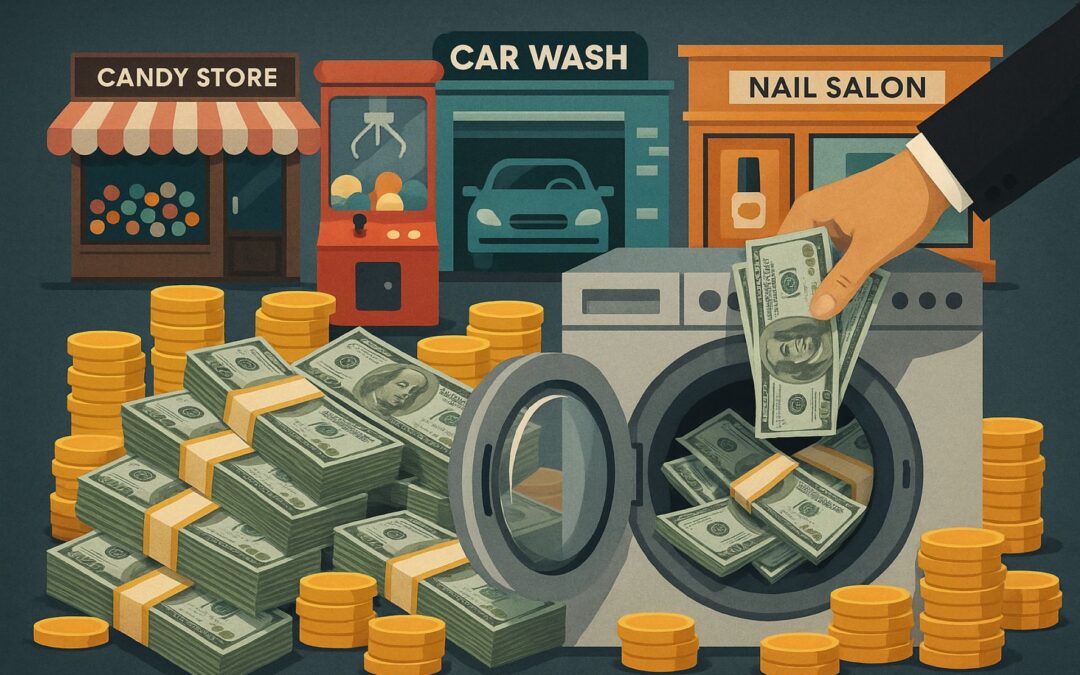
Money laundering is a pervasive crime that impacts economies worldwide, with criminals constantly finding new ways to disguise illicit funds as legitimate income. One of the most insidious aspects of money laundering is how it often hides in plain sight, operating through everyday businesses.
Some of these businesses, which seem perfectly ordinary, are fronts for illegal financial activities. From candy stores and nail salons to art galleries and crypto assets, the range of businesses involved in money laundering is vast and varied. Understanding how these operations work and recognizing the common signs can help uncover hidden criminal activity, protect legitimate businesses, and ensure financial systems remain secure.
In this article, we explore 15 of the most common businesses used for money laundering and reveal how they manipulate their operations to mask the flow of illicit funds.
1. Candy Stores
Candy stores seem like an innocent business, especially in bustling city centers or trendy shopping districts. However, their consistent ability to stay afloat, despite a lack of customer traffic, can raise suspicions. Take, for example, a candy store located in a high-rent area, where rent costs could easily amount to thousands of dollars a month. Yet, the store operates day in and day out without the steady stream of customers you would expect for such a prime location.
This apparent discrepancy between the rent and the business’s activity often hints at something more. Candy stores are an ideal front for money laundering for several reasons. First, the nature of the product makes it easy to manipulate sales figures. Candy is inexpensive, but often marked up considerably. A shop can sell bulk candy at inflated prices while maintaining the illusion of being a legitimate business. The key here is in how sales are reported—large amounts of candy can be “sold” without anyone noticing that the actual volume is far smaller. The profits from the sale can be mixed with illicit money, making the source of funds difficult to trace.
Moreover, the physical space and inventory of the store are easily manipulated. If authorities were to investigate, they might find that the candy on display doesn’t match the reported sales. In some cases, even the candy itself may be confiscated during investigations, further exposing how these seemingly innocent businesses are used to launder illicit funds. What’s more, these operations often make use of complex business structures that further obscure ownership, which means the true beneficiaries can remain hidden, making it difficult for investigators to uncover the underlying criminal activities.
2. Claw Machines and Play Areas
Claw machines, those seemingly innocent arcade games, may seem like a fun way to pass the time, but they can also serve as a front for money laundering. Arcade and play areas, where claw machines are a common attraction, tend to operate on a cash-based system, with little regulation or oversight. This is the perfect environment for money laundering activities to take place, as the flow of cash is often not documented or properly accounted for.
The first red flag is the irregular cash flow. A claw machine operation might report large sums of cash coming in from ticket sales, but without a clear number of customers or the actual value of prizes being dispensed, it’s easy to see how the business can inflate its income. The cash flow is manipulated through accounting tricks. For example, the business could report sales of high-value prizes—such as expensive electronics or gift certificates—without ever actually awarding them to customers. The money is funneled through the system and deposited into the business’s accounts, with no real prizes being exchanged.
Additionally, the business structure of arcades and amusement parks allows for easy inflation of revenue. Prize values can be overstated, and the frequency of “winners” can be exaggerated. This makes it easier for criminals to launder illicit funds by treating them as legitimate earnings from arcade games and prizes. With minimal scrutiny from local authorities, arcade businesses provide an ideal cover for money laundering operations, especially when they operate in tourist-heavy areas where large cash transactions are common.
3. Laundromats
Laundromats have long been associated with money laundering due to their ability to facilitate large cash transactions in a relatively unregulated environment. Historically, organized crime syndicates used laundromats as a way to “clean” money, and the term “money laundering” is even believed to have originated from these operations. Laundromats are attractive to criminals because they operate largely in cash, and there’s very little oversight of the money flowing through these businesses.
At a basic level, laundromats offer an ideal environment for laundering money because they experience a regular, consistent flow of cash. They also have a simple structure with minimal employees, which makes it difficult to track exactly how much money is coming in and going out. For instance, a laundromat might claim that hundreds of people are using the machines each day, but in reality, the customer base is much smaller, or the actual laundry load is much lower than reported. The discrepancy between the stated income and the real activity provides a channel for illicit funds to flow freely.
Additionally, laundromats often purchase supplies like detergents and other cleaning products in bulk. These purchases can be inflated in order to “justify” the movement of money. A laundromat might report purchasing hundreds of boxes of detergent, even if they only need a fraction of that. This creates a false sense of legitimate business expenses, further masking the illicit money flowing through the operation. The low overhead costs, combined with cash-heavy transactions, make laundromats a classic front for criminal activity and money laundering.
4. Car Washes
Car washes are another prime example of a business frequently used to launder money. Much like laundromats, car washes often operate with a high volume of cash transactions, making it easy for criminals to funnel illicit money through them. The car wash business model also provides an opportunity to inflate the value of services and products, allowing money laundering to take place without raising suspicions.
One way that car washes launder money is by over-reporting the number of vehicles washed or the value of additional services provided. For example, a car wash might claim to have detailed hundreds of cars, but in reality, only a fraction of that number were actually serviced. Similarly, the business could claim to sell a high volume of expensive add-ons, such as air fresheners, tire wax, or premium car cleaning products, at inflated prices. The actual cost of these items might be much lower, but the markup allows for the movement of illicit funds into the business.
Moreover, car washes often have a steady stream of customers, making it easier to blend illicit money with legitimate income. The regular cash transactions make it difficult for investigators to distinguish between the two, especially if the business owner is skilled at manipulating financial records. The combination of inflated service charges, minimal oversight, and frequent cash transactions makes car washes an attractive choice for those looking to launder money.
5. Nail and Beauty Salons
Nail salons, beauty parlors, and other personal care services have long been used as fronts for money laundering due to their cash-based business model and limited transparency. These businesses often involve services that are difficult to track, such as manicures, massages, or facials. With no tangible products being exchanged, it’s easy to inflate the number of services provided or overcharge clients, making it an ideal environment for criminals to launder money.
The primary way nail salons facilitate money laundering is by falsifying customer records. A salon might report performing hundreds of services in a single day, even if the actual number of customers is much lower. By inflating the sales figures and reporting a higher volume of services rendered, the business can make it appear as though it is generating legitimate revenue when, in fact, much of the money is illicit. Additionally, beauty salons often sell products like nail polish, hair care products, or cosmetics, which can also be marked up to justify the flow of money.
Another factor that makes nail salons attractive for money laundering is the relatively low level of scrutiny these businesses receive. Customers often pay in cash, making it easy to hide untraceable transactions. The lack of inventory tracking, combined with high-margin services, allows business owners to manipulate their financial statements and create the illusion of legitimate profits. These operations can easily be manipulated to disguise dirty money as earnings from beauty services, making nail salons a common tool for money launderers.
6. Restaurants with Minimal Customers
Restaurants that seem to be perpetually empty, yet somehow manage to stay in business despite a lack of customers or consistently poor reviews, can raise suspicions. It’s not uncommon to see a restaurant that appears underwhelming in terms of food quality or service, but remains operational, with regular deliveries of fresh produce, expensive ingredients, and a wide range of menu items. The key to understanding how these seemingly unremarkable establishments can survive lies in the ability to disguise illicit money through the high volume of cash transactions inherent in the restaurant industry.
One of the most common ways these restaurants facilitate money laundering is through overreporting the number of customers they serve. In a scenario where the restaurant appears nearly empty, the owners might still report a full day’s worth of sales, effectively inflating revenue figures. This discrepancy between the actual number of customers and the reported income allows illicit money to be introduced into the system, disguised as legitimate earnings. In some cases, business owners might even claim to have served more expensive dishes than they actually did, artificially boosting the sales figures.
Another technique used to launder money in restaurants involves inflating food costs. A restaurant may report buying ingredients at a much higher price than their actual cost, or it might claim to have purchased large quantities of specialty items, such as seafood or truffles, when in reality, these items are not in demand. By doing so, the business justifies the expenditure of illicit funds to pay for these inflated costs. Restaurants may also falsify inventory records, making it appear as though they have sold more food than they actually have. This allows for the laundering of dirty money while keeping the operation running as a “legitimate” business.
7. Strip Clubs
Strip clubs are among the most notorious businesses for money laundering, and for good reason. The cash-intensive nature of these establishments, combined with minimal oversight, makes them ideal locations for criminals looking to launder illicit funds. These clubs often run with significant amounts of cash, both from customers paying for lap dances and other services, and from tips given to dancers. Because much of the financial transactions occur in cash, it is relatively easy to disguise illicit funds as legitimate business revenue.
The involvement of strip clubs in money laundering often extends beyond just the customers. In some instances, strip clubs may be tied to more illicit activities, such as human trafficking or drug sales, which further complicates their role in laundering money. Since these establishments are often part of larger underground criminal operations, the illegal proceeds can be funneled through the strip club, masked as tips or payments for services. The nature of cash-based transactions allows criminals to “clean” money through the strip club without drawing too much attention.
Owners of strip clubs can further inflate their revenue by overreporting the number of customers, the value of services rendered, or the sale of overpriced drinks. These businesses also have the potential to underreport expenses and inflate the prices of their merchandise. For instance, a club might sell overpriced drinks or use inflated ticket prices for entry, making it easier to funnel illicit funds through the business, all while keeping up the illusion of legitimate operations.
8. Psychic Reading Businesses
At first glance, psychic readings may seem like harmless, mystical services, but these businesses have become a popular front for money laundering operations. The cash-only nature of these businesses, combined with the intangible nature of their services, makes it extremely difficult to track the true financial activity behind them. A psychic might claim to have helped a large number of clients, performing readings or casting spells, but there’s no real way to verify the number of people they’ve helped or the amount of money they’ve made.
One of the ways these businesses launder money is by inflating the number of customers or charging exorbitant rates for services that have little to no tangible value. A psychic might claim that a client is cursed, and offer to “remove” the curse for a large fee. This type of manipulation, both financially and emotionally, allows for significant sums of illicit money to be laundered through the business. The psychic may also claim that their services are so effective that the client is compelled to pay more money for ongoing readings or healing sessions. By creating an atmosphere of urgency and dependency, psychics can extract large sums of money from vulnerable individuals, all while masking dirty money as legitimate earnings.
Psychics can also use their businesses as a means to hide cash transactions. Since psychic services are often done in private, with no official receipts or records being provided, it’s easy to launder money by mixing illicit funds with the revenue from legitimate services. The absence of oversight and regulation in the psychic industry makes it an attractive option for criminals looking to hide dirty money under the guise of spiritual services.
9. Cash-Only Parking Lots
Cash-only parking lots are a common example of a business that can be used to launder money. These establishments operate on a simple model—customers pay for parking, often in cash, without requiring a receipt or detailed tracking of the transaction. This simplicity makes it easy to manipulate the flow of money and disguise illicit activities. A parking lot may appear legitimate, but without proper record-keeping or regulation, the owner can easily inflate their revenue by fabricating parking fees.
One of the most common methods used in these businesses to launder money is by “ghost parking.” This means that parking spaces are logged as occupied, even if no vehicle was actually parked there. The business owner can then claim a large amount of parking fees, even though the lot has remained relatively empty. This allows illicit money to be filtered into the business without raising suspicion. The lack of oversight and the constant flow of cash also provide an easy opportunity for criminals to introduce illicit funds into the system, hiding them behind the supposed “income” from parking fees.
Another red flag in cash-only parking lots is the potential for overcharging or manipulating the number of cars parked in the lot. With a minimal number of customers and no digital payment system to track transactions, it’s easy for the business owner to manipulate their financial records, inflating income and moving dirty money through the operation. The lack of transparency makes parking lots an ideal business for money laundering, especially when they are located in tourist-heavy areas or areas with limited parking options.
10. Churches and Religious Institutions
It might be hard to believe, but churches and religious institutions are often used as fronts for money laundering. Due to their tax-exempt status, these organizations are not required to file detailed financial reports or disclose their income, making them ideal vehicles for laundering money. Religious institutions often handle large sums of donations, and without stringent oversight, it becomes easier for illicit funds to be funneled through them.
Some criminal organizations use churches to launder money by claiming that donations are made in the name of charity, when in fact, the funds are being funneled into the pockets of criminals. Televangelists, in particular, have been known to exploit their religious status to justify extreme wealth. The public perception of these figures as “godly” individuals makes it difficult to question their income, and their lavish lifestyles are often explained away as a “gift from God.” This narrative can distract from the underlying money laundering activities that might be taking place within the organization.
In some instances, churches themselves may be directly involved in laundering money. With minimal oversight, funds that are claimed as donations are sometimes diverted into personal accounts or used to fund illicit activities. The faith-based nature of these organizations provides a shield for criminal activity, as it’s hard to question the flow of money under the guise of charitable giving. The combination of tax exemptions, minimal reporting requirements, and large sums of cash donations makes churches and religious institutions a prime target for those looking to hide illicit money.
11. Art Galleries
The art market is often regarded as an elite and somewhat opaque space, which is why it has become an attractive platform for money laundering. The nature of art, being largely intangible and subjective in value, allows for considerable manipulation of prices and valuations. This makes it an ideal vehicle for criminals looking to move illicit funds across borders or into legitimate investments.
One of the most common ways that art galleries are used in money laundering schemes is through overvaluation. A buyer might purchase a piece of art for a fraction of its reported price, with the difference being laundered through inflated appraisals. For instance, an artwork may be purchased from an artist for $10,000, but through a manipulated appraisal, it is then “sold” to a museum or wealthy collector for $1 million. This transaction effectively “cleans” the illicit funds, and the launderer may even benefit from a tax break by donating the artwork to a public institution.
Additionally, the nature of art sales often makes it difficult to track the true origins of funds. A painting or sculpture can change hands multiple times, each time at an inflated price. This serial overpricing allows for the money to be laundered gradually, in a manner that is difficult for authorities to trace. Furthermore, art transactions often occur in private auctions or through intermediary dealers, which increases the chances of concealing the true ownership and financial details. The ease with which art can be bought, sold, and valued allows it to be a common tool for laundering money, particularly when the artworks involved are intangible, and their value is open to interpretation.
12. Flower Shops
Flower shops, especially those that operate around the clock, have become a surprising but effective front for money laundering. The nature of their business allows for a degree of opacity when it comes to tracking sales, making it easy to move illicit funds through these businesses. The most intriguing aspect of flower shops used for money laundering is their consistent sales, despite often lacking a steady flow of customers.
Flower shops typically deal with perishable items, making it easier to falsify inventory and sales. For instance, a flower shop could claim to have sold thousands of flowers during a high-demand period, even though the actual sales are much lower. This discrepancy allows for large sums of illicit money to be mixed with legitimate revenue, making it difficult for investigators to discern the true financial activity of the business. Since flowers are often sold in small amounts and for relatively low prices, the shop can justify large, unaccounted-for cash transactions by inflating their sales records.
In some cases, flower shops may also be involved in the sale of illegal goods under the guise of floral arrangements. These goods could range from drugs to counterfeit products, all of which can be hidden within seemingly innocuous flower deliveries. Moreover, the 24-hour operation of some flower shops, often located in high-traffic areas, makes it easy for criminals to move illicit products quickly and covertly. The combination of perishable inventory, cash-heavy transactions, and minimal oversight creates the perfect opportunity to launder money while maintaining the appearance of a legitimate business.
13. Small Cinemas
Small, independent cinemas, particularly those in rural or less populated areas, are an unlikely but frequent example of businesses used for money laundering. These theaters, which may show older or less popular films, often operate at a loss yet somehow manage to stay open, often relying on cash payments for tickets. This creates an environment where it’s easy to disguise illicit money as legitimate income.
One of the primary ways these small cinemas launder money is through inflated ticket sales. These theaters may report a high number of ticket sales for films that barely attract an audience. The discrepancy between the actual attendance and the reported income provides a cover for criminals to funnel dirty money through the business. For instance, a cinema might report large crowds for a film screening, even though the theater was mostly empty. The fraudulent ticket sales allow illicit money to be introduced into the system and disguised as revenue.
Moreover, small cinemas may also inflate the prices of concessions or other services. The cost of popcorn, soda, or other snacks can be marked up far beyond their true value, providing another avenue for money laundering. These inflated sales allow criminals to disguise illicit funds as legitimate business profits. Since these businesses often operate with minimal oversight and in low-profile areas, the chances of financial scrutiny are significantly reduced. This makes small cinemas an ideal front for money laundering activities.
14. Crypto Assets
Cryptocurrency has emerged as a highly effective tool for money laundering in recent years, particularly because of its decentralized nature and the anonymity it offers. Unlike traditional banking systems, which are subject to regulations and oversight, cryptocurrencies like Bitcoin, Ethereum, and Monero can be used to move money across borders without revealing the identities of the sender or receiver. Criminals have found ways to leverage the characteristics of cryptocurrencies to mask the origin of illicit funds and to facilitate the movement of money between different jurisdictions.
One of the primary methods of laundering money through cryptocurrencies is through “mixing” services, also known as crypto tumblers. These services take cryptocurrency from multiple sources, mix it together, and then redistribute it in small, untraceable amounts. This process obscures the origin of the funds, making it impossible to trace them back to their original source. For instance, a person who has illicit funds in Bitcoin can use a crypto tumbler to mix those funds with Bitcoin from other users. The resulting coins are then sent to a new wallet, where they can be used to purchase goods or services without raising suspicion.
Another popular method is the use of privacy coins like Monero, which are specifically designed to provide anonymity for transactions. These coins make it nearly impossible to track the sender or receiver, providing a perfect cover for criminals looking to launder money. Once the illicit funds are converted into cryptocurrency, they can be used to purchase assets like real estate or luxury goods, or even be traded on international exchanges. The lack of regulatory oversight in the cryptocurrency market, combined with the anonymity provided by privacy coins, has made crypto assets a prime choice for money launderers looking to clean illicit funds.
15. Local Fruits and Grain Vendors
Local fruit and grain vendors, particularly those operating in tourist areas or busy marketplaces, may seem like humble businesses, but they can be used to launder money in an efficient and covert manner. These small-scale businesses often deal in cash and involve low-cost, high-volume transactions, which makes them perfect for masking illicit financial activity. The supply chain for fruits and grains is also difficult to track, allowing vendors to inflate their sales and expenses to hide the true source of their funds.
For instance, a vendor selling fruits may report selling a large volume of apples or bananas, despite a much smaller actual inventory. This inflated sales record allows the vendor to funnel illicit money through their business, disguising it as legitimate earnings from the sale of produce. In some cases, vendors may also use their stalls as a cover for illegal activities, such as the sale of drugs or other contraband, further complicating the laundering process.
The flexibility of fruit and grain vendors in terms of pricing and inventory also makes them an attractive option for money launderers. A vendor can mark up their goods and claim to have made a substantial profit, even though the actual cost of the items is much lower. Additionally, these vendors often have established networks for distribution, which makes it easy to move illicit money across different businesses or even countries. The combination of cash-based transactions, high-volume sales, and minimal oversight allows these businesses to serve as effective fronts for laundering money.
Conclusion
Money laundering is a complex and pervasive crime that thrives in environments where cash transactions and minimal oversight facilitate the concealment of illicit funds. The businesses we’ve discussed, from seemingly innocent flower shops to high-value art galleries, all share a common trait: they can manipulate financial records, inflate sales, or exploit loopholes in regulations to launder money.
While these businesses may appear legitimate on the surface, understanding the underlying tactics they employ can help identify and prevent financial crimes. By recognizing the red flags associated with money laundering, we can work together to protect our financial systems and ensure that criminal activity doesn’t go unnoticed. Ultimately, staying vigilant and informed is key to tackling the global issue of money laundering and safeguarding our economies from illegal practices.