
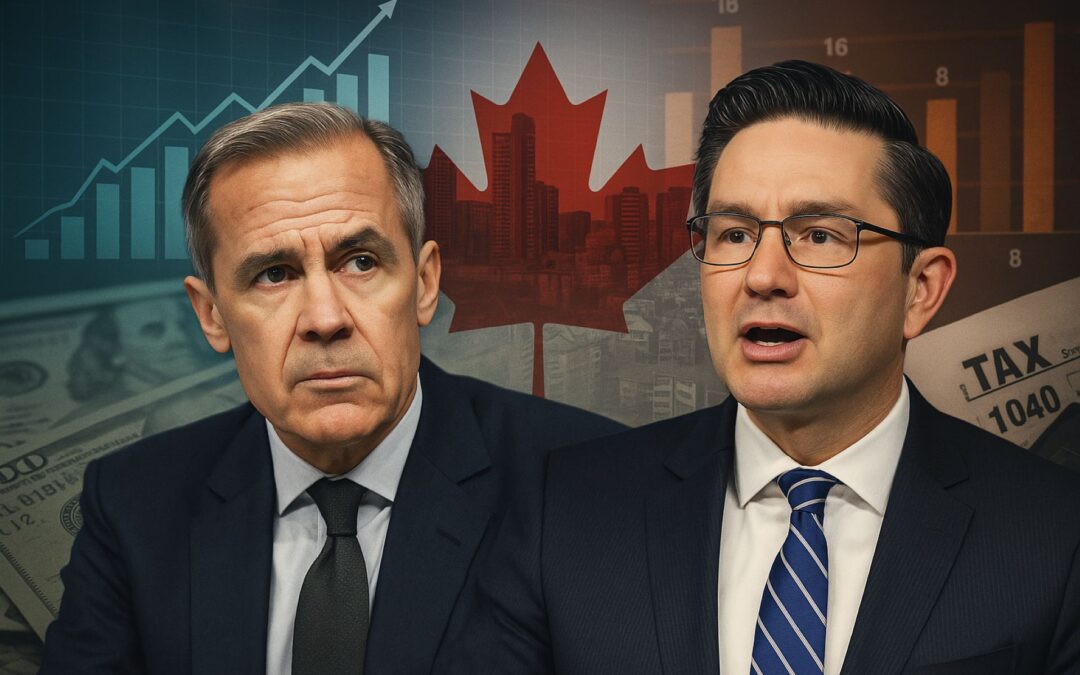
April 2025 marks a watershed moment in Canadian politics. The upcoming election isn’t just a routine affair; it pits two starkly contrasting economic visions against each other. On one side stands Mark Carney, championing a technocratic, centralized neoliberalism. On the other, Pierre Poilievre rallies for a freer market populism. At the heart of the debate lies a crucial question: who truly has Canada’s economic future in their hands? This article unpacks their proposals, with a laser focus on the cost-of-living crisis, housing, trade, and taxation.
The Crushing Weight of Housing Costs
The housing crisis in Canada is more than a political talking point—it is a socioeconomic earthquake shaking the very foundations of Canadian society. Over the past decade, the relentless surge in housing prices and rents has outpaced wage growth by an alarming margin, leaving middle-class families, young professionals, and even long-time residents struggling to find stable and affordable living arrangements. The numbers are stark: housing prices have inflated by 62%, rents by 51%, while median incomes have barely inched up by 10%. This growing chasm between earnings and expenses has created a landscape where the dream of homeownership feels increasingly unattainable for many.
This phenomenon is not simply about shelter; it permeates every aspect of life. For many Canadians, housing costs consume an ever-larger slice of their monthly budgets, forcing difficult trade-offs between basic necessities, savings, and quality of life. Younger generations face the grim reality of extended renting periods, delayed family formation, or migrating to less expensive regions. The psychological toll is palpable, with growing feelings of insecurity and disillusionment about economic mobility.
Several factors feed into this crisis. Supply constraints loom large, with zoning laws, restrictive urban planning, and community resistance (often labeled as NIMBYism—“Not In My Backyard”) stalling new developments. Meanwhile, speculative investment and foreign capital inflows have further distorted market dynamics, driving prices beyond local affordability. Add to this the sluggish pace of construction labor growth and material shortages, and the supply-demand imbalance becomes a near-perfect storm.
Mark Carney’s GST Relief for First-Time Buyers
Mark Carney’s flagship housing affordability initiative is the removal of the Goods and Services Tax (GST) on new homes priced under $1 million, targeted specifically at first-time homebuyers. The rationale is simple and politically appealing: reduce the upfront tax burden to lower barriers for new entrants into the housing market. By eliminating the 5% GST on qualifying purchases, first-time buyers theoretically save tens of thousands of dollars, making the initial leap into homeownership slightly less daunting.
Yet this measure is, at best, a modest concession. The policy’s effectiveness is geographically uneven—urban markets like Toronto and Vancouver, where average home prices far exceed the $1 million threshold, effectively exclude a vast swath of buyers from this benefit. This leaves those grappling with the highest housing costs largely untouched by the policy’s relief.
Furthermore, by limiting the exemption to first-time buyers, Carney’s plan introduces a segmentation effect in the market. This could inadvertently increase demand in the sub-$1 million segment, potentially inflating prices in that tier as competition intensifies.
Crucially, this proposal sidesteps the pivotal structural challenge: the chronic shortage of housing supply. Affordability is a two-sided equation. Lower transaction costs ease entry, but without an increase in the number of homes available, this only fuels bidding wars. Economic theory and empirical evidence alike warn that demand-side incentives without supply expansion create upward pressure on prices, ultimately negating affordability gains.
Moreover, by offering relief through tax exemptions rather than direct supply interventions, Carney’s plan skirts the deeper, systemic barriers: regulatory inertia, zoning restrictions, and infrastructure bottlenecks that throttle new construction.
Pierre Poilievre’s Broader GST Exemption
In contrast, Pierre Poilievre’s approach is more sweeping: abolishing the GST on all new homes priced up to $1.3 million, irrespective of buyer status. This extension reaches into higher-priced markets, providing tax relief to a larger portion of potential buyers in expensive cities.
This broader exemption signals a commitment to stimulate home purchases more aggressively, theoretically lowering effective prices and encouraging market activity. The inclusion of all buyers aims to remove eligibility hurdles and inject liquidity across a wider buyer base.
However, this policy walks a fine line with unintended consequences. Expanding demand incentives into an already overheated market may exacerbate price inflation rather than temper it. When more buyers find purchasing marginally cheaper, competition intensifies, often translating into bidding wars that push prices even higher.
Such a policy echoes the effects of lowering interest rates—initially stimulating buying power, but eventually stoking inflationary spirals in asset prices if supply remains constrained. Poilievre’s GST exemption, while politically bold, risks accelerating the very housing inflation it purports to alleviate.
Without complementary measures to substantially increase housing stock, this demand-driven approach may deliver only ephemeral relief. The market’s supply-side rigidity means prices are unlikely to adjust downward sustainably; instead, they may recalibrate upward, absorbing the tax savings and leaving affordability largely unchanged.
Ultimately, both Carney’s and Poilievre’s GST proposals illustrate a fundamental misalignment: policies focused on lowering transactional costs without addressing supply bottlenecks risk fueling price inflation and perpetuating the affordability crisis.
Tackling Housing Supply: Divergent Paths, Limited Impact
If affordability is the symptom, supply scarcity is the disease gripping Canada’s housing market. Any durable solution hinges on increasing the quantity and diversity of homes, especially in urban centers where demand far outstrips supply. Both Mark Carney and Pierre Poilievre acknowledge this imperative but chart dramatically different courses. Their policies reveal contrasting philosophies—Carney leans on government-led intervention and incentivization, while Poilievre favors regulatory rollback and enforcement mechanisms. Yet, beneath these divergent approaches lies a shared challenge: the complexity and inertia embedded within Canada’s housing supply ecosystem make meaningful impact difficult to achieve.
Carney’s Public Developer and Financing Initiatives
At the heart of Carney’s supply strategy is the creation of a public developer, dubbed “Build Canada Homes,” intended to spearhead affordable housing projects on federally owned lands. The idea is audacious: leverage government-owned real estate, which currently lies underutilized, to build homes targeted at lower and middle-income Canadians. This initiative is supplemented by substantial financing—$25 billion earmarked for prefabricated home manufacturers and $10 billion dedicated to low-cost housing developers.
Prefabricated housing, or prefab, is heralded for its potential to slash construction timelines and reduce costs. By assembling components off-site in controlled factory settings, prefab can mitigate labor shortages and weather-related delays, boosting efficiency. Coupled with generous financing, this could stimulate innovation and scale within a sector historically hindered by fragmentation and high capital costs.
Additionally, subsidizing low-cost housing developers aims to offset financial risks that deter investment in less profitable affordable units. By bridging economic gaps through loans or grants, Carney’s plan hopes to catalyze the production of homes that might otherwise languish in development limbo.
Despite its appealing blueprint, the initiative confronts several formidable obstacles. First, federal land holdings in key urban markets like Toronto, Vancouver, and Montreal are limited and often unsuitable for dense residential development. Much of this land may be encumbered by legacy uses, environmental restrictions, or lack of infrastructure, restricting immediate feasibility.
Second, prefab homes tend to encourage horizontal expansion rather than the vertical densification essential in cities constrained by land scarcity. Urban sprawl, driven by lower-density housing, exacerbates environmental impacts, infrastructure costs, and transportation inefficiencies. For high-demand urban cores, prefab’s role may be peripheral rather than transformational.
Third, Canada’s government apparatus lacks the operational agility and institutional knowledge to execute such ambitious public housing programs effectively. Unlike Singapore, where a highly centralized and capable public housing authority manages vast construction programs with precision, Canada’s federal system is fragmented. Bureaucratic delays, political turnover, and competing priorities may hamper Build Canada Homes’ capacity to deliver results at scale or speed.
The MURB Tax Incentive Revival
Carney also proposes resurrecting the Multi-Unit Residential Building (MURB) tax incentive program, which permits developers of multifamily housing to offset depreciation and construction costs against taxable income, thereby improving project financials.
Historically, the MURB incentive is credited with spurring a housing boom in the 1970s, though the data paints a more nuanced picture. Analysis from the Canada Mortgage and Housing Corporation (CMHC) indicates that multifamily construction did not significantly increase following the introduction of MURB. Instead, single-family home development accounted for much of the growth during this era, which was heavily influenced by government programs.
Moreover, this period coincided with a real estate bubble, fueled in part by tax sheltering and speculative investment. The MURB incentive’s resemblance to Australia’s negative gearing—a policy widely criticized for inflating property prices and benefiting investors disproportionately—raises cautionary flags. Incentives that encourage investment for tax advantages rather than market needs risk destabilizing prices rather than expanding genuine supply.
Municipal Development Charge Cuts
To address the upfront costs burdening developers, Carney advocates cutting municipal development charges (fees levied by cities to cover infrastructure and services) by 50% for multi-unit projects. In Toronto, this could translate into savings of approximately $40,000 per apartment unit.
Reducing these charges aims to improve project viability and affordability by lowering cost thresholds. However, housing economics suggests a limited long-term effect on prices. Developers, facing highly competitive land markets and strong demand, may absorb these savings into higher land bids, thus pushing prices upward rather than translating benefits fully to consumers.
Without accompanying reforms in zoning and land use policies, and without expanding the available land supply, reducing development charges alone risks only short-term alleviation, failing to address the systemic supply bottlenecks.
Poilievre’s Stick to Carney’s Carrot
Pierre Poilievre’s housing supply strategy sharply contrasts with Carney’s incentive-driven approach. His policy wields the “stick” rather than the “carrot,” focusing on compelling municipalities to act.
Central to this is tying federal funding to municipal housing growth targets. Cities that fail to achieve a 15% increase in housing stock face financial penalties, while those exceeding targets receive rewards. This mechanism intends to crack open resistant municipal governments and force progress on new developments.
Poilievre argues that past “carrot” approaches, such as grant programs and incentives, have failed to overcome entrenched NIMBYism and regulatory red tape. By threatening fiscal consequences, he aims to break the cycle of obstructionism and accelerate supply.
Complementing this, he proposes “NIMBY fines” targeting local opposition groups that block developments. However, the enforcement framework for these fines remains undefined, raising questions about their legal viability and practical effectiveness.
Poilievre also pledges to overhaul the Canada Mortgage and Housing Corporation (CMHC) to speed up financing approvals and reduce bureaucratic delays, though evidence suggests financing is only one piece of a multifaceted problem.
The Structural and Political Complexities
Both candidates confront a fragmented housing ecosystem, where federal ambitions collide with provincial and municipal autonomy. Land use regulation, zoning laws, and building permits predominantly reside at local levels, where political pressures and community sentiments strongly influence outcomes.
Labor shortages, material costs, and supply chain disruptions further complicate efforts to ramp up construction. The construction industry struggles to expand capacity rapidly, constrained by a shrinking skilled workforce and rising input costs.
Moreover, increasing density often faces fierce opposition from existing residents fearful of changing neighborhood character or increased congestion, which fuels NIMBY attitudes.
The intersection of these structural, political, and social factors means that no single policy—be it incentives, penalties, or public development—will fully untangle Canada’s housing supply crisis. It requires an integrated, multi-layered approach, sustained political will, and cooperation across all levels of government.
The Trade Tango with the United States
Canada’s economic fate is inextricably linked to its southern neighbor, the United States. The two nations share one of the world’s largest and most integrated trading relationships, with Canada exporting nearly $600 billion worth of goods to the U.S. in 2023 and importing close to $500 billion. This colossal flow of commerce supports approximately two million Canadian jobs directly, with many more indirectly dependent on cross-border trade. Yet, this deep dependence also exposes Canada to significant vulnerabilities, especially under unpredictable U.S. political leadership and protectionist policies.
The current climate, marked by fluctuating American trade stances—particularly under former President Donald Trump’s erratic approach—has underscored Canada’s exposure. Tariff threats and trade tensions have reignited anxieties about economic sovereignty, forcing Canada to strategize on how best to defend its interests while diversifying its trade portfolio.
Carney’s Tariff Retaliations and Trade Diversification
As Prime Minister, Mark Carney has adopted a confrontational stance against U.S. tariff impositions. His government has imposed retaliatory tariffs totaling $60 billion on U.S. goods and has vowed to escalate this to $95 billion if necessary. This tit-for-tat strategy signals a willingness to defend Canadian industries and workers aggressively.
However, the economic fallout from these measures is disproportionate. The Bank of Canada estimates that Canada’s GDP could shrink by 3.4% to 4.2% as a direct consequence of these retaliatory tariffs, while the U.S. economy is expected to suffer a negligible contraction of just 0.24% to 0.32%. This asymmetry reflects Canada’s higher exposure and economic vulnerability, highlighting the risks of aggressive trade warfare.
To reduce reliance on the U.S. market, Carney advocates dismantling interprovincial trade barriers. These barriers, rooted in provincial regulations and protectionism, impose costs estimated between $32 billion and $200 billion annually on Canadians. By streamlining regulations and fostering freer internal trade, Canada could bolster its economic resilience and create a more unified domestic market.
Yet, this goal encounters entrenched provincial sovereignty and political resistance. Provinces zealously guard authority over property rights and civil laws, often defending local industries and employment. Federal attempts to enforce regulatory harmonization or compel cooperation rely heavily on voluntary compliance, making meaningful reform elusive.
Carney’s $15 billion infrastructure investment, split between a $5 billion trade diversification corridor fund and $10 billion in private sector partnerships to build ports, railroads, and airports, aims to open new trade routes beyond the U.S. While promising in theory, these projects’ success hinges on the existence of competitive industries and exportable products to justify the massive capital outlays.
Energy Export Constraints
Canada’s largest export sector—mineral fuels, which include oil and natural gas—accounts for 26% of total exports. Despite its significance, this sector faces daunting structural challenges.
Environmental regulations in Canada are among the most stringent globally, leading to notoriously slow permitting processes. In fact, Canada ranks 34th out of 35 OECD countries for the speed of project approvals. This regulatory bottleneck has hampered the development of new energy projects and delayed the expansion of export capacity.
Canada’s oil and gas exports depend heavily on U.S. infrastructure, with 98% of its oil pipeline capacity flowing southward. Pipeline and refinery capacity limitations restrict Canada’s ability to redirect exports to alternative markets, such as Europe or Asia. Proposed projects like Energy East—aimed at connecting Canadian oil fields to eastern ports—would cost upwards of $15 billion and require a decade or more to realize, all while facing fierce environmental and political opposition.
Furthermore, delays have caused allied nations to source natural gas and other fuels from competitors. For example, Germany turned to Qatar, and Japan increased imports from the U.S., demonstrating the geopolitical risks of Canada’s sluggish energy project development.
Automotive Exports and Carbon Taxes
Vehicles comprise approximately 10% of Canadian exports, with 93% destined for the U.S. market. Canada’s automotive manufacturing footprint is closely integrated with the U.S., designed to serve North American demand efficiently. Attempts to reroute these exports elsewhere or alter supply chains would undermine the sector’s economic logic and competitiveness.
Complicating matters, Canada’s industrial carbon tax—distinct from consumer carbon levies—is projected to increase to $170 per tonne by 2030. This rising tax burden disproportionately impacts manufacturers already grappling with tariffs and international competition, potentially eroding competitiveness and encouraging offshoring.
Poilievre’s Deregulation and Shovel-Ready Zones
In stark contrast to Carney’s interventionist approach, Pierre Poilievre champions deregulation as the key to revitalizing Canadian trade competitiveness.
His flagship proposal involves creating “shovel-ready zones” where major infrastructure and resource projects—such as mines, liquefied natural gas (LNG) plants, pipelines, and data centers—would receive pre-approved permits to accelerate construction timelines.
By slashing bureaucratic delays, Poilievre aims to restore investor confidence and boost foreign direct investment, which has fallen from $72 billion in 2013 to around $40 billion currently. This approach targets the fundamental friction points that discourage capital inflows and stymie project execution.
Poilievre further promises to greenlight federal permits for mining critical minerals like chromite, cobalt, nickel, copper, and platinum within six months of taking office. These resources are essential to the burgeoning clean energy economy and high-tech manufacturing sectors.
A $1 billion investment to connect the Ring of Fire mineral deposit region to Ontario’s highway network complements these permitting reforms by improving access and infrastructure.
While environmental advocates and Indigenous groups have raised serious concerns regarding diminished consultation and potential ecological damage, some First Nations communities have expressed support, emphasizing anticipated economic benefits and job creation.
Additionally, Poilievre highlights skilled labor shortages as a major impediment to industrial growth. He pledges to reinstate apprenticeship grants and harmonize provincial health and safety standards to enable tradespeople to work nationwide, addressing workforce fragmentation and skill gaps.
Taxes and Economic Incentives: A Clash of Visions
Tax policy sits at the crossroads of economic growth, social equity, and government fiscal health. In Canada’s current economic environment—marked by trade tensions, a housing crisis, and pressing infrastructure needs—the stakes for tax reform are higher than ever. Mark Carney and Pierre Poilievre present fundamentally different visions on how to structure taxes and incentives to stimulate growth, foster investment, and alleviate financial pressure on Canadians. Their proposals illuminate contrasting philosophies about the role of government, markets, and taxation.
Capital Gains and Income Tax Cuts
Both leaders acknowledge that the 2024 increase in Canada’s capital gains inclusion rate was a policy misstep. This increase raised the portion of capital gains subject to taxation, making Canada less competitive for investment relative to other countries. Recognizing this, both Carney and Poilievre have committed to rolling back the hike to foster a more attractive environment for investors and entrepreneurs.
On income tax relief, both propose cuts targeting the lowest tax bracket, which primarily benefits middle and lower-income earners. Carney’s plan offers a modest 1% reduction in the lowest tax rate, aiming to put a small but meaningful amount back into Canadians’ pockets—potentially saving dual-income families up to $825 annually. Poilievre, by contrast, advocates a more aggressive 2.25% cut on the same bracket, translating to savings of approximately $1,800 per year for similar households.
These income tax reductions aim to increase disposable income, encourage consumption, and boost economic activity. However, given Canada’s strained fiscal position—characterized by elevated government spending and growing debt—such cuts carry risks. The government faces limited capacity to absorb revenue losses without exacerbating deficits or compromising public services, creating a delicate balancing act between stimulus and sustainability.
Carney’s Carbon Tax Shift
Carney proposes eliminating the consumer carbon tax, a levy applied directly to households and businesses based on carbon emissions associated with fuel and energy use. This move would alleviate direct financial pressure on consumers, addressing concerns about the regressive nature of carbon pricing, which disproportionately affects lower-income households.
However, Carney simultaneously intends to maintain—and likely increase—the industrial carbon tax. This tax targets emissions from factories, refineries, and other large industrial emitters, designed to incentivize emissions reductions and fund climate initiatives.
While shifting the tax burden away from consumers may ease public discontent, maintaining high industrial carbon taxes transfers costs upstream into production expenses. This can increase prices indirectly or erode the competitiveness of Canadian industries already stressed by tariffs and global market pressures.
Critics argue that without complementary measures to enhance industrial efficiency or support affected sectors, the net economic impact remains unchanged—merely redistributed across the economy. This shift also risks encouraging offshoring of emissions-intensive production to countries with laxer environmental standards, a phenomenon known as “carbon leakage.”
Poilievre’s Capital Gains Tax Deferral
Pierre Poilievre introduces a more novel tax incentive: a deferral of capital gains taxes when proceeds are reinvested in Canadian assets. This policy is modeled after the U.S. Section 1031 exchange, which allows investors to defer paying capital gains tax if they roll proceeds into similar investment properties.
Poilievre’s broader version would encourage investors to reinvest gains into Canadian businesses and productive assets, keeping capital circulating domestically rather than flowing out to foreign markets or being siphoned into passive holdings.
This has the potential to catalyze much-needed investment in innovation, job creation, and productivity improvements—areas where Canada has historically lagged. Given that Canada’s net direct investment position reached a staggering $811 billion in 2023, reflecting net capital outflows, this policy targets a critical challenge: reversing the trend of Canadian wealth leaving the country.
However, ambiguity surrounds what types of assets would qualify for this deferral. If the policy includes real estate investments, it risks intensifying speculative activity in an already overheated housing market. Canada’s existing lifetime capital gains exemption on primary residences has already contributed to housing affordability challenges, and expanding deferrals to real estate could exacerbate price inflation.
Clear boundaries excluding real estate from this deferral would be essential to harness its benefits without fueling the housing crisis.
TFSA Limit Increase
Poilievre also proposes increasing the Tax-Free Savings Account (TFSA) annual contribution limit to $12,000, conditional on investment in Canadian companies. The TFSA is a popular savings vehicle allowing Canadians to grow investments tax-free, and raising the limit would enable greater accumulation of capital earmarked for domestic investment.
This policy encourages Canadians to direct more personal savings into the country’s capital markets, potentially enhancing liquidity and supporting Canadian businesses.
Yet, channeling increased funds into a relatively small and concentrated equity market risks inflating valuations beyond fundamentals, creating equity bubbles. Such bubbles can distort capital allocation and expose investors to heightened risk if valuations correct sharply.
Thus, while this initiative aims to boost domestic investment, it requires careful calibration and complementary market safeguards.
Fiscal Realities and Trade-Offs
These tax proposals unfold against a backdrop of fiscal tension. Canada’s government balance sheet has been “run by children” for the last decade—a candid reflection of fiscal mismanagement marked by growing deficits and limited room for maneuver.
While tax cuts and deferrals increase households’ and businesses’ financial flexibility, they simultaneously reduce government revenues essential for funding social programs, infrastructure, and debt servicing.
Policymakers must navigate this tightrope, ensuring that incentives stimulate economic growth without undermining fiscal sustainability or exacerbating inequality.
The Verdict: More of the Same, or a Glimmer of Change?
Neither Carney nor Poilievre offers panaceas for Canada’s economic woes. Their plans contain kernels of promise but are hindered by systemic challenges, political realities, and deeply rooted structural issues.
Carney’s technocratic, centralized neoliberalism leans on government-led interventions, stimulus, and incremental reforms. Poilievre’s free-market populism stresses deregulation, decentralization, and aggressive tax incentives.
Both face daunting obstacles: entrenched municipal politics, regulatory inertia, environmental and Indigenous rights concerns, and a global economic landscape shifting beneath their feet.
One certainty emerges: both will outperform the incumbent Justin Trudeau. Beyond that, the trajectory remains unpredictable.