
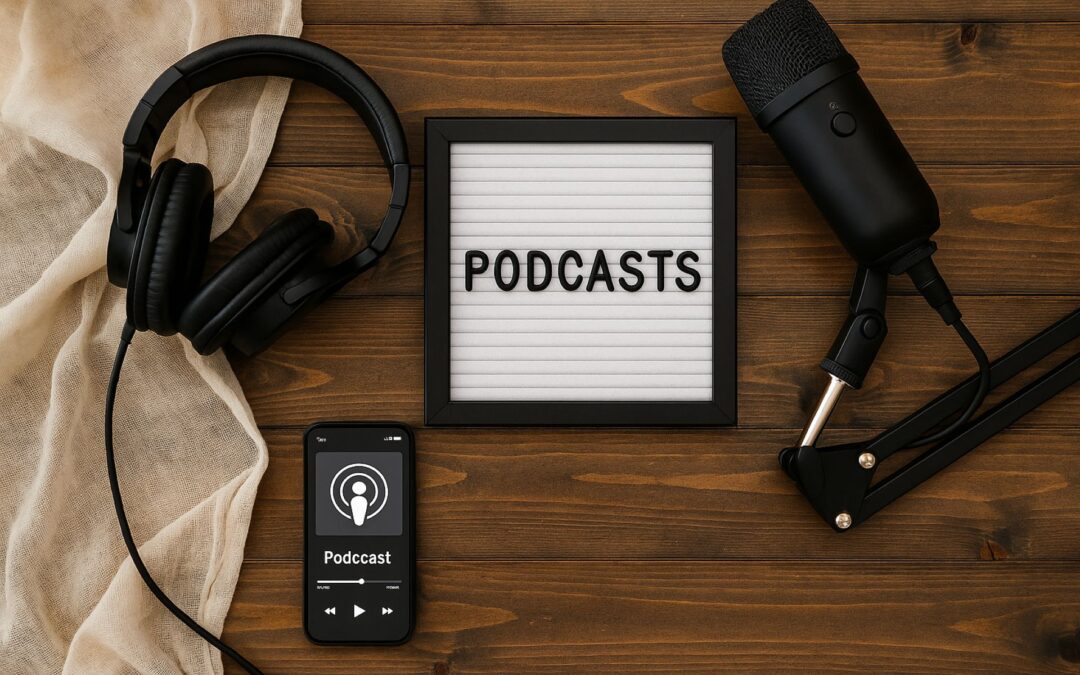
In a world obsessed with visuals, where every moment is staged, filtered, and broadcast, podcasts are refreshingly human. They ask for no glamour, no perfect lighting, no practiced smile — just your voice and your truth. They’ve quietly become one of the most intimate and powerful tools of communication, reshaping how we learn, connect, and create.
Whether you’re an entrepreneur, storyteller, or hobbyist, podcasting offers something rare in the digital age: space to think deeply and speak freely. It’s not about how you look — it’s about what you say. And in a society where attention is currency, that makes it priceless.
The Camera-Free Confidence Boost
There’s an invisible pressure that comes alive the moment a camera turns on. It’s not just the glare of the lens — it’s the awareness of being seen. That awareness distorts behavior. People who can speak passionately in private suddenly stumble over words. The need to appear composed hijacks their ability to communicate freely. They start thinking about how they look rather than what they’re saying.
The irony is striking: the more you focus on looking confident, the less confident you appear. Cameras demand polish, control, and performance — and for most, that kills spontaneity. They adjust their glasses, tilt their chin, worry about lighting, obsess over every detail that doesn’t matter. The conversation becomes staged. The connection becomes synthetic.
Podcasts are the antidote to that anxiety. Behind a microphone, the façade falls away. You don’t have to choreograph your expressions or rehearse your tone. You can record in pajamas at midnight, hair a mess, coffee in hand — and no one will care. What matters is substance. That freedom creates something rare: unfiltered truth.
Without the tyranny of the lens, your brain shifts from presentation to storytelling. You start focusing on the listener instead of your reflection. The rhythm of your thoughts feels natural; your humor, your warmth, your authenticity — they all return. This is why podcast conversations sound richer, more intimate, more human.
Listeners aren’t seeking perfection; they’re seeking connection. They don’t care if your sentences are imperfect. They care that your ideas are honest. Podcasts offer a direct line between your inner world and theirs. No filters, no edits, no pretension — just a voice speaking into the quiet spaces of someone’s day.
And that voice, once consistent, builds a bond deeper than any visual could. People can watch hundreds of creators on video, but they listen to only a few. When someone chooses to hear you through their headphones — while they walk, drive, or cook — your voice literally accompanies their life. That’s intimacy at scale.
Podcasts reward vulnerability, not vanity. They don’t require the charisma of an actor or the posture of a presenter. They reward presence — the ability to be real, to think out loud, to reveal rather than perform. For anyone intimidated by the spotlight, podcasting is liberation in its purest form. It turns fear into fluency.
The Art of Selling Time
We live in an era where attention is fragmented into microscopic intervals. Notifications tug at every idle second. Screens compete for our eyes. The modern mind is under siege. Amid that chaos, podcasts do something revolutionary: they fit into time that’s otherwise untouchable.
Think about it. You can’t read while driving. You can’t watch a video while jogging. But you can listen. The human voice — fluid, portable, effortless — turns waiting, commuting, and routine tasks into opportunities for engagement. It’s productivity without friction.
That’s why podcasts thrive in the cracks of modern life. They fill the quiet voids between obligations — the 40-minute drive to work, the morning walk, the late-night kitchen cleanup. These moments used to be dead time, fragments of existence spent in silence or background noise. Now they’ve become channels for knowledge, entertainment, and mentorship.
The numbers tell the story. Back in 2014, there were roughly 139 million U.S. commuters spending a combined 29.6 billion hours traveling. Most of that time was spent behind the wheel — a perfect environment for podcasts. You can’t scroll a feed at 60 miles per hour, but you can absorb an idea. In fact, you can absorb hundreds over a year without sacrificing a minute of your schedule.
This is why podcasts are not merely content — they’re a time economy. They sell access to hours that no other medium can reach. They transform passive listeners into active learners. Every episode becomes a way to make the mundane meaningful.
And for creators, this means one thing: you’re not competing for attention anymore — you’re accompanying it. A podcast doesn’t demand someone stop what they’re doing; it moves with them. It’s a companion on their commute, a voice in their solitude, a teacher in their routine.
Even video creators, influencers, and business professionals who dominate visual platforms benefit from adding audio to their repertoire. Because while video captures attention, audio retains it. Listeners who tune in regularly form habits around your voice. Over time, your ideas become part of their internal dialogue.
In a world where multitasking has become second nature, podcasting is the only medium designed to flow with life rather than interrupt it. It respects the listener’s time — and in doing so, earns their loyalty.
The Evolution of The GaryVee Audio Experience
When podcasting began its second golden age around 2014, most creators saw it as a niche experiment — an add-on, not a pillar. I was one of them. I already had The #AskGaryVee Show, a thriving video format where I answered questions from entrepreneurs, creators, and hustlers. To keep pace with the trend, I simply stripped the audio from those videos and uploaded it as a podcast. It was practical, quick, and efficient — but uninspired.
For a while, it worked. The podcast consistently ranked in the Top 25 under “Business.” But it was plateauing. The reason? It lacked identity. It sounded like a re-broadcast, not an experience. I was creating audio, not designing for audio.
In late 2016, after months of reflection, I decided to start over. The show needed to evolve — not as an extension of video but as its own living, breathing medium. That was when The GaryVee Audio Experience was born. It wasn’t a rebrand in name only; it was a rebrand in soul. I removed the creative restrictions. Now, any idea — a 3-minute phone rant, a backstage conversation, an impromptu keynote clip, even a fleeting insight captured between flights — could become an episode.
That shift changed everything. Suddenly, the content felt alive. It had rhythm, texture, and unpredictability. Some days it was motivational, others deeply strategic. The spontaneity became part of the charm. The audience no longer tuned in just for marketing tips — they tuned in for energy. They wanted the unfiltered pulse of how I thought and operated.
More importantly, I started to see how different audiences consumed differently. Some followers loved video, others preferred text. But the podcast reached an entirely new demographic — people who didn’t have time to sit down and watch. Commuters, gym-goers, early risers, night owls — all connected through earbuds.
That realization turned the podcast into a strategic powerhouse. It became a distribution hub — one place where I could post, experiment, and repurpose. Clips that didn’t make it into DailyVee found a home there. Candid voice notes transformed into lessons. Audio became the most flexible format in my ecosystem.
The impact was measurable. Rankings climbed. The community grew. But more than numbers, it brought back creativity. The mic became my playground again — proof that innovation isn’t always about doing more, but about doing differently.
What The GaryVee Audio Experience taught me is universal: you don’t have to reinvent the wheel, but you must reinvent how it spins. When you create with freedom, the audience feels it. They don’t just hear your voice — they sense your presence.
Podcasts 101
At first glance, podcasting looks deceptively simple: record, upload, share. But beneath that simplicity lies a craft — one that demands consistency, clarity, and connection. The barriers to entry are low, but the barriers to excellence are high.
Here’s the truth: platforms like Spotify, Apple Podcasts, and SoundCloud are great equalizers. They don’t care if you’re a celebrity or a college student with a cheap microphone. The playing field is flat. There are no fancy SEO tricks, no sophisticated algorithms to game. Success depends entirely on what you deliver and how often you deliver it.
The fundamentals never change: content quality, cadence, and community. You can’t post sporadically and expect loyalty. Listeners build habits. If they know you upload every Monday at 7 a.m., your voice becomes part of their morning ritual. Miss that routine once, and you’re forgotten by lunchtime.
Because podcast platforms don’t provide many tools for discovery, you must become your own marketer. Promote across your social media channels. Share sound bites on Instagram Stories. Post highlight clips on LinkedIn. Turn memorable quotes into visuals for X or Threads. Every episode can yield a week’s worth of microcontent — each piece a breadcrumb leading people back to the main show.
Partnerships are equally crucial. Collaborate with other podcasters, appear as a guest on larger shows, or host cross-over episodes. These symbiotic relationships expose you to audiences that already value the format. Authentic networking amplifies reach far better than paid ads ever could.
And then there’s data — the silent mentor. Podcast analytics are evolving fast. Platforms like Apple now reveal when people pause, skip, or drop off. Those small numbers tell massive stories. If listeners consistently disengage after 12 minutes, shorten your intros. If your solo episodes outperform interviews, adjust your focus. Analytics don’t replace instinct — they refine it.
Finally, remember that podcasting rewards patience. Your first episode won’t be perfect. Your tenth won’t either. But with every recording, your tone sharpens, your pacing steadies, and your confidence solidifies. You’ll begin to understand what your audience wants not by guessing, but by listening — both to them and to yourself.
So don’t wait for the perfect mic or the perfect topic. Begin messy. Begin real. Because in podcasting, progress is the only metric that matters — and every episode is a step toward mastery.
Imagine This
Imagine Blanche and Judy — seventy-five years young, lifelong best friends, and unapologetically opinionated. They’ve known each other since the Eisenhower administration, shared everything from school secrets to hospital scares, and somehow managed to laugh their way through every decade. Every month, without fail, they meet for lunch and a movie at Ruby Tuesday. It’s a ritual — predictable, comforting, sacred.
One evening, while waiting in line for Wonder Woman, Judy casually mentions that Kathleen Turner’s best performance was voicing Jessica Rabbit. Blanche nearly chokes on her popcorn. “Better than Romancing the Stone?” she gasps. “You’ve got to be kidding.” Within minutes, they’re bickering — joyfully, theatrically — like an old married couple. Their voices rise, people in line start chuckling, and someone behind them mutters, “They’re the new Siskel and Ebert.”
That throwaway comment becomes a spark. The next day, Blanche can’t stop thinking about it. What if they were the new Siskel and Ebert — just older, funnier, and completely unscripted? She pulls out her iPhone, hits record, and captures their next post-movie debate. No fancy mics. No intro music. Just two voices arguing about whether Gal Gadot was miscast and why Raisinettes are an insult to grapes.
When Blanche’s nephew — a tech-savvy podcaster himself — visits that weekend, she shows him the “recording.” He laughs, then helps her upload it properly. “You’ve got something here, Aunt Blanche,” he says. “You just need a name.” They settle on The Blanche and Judy Show.
Within months, their podcast develops a cult following. Listeners adore their authenticity — the laughter, the interruptions, the unapologetic opinions. They begin to record snippets before the movie, interviews with strangers as they leave the theater, and even nostalgic segments about ushers, ticket booths, and the days when you could smoke in cinemas. Their friendship is the show. The banter is unscripted, the chemistry timeless.
And because podcasts travel by word of mouth, The Blanche and Judy Show spreads like wildfire. Entertainment blogs pick it up. They’re invited on talk shows. Studios start sending them early screenings. Sponsors approach with deals. Suddenly, two retirees who once argued over matinee popcorn are cultural icons with a devoted following.
The beauty of their success isn’t in production value — it’s in presence. Two women, one microphone, and decades of shared history. That’s the essence of podcasting. It democratizes storytelling. It doesn’t matter if you’re twenty-five or seventy-five, whether you have a studio or a smartphone. If you have something meaningful to share — and the courage to start — there’s an audience waiting to listen.
The story of Blanche and Judy is whimsical, yes, but it’s also prophetic. It reminds us that in this era, attention isn’t bought; it’s earned through relatability and truth. Podcasting rewards those who dare to show up as themselves — imperfections and all. Sometimes, the best ideas don’t come from boardrooms or brainstorming sessions, but from two old friends arguing over a movie and deciding to press record.
How I’m Crushing It: John Lee Dumas and Entrepreneurs on Fire
Before Entrepreneurs on Fire became one of the most influential podcasts in the business world, John Lee Dumas was suffocating in conformity. His life was neat, predictable, and uninspired. After serving in Iraq as an Army officer, he returned home with discipline but no direction. He tried law school — quit after six months. Took a job in corporate finance — hated every minute. Wore the tie, attended the meetings, played the part. But inside, he was restless. “I was dying a slow death in the cubicle,” he later said.
What gnawed at him wasn’t failure, but potential. He felt a world of creativity locked inside, yet no outlet to express it. The gray of corporate life dulled his instincts. He needed color, risk, and freedom — but had no roadmap to get there. Then one book cracked the code: Crush It! by Gary Vaynerchuk. It didn’t just inspire him; it provoked him.
He quit his job, packed up, and moved to San Diego — a city he’d never visited — determined to build something that felt alive. Real estate seemed promising, but after three years, the spark faded. Yet he kept rereading Crush It! once a year, each time extracting new meaning. Then one insight hit him like lightning: “You have to build a personal brand.”
He realized he wasn’t building anything personal at all. He was selling houses, not himself. Around the same time, he discovered podcasts — free, on-demand, and bursting with insight. They became his teachers. He devoured entrepreneurial shows daily, but soon noticed a gap: no one was producing a daily podcast interviewing entrepreneurs about their failures and breakthroughs.
So he decided to create it himself.
In 2012, Dumas launched Entrepreneurs on Fire — a bold, ambitious experiment. No production team. No experience. No safety net. He committed to releasing one episode every single day. Friends called him crazy. Mentors told him it was unsustainable. “But I knew,” he said later, “that if I wanted to get good fast, I had to do more reps.”
He started small, interviewing lesser-known creators and authors — the B- and C-tier names willing to give a newcomer a chance. Those early conversations weren’t smooth. He stumbled, fumbled, and asked awkward questions. But he learned quickly. His discipline from the military became his backbone. Within two months, his podcast was featured on iTunes’ “New and Noteworthy.” Within a year, it had over 100,000 downloads.
The magic wasn’t just consistency; it was curiosity. He treated every episode like a masterclass, every guest like a mentor. His audience grew organically, drawn by his energy and humility. Eventually, he landed major guests — Seth Godin, Tim Ferriss, Barbara Corcoran, and yes, Gary Vaynerchuk.
As his audience expanded, he did something few creators do: he listened. He asked his followers what they struggled with, then built products and communities to solve those problems. He offered courses, masterminds, and mentoring — not as a hard sell, but as a natural extension of trust.
Today, Dumas runs a multimillion-dollar business built entirely around Entrepreneurs on Fire. His transparency is legendary; every month, he publicly shares income reports detailing profits, expenses, and lessons learned. He doesn’t just preach entrepreneurship — he documents it.
Yet what’s most striking isn’t the money, but the mindset. Dumas never stopped being a student. He still rereads Crush It! every year. He calls it his “reset button.” It reminds him of the law of the land grab — the idea that there’s always a new frontier waiting to be claimed. Podcasting was his in 2012. But he’s the first to say: “There’s always another one coming — Instagram, TikTok, AI, whatever’s next. Most people miss opportunities because they’re busy regretting the ones they missed.”
Dumas’s story is the anatomy of courage. He turned curiosity into action, repetition into mastery, and discipline into freedom. He didn’t wait for perfect timing — he created it. And that’s the spirit of podcasting: find your voice, light your fire, and keep it burning long enough for the world to notice the glow.
Conclusion
Podcasting isn’t merely another content medium — it’s a modern form of storytelling rooted in one of the oldest human instincts: conversation. It invites honesty, nurtures connection, and rewards those bold enough to speak their minds without hiding behind the lens. From entrepreneurs like John Lee Dumas to everyday dreamers like Blanche and Judy, the story is the same — ordinary people turning their voices into vehicles of influence.
The barrier to entry has never been lower, but the opportunity has never been higher. Whether you have one listener or one million, every episode you record is a bridge between your ideas and someone else’s life. So start the mic. Speak your truth. Because somewhere out there, someone’s commute, someone’s struggle, or someone’s next big idea is waiting for your voice to fill the silence.