
Every influencer, entrepreneur, and creator dreams of building something that lasts—an audience that trusts them, a message that resonates, and a brand that stands the test of time. Yet most people never make it past the starting line. They get caught up in details—what platform to choose, what gear to buy, what content to post—while missing the first, non-negotiable step that separates dreamers from doers.
The truth is, before you can go viral, before you can sell a product, before you can even be seen, you need a foundation. A digital home. And in today’s landscape, that home still begins with one decision: creating a Facebook business page. It’s not glamorous. It’s not cutting-edge. But it’s the cornerstone of every enduring personal brand. Just ask Costa Kapothanasis—a man who turned oil changes into influence, and a failing business into a nationwide success story—all by understanding one timeless truth: attention follows those who show up first.
Create Your Facebook Business Page—The First Move That Changes Everything
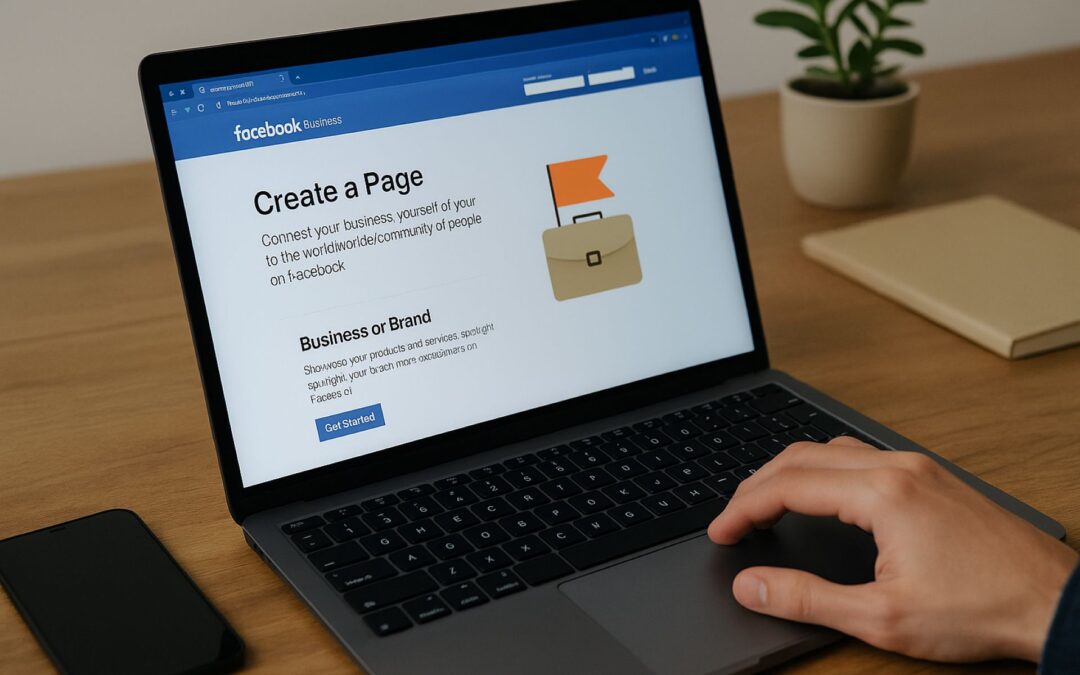
No matter who you are or what you want to build—whether you’re an artist, a coach, a creator, or a founder—the first step in your personal brand journey is deceptively ordinary yet immensely powerful: create a Facebook business page.
It sounds simple. It sounds old-fashioned. But that single decision lays the groundwork for everything that follows. Because before you build an empire, you need a foundation. And in the digital landscape, Facebook is still the most stable, versatile, and resource-rich foundation available.
Many creators dismiss it as outdated. They say, “My audience isn’t on Facebook.” But the truth is, that’s not entirely accurate. Facebook is a living ecosystem—one that evolves, absorbs, and expands with every technological shift. It is not a static relic of the early internet; it’s a platform that adapts faster than any of its competitors.
Think about it. When short-form video began dominating digital consumption, Facebook didn’t panic—it built Reels and integrated cross-platform posting with Instagram. When community-building became the new marketing currency, it launched Groups and Live Rooms, turning engagement into intimacy. And when analytics and targeting became the lifeblood of digital marketing, Facebook refined the most advanced advertising tools the world has ever seen.
You can ignore it, or you can leverage it. But you cannot deny it.
Building a Facebook business page is not about chasing trends—it’s about owning a piece of digital real estate. A place that reflects your identity, displays your values, and captures your audience’s attention in a space that still commands global dominance. It’s the storefront of your digital self, open 24/7, constantly collecting data, feedback, and connection.
Even if your audience today skews younger, understand this: the audience you want tomorrow—the one with influence, purchasing power, and loyalty—will find you there. Demographics change with time and responsibility. The same twenty-two-year-olds ignoring Facebook today will rediscover it when they need to run a business, market a project, or join professional groups.
And when that day arrives, the creators who already have a presence—who have been showing up, building trust, and refining their message—will be the ones they recognize.
Never underestimate Mark Zuckerberg’s vision. Never bet against a platform that owns two of the world’s top social media networks. If you want longevity in this game, you need to set up shop where both the old guard and the next generation eventually meet.
Your Facebook business page isn’t just a profile—it’s your digital headquarters. It’s where your audience learns who you are before they ever meet you. It’s where you’ll test your content, collect insights, run ads, build communities, and connect with the people who will one day become your customers, collaborators, or champions.
Ignore the noise. Ignore the fads. The simplest, smartest first move you can make is to show up—and stay there.
How I’m Crushing It: The Story of Costa Kapothanasis
Every entrepreneur’s journey begins with a single moment of discontent—the quiet realization that the life they’re living isn’t the life they’re meant to lead. For Constantine “Costa” Kapothanasis, that realization came not in a boardroom, but in the quiet frustration of a cubicle.
A first-generation Greek American from Portland, Maine, Costa’s story started with a dream of baseball. He was good—good enough to earn a Division I scholarship and imagine a future under the stadium lights. But when a shoulder injury ended his athletic career, he found himself drifting into the predictable path of corporate life.
He went on to earn a master’s degree in finance and landed jobs at major firms. The paycheck was solid, the titles impressive. Yet something felt off. “I either got fired or almost fired from every job,” he admitted later. The issue wasn’t incompetence—it was incompatibility.
Costa was allergic to red tape. He hated wasting time on outdated processes, and he bristled under the weight of bureaucracy. The rigid hierarchies, endless protocols, and soul-sapping meetings were suffocating. And for a man who valued speed, efficiency, and results, the corporate world felt like quicksand.
At the same time, he was nurturing a small side hustle: making custom, hand-carved baseball bats. It was a nod to his first love, a creative outlet, and a spark of entrepreneurship. But the system worked against him. His firm’s social media policies restricted how and when he could promote his products. While Twitter was in its golden era of organic reach, Costa was stuck watching opportunities slip away because his employer forbade real-time engagement.
He was living two lives—one of compliance, one of conviction—and neither could coexist.
The breaking point came as he watched his friends from the baseball circuit make it to the major leagues. They were living their dreams, earning millions, while he was sitting under fluorescent lights, drowning in reports. The contrast was unbearable. He stopped watching baseball altogether. It wasn’t just painful—it was personal.
That’s when he started looking for an escape.
Costa didn’t chase glamour; he chased logic. He sold his bat-making business and bought something entirely unsexy: a quick-lube shop—a place for ten-minute oil changes. It was small, practical, and entirely unromantic. But Costa saw what others didn’t: stability.
He called it a “quasi-utility”—a service so essential that demand would never disappear. “In America,” he thought, “as long as there are cars, there will be oil changes.” It was a business built on inevitability.
Then fate intervened again. He got fired.
And this time, it was a gift. “Getting fired was this amazing thing for me,” Costa said. “My quality of life went through the roof.” The fear of losing security was gone. The weight of obligation lifted. Suddenly, he could move at his own speed.
That moment—devastating to most—became his ignition point. It pushed him to go all-in on his business, to reinvent himself, and to finally build something that reflected his drive.
But the path forward wasn’t instant success. It was trial, error, and relentless adaptation. Costa’s journey from corporate burnout to digital entrepreneur didn’t begin with luck. It began with courage, curiosity, and an unwavering refusal to stay small.
The Reinvention
Freedom feels intoxicating—until you realize it comes with no map. When Costa was fired, he wasn’t handed a blueprint for success; he was handed possibility. And possibility, without direction, can be paralyzing.
He had a business now—a modest quick-lube shop—and a vision to grow it. But vision alone doesn’t fill bays or attract customers. So, like many new entrepreneurs, he reached for what seemed logical: traditional marketing.
Direct mail. Coupons. SEO consultants promising overnight traffic. A radio ad on iHeartRadio that, while clever, didn’t quite reach the people who needed him. He was doing what business owners were supposed to do. But it wasn’t working. Every month ended with tighter margins, heavier stress, and dwindling optimism.
By New Year’s Day 2016, Costa found himself in a strangely symbolic position—alone in his shop, surrounded by tools, machines, and silence. He’d given his team the day off. Business was slow. He had time to think. And in that solitude, something shifted.
He picked up a book: Crush It! by Gary Vaynerchuk. A random choice, maybe, but one that would alter the trajectory of his life. Page by page, it dismantled his beliefs about how business should be run. Marketing wasn’t about broadcasting anymore—it was about storytelling. Success wasn’t about shouting louder—it was about connecting deeper.
He realized he’d been trying to sell oil changes when he should’ve been selling trust, education, and experience. He was playing defense when the real opportunity was in playing offense—by becoming the voice people turned to when they didn’t understand their own cars.
So Costa made a decision that terrified most business owners at the time: he abandoned everything traditional and went all in on digital. No more direct mail. No more billboards. No more guessing.
He turned to Facebook—a platform most of his competitors ignored, but one he intuitively knew had untapped power. He spent late nights devouring YouTube tutorials, learning about ad targeting, copywriting, and creative design. He became a student of attention.
By February, he’d shifted his entire marketing budget to Facebook ads. And that’s when things started to click.
He stopped thinking like a mechanic and started thinking like a media company. Every oil change, every customer, every conversation became potential content. He wasn’t just selling a service; he was documenting a story.
He used Twitter to search for people talking about cars—anyone tweeting about oil changes, engine noise, or maintenance frustration. Then he joined the conversation. Not with sales pitches, but with advice, humor, and authenticity. He became the neighborhood car whisperer online.
On Instagram, he photographed his customers’ vehicles, editing the shots to look sleek and cinematic. People loved it. Soon, customers were walking in and asking, “Can you post my car today?” What started as marketing became community-building.
And he didn’t stop there. He began producing short educational videos—snappy, clear, and practical. He explained how to choose between conventional and full-synthetic oils, why air filters matter, when to schedule an engine flush. He wasn’t trying to sell; he was trying to teach.
His videos weren’t polished. They didn’t have fancy production. But they had value—and that made them magnetic.
People responded. Comments flooded in from customers saying, “No one’s ever explained this to me before.” Costa had cracked something fundamental: the person who educates the customer owns the customer’s trust.
That’s when his identity shifted. He wasn’t just running a quick-lube shop. He was building a brand that people recognized, trusted, and recommended. The shop became a stage. The service became a story. And Costa? He became the storyteller.
The Payoff
Success rarely arrives with fireworks. It sneaks in quietly, one small win at a time.
Within twelve months of that cold, lonely New Year’s Day, Costa’s small experiment had transformed into a fast-scaling business. What began as one struggling shop evolved into a thriving network of six locations, with two more under contract—each one fueled by the same digital engine: Facebook, authenticity, and consistency.
It wasn’t luck. It was learning. Costa had learned to see attention as currency. While his competitors still poured money into outdated ads, he built genuine relationships online. His customers didn’t just recognize his name—they knew his face, his tone, his values. They trusted him before they ever walked through his doors.
The ripple effects were staggering. Revenue climbed. Engagement soared. His business wasn’t just surviving—it was scaling at a pace that shocked his peers. And beyond the metrics, something even more powerful happened: Costa’s confidence returned.
He was no longer the corporate misfit trying to fit into someone else’s mold. He was an entrepreneur in full command of his destiny.
The attention his story generated soon caught the eyes of others. Financial networks invited him to share his journey. Radio and TV programs wanted to know how a small oil-change shop turned into a brand sensation. Universities asked him to speak to students about entrepreneurship.
He said yes to everything. Not for vanity—but because he understood that storytelling is a force multiplier. The more people heard his story, the more doors opened—not just for his business, but for future ventures.
Meanwhile, his online presence continued to evolve. He stayed consistent on social media, continued making educational videos, and nurtured his growing audience with sincerity. His posts didn’t feel like marketing—they felt like mentorship.
In 2017, Costa took one final, symbolic step: he rebranded every location under one cohesive identity—Costa Oil—10 Minute Oil Change. The name wasn’t just functional. It was personal. It was a statement: this was more than a franchise; it was his legacy.
He had gone from corporate exile to community figure. From a man who couldn’t answer a tweet during trading hours to one whose every post sparked engagement. From uncertainty to impact.
His story is proof that the difference between obscurity and opportunity is often execution. Not luck. Not timing. Just the courage to start, the humility to learn, and the discipline to keep showing up.
Costa didn’t crush it because he had all the answers. He crushed it because he stopped waiting for permission and began taking action.
And that’s the part most people miss—success doesn’t start when others recognize you. It starts the moment you recognize yourself.
Conclusion
Every great success story begins with a moment of clarity—the realization that no one is coming to give you permission. Costa’s transformation from frustrated corporate employee to digital entrepreneur didn’t happen overnight; it happened the day he decided to stop waiting and start building.
That’s the heart of it. You don’t need a perfect strategy, a massive following, or a fancy logo. You just need to start—right where you are—with what you have. The Facebook business page isn’t just a formality; it’s your declaration of intent. It tells the world, “I’m here. I’m building something.”
Because the truth is, no one gets chosen anymore. You choose yourself. And once you do, the rest of the world can’t help but take notice.