
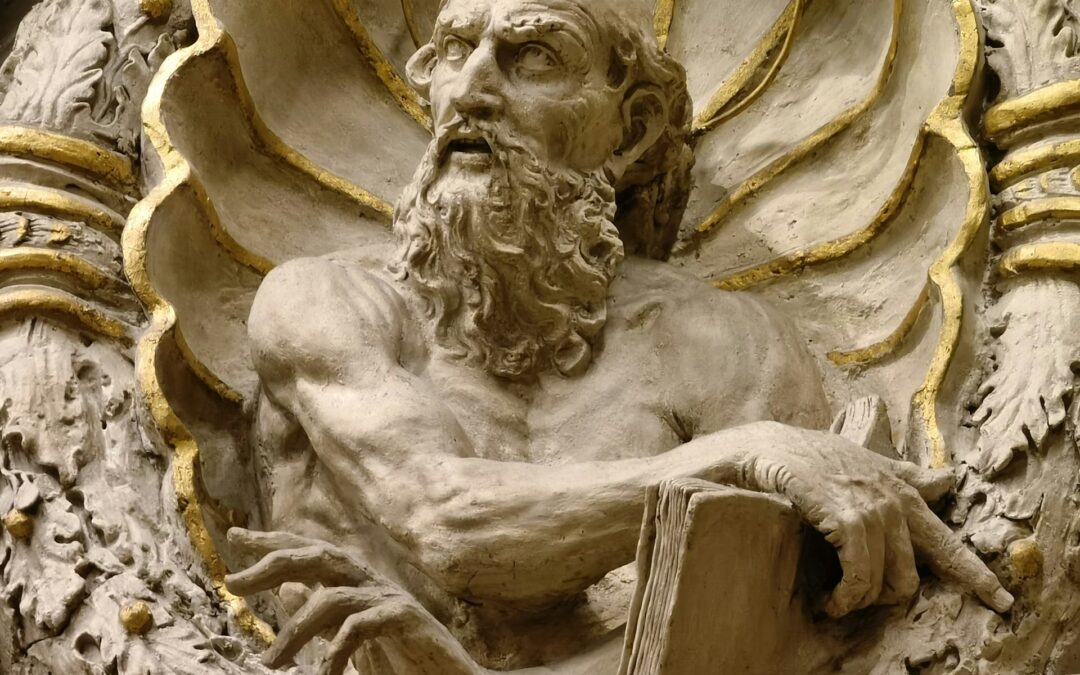
Diogenes of Sinope is perhaps the most scandalous philosopher you’ve never heard of. Picture a man who scorns authority, shatters every social convention, and flaunts public decency with brazen abandon—urinating, defecating, and even gratifying himself openly, right on the streets. Far from the serene image usually associated with philosophy, Diogenes embraced shamelessness as a radical tool of critique and liberation.
His defiant antics weren’t just provocations for shock value. They embodied a fierce opposition to the artificial constructs of society—those man-made values and institutions he believed shackled human nature, breeding unhappiness and disconnection. For Diogenes, the only path to genuine contentment was to strip away these corruptions and live in accord with nature itself.
The Birth of Cynicism: From Socratic Roots to Doggish Philosophy
The philosophical roots of Cynicism run deep, intertwined with the revolutionary spirit of Socrates, whose relentless probing of moral and social conventions shook the foundations of Athenian life. Socrates, though primarily focused on ethics and the pursuit of virtue, planted a seed of skepticism about the values embraced by society—an interrogation of what truly constitutes the good life. Among his disciples, Antisthenes took this skepticism and molded it into a more radical, ascetic philosophy that questioned not only ethical principles but also the very structures and luxuries that civilizations uphold.
Antisthenes’ philosophy was characterized by an emphasis on virtue as an intrinsic quality, independent of external possessions or social standing. He posited that external wealth, honors, and material goods were neither inherently good nor necessary for happiness; instead, true wealth was a matter of the soul’s condition. His belief that poverty could be a form of freedom challenged prevailing notions of success and fulfillment, presenting a radical redefinition of prosperity.
The term “Cynicism” itself derives from the Greek kynikos, meaning “dog-like,” a name that at once insulted and encapsulated the ethos of the philosophy. This label alluded to the Cynics’ willingness to live according to natural impulses and instincts, much like dogs—creatures unburdened by social etiquette, shameless in their bodily functions, and direct in their behavior. Dogs neither seek social approval nor disguise their desires; they exist authentically in the moment. The Cynics aspired to the same raw authenticity, choosing to live openly and without pretense.
Though it remains uncertain whether Antisthenes and Diogenes ever met, the two are often linked as philosophical kin. Both rejected wealth and status, insisting that the good life was attainable through self-discipline and independence from external trappings. Antisthenes’ doctrine that “wealth and poverty do not lie in a person’s estate but in their souls” became a touchstone for Cynicism, a philosophy less about contempt for humanity and more about resistance to the societal mechanisms that warp natural human flourishing.
This distinction is critical. Modern cynicism tends to convey a jaded distrust of human motives—pessimism about sincerity and goodness. Ancient Cynicism, however, was not a denunciation of human nature but a fierce critique of human society and its artificial norms. The Cynics believed that society had layered human nature with constraints and false values that prevented people from achieving genuine happiness and virtue. Their goal was to strip away these layers, exposing a path to living “according to nature,” unencumbered and free.
Diogenes’ Radical Simplicity: Living in a Barrel and Rejecting Possessions
Diogenes of Sinope embodied the Cynic philosophy through a life of uncompromising simplicity and radical rejection of societal norms. Born in a Greek colony, his personal history is shrouded in anecdotes and legends, but what remains clear is his choice to forsake conventional living for one of austerity and directness.
His residence was famously a large ceramic jar or tub—a dwelling that symbolized his detachment from the trappings of comfort and social expectations. This was not mere eccentricity but a deliberate philosophical statement: by living in a humble container amidst the marketplace, Diogenes demonstrated his rejection of property, luxury, and the pursuit of status.
His material possessions were minimal to the extreme. Beyond his tattered cloak and a wooden staff, Diogenes owned only a single bowl, which itself he later discarded. The story goes that after witnessing a young child drink water using his hands, Diogenes realized that even his bowl was an unnecessary luxury, a human invention that distanced him from natural living. By casting it away, he underscored the Cynic ideal that many human desires and customs are artificial constructs—obstacles that alienate us from simplicity and true happiness.
Yet, despite this ascetic existence, Diogenes was not a recluse. He strategically positioned himself in Corinth’s marketplace, the vibrant heart of civic life, to engage directly with the community. His role was that of a social provocateur: challenging citizens, questioning their values, and exposing the contradictions in their behavior. Far from withdrawing, Diogenes used his marginal status and unorthodox lifestyle to confront societal complacency.
His interactions were often confrontational, designed to jolt people out of their ingrained assumptions. He exposed pretensions and hypocrisies through sharp wit and outrageous behavior, aiming to illuminate the disparity between societal norms and natural human needs.
This paradox of radical poverty combined with active societal engagement made Diogenes a unique figure. He proved that true freedom lay not in isolation but in fearless critique. By rejecting possessions and social conventions, he claimed autonomy; by entering public life with honesty and shamelessness, he forced others to reflect on their own complicity in perpetuating artificial desires and values.
In doing so, Diogenes lived Cynicism not as a set of abstract doctrines but as a lived practice—a daily enactment of freedom, self-sufficiency, and naturalness that questioned the very foundation of the civilization around him.
Diogenes Versus Plato: The Anti-Philosopher in Action
The philosophical rivalry—or perhaps more accurately, the stark contrast—between Diogenes and Plato encapsulates a fundamental tension in ancient thought: the clash between lofty idealism and gritty pragmatism. Plato, a towering figure in Western philosophy, built his intellectual legacy upon the Theory of Forms, positing that the physical world is but an imperfect reflection of eternal, unchanging ideals. His Academy was a bastion of rigorous dialectic and metaphysical speculation, where knowledge was sought through abstract reasoning and contemplation of the perfect.
Diogenes, in opposition, rejected this theoretical edifice as detached from the realities of human existence. For him, philosophy was not a cerebral exercise confined to lofty classrooms or written treatises but a lived, embodied practice. His approach was deliberately anti-establishment, mocking and undermining the pretensions of academic philosophy by making philosophy visible, tangible, and immediate.
One of the most famous episodes highlighting this opposition took place during Plato’s lectures. Plato attempted to define a human being as a “featherless biped,” an exercise in abstract classification aiming to distill essence from form. Diogenes, seizing the opportunity, entered the Academy holding a plucked chicken and proclaimed, “Behold! Here is Plato’s human.” This act of theatrical irreverence was more than a prank; it was a pointed critique of philosophy’s tendency to prioritize abstractions over lived reality.
Diogenes’ refusal to engage in complex ethical or metaphysical systems stemmed from a conviction that such intellectualizing obfuscated the straightforward path to virtue. He believed that self-sufficiency and authenticity could not be found in labyrinthine doctrines but in stripped-down, everyday acts of courage and honesty. His method was to embody philosophy through action—living austerely, speaking candidly, and acting shamelessly—so that the message was not just conveyed but demonstrated.
Despite his sharp critique, Diogenes’ intellect was undeniable. Plato himself acknowledged Diogenes’ brilliance, though he disparaged his vulgarity by calling him “Socrates gone mad.” Diogenes’ public antics—carrying a lantern in broad daylight claiming to search for an honest man—served as a performative rebuke to the moral blindness he perceived around him. His ridicule was a challenge, a mirror held up to society’s failures.
Through this dynamic, Diogenes positioned himself as an anti-philosopher: someone who dismantled the conventional tools and venues of philosophical inquiry to reveal the core truths hidden beneath societal illusion. His philosophy was not confined to theory; it was raw, confrontational, and utterly accessible, appealing to all who felt alienated by elite intellectualism.
The Dog-Like Philosopher: Shamelessness as Philosophy
Embracing the epithet “dog-like” was no mere accident for Diogenes—it was a conscious and deliberate philosophical stance. The term kynikos (“dog-like”) carried dual connotations: on one hand, it was an insult from critics highlighting his shameless behavior and social eccentricities; on the other, it perfectly encapsulated the Cynic ideal of living authentically in accord with nature, free from artificial conventions.
Dogs, in their natural state, exhibit qualities that Diogenes revered: they are unabashedly themselves, expressing hunger, desire, and bodily functions openly, without shame or pretense. They do not construct elaborate social facades nor suppress their instincts to fit rigid cultural expectations. To Diogenes, human society was rife with unnecessary shame and vanity—chains that enslaved the spirit and bred unhappiness.
When asked why people compared him to a dog, Diogenes responded with striking candor: “I fawn on those who give me anything; I yelp at those who refuse; and I set my teeth in rascals.” This analogy not only acknowledged the social dynamics of favor and rejection but also conveyed a philosophy of transparent behavior. Like dogs, Cynics did not mask their intentions or feelings; they were direct and truthful, unafraid to confront injustice and falsehood.
Diogenes’ dog-like behavior extended far beyond metaphor. He openly defied social decorum in ways that scandalized and provoked. For example, when a group of wealthy Athenians insulted him by throwing bones—mocking his poverty and wild appearance—Diogenes famously lifted his leg and urinated on them. This gesture was an ultimate act of defiance, communicating utter contempt for social hierarchies and the superficial markers of wealth and status.
His shamelessness also encompassed his sexual behavior. Diogenes did not conform to norms of modesty; he masturbated publicly and, when criticized, replied with pragmatic humor, suggesting it was easier than waiting to satiate hunger by rubbing his belly. Through such acts, he demonstrated a philosophy that embraced natural human impulses without shame, exposing the artificial nature of societal taboos.
This fearless authenticity was more than mere provocation—it was a radical statement about freedom. By rejecting shame and the need for social approval, Diogenes claimed sovereignty over his own life. He showed that true dignity comes not from adherence to convention but from living honestly and self-sufficiently.
In essence, Diogenes used shamelessness as a tool to dismantle the pretenses and hypocrisies of his culture. His dog-like existence became a living philosophy, an invitation to question the social scripts we follow and to embrace a more natural, unencumbered way of being.
The Encounter with Alexander the Great: Power Meets Insolence
The meeting between Diogenes and Alexander the Great stands as one of the most legendary episodes in the annals of philosophy and history—a dramatic collision between worldly power and radical independence. Alexander, the Macedonian king whose conquests carved out one of the largest empires the ancient world had ever seen, was accustomed to deference and adulation wherever he went. His dominion stretched from Greece through Egypt and Persia all the way to India, making him a figure of near-mythical status.
When Alexander heard tales of the infamous Cynic philosopher who lived in simplicity and shamelessness, he was intrigued. Rather than ignoring or dismissing Diogenes, as many other courtiers and thinkers did, Alexander sought him out in Corinth, curious about this man reputed to scorn not only social conventions but also the very idea of power and wealth.
The encounter is famously recounted by Plutarch. Alexander found Diogenes reclining in the sun, soaking up its warmth with an air of complete indifference to his surroundings. Approaching him with respect and curiosity, Alexander greeted him and offered to grant any wish. In a moment of remarkable insolence and self-possession, Diogenes looked up and simply said, “Yes, stand out of my sunlight.”
This brusque dismissal wasn’t just a witty retort—it was a profound assertion of autonomy. Diogenes placed the sun, a natural and freely available source of warmth and life, above the transient power and grandeur of an emperor. By asking Alexander to move, Diogenes effectively declared that no earthly ruler had dominion over his person or his contentment.
Alexander was reportedly struck by this fearless independence. Far from taking offense, he admired Diogenes’ spirit and reportedly remarked, “If I were not Alexander, I wish I were Diogenes.” This statement acknowledged that true power, the kind that grants freedom and self-mastery, transcends political dominion.
This moment symbolized the Cynic ideal: that sovereignty begins with control over oneself, and that external achievements—even empire-building—are insignificant compared to living authentically and freely. Diogenes’ refusal to be impressed by Alexander’s wealth and status sent a powerful message, emphasizing that liberation comes from within, not from accumulation of power or riches.
Philosophy as Cure: Living According to Nature and Rejecting the Rat Race
At the heart of Diogenes’ philosophy lies a profound diagnosis of the human condition—what he saw as a disease wrought by civilization itself. He believed that human beings are not inherently corrupt or misguided; rather, it is the artificial constructs of society—its values, customs, and institutions—that distort natural living and cause unhappiness.
Drawing on Socratic themes, Diogenes emphasized that virtue and happiness are within our own control and independent of external circumstances. True contentment arises not from wealth, status, or social approval but from the cultivation of self-sufficiency (autarkeia) and harmony with nature.
Diogenes’ own lifestyle was a testament to this belief. He deliberately renounced all possessions, social status, and conventions, living with only the bare necessities to sustain life. In doing so, he demonstrated that desire can be minimized, and that happiness does not depend on accumulation but on freedom from attachment.
His rejection of material wealth was uncompromising. He famously called money the “mother of all evil,” recognizing how the pursuit of wealth drives people to immoral acts, greed, and anxiety. Society, he argued, imposes relentless pressure to chase after superficial goals—status, luxury, and possessions—that do not bring true satisfaction but instead enslave individuals in an endless rat race.
Diogenes proposed that by removing these social pressures, by stripping away the chase for external validation and possessions, humans could reconnect with their essential nature. This return to simplicity was not a retreat but a shortcut to virtue—a path toward genuine happiness that does not demand costly or complicated efforts.
Philosopher Epicurus later echoed similar sentiments, warning against the pursuit of pleasures that ultimately cost more than they deliver. Both philosophers counseled embracing modest needs, valuing the small, natural joys of life over extravagant and often hollow desires.
For Diogenes, living “according to nature” meant honoring innate human needs and instincts without shame or pretense, rejecting the artificial burdens society places upon individuals. This philosophy offered not just a critique but a cure—encouraging people to live authentically, freely, and in the present moment, unshackled from the illusions of wealth and status.
In a world still caught in cycles of consumerism and social competition, Diogenes’ message remains strikingly relevant: liberation and happiness are found not by running faster on the societal treadmill, but by stepping off, simplifying one’s desires, and embracing the natural rhythm of life.
Dogs as Teachers: Living Without Shame and Embracing the Present
Diogenes saw in dogs an embodiment of qualities that humans had long lost but desperately needed to reclaim. Dogs live unselfconsciously, fully inhabiting each moment without concern for judgment or the artificial constraints that society imposes. They eat when hungry, sleep when tired, relieve themselves openly without shame, and engage in natural behaviors such as mating without social embarrassment. These raw, uninhibited actions, often considered vulgar or taboo by human standards, symbolized for Diogenes the freedom and authenticity that humans ought to strive toward.
This canine model reflected an unfiltered relationship with nature—an existence that is direct, honest, and devoid of unnecessary anxieties about status or appearance. The modern spiritual seeker’s quest for mindfulness and presence mirrors what dogs practice instinctively every day. Dogs do not ruminate on the past nor fret about the future; they respond spontaneously to their immediate needs and surroundings. This instinctive presence is something Diogenes admired and advocated as a corrective to human alienation.
Moreover, dogs do not seek approval or validation from others; they simply exist as they are, with all their needs and flaws exposed. In adopting the dog-like lifestyle, Diogenes rejected social embarrassment and the pretenses that uphold societal hierarchies. He encouraged people to shed shame and false modesty, embracing their natural impulses and living transparently.
Living in poverty might seem, at first glance, a position of weakness or disempowerment, but for Diogenes, it was the source of immense strength. By depending on nothing external, he made himself invulnerable to manipulation and deprivation. No tyrant, no fortune, no social condemnation could touch him because his happiness was anchored entirely within himself.
This radical independence was fortified by deliberate exposure to hardship. Diogenes cultivated resilience by choosing a life of toil and discomfort, practicing voluntary discomfort to harden his character and sharpen his appreciation for simple pleasures. An example was his habit of turning his back on statues—iconic symbols of social values—as a daily exercise of rejection and self-discipline.
In sum, dogs taught Diogenes—and through him, us—that living without shame, embracing natural impulses, and remaining fully present are essential steps toward freedom and happiness. Their instinctual wisdom remains a potent counterpoint to the complexity and artificiality of human social life.
Legacy: Cynicism’s Influence and the Path Forward
Diogenes’ life and philosophy left an indelible mark on the trajectory of Western thought, though his legacy is as paradoxical as the man himself. On the surface, he was dismissed as a madman, a vagabond, and a social outcast—his shameless antics scandalized polite society and unsettled the powerful. Yet beneath the controversy lay a profound and enduring message that challenged the very foundations of cultural values.
Cynicism, as Diogenes practiced it, rejected elaborate ethical systems and social rituals in favor of a life marked by authenticity, self-sufficiency, and direct action. His philosophy became a beacon for those disillusioned with societal norms, inspiring movements that questioned the meaning of wealth, power, and happiness.
One of the most significant ways Cynicism influenced later thought was through its relationship with Stoicism. The founder of Stoicism, Zeno of Citium, is said to have studied under Crates, a Cynic philosopher, and to have developed his ideas while leaning on the teachings of Cynicism. While Stoicism adapted many Cynic principles—such as virtue as the highest good and the importance of inner freedom—it diverged by promoting engagement with society and collective responsibility.
Cynicism, in contrast, often embraced an outsider stance, critiquing society from the margins through confrontation and radical simplicity. It functioned as a philosophy for those unwilling or unable to participate in social institutions, emphasizing personal liberation above communal integration.
Despite their differences, both philosophies converge on the idea that happiness, virtue, and tranquility reside entirely within individual control, independent of external fortunes or opinions. Diogenes embodied this ideal to its most extreme, demonstrating that a man stripped of possessions, social standing, and even decorum could possess a profound power—the power of unshakable autonomy.
Today, Diogenes’ message remains provocative and relevant. In a world saturated with consumerism, social media facades, and relentless competition, his call to reject superficial desires and live simply, shamelessly, and authentically resonates as a radical invitation. His dog-like audacity challenges us to examine the social scripts we follow and to consider whether true freedom might lie in embracing our natural selves unapologetically.
Ultimately, Diogenes’ legacy is a testament to the enduring human struggle to reconcile society’s demands with the pursuit of inner freedom—a challenge as pressing now as it was in ancient Corinth.
Conclusion
Diogenes the Cynic stands as a striking figure in the history of philosophy—an unapologetic rebel who lived his ideas with fierce authenticity and unrelenting simplicity. His shameless rejection of societal conventions, his embrace of poverty, and his fearless critique of power invite us to reconsider what it truly means to live freely and well. In a culture obsessed with status, wealth, and appearances, Diogenes’ radical call to return to nature, shed unnecessary desires, and cultivate inner self-sufficiency remains as urgent and provocative as ever. His legacy challenges us to step beyond social masks, confront our own pretenses, and find liberation not in external accumulation but in embracing the raw, unvarnished essence of being human.