
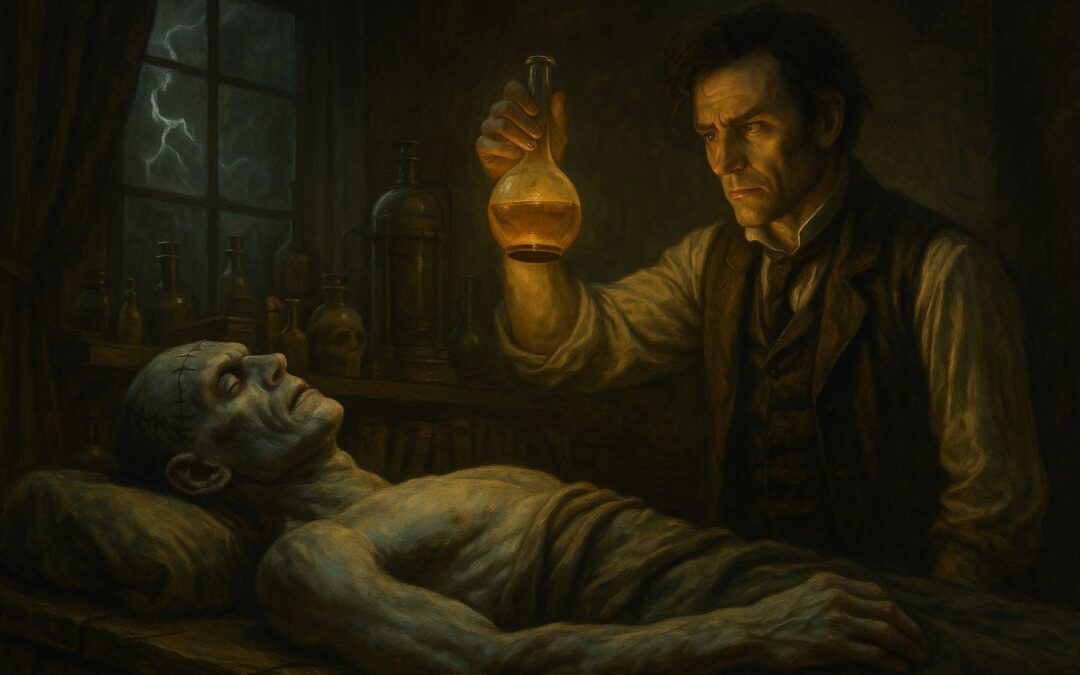
When Mary Shelley first conceived the story of Frankenstein, she was barely 18, yet her young mind was steeped in profound loss and grief. The death of her infant daughter, who lived only two weeks, shadowed her early adulthood with a haunting sorrow. In her journal, she recounted a dream where her baby came back to life, a spectral flicker of hope that swiftly faded upon waking. This intimate tragedy wasn’t just personal anguish—it became the fertile ground from which the novel’s dark themes of abandonment, death, and reanimation sprouted.
Shelley’s own life mirrored the struggles of her characters. Like Victor Frankenstein, who retreats into obsessive scientific pursuits to escape the pain of losing his mother, Mary immersed herself in writing to channel her emotions. Her novel, Frankenstein; or, The Modern Prometheus, was published in 1818, and she was born into an era where science was in flux and societal tensions simmered beneath the surface.
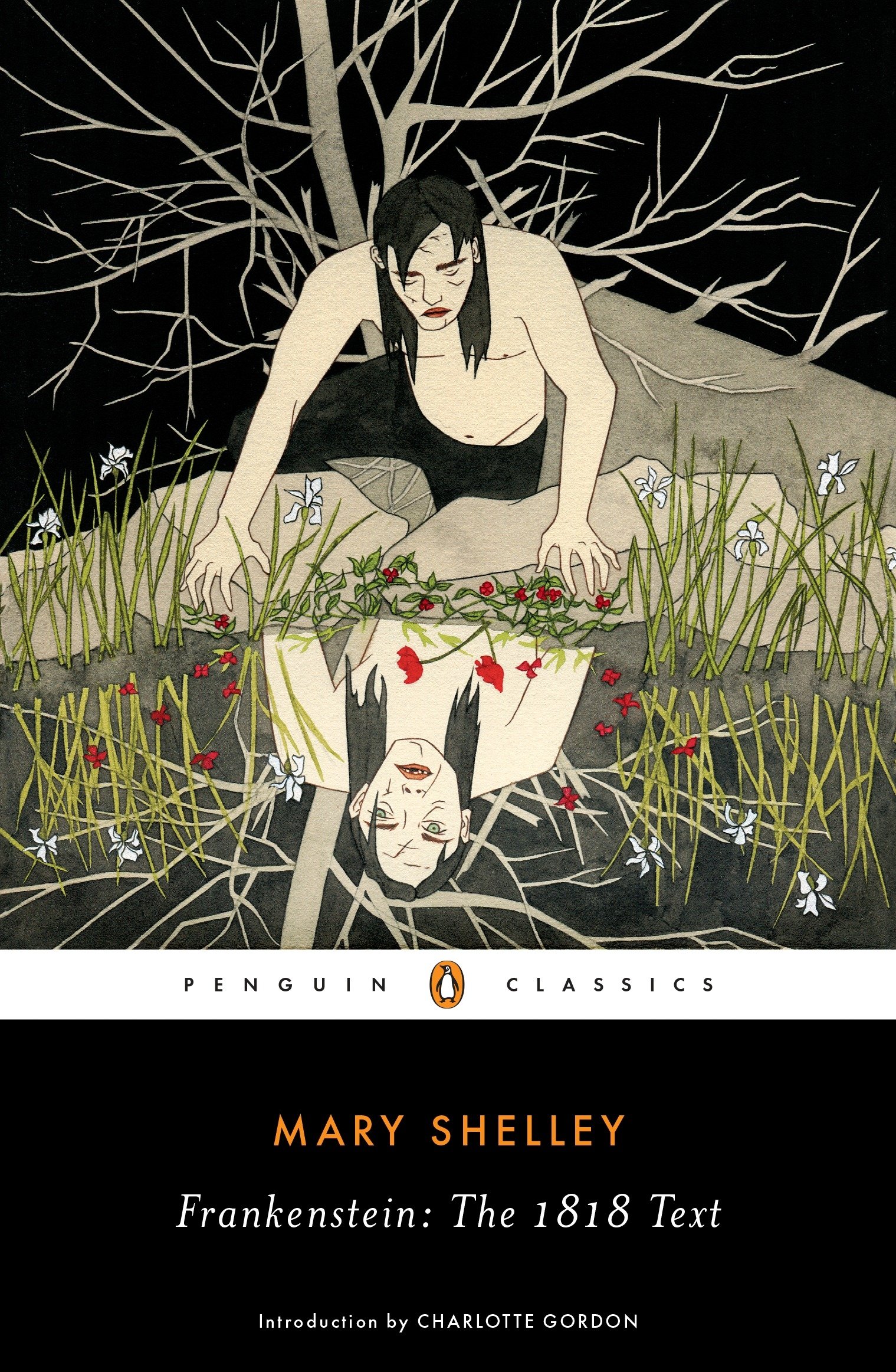
The Scientific and Cultural Cauldron of 1818
The dawn of the 19th century was a period charged with intellectual upheaval and rapid scientific progress, a fertile soil for Mary Shelley’s Frankenstein. The scientific landscape of 1818 was awash with discoveries that challenged existing notions of life, death, and the natural order. Among the most captivating and controversial was galvanism—the study of electricity’s effect on animal tissue. Experiments conducted by scientists like Luigi Galvani demonstrated that electrical currents could induce muscle contractions in dead frogs’ legs, blurring the once-clear divide between the living and the inanimate. This electrifying phenomenon ignited imaginations and fears alike, making the prospect of reanimating dead tissue not just a fantastical idea, but a scientific question actively explored in laboratories and debated in salons.
Anatomy was also advancing rapidly, thanks to improved dissection techniques and a growing curiosity about the human body’s inner workings. Medical schools expanded their studies, but this progress carried a macabre cost. The demand for cadavers exceeded legal supply, prompting a shadow economy of grave robbers who exhumed bodies under cover of night to sell to anatomists. This grim practice fed public anxieties about the violation of death’s sanctity and the ethics of scientific inquiry, themes that pulse throughout Shelley’s novel.
Philosophical currents swirled alongside these scientific advances. The debate between vitalism—the belief in a unique life force beyond physical explanation—and materialism—the idea that life could be fully explained by physical and chemical processes—was intensifying. Chemical innovations, such as the discovery of new elements and compounds, fed into hopes that humanity could manipulate and even transcend biological limits. Blood transfusions and early plastic surgeries hinted at the potential to reshape and heal the body in unprecedented ways, yet these interventions also raised troubling ethical questions.
In parallel, ancient ideas like alchemy, which sought to transform matter and unlock the secrets of life through mystical means, persisted in intellectual undercurrents, often blending uneasily with emerging scientific rationalism. Influential thinkers like Erasmus Darwin, grandfather to Charles Darwin, began proposing evolutionary concepts, suggesting that life was not fixed but mutable, challenging religious and social orthodoxies.
This complex tapestry of scientific excitement, ethical uncertainty, and philosophical debate formed the crucible in which Frankenstein was forged. Shelley’s novel emerged as a reflection—and a critique—of an era wrestling with the promise and peril of human ingenuity. It questioned not only what science could achieve but what it should attempt, probing the moral limits of mankind’s quest to control life itself.
A Radical Voice in a Restrictive Society
Mary Godwin Shelley’s emergence as the author of Frankenstein was nothing short of revolutionary, especially given the social and cultural constraints imposed on women in early 19th-century England. Born into a family of radical thinkers—her father William Godwin, a philosopher known for his advocacy of anarchism and personal freedom, and her mother Mary Wollstonecraft, a pioneering feminist writer who died shortly after Mary’s birth—Mary inherited a rich intellectual legacy. However, this inheritance came with complex personal challenges, including the absence of her mother and the sometimes fraught relationship with her father and stepmother.
Despite lacking formal schooling, Mary was an avid autodidact, voraciously reading the extensive library her father maintained. She absorbed ideas that spanned philosophy, politics, and literature, equipping herself with a sophisticated intellectual foundation rare for women of her time. Her engagement with radical ideas fostered a questioning spirit and a willingness to defy convention.
Mary’s relationship with Percy Bysshe Shelley, an aristocratic poet and political radical, further shaped her path. Their connection was forged through shared literary passion and a mutual desire to challenge societal norms. Yet, their elopement in 1814—while Percy was still married—shocked the social order and estranged Mary from her family and society at large. This personal upheaval thrust her into a life of exile, financial instability, and social ostracism.
At this juncture, women’s roles were rigidly circumscribed. Legal systems denied them the right to vote, own property independently in many cases, or act autonomously outside the domestic sphere. Society expected women to embody virtue, chastity, and obedience, confining their ambitions to marriage and motherhood. Women who stepped beyond these bounds—especially into the public realm of writing—risked social censure, accusations of madness, or moral corruption.
In this milieu, Mary’s decision to write Frankenstein—a novel grappling with monstrous creation, scientific hubris, and complex ethical dilemmas—was profoundly daring. Female authors often published anonymously or under male pseudonyms to avoid backlash; Mary followed this path, releasing Frankenstein without her name attached. Yet the novel’s themes of dehumanization, marginalization, and the destructive impact of industrialization struck at the heart of social anxieties, particularly concerning family, gender roles, and the alienation wrought by rapid societal change.
Through Victor Frankenstein’s creation and rejection of his creature, Shelley articulated a radical empathy for the dispossessed and the weak, voices often silenced in her era. Her work anticipated and paved the way for later women writers who used fiction as a platform for social critique and reform. Frankenstein was more than a Gothic novel; it was a manifesto of resistance against the constraints that sought to diminish women’s intellectual and creative agency.
The Gothic Novel Reimagined Through Science
Frankenstein occupies a fascinating crossroads between the classic Gothic tradition and the burgeoning scientific curiosity of the early 19th century. Gothic novels traditionally thrived on eerie castles, haunted landscapes, and supernatural horrors—elements designed to evoke terror and explore the darker recesses of human emotion. Mary Shelley inherited these motifs but transformed them into something intellectually provocative and deeply relevant to her time.
The gloomy, oppressive atmosphere that permeates Frankenstein owes much to the “year without a summer” in 1816. The eruption of Mount Tambora in Indonesia the previous year released colossal volumes of volcanic ash into the atmosphere, causing global temperatures to plummet. Europe endured unrelenting cold, gloomy skies, and relentless storms. This climatic disaster forced Mary and her companions—Percy Shelley, Lord Byron, and others—to remain indoors at the Villa Diodati by Lake Geneva. It was in this bleak, claustrophobic environment that the idea of Frankenstein first crystallized.
This environmental catastrophe infused the novel with its pervasive mood of desolation. The icy wastelands, howling storms, and barren mountains are not mere backdrops; they symbolize isolation, despair, and the alienation that mark both creator and creation. This bleak natural world reflects the inner turmoil and existential dread that define the narrative.
But Shelley did not stop at mood and setting. She wove cutting-edge scientific discourse into the fabric of the novel. Rather than supernatural forces animating her monster, it was galvanism and anatomy—real, contemporary sciences—that provided the mechanistic plausibility for life’s creation. This approach elevated Frankenstein from mere Gothic melodrama to a work of speculative philosophy.
By embedding scientific ideas such as galvanism, embryology, and the nascent theories of life’s physical basis into the story, Shelley tapped into widespread public fascination and anxiety. This fusion of Gothic horror with scientific inquiry was unprecedented, making the novel a prototype for science fiction and a profound meditation on the costs of human curiosity. The dread in Frankenstein emerges not from ghosts or curses, but from humanity’s audacity to defy nature’s boundaries and play god.
The Story of Creation, Rejection, and Revenge
At its core, Frankenstein is a cautionary tale about the perils of unchecked ambition and the responsibilities that accompany creation. Victor Frankenstein is a figure of Promethean hubris: his desire is not simply to be a father, but to wield godlike control over life itself. His initial vision is suffused with hope and idealism—he seeks to conquer death and bestow vitality where there was none.
Yet, this vision shatters dramatically upon the creature’s awakening. The being that opens its eyes is grotesque and malformed, a physical embodiment of the unintended consequences of scientific overreach. Victor’s reaction is immediate revulsion and horror; he flees from the very life he has fashioned. This abandonment marks the beginning of tragedy.
Left alone, the creature embarks on a poignant and heartrending quest for identity and acceptance. He educates himself by observing humans, learning language, reading literature, and contemplating his place in the world. His intelligence and sensitivity defy the monstrous appearance that leads others to fear and shun him. Yet society’s cruel rejection becomes the crucible that hardens him, twisting his pain into bitterness and rage.
The creature’s retaliation is devastating. He targets Victor’s loved ones, murdering his brother William and framing the innocent Justine Moritz for the crime, and eventually killing Elizabeth on her wedding night. These acts of vengeance highlight a complex moral landscape: the creature is both victim and villain, shaped by neglect and hatred yet responsible for his own choices.
Victor, consumed by guilt and grief, pursues the creature relentlessly, but their mutual destruction is inevitable. Their intertwined fates serve as a powerful metaphor for the dangers of forsaking ethical responsibility in the pursuit of knowledge and power.
Shelley refuses to provide easy answers or clear moral judgments. Instead, she plunges readers into an ethical abyss where creator and creation are bound in a tragic cycle of abandonment, revenge, and suffering. This ambiguity forces us to question where monstrosity truly resides: in the malformed body of the creature or the reckless ambition of his maker.
Characters as Reflections of Personal and Social Struggles
The characters in Frankenstein are not merely players in a Gothic drama; they are embodiments of Mary Shelley’s intimate experiences and incisive social commentary. Each figure reflects layers of personal pain, societal constraints, and ethical dilemmas that resonate far beyond the novel’s plot.
Victor Frankenstein stands as a complex portrait of obsession and tragedy. His relentless pursuit of scientific mastery blinds him to the consequences of his actions. This blindness mirrors Shelley’s own struggles with grief and loss—her experiences of abandonment echo in Victor’s inability to nurture or take responsibility for his creation. His descent into guilt, paranoia, and despair highlights the destructive potential of unchecked ambition and emotional repression.
The creature, often misunderstood in popular adaptations, is Shelley’s most profound creation. Far from a mindless monster, he is an articulate, thoughtful being who teaches himself to speak and read by observing human society. His intellectual and emotional growth—his longing for companionship, love, and acceptance—makes his isolation all the more tragic. The creature embodies the pain of social rejection, prejudice, and alienation. This is not mere horror fiction; it is a deeply empathetic exploration of what it means to be excluded and dehumanized. Mary Shelley’s own feelings of being an outsider—ostracized for her unconventional family background and scandalous relationship—are vividly reflected in the creature’s plight.
Elizabeth Lavenza, Victor’s cousin and fiancée, personifies the constrained ideal of womanhood in the early 19th century. She is gentle, compassionate, and loyal, but her agency is severely limited. Elizabeth’s fate—as a passive victim caught in the destructive consequences of male ambition—critiques the societal expectations that confined women to roles of silent support and sacrificial love. Her character echoes the limited choices and legal invisibility faced by real women of Shelley’s time.
William, Victor’s youngest brother and the creature’s first victim, represents innocence destroyed by forces beyond control. His murder symbolizes the collateral damage wrought by hubris and societal failure. Justine Moritz’s wrongful conviction and execution for William’s death underscore the novel’s preoccupation with injustice and the marginalization of vulnerable individuals. Justine’s character, a poor adopted girl, draws attention to the societal tendency to scapegoat the powerless, particularly women, reflecting themes championed by Shelley’s parents in their political and feminist writings.
Captain Robert Walton, the Arctic explorer who frames the novel through his letters, serves as a narrative and moral foil to Victor. Walton’s ambition mirrors Victor’s scientific zeal, but his willingness to heed warnings and turn back from dangerous pursuits offers a redemptive contrast. As both observer and participant, Walton’s reflections invite readers to consider the ethical boundaries of human endeavor and the costs of obsession.
Together, these characters form a microcosm of Shelley’s world—fraught with personal loss, social injustice, gender inequality, and the ethical quandaries of emerging modernity.
Narrative Innovation and Literary Allusions
Mary Shelley’s Frankenstein is notable not only for its thematic depth but also for its inventive narrative structure and rich intertextuality. The novel’s epistolary form, told through letters written by Captain Robert Walton to his sister, lends an immediacy and authenticity that ground the fantastic story in a believable reality. This technique was inspired by respected 18th-century works such as Samuel Richardson’s Pamela and Clarissa, and Goethe’s The Sorrows of Young Werther, which used letters to explore intimate emotions and subjective truths.
Within Walton’s framing narrative, readers encounter Victor Frankenstein’s first-person account, and nested within that, the creature’s own poignant and eloquent narrative. This “story within a story within a story” format creates a kaleidoscopic perspective that challenges singular truths. By presenting multiple viewpoints, Shelley invites readers to empathize with both creator and creation, complicating simple binaries of good and evil, human and monster.
Shelley’s erudition shines through her literary allusions, which add layers of meaning and intellectual gravitas. Biblical references—especially to the Book of Genesis—echo the theme of creation and the fall from grace. Victor’s role as a creator evokes the myth of Prometheus, the Titan who defied the gods by stealing fire to give life and knowledge to humanity, suffering eternal punishment as a consequence. This parallel positions Victor as a tragic figure whose overreaching ambition leads to ruin.
Romantic poetry permeates the text, with nods to Samuel Taylor Coleridge’s meditations on nature and the sublime. Milton’s Paradise Lost is a particularly significant influence; Shelley references it multiple times, casting the creature as a figure akin to both Adam and Satan—an innocent cast out and a rebel against his creator. These allusions deepen the novel’s exploration of innocence, knowledge, rebellion, and the consequences of disobedience.
This intricate layering of narrative voices and intertextual references not only showcases Shelley’s literary sophistication but also situates Frankenstein within broader philosophical, theological, and cultural debates. The novel thus transcends genre, functioning as a multi-dimensional inquiry into the human condition, knowledge, and morality.
Adaptations and Cultural Legacy
Since its publication, Frankenstein has transcended the confines of the written page to become a cultural touchstone, continually reinvented through film, theater, and other media. Each adaptation reflects not only the evolving artistic sensibilities of its era but also shifting societal fears and fascinations about science, identity, and morality.
The earliest and most influential film adaptations emerged in the 1930s, with James Whale’s Frankenstein (1931) and The Bride of Frankenstein (1935). These movies introduced iconic imagery—the flat-headed, bolt-necked creature, portrayed by Boris Karloff—that deeply shaped popular imagination. While Shelley’s creature is intelligent and eloquent, Whale’s version reduces him to a mute, lumbering brute, emphasizing the horror of the monster over the nuances of his psychology. Similarly, Victor Frankenstein is softened into a sympathetic, tortured genius rather than the reckless, often arrogant scientist of the novel. These adaptations reflect early 20th-century anxieties about uncontrolled scientific progress and the consequences of “playing God,” but simplify the ethical complexity inherent in Shelley’s work.
The Hammer Horror films of the 1950s and 1960s leaned heavily into gothic spectacle and graphic violence. They magnified the horror elements and presented Frankenstein’s creation as a grotesque aberration, tapping into Cold War-era fears of mutation and scientific misuse. These movies often stripped away the moral ambiguity, framing the creature as a villainous other, rather than a tragic figure.
Kenneth Branagh’s 1994 adaptation sought to restore the novel’s philosophical depth and emotional complexity. This version gave both Victor and the creature nuanced psychological portrayals, delving into the torment and moral confusion that define their relationship. Branagh’s film emphasized themes of creation, responsibility, and loss, highlighting the tragic consequences of Victor’s hubris.
Beyond cinema, Frankenstein has inspired an immense body of derivative works, including stage plays, graphic novels, television series, and reinterpretations across genres—from horror and science fiction to comedy and avant-garde art. Modern adaptations often explore themes of artificial intelligence, bioethics, and the boundaries of human identity, connecting Shelley’s 19th-century anxieties to contemporary debates about cloning, genetic engineering, and technological alienation.
Through this continuous cultural evolution, Frankenstein remains a living text—a mirror reflecting society’s changing hopes, fears, and ethical challenges, and a reminder that the questions Mary Shelley posed about creation and responsibility remain urgently relevant.
What It Means to Be Human—and Not
At its most profound, Frankenstein is a meditation on the nature of humanity itself. The creature, fashioned from fragments of dead bodies and brought to life by unnatural means, challenges the reader to reconsider what defines a human being. Is it biology alone? Appearance? Consciousness? Emotion? Morality? Shelley’s novel destabilizes simple definitions, forcing an exploration of the qualities that confer dignity and identity.
The creature exhibits remarkable intellectual capacity and emotional depth. He learns language, masters reading, and engages with philosophy and poetry. He feels love, loneliness, anger, and despair. His desire for social connection and acceptance reveals a fundamentally human yearning. Yet, his grotesque physical form provokes fear and revulsion, leading society to reject and demonize him. This harsh judgment based on appearance alone exposes the cruelty of superficiality and prejudice.
The tragedy of the creature stems not from innate monstrosity but from abandonment and alienation. Victor’s refusal to accept responsibility for his creation condemns the creature to a life of isolation. Society’s harsh treatment transforms what might have been innocence and potential into bitterness and violence. In this way, Shelley critiques not only individual failings but the broader social systems that marginalize and exclude those who are different.
Mary Shelley’s personal history—her experience as a motherless child, her alienation within her family, and her status as a woman defying societal norms—informs this empathy for the outsider. The creature’s plight reflects her understanding of social rejection and the human need for belonging.
Frankenstein ultimately poses difficult ethical questions: What obligations do creators have toward their creations? How should society treat those who deviate from norms? What does it truly mean to be human? By refusing to offer easy answers, Shelley invites readers into an ongoing dialogue about identity, compassion, and moral responsibility—questions that remain as vital today as they were two centuries ago.
Conclusion
Frankenstein endures as a masterwork not only because of its gripping narrative but because of its profound exploration of what it means to create, to be human, and to face the consequences of ambition unchecked by responsibility. Mary Shelley’s visionary melding of Gothic horror with cutting-edge science and deep ethical inquiry continues to resonate, inviting each generation to confront the fragile boundaries between creator and creation, acceptance and rejection, humanity and monstrosity. More than a tale of terror, it is a timeless meditation on empathy, social justice, and the enduring quest for identity—an extraordinary achievement by a young writer whose insights remain strikingly relevant in our own complex, rapidly changing world.