
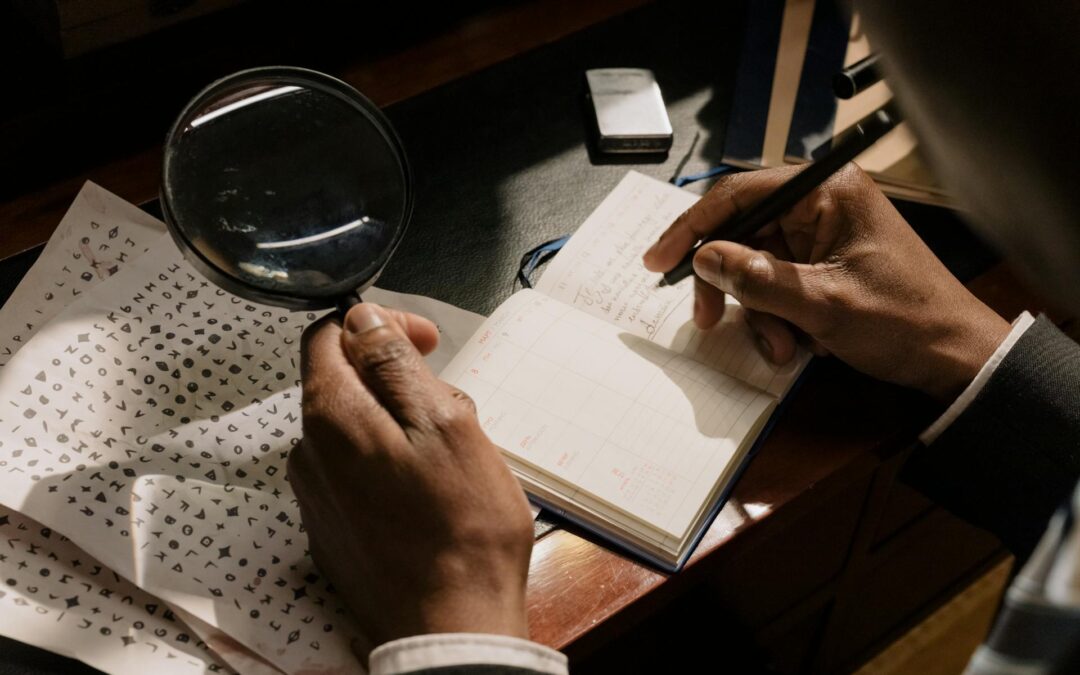
June 14th, 2000, Tampa, Florida. Retired US Army intelligence Colonel George Trofimoff pulled into an airport hotel parking lot with a mixture of desperation and hope. Facing financial ruin, driven by reckless spending and a fragile pride, he was about to take a leap that would mark him forever in history—the highest-ranking US military officer ever to spy for Russia.
Early Life: Roots in Turmoil and Loyalty
George Trofimoff’s early years unfolded against the backdrop of one of the most volatile periods in modern European history. Born on March 9, 1927, in the Weimar Republic—a fragile democracy grappling with economic collapse, political extremism, and the lingering scars of World War I—his infancy was shadowed by upheaval from the outset. His father, Vladimir Trofimoff, was a figure deeply entrenched in the anti-communist resistance; as a major in the White Army, Vladimir had fought fiercely against the Bolsheviks during the Russian Civil War. This allegiance was not merely political but familial, embedding a visceral opposition to Soviet communism that would echo throughout George’s life. The family’s identity was thus intertwined with a staunchly anti-Soviet worldview, shaped by years of exile and conflict.
George’s mother, Ekaterina Cartali, added a contrasting cultural dimension to the household as a concert pianist. Her presence represented an element of stability and refinement amid the chaos of post-revolutionary dislocation. Tragically, her death in 1928, when George was only a year old, destabilized the family’s fragile equilibrium. Vladimir’s descent into poverty and despair after her loss forced him to make difficult decisions regarding his son’s upbringing. Unable to provide a stable home, Vladimir temporarily placed George in the care of family friends—Vladimir and Antonina Sharav. This surrogate guardianship was far from a simple act of convenience; it introduced George to a new social sphere and a surrogate family dynamic that would prove crucial decades later.
Among the Sharavs was Antonina’s son from a previous marriage, Igor Susmile. From early childhood, George regarded Igor as a brother, a bond that transcended biology and became a cornerstone of his personal identity. This relationship, forged during the hardship of exile and displacement, would resurface in adulthood under startling and nefarious circumstances, blurring the lines between family loyalty and espionage.
By 1943, as the world was engulfed in the flames of the Second World War, Vladimir remarried, bringing George back into his immediate household. However, the relentless destruction wrought by the Allied bombing campaigns on Berlin shattered any semblance of stability. The family was forced apart once more amid the chaos. When George was conscripted into the German army in the fall of 1944, he faced a moral and existential crossroads. Rejecting the uniform of the Wehrmacht, he fled to occupied Czechoslovakia and went into hiding, risking capture and death to avoid serving a regime whose ideology and methods he could not accept.
The war’s end did not bring peace for George. As Soviet forces advanced westward, he undertook another perilous journey—crossing into the American-occupied zone of Germany. This move was both physical and ideological, marking a definitive break from his past under Nazi control and a tentative embrace of the Western Allies. His linguistic talents—mastery of German, Russian, and English—found immediate utility as an interpreter for the US Army, providing him a foothold in a new power structure.
In 1947, facilitated by the Society of Friends for Immigration, George emigrated to the United States. Yet, his transition was not seamless; he carried with him the scars of exile, war, and fractured identities. In 1948, he enlisted in the US Army, returning to occupied Germany and reuniting with his father for the first time since 1943. This reunion symbolized the collision of past loyalties with new realities, setting the stage for a life caught between two worlds—East and West, loyalty and betrayal, survival and ideology.
Military Career and Intelligence Work
George Trofimoff’s military career was a complex tapestry woven through some of the Cold War’s most tense and secretive theaters. After enlisting in 1948, he quickly became a valued asset due to his multilingual skills and deep cultural understanding of both European and Soviet spheres. His early postings took him back to Europe, placing him at the intersection of post-war reconstruction and emerging East-West tensions.
Following an honorable discharge from active duty in 1956, Trofimoff made a pivotal transition to military intelligence in 1959—a field that demanded discretion, analytical acuity, and unwavering loyalty. His intelligence career coincided with escalating geopolitical tensions, proxy wars, and espionage that defined the era. Trofimoff’s deployments to Laos and West Germany placed him at strategic flashpoints, where clandestine information gathering was as critical as conventional military might.
In West Germany, he was embedded within the frontline defenses of NATO against the Warsaw Pact. The intelligence he gathered and analyzed informed tactical decisions that could potentially alter the balance of power in Europe. His work required navigating a labyrinth of defections, interrogations, and intelligence-sharing among allied nations—a high-stakes environment that demanded both subtlety and ruthlessness.
The zenith of Trofimoff’s intelligence career was his promotion in 1969 to chief of the United States Army Element at the Nuremberg Joint Interrogation Center (JIC). This center was a rare example of Cold War intelligence cooperation, jointly operated by American, French, and West German agencies. Its mission was to interrogate defectors and refugees from Soviet-controlled Eastern Europe, extracting insights that could reveal Soviet military intentions, capabilities, and internal political dynamics.
As chief of the US element, Trofimoff held a position of extraordinary trust and responsibility. His top-secret security clearance granted him access to an extensive array of classified materials—interrogation transcripts, tactical assessments, and intelligence reports. The JIC was a nerve center of information, and Trofimoff was at its core, responsible for safeguarding secrets that, if compromised, could have catastrophic consequences.
Despite the immense trust placed in him, Trofimoff’s personal financial recklessness began to erode the foundation of his career. The lifestyle he maintained was unsustainable on a military salary alone, and mounting debts made him vulnerable. In a world where loyalty was paramount and espionage lurked in shadows, his financial desperation would soon become a chink in the armor—a weakness that adversaries were quick to exploit.
The Return of a Familiar Face: Recruitment Through Brotherhood
The reappearance of Igor Susmile, now known as Bishop Irenei of the Russian Orthodox Church, was neither coincidental nor benign—it was a calculated maneuver rooted in espionage tradecraft that exploited personal relationships to devastating effect. For George Trofimoff, this reunion with his childhood “brother” seemed like a rekindling of familial bonds. Yet beneath the surface lay a web of manipulation orchestrated by the KGB, which had long cultivated religious figures as covert operatives to penetrate Western intelligence.
Irenei’s position within the Russian Orthodox Church granted him an aura of trustworthiness and respectability, both among émigré communities and Western officials. The Soviet intelligence apparatus recognized the church’s dual utility: as a spiritual institution capable of influencing émigré loyalties, and as a discreet channel for clandestine recruitment and communication. This strategic use of clergy allowed Soviet operatives to approach potential assets under the guise of religious or cultural exchange, lowering guards that conventional espionage methods might raise.
Trofimoff’s precarious financial situation made him an ideal target. Despite his high-ranking position and access to sensitive intelligence, his reckless spending—particularly on expensive furniture and luxury items—had plunged him into debt. Irenei, well aware of these vulnerabilities, extended an initial loan of 5,000 Deutsch marks. This gesture, framed as brotherly assistance, was in fact a calculated inducement designed to establish a dependency and leverage.
Their initial meetings were marked by informal conversations that revolved around current events, political developments, and subtle inquiries into Trofimoff’s unit’s sentiments and perceptions of the American government. These dialogues appeared innocuous, cloaked in the familiarity of old friendship and shared heritage. However, beneath the surface, each exchange was an extraction of intelligence, a delicate probing to assess Trofimoff’s willingness to divulge sensitive information.
The recruitment unfolded gradually. Trofimoff, burdened by financial woes and tempted by offers of monetary relief, became increasingly entangled. Irenei’s religious authority served as a mask for KGB directives, allowing him to escalate demands without arousing suspicion. The dynamic was far from a simple friendship—it was a tactical exploitation of trust and vulnerability. This approach exemplified the KGB’s nuanced recruitment strategy: leveraging personal connections, ideological sympathies, and material incentives to transform insiders into assets.
Espionage in Action: Maris and the Flow of Secrets
Once fully recruited and codenamed “Maris,” Trofimoff’s espionage activities entered a critical phase characterized by systematic information gathering and transmission that posed a severe threat to US and NATO security. The KGB placed him on a substantial payroll, providing 7,000 Deutsch marks weekly—an amount reflecting the immense value of the intelligence he supplied. Payments were carefully structured to minimize detection, delivered in used bills to evade tracing, highlighting the operational sophistication behind his recruitment.
Trofimoff’s access as chief of the US Army Element at the Nuremberg Joint Interrogation Center granted him entry to a wealth of classified documents, including interrogation reports of defectors and refugees, assessments of Soviet troop deployments, and detailed analyses of tactical and strategic plans. Among the most sensitive information he photographed were reports concerning troop movements and defensive postures along the Fulda Gap, a critical corridor that was the likely flashpoint for a potential Warsaw Pact invasion of Western Europe.
Equipped with specialized photographic equipment provided by the Soviets—a camera and tripod designed for discreet, high-quality document imaging—Trofimoff smuggled copies of these documents out during clandestine meetings. This photographic intelligence was then passed on to KGB operatives during covert encounters in Austria, maintaining a secure pipeline for the flow of secrets.
The ramifications of his espionage were profound. By revealing what American forces knew—and crucially, their limitations—the Soviets gained a strategic advantage in anticipating NATO responses. This intelligence allowed them to refine tactics, conceal vulnerabilities, and potentially neutralize Western operational capabilities in any East-West confrontation. Trofimoff’s betrayal thus struck at the very heart of NATO’s defense planning.
Despite the substantial compensation of approximately $250,000 over his espionage career, the material rewards belied the gravity of his treason. His activities were not limited to passing documents; he provided real-time assessments and insights that only someone in his position could access. This insider knowledge amplified the value of his contributions, cementing his status as a high-level asset.
However, by 1987, the espionage partnership abruptly ended. Bishop Irenei ordered Trofimoff to cease his activities, likely due to shifting political landscapes—most notably the onset of perestroika and glasnost reforms under Mikhail Gorbachev, which heralded a thaw in East-West relations. The end of the Cold War’s peak hostility rendered some espionage activities obsolete or too risky to continue. Nevertheless, Trofimoff’s two-decade-long espionage left an indelible mark on the intelligence war between superpowers.
Discovery and Fallout: The Long Shadow of Betrayal
The covert saga of George Trofimoff might have remained buried in the shadows of Cold War espionage if not for a seismic breach within the KGB itself. In 1992, Vasili Mitrokhin, a senior archivist for the KGB’s foreign intelligence directorate, defected to the West, bringing with him a treasure trove of clandestine documents. Over the course of decades, Mitrokhin had meticulously copied thousands of pages, exposing the breadth and depth of Soviet espionage operations worldwide. Among these revelations was the existence of a mole embedded within a NATO interrogation center—a mole whose codename was “Maris.”
Though Mitrokhin’s documents did not initially disclose a name, the descriptions were detailed enough to draw connections. The files identified the spy as a career American intelligence officer collaborating with a figure operating as a Russian Orthodox clergyman. These clues pointed directly toward Trofimoff and Bishop Irenei, painting a chilling portrait of betrayal within trusted ranks.
Armed with this intelligence, German authorities moved swiftly. On December 14, 1994, Trofimoff and Irenei were arrested and subjected to rigorous interrogation by the German federal police. The evidence from the Mitrokhin Archive lent weight to the case, providing insights into the mechanics of their espionage and the scale of the damage inflicted.
However, German legal constraints posed significant hurdles. Espionage laws in Germany contained a five-year statute of limitations, and much of the actionable conduct occurred beyond this temporal boundary. As a result, prosecutors were unable to file formal charges for espionage, leading to an unexpected release of both men. This legal technicality underscored the difficulties in prosecuting Cold War-era espionage once political climates and statutes catch up with past crimes.
Despite evading criminal prosecution, Trofimoff faced administrative consequences. His security clearance was revoked—a profound professional and symbolic blow. More devastatingly, his military pension was rescinded, severing a vital financial lifeline. For a man accustomed to status and security, this marked a precipitous fall from grace.
The fallout reverberated beyond Trofimoff personally. His case exposed vulnerabilities within allied intelligence communities and underscored the challenges of detecting and deterring high-level insider threats. It served as a cautionary tale about the perils of complacency in safeguarding classified information, especially from trusted individuals embedded deep within intelligence networks.
The Downward Spiral: From Colonel to Grocery Clerk
The revocation of George Trofimoff’s pension and security clearance was the catalyst for a harrowing descent from military prominence into financial and personal ruin. With his primary source of income cut off and his reputation irreparably damaged, Trofimoff faced the daunting reality of sustaining a lifestyle that had long outpaced his means.
His penchant for luxury—gourmet dining, fine wines, and lavish furnishings—continued despite mounting debts and shrinking resources. Ignoring the pragmatic counsel of his wife, he pursued acquisitions that only deepened his financial hole. Credit cards became crutches, and borrowing escalated into a vicious cycle. The veneer of success and refinement masked a precarious existence teetering on insolvency.
In a desperate attempt to stabilize their finances, Trofimoff took out a second mortgage on their Florida home, leveraging the property to access additional funds. Simultaneously, he indulged in a new car purchase despite his wife’s protests and the clear inability to afford such luxuries. These decisions underscored a psychological denial of the severity of his circumstances and a clinging to symbols of status amid unraveling stability.
Eventually, Trofimoff’s financial woes forced him to make stark lifestyle adjustments. One of the most poignant moments came when he accepted employment bagging groceries at a Publix supermarket. This role was a far cry from his former life as a decorated colonel and intelligence officer. Yet, it was a necessary means of income—a testament to the steep fall from military honor to mundane survival.
Amid these struggles, old allegiances stirred. In 1997, Igor Gulkin, presenting himself as a representative of Russian intelligence, contacted Trofimoff, offering financial assistance and a path to rehabilitate his destroyed espionage file. For Trofimoff, this was not merely a business proposal; it was a rekindling of identity and purpose rooted in his childhood and heritage. His declaration, “In my soul, I’m Russian. I’m not an American. I was never an American,” revealed the depth of his internal conflict and the complex interplay of loyalty, ideology, and desperation that defined his life.
This turbulent period highlighted how Trofimoff’s personal vulnerabilities—financial desperation, identity crisis, and fractured loyalties—became the crucible that ultimately led to his undoing. The gap between his past prominence and present struggle was stark, emblematic of a man caught in the unforgiving tides of history and human frailty.
The Sting and Conviction: Justice Served
The culmination of George Trofimoff’s clandestine activities unfolded in a carefully orchestrated sting operation emblematic of the FBI’s sophisticated counterintelligence capabilities at the dawn of the 21st century. After years of evading full legal repercussions—thanks largely to Germany’s statute of limitations—Trofimoff found himself ensnared once more, this time on American soil and under the watchful eye of the Federal Bureau of Investigation.
In 1997, Trofimoff was approached by a man claiming to be Igor Gulkin, an operative of the Russian Foreign Intelligence Service (SVR). Gulkin promised financial assistance to help Trofimoff rebuild his compromised espionage dossier, ostensibly destroyed during prior disruptions. For Trofimoff, already entrenched in financial distress and nostalgic for his Russian roots, this offer rekindled old loyalties and hopes for monetary salvation. His candid confession during their communications—“In my soul, I’m Russian. I’m not an American. I was never an American”—laid bare the conflicted identity at the heart of his betrayal.
Unbeknownst to Trofimoff, “Gulkin” was actually FBI Special Agent Dmitri Drojinski, a native Russian speaker and expert in Russian intelligence tradecraft, who had perfected the art of impersonation to lure suspected moles. This guise enabled the FBI to penetrate deep into espionage networks and extract confessions or evidence critical for prosecution.
On June 14, 2000, Trofimoff arrived at the Tampa International Airport Hilton Hotel, expecting a cash payment of $20,000 as part of his continued espionage collaboration. Instead, he was met by law enforcement officers and arrested on charges of espionage. The arrest was the apex of a painstaking investigation that leveraged years of intelligence gathering, defectors’ testimonies, and intercepted communications.
The subsequent trial captivated the intelligence community and the public alike. The prosecution presented a compelling case built on documentary evidence from the Mitrokhin Archive, witness accounts, and Trofimoff’s own admissions. The defense struggled to counter the weight of the accumulated proof, unable to effectively dispute Trofimoff’s betrayal of his oath and nation.
A federal jury found George Trofimoff guilty of espionage—a conviction that reverberated through the halls of military and intelligence institutions as a stark reminder of the dangers posed by insider threats. He was sentenced to life imprisonment, a sentence reflecting the gravity of his crimes and the national security risks they entailed.
Trofimoff spent the remainder of his life incarcerated in federal prison in California, passing away on September 19, 2014. His legacy endures as the most senior U.S. military officer ever charged and convicted of spying for Russia, a somber testament to how personal failings and ideological conflict can lead to catastrophic breaches of trust.
Legacy of a Complex Betrayal
George Trofimoff’s story is far more than a tale of espionage; it is a profound study in the complexities of identity, loyalty, and the human vulnerabilities that underpin even the highest echelons of national security. His life trajectory—from a war-displaced child, torn between ideological worlds, to a trusted intelligence officer and ultimately a convicted spy—reflects the turbulent intersection of history and personal choice.
At its core, Trofimoff’s betrayal underscores the multifaceted nature of espionage. It is rarely a simplistic narrative of greed or ideology alone; often, it is the confluence of financial desperation, emotional ties, and fractured identity that drives insiders to compromise secrets. Trofimoff’s deep connection to his Russian heritage, complicated by years of exile and displacement, created internal fissures that were expertly exploited by the KGB through trusted personal relationships and religious institutions.
His recruitment via a surrogate brother turned bishop exemplifies the subtlety with which espionage operations can infiltrate trusted circles. The KGB’s use of clergy as intelligence assets highlights the blurred lines between spiritual authority and political manipulation during the Cold War, revealing the lengths to which intelligence agencies would go to secure valuable assets.
Trofimoff’s espionage compromised not just documents but the very integrity of allied intelligence cooperation, exposing NATO’s strategic vulnerabilities at a critical juncture. The intelligence he leaked had the potential to alter the balance of power, endangering countless lives and undermining decades of defense planning.
Moreover, his eventual downfall reveals the limitations of legal systems and intelligence agencies in detecting and prosecuting such betrayals, especially when statutes of limitations and international jurisdictions come into play. The Mitrokhin Archive’s defection was pivotal in bringing Trofimoff’s duplicity to light, underscoring the importance of defectors and insider information in counterintelligence efforts.
In the broader context, Trofimoff’s narrative serves as a cautionary tale for military and intelligence institutions worldwide. It highlights the imperative for robust internal security measures, vigilant monitoring of personnel vulnerabilities, and the psychological understanding of those entrusted with national secrets.
Ultimately, the legacy of George Trofimoff is one of tragic complexity—a man shaped by history’s upheavals, driven by conflicting loyalties, and undone by the very trust placed in him. His story remains a stark reminder that in the shadowy world of espionage, the human element is often the most unpredictable and consequential variable.