
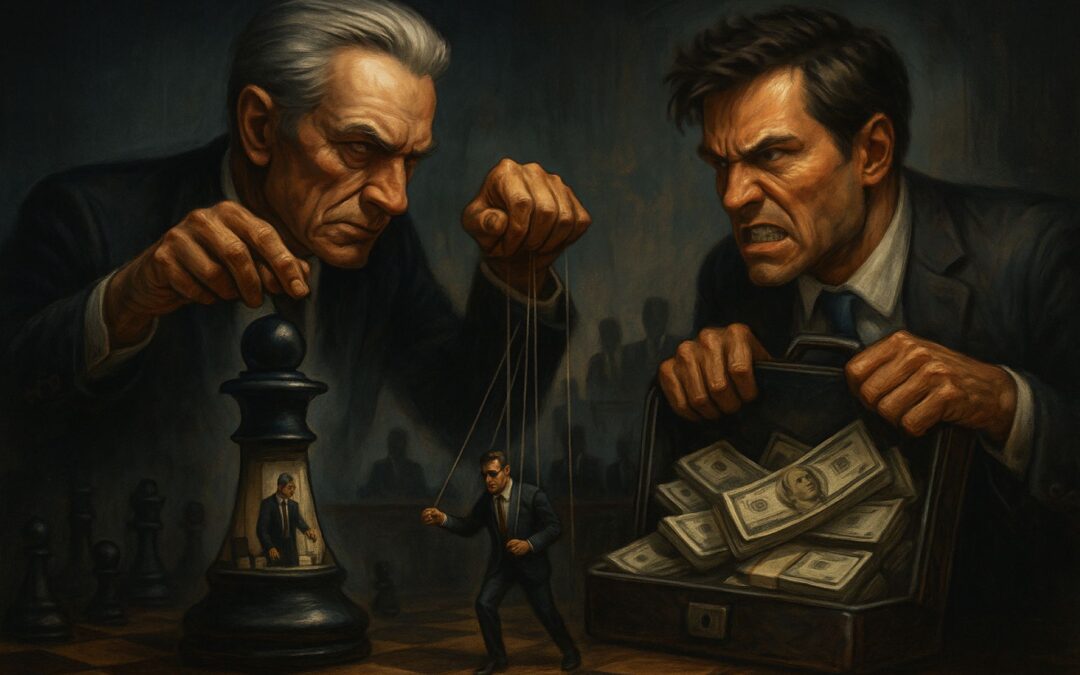
Hostile takeovers are the boardroom’s equivalent of war—ruthless, calculated, and often spectacular in scale. They turn polite corporate negotiations into battles where billions shift hands, reputations are destroyed, and empires are built. Behind the jargon of tender offers and poison pills lies a world of intrigue where billionaires play chess with entire companies as their pawns.
These moves are rarely clean; they’re messy, dramatic, and sometimes downright dirty. From secret stock accumulations to boardroom coups, from scorched-earth defenses to audacious counterattacks, the strategies reveal a side of business few textbooks dare to cover. This is the underworld of corporate conquest—where survival demands cunning, and where power belongs to those willing to bend the rules.
What Exactly Is a Hostile Takeover?
At its most stripped-down definition, a hostile takeover is an acquisition without consent. Instead of a dignified handshake across polished mahogany tables, it’s a knife fight in the shadows of Wall Street. Friendly acquisitions are about strategy and synergy—two companies agreeing that they’re better off together than apart. But when one side digs in its heels, refusing to sell, that’s when hostility enters the picture.
The drama stems from the structure of modern corporations. Public companies are not the property of the executives who run them; they are owned by their shareholders. This distinction is what makes hostile takeovers possible. An outside bidder doesn’t need the CEO’s blessing if it can convince enough shareholders to sell their stock. Once the raider crosses the magic threshold of 50% ownership, control changes hands. Boards can scream, executives can protest, but the company now answers to the new majority owner.
And here’s the rub—shareholders often care less about the company’s long-term health than about the immediate payday. If someone offers a price well above the current market value, loyalty evaporates. The corporate raider understands this psychology. Their game is to dangle a lucrative carrot in front of investors while simultaneously turning up the heat on management.
Hostile takeovers are rarely clean. They involve courtroom battles, PR campaigns, back-channel lobbying, and enormous sums of money moving at high velocity. They are part chess match, part siege, and part street brawl. For the aggressor, it’s the fastest way to acquire an empire without waiting for permission. For the defenders, it’s a fight for survival.
The Tender Offer and the Bear Hug
Among the arsenal of offensive weapons, the tender offer is the most straightforward yet devastatingly effective. In a normal acquisition, negotiations happen quietly between the buyer and the board. But if that fails, the aggressor sidesteps management entirely and addresses the shareholders directly: “We’ll buy your stock for more than it’s currently worth.” The premium—often 15 to 30% above market price—is designed to be irresistible. Shareholders are confronted with a simple choice: cash in now or remain loyal to a leadership team resisting a golden payday.
The psychology here is powerful. Investors don’t like uncertainty, and a tender offer promises guaranteed profit. This pressure often fractures unity inside the company. Some shareholders sell immediately, others hesitate, but all of them start questioning management’s judgment. The aggressor only needs enough momentum to tip the scales.
Oracle’s pursuit of PeopleSoft in 2003 is a classic case study. The board resisted stubbornly, believing the company was worth more than Oracle offered. Oracle countered with successive rounds of higher bids, each one intensifying pressure on PeopleSoft’s investors. At the same time, lawsuits clogged the courts, regulators hovered, and the company’s internal morale sagged under the weight of constant siege. After 18 bruising months, shareholders finally yielded. Oracle walked away with PeopleSoft for over $10 billion, proving that persistence paired with premium pricing can erode even the strongest defenses.
If the tender offer is a scalpel, the bear hug is a sledgehammer. Instead of discreetly making an offer, the raider goes public. They send an open letter or stage a press announcement that blasts the offer into the headlines. The tactic weaponizes visibility. Suddenly, shareholders—and the general public—know exactly what’s on the table. Management finds itself in a humiliating position, forced to explain why they’re refusing a deal that would make everyone richer.
Elon Musk’s gambit with Twitter in 2022 exemplifies this strategy. After the board resisted his overtures, Musk published his offer openly, creating a media circus. Overnight, Twitter’s executives were not just facing an aggressive buyer—they were battling their own shareholders’ anger. To them, rejecting Musk’s bid looked like betrayal of fiduciary duty. The bear hug leverages shame, transparency, and the fear of shareholder revolt to corner management into compliance.
The brilliance of both strategies lies in their ability to realign allegiances. The tender offer tempts shareholders with profit; the bear hug embarrasses management with public scrutiny. One whispers to greed, the other shouts to the crowd. And in the high-stakes theatre of hostile takeovers, both can be fatal to the defenders.
The Proxy Fight and the Toehold
When billionaires can’t win by buying, they turn to influence. A proxy fight is essentially a coup staged within the boardroom. Instead of purchasing control outright, the aggressor persuades shareholders to vote in a slate of new directors aligned with their agenda. With the right people seated at the long polished table, the company’s destiny can be reshaped without ever crossing the 50% ownership threshold.
What makes proxy fights so dangerous is that they weaponize governance. The aggressor frames management as incompetent, shortsighted, or downright negligent, then positions themselves as the savior. Through open letters, media campaigns, and back-channel calls, they whisper in shareholders’ ears: “Wouldn’t you rather have leaders who increase your stock’s value?” If enough shareholders agree, the old guard is swept aside, and the attacker’s allies hold the levers of strategy.
Carl Icahn’s standoff with Yahoo in 2008 epitomizes this maneuver. Microsoft had tabled a staggering $44 billion offer to buy Yahoo, only to be brushed aside by the board, which claimed the bid undervalued the company. Icahn saw arrogance and folly. He swooped in, buying up Yahoo shares and proposing a complete board overhaul to approve Microsoft’s deal. His plan threatened the company’s leadership, rattled investors, and forced Yahoo into a defensive crouch. Though Icahn didn’t seize total control, he won concessions: multiple board seats and significant influence over strategy. The proxy fight is rarely about total domination—it’s about leverage. Even partial victories give the aggressor a powerful foothold inside the castle.
If proxy fights are blunt-force persuasion, the toehold strategy is slow, silent infiltration. Instead of making noise, the raider quietly accumulates shares through the open market, often staying just below disclosure thresholds to avoid drawing attention. Each incremental purchase is a brick in the foundation of eventual control. By the time management realizes what’s happening, the attacker already owns a formidable stake.
The saga of Porsche and Volkswagen in 2008 is a masterclass in the toehold’s cunning. On the surface, Porsche appeared to be making modest investments in Volkswagen stock. In reality, the company was using sophisticated financial instruments—options, derivatives, and undisclosed positions—to amass a controlling share. Overnight, Porsche stunned the world by announcing it effectively controlled more than 70% of Volkswagen. The maneuver caused one of the most dramatic short squeezes in history, with hedge funds scrambling to cover losses.
But timing is everything. When the global financial crisis struck, Porsche found itself overextended and gasping for liquidity. Its audacious plan crumbled, and in a shocking reversal, Volkswagen turned predator, absorbing Porsche into its empire. The episode underscores the razor’s edge of the toehold tactic: stealth and surprise can hand you a throne, but miscalculation can just as easily strip you of your crown.
Together, proxy fights and toeholds demonstrate the versatility of hostile strategies. One storms the boardroom with shareholder votes, the other sneaks in through the stock market’s back door. Both rely less on brute financial muscle and more on cunning, persuasion, and timing.
Forced Consolidation: Rockefeller’s Ruthless Legacy
Long before hostile takeovers had legal names and Wall Street battle manuals, John D. Rockefeller pioneered the rawest form of corporate conquest: forced consolidation. His empire-building through Standard Oil was not a polite request for partnership—it was a reminder that survival was optional.
Rockefeller’s approach was elegantly brutal. Entering a new market, Standard Oil would offer to buy out local refiners. If they refused, Standard Oil unleashed its full arsenal. Prices were slashed below cost, distribution networks flooded with cheap oil, and transport deals squeezed competitors out of railroads and pipelines. Small firms simply couldn’t endure the onslaught. One by one, they folded, selling to Standard Oil at fire-sale prices rather than facing certain ruin. It was less negotiation, more ultimatum: “Join us, or be buried.”
This tactic didn’t just expand Standard Oil—it obliterated rivals, leaving behind an industrial monopoly so powerful that the U.S. government eventually dismantled it under antitrust laws. Yet Rockefeller’s methods became the blueprint for corporate domination. Scale, resources, and relentless pressure became weapons as effective as cash.
The same playbook is alive today, particularly in technology. Facebook’s acquisition of Instagram in 2012 is a modern echo. Instagram wasn’t yet the giant it would become, but its trajectory threatened Facebook’s dominance. So Mark Zuckerberg extended an offer too generous to refuse: $1 billion for a company with only 13 employees. Instagram’s founders sold, and Facebook neutralized a budding rival. When Snapchat resisted similar advances, Facebook retaliated by cloning its features across Instagram, Facebook, and WhatsApp. Suddenly, Snapchat’s unique appeal looked less like an asset and more like a liability.
Forced consolidation thrives on asymmetry. The aggressor doesn’t merely buy competitors—it crushes their will to fight. It’s a reminder that in business, survival isn’t always about innovation or customer loyalty. Sometimes, it’s about withstanding a storm engineered to leave you no choice but surrender.
Defensive Firewalls: Poison Pills and Staggered Boards
No company simply rolls over when threatened. Just as aggressors have their arsenal, defenders have theirs—designed to frustrate, delay, or outright sabotage hostile bids. Among these defenses, the poison pill is the most notorious.
The mechanics are deceptively simple. The board drafts a provision stating that if any outsider buys more than a certain percentage of stock—often 10 to 15%—then every other shareholder is given the right to buy additional shares at a steep discount. The result is a sudden dilution of the attacker’s ownership. Imagine an aggressor painstakingly acquiring 15% of a company, only to watch it instantly shrink to 8% as thousands of new shares flood the market. Their war chest must now stretch further, and every next purchase becomes more costly.
This defense was famously triggered when Elon Musk revealed his creeping stake in Twitter. As soon as he crossed 9%, the board announced a poison pill set at 15%. The message was clear: “Push further, and your efforts will backfire.” While it didn’t stop Musk altogether, it slowed him long enough for the board to renegotiate terms on their own footing. That pause—measured in days, not months—was the difference between a clean surrender and a more strategic settlement.
If the poison pill targets accumulation, the staggered board neutralizes governance coups. In a typical corporation, the entire board of directors can be replaced in a single election cycle, which makes proxy fights swift and brutal. But a staggered board fragments that process. Perhaps only one-third of directors are eligible for election in any given year. This means that even if shareholders rally behind an aggressor, the attacker must wait multiple years to gradually replace the entire board.
The staggered board doesn’t kill the takeover—it buys time. Time for the defenders to rally allies, restructure finances, seek white knights, or negotiate stronger positions. In corporate combat, time is as valuable as capital. Just as armies retreat to fortify their walls, staggered boards allow companies to slow down the siege, knowing that delay alone can turn tides.
Bribery, Parachutes, and Strategic Allies
When walls are breached and traditional defenses falter, companies often turn to desperate or unconventional measures. One of the most controversial is greenmail. Here, the target company effectively bribes the aggressor to go away, repurchasing their shares at a premium. It’s corporate blackmail by another name. Shareholders often resent it—after all, the company spends its cash reserves to reward the very raider threatening its survival. Yet executives sometimes see it as the cheapest way to remove an existential threat without prolonged warfare.
Beyond bribery, there’s the golden parachute—a legal landmine buried in executive contracts. This clause guarantees colossal payouts if top management is ousted after a takeover. Severance packages balloon with stock options, bonuses, pensions, and perks. The aggressor, eager to secure the company, suddenly faces the added cost of paying millions—or billions—just to push the old guard out. It doesn’t stop the acquisition, but it makes the price tag far less attractive. And for executives, it turns a hostile bid into a golden retirement plan.
Then there are external allies—corporate cavalry arriving in the nick of time. A White Knight is a friendly buyer who offers to acquire the company under better terms, often rescuing management from a hostile predator. Unlike the aggressor, the White Knight tends to preserve leadership, protect employees, or maintain strategic direction. For shareholders, it’s a chance to cash out at a higher valuation without the chaos of a hostile siege.
The White Squire is more subtle but equally effective. Rather than buying the entire company, this ally purchases a large enough stake to block the aggressor from achieving control. It’s less about ownership and more about obstruction—a defensive partnership forged to keep raiders at bay.
These tactics reveal something crucial about corporate warfare: survival isn’t always about fighting harder. Sometimes, it’s about buying off the enemy, reshaping the battlefield with contractual landmines, or summoning allies to tip the balance. In the high-stakes chess game of hostile takeovers, even unconventional moves can mean the difference between extinction and endurance.
Desperation Tactics: Crown Jewels, Jonestown, and Pac-Man
When the traditional defenses fail and the predator refuses to retreat, companies sometimes resort to scorched-earth strategies—moves so extreme they can permanently scar the business itself. These are the desperation tactics, the final cards pulled when survival seems almost impossible.
The crown jewel defense is among the most dramatic. Here, the company deliberately sells off or spins out its most valuable assets—the “crown jewels” that made it attractive in the first place. These might be patents, a profitable division, or a lucrative brand. By divesting the prize, the company effectively says to the aggressor: “You want us? Fine, but the treasure chest is empty.” Sometimes the jewels are sold to a friendly partner with an understanding they’ll be returned later. Other times, they’re placed into separate entities immune to the raider’s grasp. The tactic is painful—it weakens the company, diminishes shareholder value, and often invites lawsuits. Yet in certain cases, it can reduce the spoils enough to make the attacker walk away.
Even darker is the Jonestown defense—a name borrowed from tragedy because it embodies corporate suicide. This strategy involves intentionally crippling the company just to deny it to the aggressor. Leaders might saddle the firm with massive, unmanageable debt, liquidate assets at fire-sale prices, or dismantle divisions essential to long-term survival. The philosophy is simple: “If we can’t have the company, neither can you.” It’s a path of no return, usually pursued only when management’s hatred of the raider outweighs loyalty to shareholders. It’s destructive, controversial, and often a last act of defiance rather than a sustainable strategy.
And then there is the audacious Pac-Man defense. Borrowed from the arcade classic, this move flips predator into prey. Instead of waiting to be consumed, the target company launches its own takeover attempt against the aggressor. To do so, it often borrows vast sums of money, rallying financiers to back a counterstrike. If successful, the attacker suddenly finds itself on the defensive, with the roles completely reversed. The boldness of this maneuver makes it rare, but when executed correctly, it creates one of the most spectacular reversals in business history. Imagine a small, cornered company suddenly lunging forward, not just defending itself but swallowing its hunter whole.
These desperation tactics underline the ruthless psychology of corporate combat. The defenders are no longer playing to win—they are playing to deny. Every move comes at immense cost, but in their calculus, extinction on their own terms can be preferable to subjugation. It is here, at the edge of survival, that business stops looking like commerce and starts resembling war.
Conclusion
In the end, hostile takeovers expose the rawest truth about business: beneath the polished facades of quarterly reports and shareholder meetings lies a battlefield driven by power, control, and survival. Every tactic—whether it’s a tender offer dripping with temptation, a poison pill designed to suffocate, or a last-ditch Jonestown defense—reveals just how far companies and billionaires are willing to go when the stakes are everything.
These contests aren’t merely about profit; they’re about dominance, legacy, and the ability to bend markets to one’s will. For observers, they’re cautionary tales and spectacles rolled into one. For participants, they are make-or-break struggles that can redefine entire industries. In the high-stakes theater of hostile takeovers, there are no clean victories—only winners hardened by conquest and losers erased from the stage.