
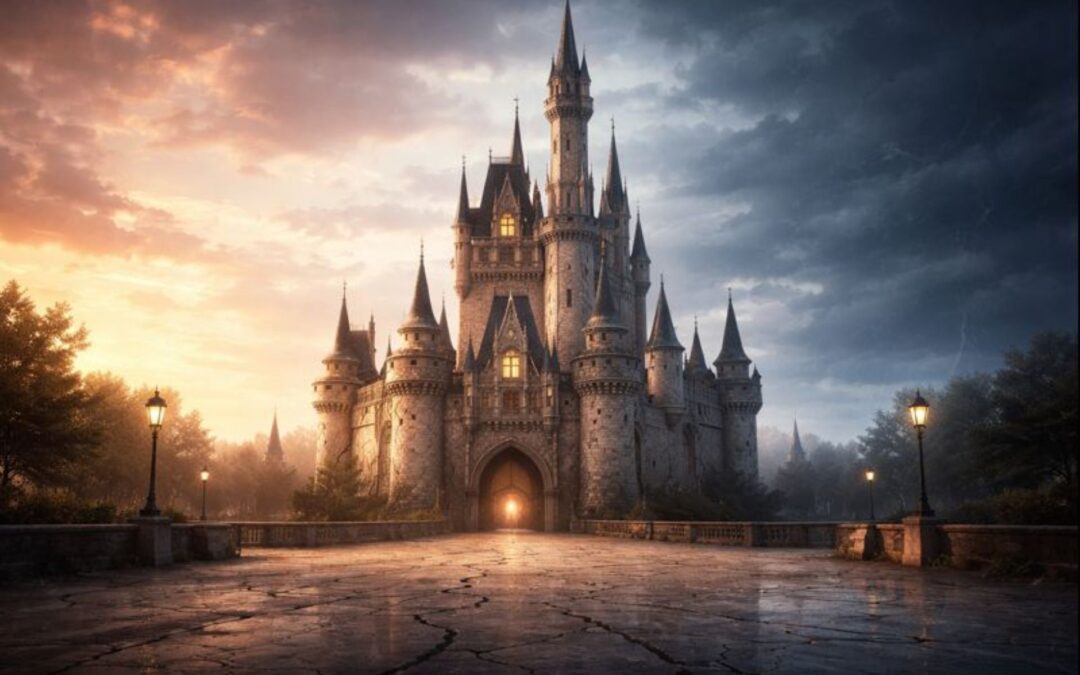
There was a time when Disney didn’t just dominate entertainment—it defined it. From the first shimmer of Snow White’s magic to the cinematic thunder of The Lion King and Avengers: Endgame, Disney wasn’t merely a studio; it was an experience. It held the power to make adults cry, children dream, and generations connect through stories that transcended language and time. But somewhere along the way, that spell broke.
The box office is shrinking. The streaming platform is bleeding. The audiences—the very soul of Disney’s empire—are quietly slipping away. It’s not just about bad movies or corporate missteps; it’s about something deeper: a loss of identity. The kingdom built on imagination now feels mechanical, its magic replaced by marketing. What happened to the studio that once taught the world to believe in “happily ever after”?
But this identity loss is not accidental. It is being engineered by the company’s economics. Disney’s films now cost so much to produce and market that they require extraordinary box-office returns just to break even, forcing the studio toward safe IP recycling instead of creative risk. When storytelling becomes a financial liability rather than an artistic asset, creativity inevitably gives way to corporate process.
To understand how Disney lost its magic, we need to look at the forces pulling it apart—uninspired content, the brutal streaming wars, and the slow death of traditional media. Together, they reveal a company struggling not just for profit, but for purpose.
The Decline of the Dream Factory
For nearly a century, Disney wasn’t just a company—it was a cultural compass. It defined imagination, dictated family entertainment, and transformed childhood into a brand. When you heard the castle theme and the soft chime of “When You Wish Upon a Star,” you knew you were in for something special. That melody meant innocence, creativity, hope. It meant escape.
But somewhere between billion-dollar acquisitions and the streaming arms race, that tune went off-key. The studio that once introduced the world to wonder now churns out mediocrity wrapped in marketing. In 2019, Disney’s box office performance was nothing short of imperial—$3.7 billion in global receipts. Avengers: Endgame became the highest-grossing film of all time, Frozen II captured hearts, and The Lion King remake—though divisive—brought in staggering profits. The company looked unstoppable.
Then came the freefall. By 2024, Disney’s box office revenue had collapsed to $1.5 billion. This wasn’t just a dip—it was an existential warning. Their once-unshakable grip on audience loyalty had eroded. Even with heavyweights like Indiana Jones and the Dial of Destiny, The Little Mermaid, Elemental, and Wish, Disney couldn’t pull crowds into theatres. These weren’t just financial underperformers—they were emotional flops. Audiences didn’t hate them; they simply didn’t care.
That’s far worse.
This collapse is not simply about changing tastes—it is mathematical. Modern Disney tentpoles often require $700–900 million in global box office just to become profitable once production, marketing, and theater splits are accounted for. As theatrical attendance structurally declines, fewer films can ever reach those thresholds. What once funded creative risk now punishes it. The business model itself filters out originality.
The magic faded quietly, not with outrage but with indifference. People no longer saw Disney films as events—they saw them as content. Something to scroll past, not line up for. In the digital era, attention is the new currency, and Disney has lost both wealth and value. While the S&P 500 soared 70% in five years, Disney’s stock dropped 17%. Investors are no longer buying the fairytale; they’re reading the fine print.
And beneath the surface, the cause is painfully human. Disney’s creative soul has been replaced by corporate machinery. The studio that once bet everything on a hand-drawn princess now bets on quarterly forecasts. Decisions aren’t made in storyboards—they’re made in spreadsheets. Executives speak more about “synergy” than storytelling. The company that once took wild creative risks now lives in fear of offending, failing, or—worse—falling behind.
Walt Disney himself once said, “I would rather entertain and hope that people learned something, than educate people and hope they were entertained.” Today, the company seems to have inverted that philosophy. The result? A brand that still wears its crown but has forgotten its kingdom.
Audiences feel the dissonance. The characters no longer speak to timeless truths but to temporary trends. The moral lessons that once felt universal now feel focus-grouped. The enchantment that once transcended culture now feels confined by it.
In trying to be everything for everyone, Disney became nothing in particular.
Poor Content and the Death of Event Cinema
To understand Disney’s decline, you have to go back to its origin story—a time when the company’s survival hinged on a single gamble. In the mid-1930s, Walt Disney staked everything on an idea no one believed in: Snow White and the Seven Dwarfs. Hollywood mocked it as “Disney’s Folly,” predicting bankruptcy. But when it premiered in 1937, the film shattered records, earning the title of the highest-grossing movie ever made at the time. More importantly, it earned something money couldn’t buy—trust.
Walt had done what no one thought possible: he turned animation into cinema, fantasy into faith.
That was the magic formula—vision, risk, and soul. And for decades, it worked. Each new release—Cinderella, The Lion King, Beauty and the Beast, Toy Story—wasn’t just a film; it was a cultural milestone. Disney movies weren’t released; they arrived. They became shorthand for childhood, love, courage, and redemption.
But that formula has been lost in translation.
The upcoming Snow White remake is a symbol of this creative erosion. In trying to “modernize” the story, Disney stripped it of its essence. No dwarfs. No prince. No romance. Even the lead actress, Rachel Zegler, seemed dismissive of the original, calling it “not 1937 anymore” and promising a heroine who isn’t “saved by true love.” That line might score applause in a press room, but it misses what made the story eternal. Snow White wasn’t just about romance—it was about innocence, kindness, and the triumph of light over envy.
In rewriting the fairy tale, Disney isn’t reimagining it—they’re dismantling it.
This isn’t an isolated issue. The studio’s biggest flops in recent years—Lightyear, Mulan, The Little Mermaid, and even the later Star Wars and Marvel instalments—all share a common thread: they’re disconnected from the emotional DNA that made Disney great. They’re technically polished, visually stunning, narratively hollow.
Instead of creating new myths, Disney keeps resuscitating old ones, each time with less life than before. There’s a fatigue that has set in—not just among audiences, but within the brand itself. When every story becomes a sequel, a remake, or a reboot, creativity dies a quiet death.
The numbers reflect this burnout. Since 2021, Marvel has released eleven films and several streaming series. What was once a tightly woven narrative universe has become an overextended sprawl. Viewers no longer anticipate new releases; they endure them. The magic of scarcity—once Disney’s greatest weapon—has been replaced by the monotony of abundance.
This oversupply is not a creative accident—it is a revenue strategy that backfires. Streaming demands constant output to retain subscribers, while theatrical films require event-level anticipation to justify their costs. Disney now operates two incompatible systems at once: one that needs volume and one that depends on rarity. The result is a brand that is everywhere—and meaningful nowhere.
This oversaturation isn’t just an artistic issue—it’s economic suicide. These massive productions cost hundreds of millions to make and market. The financial logic behind them depends on astronomical box office returns. But those returns are vanishing. In the past three years alone, Disney has lost roughly $1 billion at the box office. For a studio built on spectacle, that’s a staggering fall from grace.
And yet, perhaps the saddest part of all is the silence. There’s no outrage, no rebellion—just apathy. The same audiences that once gasped at Circle of Life or cried at Toy Story 3 now scroll past Elemental trailers without a second glance.
Disney’s problem isn’t that it stopped making movies—it’s that it stopped making moments.
The sense of anticipation, the communal joy, the shared awe—all gone. The once-luminous studio has traded craftsmanship for content volume, vision for virtue signaling, and myth-making for market-testing.
In doing so, it has violated its own unwritten law: that magic can’t be mass-produced.
The Streaming Wars and the Vanishing Subscribers
When Disney+ launched in November 2019, it was hailed as a revolutionary moment. The entertainment titan that had dominated theaters for nearly a century was finally stepping into the digital ring. And for a while, it looked unstoppable. In its first year, the platform signed up more than 70 million subscribers — a meteoric rise that left even Netflix glancing nervously over its shoulder. Families around the world were enchanted by the promise: every Disney classic, every Marvel epic, every Star Wars saga, all in one place.
But streaming, as Disney soon learned, is a game of endurance, not entrance.
The pandemic temporarily masked the problem. Locked at home, audiences devoured content at unprecedented rates, and subscriptions soared. By early 2022, Disney+ peaked at 164 million subscribers — a number that seemed to vindicate every executive decision. But by the following year, the illusion shattered. From Q2 to Q3 of 2023, Disney+ hemorrhaged more than 12 million subscribers, marking the steepest decline in the company’s streaming history.
The reasons were multifaceted — but painfully predictable.
First, the economics of streaming had shifted. When Disney+ entered the market, the “streaming wars” were in full swing. Netflix had scale, Amazon Prime had reach, and Apple TV+ had elegance. But Disney priced itself aggressively high, assuming the power of its intellectual properties would justify the premium. It miscalculated. Families who once subscribed for the nostalgia found themselves paying more for less — fewer new releases, repetitive spin-offs, and an algorithm that served them recycled content.
Then came the content drought. In a rush to control costs and achieve profitability, Disney began cutting corners. Entire projects were shelved, animation teams were downsized, and creative departments were folded into corporate structures. What remained was quantity without quality. For a company once defined by artistry, this was sacrilege.
Even worse, Disney’s identity — once its greatest strength — became a liability. The company’s “family-friendly” positioning boxed it into a corner in a marketplace dominated by adult-oriented storytelling. While Netflix thrived with dark dramas, true-crime hits, and global franchises like Stranger Things and Squid Game, Disney+ couldn’t compete for the same demographic. The result? A narrow audience base and limited engagement.
And then there’s the competition — not just fierce, but monstrous. Netflix, with its global data-driven ecosystem, had fine-tuned the art of retention. Amazon and Apple, meanwhile, play an entirely different game. Streaming isn’t their core business — it’s a tool. For Amazon, Prime Video keeps users inside the retail ecosystem. For Apple, TV+ is a subtle enhancement to the brand experience — an elegant accessory, not a profit engine. Both companies can afford to lose billions on streaming because they make it back elsewhere.
Disney cannot.
Streaming now makes up over 20% of Disney’s revenue — a dependency that’s both unsustainable and dangerous. Unlike Netflix, which is built entirely around subscription economics, or Amazon and Apple, which subsidise streaming through retail and hardware ecosystems, Disney has no external profit engine to absorb losses. Every dollar Disney+ loses must be recovered from its film, television, or parks businesses. Streaming is existential for Disney in a way it is not for its largest competitors—making every creative decision financially constrained.
To make matters worse, Apple and Amazon each sit on war chests six times the size of Disney’s. They can buy audiences with convenience; Disney has to earn them with content. But the content isn’t connecting.
The economics are merciless. Since its launch, Disney+ has posted operating losses of more than $11 billion. In that same period, Netflix — once criticised for its debt — turned a $25 billion profit. The gap between these two companies is no longer just financial; it’s philosophical. Netflix understands that storytelling drives subscriptions. Disney, paradoxically, seems to have forgotten that.
The company’s response has been predictable: cost-cutting. Marketing budgets slashed, creative teams reduced, production delayed. But this approach is a trap. Great content doesn’t come from saving money — it comes from investing in imagination. Every dollar Disney withholds from storytelling is a dollar Netflix spends to buy another loyal viewer.
And the most tragic irony? Disney, the architect of childhood wonder, is now chasing metrics like a desperate startup. It built the very foundation of modern entertainment — and now finds itself playing catch-up in an industry it should have defined.
The Slow Death of Traditional Media
For decades, Disney’s media empire rested on a pillar of gold: its television networks. ABC, ESPN, and the Disney Channel weren’t just profitable — they were cultural institutions. ESPN, in particular, was the crown jewel. Live sports made it immune to the digital onslaught that devoured newspapers, radio, and prime-time television. When advertisers fled other mediums, ESPN still commanded premium rates.
But even titans can bleed.
As streaming became the dominant mode of consumption, traditional TV began to unravel. Cable subscriptions declined year after year, and the cord-cutting revolution that started as a fringe movement became a mainstream migration. The audience that once tuned in religiously to SportsCenter now gets instant highlights on YouTube, Twitter, and TikTok — for free. The very platforms Disney once dismissed as distractions have become its fiercest competitors.
The numbers are brutal. ESPN’s pay-TV network lost nearly one million customers in the first quarter of 2023 alone. Profits from ESPN-branded programming and its streaming counterpart, ESPN+, dropped by nearly 8% over a nine-month period. What was once Disney’s most reliable cash cow is now a rapidly shrinking asset.
And the crisis isn’t confined to ESPN. ABC’s traditional television audience has aged out. Advertisers, once desperate to reach families during The Wonderful World of Disney, now pour their budgets into digital platforms where engagement can be tracked, segmented, and sold by the second. The once-predictable advertising revenue stream has evaporated into a sea of clicks, impressions, and algorithms.
To stay afloat, Disney has tried to reimagine its traditional assets. ESPN+ was an attempt to digitize sports broadcasting. Yet even here, Disney faces impossible odds. The cost of securing live sports rights — from the NFL to the NBA — has skyrocketed, while viewership has fragmented across hundreds of streaming platforms. Paying billions for exclusive rights no longer guarantees profitability; it guarantees pressure.
Talent, too, has suffered. In July 2023, ESPN laid off over 20 high-profile personalities — voices that once defined the network. Max Kellerman, Jeff Van Gundy, Suzy Kolber — household names sacrificed in the name of “efficiency.” The message was clear: Disney’s traditional media arm is no longer about excellence. It’s about survival.
And survival is not a strategy.
Disney has even explored the unthinkable: selling partial ownership of ESPN. Talks with the NFL and NBA have been floated, offering the leagues small equity stakes in exchange for long-term programming commitments. It’s a desperate attempt to offload risk — and a silent admission that the old model is collapsing.
The problem is structural. Consumers no longer want to be passive viewers; they want control. They want content that fits their schedule, their mood, their device. They no longer consume; they curate. Traditional media, built on linear scheduling and rigid programming, was never designed for such autonomy.
For Disney, this poses a philosophical dilemma. Its empire was built on control — of content, of brand, of message. But the digital age thrives on chaos — a decentralized ecosystem where anyone can be a creator and every viewer is a critic.
The fall of linear television isn’t just the end of a business model — it’s the end of an era. The glowing family living room, the Saturday morning cartoons, the prime-time premieres — they’re relics now. In their place stands an on-demand culture where nostalgia no longer sells, attention no longer lasts, and loyalty no longer exists.
Disney’s old fortress of stability — its broadcast empire — has become a sandcastle in a rising tide. And as the waves of streaming and short-form content continue to crash, even the mighty ESPN may not have the strength to swim.
A Kingdom in Crisis
There’s a tragic irony in watching Disney — a company built on dreams — stumble through its own nightmare. The studio that once taught the world to believe in magic now finds itself trapped in a story of disillusionment, one written not by artists but by accountants. The empire that once set the emotional standard for storytelling has become a case study in corporate misdirection.
Disney’s decline isn’t a single problem; it’s a convergence of many. Its cinematic division, once the heartbeat of the brand, now suffers from creative anemia. Its streaming venture bleeds cash, unable to keep up with competitors who have turned digital distribution into science. Its traditional media networks are in structural decay, losing both viewers and relevance. And even its last remaining stronghold — the fabled theme parks — shows cracks beneath the surface.
Yet the parks also reveal the paradox of Disney’s survival. They remain one of the company’s most reliable profit engines, often compensating for losses in film and media. But parks scale slowly, require massive capital, and cannot replace a failing content ecosystem. They stabilize the empire—but they cannot regenerate it.
For decades, the parks were Disney’s proof of immortality. When films underperformed or cable ratings fell, the parks still printed money. They were more than destinations; they were temples of nostalgia. People didn’t just visit Disneyland or Walt Disney World — they made pilgrimages. Families saved for years to step inside the world of their childhood heroes. It was the physical manifestation of imagination.
But in recent years, that magic has dulled. Ticket prices have skyrocketed, often doubling in under a decade. The once-affordable “family dream trip” now feels like a luxury cruise — an experience reserved for the upper middle class. Guests complain of overcrowded lines, inflated food costs, and the disappearance of the effortless joy that once defined Disney’s parks. Even loyal visitors describe them as “corporate experiences” rather than whimsical escapes.
And beneath the surface of consumer dissatisfaction lies a more fundamental problem: cultural fatigue. The Disney brand, once synonymous with innovation and optimism, has become predictable. Every decision feels reactionary, every move carefully crafted to please investors rather than inspire audiences. The spontaneity — the daring — that characterized Walt Disney’s own leadership has been replaced by risk aversion.
In its prime, Disney was fearless. It bet everything on Snow White, challenged the animation status quo with Fantasia, and revolutionized storytelling with The Lion King and Toy Story. Each milestone was an act of defiance against convention. Today, that spirit is gone. Every remake, reboot, and sequel is an admission of fear — fear of failure, fear of experimentation, fear of alienating an audience that has already moved on.
Even the company’s storytelling — once its lifeblood — feels compromised. Where Walt Disney sought to evoke universal truths about courage, love, and redemption, modern Disney too often chases validation. Films are shaped not by narrative integrity but by ideological positioning, algorithmic data, and the endless pursuit of “representation metrics.” The result isn’t inclusion — it’s confusion. The stories feel less like mirrors to the human spirit and more like press releases dressed in CGI.
But perhaps the most telling indicator of Disney’s decline is emotional, not financial. The company’s content no longer connects. It doesn’t move people in the same way it once did. Kids watch out of habit, not wonder. Adults tune in for nostalgia, not novelty. The cultural conversation — once dominated by Disney characters and soundtracks — now belongs to others: Netflix originals, independent storytellers, viral creators on YouTube and TikTok.
The erosion of trust has been quiet but relentless. When a company that once symbolized joy becomes synonymous with fatigue, the damage is far deeper than quarterly losses. It’s an identity crisis.
And make no mistake — Disney’s identity is its product. The company’s true asset was never its films, parks, or characters. It was belief — the belief that there existed a place, real or imagined, where decency triumphed, dreams mattered, and stories healed the soul. That belief has been monetized, stretched, and sterilized until it’s almost unrecognizable.
Even internally, the company seems aware of the unraveling. Leadership shake-ups, content overhauls, and strategic pivots have become routine. CEOs come and go with promises to “restore the magic,” yet the outcome remains the same — more cautious decisions, more brand dilution, more confusion. It’s a kingdom where no one remembers who the ruler is supposed to be.
The final irony is brutal: Disney’s collapse isn’t being caused by external enemies, but by its own shadow. The company is being crushed under the weight of its history — the expectation that every generation will feel the same way their parents once did. But culture evolves, and Disney hasn’t evolved with it.
Audiences today crave authenticity, vulnerability, and creative audacity — the very qualities that once made Disney untouchable. They no longer want corporate fairy tales; they want human truth. Meanwhile, the studio that once defined the word “timeless” has become trapped in time, oscillating between nostalgia and novelty, never finding balance.
The kingdom is still vast — its characters, parks, and stories woven into the global imagination. But its throne sits empty. The company that once ruled with imagination now governs by inertia. And unless Disney rediscovers the courage to tell stories for the heart rather than the algorithm, it risks becoming what every great empire eventually becomes when it forgets its soul: a monument to what once was.
The mouse built an empire. Now it must remember how to dream.
Conclusion
Disney’s downfall isn’t a single misstep—it’s a slow erosion of what once made it extraordinary. The world didn’t change overnight; Disney did. The studio that once stood for timeless imagination has become trapped in the very systems it created—chasing trends instead of setting them, milking nostalgia instead of crafting new myths, and managing algorithms instead of nurturing artistry.
The tragedy isn’t that Disney is failing financially—it’s that it’s failing emotionally. The deeper tragedy is that Disney’s financial structure now produces emotional emptiness by design. A system built on rising budgets, perpetual IP extraction, and streaming dependency cannot sustain the kind of creative risk that once defined the brand. The loss of magic is not merely cultural—it is structural.
But magic, by its nature, can be rediscovered. If Disney can remember what Walt knew—that great stories outlive profits, that risk fuels creativity, and that imagination must lead commerce—it might find its way back. Because the world doesn’t need another streaming service or cinematic universe. It needs something far rarer: a reason to believe again.