
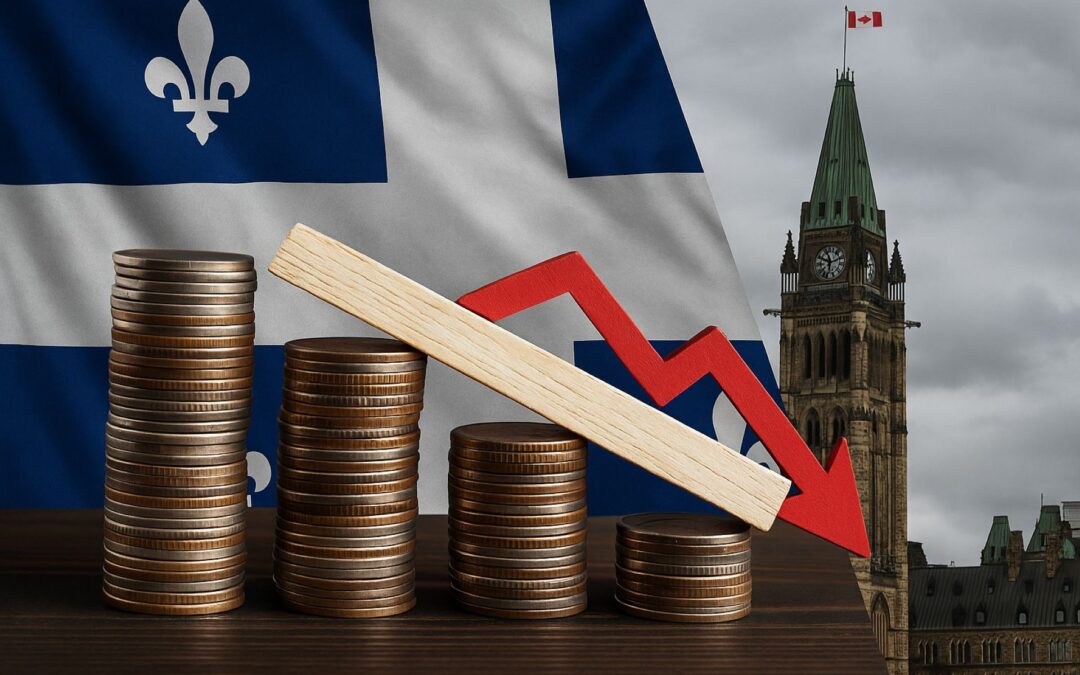
October 1995. Quebec stands at the precipice of separation, fueled by the aftershocks of the Meech Lake and Charlottetown Accords. The sovereignty referendum rocks the nation. A staggering 94% of Quebecers cast their vote. The margin? A razor-thin 50.6% to stay versus 49.4% to leave. Thirty years later, the Sovereignist Parti Québécois surges again, eyeing a third referendum in 2030. This begs the question: would Canada be better off without Quebec? The economics behind Quebec’s independence tell a revealing story.
Quebec’s Economic Reality: Powerhouse or Dependent?
Quebec’s economy often dazzles in aggregate figures, boasting the title of Canada’s second-largest provincial economy with a gross domestic product (GDP) nearing $450 billion. This headline number paints Quebec as an economic heavyweight, a vital engine driving the nation’s prosperity. Yet, when the lens zooms in to the more revealing metric of GDP per capita, the narrative shifts dramatically. Quebec’s per capita output lags behind the Canadian average, indicating that on an individual basis, Quebecers produce less wealth than residents of many other provinces.
This disparity reflects structural economic realities. Quebec’s industrial base leans heavily on traditional sectors such as manufacturing, forestry, and hydroelectric power generation—industries that tend to have lower productivity growth and slimmer profit margins compared to knowledge-intensive or resource-rich economies. For instance, provinces like Alberta, fueled by oil and gas extraction, or Ontario, with its diversified technology and financial sectors, generate significantly higher per capita economic value.
Lower labor productivity, coupled with demographic challenges such as an aging population and slower workforce growth, compounds Quebec’s economic underperformance on a per-person basis. Additionally, factors like language policies and regulatory frameworks can deter foreign investment and reduce entrepreneurial dynamism.
Despite these economic limitations, Quebecers enjoy a relatively high standard of living. Social indicators such as access to healthcare, education, and social services often rank favorably. This paradox arises largely because Quebec’s socio-economic environment benefits substantially from federal fiscal transfers and subsidies that mask the province’s underlying economic weaknesses. In other words, Quebec’s higher quality of life owes as much to financial support from other parts of Canada as to its own economic production.
The Equalization Program: A Double-Edged Sword
Conceived in 1957, Canada’s equalization program was intended as a bold social contract: to foster fiscal equity among provinces by redistributing wealth from economically advantaged “have” provinces to “have-not” provinces struggling to provide comparable public services. The goal was to level the playing field, ensuring that all Canadians, regardless of province, could access similar standards of healthcare, education, and infrastructure.
Quebec has been the program’s most consistent beneficiary, receiving equalization payments every year since the program’s inception—an unbroken 68-year streak. Adjusted for inflation, Quebec has been granted roughly $490 billion in federal transfers through equalization, amounting to more than half (52%) of all equalization funds distributed across the country since 1957.
This immense fiscal inflow has provided Quebec with a financial cushion that softens economic challenges but also risks creating dependency. Rather than incentivizing the province to accelerate economic reforms or diversify its economy aggressively, this steady stream of funds may dampen urgency. In some respects, Quebec’s economic status has been sustained by federal support rather than self-generated growth.
The unequal burden placed on other provinces is stark. Ontario, Alberta, and British Columbia—Canada’s economic powerhouses—receive a minuscule share of equalization payments, roughly 3% combined over the last decade. Provinces like Alberta, flush with oil wealth, end up subsidizing Quebec through federal transfers, fueling regional tensions and fostering a narrative of unfairness.
This system breeds a paradoxical dynamic: Quebec’s prosperity is indirectly funded by the success of other provinces, yet it can resist economic reforms or projects that might jeopardize its transfer payments. For the rest of Canada, this arrangement is a source of growing frustration, challenging notions of fairness, federal unity, and shared responsibility.
The Hidden Subsidy of Hydro-Québec
Natural resource revenues usually fluctuate with global commodity markets, and provincial governments often have little control over prices for oil, gas, or minerals. Quebec’s hydroelectric sector, however, stands apart. Hydro-Québec, a crown corporation wholly owned by the provincial government, exercises monopoly control over electricity generation and distribution within Quebec.
Quebec residents pay approximately 8 cents per kilowatt-hour for electricity—a rate significantly lower than those charged in many American states and Canadian provinces. This below-market pricing is a deliberate strategy to make power affordable for consumers and to attract energy-intensive industries such as aluminum smelting and manufacturing.
While beneficial for local consumers and businesses, this policy suppresses Quebec’s provincial revenues as calculated under the equalization program. Since equalization formulas take natural resource revenues into account, Quebec’s artificially low electricity rates effectively reduce its measured fiscal capacity, leading to higher equalization payments.
Had Hydro-Québec charged market rates internally, Quebec’s equalization payments could shrink by nearly 50%. This means the rest of Canada, particularly resource-rich provinces like Alberta, are indirectly subsidizing Quebec’s cheap power through the equalization framework.
This hidden subsidy distorts market signals and creates perverse incentives. Quebec faces little pressure to raise electricity prices or diversify its economy away from subsidized energy consumption, while other provinces bear the financial cost of supporting these policies through federal transfers.
Moreover, this arrangement complicates interprovincial relations, as Alberta and others perceive themselves as unfairly funding Quebec’s energy subsidies, further exacerbating regional grievances and contributing to calls for reform or reconsideration of the equalization program.
Quebec’s Opposition to Economic Growth Projects
Quebec’s stance on major national economic initiatives often appears contradictory when examined through the lens of fiscal self-interest and broader Canadian prosperity. A striking example is Quebec’s opposition to the Energy East pipeline, a proposed project that promised substantial economic benefits on a national scale. The pipeline was projected to generate around $10 billion in tax revenue and contribute approximately $25 billion to Canada’s GDP, creating thousands of jobs and bolstering energy exports.
Despite these promising prospects, Quebec opposed the pipeline vehemently. To the casual observer, this resistance might seem counterintuitive, especially for a province reliant on federal transfers designed to promote economic equity. However, Quebec’s economic calculus is informed by the equalization program’s structure, which reduces financial incentives to support projects that could diminish its eligibility for transfers.
Since Quebec receives substantial equalization payments regardless of its economic contributions or support for national projects, it faces little financial pressure to endorse initiatives that might reduce these payments. The province benefits from maintaining the status quo, where its fiscal dependency on federal transfers remains intact. Supporting large infrastructure projects that increase provincial revenues could shrink equalization funds, effectively making Quebec financially worse off despite overall economic growth.
This dynamic has profound implications. It enables Quebec to wield veto power over projects that could stimulate Canadian economic development while protecting its own fiscal interests. The province’s ability to oppose initiatives without facing significant economic repercussions creates tension within the federation and hampers efforts to pursue cohesive national strategies for growth and energy security.
Official Bilingualism: An Expensive and Controversial Concession
The 1969 Official Languages Act was a landmark political move aimed at recognizing French alongside English as an official language of Canada’s federal government. Spearheaded by then-Prime Minister Pierre Trudeau, a Quebecer himself, the legislation sought to affirm Quebec’s cultural and linguistic identity and alleviate separatist pressures by embedding French language rights into federal policy.
While the symbolic importance of official bilingualism cannot be understated, the practical realities present a complex and costly challenge. Maintaining bilingual services across all federal departments, agencies, and communications imposes a significant financial burden. Every official document, form, public sign, and government interaction must be available in both French and English, requiring extensive translation and interpretation services.
Despite decades of investment in bilingual education and promotion, the prevalence of French outside Quebec remains limited. Only about 7.4% of English-speaking Canadians have some level of French proficiency, and the number of first-generation French speakers has declined sharply, dropping from 6.1% in 1979 to just 3.5% today. In many parts of Canada, languages like Chinese, Punjabi, and Spanish have overtaken French as the most commonly spoken non-English tongues.
The federal government spends an estimated $2.5 billion annually on bilingualism initiatives, including French immersion programs, language training for civil servants, French media funding, and translation services in the justice system. These costs disproportionately affect provinces where French is rarely spoken, breeding resentment among Anglophone Canadians who view these expenditures as an imposition rather than a benefit.
This linguistic policy, while politically necessary to maintain national unity and recognize Quebec’s distinct identity, continues to generate debate about its practicality, fairness, and relevance in a multicultural and multilingual Canada.
The Cultural and Political Distortion of Quebec Favoritism
Official bilingualism extends beyond language policy; it shapes the very fabric of Canadian politics and governance. Fluency in French is often a prerequisite for federal leadership roles, effectively narrowing the pool of viable candidates and skewing political power toward Quebec or bilingual individuals. This linguistic gatekeeping has a profound impact on the composition and orientation of Canada’s federal leadership.
Since the advent of official bilingualism, Quebecers have dominated the office of the Prime Minister disproportionately. Five out of eight Canadian prime ministers since the late 1960s have hailed from Quebec. When considering only those who served substantive terms, five of the last six prime ministers were Quebec-born. This concentration means Quebec has effectively shaped national policy for nearly half a century.
This dominance is less a reflection of inherent leadership superiority and more a product of Quebec’s cohesive voting patterns and political influence. Quebec consistently supports parties like the Bloc Québécois, which champion Quebec’s interests, often at odds with pan-Canadian priorities. This bloc voting amplifies Quebec’s leverage within federal institutions.
The result is a political system where Quebec’s minority interests wield disproportionate power, compelling national governments to make significant concessions to retain electoral viability and parliamentary stability. Policies, funding allocations, and legislative priorities frequently reflect Quebec’s demands, sometimes at the expense of broader Canadian consensus.
This distortion breeds frustration in other provinces, where citizens feel marginalized and underrepresented. The political equilibrium in Canada thus hinges precariously on Quebec’s ability to extract concessions, challenging the principles of equal representation and federal fairness.
Quebec’s Disproportionate Federal Favoritism
Quebec’s preferential treatment extends well beyond politics and language policies into tangible economic advantages, where federal funds and institutions are disproportionately concentrated. The province benefits from a steady stream of federal support targeted at Quebec-based businesses and public-sector entities, reinforcing its economic and political influence.
Bombardier, one of Canada’s most iconic aerospace and transportation companies headquartered in Quebec, exemplifies this favoritism. Since 1966, Bombardier has received approximately $4 billion in federal funding, with a significant portion allocated in the past decade alone. These subsidies have helped the company weather economic downturns and invest in research and development, solidifying its presence in global markets. While federal support to domestic champions is common, Bombardier’s scale and Quebec-centric focus highlight the province’s ability to attract substantial government backing.
Montreal, Quebec’s largest city, hosts several major federal institutions that command significant budgets and influence. The Public Sector Pension Investment Board, responsible for managing $243 billion in funds for the RCMP and Canadian Armed Forces, is headquartered in Montreal. Similarly, the Business Development Bank of Canada (BDC), which serves small and medium-sized enterprises across the country, is also based there. Even the Canadian Space Agency has a significant presence in the city.
In contrast, Toronto and Vancouver—Canada’s largest economic hubs—lack comparable federal institutional headquarters. These cities, despite their substantial contributions to the national economy, do not wield the same political clout to attract and retain such entities.
Quebec’s ability to secure these federal presences is rooted in its political leverage and strategic demands. This concentration funnels jobs, influence, and federal spending directly into the province, enhancing its economic footprint and further consolidating its role as a key player within Canada’s federation.
Quebec’s Legal and Social Exceptions
Quebec’s distinctiveness is enshrined not only culturally but legally and socially, setting it apart from the rest of Canada in ways that challenge the federation’s cohesion. The province operates under a civil law system derived from the French Napoleonic Code, unlike the common law tradition followed elsewhere in Canada. This legal divergence underscores Quebec’s separate identity and complicates the application of uniform federal standards.
Beyond legal tradition, Quebec has enacted policies that contravene broader Canadian values and constitutional norms. The province has repeatedly invoked the notwithstanding clause of the Canadian Charter of Rights and Freedoms to restrict language rights, particularly regarding English education. Unlike in other provinces where parents can freely choose English or French instruction, Quebec restricts access to English-language education, limiting it primarily to children with parents who were educated in English in Canada. This policy effectively curtails linguistic choice and reinforces French-language dominance within the province.
More controversially, Quebec’s Bill 21, enacted in 2019, bans certain public employees—including teachers, police officers, and judges—from wearing conspicuous religious symbols while on duty. This law specifically targets visible expressions of faith such as Sikh turbans, Muslim hijabs, and Christian crosses. The legislation has drawn widespread criticism for infringing on religious freedoms and discriminating against minority communities.
No other Canadian province enforces such restrictive religious policies, highlighting Quebec’s willingness to carve out social exceptions that diverge sharply from national standards. These legal and social deviations reinforce Quebec’s exceptional status but simultaneously strain the principles of inclusion, diversity, and rights that underpin the Canadian federation.
The Unequal Partnership: Spoiled Child and Reluctant Parent
The relationship between Quebec and the rest of Canada often resembles a classic dynamic of a dependent child and an indulgent, reluctant parent. Quebec, while drawing heavily on federal fiscal support through equalization payments and subsidies, resists policies and economic initiatives that could reduce its reliance. It asserts cultural and political exceptionalism, demanding concessions that underscore its distinct identity, all while benefiting from the broader federation’s resources.
This dynamic creates a persistent imbalance. Quebec enjoys the economic and political advantages afforded by federation membership without fully embracing the reciprocal responsibilities that such membership entails. The province’s opposition to projects like the Energy East pipeline and its insistence on restrictive language and social policies exemplify a reluctance to adapt or contribute equitably to the national project.
Meanwhile, provinces like Alberta, Ontario, and British Columbia shoulder a disproportionate share of the fiscal burden. They fund equalization payments and absorb political compromises aimed at placating Quebec, fostering regional resentment and perceptions of unfairness.
This uneasy arrangement taxes national unity, fueling debates about fairness, identity, and the future of Canada as a cohesive federation. Quebec’s pattern of leveraging its unique status to extract resources while resisting integration pressures tests the limits of Canada’s political patience and poses difficult questions about the sustainability of this unequal partnership.
Conclusion: The Economics of Quebec’s Place in Canada
Quebec’s economic reliance on the rest of Canada is undeniable. The equalization program, hydroelectric subsidies, and cultural concessions combine to create a financial ecosystem where Quebec thrives not on its own merit but on sustained federal support.
Politically, Quebec’s cohesive voting and influence over federal leadership skew Canadian governance. The province’s exceptional legal and social policies further complicate national cohesion.
Canada’s tolerance of Quebec’s burdensome demands, coupled with the province’s rejection of fundamental freedoms, challenges the notion of a fair partnership.
In this uneasy union, Quebec remains the reluctant sibling who leeches off family wealth while threatening to leave, leaving Canada to pick up the tab.