
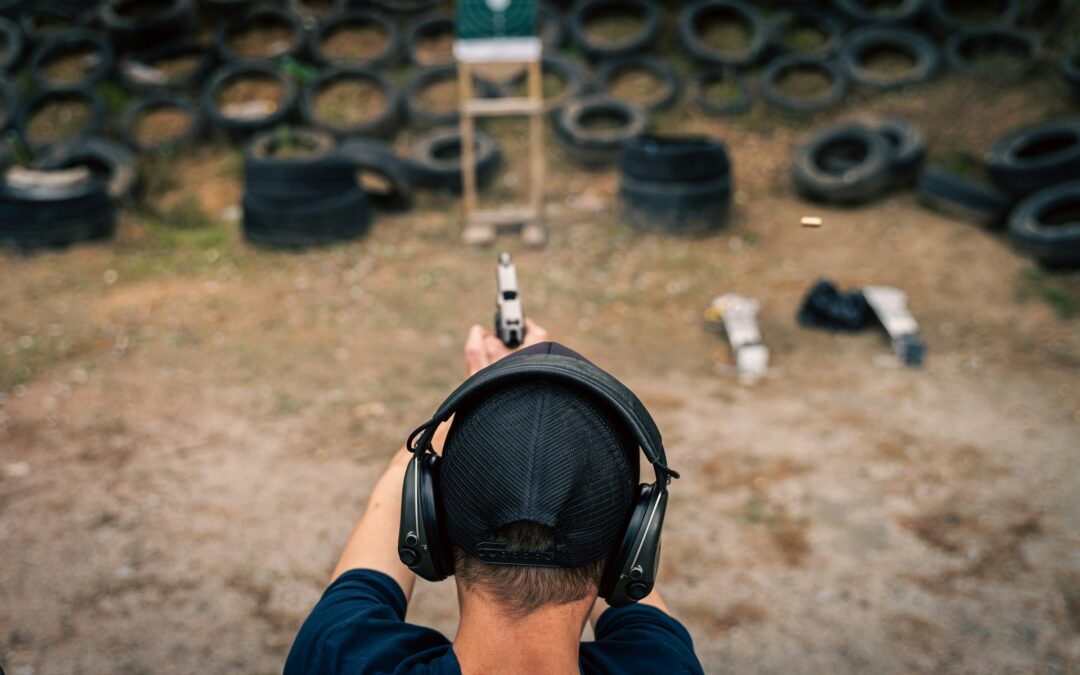
Behind the ordinary landscapes of Virginia lies a place few will ever see but whose influence stretches across the globe. It is here, at the CIA’s legendary training ground known as the Farm, that men and women surrender their past identities and step into a world of shadows. What happens within its gates is not simple instruction—it is metamorphosis. Recruits are dismantled, reshaped, and reforged until they can disappear into any crowd, master any cover story, and endure trials that would break the average person. To understand how the CIA builds its operatives is to glimpse the machinery of secrecy itself, where deception is an art, survival a science, and silence a way of life.
Camp Perry: The Farm of Shadows
In the gentle slopes of Williamsburg, Virginia, sits a place that exists both in reality and in rumor. Camp Perry, nicknamed the Farm, is less a location on a map and more a world apart. It is the CIA’s most secretive training ground, the cradle of America’s clandestine officers. To the outsider, it is a collection of inconspicuous buildings surrounded by thick forests and fenced-off perimeters. But beyond those barriers lies a hidden domain where the ordinary rules of civilian life no longer apply.
Unlike West Point or Quantico, where uniforms and ceremonies announce one’s belonging, the Farm thrives in silence. Recruits arrive under aliases, their very presence unknown to most of the world. Even their families are left in the dark about the specifics of their training. Instructors themselves often play roles—sometimes acting as allies, sometimes as adversaries—forcing recruits to accept that in espionage, trust is a currency in short supply.
The Farm is not about spectacle. There are no parades, no medals, no banners. Its curriculum is not designed to celebrate achievement but to dismantle comfort. Each drill, each simulation, and each sleepless night strips away the ordinary human instinct for ease and predictability. In its place grows adaptability, a sharpened sense of awareness, and a mind honed to live in constant uncertainty. Camp Perry is less a school and more a crucible, where shadows are forged from flesh and blood.
The Metamorphosis of a Recruit
Becoming a CIA officer is not a career shift—it is an identity death. When recruits step through the gates of the Farm, they are invited to abandon who they were. Their résumés, however impressive, are rendered meaningless. Whether a candidate once served in the military, conducted doctoral research, or led a corporate team, all of that is reduced to ash. What matters is how well they can be reshaped.
The transformation begins subtly. Daily routines are broken down: sleep cycles disrupted, meals rationed, personal time obliterated. The idea is not cruelty but conditioning. Operatives in the field cannot rely on routine; they must thrive in disarray. Slowly, ego is stripped away, revealing a raw core that can be reprogrammed. Some resist, clinging to fragments of who they were. Many fail. But those who surrender themselves to the process begin to emerge as something different—people capable of suppressing fear, disguising emotions, and operating with quiet ruthlessness.
This metamorphosis is as psychological as it is physical. Trainees are tested in ways designed to expose fractures in their character. Instructors provoke, deceive, and sometimes betray recruits to show them the reality of their future world: a life where deception is constant, and betrayal is always a possibility. Only those who can carry the weight of duplicity without breaking are allowed to continue. The person who walks into Camp Perry does not walk out again. What returns is a shadow—an operative forged for a life of secrecy.
Andrew Bustamante’s Glimpse Behind the Curtain
Andrew Bustamante’s career offers a rare window into the machinery of this transformation. A decorated Air Force combat veteran, he entered the CIA not as a blank slate but as someone hardened by war. Yet even his experience in Iraq and Afghanistan was merely a prelude. The Farm required more than bravery in battle—it required the ability to vanish, to manipulate, and to outthink rather than overpower.
Bustamante described the CIA’s structure as something akin to Russian nesting dolls. Each department is concealed within another, layers upon layers of compartments. Few ever see the whole picture. His entry point was not through a gun range or a surveillance lab but through the Office of Medical Services, where specialists dissected his body’s potential as though he were a high-performance machine. Every recruit is categorized, monitored, and calibrated—blood tests, stress tests, psychological evaluations—all meticulously recorded and updated.
But medical scrutiny was only the doorway. Bustamante soon encountered the Agency’s vast web of subdivisions: psychological services tasked with probing mental resilience, legislative councils ensuring operations remained in the gray zone of legality, cultural and linguistic experts shaping operatives into chameleons. Each layer reinforced the central truth of espionage—that nothing is left to chance. Even before a recruit touches a field assignment, the Agency has already mapped the contours of their endurance, the breaking points of their psyche, and the limits of their loyalty.
For Bustamante, the lesson was immediate: the CIA does not merely train individuals. It dismantles them, piece by piece, and then rebuilds them into assets engineered for shadows. What seems human becomes part of a system—an organism whose lifeblood is secrecy and whose heartbeat is silence.
Forging the Body and Mind
The CIA understands that a spy’s body and mind are their first weapons. Unlike soldiers, who can rely on unit strength, heavy firepower, or advanced machinery, an operative in the field often has nothing but themselves. That reality makes the Office of Medical Services (OMS) the Agency’s forge. Every recruit is assessed, monitored, and classified with an intensity closer to aerospace engineering than to personal fitness. Blood panels, cardiovascular endurance tests, psychological screenings—each result becomes part of a living dossier that follows them throughout their career.
The philosophy is simple: an agent must survive conditions where the average human collapses. They might be stranded in an Arctic outpost with only their wits and willpower. They might be chased through hostile territory, sleep-deprived and starved. Their body must keep functioning when their environment conspires against them. To prepare for this, recruits endure punishing regimens designed not only to increase strength but also to train resilience under exhaustion.
But the Agency knows that brute force alone is useless without command over the mind. Here is where meditation becomes as important as muscle. Trainees are taught to slip into silence, to slow the racing pulse that comes with fear. A spy must appear calm while being followed, must smile while being interrogated, must negotiate calmly when a weapon is pointed at them. The ability to hear one’s own breathing and control it, to quiet the mind when the body screams, becomes the difference between life and death.
Lessons of the Mind
If the body is engineered to endure, the mind is cultivated to outmaneuver. Inside the Farm’s classrooms, recruits are schooled in disciplines that resemble academia but with stakes infinitely higher. They study the psychology of decision-making, learning how individuals reveal themselves through tiny tells, contradictions, or emotional slips. They analyze scenarios like chess problems—what move will the adversary make if you act in this way, what countermove must you prepare?
One course focuses entirely on situational awareness: perceiving not just what is happening but what should be happening, and detecting the invisible difference between the two. Another tackles creative thinking—how to invent solutions under pressure when resources are nonexistent. A lesson may begin with a simple case study, but it often spirals into an exercise that requires inventing a new identity, blending into a simulated foreign environment, or devising a way to escape surveillance.
The unspoken message behind these lessons is clear: an operative’s true battlefield is the mind. Former officers often admit that the greatest challenge in espionage is not physical danger but the mental strain of concealment—living a lie day after day, year after year. Instructors drill this reality into recruits, reminding them that violence attracts attention while invisibility preserves life. The best spy is not the loudest player, but the ghost who is never noticed at all.
Tradecraft: The Art of Deception
Tradecraft is where the abstract becomes practical—the crucible where theory is tested against reality. It is the art and science of living in the shadows, and for many recruits, it is the most exhilarating and terrifying phase of training.
One of the first hurdles is the “bump.” On the surface, it seems harmless: approach a target in a public space, strike up a conversation, and create a believable pretext for further contact. But beneath the simplicity lies a maze of challenges. How do you appear casual when your heart is hammering? How do you project confidence without suspicion? And most importantly, how do you leave the interaction with an invitation to meet again? The bump is not about charm alone—it is about precision. A single slip can unravel the cover story and reveal the operative before their career even begins.
Amaryllis Fox recalled how she once sat in a Panera café for hours, waiting for her target to appear. Patience was as important as the words she chose. The exercise taught her that espionage rarely looks cinematic. It is not car chases and shootouts—it is the slow weaving of trust, one sentence, one smile at a time.
Beyond bumps, tradecraft training extends into the subtle mechanics of human interaction. Recruits learn elicitation—the ability to draw information without the target realizing they’ve given it away. They master surveillance, both conducting it and evading it. They practice counter-surveillance, building habits that let them detect if they are being followed. Tradecraft is less about playing James Bond and more about becoming a master of human nature, exploiting weaknesses without triggering alarms.
By the end of this stage, recruits understand the truth: espionage is performance. The spy is an actor whose stage is the world, whose script is improvisation, and whose applause is silence. The art of deception is not about telling lies—it is about living them so convincingly that even reality begins to bend.
Situational Awareness
If tradecraft is the art of deception, situational awareness is the science of survival. At the Farm, it is drilled into recruits with relentless precision, because without it, even the most talented operative becomes a liability. The concept goes far beyond merely “paying attention.” It is about cultivating an almost preternatural sensitivity to the environment, turning everyday spaces into living maps of behavior, rhythm, and anomaly.
The first step is establishing the baseline. Recruits are taught to walk into a café, a metro station, or a crowded market and catalog what normal looks like. Who comes and goes? Which doors are used frequently? How do people dress, move, interact? This baseline becomes the invisible grid against which threats are measured. Anything that deviates—an idling car, a man with a jacket too heavy for summer, a woman glancing over her shoulder too often—lights up as a potential danger.
The second step is perhaps harder: not becoming an anomaly themselves. A recruit in a foreign city cannot afford to draw stares. Their clothing, gestures, speech patterns, even how they order coffee must blend seamlessly into the cultural landscape. Standing out is death. The challenge is magnified by the constant state of tension an operative lives under—because nervousness itself can betray.
The final step is knowing how to respond when anomalies appear. This is not panic or overreaction, but calibrated response. If a shadow follows too long, is it coincidence or surveillance? If a conversation overheard hints at danger, is it actionable or noise? The operative must decide in seconds whether to alter their route, deploy counter-surveillance tactics, or abandon the mission. By graduation, situational awareness is no longer a conscious effort—it is instinct, a sixth sense sharpened to a razor’s edge.
Survival School: Breaking the Self
If situational awareness trains the eye, survival school hardens the soul. This is the stage where recruits are stripped of every comfort and plunged into environments engineered to break them. For six punishing months, they live in simulations that mimic capture, scarcity, and despair. It is not training for the sake of skill—it is training to unmake the self.
Food is scarce, water contaminated, supplies withheld. Some recruits are drugged with hallucinogens, their minds pushed into paranoia, forcing them to endure reality dissolving around them. Nights are warzones of the mind: flashing lights, deafening sirens, recorded screams tearing through the dark, all designed to rob them of sleep and sanity. Days are no kinder—stress positions that twist the body into agony, hours of silence under suffocating heat or freezing rain, sudden drills that force choices between instinct and training.
The goal is cruel but essential. In the field, an operative may be captured by hostile forces, interrogated, deprived, tortured. Survival school prepares them not just to resist, but to endure without breaking cover. Instructors push recruits to the point of collapse, then push harder, demanding that they hold to their false identities even in delirium.
For many, this stage is the breaking point. Strong bodies crumble under sleepless nights. Sharp minds falter under hallucination. Only those who learn to endure, to compartmentalize pain and cling to the mission above all else, survive the gauntlet. When they emerge, they are not the same. The old self has been destroyed. What remains is an individual whose very identity is malleable, capable of living lies without faltering, of carrying unbearable weight in silence. Survival school does not just create spies—it creates shadows that no hardship can erase.
Living the Lie
If survival school erases the self, this phase replaces it with a mask. Living the lie is perhaps the most dangerous—and most essential—skill in espionage. It is not about memorizing a cover story but embodying it so completely that it fuses with reality. Recruits are thrust into simulations where they must live as someone else for days, weeks, even months, maintaining falsehoods under relentless scrutiny.
These simulations are designed to blur the boundary between fact and fiction. An operative might be assigned the role of a foreign businessman, a journalist, or an aid worker, and then immersed in environments where every gesture and every word is tested. They must answer questions about their supposed background with conviction, navigate cultural details with fluency, and project authenticity at all times. The lie cannot just be told—it must be lived.
Failure in these exercises is not simply about being “caught.” It is about unraveling under the pressure of sustained deception. If a recruit slips, if their real identity leaks through in a moment of fatigue or carelessness, the exercise collapses. In the real world, that collapse could mean imprisonment, torture, or death.
Support systems exist in parallel—embassies and consulates ready to reinforce cover stories, to provide forged documents or corroborating details if needed. But even this safety net depends on the operative’s ability to maintain the illusion. The embassy can only confirm what the operative convincingly projects.
The lesson is sobering: espionage is not a series of missions but a continuous performance. The operative is both actor and audience, wearing a mask until it no longer feels like a mask at all. Living the lie means walking through the world as two people at once—one real, one fabricated—and never allowing the two to collide. It is a life where even truth becomes slippery, where the line between self and shadow fades until only the mission remains.
Languages and Cultures as Weapons
Language is not just communication—it is camouflage. At the Farm, recruits quickly discover that fluency in a foreign tongue is not optional but existential. A misplaced word, an accent too sharp, or an idiom used incorrectly can unravel months of cover. To counter this, trainees are immersed in rigorous programs that treat language like a weapon to be sharpened daily. Small classes of two to six students allow for relentless scrutiny, while instructors—often native speakers—correct the slightest inflection or cultural misstep.
But mastery goes beyond grammar. Operatives must sound like locals not only in speech but in thought. They learn regional slang, political idioms, and subtle cultural references that cement belonging. A recruit studying Arabic, for example, doesn’t just memorize vocabulary; they must learn how to navigate a tea house in Cairo, how to read the tone of a conversation in Amman, or how to switch between dialects depending on the region. These nuances can determine whether they are welcomed as insiders or exposed as impostors.
Some trainees are sent abroad into full immersion programs where every billboard, conversation, and television broadcast reinforces the target language. There, they live as locals—shopping in markets, conversing with neighbors, consuming local media. The result is not just fluency, but instinctive adaptability. Culture becomes a shield. When an operative can walk through a foreign city without drawing suspicion, they are effectively invisible. The CIA knows this truth well: words open doors, but cultural mastery keeps them from slamming shut.
The Chess Match of Interrogation
Of all the dangers a spy faces, interrogation is the most intimate and the most perilous. Unlike the chaos of survival school or the open-ended games of tradecraft, interrogation reduces the conflict to a single room, a single table, and the contest of two minds. At the Farm, recruits are taught to treat it as psychological chess. Every question posed by an interrogator is a move, and every answer an opportunity to gain ground—or lose it.
Force is rarely the answer. Instead, recruits are trained to recognize that the key to surviving interrogation is connection. They study the psychology of influence—how to build rapport even with adversaries, how to exploit common ground, how to subtly redirect suspicion. They learn to anticipate the interrogator’s strategy, identifying whether they are being approached through intimidation, manipulation, or empathy. For every tactic, they practice a counter.
Role-play sessions simulate hostile questioning. Trainees are pushed under bright lights, deprived of rest, and grilled by instructors who probe for inconsistencies in their cover stories. The smallest hesitation—a slip in tone, a pause too long—can be seized upon. Recruits must learn not only to maintain their lies but to believe them under duress. The act must be seamless, the fiction airtight.
But there is also a lifeline. CIA officers know that if detained abroad, the embassy or consulate can reinforce their cover. Diplomatic channels can provide forged documents, corroborate identities, and in some cases, intervene to secure release. Still, these measures are fragile. They only work if the operative never cracks first. The embassy cannot save a cover story that an operative has already betrayed. Ultimately, survival in interrogation rests not on muscle, but on mastery of self—keeping the mask intact when everything conspires to tear it away.
The Final Transformation
By the time recruits reach the end of their training, they have endured more than most people will in a lifetime. Their bodies have been stripped down and rebuilt for resilience. Their minds have been honed into instruments of patience, perception, and control. Their identities—once stable and ordinary—have been dissolved and recast into adaptable facades.
Graduation from the Farm is not marked by fanfare. There are no parades or celebratory ceremonies. Instead, there is a quiet recognition that the individual who entered months or years before no longer exists. In their place stands a construct—an operative who can disappear into a crowd, invent a life at will, and endure situations that would shatter the average person.
The CIA does not simply teach skills. It engineers metamorphosis. Recruits become shadows: fluent deceivers, survivalists, and strategists who can move through hostile environments unnoticed. They are equipped to handle both the mundane—ordering tea in a foreign café—and the extraordinary—gathering secrets that shift global balances of power.
This is the true secret of the Agency. It does not merely recruit spies. It creates them. Through calculated hardship, relentless testing, and the careful weaving of deception into identity, the Farm turns human beings into instruments of national strategy. The transformation is permanent. Once you leave the Farm, you do not return as yourself—you return as someone else entirely, someone who no longer lives in the light, but in the shadows where history is written in silence.
Conclusion
The journey through the Farm is not one of learning alone—it is one of transformation. From mastering languages to surviving deprivation, from living lies to navigating interrogation, every lesson is designed to strip away the ordinary and construct something extraordinary. By the time recruits emerge, they are no longer who they once were. They have become phantoms—agents of silence, deception, and endurance—engineered to serve in the most perilous corners of the world. The CIA’s secret is not simply that it trains spies; it creates them, molding ordinary individuals into shadows who walk among us, unseen but ever present in the quiet theater of global power.