
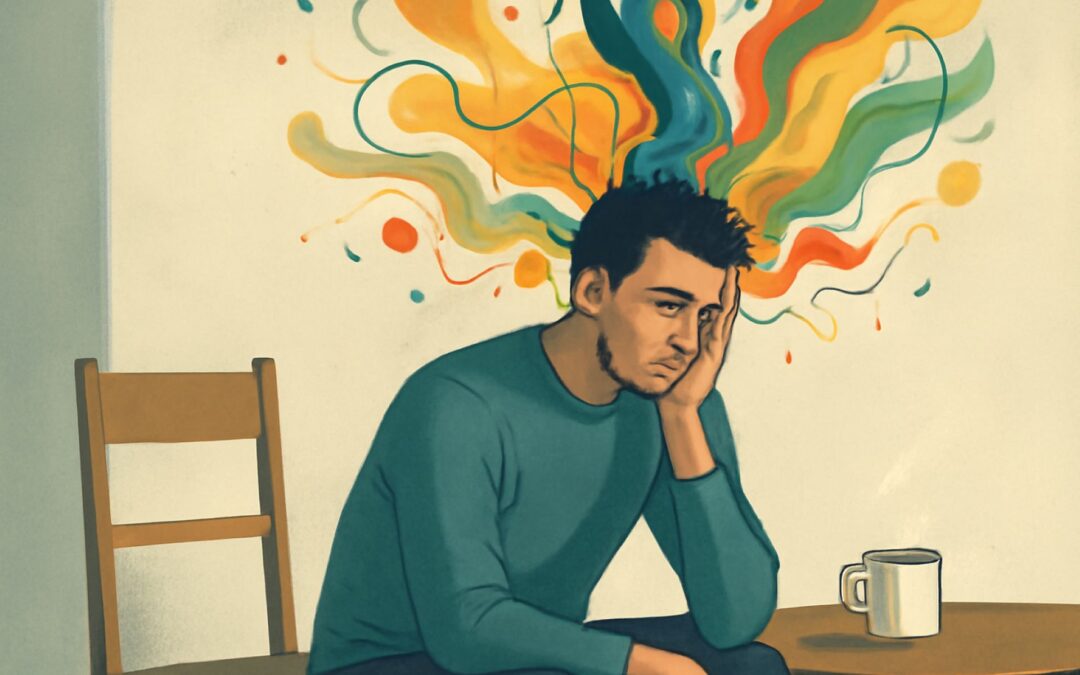
Life has a way of slipping into autopilot. We wake up, repeat the same motions, follow the same patterns, and before long the days blur into one another. For some, this feels like peace. For others, it feels like entrapment. The truth is more complicated: routines can liberate or suffocate, boredom can spark creativity or despair, and quitting can be either cowardice or wisdom. The challenge lies in knowing which is which.
To get out of a rut, you have to reframe the role of pain, embrace the strange power of boredom, invite novelty in measured doses, and master the art of flipping between grit and surrender. This isn’t about chasing constant excitement—it’s about learning when to hold steady, when to shake things up, and when to walk away.
When Routine Turns into a Rut
Routines are the scaffolding of daily life. They give rhythm to the hours, stability to the week, and predictability to the chaos. Wake up, brush your teeth, brew coffee, scroll emails, head into the grind. There is comfort in knowing what comes next. For many, these rituals are the very foundation of progress—showing up to the gym at the same time every day, eating a consistent diet, keeping regular sleep. Structure is how momentum is built.
Yet the very thing that gives structure can just as easily calcify into monotony. What once felt empowering begins to feel imprisoning. A routine that served as a vehicle toward your goals starts to resemble a hamster wheel. The critical shift is subtle—it isn’t about the routine itself but the reason behind it. A healthy routine stems from desire, from clarity, from the pursuit of something higher. A rut is the same set of behaviors born out of fear: fear of change, fear of failure, fear of stepping outside the known.
You know you’re in a rut when days blur together, when your habits stop producing vitality and instead drain it, when you cling to your patterns not because they add meaning but because they shield you from discomfort. This is why the difference is psychological, not practical. The same routine can be nourishing for one person and suffocating for another. The question becomes: am I repeating these motions because they sharpen me, or because they keep me numb? A routine that no longer carries intention becomes a cage disguised as comfort.
The Strange Value of Boredom
Boredom is usually treated as the enemy of modern existence. Entire industries—streaming platforms, social media apps, push notifications—have been built to annihilate even the faintest hint of it. Yet boredom is not the void we fear it to be; it is the seedbed of invention. When the mind is deprived of stimulation, it fidgets, wanders, and—crucially—creates. The restlessness of boredom pushes us inward, forcing the imagination to fill the silence.
But most people can’t bear it. One famous study revealed participants would rather administer mild electric shocks to themselves than sit quietly in a room for fifteen minutes. Think about that: the mind prefers pain over stillness. And yet, those moments of stillness—those stretches of time with nothing but thought—are where the unconscious begins to untangle problems, where half-formed ideas crystallize, where suppressed emotions rise to the surface.
Boredom is discomfort, yes, but not a useless one. It’s the body’s way of telling us: there is more to discover. A child complains of being bored, and soon invents a game. A writer stares at a blank page, restless, until words start to flow. An inventor daydreams, idle, and conjures solutions. Boredom acts like mental compost—what feels like dead weight eventually fertilizes creativity.
In a world drowning in stimulation, the ability to endure boredom has become a rare and powerful skill. Those who can sit with it gain clarity where others drown in noise. Boredom is not emptiness—it is space. And space, when embraced, transforms into possibility.
Pain as a Compass
Pain is one of life’s most misunderstood signals. We are conditioned to avoid it at all costs, to treat it as a defect in the system, an error to be fixed. But pain is not merely suffering—it is data. It tells you where the friction lies, where the growth edge begins, and where your boundaries are being crossed. Think of a strained muscle in the gym. The ache is uncomfortable, but it is also proof that fibers are being torn so they can rebuild stronger. Without that pain, there is no transformation.
The same applies outside the body. Emotional pain, whether from failure, heartbreak, or disappointment, is the psyche’s way of flashing a warning light. It tells you: “Something here matters.” A job that leaves you numb may not hurt, but it corrodes you quietly. A career that challenges you, frustrates you, and sometimes breaks you open—though painful—often holds more promise for fulfillment. Pain can be corrosive, yes, but it can also be catalytic.
The trick lies in discernment. Productive pain sharpens you. It’s the discomfort of stretching into new territory, of risking vulnerability, of wrestling with meaningful problems. Destructive pain, by contrast, is the slow grind of misalignment—the toxic relationship, the depleting job, the endless cycle of self-sabotage. One builds resilience, the other erodes it.
To treat pain as a compass is to listen carefully before reacting. Instead of asking, “How do I make this stop?” you ask, “What is this trying to tell me?” Often, the very places we feel resistance are the places demanding growth. Pain is not an enemy; it’s a guide pointing toward what is essential, even if the path there stings.
Novelty, Age, and the Curve of Diminishing Returns
Novelty is intoxicating. In youth, everything is drenched in it—first kisses, first heartbreaks, first risks. Each encounter shapes identity, each new experience rewires the brain. The rush is vivid because the canvas is blank. A teenager’s first trip abroad is overwhelming; every street corner feels like revelation. But repeat the journey decades later, and the thrill is softer. The once-exotic becomes familiar. This is the curve of diminishing returns: the more experiences you accumulate, the less impact each additional one has.
By the time adulthood settles in, novelty competes with the desire for stability. Spontaneity, once exhilarating, begins to feel exhausting. The joy of staying in, of repeating familiar rituals, grows stronger. Yet there is a trade-off—time itself begins to blur. When every day looks like the last, memory has no anchor. That is why people report that time seems to accelerate as they age. Novelty acts as a marker in memory; without it, weeks and years collapse into a haze.
The solution isn’t to chase chaos endlessly. It’s to inject novelty strategically. Grand adventures aren’t always necessary. A new recipe, a different route to work, a course in an unfamiliar subject—small doses are enough to slow time and reignite vitality. Novelty, in later years, doesn’t need to be about discovering the world; it can be about rediscovering yourself in different contexts.
Craving novelty is not immaturity—it’s biology. The brain craves stimulation. But wisdom lies in calibrating it: too much novelty breeds burnout, too little breeds stagnation. The art of aging well may simply be learning how to weave small surprises into familiar fabric, ensuring that stability doesn’t solidify into lifeless repetition.
The Brazilian Steakhouse Rule
Imagine sitting at a Brazilian steakhouse. A small card on your table dictates the flow of your evening. Flip it to green, and waiters flood your plate with every cut of meat they have—sirloin, lamb, chicken, pork, endless variety. Flip it to red, and the stream stops, giving you space to breathe, savor, and digest. Life functions the same way.
There are seasons where the card must be green. These are the periods of “yes”: yes to new opportunities, yes to spontaneous adventures, yes to projects that feel uncertain but exciting. In these seasons, abundance teaches you what you like and what you don’t. It stretches your capacity, introduces you to people and ideas you may never have encountered otherwise. It’s invigorating but also unsustainable if left unchecked. Keep saying yes too long, and life becomes overwhelming—a bloated plate where nothing can be truly appreciated.
Then comes the red card. This is the season of consolidation, reflection, and digestion. You say no, not out of fear but out of choice. You decline invitations, streamline commitments, and focus on what you already have in front of you. This is when growth roots deeply, when ideas incubate, when habits solidify. Red doesn’t mean stagnation; it means integration.
The wisdom lies in knowing when to flip. Many people live permanently on green, exhausting themselves, or permanently on red, stagnating. Both lead to dissatisfaction. Balance doesn’t mean blending both at the same time—it means cycling between them deliberately. By treating life as a steakhouse, you recognize that you don’t have to feast or starve indefinitely. You can flow between seasons of expansion and contraction, indulgence and restraint, novelty and routine. The card is always in your hand.
When to Quit and When to Grit
The tension between quitting and persevering is one of life’s most agonizing dilemmas. Culturally, we glorify grit—the refusal to give up, the ability to grind through adversity. Yet grit without discernment becomes masochism. Conversely, quitting is stigmatized as failure, when often it is the most courageous and intelligent choice you can make.
The real test is momentum. Progress doesn’t always look like success, but it should feel like forward motion. Ask yourself: are your failures improving? Does each attempt leave you wiser, sharper, or better equipped than before? If so, grit is the right response. It means you’re climbing a difficult mountain, but each step is higher than the last. The discomfort is part of the ascent.
If, however, your efforts yield no compounding benefit—if you’re working harder yet treading the same ground—you may be on the wrong mountain altogether. This is where quitting becomes wisdom. To walk away is not to collapse but to redirect, to channel your grit toward terrain that rewards it. Life is full of treadmills disguised as ladders. Quitting is how you step off the treadmill.
The emotional dimension complicates things. Pride tells us to push through; fear tells us to bail too early. But both can mislead. The question is not “Am I working hard?” but “Is this work building something?” Sometimes the best way to honor your grit is to reserve it for battles worth fighting. Quitting clears the field so grit can be applied where it matters most.
In the end, quitting and gritting are not opposites—they are complementary tools. Quitting is pruning the dead branches; grit is nurturing the ones that still bear fruit. Mastery of life comes from knowing which tool to use, and when.
Hard Work, Redefined
For generations, we’ve romanticized the grind—long hours, sweat, exhaustion—as if suffering were the only badge of honor. But hard work isn’t about punishment; it’s about alignment. When you’re forcing yourself into a discipline that doesn’t fit, every minute drags. Four hours of practice on an instrument you don’t truly love feels like running in wet cement. On the other hand, when the work aligns with your strengths and desires, time bends. Ten hours at the desk can pass unnoticed, your mind alive and restless with ideas. The outside world sees “hard work,” but you experience flow.
This is the critical distinction: true hard work doesn’t always feel hard. It feels demanding, yes, but also compelling. It draws energy rather than drains it. The hours multiply not because you force them, but because the work itself pulls you in. Misaligned labor, however, saps vitality. It feels like constant resistance, like trying to light a fire with wet wood. Both scenarios require effort, but only one is sustainable.
The body often knows the truth before the mind admits it. Fatigue, dread, and resentment are signals that your work may not be yours to carry. Excitement, curiosity, and even the willingness to wrestle through difficulty are signs that the work is aligned. Redefining hard work isn’t about doing less—it’s about channeling grit where it can compound rather than corrode.
Escalators, Not Stairs
The comedian Mitch Hedberg once quipped, “An escalator can never break—it just becomes stairs.” That line, meant as a joke, holds surprising wisdom. Quitting a pursuit doesn’t erase its value; it transforms it. Every project, no matter how short-lived, leaves behind residue—skills, lessons, relationships, resilience. What seemed like a detour often becomes the foundation for the next endeavor.
A failed business venture might teach you marketing, design, or negotiation skills that become priceless later. A relationship that ended in heartbreak might sharpen your sense of boundaries and clarity about what you truly need. Quitting music may open the door to writing, quitting a toxic job may spark the courage to pursue a vocation you once dismissed. These aren’t wasted years; they’re stairs built from what looked like broken escalators.
The problem is perception. We are taught to see quitting as collapse, an admission of defeat. But in reality, quitting is conversion. You’re not abandoning the journey—you’re changing vehicles. What you learned in one path becomes propulsion for the next. Seen this way, quitting is not failure; it is movement. It’s the refusal to stay stuck when the escalator has stopped moving, the decision to keep climbing on your own terms.
Conclusion
Ruts are not permanent prisons; they’re signals. They whisper that the balance has tipped too far toward safety, that growth is waiting just beyond the edge of comfort. Pain reminds us what matters, boredom forces us to look inward, novelty reawakens time, and quitting clears the ground for what’s next. Life is less about eliminating these forces than about orchestrating them.
There will be seasons of order and seasons of chaos, times to persevere and times to let go. The task is not to cling to one mode forever but to know when to shift. In the end, the real art of living is not avoiding ruts, boredom, or pain—it’s learning to use them as guides toward a more deliberate, more meaningful life.