
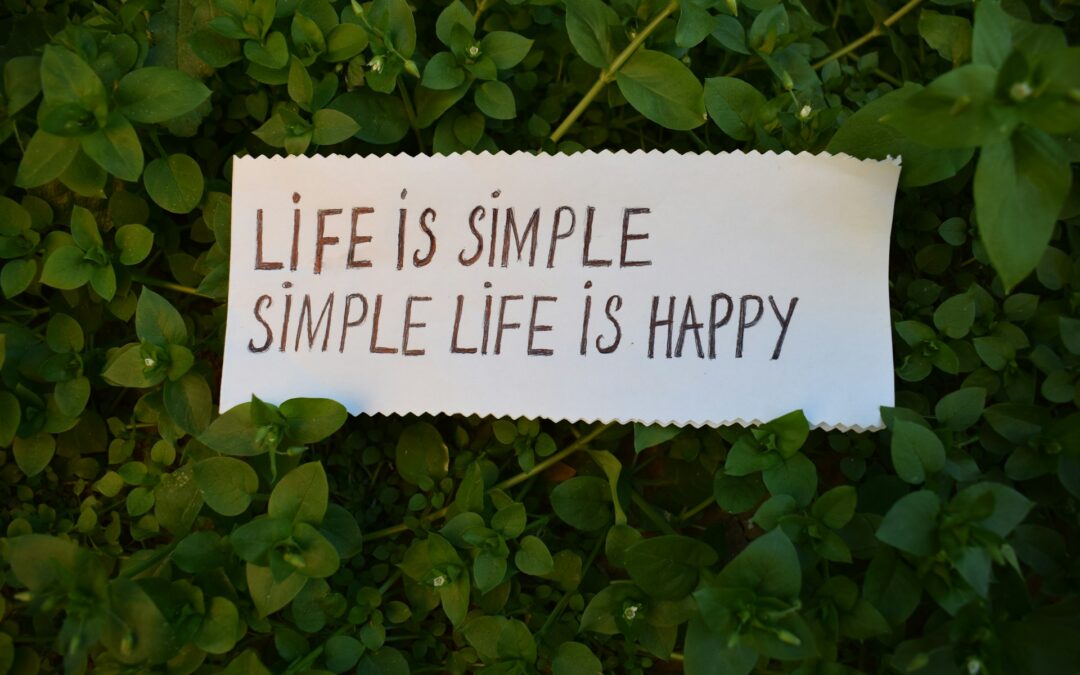
In a world that seems designed to distract us, simplicity can be a refreshing antidote. Henry David Thoreau, the transcendentalist philosopher, argued that simplicity is more than just a lifestyle—it’s the law of nature. He believed that we thrive when we embrace simplicity, free from clutter and unnecessary distractions. It’s when we strip away the superfluous that we can truly understand where we stand, where we come from, and where we are headed. But in our modern world, simplicity can feel like a rare commodity. This article explores how we can simplify our lives, not only to declutter our surroundings but to bring greater clarity, peace, and contentment to our minds.
The Philosophy of Simplicity
Simplicity is often misconceived as a form of asceticism or self-deprivation, but at its core, it’s about cultivating clarity and eliminating distractions. Thoreau’s argument that simplicity is the natural law for humans is grounded in the belief that when we strip away the superfluous, we uncover a deeper, more meaningful way of being. Thoreau withdrew from society to live by the shores of Walden Pond not as a form of rejection but as a way to reconnect with the fundamental truths of existence. In his mind, simplicity wasn’t just a lifestyle choice but a moral and philosophical stance. By living with less, he was able to connect more deeply with nature, his inner self, and the world around him.
In today’s world, simplicity has become both a rebellious act and a luxury. We are bombarded with a constant stream of advertisements, opportunities, and distractions, all designed to lure us into a perpetual cycle of consumption. Our consumerist culture convinces us that more possessions, more experiences, and more connections will lead to more happiness. This is a fundamental misunderstanding of what truly leads to a fulfilled life. Thoreau’s call to reduce life to its simplest form is a call to reclaim our attention from the forces that seek to divide and distract us. By focusing on fewer things, we create the space to engage more deeply with the important aspects of life. This doesn’t mean eliminating all comforts or luxuries but learning to prioritize what truly matters, whether it’s relationships, health, or purpose-driven pursuits. In a world of infinite choices, simplicity serves as a grounding force, reminding us that the most meaningful things are often the simplest.
Simplicity also provides us with the space to reflect on the choices we make every day. It’s about asking questions like: “What do I really need? What truly adds value to my life?” Instead of mindlessly accumulating possessions, we can choose what serves us. Thoreau’s notion of simplicity invites us to slow down, pay attention, and reevaluate what we bring into our lives. It’s about being intentional, about living deliberately rather than being swept along by the currents of modern life. In doing so, we reclaim control over our time, our resources, and our energy. Simplicity, then, is not about the absence of things but the presence of purpose.
The Link Between Simplicity and Well-Being
There is a growing body of evidence that supports the link between simplicity and well-being. Simplifying our lives is not just a way to reduce stress and anxiety, but also a way to foster a greater sense of contentment and fulfillment. When we declutter our environments, limit our possessions, and focus on what truly matters, we create the conditions for mental and emotional well-being to flourish. Studies have shown that people who embrace voluntary simplicity experience increased levels of security, autonomy, and competence—all of which are key components of overall happiness.
When we have fewer material possessions, fewer distractions, and fewer obligations, we have more mental space to focus on what truly brings us joy. We no longer need to spend time and energy maintaining things that don’t serve us, and we can instead focus on relationships, personal growth, and experiences that align with our values. In a consumer-driven culture, it’s easy to become caught up in the pursuit of more—more stuff, more success, more social validation. But the quest for “more” often leads to stress and dissatisfaction because it’s based on external validation rather than internal fulfillment.
By embracing simplicity, we shift our focus from external accumulation to internal contentment. Simplicity allows us to engage more fully with the present moment, without being weighed down by the distractions and obligations that often cause anxiety. It helps us create a life that is meaningful not because it’s filled with things, but because it’s filled with purpose and intention. The more we simplify, the more we can focus on the things that contribute to our sense of well-being, whether that’s spending time with loved ones, pursuing passions, or simply enjoying moments of peace and quiet.
Furthermore, simplifying our lives doesn’t just lead to increased happiness in the moment—it can also provide long-term benefits. For example, reducing our consumption of material goods can lead to financial savings, which in turn can reduce financial stress and increase our sense of security. When we buy fewer things, we free up resources to invest in experiences, education, or personal growth—things that contribute more meaningfully to our overall well-being. The benefits of simplicity, therefore, are not only experiential but also practical, making it a sustainable path to long-term happiness and fulfillment.
The Wisdom of Minimalism
Minimalism is a philosophy that has stood the test of time, practiced by individuals and communities across history who understood the transformative power of living with less. Diogenes, one of the founders of Cynicism in ancient Greece, is one of the most famous proponents of minimalism. Diogenes’ lifestyle was an extreme rejection of materialism. He lived in a barrel on the streets and owned almost nothing, yet he is remembered for his profound insights into human nature. One of his most telling actions occurred when he threw away his drinking cup after witnessing a child drinking water with his hands. In that moment, he realized that the child’s ability to live with so little had surpassed his own. This simple act reflects a profound lesson: we often complicate our lives with unnecessary possessions and comforts, when true happiness lies in simplicity.
Diogenes wasn’t an isolated figure in this philosophy. Various monastic traditions, such as those followed by Buddhist monks or Christian hermits, also embraced simplicity as a spiritual practice. These communities renounced worldly possessions not out of disdain for the material world but to free themselves from the distractions and attachments that can cloud our inner peace. For them, the act of renunciation was a way to cultivate a deeper connection with the divine and with themselves. The minimalist approach to life is about focusing on what is essential and removing anything that detracts from this focus. It’s about living in harmony with the natural world, letting go of the artificial constructs that weigh us down, and finding peace in simplicity.
The Dalai Lama also speaks to the power of minimalism in achieving happiness. He emphasizes that when our desires are few and we are content with the basics—food, clothing, and shelter—true satisfaction can be found. The Dalai Lama’s teachings highlight the importance of being satisfied with what we have rather than constantly seeking more. This doesn’t mean rejecting all comforts but understanding that true happiness doesn’t come from accumulation. Minimalism, in this sense, is not a rejection of modern life but a challenge to the prevailing mindset that more is always better. By simplifying our material possessions and desires, we make room for deeper connections and a more meaningful existence.
While the lifestyle of a monk or a hermit might seem far removed from the reality of modern living, minimalism offers benefits to anyone who is willing to adopt it. You don’t need to live in a barrel to embrace simplicity. Instead, it’s about recognizing the clutter in your life—both physical and mental—and making deliberate choices to remove what isn’t necessary. It’s about freeing yourself from the pressures of consumerism and focusing on what truly brings meaning to your life. Whether it’s spending more time with loved ones, pursuing passions, or simply enjoying quiet moments of solitude, minimalism offers a path to a richer, more fulfilling life.
The Psychological Impact of Possessions
The psychological effects of possessions extend beyond mere physical space; they deeply influence our emotional and cognitive well-being. Carl Jung’s observation that “our living spaces are extensions of ourselves” suggests that the environment we create is a reflection of our inner world. A cluttered home, overflowing with unnecessary objects, can lead to a cluttered mind. Every possession requires attention, whether it’s cleaning, organizing, or maintaining. The mental energy that goes into these tasks is often invisible but substantial. When surrounded by items that don’t serve a clear purpose or bring joy, our environment becomes an additional source of stress rather than a sanctuary.
This is especially true in a consumer-driven culture where the acquisition of material goods is often equated with success and happiness. However, the constant accumulation of things only adds layers of distraction that prevent us from focusing on what’s truly meaningful. Each new item we acquire brings with it a new responsibility: to care for, protect, and store it. This can drain our mental and emotional resources, leaving us less time and energy to devote to the things that matter most—our relationships, our health, and our personal growth. Additionally, the fear of losing or damaging these possessions can create anxiety, further intensifying the psychological burden of ownership.
On the other hand, when we embrace minimalism and reduce the number of possessions we own, we eliminate much of this mental burden. Fewer items mean fewer things to worry about, and fewer decisions to make about how to care for them. This leads to greater mental clarity and less stress, as we no longer feel overwhelmed by the clutter around us. With fewer distractions, we become more present, more focused, and more intentional in our daily lives. Minimalism creates an environment that supports mental peace and well-being, allowing us to engage more fully with the present moment and with the people and activities that truly matter.
Moreover, the psychological impact of owning less goes beyond just reducing stress; it can also foster a sense of freedom and empowerment. By choosing to let go of unnecessary possessions, we free ourselves from the societal pressures to keep up with the latest trends or accumulate more wealth. This sense of freedom enables us to live more authentically, without the constant need to prove ourselves through material success. In essence, reducing our possessions is not just about creating physical space—it’s about creating mental space to breathe, reflect, and live more fully.
Material Possessions and Happiness
In modern society, the pursuit of material possessions is often seen as a pathway to happiness. Advertisements, social media, and even peer pressure suggest that acquiring more things—whether it’s a new car, designer clothes, or the latest gadgets—will lead to increased satisfaction and fulfillment. However, research consistently shows that this connection between material possessions and happiness is tenuous at best. While the initial thrill of purchasing something new may bring a fleeting sense of pleasure, this feeling quickly fades, leaving us craving the next acquisition. Roman author Pliny the Younger famously remarked, “An object in possession seldom retains the same charm that it had in pursuit,” highlighting the transient nature of material joy.
The problem with this constant pursuit of possessions is that it perpetuates a cycle of consumption that ultimately fails to deliver lasting happiness. After acquiring a new item, we experience a temporary euphoria—what psychologists call the “hedonic treadmill.” However, this happiness is short-lived. Once the novelty wears off, we find ourselves wanting more, and the cycle repeats. Over time, this continuous cycle of seeking and acquiring becomes exhausting and unfulfilling. Instead of enhancing our well-being, it depletes our mental and emotional resources, leaving us feeling empty and dissatisfied.
Minimalism offers a way out of this cycle. By owning fewer material possessions, we can break free from the constant need for new acquisitions. Instead of focusing on what we don’t have, minimalism encourages us to appreciate what we do have and to cultivate contentment with less. This shift in perspective allows us to focus on experiences and relationships—things that bring more lasting fulfillment than material goods ever could. For example, rather than spending money on the latest tech gadget or a designer handbag, minimalists often invest in experiences, such as travel, learning new skills, or spending quality time with loved ones. These experiences provide long-term satisfaction and contribute to a deeper sense of happiness and connection.
Furthermore, by reducing the emphasis on material possessions, minimalism helps us reclaim our time and energy. When we stop chasing after the next big purchase, we can redirect our resources toward more meaningful pursuits—personal development, creative endeavors, or acts of service. Instead of being tied to the constant need for more, we are free to live more intentionally, prioritizing what truly brings joy and fulfillment. In this way, material possessions are no longer seen as the key to happiness; instead, happiness becomes a byproduct of living simply and intentionally, with a focus on what truly enriches our lives.
The Social Clutter
In addition to the physical and material clutter in our lives, we also face the challenge of social clutter. Modern society often emphasizes the importance of socializing and networking, encouraging us to build large social circles and maintain numerous connections. However, this focus on quantity over quality can leave us feeling overwhelmed and disconnected. The pressure to maintain a wide range of social relationships can lead to superficial interactions that don’t provide the depth or fulfillment we truly desire. Many of us find ourselves attending social events, parties, or gatherings out of obligation, rather than genuine enjoyment. These interactions can become draining, as we are pulled in different directions, trying to please others and meet their expectations, often at the expense of our own well-being.
The concept of social minimalism challenges this mindset by encouraging us to focus on the quality, rather than the quantity, of our relationships. It’s not about cutting people out of our lives entirely, but rather about being more intentional with our time and energy. Social minimalism involves being selective about the people we spend time with and the types of social interactions we engage in. It’s about prioritizing relationships that are meaningful and nourishing, rather than those that drain us or feel like obligations.
Research in the field of evolutionary psychology suggests that fewer, more meaningful social connections often lead to greater happiness, particularly for those who are more intellectually inclined. For intellectuals, who may feel overstimulated by large social gatherings, the benefits of having fewer but deeper relationships are significant. This doesn’t mean that social interaction is inherently bad or that we should isolate ourselves, but rather that we should be discerning about where we invest our social energy. Meaningful one-on-one conversations or small gatherings with close friends can provide a sense of connection and fulfillment that larger, more superficial social events cannot.
Social minimalism also invites us to reconsider the way we engage with others. Instead of filling our lives with shallow conversations and obligatory gatherings, we can choose to engage in more meaningful, thoughtful interactions. This might mean turning down invitations to events that don’t resonate with us or choosing to spend time with people who share our values and passions. By embracing social minimalism, we create the space for deeper connections that enhance our lives and contribute to our overall well-being. Ultimately, social minimalism is about cultivating relationships that support us, rather than overwhelming us with unnecessary social noise.
Digital Minimalism: Decluttering Your Digital Life
In today’s hyper-connected world, digital technology has become an integral part of our lives. We rely on our smartphones, computers, and social media platforms to communicate, work, learn, and entertain ourselves. However, the constant influx of digital information can overwhelm us, leading to a sense of digital burnout. From endless email threads and social media notifications to the pressure of staying up to date with the latest trends, it’s no surprise that many people feel overwhelmed by the sheer amount of digital stimuli they face on a daily basis. This constant barrage of notifications, messages, and digital distractions can create a sense of busyness without real productivity, leaving us feeling exhausted and mentally cluttered.
Digital minimalism offers a powerful antidote to this digital overload. Popularized by author and professor Cal Newport in his book Digital Minimalism, this philosophy advocates for a more intentional and mindful approach to technology use. Digital minimalism isn’t about rejecting technology altogether—it’s about using it in a way that aligns with our values and goals. Newport defines digital minimalism as a philosophy of technology use in which you focus your online time on a small number of carefully selected and optimized activities that strongly support things you value, and then happily miss out on everything else.
The key to digital minimalism is intentionality. Instead of mindlessly scrolling through social media or spending hours watching videos, digital minimalists choose to focus their time online on activities that are purposeful and meaningful. For example, instead of spending hours scrolling through Instagram, a digital minimalist might choose to spend that time reading articles or watching educational videos that contribute to their personal growth. They may limit their social media use to specific times of day, ensuring that it doesn’t dominate their attention or disrupt their focus on more important tasks. By reducing unnecessary digital distractions, digital minimalists reclaim their time and mental energy, allowing them to focus on activities that truly enhance their lives.
Digital minimalism also extends to reducing the number of digital devices and platforms we use. Many people find themselves constantly switching between multiple devices—smartphones, laptops, tablets—and managing multiple social media accounts. This constant switching between devices and platforms can lead to cognitive overload and decrease our ability to focus on any single task. By minimizing the number of devices we use and the platforms we engage with, we can reduce the mental clutter associated with digital life. For example, rather than having dozens of apps installed on your phone, digital minimalism encourages you to use only the essential apps that align with your priorities. Similarly, you can streamline your digital presence by focusing on one or two social media platforms that serve your needs, rather than spreading yourself too thin across multiple networks.
In practice, digital minimalism can also involve setting boundaries around the time spent on digital devices. For instance, turning off notifications or scheduling specific times to check emails and social media can prevent these digital interruptions from taking over your day. By setting these boundaries, you regain control over your time and can focus more on real-world activities that bring joy, connection, and fulfillment. Digital minimalism, therefore, is not about eliminating technology but about using it more wisely, creating a healthier relationship with our devices and the digital world.
Simplifying Your Schedule and Priorities
In our modern, fast-paced society, it’s easy to fall into the trap of overcommitting ourselves. From professional responsibilities and family obligations to social engagements and personal pursuits, our calendars often become packed with a long list of tasks and events. The more we fill our schedules, the less time we have for meaningful activities, reflection, and relaxation. This tendency to overschedule can lead to burnout, stress, and a feeling of being constantly “busy” without ever feeling truly productive or fulfilled.
A minimalist approach to scheduling challenges the notion that busyness equals productivity. Instead, it encourages us to be more selective and intentional with how we spend our time. Simplifying our schedules starts with evaluating our commitments and identifying what truly aligns with our values, goals, and well-being. It’s about recognizing that not everything requires our attention, and not every opportunity is worth pursuing. By focusing on the most important tasks and events, we can create more space in our lives for rest, creativity, and personal growth.
One of the core principles of simplifying your schedule is learning to say “no” to non-essential tasks and commitments. Saying no can be difficult, especially in a culture that often equates productivity with worth. However, by saying no to less important obligations, we free up time for the things that matter most. For example, if you’re constantly attending meetings or events that don’t contribute to your goals or personal happiness, it may be time to reassess their place in your life. Saying no to these commitments doesn’t mean you’re being lazy or unproductive—it means you’re prioritizing your time and energy in a way that supports your overall well-being and long-term success.
Another important aspect of simplifying your schedule is prioritizing quality over quantity. In many cases, it’s not the number of tasks on our to-do list that matters, but the importance and impact of those tasks. By focusing on fewer, more meaningful activities, we can create more space for personal fulfillment and growth. This could mean dedicating more time to a passion project, spending quality time with loved ones, or engaging in self-care practices that nourish your mind and body. Simplifying your schedule allows you to shift from a reactive, “do everything” mindset to a proactive, focused approach that aligns with your core values.
In addition, simplifying your schedule can help reduce the feelings of anxiety and stress that often come with a packed calendar. When we’re constantly rushing from one task to the next, it can feel like there’s never enough time in the day to catch up. But by simplifying our schedules and cutting out the unnecessary, we create breathing room in our days, allowing us to approach each task with more focus and intention. A less cluttered schedule leads to greater mental clarity and reduces the sense of overwhelm that often accompanies a busy life.
Clearing Mental Clutter
While decluttering our physical spaces is important, the true key to simplicity lies in clearing our mental clutter. Our minds, much like our living spaces, can become filled with unnecessary thoughts, worries, and distractions that make it difficult to focus on what truly matters. In modern society, we are constantly bombarded with information—whether from the news, social media, work, or personal relationships. This constant influx of stimuli can create mental overload, leading to stress, anxiety, and a sense of being overwhelmed.
The first step in clearing mental clutter is recognizing that not all thoughts are valuable or productive. We often spend much of our time ruminating over past events, worrying about the future, or obsessing over things that are outside of our control. This mental clutter prevents us from being fully present in the moment and can drain our energy and focus. The key to clearing mental clutter is learning to let go of these unnecessary thoughts and distractions.
Mindfulness practices, such as meditation, offer powerful tools for clearing mental clutter. By focusing on the present moment and observing our thoughts without judgment, we can begin to detach from the constant stream of mental noise. Meditation helps train the mind to be more aware of when it is wandering or becoming overwhelmed, allowing us to gently refocus on the present. This practice of mindfulness can also be extended to daily activities—whether it’s eating, walking, or simply sitting in silence. By paying attention to the present moment and letting go of distractions, we create mental space for clarity and calm.
Another important aspect of clearing mental clutter is simplifying our thought patterns. This involves challenging negative thought habits, such as perfectionism, self-criticism, and overthinking. By learning to reframe our thoughts and focus on what’s within our control, we can reduce the mental burden of unnecessary worries. Cognitive behavioral techniques, such as identifying and challenging irrational thoughts, can be particularly helpful in this process.
Additionally, decluttering our mental space involves setting clear boundaries around the information we consume. In an age of constant connectivity, we are exposed to an overwhelming amount of information every day. The news, social media, emails, and even well-meaning friends and family can all contribute to the mental clutter we experience. By consciously limiting the amount of information we take in—whether through news consumption, social media, or other digital distractions—we can protect our mental energy and focus on what truly matters.
Ultimately, clearing mental clutter is about creating space for calm, clarity, and focus. It’s about letting go of the unnecessary mental noise that keeps us from living with intention. By incorporating mindfulness practices, simplifying our thought patterns, and limiting information overload, we can clear the mental clutter that prevents us from fully engaging with the present moment and living a simpler, more peaceful life.
Conclusion
In a world where complexity often feels inevitable, embracing simplicity offers a powerful remedy for the mental, emotional, and physical clutter that surrounds us. Whether it’s minimizing our material possessions, reducing digital distractions, or focusing on fewer but more meaningful relationships, the principles of minimalism help us create a life that is more intentional and fulfilling. Simplicity isn’t about deprivation; it’s about prioritizing what truly matters and letting go of what doesn’t.
By simplifying our environment, our schedules, and our minds, we open up space for clarity, peace, and well-being. The minimalist approach allows us to step away from the constant pressures of modern life and reconnect with what truly brings us joy and purpose. It’s a reminder that less can be more—that the absence of unnecessary distractions can reveal a life filled with greater contentment, freedom, and fulfillment. In adopting simplicity, we not only declutter our physical world but also create the mental space necessary to fully appreciate the richness of life.