
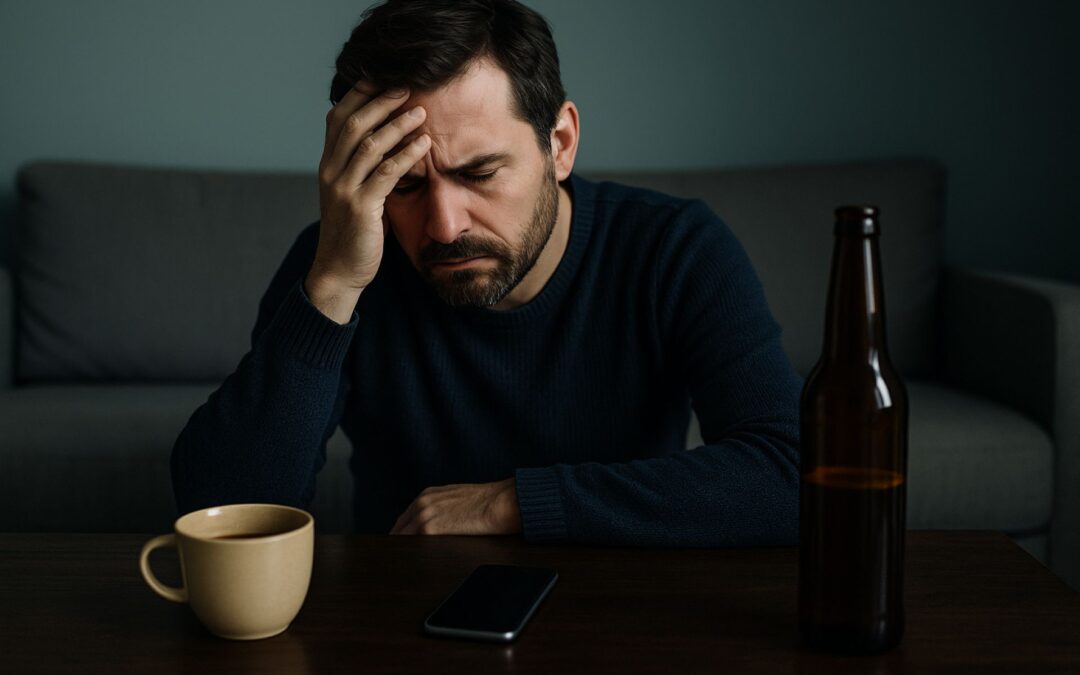
Most addictions don’t look like addictions. They look like morning rituals, small comforts, or everyday conveniences. They look like harmless habits that help us cope with the chaos of life. But beneath the surface of these routines lies something more sinister—a quiet erosion of freedom.
The Stoics believed that anything we cannot willingly abstain from owns a piece of us. Seneca warned that our courage and greatness of soul decay when we cling too tightly to what feels good. The tragedy of addiction, then, is not just dependence—it’s blindness. We become enslaved not by force, but by familiarity.
This is not an argument for abstinence—it’s a call for awareness. Because the moment you begin to see your addictions clearly, you regain the ability to choose. And that, as the Stoics knew, is the essence of true freedom.
“We must give up many things to which we are addicted, considering them to be good. Otherwise, courage will vanish, which should continually test itself. Greatness of soul will be lost, which can’t stand out unless it disdains as petty what the mob regards as most desirable.”
— Seneca, Moral Letters, 74.12b–13
The Subtle Chains We Don’t Notice
Addiction doesn’t always arrive with drama or destruction. It often begins softly, slipping into our lives disguised as something beneficial—something that feels good, necessary, even productive. It hides in the rituals we defend, the comforts we rationalize, and the routines we refuse to question.
Take coffee, for example. At first, it’s a pleasant morning ritual, a quiet moment of energy and reflection. Soon, it becomes the signal that your day can begin—the trigger for alertness, the permission to function. Miss a cup, and you feel foggy, irritable, off balance. What was once a choice becomes a need.
The same pattern repeats everywhere. We check our phones because we “need to stay informed.” We scroll social media to “unwind.” We snack because “we deserve a treat.” Each justification feels harmless, even reasonable. But what’s actually happening beneath these excuses is a subtle exchange: autonomy for comfort.
These behaviors begin as tools—ways to regulate mood, manage time, or fill silence—but over time, they begin to use us. The compulsion grows roots. A single notification can pull your attention from the present moment. A passing craving can dictate your actions. And somewhere in that quiet shift, your sovereignty erodes.
The Stoics warned about exactly this kind of invisible enslavement. Seneca wrote that the greatest loss occurs when we begin to love our chains, mistaking them for ornaments. We proudly defend our addictions as preferences, claiming they make us “who we are.” But behind that pride lies fear—the fear of sitting still without stimulation, of facing silence without distraction, of discovering who we are without our habits.
This is how modern addiction operates: not through force, but through permission. We allow small dependencies to accumulate until they quietly define us. The real danger isn’t the coffee or the phone—it’s forgetting that we could live perfectly well without them.
And that’s the true test of freedom. Not whether something brings pleasure, but whether we can go without it—and remain whole.
The Illusion of Control
Control is one of the grandest deceptions the human mind performs. We like to believe we are the masters of our actions—that our choices are deliberate, our habits intentional. Yet the irony is that the stronger our habits become, the less conscious our choices are. We move not from will, but from impulse, mistaking momentum for mastery.
Consider how we speak about our habits: “I can stop anytime I want.” “It’s just one drink.” “I only check my phone for work.” These are the self-soothing phrases of a person who suspects they’re not entirely in control but needs the illusion to feel safe. We don’t want to see how easily we’re swayed by comfort, convenience, and craving.
Control, in the Stoic sense, has nothing to do with dominance—it’s about discernment. It’s not about suppressing desires, but about understanding their hold over us. The Stoics drew a sharp distinction between what is within our power and what is not. Our thoughts, our actions, our interpretations—these are ours to command. But the cravings that arise, the impulses that flash through the mind—they are not ours to choose, only ours to manage.
When we lose this distinction, control becomes a mirage. We think we’re choosing to indulge when, in fact, we’re being pulled by unseen strings. Addiction is not just dependence on a substance or behavior—it’s dependence on a feeling. The comfort of distraction. The pleasure of instant gratification. The relief of escaping oneself.
Each time we obey that craving without resistance, we reinforce the loop. Our neural pathways deepen, our will weakens, and the illusion grows stronger. We begin to believe we’re choosing indulgence when, in truth, indulgence is choosing us.
Seneca’s warning echoes here: greatness of soul vanishes when courage stops testing itself. And courage cannot be tested in comfort. It is tested in restraint—in the moment we say “no” to what we’ve always said “yes” to. That is when control becomes real, not imagined.
To regain true control, we must first confront the uncomfortable truth that we may not have it. We must see the strings before we can cut them. Only then can we begin to replace impulsive reaction with deliberate action—to reclaim the agency that addiction quietly steals away.
Because freedom, in the deepest sense, isn’t doing what you want whenever you want. It’s the ability to want wisely—and to stop when you must.
The Hidden Cost of Compulsion
Every addiction, no matter how trivial it may appear, extracts a price. The cost is rarely financial—it’s psychological, emotional, and spiritual. Compulsion drains energy that could be directed toward creativity, discipline, or stillness. It interrupts thought, hijacks focus, and keeps the mind in a constant state of mild agitation.
Think about the last time you felt the phantom buzz of your phone. That brief, hollow jolt of anticipation—followed by disappointment when there’s nothing new. The brain learns to crave that microburst of dopamine, creating a cycle of reach, reward, and relapse. It’s not the phone that owns you—it’s the chemical pattern it creates in your mind. And those patterns shape the rhythm of your life.
The cost of compulsion is subtle but corrosive. It eats away at presence. You’re at dinner, but not really there. You’re reading, but the mind keeps drifting. You’re resting, but your thoughts are restless. Addiction robs you of the depth of every experience by fragmenting your attention across countless tiny distractions.
The Stoics understood that the greatest danger of indulgence wasn’t moral decay—it was the loss of clarity. When the mind is scattered, the soul cannot steer. Clarity requires stillness, and stillness cannot coexist with compulsion. Each time we yield to an unnecessary urge, we reinforce the noise. The mind becomes cluttered, like a room filled with trinkets—no space for movement, no silence for thought.
Seneca’s observation that “courage will vanish” isn’t merely poetic. He’s pointing to a psychological truth: when we stop testing ourselves, when we always choose the path of least resistance, we become weaker in spirit. Courage is the ability to say no when every fiber of comfort says yes. It’s the discipline to resist the easy pleasure that leads to long-term dullness.
And this dullness is the silent consequence of modern life. We call it stress, boredom, anxiety—but it’s really the byproduct of overstimulation and under-reflection. Compulsion numbs the very faculties that make us human: awareness, intention, and choice. To recover them, we must first acknowledge that our habits are not as harmless as we pretend.
The cost of compulsion is not measured in minutes wasted—it’s measured in potential unfulfilled.
The Art of Reclaiming Freedom
Freedom is not about abstaining from everything—it’s about knowing you can. The Stoics viewed self-control not as punishment but as power. To them, the ability to abstain from pleasure, to delay gratification, to pause before reacting, was the highest expression of mastery.
Reclaiming freedom begins with awareness. You cannot change what you refuse to see. Begin by noticing your triggers—the moments when impulse overrides intention. When do you reach for your phone? When do you open the fridge without hunger? When do you speak just to fill silence? Observe, don’t judge. Awareness must precede discipline.
Once you see the pattern, introduce interruption. Pause between craving and compliance. Delay the habit by five minutes. Then ten. You’re not trying to conquer the addiction in one act—you’re teaching your mind that it has a choice. That moment of hesitation is where freedom lives.
Next comes substitution. The goal isn’t to empty your life but to fill it with things that strengthen rather than weaken you. Replace scrolling with reading. Replace mindless chatter with journaling. Replace sugar with stillness. You’ll soon realize that fulfillment doesn’t come from constant stimulation—it comes from depth.
There’s also value in deliberate abstinence. Occasionally, deny yourself something you enjoy—not to suffer, but to remember that you can. The Stoics called this voluntary discomfort—training the mind to be indifferent to luxury, so it never becomes enslaved by it. Seneca would spend days living simply, eating coarse food, wearing rough garments, and reminding himself that happiness requires very little.
Each time you resist a craving, you reinforce autonomy. Each act of restraint is a quiet declaration of strength. Freedom is not found in indulgence but in the ability to abstain without distress.
And as you begin to detach, you’ll notice something remarkable: your senses sharpen, your attention deepens, and life regains its texture. The silence you once feared begins to feel like peace.
Freedom is not something to be won—it’s something to be remembered. You already possess it beneath the noise of your habits. You need only reclaim it, one decision at a time.
What Mastery Really Means
Mastery is often misunderstood. People equate it with dominance—with control over others, with perfection, with unbroken discipline. But the Stoics saw mastery differently. It was not about exerting power outward—it was about achieving harmony within.
To master oneself is to govern one’s desires, not suppress them. It’s the ability to act with reason rather than reflex. It’s having impulses without being ruled by them. True mastery doesn’t kill desire; it refines it. It turns blind craving into conscious choice.
This kind of mastery is quiet, invisible. It’s in the person who feels the pull of temptation yet smiles and walks past. It’s in the person who could indulge but chooses restraint because they understand the difference between pleasure and peace.
The Stoic philosopher Epictetus taught that freedom begins when you no longer wish for things to be other than they are. Mastery grows from this same soil. It’s not about creating a perfect life—it’s about creating an unshakable self. The one who can remain calm amid abundance or scarcity, success or failure, applause or silence—that’s the person who has mastered life.
When you no longer need validation, stimulation, or escape, you discover the purest form of satisfaction: sufficiency. You realize you already have what you need, and that most of your addictions were distractions from that truth.
This doesn’t mean rejecting the world. It means participating in it without possession. Drinking the wine but not needing it. Earning the praise but not depending on it. Using technology but not being consumed by it.
In mastering your impulses, you reclaim authorship over your own story. You stop reacting and start directing. You become, as Marcus Aurelius wrote, “upright, not kept upright.”
And in that moment—when you can look at your cravings, your habits, your desires, and see them clearly without flinching—you understand what Seneca meant by “greatness of soul.” It is the state of being unshaken by pleasure, untouched by fear, and unmoved by the noise of the crowd.
That is what mastery really means: to walk freely through the world, unattached yet fully alive.
Conclusion
The path to mastery doesn’t begin with control—it begins with clarity. When you see your compulsions for what they are—habits that once served you but now quietly dictate you—you awaken the will to reclaim your sovereignty.
Freedom isn’t about rejecting every pleasure or denying every comfort. It’s about ensuring that nothing possesses you. It’s about pausing before reaching, thinking before reacting, and remembering that peace doesn’t come from indulgence but from independence.
Seneca’s wisdom remains timeless: courage fades when we stop testing ourselves. So, test yourself. Abstain, not to punish, but to remember your power. Refuse, not to deprive, but to strengthen. Because the one who can walk away without loss is the one who has truly mastered life.
To see your addictions clearly is to begin your liberation. To overcome them is to reclaim your soul.
This article is part of The Daily Stoic Series based on Ryan Holiday’s book.