
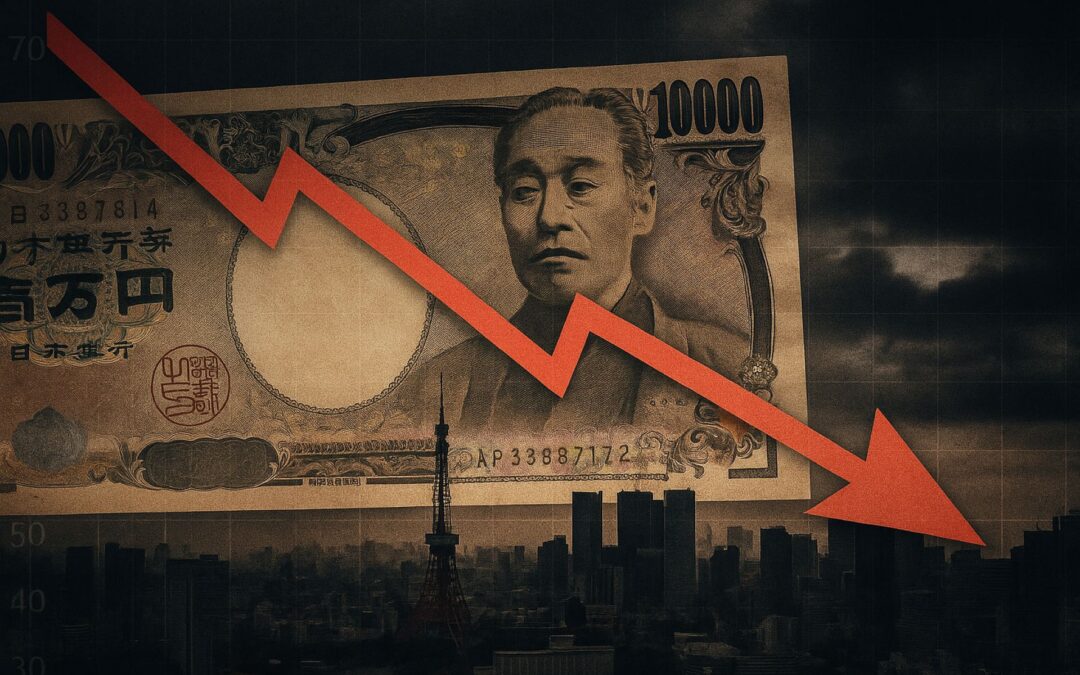
Picture this: it’s 1989, and Japan is the epitome of economic success. From the ashes of World War II, the nation rebuilt itself with a ferocity and precision that the world had never seen. In just over three decades, Japan’s economy grew ninefold. Iconic cultural phenomena like Mario Brothers emerged from its vibrant creative milieu. The country boasted 32 of the world’s 50 largest companies and stood proudly as the second-largest economy globally. Yet, beneath this glittering veneer lurked the seeds of a spectacular economic unraveling. How did Japan soar so high, only to stumble and stagnate for decades? Let’s rewind to understand the full arc of this remarkable saga.
From Ruin to Reconstruction: The Post-War Reset
The conclusion of World War II in 1945 left Japan in a state of utter devastation—both physically and psychologically. More than just the visible ruins of cities like Tokyo and Osaka, the country’s infrastructure was shattered: factories lay in smoldering heaps, transportation networks were fractured, and the once-thriving merchant fleet that had powered trade was almost entirely wiped out. With approximately 25% of its buildings destroyed and 82% of its ships sunk or seized, Japan was effectively brought to its knees.
Beyond the physical destruction, Japan faced a profound identity crisis. The imperial system, which had underpinned national unity and militaristic ambitions, was discredited. The population was demoralized, grappling with the dual trauma of defeat and occupation by foreign powers. The Allied occupation, led by General Douglas MacArthur, entered with a mandate not merely to rebuild but to reimagine Japan’s future—to prevent any resurgence of militarism and to establish a peaceful, democratic society.
This monumental transformation began with constitutional reform. The new 1947 Constitution, often called the “Peace Constitution,” was revolutionary in its renunciation of war (Article 9), effectively forbidding Japan from maintaining traditional military forces. The emperor, previously a divine sovereign, was relegated to a symbolic figurehead without political power. These changes dismantled the structures that had driven Japan into conflict and set the stage for democratic governance.
Economically, the occupation authorities identified the zaibatsu—powerful family-controlled industrial conglomerates—as key enablers of Japan’s wartime militarism. These groups had tightly controlled vast sectors of the economy, creating monopolies that the Allies saw as antithetical to democratic capitalism. The Anti-Monopoly Act, enforced through the dissolution of zaibatsu holdings and mandated divestitures, aimed to decentralize economic power and foster competition.
Simultaneously, social reforms swept the country. One of the most significant was the empowerment of labor. Workers, previously suppressed under militarist regimes, were now encouraged to organize. Union membership skyrocketed from a mere 3.2% in 1945 to over 53% by 1948. This radical shift not only improved workers’ rights but also injected a new dynamism into the economy through collective bargaining and wage stabilization.
Agricultural reform was equally transformative. Prior to the war, vast tracts of farmland were controlled by absentee landlords who extracted rents from tenant farmers. The occupation government purchased nearly 38% of Japan’s agricultural land and redistributed it to the tenant farmers at affordable prices. This democratization of land ownership invigorated rural economies, improved food security, and helped lay the social foundation for broader economic growth.
Yet, despite these sweeping political and social overhauls, Japan’s economy in the immediate postwar years was in shambles. Inflation spiraled out of control as the government printed money to finance reconstruction and social programs, while food and basic goods were scarce. Industrial output was a fraction of prewar levels, and supply chains were fragmented. The reforms addressed many systemic issues but left the country grappling with fundamental economic dysfunction.
Cold War Capitalism: The Dodge Plan and Economic Awakening
As the global political landscape shifted with the dawn of the Cold War, Japan’s strategic value to the United States transformed dramatically. Once an enemy, Japan was now seen as a critical capitalist ally in Asia, a bulwark against the spread of communism from the Soviet Union and China. This geopolitical pivot translated into economic policies designed not only to stabilize Japan but to catalyze rapid growth and integration into the Western-led global economy.
In 1949, the Dodge Plan was introduced, named after Joseph Dodge, a Detroit banker brought in as a financial advisor to the Japanese government. The plan was austerity incarnate, designed to halt hyperinflation and restore fiscal discipline. It cut government subsidies that had artificially lowered prices, mandated a balanced government budget, and severely curtailed money printing.
A cornerstone of the Dodge Plan was the establishment of a fixed exchange rate: 360 yen to 1 U.S. dollar. This artificially undervalued yen made Japanese exports competitively cheap in international markets, fueling industrial expansion. The policy was a calculated gamble, sacrificing short-term hardship for long-term export-led growth.
The Dodge Plan’s immediate impact was profound. Inflation tumbled from runaway levels to a manageable single-digit range. Confidence in the yen was restored, enabling Japan to access international capital and trade markets. However, the economy remained fragile, and recovery was tentative until an unexpected catalyst emerged: the Korean War in 1950.
The outbreak of hostilities on the Korean Peninsula thrust Japan into the center of a massive military-industrial supply chain. The U.S. and United Nations forces relied heavily on Japanese factories for uniforms, weapons parts, vehicles, and provisions. This created a sudden surge in demand, reviving dormant factories and stimulating industrial output.
Japan’s small size and lack of natural resources meant that it could not grow through traditional commodity exploitation. Instead, it relied on an export-driven model, heavily investing in industrial infrastructure, technology acquisition, and human capital. The Korean War effectively jump-started this process, providing steady external demand that sustained economic expansion.
The early 1950s also saw a critical shift in Japan’s economic mindset. Growth was no longer about mere survival or recovery—it was about positioning Japan as a major industrial power. Capital accumulation accelerated, government policies focused on targeted industries, and the foundations for what would become the postwar economic miracle were laid.
Prime Minister Hayato Ikeda’s 1960 Income Doubling Plan encapsulated this ambition. It wasn’t simply a growth target but a holistic strategy involving infrastructure investment, technology diffusion, education expansion, and social welfare improvements. The government and private sector operated in concert, often described as a unique developmental state model, steering resources into priority sectors and managing industrial policy with precision.
This model paid off spectacularly. By leveraging fiscal discipline, strategic industrial policy, and a disciplined labor force, Japan achieved an average growth rate of nearly 10% annually between 1950 and 1973—growth so rapid it astonished economists worldwide and propelled Japan from wartime ruin to global economic heavyweight in just two decades.
Education and Human Capital: The Engine of Growth
Japan’s postwar economic transformation was not solely driven by capital investment or natural resource exploitation—both of which were limited—but by a deliberate and profound investment in human capital. Recognizing that machinery and factories alone could not sustain long-term growth, Japanese policymakers placed education at the heart of their strategy, understanding that a highly skilled and adaptable workforce was essential to leapfrog Western industrial powers.
By the 1960s, Japan had established an education system that was both rigorous and inclusive. Secondary school enrollment rates soared, surpassing even those of other industrialized nations at the time. This was no accident. The education reforms emphasized not only basic literacy and numeracy but also technical skills, scientific knowledge, and disciplined work ethics. These qualities were integral to meeting the needs of an economy rapidly shifting from agriculture to complex manufacturing and technology-driven sectors.
Moreover, Japan’s cultural values around education complemented these reforms. Concepts such as ganbaru (perseverance) and kaizen (continuous improvement) permeated classrooms and factories alike. Students were imbued with a mindset of diligence and mastery, traits that translated seamlessly into industrial productivity. The workforce’s adaptability allowed rapid absorption of new technologies and manufacturing techniques, a crucial advantage during an era defined by technological acceleration.
The symbiosis between education and economic policy manifested in specialized technical schools, university-industry partnerships, and government-sponsored research initiatives. Vocational training ensured that factory workers could operate sophisticated machinery with precision, while universities supplied engineers and scientists to drive innovation. This education-driven human capital accumulation enabled Japan to climb the value chain swiftly—from low-wage assembly work to precision electronics, automotive engineering, and eventually, cutting-edge technology.
This focus on human capital also had social ripple effects. Education increased social mobility, expanded the middle class, and fostered a sense of collective purpose. The shared commitment to national rebuilding and advancement created a virtuous circle, where educated citizens fueled industrial growth, which in turn supported educational investment.
Oil Shock and the First Signs of Strain
Japan’s extraordinary postwar growth trajectory was dramatically interrupted in 1973 by the global oil crisis—a seminal event that exposed the structural vulnerabilities of the Japanese economic model. Dependent on energy imports for 99% of its needs, Japan was particularly susceptible to the sudden spike in oil prices triggered by the OPEC embargo.
The embargo, aimed at nations supporting Israel during the Yom Kippur War, quadrupled oil prices virtually overnight. The shockwave reverberated through Japan’s economy, where energy costs constituted a significant portion of industrial production expenses. Manufacturers found their profit margins squeezed as input costs soared, forcing price increases that sparked inflationary pressures.
Inflation, which had been relatively subdued, surged to nearly 25% in 1974—a staggering jump that unsettled markets and consumers alike. The specter of energy shortages and blackouts added to public anxiety, threatening to derail the nation’s industrial momentum.
In response, Japan pursued a multi-pronged strategy. Energy diversification became a national priority: the government accelerated investment in nuclear power plants, developed coal infrastructure, and built strategic petroleum reserves to buffer future shocks. These efforts reduced Japan’s vulnerability over time but did not eliminate the immediate economic fallout.
The oil crisis also catalyzed a shift in investor psychology. Confidence in the economy’s unassailable growth began to waver. The rapid catch-up in technology and industrial output slowed as investment growth decelerated. Companies became more cautious, and growth rates dropped sharply—from the heady 10% of the previous two decades to around 5%.
This marked a crucial inflection point. The oil shock revealed that Japan’s export-driven, resource-dependent model had inherent fragilities. It forced policymakers and business leaders to confront the need for more sustainable, diversified growth strategies and more robust economic safeguards.
The 1980s: The Real Estate and Stock Market Frenzy
The 1980s in Japan were defined by unprecedented asset inflation, a period where exuberance in real estate and stock markets masked underlying economic imbalances. Real estate, in particular, occupied a near-mythical status rooted in Japan’s cultural heritage and geographical realities. Historically, landownership symbolized wealth and status, tracing back to feudal times when land was the ultimate source of power. Moreover, Japan’s mountainous terrain limited available development space, intensifying the value placed on urban property.
Between 1956 and 1986, Japanese land prices surged an astonishing 5,000%, an appreciation fueled by speculative fervor and low borrowing costs. The prevailing belief—almost a societal consensus—was that land values would never decline. This “land price never falls” doctrine fostered a self-fulfilling bubble, with investors pouring money into property with minimal risk perception.
Simultaneously, Japan’s corporate giants flourished on the global stage. Names like Sony, Honda, Nintendo, and Canon transformed from domestic manufacturers to international titans, emblematic of Japan’s technological and economic prowess. However, this rise also stoked fears abroad, particularly in the United States, where concerns about Japan “taking over” were vocalized through political rhetoric and even acts of protest, such as Detroit auto workers destroying imported Japanese cars.
Financially, this period was marked by a glut of cheap credit. The Bank of Japan’s policies, designed initially to cushion economic shocks, inadvertently fed speculative excess. The stock market soared alongside real estate values, creating a powerful wealth effect that encouraged further borrowing and investment into assets rather than productive ventures.
Corporations increasingly diversified into financial trading and property speculation, with profits from these activities sometimes surpassing those from core business operations. This shift marked a dangerous decoupling of the economy’s real productive capacity from its financial markets, setting the stage for the eventual unraveling of the bubble and the Lost Decades that followed.
Window Guidance Relaxed: The Birth of Speculative Mania
At the core of Japan’s financial system during its bubble era was a distinctive mechanism known as window guidance—a form of informal but powerful regulatory control exercised by the Bank of Japan. Traditionally, this practice involved the central bank issuing direct instructions to commercial banks regarding how much credit they could extend and which sectors should receive priority. This system effectively kept lending disciplined, preventing reckless risk-taking and ensuring that credit fueled productive industries rather than speculation.
However, the mid-1980s marked a turning point. In an effort to stimulate economic activity amid concerns of slowing growth and the repercussions of the Plaza Accord (which appreciated the yen), the Bank of Japan loosened its window guidance. Banks were encouraged to expand lending aggressively, even to higher-risk borrowers. This regulatory relaxation unleashed a torrent of cheap credit into the financial system, creating fertile ground for speculative excess.
Financial institutions, buoyed by the flood of funds, began chasing profits beyond traditional banking activities. One notable phenomenon was the rise of zaitech—complex financial maneuvers involving speculative trading in securities and derivatives. Through tax advantages, companies could boost earnings by investing in stocks and bonds rather than relying solely on their operational profits. Instruments like egg tokens, speculative accounts promising returns higher than bank interest, became wildly popular.
Between 1985 and 1989, the scale of speculative investment exploded, with funds tied up in these tokens ballooning from 9 trillion yen to an astonishing 40 trillion yen (roughly $300 billion at the time). Stock prices soared; between 1985 and 1987, stock market valuations doubled. Concurrently, real estate prices quadrupled, with urban land and property becoming the cornerstone of corporate and personal wealth.
Corporate earnings became increasingly divorced from actual business performance, as more than half of the profits for industry giants like Toyota and Nissan originated from speculation. Investors began valuing companies not on traditional financial metrics but based on the market value of their real estate holdings—“hidden assets” that inflated balance sheets and share prices artificially.
This speculative frenzy created a feedback loop with systemic implications. Rising land values enhanced the collateral value of loans, enabling banks to increase lending capacity. More lending pushed stock and property prices higher, further boosting collateral and bank capital. The financial system became a self-reinforcing cycle, detached from economic fundamentals—a classic hallmark of an unsustainable bubble.
The Apex and Unraveling: Crash and Lost Decades
Japan’s economic bubble reached a zenith in late 1989. The Nikkei 225 stock index soared to an all-time high of 38,915 points—a dizzying peak that epitomized speculative exuberance. Public confidence was sky-high, buoyed by a belief in continuous growth and government intervention to sustain asset prices. Some forecasts, such as those from Nomura Securities, boldly predicted the index could double again by 1995.
Yet beneath the surface, vulnerabilities accumulated. Stock prices had outpaced corporate earnings by a factor of three, even when factoring in speculative gains. The Bank of Japan, recognizing the risk of runaway inflation in asset markets, appointed Yasushi Mieno as governor in 1989. He embarked on a mission to prick the bubble through monetary tightening.
Beginning on Christmas Day 1989, Mieno ordered a series of interest rate hikes—five increases in total—pushing the benchmark rate from historic lows of around 2.5% to 6% by August 1990. This rapid tightening drained liquidity and cooled speculative appetite. Unlike prior market crashes, which often unfolded overnight, Japan’s collapse was a protracted, grinding deflation of the bubble.
The consequences were severe. The Nikkei index plunged 60% by 1992, wiping out trillions of dollars in market capitalization. Tokyo real estate prices followed suit, falling by 60% over the subsequent years. Corporate balance sheets, once buoyed by asset appreciation, now showed massive losses. Consumer and investor confidence evaporated, curtailing spending and investment.
Japan entered a recession, marked by stagnant growth and deflationary pressures. The government responded with aggressive macroeconomic stimulus, funding massive public works projects and slashing interest rates to encourage borrowing. However, the structural damage was deep and persistent.
Compounding the crisis was the emergence of zombie loans: non-performing loans extended to insolvent companies kept artificially alive by banks reluctant to write off losses. This phenomenon clogged financial institutions’ balance sheets and undermined credit markets. The 1997 failure of Hokkaido Takushoku Bank underscored the fragility of the banking sector and forced the government into costly bailouts.
The purge of bad debts and restoration of financial health was a decade-long, painful process. Economic growth languished at around 0.8% annually, a stark contrast to the explosive expansion of previous decades. This prolonged stagnation, known as the Lost Decades, fundamentally reshaped Japan’s economic landscape and offered sobering lessons on the dangers of speculative bubbles and financial excess.
The Stagnation Spiral: Innovation Drought and Labor Rigidity
Japan’s Lost Decades were not only a story of financial collapse but also of profound structural stagnation that permeated its economic and social fabric. While the bursting bubble left scars on balance sheets, the subsequent stagnation was compounded by a lack of dynamism in innovation and a labor market mired in rigidity.
The country’s famed lifetime employment system, which once fostered company loyalty and stability, became a double-edged sword. This system guaranteed job security, especially for core workers, but created inflexibility that stifled the reallocation of labor. Companies were reluctant to lay off underperforming employees or restructure, even when economic conditions demanded agility. Instead, workers were often relegated to unproductive roles, a phenomenon captured by the term muda wazaoku—literally “people who do nothing”—referring to employees sidelined but retained on company payrolls. This inefficiency reduced overall productivity and impeded innovation.
At the same time, Japan’s corporate culture, characterized by seniority-based promotion and risk aversion, hampered entrepreneurship and the infusion of fresh ideas. The consensus-driven decision-making process, once a source of strength, slowed adaptation to rapidly evolving global markets and technological shifts. Investment in burgeoning fields such as information technology and digital industries lagged behind that of Western competitors.
This rigidity also hurt Japan’s younger generation. With few new jobs opening up due to companies maintaining existing staff, youth employment stagnated. Many young people found themselves locked out of the workforce or consigned to precarious, low-paying positions. This social dislocation fueled the rise of hikikomori—individuals who withdrew entirely from social life, isolating themselves at home for months or even years. This phenomenon was both a symptom and cause of Japan’s demographic and economic malaise, revealing the deep psychological impact of stagnation.
Meanwhile, regional rivals capitalized on Japan’s faltering growth. The “Four Asian Tigers”—Hong Kong, Singapore, Taiwan, and South Korea—implemented more flexible labor markets, invested aggressively in technology, and fostered export-driven industrialization. These countries began to surpass Japan in sectors like semiconductors, shipbuilding, and consumer electronics, challenging Japan’s once unassailable economic dominance in Asia.
Deflation and the Liquidity Trap: Monetary Policy Gone Awry
By the late 1990s, Japan’s economy was trapped in a vicious cycle of deflation—a sustained decline in prices and wages that discouraged consumption and investment. Falling prices may sound beneficial for consumers, but deflation can cripple an economy by increasing the real burden of debt, eroding corporate profits, and inducing consumers to postpone purchases in expectation of further price drops.
Japan’s central bank had already slashed interest rates close to zero in attempts to stimulate borrowing and spending. However, this conventional monetary policy tool lost efficacy in what economists term a liquidity trap. In this condition, even zero or near-zero interest rates fail to incentivize economic activity because confidence is so low and uncertainty so high that both consumers and businesses hoard cash.
Confronted with this unprecedented challenge, the Bank of Japan pioneered several innovative policy tools. It introduced forward guidance, a commitment to keep interest rates near zero until clear signs of economic recovery emerged. This was a significant departure from traditional central banking, aimed at shaping market expectations and reassuring investors and consumers.
The Bank of Japan also became the first major central bank to implement quantitative easing (QE)—a process of purchasing government bonds and other financial assets directly from banks to inject liquidity into the banking system. The intention was to encourage banks to lend this new money to businesses and consumers, thereby stimulating economic activity.
Despite these groundbreaking efforts, the impact of forward guidance and QE in Japan was modest. Structural issues such as an aging population, declining workforce, and pervasive risk aversion muted the policies’ effectiveness. Japan’s experience underscored the limits of monetary policy in addressing deep-seated economic malaise and served as a harbinger for global central banks facing similar challenges in subsequent decades.
Facing Tomorrow: Demographic Headwinds and Economic Uncertainty
Japan’s contemporary economic landscape is dominated by demographic challenges that exacerbate its long-standing issues. The country has one of the world’s fastest-aging populations, coupled with one of the lowest birth rates. This demographic shift exerts enormous pressure on social welfare systems, healthcare infrastructure, and the labor market.
As the working-age population shrinks, Japan faces a tightening labor supply that threatens to slow productivity and economic growth further. Pension systems strain under the weight of an increasing number of retirees supported by fewer workers. Healthcare costs escalate as the elderly population grows, increasing fiscal burdens on government budgets.
To mitigate these challenges, Japan has turned to technology and social reforms. Investments in robotics, automation, and artificial intelligence aim to compensate for labor shortages, particularly in manufacturing and elder care. Additionally, policy efforts seek to boost female labor participation and carefully increase immigration, although societal attitudes and regulatory frameworks limit rapid changes.
Economists debate Japan’s growth prospects amid these demographic trends. Some argue that Japan’s experience offers lessons for other advanced economies facing aging populations. The need for structural reforms—labor market flexibility, innovation promotion, and social safety net sustainability—is paramount.
Japan’s Lost Decades stand as a cautionary tale and a living experiment in managing economic transformation amid demographic headwinds. Its future trajectory will shape global conversations on aging societies, economic resilience, and the balance between tradition and adaptation.
Conclusion
Japan’s Lost Decades reveal a complex tapestry of triumph, excess, and resilience. From the ashes of war, the nation engineered an economic miracle fueled by education, innovation, and strategic policymaking. Yet, unchecked speculation, rigid structures, and demographic shifts sowed the seeds of stagnation. The long aftermath offers profound lessons on the delicate balance between growth and stability, the dangers of financial euphoria, and the imperative of adaptability in an ever-changing world. As Japan confronts its demographic challenges and strives for renewal, its journey stands as both a warning and a beacon—reminding us that economic success is never guaranteed and must be nurtured with foresight, flexibility, and enduring resolve.