
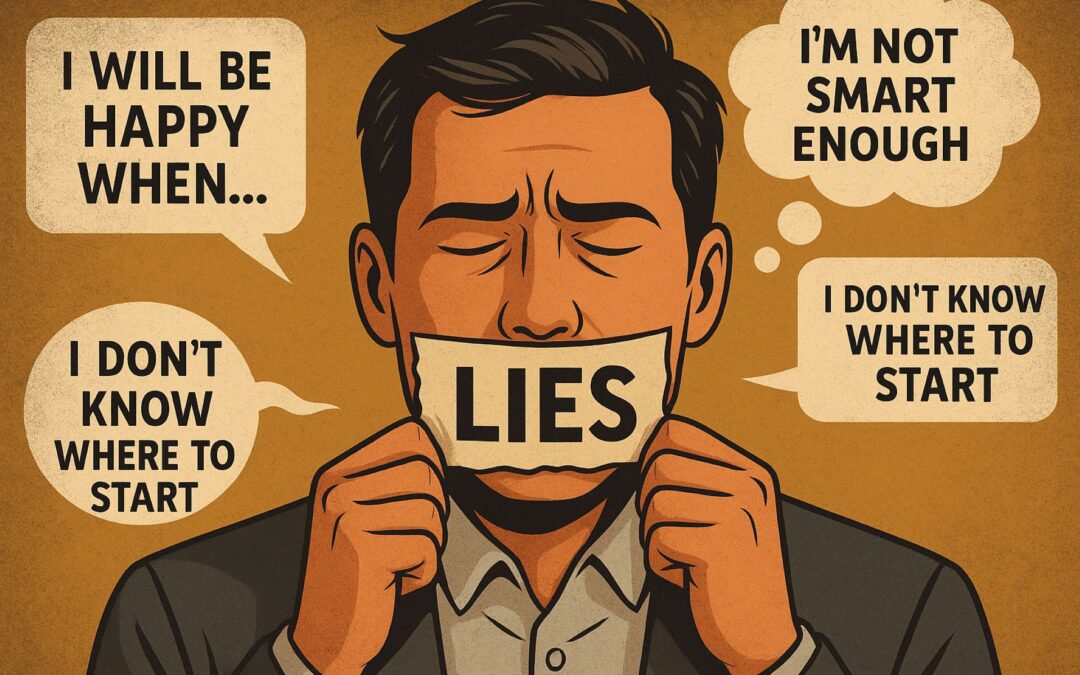
In the hustle and bustle of daily life, it’s easy to slip into the habit of deceiving ourselves. While we may readily condemn dishonesty when it’s directed outward, we often fail to recognize the insidious nature of self-deception. Each day, we tell ourselves lies—small falsehoods that we use to justify our actions, protect our egos, or avoid uncomfortable truths. But these lies, though seemingly innocuous, can have profound consequences on our well-being and success.
1. Today is the Last Day I Relax
This lie hides behind the comforting illusion that rest can endlessly be postponed without consequence. It’s the mental permission slip we give ourselves to delay meaningful action, wrapped in the guise of deserved relaxation. The trouble is, this “last day to relax” rarely stays last. It morphs into a pattern, a daily mantra that numbs ambition and nurtures inertia.
Abraham Lincoln’s exhortation to “leave nothing for tomorrow which can be done today” is a rallying cry against this self-sabotage. When you push your responsibilities, your dreams, or even small tasks into the nebulous “tomorrow,” you hand over your power to an unpredictable future. Tomorrow, after all, may never arrive as you imagine—it’s a shifting target that excuses inaction under the pretense of patience.
Underlying this procrastination is resistance, an invisible, often unconscious force that fights against your creative impulses and your desire to improve. Resistance is slippery; it hides behind fatigue, distraction, and rationalizations. It seduces you with the allure of comfort, whispering that the discomfort of starting is too great. But resistance is a relentless adversary—it doesn’t tire, doesn’t negotiate, and grows stronger with every concession you make.
Rest itself is essential for sustainable performance. However, there is a critical difference between restorative rest and procrastinatory avoidance. The former rejuvenates and prepares you for productive action, while the latter erodes your momentum and compounds stress. When relaxation becomes a repeated excuse to avoid discomfort, it becomes toxic.
Every moment you delay, your future self accumulates a debt of unfulfilled potential and mounting pressure. That future self—who will face the consequences of today’s choices—is silently observing. Will they thank you for your discipline or curse you for your delay? The choice is yours. The power of now is the only moment where resistance can be overcome and where your dreams begin their journey from possibility to reality.
2. I Will Be Happy When X Happens
This lie is a siren’s call pulling many into a never-ending chase after an elusive, externalized version of happiness. It’s the belief that if you just achieve that promotion, buy that house, land that relationship, or hit that number, you will unlock a permanent state of joy. The problem is, this happiness is conditional, fragile, and transient.
Neuroscientific research reveals why this is so. Happiness is heavily influenced by neurochemicals such as dopamine and serotonin, which spike with novel achievements or acquisitions but quickly normalize. The “high” of success fades, returning you to your emotional baseline, often leaving a sense of emptiness or craving for the next goal. This cycle can trap you in a treadmill of perpetual wanting, making happiness feel like a moving target just out of reach.
The cultural narrative compounds this issue. Society bombards you with messages that link happiness to material success, social status, or future milestones. You internalize the idea that you must “earn” happiness, effectively signing a contract to be dissatisfied until certain conditions are met.
True happiness, however, is an ongoing practice and state of mind, not a destination. It is cultivated through gratitude, acceptance, and the capacity to find contentment in the present moment, regardless of circumstance. This skill requires intentional training—learning to observe your thoughts, manage desires, and recognize when your expectations distort reality.
About 40% of your happiness is within your control, influenced by your attitudes, habits, and mindset. This insight is empowering; it means you don’t have to wait for external conditions to be met to experience joy. Instead, you can cultivate happiness through self-awareness, mindfulness, and aligning your life with intrinsic values.
Happiness is less about accumulating achievements and more about nurturing an internal state where nothing essential feels missing. It is a delicate balance between striving for growth and appreciating what already is. Free yourself from the myth that happiness is “over there” in the future. It lives here—in your perspective, in your daily choices, and in your willingness to be present.
3. This is the Last Time I’m Doing X
The declaration, “This is the last time I’m doing X,” often rings hollow because it’s a defense mechanism masking deep-seated struggles with habit, addiction, or negative behavior patterns. When someone utters these words, it’s usually a sign they’re wrestling with the uncomfortable truth that their actions aren’t aligned with their values or goals. Yet, beneath this surface-level commitment often lies a repeating cycle of denial and self-deception.
From a psychological perspective, these proclamations serve as temporary self-soothing statements. They allow individuals to momentarily convince themselves they have control, creating an illusion of progress without requiring immediate change. However, this self-deception can quickly evolve into a dangerous loop, where the individual truly begins to believe their own promises even as they continue to repeat the very behaviors they want to stop.
This cycle can erode self-trust, leading to feelings of guilt, shame, and helplessness. When words lose their power to effect change, behavior solidifies into habitual patterns that become increasingly difficult to break. The brain, wired for consistency, tends to resist abrupt change. Breaking free requires more than verbal affirmations—it demands honest self-reflection, strategic planning, and often external support or accountability.
True transformation is a process, not a one-time declaration. It involves identifying triggers, creating healthier habits, and cultivating resilience against setbacks. Instead of relying on “last time” statements, focus on small, deliberate actions that reinforce your commitment. Change is built on persistence and honesty, not empty promises.
4. I Am Too Old or Too Young to Do This
Age-related self-limiting beliefs are a pervasive form of internal censorship that unnecessarily restrict human potential. Telling yourself you’re “too old” or “too young” to pursue a dream, learn a new skill, or start a new chapter is not grounded in fact but in societal conditioning and fear of stepping outside perceived norms.
Philosophers such as Jean-Paul Sartre have profoundly argued that life lacks inherent meaning; rather, it is up to each individual to construct purpose through authentic choices and actions. This existential freedom is ageless. The boundaries that age imposes biologically do not equate to limitations on the human spirit’s capacity for growth, reinvention, and fulfillment.
Similarly, utilitarian thinkers like John Stuart Mill championed the pursuit of happiness through the development and expression of one’s unique talents and passions. Age, therefore, should never be a barrier to engaging fully with life or chasing aspirations. In fact, many great achievements across history have come late in life, illustrating that time can deepen wisdom and resilience rather than diminish possibility.
Conversely, youth is often accompanied by energy and openness but can be undermined by self-doubt or impatience. Believing you’re too young discounts the power of curiosity, experimentation, and the fearless creativity that youth can bring.
The myth of age-based limitation often serves as an excuse to avoid risk or discomfort. It subtly cloaks fear in socially acceptable terms. Embracing your current age—whether young or old—as the perfect time to act is an act of rebellion against this lie. It acknowledges that your potential is not fixed by numbers but expanded through intention and courage.
Waiting for a sign or the “right time” is, in reality, waiting for permission to live fully. The truth is, the only time you truly have is now. Challenge the narrative that age defines your limits. Instead, let it remind you that life’s value is measured by how authentically and boldly you choose to engage with it.
5. Next Year is Gonna Be My Year
The belief that “next year will be my year” is one of the most common and comforting lies people tell themselves. It offers a psychological reset button, a future horizon where everything will suddenly change for the better. Yet, this mindset is often little more than wishful thinking disguised as a plan. Waiting for an arbitrary calendar date to turn your life around delays the hard, gritty work that real transformation demands.
New Year’s resolutions are a cultural phenomenon that promises reinvention but frequently falls short because it underestimates the complexity of behavior change. Success is not born from a single moment of resolve but from consistent, disciplined actions repeated daily. Philosophers like Aristotle emphasized ethos—character formed through habits. This means that who you become is the product of the everyday choices you make, not an event that happens once a year.
More often than not, resolutions are made without sufficient self-reflection. People declare lofty goals that aren’t rooted in genuine desire or realistic planning, creating a disconnect between intention and action. This gap leads to inevitable failure, reinforcing cycles of disappointment and self-doubt.
Moreover, this “next year” mentality fosters procrastination. It allows you to defer responsibility and effort, clinging to the illusion that change will come later without sacrifice now. It’s a comfortable escape from the discomfort of facing your current reality and committing to the discipline required to shift it.
If you want to make a real breakthrough, the time is now—not next year, not next Monday, not after the perfect moment. Start small, build momentum, and show up every day. Real growth thrives in the steady accumulation of effort, not in sudden bursts of enthusiasm.
6. I Am Special; Nothing Bad Can Happen to Me
There’s a natural human tendency to believe in our own exceptionality—that somehow, because of who we are, the rules don’t apply to us. This belief feels empowering at first but quickly becomes perilous when it blinds us to risks and the unpredictable nature of life. Thinking “nothing bad can happen to me” is a dangerous form of denial that sets you up for unnecessary hardship.
Stoic philosophy provides a profound counterpoint through the practice of premeditatio malorum, or negative visualization. This mental exercise involves vividly imagining possible adversities before they occur—not to invite fear, but to build resilience and emotional preparedness. By confronting potential hardships ahead of time, you reduce their power to unsettle you and increase your capacity to respond calmly and effectively.
Epictetus, one of the most influential Stoics, advised his students to consider the worst-case scenarios regularly. This wasn’t a morbid obsession but a practical strategy to temper anxiety and cultivate gratitude for what you have. Preparing mentally for loss, failure, or pain means you’re less likely to be blindsided by life’s inevitable challenges.
Believing you are immune to misfortune fosters complacency, poor planning, and reckless decision-making. It underestimates the chaotic forces that shape the world and your place within it. Remember, while you are the main character in your life story, you exist within a vast, unpredictable universe with its own narrative arc.
Acknowledging vulnerability is not weakness—it is strength. It grounds you in reality and enables proactive strategies for protection and growth. Embrace the balance of hope and caution, and you’ll navigate life’s uncertainties with greater wisdom and equanimity.
7. I Am Not Smart Enough
The belief that you’re “not smart enough” is one of the most debilitating lies because it erects an invisible barrier around your potential before you even begin. This mindset often stems from a fixed view of intelligence — the idea that cognitive ability is a static, unchangeable trait you were born with. When you accept this lie, you limit your ambitions, avoid challenges, and resign yourself to mediocrity.
Psychologists call this the fixed mindset, a concept popularized by Carol Dweck. People with a fixed mindset see effort as fruitless and fear failure as a reflection of their innate inadequacy. This fear shuts down curiosity and blocks the drive to learn or grow. It’s a self-fulfilling prophecy: if you believe you can’t get smarter, you won’t try, and so your abilities stagnate.
However, decades of research in neuroplasticity reveal a far more empowering truth. Intelligence is not a fixed quantity but a malleable skill. The brain rewires itself throughout life in response to learning and experience. Skills, creativity, problem-solving ability — all can be cultivated through deliberate practice, persistence, and resilience.
More importantly, success is rarely dictated by raw intelligence alone. Qualities like grit, adaptability, emotional intelligence, and the ability to learn from failure often determine who excels. Einstein himself famously said, “It’s not that I’m so smart, it’s just that I stay with problems longer.”
When resistance knocks at your door, the “I’m not smart enough” lie is often a convenient excuse to avoid discomfort or risk. It’s a shield against uncertainty. The antidote is embracing a growth mindset — viewing intelligence and ability as works in progress. Celebrate effort and learning over perfection. Understand that your brain is capable of far more than you currently believe. By rejecting this lie, you open the door to continual expansion and achievement.
8. I Don’t Know Where to Start
Not knowing where to start can feel like standing at the foot of a towering mountain with no trail markers. This paralysis can be paralyzing, leaving you stuck in indecision and inaction. It’s one of the most common mental traps, fueled by overwhelm, fear of failure, and the pressure to get it perfectly right from the outset.
Ancient Stoic philosophy offers a radical reframe: “The obstacle is the way.” This idea transforms barriers from insurmountable walls into pathways. The difficulty you face is not a sign to stop but a signal of where your growth lies. The first step—the act of beginning—is itself the way forward.
The fear of starting is often tied to “analysis paralysis,” a phenomenon where overthinking and endless planning prevent any actual movement. In today’s world, with limitless information and options, this is a modern affliction. The desire for certainty and control becomes a trap, masking the underlying fear of imperfection and failure.
The cure is deceptively simple yet profound: start anywhere. Pick something that sparks your interest, no matter how small or imperfect. The momentum created by action propels you forward, generating clarity and confidence over time. Failure is not a pitfall but a feedback mechanism—essential data guiding your adjustments.
You don’t need a fully mapped-out plan before you begin; you only need curiosity, courage, and the willingness to learn through doing. As the Stoics remind us, obstacles are not detours—they are the road. Embrace the discomfort of the unknown, take the first step, and trust that the path will unfold with each move you make.
9. The Present is More Important Than the Future
There’s a compelling appeal to the idea that the present moment is all that truly matters. Mindfulness, after all, teaches us to ground ourselves fully in the now, to savor experience, and to escape the tyranny of worry. However, the lie that “the present is more important than the future” distorts this wisdom into a dangerous imbalance, one that prioritizes short-term pleasure at the expense of long-term wellbeing.
Our brains are wired to seek instant gratification. Dopamine, the neurotransmitter of reward, floods our system when we indulge in immediate pleasures—whether it’s scrolling social media, junk food, or impulsive spending. While these rewards feel good momentarily, they often sabotage future goals by diverting energy and focus away from meaningful, sustained effort.
Ignoring the future leads to a myopic mindset that discounts the consequences of today’s actions. It’s a subtle surrender to temptation, where the fleeting allure of “right now” outweighs the value of delayed gratification, patience, and planning. This tendency can result in chronic stress, financial insecurity, and unfulfilled potential.
True mastery lies in balancing presence with foresight. Philosophers like Epicurus advocated for mindful enjoyment of simple pleasures while maintaining prudence and moderation. The Stoics emphasized that living well involves preparation for the future, embracing discipline in the present to secure long-term tranquility.
Prioritizing the future doesn’t mean ignoring the present—it means aligning your current actions with your deeper values and goals. The small, consistent efforts you invest today compound over time, creating profound satisfaction and success. Developing this long-term perspective trains your brain to value sustainable rewards over transient highs.
Anchoring yourself solely in the present moment without regard for tomorrow creates fragility. Cultivating the ability to live in the now while steering toward the future is the foundation for resilience, growth, and enduring fulfillment.
10. I Will Be Happy When I Have X Amount of Money
The conviction that a certain amount of money will finally unlock happiness is one of the most pervasive and damaging lies in modern society. From a young age, many are conditioned to equate wealth with security, freedom, and joy, leading to the relentless pursuit of financial milestones as if they were the ultimate answer to life’s questions.
Yet, money is at best a facilitator—not the source—of happiness. While financial stability can relieve stressors like insecurity and scarcity, it cannot manufacture the deeper states of contentment, meaning, or purpose. Emotional wellbeing depends far more on perspective, relationships, health, and personal growth than on bank balances.
Studies on happiness and wealth consistently show a complex relationship: increases in income beyond a modest threshold produce diminishing returns in subjective wellbeing. This means that after your basic needs and some comforts are met, more money does little to increase long-term happiness.
The problem with tying happiness to money is twofold. First, it externalizes your emotional state, making it contingent on factors outside your immediate control. Wealth can be gained or lost, often unpredictably, which makes your happiness precarious if it depends solely on financial fortune.
Second, the pursuit of money can become a never-ending race, where the goalposts keep shifting. The “I’ll be happy when I have X” mindset fosters chronic dissatisfaction, pushing you to delay gratitude and joy until some future, often ill-defined, point.
True happiness comes from cultivating enoughness—the profound realization that your life is already complete in this moment, that nothing essential is missing. It’s about appreciating what you have, understanding your values, and nurturing relationships and passions that enrich your soul.
Money is a tool to build the life you want, but it should never be mistaken for the destination. Learning to enjoy the journey, regardless of your financial status, is a radical act of freedom and wisdom. Knowing when to pause, reflect, and savor the present transforms wealth from a chase into a resource for living well.
Conclusion
In conclusion, the lies we tell ourselves each day are but illusions—shadows that obscure the truth of who we are and what we are capable of achieving. By confronting these lies with courage and honesty, we can embark on a journey of self-discovery and transformation—a journey that leads to greater happiness, fulfillment, and authenticity.
So let us challenge the lies that hold us back, embrace the truth of who we are, and step boldly into the future with confidence and clarity. For it is only by facing our fears and confronting our deepest truths that we can truly become the architects of our own destiny.