
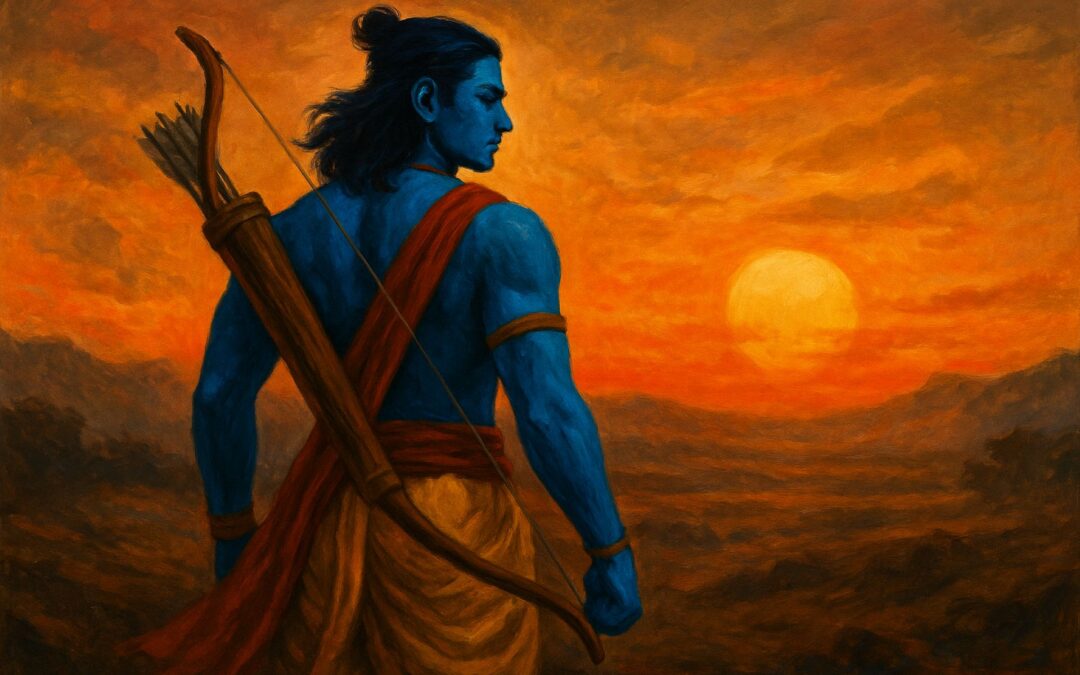
The tale of Ram, as chronicled in the Ram: Scion of Ikshvaku by Amish Tripathi, is more than a retelling of an ancient epic—it is a vivid exploration of duty, justice, and destiny woven into the fabric of a fractured kingdom. From his formative years under the guidance of Sage Vashistha to the tumultuous events that test his resolve and righteousness, Ram’s journey encapsulates the timeless struggle between dharma and adharma. This narrative delves deep into the complexities of leadership, sacrifice, and moral conviction, painting a portrait of a hero whose path is as much about inner transformation as it is about external conquest.

The Formative Years: Ram and His Brothers at Sage Vashistha’s Hermitage
The transition from the luxuries of the royal palace in Ayodhya to the austere hermitage of Sage Vashistha was no mere change of address for Ram and his brothers; it was an initiation into a profound transformation. The hermitage stood as a bastion of ancient wisdom, nestled within a landscape where the whispers of nature intertwined with the echoes of sacred chants. Here, stripped of princely comforts, the young princes encountered a world governed not by material opulence but by rigorous discipline and spiritual profundity.
Sage Vashistha, a luminary among sages, was more than a teacher—he was a custodian of dharma and cosmic order. His curriculum was exhaustive, weaving together martial discipline, ethical reasoning, political philosophy, and metaphysical inquiry. Ram was not simply trained in wielding weapons; he was schooled in the art of judicious leadership, learning that true strength lies in restraint and wisdom, not mere brute force. Every lesson was layered with nuance, illustrating that governance demanded a harmonious balance between power and compassion.
Beyond academics and combat, the hermitage was a crucible of character-building. The princes were immersed in the history and plight of their land—fractured kingdoms, growing internal strife, and the creeping erosion of virtue among rulers. Vashistha’s teachings compelled them to grasp that their roles extended beyond lineage—they were stewards of justice and protectors of a society teetering on the edge of chaos.
The brothers forged a bond forged in shared hardship and common purpose. Despite the complexities of their birthright—with different mothers and rivalries simmering beneath the surface—they cultivated loyalty and mutual respect. This fraternal alliance, nurtured within the sanctity of the hermitage, would become a vital bulwark against the treacheries and betrayals awaiting them beyond those sacred walls.
The Tragic Catalyst: The Murder of Roshni and the Consequences of Justice
The serene rhythms of the princes’ education and growth were violently disrupted by a harrowing tragedy that rippled through the very fabric of their world. Roshni, daughter of the prosperous trader Manthara and a cherished sisterly figure to the princes, embodied innocence and warmth. Her brutal gang rape and murder were not isolated acts of cruelty but a shattering breach of societal and moral order that demanded reckoning.
Ram, entrusted with upholding law and order, found himself at the heart of a storm that tested the core of his ideals. The legal machinery of Ayodhya was swift and uncompromising—most perpetrators faced the ultimate punishment, reinforcing the city’s unyielding stance against such atrocities. Yet, the case of Dhenuka, the youngest accused, complicated matters profoundly. Being underage, the law prescribed imprisonment rather than execution, forcing Ram to enforce a verdict that clashed with popular clamour for vengeance.
Ram’s unwavering commitment to justice, even in the face of overwhelming emotional pressure, underscored his integrity. However, this principled stance was a double-edged sword. Manthara, shrewd and calculating, capitalized on the dissatisfaction and manipulated Kaikeyi to sway Bharat. The resulting secret execution of Dhenuka by Bharat was a betrayal that cut deep—not just a legal violation but a rupture within the royal family’s fragile trust.
This act exposed the volatile intersection of law, politics, and familial loyalty. Ram’s chagrin was not just personal anguish but a profound disillusionment with the very structures he sought to uphold. It was a grim reminder that justice in a kingdom steeped in ambition and intrigue is often entangled with compromise, and that even the noblest of intentions can be undermined by human frailty and greed.
The Rise of Ram: Crown Prince and Protector of the Realm
Following the turmoil that shook Ayodhya and tested the limits of law and loyalty, King Dashrath’s resolve crystallized around a singular truth: Ram was the embodiment of the leadership his kingdom desperately needed. His appointment as crown prince was not merely a ceremonial gesture but a powerful affirmation of his virtues, capabilities, and the hope he inspired among the people. In an era riddled with political intrigues and growing external threats, Ram represented a beacon of steadfastness and righteousness.
His role extended far beyond courtly pomp. Ram was entrusted with the complex and delicate task of maintaining law, order, and justice in a kingdom fraught with unrest and decay. Unlike many rulers who wielded power as a blunt instrument, Ram governed with a nuanced understanding of balance — between mercy and discipline, strength and wisdom.
This maturity was put to the test when Sage Vishwamitra, the revered leader of the Malayaputra tribe, summoned Ram and his brother Lakshman to aid in protecting his hermitage from relentless assaults by the Asuras. These Asuras were no ordinary foes; they symbolized forces of chaos intent on disrupting cosmic and earthly harmony. The Malayaputras themselves were custodians of dharma, guardians against the encroaching darkness.
Ram’s response was a masterclass in strategic acumen and moral fortitude. He didn’t merely repel the attacks with brute force; he engaged the Asuras in dialogue, persuading them to relocate to Pariha — the domain of Lord Rudra, a powerful deity whose authority could contain their aggression. This act of diplomacy underscored Ram’s unique blend of warrior prowess and statesmanship.
Amidst these events, Lakshman disclosed to Ram a monumental secret: Ram had been anointed by Sage Vashistha as the next incarnation of Vishnu, the divine preserver of cosmic order. This revelation transformed Ram’s understanding of his own destiny. He was no longer just a prince or warrior but a divine agent tasked with restoring dharma on earth. The weight of this knowledge deepened his sense of responsibility and sharpened his resolve to fulfill the role fate had carved for him.
The Meeting of Equals: Ram and Sita in Mithila
The journey to Mithila was more than a diplomatic mission; it was the prelude to a union that would shape the course of legend and history. In the distant kingdom, Ram encountered Sita — the adopted daughter of King Janak — whose intellect, virtue, and devotion to law rivaled his own. Sita was no passive princess; she was a paragon of righteousness and strength, her spirit unwavering amidst the constraints of royal expectation.
Their meeting was electric, a meeting of equals bound by shared ideals. Both revered the principles of dharma and saw leadership not as a privilege but as an onerous duty to uphold justice and truth. This intellectual and spiritual parity sowed the seeds of mutual respect that would soon blossom into profound love.
The grand Swayamvar arranged by King Janak was not just a ceremonial occasion but a formidable test for prospective suitors. It attracted princes, warriors, and kings from across realms, each eager to claim Sita’s hand and the prestige it conferred. The arrival of Raavan and his brother Kumbhakarna added an ominous shadow. Their storming out upon Vishwamitra’s announcement of Ram as the first suitor was an unmistakable display of arrogance and veiled menace.
Ram’s triumph in the Swayamvar was a testament not only to his valor but to the alignment of destiny and virtue. Winning Sita’s hand was emblematic of dharma’s ascendancy over adharma — righteousness prevailing over tyranny and chaos. Their marriage symbolized the coming together of two souls deeply committed to law, order, and the preservation of cosmic balance.
The union was further solidified by Lakshman’s marriage to Urmila, King Janak’s biological daughter, intertwining the fates of Ayodhya and Mithila. This alliance of blood and spirit created a powerful foundation for the challenges that lay ahead, reinforcing the bonds of loyalty, honor, and shared purpose that would be vital in the looming storms.
The Siege of Mithila and the Forbidden Weapon
The joyous celebrations of the royal unions in Mithila were abruptly overshadowed by the looming threat of Raavan’s wrath. Enraged and humiliated by Ram’s triumph at the Swayamvar, Raavan unleashed a massive military assault on Mithila, sending an overwhelming force of ten thousand soldiers to lay siege to the kingdom. This was not merely an act of vengeance but a calculated move to crush the rising influence of Ram and to destabilize a kingdom aligned with dharma.
Faced with a seemingly insurmountable enemy, Ram found himself at the crossroads of duty and morality. The principles he had been taught since childhood, the delicate balance between righteous action and restraint, were put to a brutal test. Conventional warfare strategies were insufficient against the ferocity and numbers of Raavan’s forces.
In this desperate hour, Sage Vishwamitra revealed the existence of the Asurastra — a biological weapon of unimaginable destructive power. The Asurastra was no ordinary weapon; it carried the potential to unleash devastation on a massive scale, capable of indiscriminately annihilating armies and laying waste to entire lands. Its use was strictly forbidden by the Vayuputras, the ancient tribe devoted to Lord Rudra, who had decreed that such weapons be restrained to prevent cosmic imbalance.
Ram’s decision to deploy the Asurastra was fraught with inner turmoil. He was painfully aware that wielding this forbidden weapon contravened sacred laws and could irreparably harm his honor and the very dharma he sought to protect. Yet, the dire circumstances left no room for hesitation. With a heavy heart and resolute will, Ram unleashed the Asurastra, decimating Raavan’s forces and decisively turning the tide of battle.
Though victorious, Ram was burdened by the moral cost of this choice. Raavan himself escaped the carnage aboard the legendary Pushpak Vimaan, a celestial flying chariot, his fury now compounded by defeat and humiliation. The siege and its aftermath underscored the complex nature of warfare where victory often comes shadowed by sacrifice and the erosion of innocence.
The Exile: A King’s Burden and the Bonds of Family
The aftermath of the siege brought Ram face to face with the inexorable consequences of his actions. The use of the forbidden Asurastra was a transgression against divine law, a stain on his otherwise impeccable adherence to dharma. In a society deeply rooted in sacred ordinances, such an act demanded accountability, not only in the eyes of men but before the cosmic order itself.
In an act of profound humility and responsibility, Ram voluntarily accepted a fourteen-year exile from Ayodhya as atonement for breaking Lord Rudra’s command. This self-imposed penance was not a sign of weakness but a testament to Ram’s unwavering commitment to righteousness — a recognition that no personal ambition or comfort could supersede adherence to law and cosmic balance.
Yet, beneath this noble sacrifice lay the machinations of Manthara, whose bitterness over past grievances festered into a dangerous resolve. She cunningly manipulated Kaikeyi, Ram’s stepmother, reminding her of two boons granted by King Dashrath for saving his life in a past battle. Exploiting Kaikeyi’s fears and ambitions, Manthara persuaded her to demand these boons: the exile of Ram and the coronation of her own son, Bharat.
Dashrath, torn between love and duty, was powerless to resist the invocation of these sacred promises. Ram’s departure, accompanied by the devoted Sita and loyal Lakshman, was a somber procession that marked the beginning of a trial by wilderness and destiny.
Bharat, upon learning of these events, was consumed by grief and outrage. Refusing to accept the throne by injustice, he pledged to rule Ayodhya only as a regent in Ram’s name, keeping the seat warm for his rightful elder brother. This vow of loyalty was a poignant counterpoint to the betrayal and underscored the complex interplay of family, power, and honor.
Sita’s wisdom shone even in exile. She forged a secret alliance with Jatayu, the noble vulture-like Naga, and his companions to protect the exiled trio. Through this bond, they gained access to Somras — a mythical elixir granting longevity and vitality — ensuring their strength and endurance during years of hardship ahead. This pact symbolized the intertwining of mortal resolve with supernatural support, a crucial lifeline in the looming struggle against darkness.
The Shadows of Betrayal: Raavan’s Kin Seek Refuge
For thirteen years, Ram, Sita, and Lakshman endured the hardships of exile, navigating the wild terrains with resilience and an unbreakable spirit. Yet, the fragile peace of their secluded existence was shattered when two unexpected visitors arrived — Vibhishan and Shurpanakha, siblings of the formidable demon king Raavan. These siblings, estranged and fleeing from Raavan’s despotic reign, sought sanctuary within Ram’s camp, igniting a complex web of suspicion, hope, and political intrigue.
Vibhishan, the elder brother, was a voice of reason and dissent against Raavan’s tyrannical ambitions. His defection symbolized not just a familial rift but a profound ideological divide within the ranks of Lanka’s ruling class. Shurpanakha, on the other hand, was driven by darker impulses—vengeance and resentment simmered beneath her arrival, foreshadowing the chaos that would soon engulf Ram’s world.
Ram’s acceptance of these fugitives embodied his unwavering commitment to dharma, hospitality, and justice, even when such decisions carried great risk. He balanced wariness with compassion, understanding that even enemies might harbor seeds of change and redemption. Yet, this act of refuge also exposed the camp to vulnerabilities from within.
The tension reached a boiling point when Shurpanakha, driven by malice, attempted to drown Sita in a cold-blooded act of aggression. Sita, far from a helpless victim, displayed fierce resolve and strength, overpowering her assailant. The confrontation escalated as Lakshman, acting instinctively to protect his sister-in-law, severed Shurpanakha’s nose — a symbolic act that marked the irreparable breach between the two factions.
This violent episode forced Ram and his companions to flee their sanctuary, aware that Raavan’s wrath would soon descend upon them with devastating force. The betrayal from Raavan’s own blood highlighted the precariousness of alliances and the ever-present shadows lurking even within acts of refuge. It was a stark reminder that in the great cosmic drama, trust was both a precious commodity and a dangerous gamble.
The Kidnapping of Sita: Rage and Resolve
The delicate equilibrium of Ram’s exile was shattered utterly upon his and Lakshman’s return from a hunting expedition to a scene of grim devastation. Their loyal protector, Jatayu — the mighty vulture-like Naga entrusted with safeguarding Sita — lay mortally wounded, surrounded by his fallen comrades. The air was thick with sorrow and a palpable urgency as Jatayu, with his final breath, revealed a horrifying truth: Raavan had abducted Sita.
This moment was seismic, a turning point that transformed Ram from a prince in exile into a fierce avenger of justice and dharma. The sight of the Pushpak Vimaan, Raavan’s celestial flying chariot, disappearing into the clouds with Sita onboard was unbearable — a visual embodiment of loss, violation, and the urgent call for retribution.
Ram’s fury was not mere personal anguish; it was a righteous storm fueled by the desecration of virtue and cosmic order. His rage was tempered by unwavering resolve and a deep-seated conviction that dharma demanded immediate action. The kidnapping was not just an abduction but an affront to the very principles Ram had sworn to uphold.
This calamity set Ram on an inexorable path, where the boundaries between mortal valor and divine destiny blurred. The quest to rescue Sita would become a legendary saga of courage, sacrifice, and unyielding faith. Ram’s transformation into a leader of armies and a beacon of hope was sealed by this crisis, as he prepared to confront the darkness embodied by Raavan, not just for love but for the restoration of cosmic balance.
Conclusion
Ram’s saga in Ram: Scion of Ikshvaku is a profound meditation on the burdens and blessings of destiny. Through trials of law, loyalty, love, and loss, Ram emerges not merely as a warrior or prince, but as the embodiment of dharma itself—flawed, resolute, and unwavering. His journey from the sanctity of Vashistha’s hermitage to the crucible of exile and the relentless pursuit of justice illuminates the eternal dance between cosmic order and chaos. Ultimately, Ram’s story reminds us that true leadership demands sacrifice, humility, and an unbreakable commitment to righteousness, even when the path is strewn with hardship and heartbreak.