
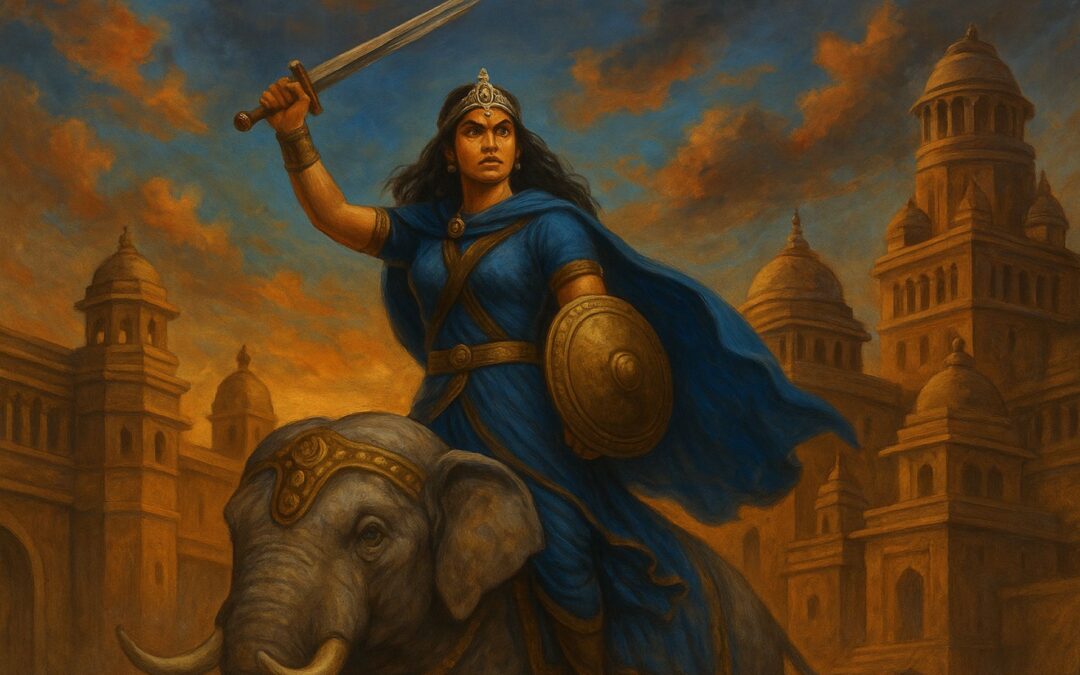
In the sprawling tapestry of epic legends, few stories resonate with the profound complexity and strength embodied by Sita, the warrior princess of Mithila. Far from the gentle and demure figure often portrayed, Sita’s journey is one of fierce determination, political acumen, and spiritual awakening. From her mysterious origins beneath the watchful eye of a vulture to her rise as a leader and divine incarnation, her life weaves together threads of destiny, loyalty, and betrayal. This article delves deep into the first book of the Ram Chandra Series, exploring Sita’s transformative path as a warrior, stateswoman, and exile, revealing a heroine whose courage and intellect redefine ancient myth.

The Mysterious Origins of Sita
The story of Sita begins not in a palace or a temple, but along a lonely, dusty road far from the centers of power. King Janak of Mithila and his queen, Sunaina, were traveling when fate orchestrated a scene both haunting and beautiful—a child lying defenseless in the earth’s furrow, under the vigilant guard of a solitary vulture. This was no ordinary child, nor an ordinary guardian. The vulture, often a symbol of death, decay, and transformation, stood sentinel as if shielding this infant from the chaos of the world. It was an uncanny tableau—a living emblem of protection and resurrection.
The earth’s furrow itself was pregnant with meaning: a scar left by the plow that, paradoxically, also signified life’s potential. Just as seeds sown in a furrow promise a future harvest, so too did this child embody the hope of renewal and destiny. The name Sita, meaning ‘furrow,’ was both literal and profoundly symbolic—a constant reminder of her unique bond to the land and its cycles.
Janak and Sunaina’s decision to adopt the child was both an act of compassion and a recognition of something extraordinary at play. In an era steeped in spiritual and cosmic significance, such omens could not be dismissed as coincidence. Sita’s arrival marked the genesis of a life destined to bridge the earthly and the divine, to carry burdens and blessings in equal measure. The child found protection not only in royal arms but beneath the wings of nature’s guardian, hinting at the sacred journey that lay ahead.
Formative Years at Rishi Shvetaketu’s Ashram
Sita’s early years in Mithila laid the foundation, but it was at Rishi Shvetaketu’s ashram that her transformation truly took shape. The ashram was a crucible of knowledge, discipline, and spiritual awakening. It was here that Sita moved beyond the confines of royal privilege to embrace the rigorous demands of scholarship and combat.
The curriculum was vast and demanding. Sita mastered sacred texts, philosophy, astronomy, and languages, cultivating a mind sharp enough to navigate the complexities of governance and diplomacy. Yet intellectual growth was only part of the equation. Martial training was integral, forging her body and spirit into a weapon of precision, endurance, and grace. Her dedication to mastering the martial arts was not merely for defense but a commitment to embody the warrior ethos—the courage to protect, the wisdom to lead, and the discipline to endure.
Social bonds formed at the ashram enriched her education immeasurably. Among these was her friendship with Radhika, whose steady support and counsel anchored Sita through the rigors of her training. More extraordinary was her kinship with Hanuman, her cousin and a living legend in his own right. As a Vayuputra, Hanuman carried the legacy of the wind deity, a lineage steeped in power and mysticism. His identity as a Naga, a semi-divine serpent being, combined with his distinctive appearance—a monkey’s head perched upon a human body—wove myth and reality into a living tapestry. Together, their bond transcended ordinary friendship, blending familial loyalty with spiritual kinship.
In this sanctified space, surrounded by sages and warriors, Sita’s identity crystallized. She was no longer simply a foundling of the earth but a rising force—a fusion of intellect, strength, and divine purpose—prepared to face the monumental challenges that awaited her beyond the ashram’s sacred walls.
The Secret Appointment by Maharishi Vishvamitra
When Sita reached the pivotal age of fourteen, the trajectory of her life took a dramatic and irrevocable turn. It was at this time that Maharishi Vishvamitra, the formidable and visionary leader of the Malayaputra tribe, arrived at Rishi Shvetaketu’s ashram. The Malayaputras were no ordinary group; they were an elite sect, guardians appointed to serve and prepare the next incarnation of Vishnu—the cosmic preserver destined to restore dharma in the world. Vishvamitra himself was a sage of immense power and insight, carrying the burden of identifying and guiding this divine figure.
Upon his arrival, Vishvamitra’s discerning gaze fell upon Sita, and he was struck not only by her exceptional skills but by an ineffable aura surrounding her. He observed her mastery of martial arts, the breadth of her knowledge, and the depth of her resolve. But beyond these tangible qualities, a mysterious recognition stirred within him—triggered by the distinct call of a hill myna, a bird whose unique sound resonated deeply in his memory. This avian signal unlocked a forgotten thread in the tapestry of fate, a cosmic connection that linked Sita to the divine plan.
Moved by this revelation, Vishvamitra took the monumental decision to appoint Sita as the seventh Vishnu—the next incarnation in the cycle of cosmic guardians. This was a secret of immense gravity; such knowledge could not be revealed lightly. The mantle of Vishnu was not merely a title but a profound responsibility to uphold righteousness, restore balance, and confront darkness. Sita was sworn to keep this truth hidden, a silent guardian of destiny.
This appointment also marked the beginning of crucial alliances. Among the Malayaputra was Jatayu, a noble Naga warrior whose loyalty and strength became an indispensable support for Sita. Gaining Jatayu’s trust was not just a political move—it was a spiritual bond, reinforcing Sita’s place within a network of protectors and allies. Together, they would navigate the treacherous path ahead, facing enemies seen and unseen in the unfolding saga of dharma and power.
Return to Mithila: Loss and Leadership
Sita’s return to her homeland of Mithila was shadowed by the weight of loss and new responsibilities. The death of her mother, Queen Sunaina, left an irreplaceable void in the royal family. Beyond personal grief, this loss signaled a shift in the dynamics of power and care within the household. With her father, King Janak, increasingly absorbed in spiritual contemplation and detachment from worldly affairs, the mantle of familial and political leadership fell heavily upon Sita’s young shoulders.
Caring for her younger sister Urmila became a solemn duty, a task that intertwined personal affection with protective vigilance. Yet Sita’s role extended far beyond family matters. The kingdom of Mithila was at a crossroads, grappling with economic challenges, administrative stagnation, and social unrest. Recognizing her exceptional capabilities and the need for strong governance, the royal council appointed Sita as Prime Minister—an unprecedented position for a woman in that era, signaling a radical shift in traditional power structures.
In this role, Sita’s vision came to the forefront. She embarked on a comprehensive reform agenda aimed at revitalizing Mithila’s economy, strengthening its administrative frameworks, and restoring public faith in the monarchy. Her reforms were not superficial; they sought to address systemic inefficiencies, enhance resource distribution, and promote social welfare.
Sita’s partnership with Samichi, her childhood friend and the kingdom’s chief of police, proved critical. Samichi’s expertise in law enforcement and public security complemented Sita’s strategic acumen. Together, they forged a governance model that combined benevolence with discipline, fostering stability in a kingdom emerging from uncertainty.
Through their concerted efforts, Mithila experienced a renaissance—its finances stabilized, its people’s spirits lifted, and its institutions fortified. Sita’s leadership during this turbulent period showcased her unique blend of compassion, intellect, and unyielding determination, establishing her as a formidable force both in the palace and among the people.
Training and Growing Doubts in Agastyakootam
Having restored stability to Mithila, Sita recognized that her journey was far from over. The role of the seventh Vishnu demanded more than political prowess—it required spiritual depth, martial mastery, and unwavering resolve. To hone these qualities, she traveled to Agastyakootam, the capital city of the Malayaputra tribe. This city was a sanctuary of ancient wisdom and rigorous training, nestled amidst sacred peaks and shrouded in mysticism.
Agastyakootam was a crucible where the esoteric arts of warfare, meditation, and divine knowledge intertwined. Here, Sita immersed herself in intense disciplines designed to awaken the latent divinity within her. Days were spent mastering advanced combat techniques, while nights unfolded in deep spiritual practice, attuning her mind to cosmic rhythms. The city was alive with sages, warriors, and scholars—all preparing for the inevitable battles against forces that threatened dharma.
Yet amidst this preparation, seeds of doubt began to germinate within Sita’s heart. She could not silence the nagging question: why had Maharishi Vishvamitra chosen her over Rama, the illustrious prince of Ayodhya and son of the mighty King Dashrath? Rama’s reputation as a paragon of virtue, skill, and destiny was legendary, and many whispered that he was the true candidate for the next Vishnu incarnation.
Seeking clarity, Sita confided in her trusted friend Radhika, whose insights added layers to the enigma. Radhika revealed that Rama was, indeed, being groomed as a rival candidate by his own mentor, Rishi Vashistha, a sage of immense spiritual authority. This revelation transformed Sita’s internal conflict into a strategic challenge: the cosmic game was not only about spiritual readiness but also about political alliances and legitimacy.
Determined to unify their paths and prevent divisive conflict, Sita conceived a bold plan—a Swayamvar, a traditional ceremony in which she would select her husband from a field of suitors. This union would not only cement a personal bond but also strategically align her destiny with Rama’s, potentially harmonizing the competing claims to the Vishnu mantle. The Swayamvar would serve as both a spiritual rite and a political gambit, a moment where divine purpose and earthly power would intersect.
The Swayamvar and the Arrival of Raavan
The Swayamvar was arranged with grandeur befitting its significance. Nobles, warriors, and princes from far and wide were summoned, their intentions clear: to win Sita’s hand and secure their place in the unfolding destiny. The event was set to be a spectacle of valor, wisdom, and divine favor.
However, the atmosphere was charged with tension when the infamous Raavan, king of Lanka, arrived with his formidable brother Kumbhakaran. Their presence was more than a mere bid for alliance or power—it was an ominous declaration of intent. Raavan’s reputation as a ruthless and cunning adversary preceded him, and his appearance at the Swayamvar cast a dark shadow over the festivities.
Undeterred by this threat, Sita’s political acumen shone. Collaborating closely with Maharishi Vishvamitra, she orchestrated a subtle yet decisive manipulation of the proceedings. Through a mixture of spiritual influence, political maneuvering, and psychological strategy, they ensured that Rama’s name was announced as the first suitor, setting the tone and asserting his precedence.
Rama’s prowess was undeniable. He triumphed in the trials and competitions that followed, winning Sita’s hand in marriage. This union symbolized not just love but the convergence of destinies and the merging of divine purposes. Meanwhile, his brother Lakshman married Sita’s sister Urmila, further solidifying the familial and political bonds.
Yet the victory was bittersweet. The celebrations were abruptly marred by Raavan’s fury and thirst for vengeance, setting in motion events that would engulf Mithila in conflict and test the limits of loyalty, power, and righteousness.
The Siege of Mithila and the Forbidden Asurastra
No sooner had the celebrations of the Swayamvar concluded than the ominous storm of war descended upon Mithila. Incensed by Rama’s triumph and the symbolic alliance it represented, Raavan unleashed a devastating assault on the kingdom. His army, an overwhelming force of 10,000 soldiers, advanced like a relentless tide, intent on crushing the newly forged unity and asserting Lanka’s dominance.
Mithila’s defenders, though valiant, were vastly outnumbered. The city braced itself for a conflict that threatened not only its physical walls but the very fabric of its sovereignty and honor. The siege tested the mettle of every warrior and the resolve of every citizen. In the midst of this crucible, Rama found himself confronting a harrowing dilemma that transcended mere battlefield tactics.
Maharishi Vishvamitra, wielding both spiritual authority and emotional leverage, confronted Rama with a grave choice: deploy the Asurastra, a forbidden biological weapon so devastating it was outlawed by Lord Rudra himself. The Asurastra was not just a weapon of mass destruction—it was an unholy force capable of annihilating armies, laying waste to entire landscapes, and upsetting the cosmic balance. Its usage carried profound moral and spiritual consequences.
Faced with the imminent destruction of Mithila and the lives of its people, Rama wrestled with his conscience. Vishvamitra’s pressure was relentless, bordering on coercion, as he invoked the urgency of the moment and the necessity of sacrifice for dharma. Ultimately, Rama yielded, unleashing the Asurastra in a cataclysmic display of power.
The weapon decimated Raavan’s forces, scattering the invaders and breaking the siege. But the victory was hollow. Raavan himself escaped aboard the legendary Pushpak Viman, a flying chariot that symbolized his enduring menace and technological supremacy. The battlefield was left scarred, the ethical cost of the forbidden weapon weighing heavily on the hearts of those involved.
Exile and Resentment
The aftermath of the siege was marked by somber reflection and heavy consequences. Though Mithila had been saved, the sacred laws of Lord Rudra had been transgressed. The use of the Asurastra, forbidden and profane, could not go unpunished. In an act of profound humility and adherence to dharma, Rama chose to accept a 14-year exile—a period of self-imposed penance to atone for breaking cosmic law.
This decision reverberated through the kingdom and the hearts of those closest to Rama. For Sita, the exile was a crucible of conflicting emotions. While bound by love and loyalty to her husband, she harbored a deep and abiding resentment toward Maharishi Vishvamitra. In her eyes, Vishvamitra had manipulated Rama, pressuring him into deploying a weapon that not only violated sacred law but also sealed their fate into exile. This grudge was not easily assuaged; it created a rift that cut through spiritual guidance and personal bonds alike.
Despite this bitterness, Sita’s resolve remained unshaken. She made the conscious choice to stand with Rama and Lakshman during their exile, embracing the hardships of forest life, political uncertainty, and constant peril. Their survival depended heavily on the protection of Jatayu and his band of warriors, who pledged their vigilance and courage to safeguard the trio.
Moreover, their endurance was sustained by the mystical Somras, an elixir known for its anti-aging and restorative properties. This divine nectar kept them youthful and strong, enabling them to withstand the ravages of time and the relentless challenges of exile.
Together, they embarked on this arduous journey—an odyssey of sacrifice, testing the boundaries of faith, loyalty, and the human spirit.
The Thirteen Years of Trials
The exile that Rama, Sita, and Lakshman undertook was not merely a withdrawal from royal life; it was a profound journey through hardship, transformation, and relentless adversity. For thirteen long years, the trio traversed dense forests, rugged terrains, and unknown realms, far removed from the comforts and securities of palace walls. Each day brought new challenges—both physical and spiritual—that tested their endurance, resilience, and unity.
Life in the wilderness demanded more than survival skills; it required a harmony with nature and a steadfast adherence to dharma amid uncertainty. Sita, once a royal princess and prime minister, adapted to the austere existence with remarkable fortitude. She balanced the roles of protector, nurturer, and strategist, often tending to wounds, offering counsel, and maintaining the morale of the small band that surrounded them.
Throughout this period, countless incidents unfolded—encounters with sages and demons, narrow escapes from danger, and moments of deep introspection. Their exile was punctuated by tests of faith, confrontations with malevolent forces, and the ever-looming threat of Raavan’s pursuit. Each event shaped them further, forging an unbreakable bond between the three companions and deepening their commitment to their divine mission.
The trio’s reliance on Somras, the legendary elixir that preserved youth and vitality, was pivotal. It was not merely a physical sustenance but a symbol of their connection to the cosmic forces that governed their fate. Together, they embodied the ideal of dharmic endurance—accepting suffering with grace, wielding strength with humility, and remaining unwavering in purpose.
Abduction and Betrayal
The fragile equilibrium of exile was shattered one fateful day when Rama and Lakshman ventured out on a hunting expedition, leaving the camp vulnerable. Seizing the opportunity, Raavan’s soldiers launched a sudden and ferocious attack. The camp was thrown into chaos, the air thick with danger and desperation.
In the midst of the turmoil, Sita’s courage was unequivocal. She rushed to the aid of Jatayu, the valiant Naga warrior who had been grievously wounded defending her. Despite her fierce determination and martial skill, the sheer number of enemies overwhelmed her. Captured and rendered unconscious, Sita was seized and carried away aboard the infamous Pushpak Viman—Raavan’s mythical flying chariot and symbol of his power.
Upon regaining consciousness in captivity, Sita’s warrior spirit ignited. She attempted a daring assassination of Raavan during the flight, wielding every ounce of her strength and training. However, her attempt was abruptly thwarted when a blade was pressed to her throat—a lethal reminder of the peril she faced.
The identity of her captor delivered a staggering blow: it was Samichi, her childhood friend and erstwhile ally, who revealed herself as a traitor. This betrayal cut deeper than physical wounds, exposing a web of deceit woven within Sita’s closest circle. Samichi’s duplicity cast a long shadow over Sita’s fate, signaling that the battle was not only against external enemies but also against treachery from within.
This harrowing twist underscored the complexity of Sita’s journey—a path marked by valor and sacrifice, illuminated by loyalty and shadowed by betrayal. It was a testament to the indomitable spirit that defines her saga in the Ram Chandra Series.
Conclusion
Sita’s saga in the Ram Chandra Series Book 1 transcends the boundaries of myth to offer a rich portrait of resilience, leadership, and the multifaceted nature of destiny. Her evolution—from a child found in a furrow to a sovereign guiding her kingdom, from a devoted wife to a warrior confronting betrayal—speaks to the timeless struggle between duty and desire, faith and doubt. As Sita navigates the turbulent currents of cosmic design and human frailty, she emerges not merely as a figure of legend but as an enduring symbol of strength and complexity. Her story invites us to reconsider what it means to be a hero, challenging conventions and inspiring new narratives of power and grace.