
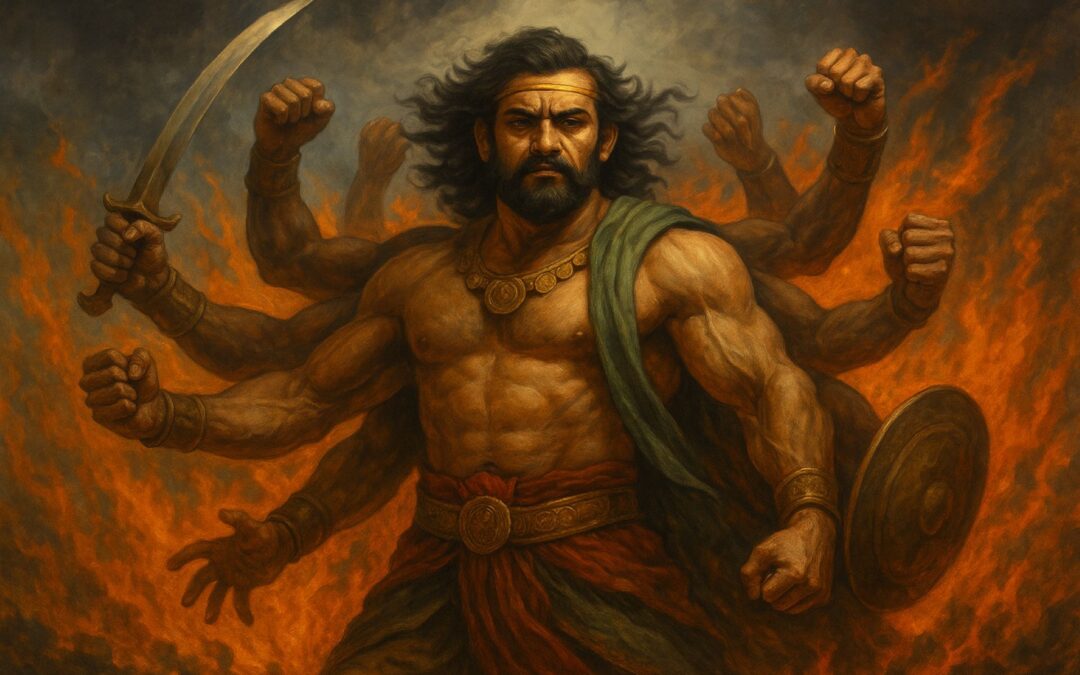
In the vast panorama of Indian epic lore, few figures are as complex and compelling as Raavan—the enigmatic antagonist whose story is steeped in power, passion, and paradox. Ram Chandra Series Book 3: Raavan: Enemy of Aryavarta by Amish Tripathi unravels the intricate layers of this formidable character, tracing his journey from a secretive childhood burdened by a mystical heritage to a ruthless warlord whose ambitions shape the fate of kingdoms.
This article delves into Raavan’s rise, his turbulent relationships, and the pivotal moments that define his legacy, revealing a man driven not just by conquest but by love, loss, and a quest for divine legitimacy. Join us as we explore the fascinating tapestry of Raavan’s life—the triumphs, the tragedies, and the indelible mark he leaves on the epic saga of Aryavarta.

The Birth and Early Life of Raavan: A Secret Naga
Raavan’s origin story is steeped in mystique and foreboding from the very moment of his birth. As the firstborn son of Maharishi Vishrava, he was destined for greatness—or so the world believed. Yet, beneath this veneer of nobility lurked a secret that would shape not only Raavan’s fate but the destiny of Aryavarta itself: Raavan was born a Naga, a serpent being, a lineage often shrouded in enigma and fear. This concealed heritage was carefully hidden from even those closest to him, an invisible mark that set him apart in ways no one could initially comprehend.
The Nagas, with their serpentine qualities and ancient powers, were seen with suspicion and awe. Being born into this line meant inheriting a primal, elemental force that was both a blessing and a curse. For Raavan, it seeded an insatiable hunger for power and control, an obsession that simmered within his young soul like molten lava. From his earliest days, he exhibited traits uncommon among his peers—a restless intensity, an unyielding will, and an uncanny intelligence that made him both captivating and dangerous.
His childhood was not the idyllic innocence one might expect for the son of a sage. Instead, it was fraught with tension and struggle. The duality of his existence—the noble son of Maharishi Vishrava and the secret scion of the Nagas—created an inner conflict that would define his character. This dual identity fueled a relentless drive to assert himself, to claim power not just for survival, but as a statement of existence. Raavan was not content to be a footnote in history; he was determined to be its author.
A pivotal influence in his early years was the figure of the Kanyakumari of Vaidyanath. She was a woman of profound spirituality and fierce compassion, who saw beyond Raavan’s tempestuous exterior. To her, he was not merely a boy marked by his heritage and ambitions but a soul capable of transformation. She implored him to rise above his innate impulses and strive for betterment, planting in him the seeds of moral conflict. Her presence was a rare light in Raavan’s darkening world, a call toward redemption that would echo in his heart even as his path led him toward destruction.
The fragile stability of his early life shattered with the birth of his younger brother. Like Raavan, the infant was also born a Naga, an event that ignited fierce enmity among their father’s disciples who saw the brothers as threats to the established order. At only nine years old, Raavan found himself not as a child but a warrior, alongside his maternal uncle Mareech, fighting to protect his baby brother’s life against powerful adversaries. This brutal baptism by fire was a formative crucible, compelling Raavan to confront violence, betrayal, and the stark realities of survival.
This conflict led to a devastating fracture within his own family. Their maternal kin, once a source of refuge, cast them out, deepening their exile and loneliness. Seeking solace and guidance, Raavan and Mareech journeyed to Vaidyanath once again, hoping to find the Kanyakumari who had inspired them. But upon arrival, they discovered that the woman who had once been their moral compass had changed; her warmth and wisdom had been replaced by silence and distance. This painful realization forced Raavan to confront the harsh truth: the world he longed for was no longer accessible.
With a heavy heart and a mind burdened by loss, Raavan made the agonizing decision to leave Vaidyanath. This departure marked the end of his childhood innocence and the beginning of a relentless pursuit of power, retribution, and identity. It was a turning point where the boy who once yearned to be better embraced the shadows within himself, setting him on a path that would shape the fate of kingdoms and echo through the ages.
A Smuggler’s Rise in the South: Survival and Loyalty
Raavan’s exile from Vaidyanath thrust him and his small band—his loyal maternal uncle Mareech and his beloved younger brother Kumbhakarna—into the crucible of survival in the southern reaches of the Indian subcontinent. Here, the sociopolitical landscape was a complex tapestry woven with caste hierarchies and power struggles. The Kshatriya warrior class held dominion, their martial prowess ensuring dominance over the fertile lands of the Sapt Sindhu, while the Vaishyas—the merchant and trading communities to which Raavan belonged—found themselves marginalized, their influence severely curtailed.
For a boy barely ten years old, this world was unyielding and unforgiving. Yet necessity bred innovation. Raavan, sharp beyond his years and fiercely determined, abandoned any illusion of a peaceful existence. Instead, he embraced the underbelly of commerce—smuggling—transforming it into his battleground. Operating within the shadows of legality, he honed skills not just of trade but of deception, strategy, and survival. Smuggling was more than a livelihood; it was a lifeline. Every shipment, every clandestine deal was a step toward securing a future for those he loved.
At the heart of Raavan’s ambitions lay an unwavering loyalty to his family. His mother, a pillar of strength despite the bitter ostracism from their maternal clan, depended on him for support. Kumbhakarna, the gentle giant with ears shaped like the traditional ‘kumbha’ pots, was not just a brother but a confidant and anchor in a world that offered little mercy. Mareech, the ever-faithful uncle, stood beside Raavan through every trial, a steadfast guardian and partner in their shared exile.
Raavan’s affection for Kumbhakarna was fierce and protective. While the elder brother navigated the treacherous currents of the southern trade networks, Kumbha’s loyalty was absolute—he embodied the dharma of a devoted sibling, willing to sacrifice everything. This bond became a defining element of Raavan’s early life, tempering his ruthlessness with moments of genuine tenderness.
Despite his youth, Raavan’s reputation grew. The turning point came when he boldly seized control of Akampana’s ship—a strategic asset in the bustling maritime trade that crisscrossed the Indian Ocean. This coup was no mere act of piracy; it was a calculated assertion of power that catapulted Raavan from a street-smart smuggler to a formidable player in the commerce of the region. With this vessel under his command, he expanded his network, gaining both wealth and influence.
Amidst this harsh existence, a poignant moment of humanity shines through in the rescue of a young girl named Samichi. Saved from peril by Raavan and his companions, Samichi’s loyalty was swift and unwavering. She revered Raavan as her Iraiva—a divine protector—signifying a spiritual dimension to their relationship. This bond was symbolic: even in a world marked by treachery and hardship, Raavan’s actions could inspire devotion and faith.
Yet, underlying all his endeavors was the memory of the Kanyakumari, the enigmatic woman who had ignited his desire to be better, whose name and location remained an elusive whisper in the wind. She was both his inspiration and his unattainable dream—a symbol of the person Raavan might have become had fate not conspired against him.
This phase of Raavan’s life was a crucible of growth—where innocence was forged into ambition, love tempered with loss, and survival demanded sacrifices that would shape the ruthless warlord to come. It was the foundation of a legacy built not just on power, but on the fierce loyalty to those he held dear in a world that had cast them aside.
The Encounter with Vedavati: Love, Loss, and Ruthlessness
The tapestry of Raavan’s life, woven with threads of ambition and hardship, took a profound and agonizing turn during a calculated military operation against Krakachabahu, the elusive governor of Chilika. Krakachabahu had cleverly concealed vast treasures from the King of Kalinga, and Raavan, ever the strategic tactician, led an assault to expose and seize this hidden wealth. It was amid the chaos and violence of this campaign that Raavan’s past collided violently with his present—he saw her again, the woman who had haunted his heart since childhood, now living under the name Vedavati.
Vedavati was no longer the ethereal Kanyakumari who once implored him to seek redemption. Time had transformed her, and she had embraced a new identity, a new life far removed from the shadows of their shared past. She was married to Prithvi, a modest trader whose life was a quiet contrast to Raavan’s tempestuous existence. Vedavati was also pregnant, carrying the hope of a new beginning. The sight of her, serene and seemingly distant from his world, ignited a complex storm within Raavan—part yearning, part heartbreak, part simmering resentment.
Raavan’s efforts to rekindle the bond with Vedavati were marked by desperation and passion. He attempted to woo her back, to reclaim the love that had once seemed possible. Yet Vedavati remained resolute, her heart tethered to her new life and husband, unwilling to be drawn into the turbulent world Raavan inhabited. This rejection cut deep, exposing a vulnerability beneath Raavan’s formidable exterior—a man caught between the ruthless desires of power and the tender ache of lost love.
Tragedy struck when Vedavati and Prithvi were brutally murdered by the son of the village leader. The catalyst for this violence was the hundi—a financial instrument, a debt note—that Raavan had once given Vedavati, a symbol of his lingering presence and a connection to a past life she sought to escape. This act of cruelty was not just a personal loss but a shattering blow to Raavan’s already fractured psyche.
The massacre of the villagers who committed this atrocity became Raavan’s reckoning. His wrath was swift and merciless, an eruption of vengeance that transformed him irrevocably. Where once there might have been a flicker of compassion or hope for change, now only ruthless determination remained. The burning of the village was not merely retribution; it was a declaration—a vow that Raavan would dismantle the very fabric of the Sapt Sindhu, the land that had nurtured his pain and betrayal.
This episode marked a pivotal juncture in Raavan’s evolution from a boy with dreams of redemption to a warlord consumed by fury and ambition. The loss of Vedavati severed the last ties to his softer self, hardening his resolve to wield power without restraint. The man who emerged was one who wielded his ruthlessness as both shield and sword, poised to reshape the world on his own terms.
Through this crucible of love and loss, Raavan’s character became a study in contradictions—capable of deep affection yet merciless in vengeance; a seeker of connection yet driven by isolation; a symbol of raw power forged in the fires of personal tragedy. This duality would come to define his actions, motivations, and the epic saga that surrounds his name.
Conquest and Command: Lanka’s Rise and Fractured Brotherhood
Raavan’s ascent from a cunning smuggler to a formidable sovereign was marked by strategic brilliance and unrelenting ambition. His eyes were fixed not merely on personal gain but on reshaping the very economic and political landscape of the Sapt Sindhu region. Central to this grand design was Lanka—a city-state ripe with opportunity and rich in untapped wealth. Through calculated moves, Raavan seized control of Lanka’s trading networks, elevating the island to unprecedented prosperity and securing his position as a pivotal figure in the subcontinent’s power matrix.
Under the aegis of Kuber, the chief trader of Lanka, Raavan was appointed general, a title that solidified his authority over both military and mercantile domains. This fusion of commerce and command allowed him to wield influence far beyond the battlefield, transforming Lanka into a commercial powerhouse that attracted traders, warriors, and political actors alike. His control over the lucrative maritime routes ensured a steady flow of wealth and resources, fueling his expanding ambitions.
Raavan’s most decisive military triumph came at the battle of Karachapa, where he confronted Dashrath, the revered king of Ayodhya. This confrontation was more than a mere clash of armies; it was a symbolic contest between the old guard and the rising force that Raavan embodied. Emerging victorious, Raavan not only crushed a powerful adversary but also gained dominion over the financial arteries that fed the kingdoms of the Sapt Sindhu. Lanka’s coffers swelled, and under Raavan’s iron hand, the city became the richest and most influential in the region—a glittering jewel in his growing empire.
Yet, this meteoric rise was not without internal fissures. Raavan’s increasing ruthlessness alienated those closest to him, most notably his brother Kumbhakarna. Though Kumbha remained fiercely loyal, his adherence to dharma—the righteous path—began to create a chasm between the siblings. Where Raavan sought absolute power and control, often through intimidation and force, Kumbhakarna yearned for balance and moral integrity. This divergence foreshadowed a fracturing of familial bonds that would ripple through the unfolding saga.
Amid the turbulence of conquest and governance, Raavan’s personal life took shape through his marriage to Mandodari, a union that was as much political as it was emotional. Mandodari brought with her grace and intelligence, serving as both consort and counsel. Together, they bore a son, Indrajit, whom Raavan cherished deeply. Indrajit’s birth represented not only a continuation of Raavan’s lineage but also the embodiment of his legacy—a symbol of strength and future dominion.
The dynamics between Raavan, Kumbhakarna, and Mandodari revealed the complexity beneath the veneer of power. Raavan’s expanding empire was mirrored by the widening emotional distances and conflicting values within his closest relationships. This interplay of ambition, loyalty, and dissent created a potent undercurrent that would influence decisions, alliances, and ultimately, the fate of kingdoms.
In this crucible of conquest and kinship, Raavan’s Lanka stood as both a testament to his genius and a reflection of his inner turmoil. His empire’s glittering rise was shadowed by the growing estrangement of those he loved, setting the stage for the dramatic and tragic events that would follow.
The Plot for Mithila and Kishkindha: Ambition Meets Humiliation
Raavan’s ambitions extended far beyond the gleaming walls of Lanka and the spoils of trade. His vision was expansive, a blueprint for empire that sought not only territorial conquest but spiritual and political supremacy. Central to this grand design were the twin objectives of subjugating Kishkindha and gaining divine legitimacy through the Council of Wise Men in Mithila. These intertwined goals underscored a shrewd understanding that true power required both military might and sanctified authority.
The first thread in Raavan’s intricate plan involved the secret of Prince Angad’s parentage. Angad, a key figure in the kingdom of Kishkindha, was not merely a royal heir but a linchpin in the fragile balance of power. Raavan, possessing knowledge of Angad’s true father, intended to exploit this secret to destabilize Kishkindha’s leadership and co-opt its formidable army. Merging Kishkindha’s forces with his own depleted legions would not only bolster his military strength but also send a chilling message to all rivals—that no kingdom was beyond his reach.
Simultaneously, Raavan pursued a more subtle and profound ambition: to be declared a Living God by the Council of Wise Men in Mithila. This accolade would elevate him from mere mortal ruler to divine sovereign, cementing his authority in the hearts and minds of his subjects and adversaries alike. To secure this, Raavan set his sights on marrying Princess Sita, the prime minister of Mithila, whose political acumen and spiritual stature made her the ideal partner in this quest for legitimacy.
However, Raavan’s plans were not destined to unfold smoothly. The political landscape of Mithila was fraught with intrigue and resistance. The Malayaputras, a powerful faction skilled in covert maneuvering, viewed Raavan’s ambitions as a direct threat. Employing underhanded tactics, they sought to undermine his courtship of Sita, aligning themselves with the princess’s own desires. Sita, a woman of conviction and vision, rejected Raavan’s overtures, steadfast in her commitment to marry Ram—a rising hero and symbol of righteousness.
This rejection was a significant blow to Raavan’s prestige and ego. Determined to impose his will, he laid siege to Mithila with an army of ten thousand soldiers who also served as his personal bodyguards—elite warriors whose loyalty was absolute. The siege was a testament to Raavan’s military prowess and unyielding resolve, yet it also revealed the limits of brute force when confronted with united resistance and moral conviction.
In the crucible of this siege, desperate times called for desperate measures. Ram, facing overwhelming odds, was compelled to deploy the forbidden Asurastra—a devastating biological weapon sanctioned by Viswamitra despite the explicit prohibition by Lord Rudra. The use of such a weapon underscored the gravity of the conflict and the existential stakes for both sides. The resulting battle was cataclysmic, with devastating losses and the eventual defeat of Raavan’s forces.
Raavan’s retreat was as dramatic as his assault. Escaping aboard his legendary flying chariot, the Pushpak Viman, he left behind not only a battlefield strewn with the remnants of his failed conquest but also a grievous wound inflicted unintentionally upon his beloved brother Kumbhakarna. This injury was a turning point—forcing Raavan to shelve his immediate plans for Kishkindha and Mithila and redirect his focus toward the recovery and well-being of Kumbha.
This episode in Raavan’s saga was emblematic of the clash between unbridled ambition and the forces of fate and resistance. His designs on Mithila and Kishkindha were bold and visionary, yet their unraveling revealed vulnerabilities and exposed the complex interplay of power, loyalty, and destiny. The seeds of humiliation and setback planted here would germinate in the years to come, shaping Raavan’s motivations and the trajectory of his inexorable rise and fall.
The Abduction of Sita: Destiny and Revelation
Thirteen years of simmering plans, thwarted ambitions, and silent brooding culminated in one of the most defining acts of Raavan’s tumultuous journey—the abduction of Sita. This act was more than a calculated political move or a warrior’s ploy; it was a moment where destiny, desire, and divine will converged in a way that would forever alter the course of Aryavarta’s history.
Raavan and his brother Kumbhakarna, both battle-hardened and driven by personal vendettas as well as political calculation, orchestrated the kidnapping with meticulous precision. Their motives were complex—tied to Raavan’s unresolved yearning for power, his deep-seated obsession with Sita as the emblem of both personal loss and political conquest, and the desire to strike a blow that would destabilize their rivals. Yet, beneath these surface intentions lay a far more profound and unsettling reality: when they finally laid eyes on Sita, the realization dawned with a chilling clarity—they were confronting the next incarnation of Vishnu, a living goddess destined to challenge their very existence.
This revelation struck Raavan and Kumbhakarna to their core. The woman they sought to possess was not merely a queen or a prize; she embodied a divine essence that echoed the memory of Vedavati and Prithvi—the daughter they believed lost but who had survived, raised under the loving care of King Janak of Mithila as his adopted daughter. This connection was no coincidence but the intricate design of fate and cosmic balance.
It was this truth that illuminated why Sage Vishwamitra had chosen Sita as the next Vishnu incarnation. The sage, a master of foresight and strategy, understood the profound psychological and spiritual dynamics at play. He recognized that Raavan, despite his ruthless exterior, could never bring himself to kill a woman who bore the unmistakable resemblance of a lost love and a symbol of his own fractured humanity. This insight was a masterstroke, embedding hope and divine protection within the heart of an enemy’s stronghold.
As the news of Sita’s abduction rippled through the kingdoms, Vishwamitra learned of the unfolding crisis with grave concern. He also received intelligence that Hanuman, the indomitable monkey warrior and old friend turned ally, had arrived at the scene. Hanuman’s presence was pivotal—not only as a warrior of unmatched skill but as a bridge between ancient loyalties and the impending war. The longstanding friendship and rivalry between Hanuman and Sage Vashishtha, who had little choice but to aid him in this moment, added layers of complexity to the impending conflict.
The stage was thus set for an epic confrontation that would pit loyalty against duty, love against power, and destiny against free will. Raavan’s abduction of Sita was not merely a spark but a raging fire, igniting a war that would challenge the very foundations of kingdoms and beliefs.
In this moment of reckoning, Raavan’s character—both as a formidable antagonist and a deeply conflicted man—was laid bare. His actions, driven by a mosaic of emotions and motivations, underscored the eternal struggle between darkness and light that defines the human—and divine—condition.
The abduction was both an end and a beginning: the end of Raavan’s elusive hopes for reconciliation and the beginning of a legendary saga that would echo through the ages, forever entwining his fate with that of Sita, Ram, and the destiny of Aryavarta itself.
Conclusion
Raavan’s story is far more than the tale of a villain; it is a profound exploration of the human condition—where ambition wrestles with vulnerability, power clashes with love, and destiny unfolds in unpredictable ways. His journey from a secret Naga child to the formidable lord of Lanka reflects a man shaped by exile, loyalty, and a burning desire to transcend his origins. As the saga reaches the dramatic crescendo of Sita’s abduction and the looming war, we see Raavan not merely as an enemy of Aryavarta but as a tragic figure whose complexities enrich the timeless narrative. Through understanding his story, we gain insight into the eternal struggle between light and shadow that defines all great epics—and, perhaps, all of us.