
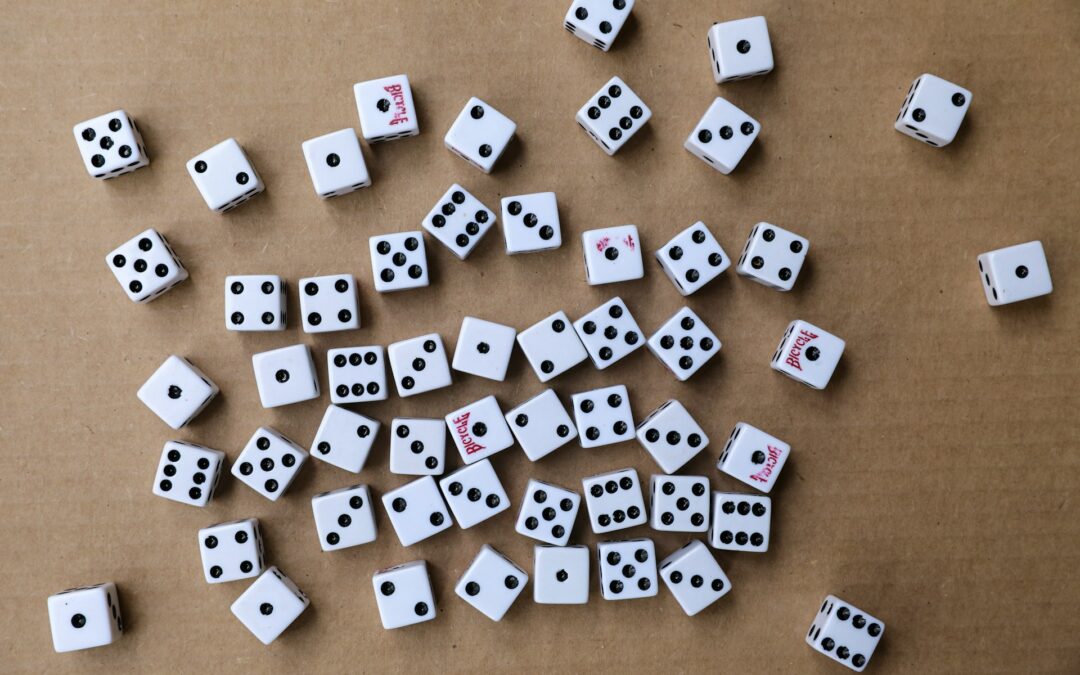
People don’t want accuracy. They want certainty.
“The fundamental cause of the trouble is that in the modern world the stupid are cocksure while the intelligent are full of doubt.”
— Bertrand Russell
Jerry Seinfeld was once driving around in an old car from the 1950s with Jimmy Fallon. Fallon asked, “Do you worry that the car doesn’t have an airbag?” Seinfeld replied without hesitation, “No. And be honest, in your whole life how often have you needed an airbag?” It was a joke, but a perfect encapsulation of a much deeper truth: people struggle to grapple with probability and uncertainty.
Stanford professor Ronald Howard found an ingenious way to teach this lesson. He asked his students to attach a confidence percentage to each test answer, reflecting how sure they were that it was correct. Claiming 100% confidence and being wrong meant failing the entire test. Zero confidence with a correct answer gave no credit. Scores were adjusted based on confidence and correctness.
This method is brilliant—not only does it illustrate the necessity of managing probabilities, but it also jolts students into facing the harsh reality that certainty is a rare commodity in a world riddled with unknowns.
The Desire for Certainty in an Uncertain World
The yearning for certainty is a fundamental human impulse, one that cuts deep into the roots of our psychology. It’s not just a preference—it’s a survival mechanism encoded through millennia of evolution. When faced with ambiguous threats or unpredictable environments, our ancestors who could quickly latch onto a clear course of action stood a better chance of survival. Today, even though the dangers may have transformed from predators lurking in the brush to economic downturns or political upheavals, our brains cling to that same primal wiring.
This psychological imperative manifests in countless facets of modern life. We seek clear answers in politics, fixate on crystal-ball predictions in finance, and obsess over forecasts in health and technology. The discomfort of uncertainty gnaws at us, compelling us to grasp for definitive conclusions, no matter how illusory. The more opaque the future, the stronger the temptation to convert ambiguity into certainty—even when such certainty is unwarranted.
Yet the universe is indifferent to our desire for neat answers. Reality is stochastic and probabilistic. Outcomes are distributions of likelihoods, not fixed endpoints. The weather might forecast a 70% chance of rain, but the sky could remain clear. Investments with high expected returns might plunge unexpectedly. Even the best-informed experts can only assign probabilities, not certainties, to future events.
This tension breeds cognitive dissonance. On the one hand, we intellectually acknowledge uncertainty. On the other, emotionally we crave assurance. It’s why definitive pronouncements carry outsized appeal—they soothe the anxiety that doubt stirs. A bold prediction feels like control in a chaotic world.
The mental shortcuts we use to simplify complexity often sacrifice accuracy for comfort. Our brains are wired to favor certainty because it reduces mental effort and emotional strain. This cognitive economy comes at a cost: oversimplification and misplaced confidence.
The consequence is that nuanced probabilistic thinking is rare in practice. Most people prefer to live with a simplified narrative—a clear story where events unfold as predicted or not—rather than wrestle with the inherent fuzziness of the real world. We accept black-and-white because it is easier to understand and communicate, even if it blinds us to the true texture of reality.
Probability vs. Reality: The Human Blind Spot
Probability is an elegant mathematical framework, but it clashes with how humans naturally perceive the world. We crave stories with clear heroes and villains, triumphs and failures, right and wrong. Probability, by contrast, lives in shades of gray, with outcomes shaded by varying likelihoods rather than absolutes.
This mismatch creates a profound cognitive blind spot. When an expert predicts an event with, say, a 70% chance of occurring, and it happens, we praise their insight. When it doesn’t, we quickly label them wrong, ignoring the fact that a 30% chance of the event not occurring is entirely consistent with probability theory.
We struggle to internalize that being “wrong” in a single instance does not invalidate the predictive power of probabilistic reasoning. This leads to harsh judgments and a tendency to mistake luck for skill, or skill for luck. Success is often attributed solely to competence, while failure is seen as incompetence or error, neglecting the role randomness plays.
Our minds also fall prey to hindsight bias—after an event unfolds, we rewrite the narrative as if the outcome was inevitable, ignoring the uncertainty that existed beforehand. This illusion of inevitability blinds us to the probabilistic nature of the world and inflates our confidence in what was predicted.
This blind spot extends into how we judge others, particularly in domains like finance, politics, or sports. Someone who made a call that proved right is often deemed a genius, while someone who was correct but uncertain is overlooked. This binary framing undervalues nuanced judgment and punishes honest admission of doubt.
The human discomfort with ambiguity encourages overconfidence and simplistic interpretations. We want to believe in the reliability of predictions, yet the reality is that even the smartest, most informed people must wrestle with randomness and chance.
This is why understanding probability is not just an academic exercise—it is a fundamental skill for navigating reality wisely. It requires us to resist the urge to reduce complex outcomes to simple yes/no verdicts and to embrace uncertainty as an intrinsic part of the human experience.
The Enigma of Rare Events in a Vast World
Rare events fascinate us precisely because they seem to defy the ordinary rules of chance. We label them “miracles” or “freak occurrences,” attributing supernatural meaning to their improbability. Yet this perception arises largely from the limits of human intuition about scale and numbers.
Our cognitive architecture struggles enormously with extremely large or small probabilities. When faced with minuscule odds like one in a trillion, we instinctively imagine near impossibility. But when the sample size expands dramatically—as it does in a world with billions of people and countless daily interactions—what once seemed impossible becomes statistically likely, even inevitable.
Take Evelyn Marie Adams, the woman who won the lottery twice in four months. The naive calculation of her odds, 1 in 17 trillion, suggests a cosmic fluke. But this figure obscures a crucial reality: millions of people play lotteries repeatedly, multiplying the number of “tries” exponentially. When mathematicians Persi Diaconis and Frederick Mosteller re-examined the problem, they found the probability that someone would win twice was surprisingly high—around 1 in 30.
This example illustrates the principle known as the “law of truly large numbers”: with a large enough population and sufficient trials, even the most improbable events will occur. The extraordinary becomes ordinary given enough opportunities.
This insight rewires how we think about coincidences, miracles, and the “unbelievable.” Far from being magical, these events are baked into the fabric of probability.
The implication is profound: what we often dismiss as anomalies are natural products of statistical inevitability. Our experience is littered with such “rare” events precisely because the scale of human activity is vast.
This reframing is sobering. It means we should expect the unexpected, not be shocked by it. It also reminds us to temper awe with mathematical realism, acknowledging that in a sea of billions, wild outcomes are a certainty rather than a surprise.
The Fallacy of “One-Hundred-Year” Events
The term “one-hundred-year event” has a beguiling finality, but it conceals a subtle statistical truth that often escapes common understanding. When we say an event is a “one-hundred-year flood” or “one-hundred-year hurricane,” we mean that it has a 1% chance of occurring in any given year—not that it happens precisely once every hundred years.
This nuance is critical because many such risks coexist independently. Imagine dozens or hundreds of different “one-hundred-year” risks—pandemics, financial crashes, natural disasters, political upheavals—each carrying roughly a 1% annual chance.
The cumulative effect is that the probability some catastrophic event will strike in any given year is far greater than 1%. Statistically, it can approach near certainty that at least one serious disruption occurs annually.
This explains why, despite our longing for stability and safety, calamities seem almost relentless. The world is a complex system riddled with countless latent risks that, taken together, make disaster an ever-present possibility.
Historical periods often remembered as “calm” were in fact punctuated by crises that shaped their era. The 1950s, romanticized as a golden age of post-war prosperity, experienced severe recessions and social upheavals. The 1990s, celebrated for economic boom and technological advances, narrowly avoided systemic financial collapse in 1998.
What has intensified this dynamic in the modern era is globalization and interconnectedness. Risks in one region can cascade and amplify worldwide. The speed and scale of information flow make crises more visible and immediate, creating a heightened sense of instability.
This perspective dissolves the illusion that disaster is rare or unusual. Instead, it reveals that disruption is woven into the very fabric of life. Accepting this reality allows us to prepare better mentally, institutionally, and socially for the inevitable waves of chaos.
Understanding the fallacy of the “one-hundred-year event” shifts us from denial and surprise to realism and resilience. It challenges us to embrace uncertainty and complexity rather than cling to comforting myths of predictability.
The Explosion of Information and Pessimism
The modern information landscape is an unprecedented phenomenon. A century ago, news was hyper-local, filtered through a handful of newspapers or a single radio broadcast, tailored to regional concerns and often bearing a cautious, community-focused tone. People’s informational horizons were limited to their town, county, or at best, their country. This limitation shaped not only what they knew but how they felt about the world—less overwhelmed, less anxious, more anchored.
Fast forward to today, and the scene is radically different. The rise of the internet, social media, and 24-hour digital news cycles has connected billions of people instantaneously. Information flows continuously and globally, drowning us in a ceaseless torrent of events, opinions, and updates. Every plane crash, political scandal, natural disaster, or violent act is broadcast and dissected in real time to a worldwide audience.
While this hyper-connectivity has clear benefits—awareness, mobilization, and cross-cultural empathy—it also carries a pernicious side effect: an outsized amplification of bad news. Psychological research confirms that negative information exerts a stronger pull on attention than positive news. Fear, outrage, and pessimism activate primal survival instincts, making bad news more clickable, shareable, and viral.
This creates a feedback loop where media outlets prioritize sensational, negative stories because they capture engagement and generate revenue. The result is a global news diet heavy on crises, conflicts, and catastrophes, leaving little room for stories of progress, innovation, or everyday goodness.
The consequence for individuals is profound. Exposure to constant negative news fosters chronic anxiety, a distorted worldview, and a sense of helplessness. We feel the world is unraveling, despite living in arguably the most peaceful and prosperous era in history.
Moreover, as our informational horizon expands from local to global, the probability that something terrible is happening somewhere right now approaches 100%. This unrelenting barrage of bad news feels inescapable. It amplifies the perception of insecurity and loss of control, feeding our craving for certainty even further.
The Relentless Quest for Certainty
The human mind is wired to abhor uncertainty. Charlie Munger’s concept of the “Doubt-Avoidance Tendency” captures this perfectly: when faced with doubt, our brains instinctively rush to a conclusion to end the discomfort. This reflex is rooted in evolutionary biology—hesitation or prolonged indecision in the face of a predator could be fatal.
In contemporary life, this translates into an insatiable demand for clear answers and firm convictions, especially in complex domains like politics, economics, or health. We turn to experts, pundits, and analysts, yearning for forecasts that paint a predictable, controllable future. Yet, paradoxically, research shows that many experts are terrible at predicting complex events.
Philip Tetlock’s decades-long studies of expert forecasters reveal dismal accuracy in political and economic predictions. Despite this, public trust in experts remains high, driven less by demonstrated skill and more by the human psychological need to believe the world is knowable and manageable.
This dynamic fuels a cycle where confident, authoritative-sounding assertions are prized over cautious, probabilistic judgments, even if the latter better represent reality. The discomfort of living with uncertainty pushes us to embrace certainty, even if it is false.
A compounding problem is the scarcity of feedback. Some domains generate few opportunities to test predictions. A seasoned economist might only witness seven recessions in a 50-year career, providing limited data to refine forecasting skill. This scarcity makes it hard to distinguish between luck and genuine insight.
Consequently, the allure of confident prediction persists because it offers emotional solace. We willingly trade honesty about uncertainty for the comfort of firm answers, even when the cost is misplaced confidence and poor decisions.
The Human Cost of Misjudging Probability
Misunderstanding probability isn’t just an intellectual problem—it has real-world consequences, often costly and painful. Human beings struggle to interpret risk, especially when outcomes affect them personally.
Consider the valet parking example. A team managing 10,000 cars monthly might dent one car every month. To management, this seems reckless and unacceptable. Yet, statistically, one accident every 10,000 parking maneuvers is an impressive safety record—akin to one minor mishap every fourteen years of daily driving for an individual.
Despite the favorable statistics, management’s frustration is understandable: each accident generates paperwork, claims, and tangible loss. People naturally seek clear cause-and-effect explanations and prefer to hold someone accountable rather than accept randomness.
This tendency scales up in more consequential arenas. The stock market experiences crashes roughly every five to seven years, a pattern supported by historical data. Yet each crash surprises and upsets investors anew, who interpret the event as abnormal or evidence of failure, ignoring the probabilistic inevitability of market cycles.
Our cognitive architecture is paradoxical here. We overreact to the unavoidable “noise” of routine fluctuations but often underestimate rare, catastrophic risks. This miscalibration leads to poor risk management, emotional turmoil, and systemic fragility.
In high-stakes environments—aviation, medicine, finance—the challenge is balancing vigilance against rare disasters with tolerance for frequent but less harmful variability. Failing to do so can either breed complacency or paralyzing fear.
Recognizing and internalizing probability helps us reframe setbacks as part of the normal ebb and flow rather than aberrations signaling incompetence. This shift doesn’t remove pain or loss but softens their impact by situating them within a realistic framework. It enables better decision-making, improved risk tolerance, and greater resilience.
Conclusion: Embracing the Wild Numbers of Life
The world is governed by wild numbers — immense probabilities, rare events, and constant uncertainty. Our craving for certainty is natural but often misleading. Recognizing that probability, not absolute truth, shapes reality helps us make better decisions and develop humility in the face of unpredictability.
Morgan Housel’s insights remind us that luck and risk are inseparable companions. Miracles and disasters occur with mathematical inevitability. The world’s chaos isn’t new; we simply see more of it in an interconnected age.
To navigate life well, we must accept that certainty is a comforting myth. The wild numbers of chance, risk, and probability govern the outcomes we experience. The smartest response is not to pretend we know the future but to manage uncertainty with clarity and courage.