
The First Punic War was a battle for supremacy in the ancient Mediterranean world, fought between two dominant powers of the era: Rome and Carthage. Lasting from 264 BC to 241 BC, this conflict was a game of strategy, endurance, and relentless determination. The Romans, despite their initial naval disadvantages, were able to adapt quickly, pushing back their enemies and claiming victory in the most unexpected ways. This article delves into the pivotal moments and key figures of the war, from the brutal land campaigns to the defining naval battles that would forever alter the course of history.
The Roman Landing on Africa: A New Phase in the Conflict
The Battle of Cape Ecnomus was a decisive moment in the First Punic War, a battle that not only crippled the Carthaginian navy but also allowed the Romans to finally take the fight directly to Carthage’s home turf. With their fleet battered but still intact, the Romans set their sights on the African continent, hoping to force the Carthaginians into submission by striking at the heart of their empire. This shift in strategy was monumental, as it signified a transition from naval warfare, which the Carthaginians had traditionally dominated, to land-based campaigns where the Romans could assert their power.
After the victory at Cape Ecnomus, the Roman navy was free to sail along the African coast, and it didn’t take long before Roman forces made landfall. The Romans, under the leadership of Consul Regulus, wasted no time in securing a stronghold. The city of Aspis, located on the northern coast of Africa, was quickly captured. This city was strategically important for the Romans because it offered them a base of operations to further plunder Carthaginian territory and disrupt their supply lines. With Aspis in Roman hands, the Romans began to raid and pillage the surrounding countryside, taking over 20,000 slaves and seizing a large quantity of treasure in the process.
Despite the success of their early campaign, the Roman soldiers’ morale was mixed. While the loot was certainly appealing, the Senate back in Rome was cautious about overextending their forces and resources. Roman policy dictated that the plunder be sent home, leaving the soldiers frustrated. This decision was not only a blow to the soldiers’ immediate hopes for wealth but also a stark reminder of the bureaucratic limitations on their ambitions. Nonetheless, Regulus and his men pressed on, undeterred by the setback.
With his forces still intact and motivated by the desire for glory and success, Regulus led the Romans toward the next phase of their invasion: marching directly towards Carthage. This bold move was a calculated gamble. If the Romans could successfully advance through Carthage’s defenses and lay siege to the city itself, it could mark the end of the conflict and a catastrophic defeat for Carthage. The Carthaginians were now on the back foot, unable to defend their territories effectively and faced with a determined and confident Roman force.
This decision to push forward into Africa marked a significant shift in the war. The Romans were no longer simply defending their shores or battling at sea—they were actively bringing the war to the doorstep of the Carthaginian heartland. The implications were enormous, as the Romans now had the potential to deliver a crippling blow to Carthage’s power and influence in the Mediterranean. However, as Regulus would soon learn, the challenges of land warfare, particularly when fighting in enemy territory, would be far more complex than he had anticipated.
The Mythical Encounter: Livy’s Dragon and the Struggle for Survival
As the Roman forces advanced deeper into Carthaginian territory, their journey became marked by a strange and intriguing story, one that would go down in history as a mixture of Roman superstition, exaggeration, and, perhaps, a bit of entertainment. According to the Roman historian Livy, Regulus and his army encountered a dragon on their march, a fantastical claim that adds a layer of myth to the narrative. While most historians dismiss the account as a fabrication, it serves as an example of how Romans often veiled their military campaigns in the guise of legend, possibly to embellish the hardships they faced or to underline the daunting nature of their journey.
This encounter, whether real or not, highlights the dramatic atmosphere surrounding the Roman campaigns in Africa. Livy, being a Roman historian, would often mix fact with legend to tell a story that was both informative and captivating for Roman audiences. The concept of a “dragon” as an adversary serves as a metaphor for the mythical and sometimes surreal challenges the Roman soldiers encountered in foreign lands. While the dragon itself may not have existed, the struggle the soldiers faced in adapting to a new and hostile environment certainly did.
Beyond this mythical encounter, the real battle for survival was taking place back in Carthage. With their land vulnerable to Roman incursions, the Carthaginian leadership was scrambling to defend their empire. The city of Carthage itself became a refuge for thousands of civilians who fled from the advancing Roman soldiers. The influx of people into the city led to overcrowding, which in turn caused a severe strain on resources. Food became scarce, and famine began to set in. The city was now in crisis mode, as the Carthaginian leadership desperately tried to maintain control over both the population and their defenses.
Amidst this chaos, panic spread throughout the city. Livy paints a vivid picture of the desperate mood in Carthage, with citizens frantically searching for food, while their leaders struggled to hold the city together. The situation became dire as the Carthaginian forces, already stretched thin, began to buckle under the pressure. With famine setting in and the city’s defenses weakening, it seemed as though Carthage might soon fall to the Romans. However, Carthage was not yet out of the fight. The moment of greatest despair often leads to the most remarkable reversals in history, and Carthage was about to make a strategic move that would shift the course of the war.
The Roman presence in Africa, though seemingly unstoppable at first, had begun to wear thin. Regulus and his forces were facing logistical challenges as they ventured further into enemy territory. Carthage, though in turmoil, had not yet given up, and the Carthaginian leadership would soon make a game-changing decision. The Romans had underestimated their resolve and miscalculated their next steps. This would lead to the emergence of one of the most significant turning points in the First Punic War.
Carthage’s Desperate Defense: A Poorly Executed Strategy
The Carthaginian leadership, reeling from the Roman invasions and the dire situation within their capital, understood the urgency of mounting a successful defense. With the Romans steadily advancing toward their heartland, Carthage’s military commanders recognized that the next battle would be pivotal in determining the outcome of the war. They could no longer afford to be passive or reactive; they needed to mobilize all available forces to stop the Roman momentum.
The Carthaginian high command, however, was plagued by strategic blunders that would prove fatal. Their first major mistake was the decision to set up camp on rough, hilly terrain overlooking the Roman camp, a move that ultimately worked to their disadvantage. On paper, the high ground seemed to offer a strategic advantage—allowing the Carthaginians to observe the Romans from a superior vantage point and potentially launching surprise attacks. But this terrain, while visually imposing, was far from ideal for the types of warfare the Carthaginians excelled in.
Carthage had built its reputation as a master of naval warfare, but its land forces were a patchwork of foreign mercenaries and professional soldiers. The mercenaries, who made up the majority of the Carthaginian army, came from a diverse range of cultures, including Numidians, Iberians, Gauls, and Balearic Islanders. This diversity brought its own set of challenges: language barriers, cultural differences, and a lack of cohesion in battle. The Carthaginian generals struggled to coordinate such a heterogeneous army, which often led to confusion and disorder in battle. Loyalty was another issue, as many of these mercenaries were primarily motivated by pay, and when the battle turned against them, they were more likely to flee than fight to the death.
This lack of unity among Carthaginian troops was compounded by the ineffective deployment of their most powerful assets: the war elephants. Elephants were a psychological weapon for the Carthaginians—intimidating to the Roman soldiers, who had never faced such beasts in battle. However, the Carthaginians made the grave error of placing the elephants at the rear of their army, where they were out of reach and unable to make an impact. In contrast, the Romans, who had not encountered war elephants before, were terrified by the sheer size and power of the creatures. The Roman soldiers were trained to fight in a highly disciplined, organized manner, but the Carthaginian elephants, placed in the wrong position, simply served as a liability rather than an asset.
Additionally, the Carthaginian cavalry—renowned for its speed and skill, particularly the Numidian cavalry—was also misused. The Carthaginian commanders decided to fight on rough, uneven terrain, where cavalry was less effective. This decision neutralized one of Carthage’s greatest advantages, as the cavalry could not maneuver effectively on the rocky landscape, leaving them unable to outflank the Roman forces as they had done in previous battles. By contrast, the Roman legions were trained to fight in a variety of environments, and their heavy infantry could adapt to the terrain with greater ease.
The combination of poor strategic decisions, mismanagement of resources, and lack of effective leadership meant that the Carthaginian forces were ill-prepared to deal with the Roman threat. The Romans, on the other hand, were highly disciplined and had the advantage of operating on familiar ground. Their tactical flexibility allowed them to exploit the weaknesses in the Carthaginian defense. When the battle was joined, the Romans easily overwhelmed their opponents, driving the Carthaginians off the field. This victory brought them one step closer to their ultimate goal: the conquest of Carthage itself.
The defeat of the Carthaginian forces in this battle revealed the deep flaws within their military structure. Despite their financial wealth, which allowed them to hire mercenaries from all over the Mediterranean, Carthage’s reliance on a diverse, often disorganized army ultimately undermined their ability to mount a cohesive defense. The inability to leverage their strengths—particularly the war elephants and cavalry—along with their failure to make sound strategic decisions, allowed the Romans to maintain their momentum and put Carthage on the defensive.
Regulus’ Bold and Overzealous Gamble
After the Romans’ crushing victory over the Carthaginian forces, the road to Carthage seemed wide open. Regulus, the Roman consul and commander, was brimming with confidence. With his forces pushing forward and the Carthaginian defenses crumbling, it appeared that Roman victory was imminent. Regulus, however, made a critical miscalculation that would have far-reaching consequences. With his consulship nearing its end and the possibility that his successor would claim credit for the victory, Regulus decided to act prematurely and issue an ultimatum to Carthage: unconditional surrender.
At this moment, Regulus overestimated both his position and the state of the Carthaginian resolve. His demand was direct, harsh, and intended to force the Carthaginians to submit. Regulus was confident that, after the heavy Roman successes and the Carthaginians’ apparent lack of resources, Carthage would have no choice but to accept defeat. However, Regulus failed to understand that the Carthaginian leadership, though reeling from recent defeats, still had a great deal of pride and would not simply surrender without a fight.
The Roman consul’s arrogance and impatience led him to underestimate the Carthaginian spirit. Regulus, seeing his opportunity to claim victory and achieve glory, disregarded the possibility that his demand might have the opposite effect. Instead of weakening Carthage, his ultimatum had the unintended consequence of strengthening their resolve. The Carthaginian leadership now saw Regulus as a threat that could not be ignored. They realized that the Romans were not simply trying to take land—they were attempting to break Carthage’s will and assert complete dominance in the region.
In response to Regulus’s demand, the Carthaginians decided to make a bold move. They recognized that their current military leadership was inadequate, so they sought the expertise of a mercenary general from Sparta—Xanthippus. Xanthippus was renowned for his tactical brilliance and his ability to turn the tide of battle in dire circumstances. He was an outsider, a mercenary, but his reputation for success preceded him. Carthage placed its hopes on his shoulders, and Xanthippus wasted no time in reorganizing the Carthaginian forces.
The arrival of Xanthippus marked the beginning of a shift in Carthage’s fortunes. Under his leadership, the Carthaginians began to employ new strategies that played to their strengths and exploited the weaknesses in the Roman approach. Xanthippus’s first major decision was to reposition the war elephants to the front of the army, where they could create chaos in the Roman lines. The elephants, which had been rendered ineffective under the previous commanders, were now positioned where they could inflict maximum damage. Furthermore, Xanthippus ordered the Carthaginian cavalry, particularly the highly skilled Numidian horsemen, to take advantage of the open terrain and flank the Romans. The cavalry’s mobility was key to outmaneuvering the Roman infantry, and with the proper tactics in place, the Carthaginians regained the upper hand.
Regulus, who had thought the Romans were on the verge of a final victory, was caught off guard by the Carthaginian resurgence. Xanthippus’s tactical genius reversed the situation, leading to a crushing defeat for the Romans at the Battle of Bagradas River. The battle highlighted the significance of leadership and the ability to adapt to changing circumstances. Regulus, once confident in his position, was now captured by the Carthaginians, and the momentum of the war shifted dramatically in Carthage’s favor.
Regulus’s premature demand for surrender and his overestimation of Roman strength had proved to be a fatal mistake. Instead of securing a swift victory, he had inadvertently provided Carthage with the opportunity to regroup and fight back with renewed vigor. The outcome of this battle set the stage for the next phase of the war, one in which the Carthaginians would take the initiative, and Regulus’s fate would be sealed.
Enter Xanthippus: The Spartan Solution
The turning point in the First Punic War came when Carthage, desperate for a solution to the growing Roman threat, turned to a foreign mercenary for help. The Carthaginian leadership, shaken by their recent defeats and desperate for a way out of their dire situation, enlisted the services of Xanthippus, a Spartan mercenary general renowned for his strategic brilliance. This decision would ultimately change the course of the war and prove to be a masterstroke by the Carthaginians, as Xanthippus was the catalyst they needed to reorganize and revitalize their army.
Xanthippus was no stranger to the complexities of warfare. Born into the militaristic society of Sparta, where soldiers were trained from childhood to become the finest warriors in the Mediterranean, he understood the art of war on a level few could match. His tactical expertise was invaluable to Carthage at a time when their forces were scattered, disorganized, and on the brink of collapse. With his arrival, the Carthaginians gained not only a skilled military leader but also a fresh perspective on how to conduct the war.
Upon taking command, Xanthippus immediately began to assess the weaknesses of the Carthaginian army. The first and most glaring issue was the misallocation of resources, particularly the use of war elephants and cavalry. For years, Carthage had relied on war elephants to intimidate their enemies, but their placement at the rear of the army had rendered them largely ineffective. Elephants, which could have played a decisive role in crushing the Roman forces, were instead kept out of harm’s way, and as a result, their potential was never realized.
Xanthippus quickly corrected this by moving the elephants to the front of the Carthaginian army, placing them in a position where they could charge directly into the Roman lines. The elephants, with their immense size and strength, were terrifying for the Roman soldiers, who had never encountered such beasts in battle. The mere sight of the massive creatures charging toward them created confusion and fear, causing the Roman lines to break. The Romans, disciplined and well-trained as they were, had never faced a situation where their formation was so easily disrupted. The war elephants had always been a psychological weapon, but now, under Xanthippus’s command, they became an unstoppable force on the battlefield.
In addition to repositioning the elephants, Xanthippus also focused on optimizing the mobility of the Carthaginian cavalry. The Numidian cavalry, famous for its speed and maneuverability, had been underutilized by previous commanders, particularly due to the rough terrain chosen for many of the battles. Xanthippus knew that the Carthaginian cavalry could outflank the Roman legions if given the right opportunity. He ordered them to reposition on more favorable terrain, where their speed and agility could be maximized. The Romans, accustomed to fighting in tightly packed formations, were vulnerable to cavalry attacks, and the Carthaginians took full advantage of this weakness.
Xanthippus’s approach to warfare was not just about physical repositioning; he also understood the importance of leadership and morale. When he assumed command, the Carthaginian forces were demoralized and disorganized. The soldiers, many of whom were mercenaries fighting for pay rather than loyalty, had little reason to believe they could win. Xanthippus was not just a commander; he became a symbol of hope. His calm demeanor, coupled with his decisive actions, inspired the troops to rally around him. He showed them that victory was still possible if they adapted and fought smart.
Under Xanthippus’s leadership, the Carthaginian army was transformed. They were no longer a collection of mercenaries but a unified force with a clear strategy and a common purpose. This transformation culminated in the Battle of Bagradas River, where the Carthaginians, now led by Xanthippus, faced off against the Romans in what would become a crushing defeat for the Roman forces.
Xanthippus’s brilliance was on full display during this battle. The war elephants, placed at the front of the Carthaginian lines, smashed into the Roman formations, causing chaos and panic among the Roman soldiers. The Carthaginian cavalry, now free to operate in open terrain, flanked the Roman infantry, further breaking their lines. The Romans, overwhelmed by the coordinated assault from the elephants and cavalry, were forced to retreat. It was a devastating loss for Rome, and one that would force Regulus, the Roman consul, to confront the reality that his previous strategy had failed.
In the aftermath of the battle, Xanthippus’s reputation soared, but his success also brought complications. Carthaginian leadership, jealous of his newfound prominence, would eventually push him out of the city, but not before he had secured a critical victory for Carthage. Xanthippus’s leadership was a game-changer for Carthage, and his strategic overhaul was the key to their temporary resurgence in the war.
The Tragic Fate of Regulus: A Promise and a Death Sentence
The Battle of Bagradas River was a stunning defeat for the Romans, and its consequences were far-reaching. Regulus, the consul who had been so confident of a Roman victory, found himself in a humiliating position. Captured by the Carthaginians, Regulus was brought before the Carthaginian council, where he faced an unexpected proposition. The Carthaginians, who had previously been on the defensive, saw an opportunity to turn the tide of the war by using Regulus as a bargaining chip.
Rather than executing him immediately, the Carthaginians offered Regulus a deal: he would be sent back to Rome to negotiate peace on their behalf, with the understanding that if he failed to convince the Roman Senate to surrender, he would return to Carthage to face a brutal death. Regulus, bound by his Roman sense of honor and duty, accepted the terms. He saw it as his responsibility to ensure Rome’s continued resistance, but he also understood the gravity of the situation. If he failed in his mission, he knew the consequences would be dire.
Upon returning to Rome, Regulus’s role as a prisoner-turned-negotiator presented a unique challenge. He was still highly respected in Rome, and his reputation as a steadfast leader made his word powerful. He passionately argued against surrender, urging the Roman Senate to continue the fight against Carthage. Regulus’s rhetoric, however, fell on deaf ears. The Senate, weary of the war and cognizant of the Roman losses, was not willing to concede defeat. Regulus, despite his personal honor and devotion to Rome, was unable to change the Senate’s decision. His mission had failed.
The failure to convince the Senate to surrender meant that Regulus had no choice but to fulfill the terms of his agreement with the Carthaginians. He returned to Carthage, knowing that his fate was sealed. The Carthaginians, true to their word, tortured Regulus to death. His execution was not just a personal tragedy but a symbol of Roman virtue. Regulus’s death was seen by many in Rome as the ultimate expression of loyalty and honor. Despite his tragic end, he became a symbol of Roman endurance and commitment, immortalized as a martyr for the Roman cause.
Regulus’s fate raised important questions about duty, honor, and sacrifice. His decision to keep his promise, even at the cost of his life, was seen as a testament to the values that Rome held dear—values that would continue to shape Roman identity for centuries to come. However, Regulus’s death also underscored the harsh realities of war, where even the most virtuous leaders could be caught in a cycle of violence and retribution. His story became a cautionary tale of the brutal costs of warfare, particularly in the context of the larger conflict between Rome and Carthage.
In the aftermath of Regulus’s death, the war continued, with both sides still locked in a bitter struggle for supremacy. Regulus’s sacrifice, however, inspired many Romans to rally against Carthage, refusing to give up despite the mounting losses. His legacy would linger throughout the rest of the war, as Rome, propelled by his example, pressed forward with renewed determination. The fate of Regulus may have been sealed, but the war between Rome and Carthage was far from over.
A Fleet’s Fate: Nature’s Wrath and the Unyielding Roman Spirit
The relentless Roman determination, which had driven them through every hardship thus far in the First Punic War, was put to an even more severe test after the Battle of Bagradas River. Despite the crushing defeat and Regulus’s capture, Rome’s spirit remained unbroken. The Romans had suffered a significant loss on land, but they were still in control of much of Sicily, and they had built a formidable fleet to dominate the seas. They were not about to let Carthage take the upper hand in the Mediterranean.
Rome’s focus shifted back to rescuing their soldiers stranded in Africa and ensuring the supply lines remained intact. They knew that with Carthage’s naval forces weakened after the losses at Cape Ecnomus, they had an opportunity to strike. In response, they sent out their fleet, hoping to ferry the remaining Roman soldiers back to safety. However, fate had a cruel twist in store for them.
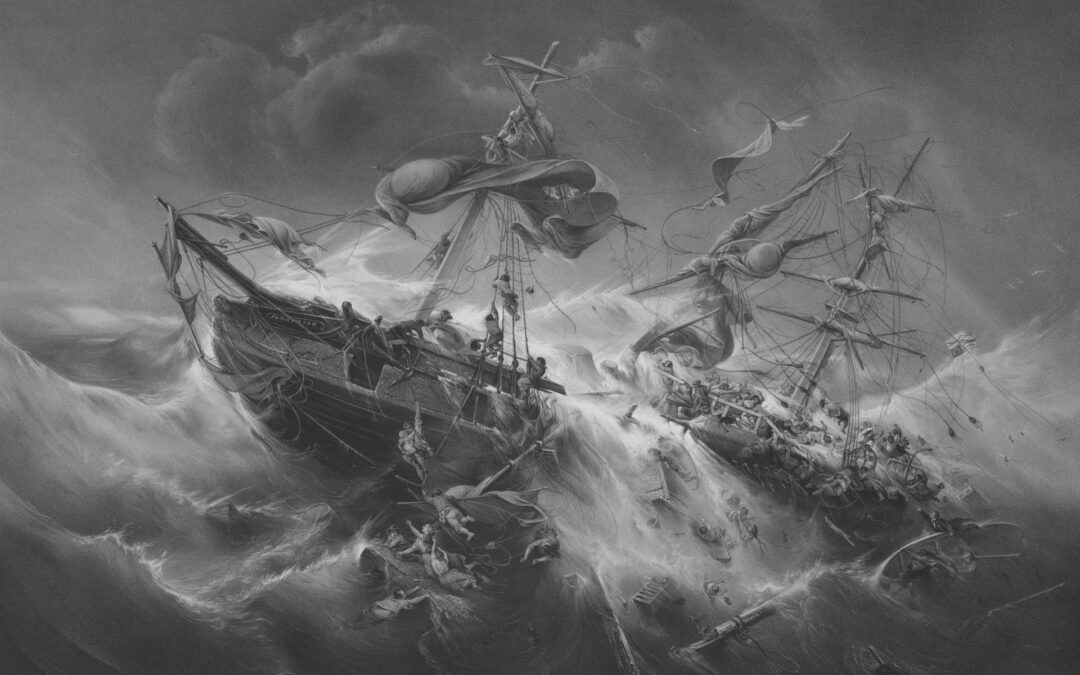
In one of the most catastrophic moments of the war, the Roman fleet encountered a violent storm that obliterated nearly 80% of their ships. A staggering 284 vessels were destroyed, and over 100,000 Roman soldiers perished in the devastating natural disaster. This loss was unprecedented—never before had Rome experienced such a catastrophic setback. It was a blow to the Roman navy and a sharp reminder that their victory was not guaranteed simply because they had superior resources and discipline. The storm, an act of nature, left the Romans in a vulnerable position, their fleet shattered and their soldiers lost at sea.
For most nations in the ancient world, such a disaster would have been insurmountable. The losses were so severe that any other empire might have considered suing for peace or calling for a cessation of hostilities. But Rome was no ordinary nation. The Romans were infamous for their resilience, and this tragedy would not be the end of their campaign. Instead of conceding defeat, the Roman Senate and military leadership quickly regrouped and began the daunting task of rebuilding their fleet from scratch. This level of resilience, determination, and refusal to give up marked one of the key characteristics of Roman identity.
In a matter of just three months, Rome’s shipyards were busy at work, and the Romans managed to construct an entirely new fleet of 220 ships. It was an astonishing feat that showcased Rome’s industrial capability, organizational structure, and determination to continue the war. The speed with which they rebuilt their naval forces was unprecedented, and it sent a clear message to Carthage: Rome would not be cowed by this setback. The Carthaginians, watching from the sidelines, were undoubtedly stunned. They had just witnessed the destruction of an entire fleet, yet now the Romans were back on their feet, ready to fight again.
However, just when it seemed that the Romans had turned the page on their misfortune, another twist of fate struck. The newly rebuilt fleet, which had been readied to engage the Carthaginians, sailed out once more—only to be caught in yet another storm. This second storm proved equally devastating, destroying another fleet and claiming more lives. The Carthaginians must have been dumbfounded. They had watched Rome lose hundreds of thousands of men and two complete fleets, yet the Romans remained steadfast, rebuilding their forces after each disaster.
While the Carthaginians might have expected Rome to eventually break, they failed to anticipate the unyielding Roman spirit. It was in these moments of despair that Rome’s true character as an empire forged in adversity became evident. The Romans, unperturbed by nature’s fury, simply began to rebuild once more, undeterred by the immense losses. It was this determination that ultimately proved to be Rome’s greatest asset in the conflict, and it would be a theme throughout the entire Punic Wars. For Rome, the idea of surrender was inconceivable—no matter the odds, they would continue fighting.
The storms that wreaked havoc on the Roman fleet became emblematic of the internal fortitude of the Roman state. Even after suffering enormous losses, Rome was committed to carrying on with the war. This spirit would be tested again and again throughout the conflict, but each time, Rome demonstrated an unparalleled ability to adapt and recover. The Carthaginians, while still victorious in the short term, could not have imagined the persistence that lay ahead.
The Final Stalemate and the Siege of Lilybaeum
By the time Rome had rebuilt its fleet for the second time, the First Punic War had entered a prolonged stalemate. The Romans had successfully established control over most of Sicily, and their military was firmly entrenched on the island. Yet, despite these advances, the conflict remained deadlocked, as Carthage still held the strategic stronghold of Lilybaeum. This city, located on the western tip of Sicily, was critical to Carthage’s ability to continue the fight, and the Romans knew that they had to capture it to finally break Carthage’s hold on the island.
The siege of Lilybaeum began in earnest around 250 BC, but the task was far from straightforward. Lilybaeum was a well-fortified city, surrounded by strong defensive walls and protected by Carthaginian naval forces that could disrupt Roman operations. Moreover, Carthage’s forces on the island were still significant, led by commanders like the legendary Hamilcar Barca, who would go on to become one of the most important figures in Carthaginian military history.
Hamilcar’s arrival on the scene marked a new phase in the conflict. A general of considerable skill, Hamilcar had a deep understanding of warfare, and he quickly adapted to the situation in Sicily. His strategic approach focused on guerrilla warfare—attacking the Romans in small, mobile skirmishes rather than engaging in large, open battles. This type of warfare was particularly effective in the rugged terrain of Sicily, where Roman forces struggled to maintain supply lines and control over vast stretches of land. Hamilcar’s ability to launch these surprise attacks behind enemy lines disrupted the Romans’ efforts and kept them from making meaningful progress in their siege.
The Roman commanders found themselves in a difficult position. Despite the advantage of superior numbers and resources, the Roman military struggled to bring about a swift resolution to the conflict. The Carthaginian forces had dug in, making it nearly impossible for the Romans to make significant headway. Every attempt to breach the city walls was repelled, and the Romans began to realize that this was not going to be a quick victory. The siege stretched on for months, and then years, with little to show for their efforts. The Carthaginians continued to send supplies and reinforcements into the city, and despite Roman efforts to blockade the port, they were unable to starve the defenders into submission.
For the Romans, this prolonged siege became a test of endurance. Their strategy was to exhaust the Carthaginians, hoping that their resistance would eventually crumble under the weight of prolonged conflict. However, as the siege dragged on, it became clear that Carthage was not going to simply fold. Instead, the Carthaginians continued to bolster their defenses, and the Roman forces found themselves in a grinding, slow-motion battle that seemed to have no end in sight.
The Romans attempted various tactics to break the deadlock, including attempts to starve out the city and blockading sea routes to prevent supplies from reaching the defenders. Yet, every time they thought they had gained an advantage, the Carthaginians would adapt and push back. This stalemate in Sicily was a microcosm of the larger war—a drawn-out conflict that tested both sides to their breaking point. The siege of Lilybaeum would go on for nine long years, a reminder of the brutal and unforgiving nature of ancient warfare.
Despite the Carthaginians’ resilience, there were signs that the prolonged conflict was beginning to take its toll on their resources and morale. The Romans, while struggling with the siege, were still able to mount a strong offensive elsewhere, thanks to their naval superiority. However, with the conflict dragging on, it was clear that the war was far from over, and neither side could afford to let the stalemate continue indefinitely. The next phase of the war would require new strategies, new alliances, and new efforts from both sides. The siege of Lilybaeum, while still unresolved, was setting the stage for a dramatic shift in the First Punic War—a shift that would take the conflict beyond the shores of Sicily and into the realms of naval warfare and strategic alliances.
A Bitter End: Carthage’s Last Stand and Rome’s Victory
The siege of Lilybaeum, which had dragged on for years, was one of the most protracted and bitter campaigns in the First Punic War. Both sides were exhausted by the endless skirmishes, failed sieges, and continual resource depletion. The Romans, despite their persistent efforts, were no closer to breaking the Carthaginian hold on the city. Yet, in typical Roman fashion, they were not about to give up. The momentum was shifting, but it would take another string of disasters and a critical misstep from Carthage to finally break the stalemate.
Carthage, though still in possession of Lilybaeum, had begun to falter in other areas. The Carthaginian fleet, which had once been the most powerful naval force in the Mediterranean, had been severely weakened by Roman victories at sea. After suffering losses at Cape Ecnomus and subsequent defeats, Carthage found itself stretched thin, unable to both maintain control over Sicily and defend its supply lines and navy. Meanwhile, Rome’s resilience was beginning to pay off. Even though the Romans had suffered unimaginable losses—both in battles and at sea—their commitment to the cause remained unwavering.
The turning point came when the Carthaginian government, exhausted by the long war and desperate for peace, began to make a series of critical errors. The Carthaginian leadership, realizing that their naval forces were exhausted and their resources dwindling, made a drastic decision to withdraw a significant portion of their fleet and repurpose it for civilian trade rather than military operations. They believed, perhaps prematurely, that the Romans could not rebuild their naval forces again and that the tide of war would soon turn in their favor. This move, however, left Carthage vulnerable to a final Roman push.
The Romans, now fully aware of Carthage’s weakened position, seized upon this opportunity. They had already rebuilt their fleet once, and after suffering two devastating naval disasters, their naval engineers and military strategists had become experts at constructing new ships and improving their tactics. In a move that stunned the Carthaginians, the Romans sent out yet another new fleet, this time with full force and purpose.
When the Romans encountered the Carthaginian fleet at the Battle of the Aegates in 241 BC, they were ready. The battle was fiercely contested, but the Romans, despite their recent losses at sea, had developed a stronger, more effective fleet. They had learned from their mistakes and adapted. The Carthaginians, on the other hand, were exhausted. Their fleet was no longer the formidable force it had once been, and they were caught off guard by the renewed Roman strength. The Romans decisively won the Battle of the Aegates, and the Carthaginian navy, already in disrepair, suffered another devastating blow. The loss of their fleet sealed Carthage’s fate.
At this point, with their naval forces destroyed, their resources depleted, and their will to fight fading, the Carthaginian leadership was forced to negotiate peace. It was clear that Carthage could no longer continue the war; the long years of fighting, combined with the tremendous financial strain, had pushed them to the brink of collapse. The peace treaty that followed would be harsh, and it would set the stage for the bitter aftermath of the First Punic War.
In a final act of political maneuvering, the Romans imposed strict terms on Carthage. The Carthaginians were forced to surrender Sicily to Rome, a major loss of territory and influence in the Mediterranean. In addition to losing Sicily, they had to pay an enormous war indemnity: 3,200 talents of silver, which was crippling to their economy. Carthage was also forbidden from waging war against Rome’s allies without Rome’s permission, effectively limiting their military capabilities. The peace terms were not just punitive but aimed at ensuring that Carthage would be unable to recover from its losses for a long time.
Rome’s victory in the First Punic War marked a pivotal moment in the history of the Mediterranean world. Rome, having spent years fighting against one of the most powerful empires of the ancient world, emerged as the dominant power in the region. With Carthage crippled, Rome now had the opportunity to expand beyond the Italian peninsula, setting the stage for its future conquests. However, while the war had ended, the seeds of future conflict were already sown. The Carthaginian resentment towards Rome and the harshness of the peace terms would continue to fester, eventually leading to the outbreak of the Second Punic War.
The legacy of the First Punic War would shape Roman military strategy and diplomacy for centuries to come. Rome had proven itself as a power capable of absorbing immense losses, recovering quickly, and, when necessary, outlasting its enemies. This resilience would become one of the defining characteristics of Rome as an empire. For Carthage, however, the war left deep scars. Though defeated, the memory of their humiliating peace treaty would serve as a catalyst for their eventual revenge against Rome.
The Punishing Peace: The Treaty of 241 BC
The conclusion of the First Punic War brought with it a peace treaty that would leave a profound and lasting impact on both Rome and Carthage. The terms of the peace deal were harsh, reflecting the severity of the war and the bitter nature of the conflict. The Romans had not only won the war but had done so in a way that sought to ensure that Carthage could not recover easily, securing their own dominance in the Mediterranean for years to come.
The primary condition of the treaty was the surrender of Sicily. Carthage had controlled the island for centuries, but now, thanks to Rome’s victory, Sicily became the first Roman province outside of Italy. This loss of territory marked the beginning of Rome’s expansion beyond its homeland, a key moment in the rise of the Roman Empire. The acquisition of Sicily provided Rome with valuable resources, including fertile land, strategic ports, and access to important trade routes in the Mediterranean. This was not just a military victory for Rome—it was a significant economic gain that would help fuel its future conquests.
In addition to losing Sicily, Carthage was forced to pay a staggering indemnity of 3,200 talents of silver—an amount so large that it effectively crippled the Carthaginian economy. To put this into perspective, the silver demanded by Rome was equivalent to the wealth of an entire region, and it would take Carthage two decades to pay off the full amount. The indemnity, combined with the loss of Sicily, placed Carthage in a precarious financial position. Their ability to wage war was severely diminished, and their commercial dominance was under threat. For a nation so dependent on trade and wealth, this was a crippling blow.
Furthermore, the treaty imposed restrictions on Carthage’s military activities. They were forbidden from waging war against Rome’s allies and were required to seek Rome’s permission before engaging in any conflicts outside their borders. This meant that Carthage could no longer act freely on the international stage. The restrictions were designed not just to punish Carthage but to prevent it from ever becoming a threat to Rome again. The idea was simple: if Carthage could not expand, it could not challenge Rome’s growing influence in the Mediterranean.
Perhaps the most humiliating aspect of the treaty was the way it stripped Carthage of its ability to recover from the war. By demanding an enormous financial payment, territorial concessions, and military restrictions, Rome ensured that Carthage would be too weak to mount any serious resistance for years to come. Carthage, though still a powerful city-state, was now a shadow of its former self. The Romans had reduced their rival to a second-rate power, ensuring their own supremacy.
However, the Roman victory and the peace treaty came at a cost. While Rome had won the war and secured its position as the dominant power in the Mediterranean, the harshness of the terms left a lingering bitterness in Carthage. Carthage’s political and military leadership, humiliated by the terms of the peace deal, would not forget the losses they had suffered. The Carthaginian desire for revenge would simmer for years, eventually leading to the outbreak of the Second Punic War.
For Rome, the victory in the First Punic War was a turning point. It marked the beginning of Rome’s transformation from a regional power to a global empire. Rome’s resilience, tactical innovation, and ability to rebuild after disaster set the stage for its future success. However, the harshness of the peace treaty would sow the seeds of future conflict, and Rome’s dominance in the Mediterranean would be challenged by the very nation they had just defeated.
In the end, the peace treaty of 241 BC did more than just end the First Punic War—it set the stage for the next great conflict between Rome and Carthage. Though Carthage was beaten, its thirst for revenge would eventually lead to one of the most famous and brutal wars in history: the Second Punic War. The Carthaginian general Hannibal, the hero of the Second Punic War, would rise to prominence and bring Rome to the brink of defeat, ensuring that the conflict between these two powers was far from over.
Conclusion: Rome’s Relentless Pursuit of Victory
The First Punic War, though marked by prolonged battles, strategic blunders, and unforeseen challenges, ultimately laid the foundation for Rome’s rise as the dominant power in the Mediterranean. Through sheer resilience and determination, Rome overcame significant losses, rebuilt its forces, and emerged victorious, securing Sicily and positioning itself for future expansion. Carthage, although defeated, suffered greatly under the harsh peace terms imposed by Rome, which left the city financially crippled and politically humiliated. However, this humiliation would not go unanswered.
The treaty of 241 BC, while ending the First Punic War, sowed the seeds for future conflict. The bitterness of Carthage’s defeat and the crippling terms of the peace would eventually ignite a desire for revenge, leading to the Second Punic War—a conflict that would become one of the most legendary chapters in military history. The war between Rome and Carthage was far from over, and the legacy of the First Punic War would continue to shape the strategic decisions, military innovations, and political dynamics of both powers in the years to come.
In the end, the First Punic War was not just a battle for Sicily, but a pivotal moment in the long struggle for supremacy in the ancient world. Rome’s victory cemented its place as the future master of the Mediterranean, but the challenges faced during the war served as a reminder that resilience, adaptation, and determination would be the keys to its continued dominance.