
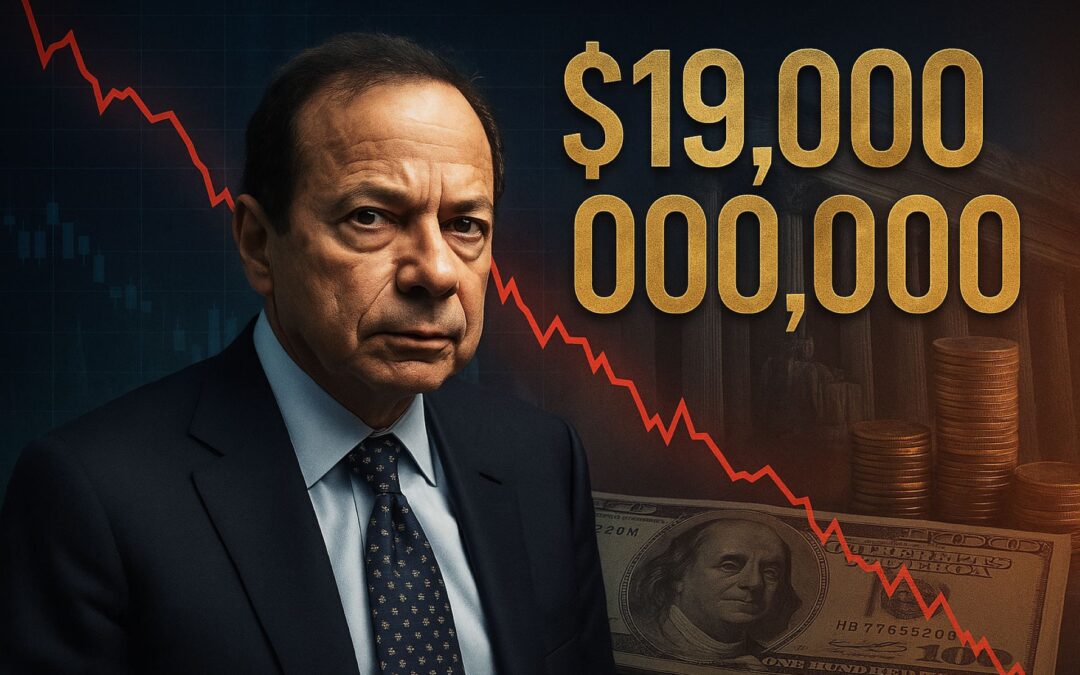
In the world of finance, some stories are whispered in awe, passed on like legends among insiders. One such story is that of John Paulson, a relatively unknown hedge fund manager who executed what many call the greatest trade ever—turning a modest investment into nearly $20 billion in just two years. His contrarian bet against the housing market in the early 2000s is a masterclass in unconventional thinking, patience, and sheer conviction. This is the story of how Paulson outwitted the market frenzy and walked away with one of history’s most lucrative trades.
The Contrarian Mindset: Betting Against the Madness
Contrarian investing is a philosophy that runs counter to conventional wisdom. It demands not just a different approach but an entirely different way of seeing the market’s pulse. Markets rarely move in a rational, orderly fashion. Instead, they often resemble a pendulum swinging wildly between extremes — euphoric optimism one moment and paralyzing fear the next. This emotional volatility leads to profound mispricings, where assets become grossly overvalued or undervalued relative to their intrinsic worth.
John Paulson’s brilliance lay in recognizing this fundamental truth. While the majority of investors were caught in a collective delusion, swept up by the soaring housing prices and the glossy stories sold by financial media and institutions, Paulson adopted a mindset that demanded skepticism and independent verification. Contrarian investing is about more than just picking unpopular stocks; it’s about cultivating intellectual independence, emotional resilience, and the willingness to stand alone when everyone else is rushing in the opposite direction.
This mindset goes beyond a mere strategy; it is a discipline of thought and action. The market’s “madman” behavior — irrational exuberance, panic selling, herd mentality — creates a cyclical rhythm that can be exploited, but only by those who are comfortable swimming against the tide. Between 2000 and 2006, the U.S. housing market was a textbook example of this phenomenon. Housing prices were climbing at an unprecedented rate — roughly 10% annually, nearly double the historical average. While everyone else was enchanted by the spectacle, Paulson’s contrarian view kept him focused on the mounting risks beneath the surface.
His contrarian mindset was built on rigorous analysis and a willingness to question prevailing narratives. Where others saw a sure bet, he saw a potential catastrophe. This foundational belief enabled him to resist the seductive allure of the crowd and prepare for an outcome that seemed unfathomable to most — a nationwide housing market collapse.
Understanding the Subprime Surge
To appreciate Paulson’s insight, it’s critical to understand the structure of mortgage lending during this period. Mortgage borrowers fall into distinct categories, broadly segmented as “prime” and “subprime.” Prime borrowers are individuals with strong financial profiles: solid credit scores typically above 660, stable employment, and verifiable income streams. These borrowers are considered low risk, and banks offer them competitive interest rates and favorable loan terms.
Subprime borrowers, however, stand at the opposite end of the spectrum. With credit scores below 620 or inconsistent financial histories, these individuals represent a significantly higher risk to lenders. Loans extended to subprime borrowers typically carry higher interest rates and stricter contractual terms, including prepayment penalties and more aggressive collection provisions. The elevated risk compensates lenders for the increased likelihood of default.
From 2000 to 2006, the volume of subprime loans exploded. The number of these high-risk mortgages nearly tripled, and the aggregate debt carried by subprime borrowers ballooned from $4.8 trillion to a staggering $9.8 trillion. This massive surge wasn’t accidental — it was driven by systemic incentives that encouraged banks to approve loans regardless of borrower qualifications. Traditional underwriting discipline was cast aside in favor of quantity over quality.
Paulson’s critical observation was that this unprecedented growth in subprime lending was not sustainable. The borrower pool was increasingly composed of individuals unlikely to meet their repayment obligations over the long term. Yet the market, intoxicated by rising prices and fueled by financial innovation, ignored these warning signs.
What made this surge especially dangerous was the asymmetry of information. Many market participants failed to appreciate the deterioration in loan quality because the subprime loans were bundled and sold off in complex financial products. The risks were hidden behind layers of securitization, giving the illusion of diversification and stability. Paulson’s ability to peel back these layers and see the mounting fragility positioned him uniquely to anticipate the collapse.
The Loophole: Banks’ Reckless Lending and Securitization
At the heart of the crisis was a fundamental shift in the banking industry’s incentives and structure. For decades, regulatory frameworks like the Glass-Steagall Act enforced a clear separation between commercial banking — which involved lending money and taking deposits — and investment banking, which dealt with securities and trading activities. This separation helped align banks’ incentives with prudent lending practices.
However, in the late 1990s, regulatory changes repealed these barriers, allowing banks to operate across commercial and investment banking activities simultaneously. This deregulation enabled banks to both originate loans and package those loans into investment products that could be sold to investors. Suddenly, banks no longer needed to hold loans on their books for decades; they could offload them immediately to other market players.
This shift created a perverse feedback loop. Banks were incentivized to maximize loan originations without regard for borrower quality because they could quickly bundle these loans into mortgage-backed securities (MBS) or collateralized debt obligations (CDOs) and sell them on. They received immediate fees from originating loans and selling them, but transferred the default risk to distant investors.
Mortgage-backed securities pooled thousands of mortgages and sliced them into tranches with varying levels of risk and return. CDOs went a step further by blending multiple types of debt — mortgages, corporate loans, student loans — into a single complex product. This financial engineering masked the poor quality of many underlying assets.
Investors, reassured by the AAA ratings assigned to these securities by credit rating agencies, flocked to buy them. The agencies, however, relied on flawed models and conflicted incentives, assigning top ratings to securities laden with risky subprime loans. This false sense of security emboldened further lending and investment.
Banks aggressively promoted mortgage products to borrowers with questionable creditworthiness, often encouraging them to take on loans they could not afford. This reckless lending, combined with securitization, fueled an unsustainable housing bubble.
Paulson and his team saw this entire ecosystem as a fragile house of cards. The very mechanisms that were supposed to distribute and mitigate risk had instead concentrated it in obscure, interconnected financial instruments, creating systemic vulnerability. Recognizing the scale and severity of this loophole was crucial to anticipating the market’s inevitable unraveling.
Seeing What Others Couldn’t: Hiring Expertise to Dig Deeper
John Paulson’s brilliance wasn’t rooted in prior real estate or mortgage industry experience. Instead, it was his intellectual humility and willingness to seek expertise that set him apart. Recognizing the complexity of the mortgage market and the opaque nature of the securities being created, Paulson brought on Paulo Pellegrini, an analyst with deep financial acumen, to help dissect the convoluted data and unravel the hidden risks.
Together, they embarked on a meticulous, almost forensic investigation. They combed through loan data, underwriting standards, and the mechanics of securitization. What they uncovered was alarming: banks, motivated by short-term profits, were approving loans with scant regard for the borrower’s ability to repay. The traditional model, where banks carefully underwrote loans and retained exposure for years, had been replaced by a transactional model focused on volume and immediate fees.
This disconnection between loan originators and end investors created a moral hazard. Banks no longer bore the risk of borrower default since these loans were bundled into securities and sold off. The incentive to maintain quality evaporated. Moreover, the complexity of collateralized debt obligations obscured the quality of individual loans. Investors and even rating agencies lacked clear visibility into the true risk embedded in these products.
The duo also scrutinized the role of credit rating agencies, the so-called gatekeepers of financial quality. Instead of acting as unbiased arbiters, these agencies had conflicts of interest—they were paid by the very issuers of the securities they rated. This compromised their objectivity and led to inflated ratings. Paulson’s team realized that these AAA ratings, which lured in vast pools of capital, were dangerously misleading.
Where others saw a thriving, growing market, Paulson and Pellegrini saw a brittle structure built on shaky foundations. Their willingness to probe beneath surface-level optimism and question authoritative narratives was pivotal. They transformed an abstract concern about loan quality into a concrete thesis: the subprime mortgage market was headed for a catastrophic breakdown.
The Instrument: Credit Default Swaps (CDS)
To translate their insight into profit, Paulson employed a sophisticated and somewhat obscure financial instrument: the credit default swap (CDS). At its essence, a CDS is a derivative contract functioning like insurance on debt instruments such as bonds or mortgage-backed securities. The buyer of a CDS pays a premium to the seller, and in exchange, the seller agrees to compensate the buyer if the underlying asset defaults.
What made CDS contracts uniquely powerful for Paulson’s strategy was the ability to purchase them without owning the underlying mortgage bonds. This meant he could bet directly on the failure of subprime mortgage securities without the burden of holding them. It was, in effect, a way to “short” the mortgage market by insuring against default.
At the time, CDS markets were largely unregulated and opaque. Trades occurred privately between large financial institutions, often without transparency or centralized reporting. This lack of visibility meant that market participants, regulators, and even the sellers of CDS contracts themselves did not fully grasp the scale or concentration of risk embedded in these derivatives.
Paulson’s insight was that the risk of mortgage bond default was dramatically underestimated, causing CDS contracts on these bonds to be priced cheaply. By buying protection on these mortgage-backed securities, he positioned his fund to reap enormous profits when the inevitable defaults triggered massive payouts.
The financial institutions selling CDS protection — including giants like AIG and major investment banks — assumed the housing market’s stability would continue, making the risk minimal. They collected premiums from Paulson and others while underestimating the exposure they were accumulating. When the subprime market started to fail, these institutions were caught off guard, forced to honor the contracts, and consequently incurred staggering losses.
Paulson’s use of CDSs was innovative because few investors at the time saw these contracts as vehicles for speculative bets. Instead, they were considered hedges or risk management tools. This gap in market perception provided Paulson with a significant informational advantage, allowing him to take a contrarian position with relatively small upfront capital and enormous potential upside.
Perfect Timing: Entering Early, Exiting Smart
A brilliant investment thesis alone does not guarantee success — timing is critical. Paulson’s mastery extended beyond identifying the opportunity; it included impeccable judgment on when to enter and when to exit the market.
He began purchasing CDS contracts early, during a period when the housing market was still in full bloom and the general consensus held that prices would never fall. Because the risk was so widely misunderstood and underestimated, CDS premiums were relatively low, allowing Paulson to build a large position at favorable costs. This early entry gave him a significant leverage advantage compared to investors who reacted later in the crisis.
As early warning signs emerged—rising default rates on subprime loans, tightening credit conditions—Paulson’s position began to pay off. The institutions that had sold protection on these mortgage bonds faced mounting pressure to meet their obligations, triggering a cascade of payouts.
Paulson demonstrated equal skill in timing his exit. Recognizing that the market was entering a phase of extreme volatility and that CDS premiums were becoming inflated due to crowded positions, he began unwinding his bets before the full-blown panic unfolded. This proactive exit preserved and locked in his multi-billion dollar profits.
By exiting just before the most chaotic phases of the crash, Paulson avoided the risk of a liquidity crunch or regulatory interventions that might have complicated his positions. His timing allowed him to harvest the gains while others were still scrambling to understand the unfolding catastrophe.
In 2007 alone, Paulson’s fund netted approximately $15 billion, with Paulson personally earning about $4 billion—the largest single-year payout in hedge fund history. This staggering success was not just a product of a good idea, but of strategic discipline, patience, and exceptional market timing.
The Courage to Swim Against the Tide
John Paulson’s bet was a radical departure from the prevailing consensus—a move that required extraordinary courage. At a time when the housing market was widely regarded as invincible, and home prices were perceived as a perpetually rising asset, going “all in” against this narrative was considered reckless, even lunatic. The phrase “too big to fail” was repeated ad nauseam by experts, regulators, and media alike, reinforcing a sense of invulnerability around the housing sector.
What made Paulson’s contrarian stance so bold was not just the scale of his wager but the personal and professional risks involved. He lacked a background in real estate and was stepping into a domain where he was relatively inexperienced. Had his thesis proven wrong, he risked not only the financial ruin of his fund but also his reputation and career.
Contrarian investing is inherently uncomfortable. It means standing apart from the crowd, enduring skepticism, criticism, and isolation. Most investors are wired to follow the herd—fearful of missing out, fearful of standing alone, fearful of being wrong. The psychological and emotional challenges of holding a position when the world is betting the other way cannot be overstated.
Paulson’s journey highlights a rare breed of investor who can tolerate the loneliness and uncertainty of going against popular opinion. His conviction was not blind arrogance but a well-reasoned belief rooted in diligent research and disciplined analysis. This courage to swim upstream, especially in the face of overwhelming opposition, underscores the essence of contrarian investing and explains why so few achieve such outsized success.
The Psychology of Contrarian Investing
The discipline of contrarian investing transcends financial metrics; it is a battle against human nature. Behavioral psychology teaches us that social proof—the tendency to follow what others do—is a powerful force shaping decisions. This herd mentality can lead to irrational exuberance during booms and panic during busts, fueling volatility far beyond what fundamentals would dictate.
Most investors find it nearly impossible to resist the gravitational pull of the crowd. When markets soar, fear of missing out (FOMO) compels participation even when valuations are stretched. Conversely, during downturns, fear and anxiety trigger mass sell-offs, often at the worst possible time. This cycle traps the majority in emotional rollercoasters that erode returns.
Paulson’s success illustrates the mental toughness required to detach from these psychological traps. It demands discipline to buy when others are fearful and sell when others are greedy. It requires self-confidence to maintain a position in the face of relentless doubt and contrarian conviction that must withstand waves of skepticism.
The famous exhortation by Winston Churchill, “Never give in… never, never, never,” encapsulates the mindset needed. Contrarian investing isn’t just about analysis; it’s about resilience, patience, and the willingness to bear discomfort for long-term reward.
This psychological fortitude separates true contrarians from the crowd and allows them to capitalize on market inefficiencies created by collective irrationality. It’s a rare skill that blends emotional intelligence with analytical rigor.
Lessons from the Greatest Trade
The saga of John Paulson’s historic trade offers timeless lessons that extend beyond the world of finance. First, intellectual humility is paramount. Paulson did not pretend to know everything; he sought expertise to fill his gaps and rigorously challenged assumptions. This openness to learning is a foundation for sound decision-making.
Second, conviction anchored in deep research is crucial. Mere contrarianism for its own sake is folly. Successful contrarian investing is predicated on a well-founded thesis that withstands scrutiny. Paulson’s painstaking analysis of mortgage data, lending practices, and securitization mechanisms gave him the edge others lacked.
Third, timing and execution matter immensely. Identifying an opportunity is not enough; entering early and exiting strategically can make the difference between windfall gains and catastrophic losses. Paulson’s patience in building his position and prudence in locking in profits exemplify disciplined investing.
Fourth, emotional resilience is non-negotiable. The ability to resist crowd psychology, endure doubt, and maintain course amid uncertainty is what separates winners from the pack.
Lastly, Paulson’s story underscores the danger of complacency and groupthink in markets. When prevailing beliefs become dogma, they suppress critical inquiry and mask systemic risks. True opportunity often lies in questioning consensus and daring to look where others won’t.
In sum, the greatest trade of all time is a masterclass in humility, analysis, courage, and timing—an enduring testament to the power of contrarian thinking done right.
Conclusion
John Paulson’s extraordinary trade serves as a powerful reminder that true opportunity often lies hidden beneath the surface of popular belief and market euphoria. His success was not a stroke of luck but the result of rigorous analysis, intellectual humility, unwavering conviction, and the courage to stand alone against the tide. In a world where crowd psychology dominates, cultivating a contrarian mindset—one that questions prevailing narratives and embraces discomfort—can unlock unparalleled potential. For investors and thinkers alike, Paulson’s story challenges us to look beyond consensus, trust our own insights, and have the resilience to act decisively when others hesitate. Ultimately, the greatest rewards await those willing to see what others don’t—and to bet boldly when the world bets the other way.