
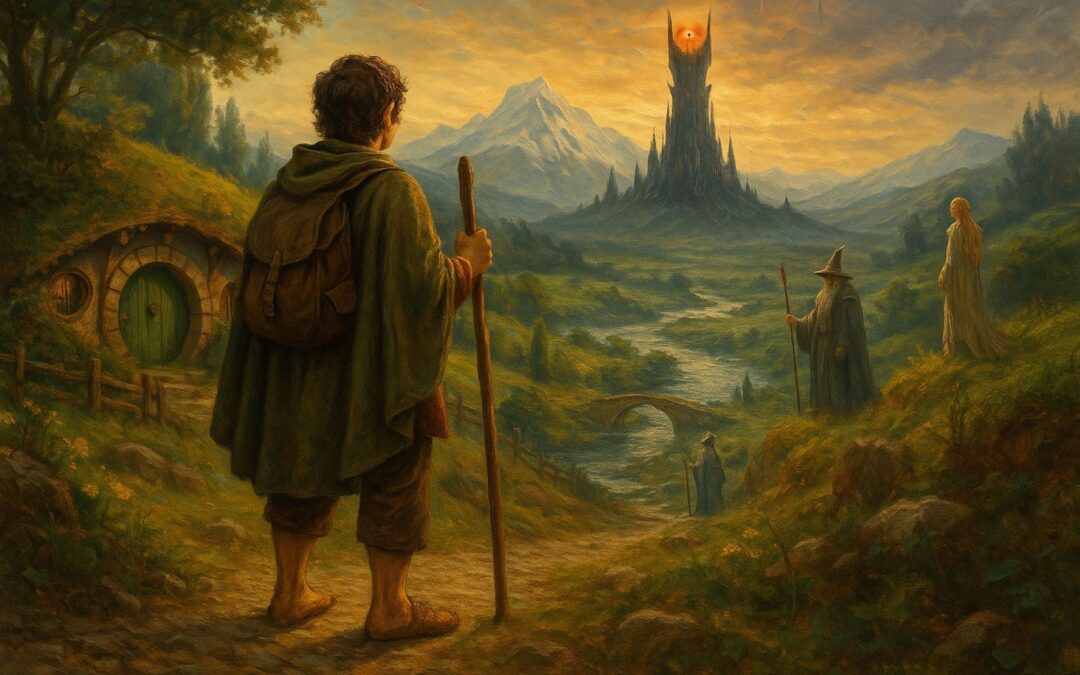
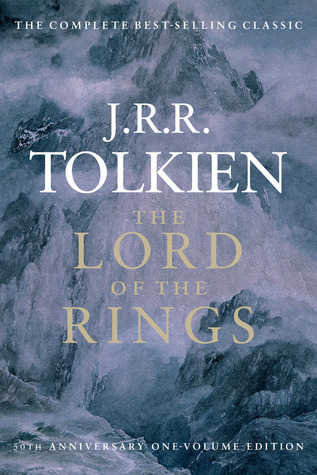
In 1954, J.R.R. Tolkien, then 62 years old, released what would become one of the most transformative literary works of the 20th century: The Lord of the Rings. After dedicating sixteen years to this monumental project, Tolkien faced the daunting task of unveiling a book, unlike anything the literary world had encountered before. It was a gamble for both the author and the publisher. With its sprawling narrative, unfamiliar names, and epic scope, the book challenged traditional categories—it was neither a children’s tale like The Hobbit nor a conventional adult novel. Instead, it carved out a new domain, giving birth to the fantasy genre as we know it.
A Risky Debut: The Uncharted Terrain of Middle-earth
When The Lord of the Rings finally emerged in 1954, it did so against a backdrop of uncertainty and trepidation. Publishing houses at the time were wary of investing heavily in works that defied the conventional literary mold. Tolkien’s magnum opus was an audacious gamble. It wasn’t merely the sheer length of the book—three volumes totaling over a thousand pages—that daunted publishers, but the unprecedented nature of the content itself. This was a world populated by languages that needed decoding, an alphabet unfamiliar to most readers, and names that defied easy pronunciation: Frodo Baggins, Legolas Greenleaf, Galadriel, and many more.
This wasn’t a narrative neatly confined to a single genre or market segment. It straddled the space between children’s literature and adult fiction, combining the whimsy of fantasy with the gravitas of epic myth. The presence of wizards, dragons, and mystical rings could have pigeonholed it as mere fantasy escapism, yet its complex political intrigues, philosophical reflections, and deeply human themes pushed it into a literary grey zone. Publishers and critics alike questioned: who was the intended audience? Would readers embrace this sprawling world or abandon it as inaccessible?
Tolkien’s vision was deeply immersive and intricate, featuring detailed appendices that explained lineages, languages, calendars, and histories. This encyclopedic approach was unprecedented for a novel and risked overwhelming readers accustomed to more straightforward storytelling. Yet, it was precisely this depth that distinguished Tolkien’s work, giving Middle-earth a tangible, lived-in reality that had never before been attempted at such scale in fantasy fiction. The gamble was immense—would readers commit to the extensive world-building and myth-making, or would they turn away? The publishing gamble was also financial, given the high costs of producing such a massive work and the uncertainty surrounding its commercial viability.
The Birth of the Hobbit and a Prelude to Legend
The inception of Tolkien’s Middle-earth saga is almost serendipitous. In the early 1930s, Tolkien was grading examination papers as a professor at Oxford when he encountered a blank sheet. To amuse his children and himself, he spontaneously wrote a story about a small, curious creature called a hobbit. This tale evolved into The Hobbit, published in 1937, and marked the first full glimpse into the world of Middle-earth.
The Hobbit was markedly different in tone and scope from what would later become The Lord of the Rings. It was a lighter, more whimsical narrative, tailor-made for children but layered enough to enchant adults. The narrative followed Bilbo Baggins, a reluctant adventurer, as he journeyed through a world of trolls, goblins, elves, and dragons. It introduced readers to the culture of hobbits, their love of comfort and routine, and a world steeped in legend and lore but filtered through a more accessible lens.
The book’s success was swift and widespread. It was embraced as a charming and imaginative children’s tale, often likened to classics like Alice in Wonderland and The Wind in the Willows. Critics noted its playful tone and engaging storytelling, positioning it firmly in the canon of children’s fantasy literature. However, beneath this playful exterior lay the seeds of a much grander mythology—Middle-earth’s deep histories and ancient conflicts—waiting to be fully explored.
Tolkien’s close friend and fellow author C.S. Lewis was among the early champions of The Hobbit, recognizing the narrative’s potential and encouraging Tolkien to expand his world further. This encouragement would ignite years of creative struggle and eventual triumph in the form of The Lord of the Rings.
The Long Road to The Lord of the Rings
Following The Hobbit’s acclaim, Tolkien’s aspirations grew more ambitious. His mind was set on crafting a grand mythological corpus that would rival the great epics of ancient cultures. This vision materialized as The Silmarillion, a comprehensive and dense mythology chronicling the creation and ancient history of Middle-earth, populated by godlike beings, primordial wars, and the origins of races.
However, Tolkien’s publisher, Stanley Unwin, took a more pragmatic stance. The commercial success of The Hobbit had been rooted in the appeal of the hobbits themselves, and Unwin believed the public wanted more of these beloved characters—essentially, The Hobbit Two. This commercial pressure placed Tolkien in a difficult position, torn between his scholarly drive to create a vast mythos and the market’s demand for accessible narratives featuring hobbits.
The tension between Tolkien’s artistic vision and publisher expectations spanned over sixteen years. Throughout this period, Tolkien wrestled with narrative scope, language development, and the complexities of weaving a story that balanced mythological depth with narrative engagement. He sought to create a work that maintained the charm of The Hobbit while transcending it into something much more profound and adult in theme.
Ultimately, The Lord of the Rings succeeded in this delicate balancing act. It retained the narrative warmth and adventure that made The Hobbit appealing but layered it with political intrigue, moral complexity, and existential reflections. This work is not merely a sequel but an evolution—transforming Tolkien’s world into a richly detailed, fully realized mythos that speaks to the human condition, fear, hope, and the eternal struggle between light and darkness.
The publication of The Lord of the Rings marked the genesis of a new genre—the epic fantasy novel. It opened the gates for subsequent generations of writers to explore fantastical worlds with depth and seriousness, forever changing the literary landscape.
A Life Imprinted on Fiction: Tolkien’s Roots in Middle-earth
Tolkien’s intimate connection to Middle-earth was not merely the product of academic curiosity or literary invention; it was deeply rooted in his formative experiences and personal history. Born John Ronald Reuel Tolkien in 1892 in Bloemfontein, South Africa, his early life was marked by transience and tragedy. His father’s untimely death from rheumatic fever left the family in financial uncertainty, prompting Tolkien’s mother to relocate with her children to England. They settled near Birmingham, in the rural village of Sarehole, a pastoral enclave surrounded by the encroaching sprawl of the industrial city.
This juxtaposition—the peaceful countryside and the relentless advance of industry—became a potent symbol in Tolkien’s imagination. The Shire, that quintessentially English, idyllic landscape inhabited by hobbits, was directly inspired by Sarehole. Its rolling fields, quaint farms, and tranquil streams were not abstractions but reflections of a real place that Tolkien treasured. The industrial expansion swallowing surrounding villages mirrored the destruction of the Shire’s innocence in his stories, casting a mournful shadow over his work. His prose often mourns the loss of nature’s sanctity, the erosion of simple pleasures under the relentless march of modernization.
Tolkien’s mother, Mabel, was a profound influence on his intellectual and moral development. Her conversion to Catholicism in 1900 was a courageous act that led to familial estrangement and financial hardship, themes that reverberate through Tolkien’s narratives as motifs of sacrifice, exile, and moral steadfastness. She homeschooled Tolkien in his early years, nurturing his love for literature and imagination, introducing him to fantasy authors such as George MacDonald and Andrew Lang. Her death when Tolkien was only twelve was a devastating loss, compounding the instability of his youth and leaving him orphaned. These personal tragedies infused his writing with a pervasive sense of loss, longing, and resilience that permeate Middle-earth’s history.
Language as the Heartbeat of Middle-earth
Tolkien’s unparalleled expertise as a philologist was not an ancillary skill but the very foundation of his creative universe. His passion for languages—both ancient and invented—infused The Lord of the Rings with a vibrancy and authenticity rarely seen in fictional worlds. For Tolkien, language was not merely a tool for communication but a living embodiment of culture, identity, and history.
The Elvish languages, particularly Quenya and Sindarin, stand as towering achievements in constructed linguistics. Drawing inspiration from Finnish and Welsh phonology, Tolkien developed these tongues with fully realized grammar, syntax, and phonetics. Their melodic and flowing qualities reflect the elves’ ethereal beauty, grace, and reverence for nature and art. These languages are not superficial add-ons but deeply integrated into the narrative, appearing in songs, poetry, and inscriptions that enrich the world’s texture.
Contrasting with the elegance of Elvish are the dwarvish tongues, especially Khuzdul. Stark, guttural, and deliberately secretive, Khuzdul mirrors the dwarves’ pragmatic, industrious nature. It conveys a sense of craftsmanship and resilience, encapsulating a culture built on stone and metalwork.
Even among the humans of Middle-earth, Tolkien differentiates dialects and linguistic styles to reflect cultural identities. The Rohirrim’s language is peppered with equestrian metaphors and a straightforward martial tone, emphasizing their nomadic, horse-centered society. Gondorian speech is more formal and archaic, evoking nobility, ancient heritage, and a civilization steeped in tradition.
By embedding distinct languages into his cultures, Tolkien created a multilayered linguistic ecosystem that breathed life into Middle-earth. This meticulous attention to language forged a sense of realism and historical depth, inviting readers to inhabit a world where speech, song, and story are interwoven with identity and destiny.
The Shadow of War: Echoes of the Great Conflict
While The Lord of the Rings is a heroic quest on its surface, it is also a profound meditation on the nature and consequences of war, shaped profoundly by Tolkien’s personal experiences during World War I. Unlike classical epics that glorify battlefield prowess and martial glory, Tolkien’s hero, Frodo Baggins, embodies a different kind of courage—one defined by endurance, humility, and moral resolve.
Frodo is not a warrior king but a simple hobbit who values peace, comfort, and community. His quest—to destroy the One Ring, a symbol of absolute power—is revolutionary in that it rejects conquest and domination in favor of renunciation and sacrifice. This narrative inversion challenges traditional heroic archetypes and reflects the sobering realities of 20th-century warfare.
Tolkien’s service in the Battle of the Somme exposed him to the mechanized horrors of modern conflict. The Somme was a catastrophic engagement, with over one million casualties, emblematic of the brutal industrialization of war. The desolate, scarred landscapes of Mordor mirror the war-ravaged fields of northern France, while the terrifying, massive Oliphaunts—giant war-beasts in Tolkien’s lore—are often interpreted as analogues to tanks, representing the mechanized force that reshaped combat.
The pervasive presence of war throughout the narrative is not merely background but a thematic core. Themes of camaraderie, loss, sacrifice, and the psychological toll of conflict permeate the story. Tolkien depicts war’s duality—the necessity of fighting against evil and the tragic cost it exacts on all involved. This nuanced portrayal reflects a lived understanding of war’s complexity, rather than a simplistic glorification or condemnation.
The shadow of World War I, combined with the looming threat of World War II during the writing of the saga, infuses The Lord of the Rings with an urgency and poignancy that resonate with readers facing the tumult of the modern age. The novel’s exploration of power’s corrupting influence and the resilience of hope amid despair remains a timeless reflection on humanity’s darkest and most heroic impulses.
War, Good, and Evil: The Moral Ambiguities
Tolkien’s portrayal of war in The Lord of the Rings transcends the simplistic dichotomy of good versus evil, offering instead a deeply textured exploration of moral complexity. The dark force of Sauron, with his insatiable hunger for domination, is unmistakably reminiscent of 20th-century totalitarian regimes, especially the Nazi threat looming over Europe during Tolkien’s lifetime. Yet Tolkien carefully avoids reducing his characters and societies to mere archetypes of good or evil. Instead, he reveals that the boundaries are porous and often blurred.
Sauron’s evil is insidious and systemic, represented not just by his armies of Orcs and Trolls but also by the allure and corruption of the One Ring. The Ring symbolizes power in its most seductive and destructive form. It corrupts all who come near it, regardless of their initial intentions, demonstrating how power can erode even the noblest of hearts. This moral ambiguity underpins the struggles of characters like Boromir and Gollum, whose desires and weaknesses illustrate that evil can grow within anyone, given the right circumstances.
Tolkien’s wartime experiences also shaped his view that “the enemy” is not a monolithic evil. He opposed the widespread bombing campaigns against German cities during World War II and was outspoken about the moral costs of such strategies. His letters reveal a profound belief that good and evil reside in all individuals and societies. This ethos permeates the Fellowship’s journey: while they fight a just cause, they remain vigilant against succumbing to the same dark impulses they oppose.
The Fellowship’s resistance to the Ring’s temptation becomes a metaphor for the constant ethical battle within each person—the struggle to wield power responsibly without surrendering to corruption. Through these layered portrayals, Tolkien invites readers to grapple with the uncomfortable truth that the fight against evil requires humility, self-awareness, and the recognition that goodness is fragile and must be fiercely protected.
The Aftermath: Trauma and the Return Home
The conclusion of The Lord of the Rings does not present a triumphant, unblemished victory. Instead, it poignantly acknowledges the enduring wounds left by conflict—physical, psychological, and societal. Frodo’s return to the Shire encapsulates the struggle of countless soldiers returning from war, bearing invisible scars that alienate them from the world they once called home.
Despite his success in destroying the Ring, Frodo is forever changed. His pain, exhaustion, and sense of displacement echo the symptoms of what we now recognize as post-traumatic stress disorder (PTSD). The psychological burden of his quest manifests as an inability to fully reintegrate into the peaceful, unchanged life of the Shire. This contrast between the internal turmoil of the hero and the external tranquility of home deepens the narrative’s emotional resonance.
The “Scouring of the Shire” chapter further complicates this homecoming. The idyllic countryside has been marred by industrialization, authoritarian control, and social decay—transformations that parallel the post-war realities faced by many veterans. The environmental damage and political oppression they confront echo Tolkien’s conservative concerns about rapid modernization, loss of tradition, and intrusive governance.
Through the hobbits’ struggle to reclaim their homeland, Tolkien explores the difficulties of rebuilding and healing after devastation. The narrative refuses to romanticize war’s aftermath; instead, it highlights the complexities of recovery, the resilience required to restore community, and the bittersweet nature of change. This nuanced depiction honors the sacrifices made while acknowledging that peace is not merely the absence of war but a continuous, often fraught, process.
Crafting a Mythology: Beyond Storytelling
Tolkien’s creation of Middle-earth was far more than a setting for a single narrative; it was a colossal, enduring mythology painstakingly crafted over decades. His ambition was to construct a “legendarium”—a vast, interconnected tapestry of stories, histories, genealogies, languages, and cultures—that could stand alongside the great mythologies of ancient civilizations.
This undertaking was fueled by Tolkien’s scholarly background as a philologist and medievalist. Drawing from a wealth of sources—Norse sagas, Anglo-Saxon epics, Celtic folklore, and classical literature—he synthesized diverse traditions into a unique, cohesive mythos. Unlike most fictional worlds, Middle-earth possesses a profound internal consistency, replete with detailed histories stretching back millennia, genealogical charts, and intricate maps that give it the gravitas of authentic antiquity.
Tolkien’s method involved layering narratives across time, where present events in The Lord of the Rings are interwoven with tales of ancient heroes, lost civilizations, and cosmic battles. This technique creates the illusion of a living world with a deep past and a complex cultural memory. Readers encounter a secondary world rich with legends, prophecies, and songs that suggest a vast, unfolding epic beyond the immediate story.
His unpublished works and letters reveal the extraordinary scope of this mythology, including the cosmogony in The Silmarillion and the detailed genealogies of elves, men, dwarves, and other races. This scholarly rigor not only enhances narrative immersion but elevates the work to the status of a modern myth—a cultural touchstone that speaks to universal themes of creation, fall, heroism, and redemption.
By building this mythology, Tolkien provided a framework for future fantasy writers and established a benchmark for world-building. His legendarium remains a testament to the power of myth to convey enduring human truths through imaginative storytelling.
The Lingual Symphony: Languages That Live
One of Tolkien’s most extraordinary achievements lies in the linguistic richness woven throughout The Lord of the Rings. He did not merely invent names or phrases; he created entire languages, each with its own phonetics, grammar, vocabulary, and script systems, that reflect and reinforce the cultures, histories, and identities of Middle-earth’s diverse peoples.
The Elvish languages—Quenya and Sindarin—are the most fully realized. Quenya, inspired by Finnish, carries an archaic, almost sacred aura, fitting for the High Elves, who are ancient and ethereal. Sindarin, more fluid and melodic, resembles Welsh and is spoken by the Grey Elves, who are closer to the mortal realms. These languages are not static; they evolve throughout the narrative, their sounds and structures carefully crafted to evoke mood, status, and cultural values. When Elves sing or speak, their language’s musicality conjures an atmosphere of timeless grace and reverence for nature, underscoring their otherworldly qualities.
In stark contrast, the language of the dwarves—Khuzdul—is harsh, guttural, and deliberately secretive, reflecting their stoic, craftsmanship-oriented culture. The dwarves guard their language jealously, adding an element of mystique and depth to their character. Even among humans, Tolkien differentiates dialects to signify social and cultural distinctions. The Rohirrim, a horse-riding warrior people, speak in a direct, martial tongue peppered with references to horsemanship and combat, evoking their rugged lifestyle. Gondorians, with their noble lineage, use a more formal and elevated speech style that reflects their ancient heritage.
The orcs’ language, crude and guttural, embodies their brutishness and savagery. The linguistic contrasts serve not just to add realism but to immerse readers fully into Middle-earth, making each race’s worldview and ethos tangible through the sounds and rhythms of their speech. Tolkien’s philological passion transformed language from a mere narrative device into a living, breathing element of world-building, shaping identity, mood, and culture in ways few authors have matched.
A Complex Homecoming: The Scouring of the Shire
One of the most poignant and politically charged episodes in The Lord of the Rings is the “Scouring of the Shire,” a chapter that starkly contrasts the pastoral serenity of the hobbits’ homeland with the harsh realities of change and corruption. Upon their victorious return, Frodo and his companions find the Shire transformed into a grim shadow of itself, besieged by industrial blight, authoritarian rule, and social decay.
This upheaval reflects Tolkien’s deeply conservative worldview and his skepticism of modernity’s rapid industrialization and centralization of power. The Shire, once emblematic of simple pleasures, community, and harmony with nature, has been desecrated by ruffians who impose heavy-handed regulations, surveillance, and destructive “improvements.” Inns have closed, beer is banned, old homes are demolished for soulless new buildings, and the land itself is scarred.
The new regime operates through a police-like force of “shiriffs,” whose ruthless enforcement of draconian rules suppresses dissent and liberty. This authoritarian takeover echoes the oppressive tactics used by totalitarian regimes, as well as post-war anxieties about government overreach and loss of traditional values. The hobbits’ struggle to reclaim their homeland serves as a microcosm of the broader fight to preserve cultural identity and autonomy amid sweeping social and political changes.
This chapter also functions as a veiled critique of socialist ideals and the failures of collectivist policies, illustrated by the hobbits’ discussions on communal gathering and redistribution, which falter under bureaucratic inefficiency and corruption. Through the “Scouring of the Shire,” Tolkien emphasizes that the battle for good extends beyond the battlefield into the fabric of everyday life, where vigilance against tyranny and the preservation of freedom remain ongoing struggles.
Faith and Myth: The Subtle Spirituality of Middle-earth
Although Tolkien adamantly rejected the notion that The Lord of the Rings was a religious allegory, his devout Catholic faith profoundly informs the moral and thematic undercurrents of the narrative. The story unfolds in a pre-Christian, mythic world devoid of explicit religious institutions or overt divine intervention, placing it within a pagan or mythopoetic framework. Yet, embedded within its fabric are unmistakable Christian values and concepts expressed through universal themes.
Sacrifice, selflessness, hope, redemption, and the constant battle between good and evil resonate throughout the saga. Frodo’s willingness to bear the unbearable burden of the Ring parallels Christ-like suffering and redemptive sacrifice, while the lure and corruption of the Ring symbolize temptation and the fallibility of mankind. The emphasis on mercy, forgiveness, and moral courage aligns with Christian ethics, even if these ideas are not articulated through doctrinal language.
Tolkien reasoned that explicit Christian symbolism would be incongruous in a pre-Christian setting. Instead, spiritual motifs are woven implicitly, manifested in characters’ choices, their struggles with pride, temptation, and grace. This subtlety allows the narrative to transcend specific religious boundaries, appealing to a broad audience while reflecting Tolkien’s deeply held convictions.
The mythology itself functions as a vessel for exploring these moral truths, echoing the function of ancient myths as carriers of cultural and spiritual wisdom. Thus, The Lord of the Rings exists at the crossroads of faith, myth, and literature—a testament to how deeply personal belief can inform and enrich storytelling without overt proselytizing.
Legacy: Tolkien’s Enduring Influence
The publication of The Lord of the Rings between 1954 and 1955 heralded a seismic shift in the literary world, quickly garnering praise from esteemed contemporaries such as C.S. Lewis and W.H. Auden. Auden’s comparison of Tolkien’s work to Milton’s Paradise Lost underscored the saga’s epic ambition: to articulate a grand narrative that transcended national identity and spoke to the human condition in its vast complexity.
Tolkien’s synthesis of ancient sagas, medieval poetry, classical epics, and his own creative genius forged a mythos of unparalleled depth and resonance. Middle-earth was no mere fictional playground; it was a living, breathing world with its own histories, languages, and cultures—a new cultural mythology for the modern era.
The legacy of Tolkien’s creation extends far beyond literature. His pioneering of epic fantasy and immersive world-building laid the foundation for an entire genre that dominates popular culture. Without Tolkien, the vast universes of Star Wars, Game of Thrones, Harry Potter, and countless role-playing games like Dungeons & Dragons might never have taken shape.
His influence is felt not only in storytelling but in how authors approach narrative scope, character complexity, and cultural depth. Tolkien’s world-building set a new standard, inspiring generations to create intricate, believable secondary worlds that explore universal themes through the lens of myth and fantasy.
Today, Middle-earth remains a cultural touchstone, a testament to Tolkien’s vision and craftsmanship. It continues to captivate millions, proving that the power of myth and imagination endures, transcending time, medium, and audience.
Conclusion
The Lord of the Rings stands as a monumental achievement—an unparalleled fusion of mythology, language, and profound human insight. Tolkien’s creation transcends genre, offering not just a story of adventure, but a deeply textured meditation on power, sacrifice, and the resilience of hope amid darkness. Rooted in his own life experiences and scholarly passions, Middle-earth invites readers into a world both fantastical and intimately familiar, where every word, language, and legend breathes with authenticity. Its legacy reshaped literature and culture, inspiring countless creators and capturing the imagination of generations. In exploring the complexities of good and evil, the scars of war, and the enduring quest for meaning, Tolkien crafted more than a novel—he forged a timeless myth for the modern age.