
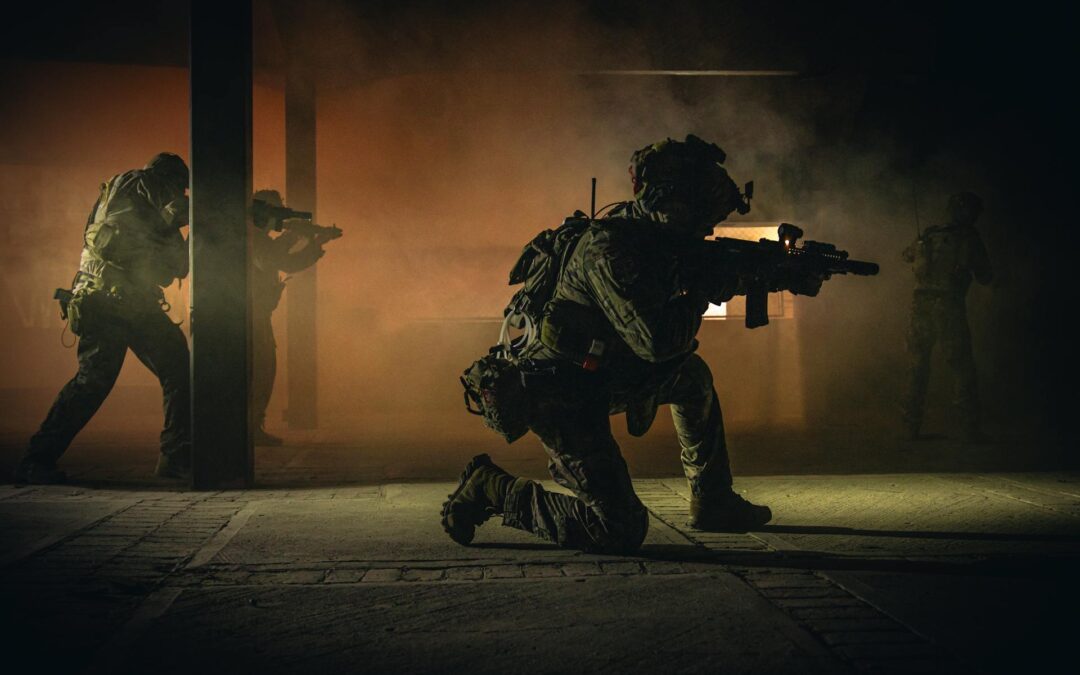
In the modern theater of warfare, not all battles are waged in broad daylight with tanks rolling and infantry charging across open fields. Some conflicts unfold in the shadows—where espionage, sabotage, and cyber operations shape the fate of nations. Ukraine’s clandestine response to Russian aggression is embodied by one particularly secretive force: Unit 2245. This elite cadre of shadow warriors operates deep behind enemy lines, carrying out missions that conventional armies cannot.
Unit 2245 is not just a military unit; it’s an ecosystem of spies, saboteurs, and cyber operatives. They infiltrate, disrupt, and dismantle the enemy’s infrastructure, undermining Russian advances with surgical precision and invisible strikes. Their existence is a testament to Ukraine’s strategic adaptation in a war that blends traditional combat with unconventional tactics.
Origins Born of Upheaval
The birth of Unit 2245 cannot be understood without delving deeply into the seismic political and social upheavals that shook Ukraine in late 2013 and early 2014. The Maidan Revolution was more than a protest—it was a national convulsion rooted in centuries of tension, identity struggles, and geopolitical tug-of-war. At its heart was a moment of betrayal felt by many Ukrainians: President Viktor Yanukovych’s sudden decision to suspend the country’s pending association agreement with the European Union, opting instead to deepen ties with Russia. This pivot was a catalyst that ignited widespread fury among Ukrainians yearning for democratic reform, transparency, and integration with the West.
Protests erupted on the frigid streets of Kyiv’s Independence Square, a sprawling epicenter for civil discontent. What started as peaceful demonstrations rapidly escalated in scale and intensity, drawing tens of thousands from across the country. The atmosphere was electric with hope and defiance, yet ominous clouds gathered as security forces clashed violently with protesters. The government’s use of brutal tactics, including snipers targeting demonstrators, escalated the crisis. By February 2014, over one hundred lives had been lost, transforming the movement into a crucible of martyrdom and national resolve.
Yanukovych’s abrupt flight to Russia left Ukraine in a volatile power vacuum, swiftly filled by an interim government that symbolized a dramatic shift toward Western alignment. Yet this political realignment sent shockwaves through the region. Russia, perceiving a direct threat to its sphere of influence and strategic interests, moved swiftly and covertly. The annexation of Crimea was executed with remarkable stealth and precision. Under the cover of unmarked troops known as the “Little Green Men,” Russia seized the peninsula, violating international law and shaking the foundations of European security.
This annexation set a dangerous precedent. In eastern Ukraine, separatist movements in the Donetsk and Luhansk oblasts declared independence, backed aggressively by Russian military aid and irregular forces. The conflict morphed into a hybrid war—a complex blend of conventional military clashes, irregular insurgency tactics, cyber attacks, and a sprawling disinformation campaign designed to fracture Ukrainian society and destabilize the government.
Within this maelstrom, Ukraine’s military was unprepared and internally conflicted. The armed forces were relics of the Soviet command structure, riddled with personnel who held sympathies, loyalties, or even active ties to Moscow. This created fissures of distrust that crippled operational effectiveness. High-ranking officers were suspected, often justifiably, of acting as double agents or at least being reluctant to confront Russian aggression decisively. This internal rot compounded Ukraine’s strategic vulnerabilities.
The Maidan Revolution and its aftermath were not only a geopolitical flashpoint but also a catalyst that exposed the critical necessity for Ukraine to overhaul its military and intelligence capabilities fundamentally. The existing forces were ill-equipped for the nuanced and multidimensional nature of hybrid warfare being waged on its soil. In this crucible of upheaval, the seeds for Unit 2245 were sown—a specialized, covert unit born out of the existential imperative to defend Ukraine by mastering the shadows where conventional armies faltered.
The Imperative for a New Kind of Force
The rapidly evolving conflict underscored a profound reality: traditional military paradigms were insufficient in the face of Russia’s hybrid warfare strategy. Russia was not simply deploying tanks and infantry; it was leveraging a cocktail of unmarked paramilitaries, cyber attacks, psychological operations, and covert sabotage. Ukraine’s conventional forces, often constrained by outdated Soviet doctrines and compromised loyalties, were ill-prepared to counter these multifaceted threats.
Ukraine’s leadership recognized that to resist effectively, it needed a force tailored to the demands of asymmetrical warfare—nimble, elusive, and capable of striking with precision far behind enemy lines. This force would not fight in broad daylight but in the shadows, where intelligence gathering, sabotage, and psychological disruption could yield disproportionate strategic advantages.
Unit 2245 was conceived precisely as this force: a secretive, elite commando unit trained to operate invisibly within hostile territory. Its mandate went beyond brute strength or mass mobilization. Instead, it focused on clandestine operations that could unravel enemy supply chains, gather critical intelligence, and carry out precision strikes designed to destabilize and disorient Russian forces from within.
The United States emerged as a crucial partner in this endeavor. Aware of the broader geopolitical stakes—Russia’s aggressive expansionism threatening the balance of power in Eastern Europe—the CIA took a leading role in shaping and training Unit 2245. This was not merely about exporting Western special operations tactics; it was a deliberate effort to implant Western intelligence methodologies and operational culture within Ukraine’s defense apparatus.
The CIA’s involvement brought a wealth of expertise in unconventional warfare, espionage, cyber operations, and psychological warfare. Training focused on melding physical prowess with intellectual agility—creating operatives who were equally adept at sabotage, intelligence collection, cyber disruption, and information manipulation.
This partnership marked a strategic shift for Ukraine. It was no longer enough to rely on conventional military might or fragmented intelligence efforts. Unit 2245 became a linchpin in a broader strategy to wage a multi-dimensional war, one that embraced the complexities of modern conflict where battles are fought as much in cyberspace and minds as on physical terrain.
In this context, the creation of Unit 2245 was a direct response to the failures of the past and an adaptation to the realities of the present—a bespoke tool engineered to level the playing field against a more technologically advanced and strategically sophisticated adversary. It embodied Ukraine’s resolve to not just survive but to fight smartly and invisibly, rewriting the rules of engagement in a brutal and uncertain war.
Transforming Soldiers Into Covert Operatives
Unit 2245’s transformation from a concept born of necessity into a lethal reality hinged on an extraordinary process: the meticulous conversion of conventional soldiers into multifaceted covert operatives. This transformation was neither quick nor superficial; it was a profound overhaul that fused physical endurance, tactical mastery, intelligence acumen, and psychological resilience into a singular lethal package. The CIA’s role was pivotal, bringing decades of clandestine warfare experience to bear on the training and indoctrination of these Ukrainian warriors.
The training program was structured into comprehensive, interlocking phases, each designed to build upon the last and produce operatives capable of thriving in the unforgiving crucible of modern hybrid warfare.
Phase One: Physical and Tactical Mastery
At its core, this phase forged the foundation of survival and combat effectiveness. Operatives underwent grueling instruction in Survival, Evasion, Resistance, and Escape (SERE) techniques, preparing them for scenarios where capture behind enemy lines was a constant threat. These were not abstract drills; trainees faced realistic simulations that tested their ability to navigate hostile terrain covertly, avoid enemy patrols, and survive without external support.
The emphasis on evasion and stealth was paramount. Operatives learned to move silently across diverse landscapes—urban ruins, dense forests, and war-ravaged countryside—employing camouflage, concealment, and counter-surveillance tactics honed from CIA Special Activities Division doctrines. The ability to disappear into the environment, striking unseen, was a hallmark of their evolving skill set.
Urban warfare training was equally rigorous. Drawing from elite American units such as Delta Force and Navy SEALs, trainees mastered close-quarters combat, building clearance, and sabotage operations in complex environments. They were taught to identify and exploit structural vulnerabilities in enemy infrastructure—railways, bridges, power grids, communication hubs—and to deploy explosives with surgical precision that maximized disruption while minimizing collateral damage.
One operational highlight illustrating the efficacy of this training was the 2023 demolition of a Russian ammunition depot in the T region. Executed with flawless timing and stealth, this mission crippled the enemy’s logistics pipeline, underscoring how a small team, expertly trained and precisely executed, could deliver strategic blows disproportionate to their size.
Phase Two: Psychological and Intelligence Operations
Physical prowess alone was insufficient for the unconventional war Ukraine faced. Phase two plunged operatives into the complex realm of espionage, psychological warfare, and intelligence collection—a domain where the mind was as much a weapon as any firearm.
Operatives were trained in a broad spectrum of spycraft disciplines. They learned to intercept and decrypt enemy communications, turning electronic transmissions into actionable intelligence. This included mastering signal intelligence (SIGINT) techniques—tapping into radio frequencies, understanding encryption algorithms, and exploiting weaknesses in enemy communication protocols.
Human intelligence (HUMINT) training focused on recruiting and handling informants, building clandestine networks, and gathering nuanced insights from within enemy populations. Trainees practiced elicitation techniques, learning how to extract vital information without raising suspicion.
Psychological operations were integral. Trainees engaged in roleplaying exercises designed to develop campaigns that manipulated enemy morale and public perception. Drawing from real-world examples of media manipulation within the conflict, they simulated disinformation efforts aimed at demoralizing Russian forces or bolstering support for Ukrainian resistance within contested areas.
A striking demonstration of this phase’s success was the decryption of captured Russian radio transmissions. By unlocking these communications, Unit 2245 operatives provided Ukrainian command with critical real-time intelligence on troop movements and operational orders, a force multiplier that shifted battlefield dynamics in key engagements.
Phase Three: Cyber Sabotage and Electronic Warfare
The battlefield had extended far beyond the physical into cyberspace. Recognizing this, Unit 2245’s third training phase immersed operatives in cyber warfare and electronic sabotage, working hand-in-hand with CIA cyber operation specialists.
This phase developed capabilities to jam and disrupt Russian electronic warfare systems, communications networks, and command centers. Operatives learned advanced hacking techniques, electronic signal interference, and how to exploit vulnerabilities in enemy cyber infrastructure.
During the 2023 Ukrainian counteroffensive, these skills manifested in a high-impact cyber operation that disabled a major Russian command and control hub for several critical hours. The blackout sowed chaos among Russian forces, fracturing command cohesion and enabling Ukrainian troops to capitalize on the disorder.
Further, operatives became proficient in reverse engineering captured Russian drones and communication devices. By dismantling and analyzing this technology, they fed invaluable intelligence back to CIA analysts, who developed countermeasures to decrypt enemy transmissions and remotely disrupt their systems.
This synergy between kinetic operations and cyber capabilities epitomized Unit 2245’s cutting-edge approach. No longer confined to physical sabotage or traditional espionage, their multi-domain expertise allowed them to wage war on numerous fronts simultaneously—digital, psychological, and physical—making them a formidable and elusive adversary.
The training of Unit 2245 was not merely about creating soldiers; it was about crafting operatives who were shapeshifters in the art of war. They emerged as polymaths—skilled in explosives, stealth, espionage, cyber operations, and psychological manipulation—embodying the future of conflict where adaptability and multidimensional mastery define survival and success.
Precision Strikes and Covert Assassinations
Unit 2245’s operational theater extends far beyond conventional sabotage and intelligence gathering into the realm of precision strikes and covert assassinations—a realm where the stakes are existential, the margins for error razor-thin, and the consequences monumental. These operations are executed with a deadly combination of patience, precision, and meticulous planning, functioning like a lethal chess game where every move is calculated to reshape the enemy’s command structure and morale without igniting open warfare.
The foundation of these missions lies in exhaustive intelligence gathering. Human intelligence (HUMINT) operatives embedded within or adjacent to enemy lines cultivate a web of informants, intercept whispers and rumors, and secure critical insights about target movements and vulnerabilities. Signals intelligence (SIGINT) complements this by intercepting encrypted communications, decrypting command orders, and exposing operational rhythms. Drones and reconnaissance assets circle overhead, providing live surveillance feeds that map the target’s environment in real time, identifying travel routes, security measures, and windows of opportunity.
Operational planning is an exercise in strategic orchestration. Every detail—logistics, timing, safe houses, extraction routes—is scrutinized and rehearsed. Local resistance groups often provide crucial support, facilitating covert movement and supply chains. Terrain analysis is exhaustive; the operatives assess not only physical geography but also sociopolitical nuances, understanding where loyalty or suspicion might be found among civilian populations.
The execution phase is a ballet of deadly efficiency. Ambushes are preferred, striking when targets are in transit and most vulnerable, leveraging the element of surprise. Snipers concealed in natural or urban camouflage patiently wait for the perfect moment when their crosshairs align with the target’s vital zones. When subtlety and infiltration are paramount, operatives don disguises—masquerading as local forces or civilians—slipping into meetings or locations unnoticed, ready to execute their strike with clinical precision.
Technology acts as an invisible partner throughout these operations. Overhead drones provide real-time intelligence and, where necessary, deliver precision strikes to support ground teams. Cyber operations simultaneously disrupt enemy communications, sowing confusion in the critical moments leading up to and following the assassination. This coordinated use of kinetic and digital tools multiplies operational effectiveness, ensuring that targets are eliminated with minimal collateral fallout.
Post-operation, the art of concealment becomes paramount. Cover stories are crafted to deflect suspicion—deaths are attributed to accidents, illnesses, or internal rivalries. Media manipulation steers public narratives, obscuring the unit’s involvement and maintaining plausible deniability. The ultimate objective is to erase any trace of the operation, leaving behind only uncertainty and fear within enemy ranks.
A defining example of Unit 2245’s prowess was the covert operation in Crimea where operatives, disguised as Russian soldiers, infiltrated a key military installation. They planted explosives that devastated critical infrastructure, significantly hampering Russia’s military capabilities in the region. This mission not only demonstrated the unit’s operational daring but also their mastery in blending espionage with kinetic sabotage under the highest security risks.
The Architects of Shadow Warfare
Behind the veil of secrecy that cloaks Unit 2245 stand its architects—visionary leaders whose strategic acumen and operational expertise have shaped Ukraine’s clandestine warfare capabilities. These figures combine battlefield experience with deep intelligence knowledge, orchestrating missions that fuse tactical precision with geopolitical impact.
Killo Budanov is the linchpin of this shadowy apparatus. As head of Ukraine’s Military Intelligence Directorate, his role extends beyond administrative command; he is a hands-on architect of covert operations and the strategic vision behind Ukraine’s unconventional warfare doctrine. Budanov’s trajectory is marked by his early participation in daring raids and intelligence-gathering missions, including pivotal operations in Crimea. His leadership exemplifies a blend of audacity and strategic calculation, steering Unit 2245 through some of the conflict’s most sensitive and high-stakes missions.
Alongside Budanov stands Alexi Hunter Novikov, another pivotal figure whose operational leadership has been instrumental in several landmark missions. Novikov’s expertise lies in intelligence infiltration and sabotage, with a reputation for navigating enemy territory disguised as a civilian operative. His spearheading of Operation Phoenix in the Luhansk region in 2022 showcased the effectiveness of deep-cover intelligence work. By mapping Russian supply routes and military convoys, Novikov enabled precision artillery strikes that crippled enemy logistics, buying critical time for Ukrainian defensive and counteroffensive maneuvers.
These leaders embody the hybrid warrior ethos—combining espionage tradecraft with military tactics, cyber capabilities, and psychological operations. Their strategic planning incorporates not only battlefield outcomes but also the broader psychological and informational dimensions of warfare. They understand that modern conflict is fought in shadows and networks as much as it is on terrain and frontlines.
The success of Unit 2245 is inseparable from this visionary leadership. Budanov, Novikov, and their cohorts have institutionalized an operational culture that prizes adaptability, innovation, and ruthlessness tempered by precision. They have cultivated a force that is simultaneously a dagger in the enemy’s side and a ghost slipping through the cracks of traditional military confrontation.
Together, these architects have ensured that Unit 2245 is not merely a reactive force but a proactive instrument of strategic disruption—capable of shaping the course of the conflict in Ukraine’s favor by exploiting the vulnerabilities of a more powerful adversary through intelligence mastery, surgical strikes, and psychological dominance.
Psychological Warfare and Battlefield Impact
The tangible destruction wrought by Unit 2245’s operations is only one facet of their influence; perhaps even more consequential is the intangible psychological pressure they exert on Russian forces. The presence of a highly skilled, invisible enemy operating deep behind their lines instills a pervasive sense of paranoia and insecurity among Russian troops and commanders. This psychological warfare, often overlooked in traditional military assessments, is a critical force multiplier that undermines morale, disrupts cohesion, and impairs decision-making.
Russian soldiers are acutely aware that any routine movement—whether a supply convoy, a patrol, or even a command meeting—could be compromised by unseen Ukrainian operatives lurking in the shadows. This constant threat forces a hypervigilant mindset, where caution replaces confidence and hesitation replaces decisiveness. The resulting operational friction slows troop movements and dilutes combat effectiveness. Commanders must allocate disproportionate resources to internal security and counterintelligence efforts, diverting manpower and attention from frontline engagements.
The psychological toll is compounded by the unpredictability of attacks. Sabotage missions on critical infrastructure—railways, ammunition depots, communication nodes—occur with such stealth and precision that Russian forces never know where or when the next blow will land. This sense of omnipresent vulnerability breeds fear and mistrust within units, eroding trust not only in leadership but also among comrades. Suspicion of infiltrators and traitors within their own ranks becomes rampant, fracturing unit cohesion at the most fundamental level.
Moreover, the propaganda and information operations led by Unit 2245 exacerbate these psychological pressures. By manipulating media narratives and sowing disinformation, they destabilize enemy morale and influence civilian populations in contested regions. This multidimensional approach to warfare extends the battlefield into the realm of perception and belief, where victory hinges as much on breaking the enemy’s will as on destroying their physical assets.
In sum, the psychological warfare waged by Unit 2245 transforms the environment in which Russian forces operate. It converts territory from a mere physical space into a labyrinth of fear and uncertainty, where every decision is shadowed by doubt. This invisible pressure undermines operational tempo, weakens resolve, and ultimately magnifies the effectiveness of Ukraine’s broader military strategy.
Challenges and The Road Ahead
Despite Unit 2245’s formidable successes, the path forward is fraught with complex challenges that test the resilience of both the unit and its supporting allies. One of the most pressing concerns is the precarious nature of continued external support, particularly from the United States. The CIA’s investment in training, equipping, and supporting Unit 2245 has been indispensable, but shifting political winds in Washington pose uncertainty. As electoral cycles come and go, questions arise about the sustainability and scale of U.S. assistance, casting a shadow over the unit’s future operational capacity.
Domestically, the evolving nature of the conflict demands constant adaptation. Russia, having suffered repeated disruptions from Ukrainian sabotage and intelligence operations, has intensified its countermeasures. Its counterintelligence apparatus has been beefed up, deploying sophisticated electronic warfare systems, enhanced signal encryption, and an aggressive hunt for infiltrators. This escalation heightens the risk for Unit 2245 operatives, necessitating ever more innovative tactics and tighter operational security.
Cyber warfare remains an especially dynamic and contested domain. Unit 2245’s cyber capabilities have proven decisive, but Russia’s cyber defenses and offensive operations are growing in sophistication and volume. This digital arms race requires continuous investment in technical expertise, infrastructure, and international intelligence cooperation to maintain the edge.
Looking ahead, Unit 2245 is poised to play an even greater role in Ukraine’s strategic calculus. Its accumulated expertise in espionage, sabotage, and cyber operations will be crucial as Kyiv intensifies efforts to reclaim occupied territories and disrupt Russian military logistics. The unit’s evolution embodies the broader transformation of warfare itself—a shift from massed armies and open battlefields to decentralized, networked conflicts where information, stealth, and precision reign supreme.
The challenges are daunting, but Unit 2245’s trajectory reflects a determination to innovate relentlessly. Its future will depend not only on continued external support but also on the unit’s ability to adapt to an adversary that is equally resolute and resourceful. In this high-stakes game of shadows, the balance of power hinges on agility, secrecy, and the unyielding will to survive and prevail.
Conclusion
Unit 2245 stands as a testament to Ukraine’s resilience and ingenuity in the face of overwhelming odds. Forged in the crucible of political upheaval and armed with cutting-edge training and intelligence partnerships, this secretive unit exemplifies the new paradigm of modern warfare, where shadows, silence, and cyber dominance often decide the outcome before a shot is even fired. As the conflict evolves, Unit 2245’s blend of espionage, sabotage, and psychological warfare will remain pivotal, embodying the relentless spirit of a nation determined not just to defend its sovereignty but to redefine the rules of engagement for generations to come.