
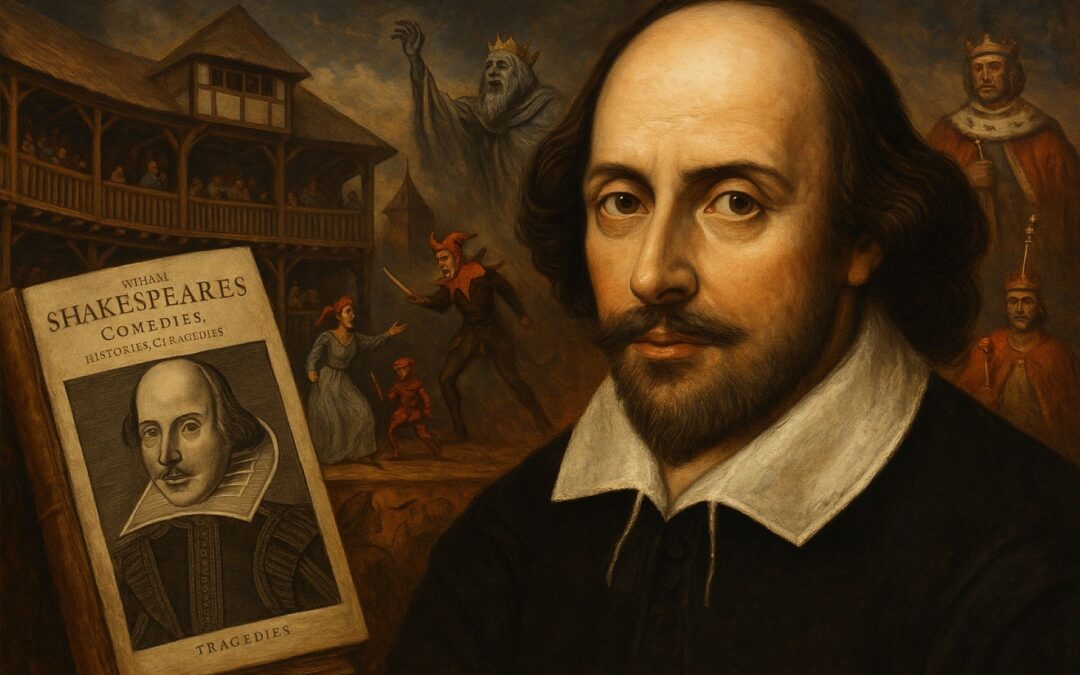
William Shakespeare stands as the titan of English literature, yet he remains one of the most paradoxically misunderstood figures in literary history. Despite his universal fame, Shakespeare often feels like a distant icon, cloaked in the garb of elitism—his works relegated to academic obligation rather than heartfelt appreciation. This disconnect obscures the essence of a playwright whose primary ambition was to entertain to captivate audiences with humor, wit, and the raw, unvarnished texture of human life.
His plays are a dazzling mosaic of slapstick comedy, ingenious wordplay, and a profound empathy for the human heart’s kaleidoscope—its joys, sorrows, follies, and passions. Far from being mere relics of an Elizabethan stage, Shakespeare’s works transcend time and language, their pulse beating in over 100 tongues worldwide.

The Genesis of the Shakespearean Legacy: The First Folio
The publication of The First Folio in 1623 stands as one of the most consequential moments in literary history. At a time when the written preservation of plays was far from guaranteed—scripts were often treated as transient commodities, used for performance and then discarded—the act of compiling Shakespeare’s work into a single, cohesive volume was both visionary and heroic. John Heminges and Henry Condell, two of Shakespeare’s closest friends and fellow actors, undertook this monumental endeavor out of devotion and foresight. Without their intervention, the literary world might have lost nearly half of Shakespeare’s dramatic legacy.
This folio contained 36 plays, of which 18 had never before been printed, including now-iconic works like Julius Caesar, Macbeth, and The Tempest. The preservation of these plays gave Shakespeare’s oeuvre permanence, transforming his ephemeral stage works into enduring texts accessible to generations far beyond his own time.
The First Folio also helped codify Shakespeare’s reputation, establishing him as a singular literary genius rather than just another Elizabethan playwright. It organized his diverse plays into three categories—Comedies, Histories, and Tragedies—laying the foundation for how his works would be studied, performed, and appreciated. Moreover, it fueled a burgeoning Shakespearean culture, inspiring adaptations, scholarly inquiry, and widespread readership.
The significance of the First Folio extends beyond mere preservation; it cemented Shakespeare’s place at the heart of English literature and guaranteed that his extraordinary insights into human nature would continue to captivate audiences worldwide.
Roots in Stratford-upon-Avon: The Making of a Bard
William Shakespeare’s beginnings were grounded in the modest confines of Stratford-upon-Avon, a market town that, in the 16th century, was hardly remarkable on the map of England. Born in 1564 to John Shakespeare, a glove maker and local official, William’s early life was steeped in the rhythms of small-town England. His education at the Stratford Grammar School was rigorous, focused on Latin language and literature—a classical foundation that proved instrumental in his later work.
The curriculum immersed young Shakespeare in the epic tales of Ovid’s Metamorphoses and the biographies of Plutarch, texts filled with mythic transformations, heroic feats, and tragic downfalls. These stories provided a rich intertextual tapestry that Shakespeare would draw upon throughout his career, reimagining classical material for the English stage with a uniquely humanistic touch.
Unlike many playwrights and poets of his era, Shakespeare did not attend university, a fact that has intrigued scholars for centuries. This absence of formal higher education did not hinder his intellectual growth; rather, it underscores the power of autodidactic learning and experiential knowledge. His works reveal an erudition and subtlety suggesting a deep engagement with literature, history, and philosophy, acquired through self-study, reading, and theatrical collaboration.
In 1582, Shakespeare married Anne Hathaway, a woman eight years his senior and already expecting their first child. This union thrust him into early adult responsibilities, and the couple had three children: Susanna, followed by twins Judith and Hamnet. While Anne and the children remained in Stratford, Shakespeare’s ambitions drew him to London, where he sought to carve out a career on the stage. This physical and emotional separation from his family would color much of his later writing, especially themes of loss, absence, and reconciliation.
The Lord Chamberlain’s Men: A Theatrical Powerhouse
The foundation of The Lord Chamberlain’s Men in 1594 was a watershed moment in Shakespeare’s career and the landscape of English theatre. This company became the platform from which Shakespeare both created and presented his works, offering a stable troupe of actors and resources to bring his plays to life.
The company’s initial repertoire focused heavily on history plays and comedies. The history plays resonated deeply with Elizabethan audiences, dramatizing the trials and tribulations of English monarchs, national identity, and political intrigue. These plays were not dry historical lectures; they were vibrant spectacles filled with power struggles, loyalty, betrayal, and human drama. Shakespeare’s histories spanned events from the 12th century through the 16th century, providing a sweeping narrative of England’s past that connected with contemporary political anxieties and triumphs.
Within these plays, Shakespeare crafted some of his most memorable and complex characters. Richard II emerges as a figure both regal and effete, his eloquence shadowed by vanity and insecurity. Hotspur burns with fiery impulsiveness and martial valor, embodying youthful rebellion. Richard III’s twisted form is not merely physical deformity but an external manifestation of moral corruption and ruthless ambition. These characters transcend their historical roles, becoming psychological studies of power, identity, and human frailty.
The company attracted audiences across the social spectrum—from nobility in the Lords’ rooms to common groundlings packed in the pit. Shakespeare’s ability to appeal to this wide range was rooted in his blending of intellectual wit and bawdy humor, high tragedy and low comedy. His plays entertained but also provoked reflection, giving voice to the full range of human experience. The Lord Chamberlain’s Men, through Shakespeare’s pen and their performances, became the heartbeat of London’s theatrical world and an engine for cultural transformation.
Shakespeare’s Artistry: Storytelling Over Strict History
William Shakespeare’s approach to history was a deliberate and artful manipulation rather than a rigid adherence to fact. Unlike modern historians who aim to present a precise record, Shakespeare prioritized the demands of drama—emotional resonance, thematic clarity, and theatrical impact—over exact historical accuracy. His histories were less chronicles and more living narratives, crafted to engage audiences with human conflicts and moral dilemmas that transcended mere dates and events.
Take Richard II as a prime example. While the real Richard II was a complex monarch with a troubled reign, Shakespeare reshaped him into a poetic and tragic figure whose downfall serves both political and dramatic purposes. Shakespeare’s portrayal aligned with Tudor propaganda, subtly reinforcing the legitimacy of the reigning monarch by casting Richard II in a flawed light. He even altered details like Richard’s age at marriage to create dramatic symmetry, pairing the king’s youth with that of his queen, Isabella of Valois, enhancing the poignancy of their doomed union.
Similarly, Shakespeare’s depiction of the Wars of the Roses in plays such as Henry VI and Richard III simplifies centuries of intricate political maneuvering into gripping personal rivalries and battles for power. The character of Richard III, with his notorious hunchback and physical deformities, becomes a theatrical embodiment of moral corruption and villainy rather than a historically precise portrait. This choice amplifies the dramatic tension and highlights themes of ambition, deceit, and the costs of ruthless power.
By privileging storytelling, Shakespeare infused his histories with psychological complexity and universal relevance. These plays reveal the human struggles behind political events, exposing vulnerability, pride, jealousy, and loyalty. His artistry transformed dusty historical episodes into vibrant, emotionally charged human dramas that continue to captivate audiences.
Personal Tragedies and The Turn to Darkness
The trajectory of Shakespeare’s writing was deeply influenced by the personal tragedies he endured, particularly the death of his 11-year-old son Hamnet in 1596. This profound loss cast a long shadow over Shakespeare’s work, marking a shift in tone and theme from the earlier lighthearted comedies and patriotic histories to darker, more introspective dramas.
In the wake of Hamnet’s death, Shakespeare penned Twelfth Night, a play that, on the surface, bubbles with comedic mischief, mistaken identities, and joyful reunions. Yet beneath this frothy exterior lies a poignant meditation on loss, separation, and the yearning for reconciliation. The plot’s focus on twins Viola and Sebastian, separated by a violent storm and eventually reunited, mirrors the emotional pain of broken families and the hope for healing—echoing Shakespeare’s own desires for reunion with his lost child.
Five years later, in 1601, Shakespeare experienced another blow with the passing of his father, John Shakespeare. This event coincides with the emergence of Hamlet, a play steeped in grief, revenge, and existential questioning. Hamlet’s profound psychological complexity represents a seismic shift in theatrical characterization. Rather than a conventional tragic hero, Hamlet is introspective, conflicted, and prone to paralysis by analysis. His famous soliloquies, especially “To be, or not to be,” reveal a man wrestling with the unbearable weight of loss and the moral ambiguity of vengeance.
The grief that permeates Hamlet is not merely personal but universal. The play probes themes of mortality, the afterlife, the nature of justice, and the fragility of the human mind. Hamlet’s attempts to “unpack his heart with words” symbolize the playwright’s own struggle to articulate the depths of sorrow and confusion following his personal tragedies. This dark, reflective period marked Shakespeare’s evolution toward exploring the intricacies of the human psyche with unprecedented depth.
The Pinnacle of Tragic Craftsmanship
Following the watershed of Hamlet, Shakespeare entered a period of unparalleled tragic brilliance, producing some of the most powerful and devastating works in the Western canon. Plays like King Lear and Othello not only exemplify his mastery of dramatic structure and poetic language but also offer profound insights into the darkest recesses of human nature.
King Lear stands as a towering testament to Shakespeare’s tragic vision. It explores themes of authority and madness, loyalty and betrayal, and the catastrophic consequences of human folly. Lear’s descent from a commanding monarch to a broken, insane figure stripped of power reveals the fragility of identity and the brutal randomness of suffering. The play’s intense emotional range—from brutal cruelty to moments of heartbreaking tenderness—immerses the audience in a world where love and rage coexist in turbulent equilibrium.
Othello, on the other hand, offers a searing exploration of race, jealousy, and manipulation. The titular character is a Moor and a respected military general, an outsider in Venetian society whose tragic flaw is his susceptibility to the poisonous insinuations of Iago, a master of deceit. Iago’s relentless machinations stoke Othello’s jealousy—the “green-eyed monster”—leading to the tragic murder of his innocent wife, Desdemona. The play’s exploration of trust, otherness, and the corrosive power of envy remains strikingly resonant, exposing the vulnerabilities embedded in love and identity.
Shakespeare’s poetic brilliance is on full display in these tragedies. The language is simultaneously grandiose and intimate, rich with metaphor and rhythmic beauty, elevating the emotional stakes. The characters are deeply human—flawed, conflicted, and caught in inexorable fates—inviting both empathy and contemplation.
This phase of Shakespeare’s career not only solidified his status as the preeminent dramatist of his time but also laid the groundwork for modern tragedy, influencing countless playwrights and continuing to challenge audiences with its moral and psychological complexity.
Shakespeare’s Theatre: From Margins to Mass Appeal
At the dawn of Shakespeare’s career, the theatre occupied a precarious social position. Actors were often lumped in with vagabonds and beggars, and playwrights struggled to secure steady patronage or financial reward. The stage was viewed by many as a disreputable profession, far removed from the polished courts or learned universities. Yet, by the end of the Elizabethan era, theatre had metamorphosed into a booming commercial enterprise, a popular cultural phenomenon that captivated Londoners from all walks of life. Shakespeare was both witness and architect of this transformation.
The proliferation of playhouses—such as The Globe and The Curtain—offered accessible venues where the city’s diverse population could congregate to witness drama unfold. The theatrical audience was highly stratified: at the top were the nobility and wealthy patrons occupying the Lords’ rooms, who paid premium prices for reserved seating and some shelter from the elements. Below them, the galleries provided covered benches for the middle classes. Finally, at ground level, the “groundlings” stood packed shoulder to shoulder in an uncovered area directly before the stage, paying the lowest admission fee.
Despite their modest means, the groundlings were fiercely engaged spectators. Known colloquially as the “stinkards” due to the summer heat and crowds, they ate, drank, shouted, and sometimes heckled, demanding constant entertainment and immediacy from the performances. Shakespeare’s plays expertly catered to these varied tastes, weaving together intellectual wordplay and complex characterizations with bawdy humor, slapstick, and coarse innuendo.
Shakespeare’s acute awareness of his audience’s expectations enabled him to craft works that transcended class barriers, transforming theatre into a shared cultural experience. In this sense, he was a pioneer of mass-market entertainment—creating art that was commercially viable without sacrificing depth or artistic integrity. The theatre became a vibrant marketplace where ideas, stories, and emotions were traded in a lively, participatory exchange.
The Commercial Bard: Crafting for Money and Applause
Shakespeare was not only an artistic genius but a shrewd entrepreneur acutely attuned to the commercial realities of Elizabethan theatre. In an era when plays were performed live to paying audiences, financial success depended on popular appeal. Shakespeare’s ability to blend artistic ambition with business acumen was instrumental in his enduring success.
The prevalent model of playwriting at the time was adaptation rather than original invention. Many stories Shakespeare dramatized were already well-known—drawn from history, classical mythology, or popular literature. For example, Hamlet shared roots with earlier plays and folk tales; King Lear evolved from the older play King Leir by Thomas Kyd; Romeo and Juliet was adapted from Arthur Brooke’s narrative poem. These sources provided familiar frameworks that audiences recognized and anticipated.
Yet Shakespeare’s brilliance lay in his transformative touch. He took these known narratives and infused them with nuanced characterization, emotional complexity, and poetic invention. His subtle yet powerful alterations elevated the material—turning a conventional story into a profound exploration of love, tragedy, and human frailty. The famous moment in Romeo and Juliet where Juliet kisses the dying Romeo, feeling his “dwindling body heat,” deepens the intimacy and poignancy far beyond previous versions.
Shakespeare’s commercial savvy extended beyond plot selection. He understood pacing, theatrical spectacle, and audience engagement, blending highbrow wit with bawdy humor to please both elite and popular spectators. His involvement as a shareholder in theatre companies and playhouses further aligned his artistic output with financial incentives. Writing for applause and profit did not dilute Shakespeare’s artistry; rather, it honed his capacity to entertain while challenging his audiences intellectually and emotionally.
Audience Engagement and Suspension of Disbelief
Elizabethan theatre was a highly interactive and immersive experience. Unlike modern audiences accustomed to plot twists and secrecy, Shakespeare’s contemporaries often knew the stories well in advance. Plots like Romeo and Juliet were popular tales already circulating in poetic and prose forms. Shakespeare frequently used prologues and choruses to reveal key plot points before the action unfolded, shifting the dramatic tension from “what will happen” to “how it will happen” and “why.”
This familiarity demanded a different kind of audience engagement—one based on imaginative immersion and emotional investment rather than surprise. Shakespeare invited his audiences to “awake your faith” and fully inhabit the imaginative worlds he conjured on stage. The willingness to suspend disbelief was a theatrical contract; viewers were asked to accept the improbable, the magical, and the poetic as vehicles for exploring universal truths.
In plays like The Winter’s Tale, this contract is explicit. The famous stage direction “Exit pursued by a bear” exemplifies Shakespeare’s playful blending of tragedy and absurdity, urging audiences to accept sudden tonal shifts and improbable events as part of the dramatic fabric. Similarly, the miraculous statue awakening in the same play asks spectators to embrace wonder alongside realism.
Shakespeare’s fluid blending of genres—comedy infused with darkness, tragedy laced with humor—mirrors life’s contradictions and complexities. This breadth of emotional range requires a nimble suspension of disbelief, allowing audiences to oscillate between laughter and tears, horror and joy, within a single performance. The vitality of his theatre lies not only in the stories but in this dynamic interplay between performer and spectator, reality and imagination.
Embracing Life’s Contradictions: The Shakespearean Spectrum
Shakespeare’s genius lies in his remarkable capacity to embrace and portray life’s inherent contradictions—joy intertwined with sorrow, comedy shadowed by tragedy, and hope existing alongside despair. His plays resist simple categorization, instead presenting a kaleidoscopic view of the human experience where light and darkness coexist in a dynamic balance.
In King Lear, for example, Shakespeare plunges the audience into a maelstrom of emotions. The play’s narrative unfolds with brutal betrayals, madness, and death, yet interspersed are moments of profound tenderness and insight. Lear’s interactions with his loyal daughter Cordelia reveal the depths of parental love and redemption amidst chaos. The juxtaposition of cruelty and compassion underscores the complexity of human nature, where benevolence and malevolence often dwell side by side.
Similarly, Twelfth Night oscillates between uproarious comedy and psychological nuance. The play’s farcical elements—mistaken identities, witty banter, and playful pranks—bring laughter, but beneath this surface lies a poignant exploration of loneliness, identity, and unrequited love. The character of Malvolio, subjected to a humiliating prank, embodies the thin line between folly and cruelty, highlighting the darker undertones beneath the comedy.
In Titus Andronicus, Shakespeare pushes theatrical boundaries by combining gruesome violence with black humor. The revenge plot culminates in the infamous scene where Titus serves his enemy’s sons baked into a pie—a grotesque tableau that is both horrifying and perversely comic. This blending of gore and melodrama challenges audiences to confront discomfort and absurdity simultaneously, reflecting the chaotic extremes of human passion.
Through these works and others, Shakespeare pioneers the genre of tragi-comedy, wherein laughter and tears coexist. This genre reflects life’s unpredictable nature—where tragedy can swiftly give way to humor, and despair can be punctuated by hope. The famous stage direction “Exit pursued by a bear” in The Winter’s Tale epitomizes this spirit, transforming a tragic death into an absurdly comic moment. Shakespeare’s willingness to inhabit these contradictions enriches his storytelling, inviting audiences to accept the multifaceted, often paradoxical reality of existence.
Final Years: Magic, Reconciliation, and Farewell
The early 1600s marked a poignant and transformative phase in Shakespeare’s life and career. Personal losses—the deaths of his brother Edmund and nephew during a devastating plague outbreak—were juxtaposed with familial joys, such as his daughter Susanna’s marriage and pregnancy. This blend of grief and hope seemed to inspire a shift in Shakespeare’s thematic focus toward reconciliation, renewal, and the mystical.
His final four plays—Cymbeline, The Winter’s Tale, Pericles, and The Tempest—are suffused with motifs of magic, forgiveness, and homecoming. These works often feature characters who endure exile, separation, or profound loss, only to find restoration through supernatural or miraculous intervention. The plays evoke a sense of yearning for wholeness and peace, perhaps mirroring Shakespeare’s own reflections on mortality and legacy.
In The Winter’s Tale, for instance, the fantastical resurrection of Hermione serves as a symbol of hope emerging from despair. Similarly, The Tempest centers on Prospero, a magician who orchestrates reconciliation among estranged family members before renouncing his powers. This thematic focus on forgiveness and the relinquishing of control carries a meditative, almost elegiac tone.
These late romances blend elements of tragedy and comedy, weaving together sorrow and joy in a manner that transcends earlier genre conventions. They reveal a world-weariness tinged with optimism—a recognition of life’s hardships alongside the possibility of renewal. Shakespeare’s exploration of magic and the miraculous in these works serves as a metaphor for the transformative power of art, memory, and human connection in the face of impermanence.
The Tempest: Shakespeare’s Swan Song
The Tempest is widely regarded as Shakespeare’s theatrical farewell—a masterful meditation on mortality, power, and forgiveness. The protagonist, Prospero, is often interpreted as Shakespeare’s own alter ego, a sorcerer wielding control over a mystical island, orchestrating events to bring about reconciliation before his impending departure.
Throughout the play, Prospero confronts themes of loss and restoration. He has been betrayed and exiled, yet now he uses his magical abilities not for revenge but for healing fractured relationships. His ultimate decision to relinquish magic symbolizes a conscious letting go—not only of supernatural power but of artistic control and life itself. This renunciation resonates as a poignant metaphor for Shakespeare’s own approaching end.
The Tempest explores the human longing for peace and closure, with Prospero’s return home signifying a return to origins and the acceptance of mortality. The play’s concluding lines, where Prospero asks the audience for their forgiveness and applause, blur the boundary between character and creator, suggesting Shakespeare’s final bow before stepping off the stage of life.
Shakespeare died in 1616 at the age of 52, leaving a legacy unparalleled in literary history. His burial in Stratford-upon-Avon transformed the once modest town into a site of pilgrimage for admirers worldwide. The Tempest, with its blend of magic, melancholy, and hope, stands as a fitting capstone to a career that forever altered the landscape of drama and human understanding.
Conclusion
Shakespeare’s enduring legacy lies in his unparalleled ability to capture the full spectrum of human experience—its contradictions, passions, and complexities—with a depth and artistry that continue to resonate across centuries and cultures. From the preservation of his work in the First Folio to the vibrant stages of Elizabethan London, from personal tragedy to transcendent final plays, his journey reflects not only the evolution of a playwright but the timeless heartbeat of humanity itself. In embracing both the light and shadow of life, Shakespeare invites us to see ourselves in all his characters and stories—reminding us that beneath every crown and mask lies the profoundly human story worth telling again and again.