
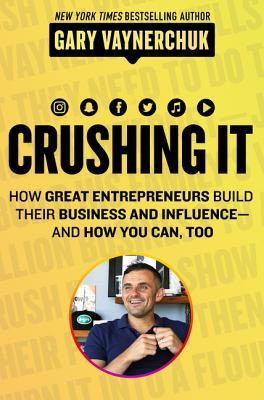
Every generation has a blueprint for success — a book, an idea, a manifesto that redefines how ambition meets opportunity. For the digital era, that book is Crushing It! by Gary Vaynerchuk. It’s not just a manual for entrepreneurship; it’s a mindset shift. It teaches that the gatekeepers are gone, the excuses are obsolete, and the tools to build a life on your own terms are already in your hands.
Gary’s philosophy is raw, practical, and deeply human. He doesn’t preach shortcuts or overnight fame; he preaches ownership — of your story, your energy, your craft, and your future. Through stories of creators, dreamers, and misfits who defied convention to build empires online, Crushing It! shows that success today isn’t about who shouts the loudest — it’s about who shows up with the most authenticity, consistency, and intent.
This is the roadmap to designing a life that feels good on the inside, not just impressive on the outside.
Self-Awareness: The Foundation of Everything
The cornerstone of every successful entrepreneur isn’t strategy — it’s self-awareness. The ability to know yourself so clearly that no external noise can sway you. It’s understanding what you excel at, where you fall short, what motivates you, and what drains you. It’s your internal compass — the one thing that keeps you moving forward when logic, pressure, and opinions pull you in every direction.
In a world obsessed with imitation, self-awareness becomes your competitive advantage. Too many people spend years building lives that look impressive but feel hollow — chasing metrics that mean nothing to them personally. They confuse activity with progress, popularity with purpose. True success begins when you stop performing for others and start creating from your core.
Self-awareness liberates you from the illusion of comparison. It reminds you that you don’t need to follow anyone else’s timeline. You don’t need to have a million followers, a viral video, or a fancy office to “make it.” If your life aligns with your values — if you’re doing meaningful work, living with intention, and waking up with purpose — then you’re already ahead.
This level of clarity demands brutal honesty. It requires looking at your flaws without judgment and your strengths without arrogance. It’s the quiet recognition that happiness and achievement are not separate paths but parallel ones.
Gary Vaynerchuk emphasizes this point relentlessly: self-awareness isn’t just personal — it’s practical. It dictates the kind of business you build, the audience you attract, and the goals you set. Without it, you’ll chase trends, burn out, and never feel “enough.” With it, you’ll play to your strengths, delegate your weaknesses, and design a life that’s both successful and satisfying.
The digital age has removed every excuse. The tools to build, create, and connect are free. The only real obstacle left is self-deception. Once you know who you are — and what you’re not — everything else becomes strategy.
Get Pumped: The Path Is All Yours
We are living through the most extraordinary era of human potential. Never before in history have individuals possessed this much creative control over their own destiny. The internet isn’t just a tool — it’s a revolution. It has flattened hierarchies, dismantled gatekeepers, and turned everyday people into global brands.
A teenager in Lagos can start a podcast that rivals CNN’s reach. A mother in Mumbai can teach millions how to cook from her kitchen. A designer in São Paulo can sell art to collectors in Paris — all from a smartphone. The playing field has been leveled. The only barrier left is belief.
This is what Gary Vaynerchuk means when he says “the path is all yours.” You are no longer dependent on permission, capital, or connections. The power to reach the world now fits in your pocket. Platforms like Instagram, YouTube, Facebook, and TikTok are the modern equivalents of television networks — except this time, you control the programming.
The catch? Freedom demands responsibility. You can no longer blame the system, the economy, or the industry. You are the system. You are the brand. You are the product and the platform.
To truly capitalize on this age, you must think beyond the short-term rush of likes or followers. You’re not just building a page — you’re building a legacy. A personal brand that transcends platforms and survives algorithm changes. One that is so authentic, so valuable, that it becomes untouchable.
That begins with courage — the courage to start when no one is watching, the courage to speak even when your voice shakes, the courage to fail publicly and try again. Most people are paralyzed by the fear of imperfection. They wait for the right time, the right gear, the right moment. But the right moment never arrives. The ones who win are those who begin before they feel ready.
Gary’s message is clear: the internet has democratized opportunity, but only those who act will seize it. Consistency, patience, and adaptability are your new capital. You don’t need to go viral — you need to go visible, every single day.
Every post is a seed. Every conversation is a chance. Every small piece of content builds momentum toward something greater. The empire you want to build already exists in potential — the tools are there, the audience is waiting, and the path is open.
The only question left is: will you walk it?
What Still Matters
In a world that evolves at breakneck speed — where apps rise and fall, and algorithms rewrite the rules every six months — it’s tempting to believe that success is a moving target. But the truth, as Gary Vaynerchuk insists, is timeless: the fundamentals of success never change. The tools evolve, the platforms rotate, but the principles remain.
Whether you’re building a business, a brand, or a following, what matters most isn’t your logo, your editing skills, or your marketing budget — it’s your mindset. And that mindset rests on seven unshakable pillars: intent, authenticity, passion, patience, speed, work, and attention. These aren’t motivational buzzwords. They’re the operating system of every person who has ever “crushed it.” Let’s break them down.
Intent
Intent is the invisible energy that powers every great entrepreneur. It’s the “why” behind the “what.” It determines how you show up, what decisions you make, and how the world perceives you.
When your intent is rooted in greed, manipulation, or vanity, it leaks through — in your tone, your messaging, your behavior. People feel it. The market may reward you briefly, but it never sustains those who lack genuine purpose. On the other hand, when your intent is anchored in service, something magical happens. You start attracting opportunities instead of chasing them.
Gary often says that the best entrepreneurs are at least 51% altruistic and only 49% selfish. They care deeply — about their audience, their craft, their customers. They give more than they take. This imbalance is their superpower. When you focus on providing value first, everything else — money, attention, success — follows naturally.
Intent transforms ambition from a selfish pursuit into a collective force. It’s what separates those who exploit from those who elevate. It’s the reason some brands fade after a viral moment while others become institutions.
So ask yourself: are you doing this to impress people or to improve them? The difference will define your legacy.
Authenticity
Authenticity is the currency of trust in the digital age. We live in a time when everyone is performing — filtering, scripting, curating. But amidst that noise, realness cuts through like sunlight.
People don’t crave perfection. They crave honesty. They want to see your stumbles as much as your successes. They want the behind-the-scenes chaos, not just the highlight reel. When you share your truth — unpolished, unfiltered — you give people permission to do the same.
Authenticity doesn’t mean oversharing or being careless. It means aligning your actions with your values. It means that who you are offline and online are the same person. The irony is that authenticity can’t be faked — the harder you try to appear “real,” the less real you become.
The internet has become the great revealer. Over time, it exposes exaggeration, ego, and empty promises. But it also rewards integrity, transparency, and heart. Your audience doesn’t expect flawlessness — they expect consistency. They want to believe that when you speak, it’s from experience, not agenda.
Don’t announce your plans — document your progress. Don’t declare your expertise — demonstrate it. Let your actions, not your captions, prove your authenticity.
Passion
Passion is the great differentiator. It’s the fuel that sustains you when the results don’t. It’s what gets you up at 5 AM and keeps you working after everyone else has stopped. Without it, you’re just playing a short-term game — one built on willpower, not love.
When you love what you do, you bring a magnetic energy to it. People sense that. They don’t just buy your product; they buy your enthusiasm. Passion turns customers into advocates and work into art.
But passion is more than emotion — it’s commitment. It’s showing up even when it’s inconvenient, exhausting, or uncertain. It’s the quiet persistence to keep refining your craft because you believe it matters. Passion doesn’t always feel like joy. Sometimes it feels like discipline. But it always feels like purpose.
Gary warns against building businesses purely for money. If you chase profit over purpose, you’ll run out of gas. But if you chase meaning, the money will inevitably follow. Because people can’t resist those who are genuinely obsessed with what they do.
Passion is your backup generator when everything else fails — when motivation runs dry, when feedback is silent, when growth feels glacial. It’s what keeps the lights on when no one’s watching.
Patience
Patience is the most underrated virtue in entrepreneurship. Everyone wants overnight success, but nothing meaningful happens overnight. Every “sudden” success story is just a highlight reel of someone else’s decade of invisible work.
Patience doesn’t mean inaction — it means resilience. It means being willing to plant seeds and water them daily without demanding instant fruit. It’s the quiet strength to endure obscurity, rejection, and slow growth because you trust the process.
Impatience kills more dreams than failure ever could. It pushes people to quit too soon or chase shortcuts that cost them credibility. Gary compares patience and speed to pressure and heat — it’s the combination of both that forms diamonds. You need to move fast daily, but think long-term always.
The irony is that patience accelerates results. When you stop obsessing over “when” and focus on “how well,” you execute better, think clearer, and build something that actually lasts.
Speed
Speed is the art of acting before you overthink. It’s about momentum — the willingness to move, make mistakes, and iterate before perfectionism slows you down.
People lose because they hesitate. They wait for clarity, approval, or confidence. But action creates all three. The faster you execute, the faster you learn. The more you experiment, the quicker you adapt.
Speed doesn’t mean recklessness; it means responsiveness. It’s knowing when to strike, when to pivot, and when to double down. The marketplace rewards those who outlearn and outmove their competitors — not necessarily those with the best ideas, but those who act on them first.
Speed gives you leverage. While others are analyzing, you’re building. While they debate, you’re testing. Progress loves decisiveness.
Work
There is no hack for hard work. The algorithm for success is still effort multiplied by endurance. Every dream demands sweat equity — especially in the early years.
The internet can make success look effortless, but behind every viral post and thriving brand are countless late nights, repetitive tasks, and quiet sacrifices. The grind is not glamorous, but it’s sacred. It’s where skill sharpens, credibility compounds, and identity forms.
If you truly love what you do, it won’t feel like punishment — it’ll feel like purpose. Work, when aligned with passion, becomes a form of joy. That’s the paradox of entrepreneurship: the harder you work at what you love, the less it feels like work at all.
But don’t confuse busyness with progress. Real work is about direction, not just motion. It’s about doing what moves the needle — creating, engaging, refining — not just reacting to notifications.
Attention
Attention is the new oil. It fuels the digital economy, drives influence, and determines relevance. The people who understand attention — where it is, where it’s going, and how to hold it — hold the future.
But attention isn’t captured; it’s earned. You earn it by understanding people — their needs, their humor, their pain points. You earn it by showing up consistently where they already are, not where you wish they’d be.
To master attention, you must become a cultural observer — part psychologist, part artist. Watch what’s trending, but don’t lose your identity chasing it. Instead, find the overlap between what the world wants and what you love giving. That intersection is where loyalty lives.
Attention, when paired with authenticity and value, becomes unstoppable. It transforms audiences into communities and followers into evangelists.
The Eighth Essential: Content
Content is the oxygen of your personal brand — the medium through which your ideas breathe and your influence expands. In the digital age, content isn’t just marketing material; it’s the currency of trust, the architecture of your reputation, and the bridge between what you know and who needs to hear it.
Great content doesn’t sell — it tells. It tells a story about who you are, what you stand for, and why your perspective matters. It turns invisible work into visible value. But here’s the paradox: most people overthink content creation. They want perfection before participation. They polish drafts that never get published, chase trends that don’t fit them, and wait for creativity to strike instead of engineering it.
Gary Vaynerchuk’s advice is brutally simple: document, don’t create. You don’t need to stage your life — you need to share it. The process, the failures, the lessons, the grind — that’s the content people crave. We live in a world addicted to transparency. The audience doesn’t just want to see the result; they want to witness the journey.
Think of your content strategy as an ecosystem. At the top sits your pillar content — a podcast episode, a YouTube video, a blog post, or a keynote speech. This is the main artery of your message — the long-form piece that embodies your expertise and energy. From there, it branches into micro-content — smaller pieces that travel across different platforms. A single podcast can become ten quotes on Twitter, five clips on Instagram, three posts on LinkedIn, and one short reel that goes viral on TikTok.
Gary calls this the “content pyramid.” It’s how one idea multiplies into a hundred opportunities. Each platform demands a different flavor — Twitter wants insight, Instagram wants emotion, LinkedIn wants articulation, and TikTok wants entertainment. Your job is to tailor the same message for multiple mediums without diluting its essence.
But great content isn’t just frequent — it’s honest. It’s infused with your DNA. You can outsource design, editing, and distribution, but not your perspective. That’s non-transferable. The reason people follow you isn’t because of the format; it’s because of the feeling. They follow how you think, how you interpret, how you make them feel seen or understood.
Consistency is the differentiator. The market rewards those who show up daily — even when it’s inconvenient. One video may flop; the next might change your life. But you’ll never know if you stop posting. Every piece of content is a ticket in the lottery of attention, and the only people who win are those who keep buying tickets.
And here’s the beauty — content compounds. The more you publish, the sharper your voice becomes. The sharper your voice becomes, the more authority you build. Over time, your content starts working for you — generating opportunities, leads, partnerships, and community while you sleep.
The golden rule is this: don’t chase viral moments; chase valuable moments. Virality fades. Value compounds. The more your content teaches, entertains, or inspires, the longer it lives. The goal isn’t to be popular — it’s to be remembered.
What’s Stopping You
Most people don’t fail because they lack tools or talent — they fail because they hesitate. They spend years overanalyzing, overpreparing, and overjustifying their inaction. They build imaginary barriers that protect them from trying and therefore from failing. Gary Vaynerchuk calls out these barriers for what they really are: fear, disguised as logic.
The three great fears that paralyze creators are fear of failure, fear of wasting time, and fear of seeming vain. Each one has destroyed more dreams than actual failure ever could.
Fear of Failure
This is the most obvious one — the terror of putting yourself out there and falling flat. Of being judged. Of trying and realizing you’re not good enough. But here’s the truth: failure isn’t fatal. It’s data. Every misstep teaches you what doesn’t work, bringing you closer to what does.
People think failure means the end of credibility. In reality, it builds it. Audiences respect transparency, not perfection. When you show how you failed and what you learned, you become relatable — and relatability is influence. The people who “win” online aren’t those who never fail; they’re the ones who fail publicly and keep showing up anyway.
If you redefine failure as feedback, you eliminate its power. The only real failure is quitting before you discover what you’re capable of.
Fear of Wasting Time
This fear whispers, “What if it doesn’t work?” It convinces you to keep planning instead of producing. But time is wasted only in hesitation, never in experimentation. Every piece of content, every attempt, every conversation is either a win or a lesson — both move you forward.
Gary reminds us that perfectionism is just fear wearing a tuxedo. The people who act fast — even imperfectly — learn exponentially faster than those who wait to be “ready.” The market rewards execution, not contemplation.
Ask yourself this: what’s truly riskier — investing a year in building something that might not explode, or wasting a decade wishing you had started?
Fear of Seeming Vain
This one is sneakier. It’s the fear of being judged for self-promotion, of being labeled “arrogant,” “attention-seeking,” or “cringe.” Many talented people hide behind false humility — they don’t post, they don’t speak up, they don’t promote — because they’re afraid of how it looks.
But confidence isn’t vanity. Sharing your message isn’t arrogance; it’s generosity. If your content helps, teaches, or uplifts someone, then withholding it is the selfish act. The world doesn’t need your silence — it needs your contribution.
Remember, the people who mock creators are rarely creating themselves. No one doing meaningful work has time to criticize those trying to improve.
The Root Cause
All three fears come from the same place — the need for validation. The cure is self-judgment. Once you make yourself the only jury that matters, you reclaim your power. You stop playing defense and start building offense.
Social media doesn’t create insecurity; it exposes it. The people who thrive online aren’t those who are the most talented — they’re the ones who are the most transparent. They turn vulnerability into visibility.
Everyone looks foolish in the beginning. Every pioneer was once an amateur with shaky hands and a dream. The first step is always awkward, the first post always imperfect, the first video always uncomfortable. But those who endure embarrassment today earn admiration tomorrow.
The only way to overcome fear is through friction — through doing. Once you act, the monster shrinks. Once you start, the excuses evaporate. The hardest part is always the beginning, and the only person standing between you and your potential is the one you see in the mirror.
No one who played it safe ever made history.
Permission
The most powerful gatekeeper in your life isn’t society, the algorithm, or even luck — it’s you. The voice that whispers, “Who are you to do this?” is the same one holding the keys to your future. Gary Vaynerchuk’s most liberating insight is brutally simple: you don’t need anyone’s permission to begin. Not from your boss, your peers, your parents, or even the marketplace. You only need your own.
Every generation before us waited for someone to choose them — a publisher to validate their writing, a producer to approve their song, an investor to believe in their business. But the internet obliterated that hierarchy. The era of permission is dead. You can publish, create, teach, and build directly. The tools of creation and distribution — social media, podcasting, video platforms, e-commerce — are free. The only thing you’re missing is self-authorization.
Waiting is the new failure. People spend years polishing their ideas, waiting for the mythical moment when they’ll “feel ready.” But readiness is a lie — it never arrives. Permission comes the moment you decide that the cost of inaction outweighs the risk of rejection.
Gary calls this “flipping the switch.” Once you stop asking for validation, you unlock a different kind of freedom — the freedom to act without fear, to experiment without apology, and to fail without shame. Because here’s the paradox: once you stop seeking permission, the world starts granting it. People follow those who lead themselves.
To give yourself permission means to drop the performance. Stop waiting for external applause before creating internal conviction. Go deep instead of wide. You don’t need millions of fans — you need a few thousand who truly care. And they won’t appear until you start showing up consistently with something real to offer.
If you create with sincerity, you don’t need to chase — you attract. Permission isn’t an event; it’s a mindset. It’s a quiet, daily decision to bet on yourself instead of waiting for someone else to.
Gary’s philosophy is grounded in this truth: value attracts attention. When you focus on serving — educating, entertaining, or inspiring — people will come. And when they do, they’ll see not a brand asking for approval, but a creator radiating confidence.
So post that video. Launch that podcast. Publish that blog. Send that message. You don’t need credentials, experience, or guarantees — only courage. The world doesn’t reward those who wait; it rewards those who dare.
You are the gatekeeper. You are the green light. You are the permission slip.
First, Do This
Before any viral clip, brand partnership, or follower count — before you even begin building your empire — you need a home base. A foundation. Gary Vaynerchuk insists that every creator, entrepreneur, and influencer must start here: create a Facebook Business Page.
It might sound old-school in a world obsessed with TikTok virality and short-form dopamine hits, but Facebook remains the most versatile and powerful ecosystem for establishing your personal brand. Think of it as the digital headquarters of your online identity — the place where all your content, communication, and community converge.
Facebook isn’t just another social media platform; it’s an entire infrastructure. It allows you to share every format — articles, photos, videos, live streams, podcasts — and connect them to a central narrative. It integrates seamlessly with Instagram and WhatsApp, offers advanced analytics, and, most importantly, gives you control over your story. You own the page. You control the message.
Creating a Facebook Business Page isn’t about nostalgia — it’s about strategy. It’s the foundation upon which your long-term brand ecosystem is built. Here’s why:
- It legitimizes your presence. A business page signals to the world that you’re serious — not just a hobbyist posting content, but a brand building equity.
- It centralizes your audience. Every other platform — Instagram, YouTube, LinkedIn — can funnel traffic back to your base. This is your home turf, your digital storefront.
- It amplifies your reach. Facebook remains unmatched when it comes to paid targeting. With even a modest budget, you can reach highly specific audiences based on age, interests, behaviors, and geography. It’s the most cost-efficient advertising engine on the planet.
- It nurtures community. The platform’s groups, events, and comment systems foster dialogue — not just broadcasting. It’s where followers turn into fans and fans turn into collaborators.
Gary’s insistence on this first step isn’t about platform favoritism — it’s about discipline. Too many people scatter themselves across ten platforms without mastering one. Facebook gives you a place to practice consistency, storytelling, and engagement — the three cornerstones of digital authority.
Start simple: create the page, upload a professional profile photo, write an honest bio, and post your first piece of content. Don’t overthink aesthetics or strategy. The point isn’t perfection; it’s presence.
Once your Facebook page is live, it becomes your testing ground. You’ll learn what resonates, what falls flat, and how your voice lands with real people. Every comment, every like, every share is feedback — and feedback is data. That data will guide your evolution across every other platform.
When you have a digital home, every other space becomes a doorway to it. Instagram reels can link back to your Facebook content. YouTube subscribers can join your Facebook community. Podcasts can direct listeners to your events or updates.
In the long game of personal branding, your Facebook page is your hub — not a trend, but a foundation. Because as platforms come and go, as algorithms rise and fade, one truth endures: you need a space that’s yours.
That’s where crushing it begins.
Get Discovered
Visibility is the lifeblood of opportunity. You could have the best idea, the most profound message, or the most valuable product — but if no one sees it, it doesn’t exist. Getting discovered is not about luck or virality; it’s about intelligent persistence. It’s about learning how to place your work in front of the right eyes, again and again, until momentum becomes inevitable.
Gary Vaynerchuk makes it clear: the internet doesn’t owe you attention. You have to earn it. And earning it begins with two simple but powerful tools — hashtags and direct messages (DMs).
Hashtags are your visibility engine. They’re digital magnets that connect your content to conversations already happening. When used strategically, they turn your posts into doorways — portals that invite new audiences into your world. The key is not to spam or chase trending tags, but to find those that align with your niche. You want to appear where your ideal audience is already listening. It’s not about volume; it’s about precision.
But hashtags alone aren’t enough. The real magic happens in the DMs — the most underrated opportunity in the entire social media landscape. Direct messages allow you to collapse the distance between you and anyone: collaborators, customers, investors, or mentors. You don’t need an introduction; you just need the courage to reach out.
The formula is simple: give before you ask. Most people approach DMs with entitlement — pitching before providing value. Flip the script. Study the person, engage with their work, share their content, compliment them authentically, or offer something that benefits them first. When you approach with generosity, conversations open — and relationships begin.
Gary calls this hand-to-hand combat — the one-to-one outreach that builds long-term connections. It’s not glamorous, and it doesn’t scale immediately, but it works because it’s human. While everyone else automates outreach, you personalize it. While others broadcast, you build rapport. The result? Loyalty that lasts longer than any algorithmic spike.
Beyond hashtags and DMs, collaboration is your fastest path to discovery. Partnerships create bridges between audiences. When you collaborate — through joint lives, interviews, shoutouts, or co-created projects — you borrow trust from someone else’s community while adding value to it. You’re not competing for attention; you’re sharing it. That’s how creators expand exponentially — together.
And remember: you don’t need to start with the biggest names. Partner with people who are at your level or slightly ahead. Build small alliances that lead to larger ones. Consistent collaboration compounds into a network of visibility.
The platforms are your arenas. Each one has its own rhythm, its own psychology. Learn the rules of each, master their nuances, and adapt your strategy accordingly. Let’s break them down.
Musical.ly (Now TikTok): The Birthplace of Creative Momentum
Before it became TikTok, Musical.ly was a digital playground — a place for dancers, singers, comedians, and creators to express themselves freely. What began as a niche platform evolved into one of the most powerful engines of global attention.
TikTok rewards creativity and courage. It’s not about production value but personality. Its algorithm thrives on authenticity, humor, and innovation. You don’t need fame to go viral — you just need a spark of originality. Every post is a fresh chance to be discovered.
The secret lies in understanding its culture. Participate in trends, but twist them through your unique lens. Use hashtags not to chase popularity, but to anchor your content in relevance. Collaborate often — duets, remixes, and stitches multiply reach effortlessly.
If you’re a performer, educator, or entertainer, this platform is your stage. But even if you’re not, TikTok offers unmatched organic discovery — something no other platform replicates at scale. You just need the courage to press record.
Snapchat: The Power of Real-Time Authenticity
Snapchat thrives where other platforms pretend — in imperfection. It was the first app to normalize “unfiltered.” Posts vanish within 24 hours, encouraging spontaneity over polish. It’s raw, it’s real, and it’s where personality reigns.
For creators, this ephemerality is gold. You can document your life without the pressure of permanence. You can test ideas, share behind-the-scenes glimpses, and build intimate connections that feel more like friendship than fandom.
Gary Vaynerchuk loves Snapchat because it strips away performance. It forces you to show up as yourself. When you post unfiltered content — your voice, your face, your day — people connect with you, not your production. And connection is the foundation of every strong brand.
To grow here, use the same principles: collaborate, shout out others, and keep it personal. The more you reveal your real self, the faster people trust you. In a world obsessed with curation, Snapchat rewards candor.
Twitter: The Global Conversation Hub
Twitter is the digital town square — fast-paced, opinionated, and alive. It’s where thought leaders are made and trends are born. Here, attention is not given; it’s earned through insight, empathy, and engagement.
To succeed on Twitter, you have to listen before you speak. Spend time in the conversations that matter to your niche. Reply thoughtfully. Add value to discussions. Share insights that teach, amuse, or provoke thought. When you give more than you take, you become a trusted voice.
Gary describes Twitter as the “water cooler of our society.” It’s the platform where ideas spread faster than anywhere else. Use it to share bite-sized wisdom, ask questions, or give real-time commentary. And most importantly, use it to connect. Every comment is a handshake. Every retweet is a door.
YouTube: The Empire of Storytelling
YouTube isn’t just a platform — it’s an archive of human experience. It’s where long-form storytelling lives, and where authority is built over time. Gary calls it the ultimate credibility platform because it rewards depth.
You don’t need cinematic gear to win here. You need truth, consistency, and a willingness to improve on camera. Start simple: record your thoughts, your process, your lessons. Your first 50 videos will be awkward — that’s the point. The process refines the performer.
YouTube’s algorithm loves commitment. The longer you stay, the more it rewards you. Treat every video as a brick. Over time, those bricks form a fortress of credibility that no one can take away. Whether you’re teaching, entertaining, or documenting, this is the platform that turns voices into legacies.
Facebook: The Digital Ecosystem
Facebook is the veteran that still dominates. It’s not flashy, but it’s foundational. It remains the most diverse and flexible platform for storytelling, community building, and business development.
Use Facebook to share everything — videos, photos, posts, lives, and even blog-length reflections. It’s the only social media network that supports every form of content under one roof. And with its advanced targeting and analytics, it gives you tools to understand your audience like no other.
Facebook Live, in particular, is a goldmine. It combines authenticity and immediacy, giving your followers real-time access to you. It’s unedited, unfiltered, and human — everything today’s audience craves.
The trick is consistency. Post often. Engage deeply. Create a rhythm of presence. Facebook rewards activity with visibility. The more you show up, the more it amplifies your reach.
Instagram: The Digital Stage of Identity
Instagram is where aesthetics meet aspiration. It’s not just a photo app anymore — it’s a personal brand portfolio. Reels, Stories, and carousels now make it a hybrid between a TV channel and a visual diary.
Here, every post communicates your taste, your tone, and your truth. But while beauty gets attention, value keeps it. Use your Stories to narrate your journey, your Reels to teach or entertain, and your grid to curate your brand identity.
The secret weapon? Direct Messages. Instagram DMs are the modern networking tool — subtle, direct, and immensely powerful. Gary calls it “digital door-knocking.” If your profile radiates authenticity and your outreach carries value, people respond. Businesses have been built entirely through strategic DM conversations.
Instagram is also an empathy platform. It’s where visuals meet emotion. When your content resonates, people not only engage — they relate. And in a world of digital noise, relatability is currency.
Podcast: The Intimacy of the Human Voice
Podcasts are quiet revolutions. While social media screams for attention, podcasts whisper into people’s ears. They build relationships in solitude — while someone drives, cooks, or walks. That intimacy creates loyalty like nothing else.
For creators who dislike the camera or prefer long-form expression, this is the perfect medium. You don’t need to be flashy; you need to be authentic. A microphone, a consistent schedule, and a meaningful message — that’s all it takes.
Gary emphasizes consistency over perfection. You don’t need professional soundproofing or guests with massive followings. What you need is commitment. Over time, your audience will grow not through marketing, but through habit — your voice becoming a familiar presence in their daily routine.
Voice-First: The Next Frontier
Voice-first technology — through Alexa, Google Home, and beyond — represents the next leap in digital evolution. It’s frictionless communication — the purest interface between intent and action. You speak, and the world responds.
Gary predicts that voice will redefine how we consume content. In a few years, people won’t type to search — they’ll ask. They won’t scroll — they’ll speak. This shift will birth new kinds of creators: storytellers who master the art of the spoken word.
Now is the time to experiment. Create Alexa Skills. Build audio summaries of your blog posts. Convert your YouTube insights into bite-sized voice segments. The technology is young — which means it’s ripe with opportunity.
Voice-first is not the future; it’s the quiet revolution happening now. And those who plant their flag early will own the landscape tomorrow.
Articles on Individual Chapters
Conclusion
Crushing It! isn’t a book about making millions — it’s about making meaning. It’s a reminder that in the modern age, opportunity no longer waits for the privileged few. It’s created daily by those willing to take the first step, share their truth, and stay patient long enough to let their work speak louder than their fears.
Gary Vaynerchuk’s message cuts through the noise: success is built on self-awareness, authenticity, generosity, and relentless execution. Whether you’re an artist, entrepreneur, educator, or just someone with something to say, the tools are already at your fingertips. The only question left is — will you use them?You don’t need permission. You need purpose. You don’t need luck. You need consistency.
Because in a world where everyone is online, the ones who truly crush it are those who dare to be unmistakably real.