
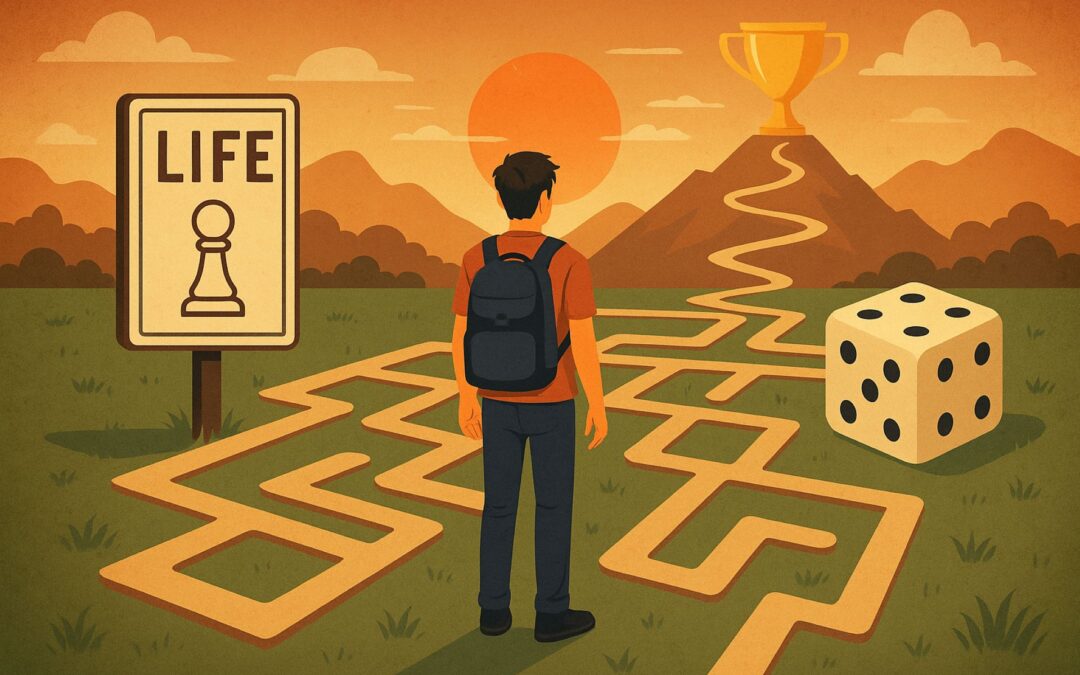
What if life, as we know it, is merely an elaborate game? This intriguing perspective invites us to reconsider our roles, choices, and aspirations as we navigate the complexities of existence. We all partake in the game of Being Alive, where survival is the primary objective. Yet, once our basic needs are met, we enter a realm of possibilities—the game we choose to play.
In this article, we’ll explore the essence of these games, helping you identify the paths that truly resonate with your values and desires. By understanding what it means to play consciously and defining what winning looks like for you, you can cultivate a fulfilling life that reflects your authentic self. So, are you ready to discover a life game worth playing? Let’s dive in!
The Unavoidable Game: Being Alive
From the very instant you are born, you’re catapulted into the raw, unfiltered reality of existence—a game that demands participation without pause or permission. The game of Being Alive is ancient, primal, and unforgiving. It’s the most fundamental contest you’ll ever face, yet it operates on deceptively simple rules. Find food. Find water. Secure shelter. Rest. These four pillars are the scaffolding of survival, universally mandated and non-negotiable.
At first glance, these rules seem straightforward, almost mundane. But their execution is a perpetual balancing act. Hunger, thirst, exposure, and fatigue are constant adversaries that fluctuate in intensity and complexity based on your environment, health, and circumstances. The game is relentless; there is no “pause” button or “retry.” Failure to meet these essential needs means elimination from the game itself.
What makes this game both merciless and mesmerizing is its universality. It doesn’t care who you are—your social status, wealth, education, or dreams. Regardless of your ambition, everyone must engage in this baseline survival game. It is biologically encoded into every cell, embedded in the collective experience of every living organism on the planet.
This game also defines the baseline of human experience. Maslow’s hierarchy of needs places these physiological requirements at its foundation for a reason: without satisfying them, no higher aspirations—be it love, creativity, esteem, or self-actualization—can be meaningfully pursued. It’s like trying to build a skyscraper on sand.
The intensity of this game fluctuates throughout life. Early childhood, illness, economic hardship, or displacement can amplify the struggle for these basics, demanding more resources, effort, and mental resilience. Conversely, when these needs are met reliably, they recede into the background, fading from conscious thought.
Yet, mastering this first game is no small feat. It requires constant vigilance, adaptability, and often sacrifice. The rhythms of eating, hydrating, finding safety, and sleeping shape our daily lives more profoundly than we often realize.
Winning the game of Being Alive isn’t a momentary victory; it’s a continuous process. It means maintaining these essential needs consistently, adapting to changes in environment and circumstance, and preserving the body and mind in a state capable of more than mere survival.
This game sets the stage for everything else. Without it, nothing else matters. But with it, the door opens to a vast expanse of possibility—the games you get to choose.
The Second Game: The Game You Choose to Play
Once you have secured the essentials—food, water, shelter, rest—the landscape of life transforms. You step beyond survival and enter the realm of choice, meaning, and creation. This is the second game: the one you opt into, design, and play on your own terms.
Unlike the first, this game doesn’t have universal, immutable rules. It is infinitely malleable, shaped by your desires, values, beliefs, and circumstances. It is the playground of human complexity and cultural nuance.
For some, this game manifests as the career pursuit—advancing through ranks, acquiring skills, negotiating office dynamics, and seeking recognition. The corporate ladder, with its promotions, reviews, and targets, forms a structured yet competitive arena.
Others plunge into entrepreneurship, where the rules are fluid but unforgiving. It demands relentless innovation, risk tolerance, resilience in the face of failure, and the capacity to pivot. This game can be intoxicating in its freedom but merciless in its challenges.
The game of family is another powerful variant. Here, the objectives are nurturing, love, sacrifice, and legacy. Success is measured not in profits but in relationships and emotional bonds. This game carries profound rewards and heart-wrenching trials in equal measure.
Social games also populate this realm—being the connector, the influencer, the entertainer, or the silent observer. Each role involves its own expectations, strategies, and payoffs. Engaging in social dynamics is a game with constant negotiation of identity, belonging, and influence.
Moreover, some choose intellectual or creative games: mastering a craft, pursuing knowledge, or expressing artistry. These are often deeply personal games, aligned with internal fulfillment rather than external validation.
The complexity of this second game is heightened by the fact that it is optional but rarely optional in practice. Society, culture, and personal ambition exert pressures that make participation feel inevitable. The challenge is that these games often overlap and compete for your finite time and energy.
The psychological stakes are higher here. Unlike survival, where failure means death, failure in this second game often translates to emotional pain: stress, anxiety, burnout, regret, or a sense of meaninglessness. These outcomes arise frequently when the game you’re playing clashes with your authentic self or values.
Navigating this game requires self-awareness, strategic choice, and continuous recalibration. The options are numerous, and the consequences of choice profound. Play the wrong game, or play without clarity, and the result can be a life that feels draining, hollow, or directionless.
Yet, the beauty of this game lies in its openness. You can switch games, modify rules, set new goals, and redefine what success means to you. The challenge is to identify which game resonates deeply, fuels your passion, and aligns with your vision of a fulfilling life.
Understanding this second game as a voluntary, constructed realm is empowering. It reframes struggles not as personal failings but as inherent challenges within the game’s rules. This perspective opens the door to mastery and joy.
In sum, the second game is the arena where meaning, creativity, and legacy are forged. It is the domain of human freedom and the canvas on which you paint your life’s narrative. Choosing the right game—and playing it well—is arguably the most significant decision you will ever make.
Two Crucial Questions Everyone Should Ask
In the sprawling labyrinth of life’s complexities, two questions stand out as indispensable signposts: What game are you playing? and What does winning look like? These are not casual musings but foundational inquiries that compel deep reflection and recalibration.
Asking What game are you playing? demands radical honesty. It cuts through the fog of routine and social expectation, confronting you with the reality of your current engagement. Many glide through life believing they are passive observers, unbound by games or roles. Yet the truth is inescapable: everyone is playing something. The crucial difference lies in awareness and intention.
When you interrogate this question, you peel back layers of conditioning and societal pressure. Society, culture, family—they all script narratives and assign roles that can feel compulsory. The “good employee,” the “devoted parent,” the “successful entrepreneur” are archetypes often imposed rather than chosen. Yet, underneath these external narratives, lies your own agency.
Recognizing that you choose the game—even if the choice feels constrained—restores power. You are no longer a hapless participant but an architect of your own journey. This awareness invites scrutiny: are you playing a game that truly reflects your values, desires, and potential? Or are you trapped in a role imposed by inertia or external expectation?
The second question—What does winning look like?—is equally transformative. It forces you to project your vision forward, imagining a future where your efforts have borne fruit. This mental journey is both illuminating and unsettling. Visualizing winning transports you 10, 20, or more years ahead, compelling you to assess whether your current path leads to a destination you genuinely desire.
Many are jolted by this exercise. They realize that the game they have been investing in might culminate in rewards they don’t want or outcomes that contradict their happiness. This is the moment where profound clarity emerges. If your picture of winning provokes discomfort, dissatisfaction, or ambivalence, it signals misalignment.
Conversely, a vivid, compelling vision of winning is a clarion call to pursue that game with passion and persistence. It serves as a north star, guiding decisions, priorities, and actions.
Together, these questions form a powerful diagnostic tool. They reveal not only what you are doing but why and to what end. They dismantle ambiguity and replace it with conscious choice.
By regularly revisiting these questions, you cultivate ongoing self-awareness, enabling course corrections and growth. They challenge complacency, prevent drift, and foster alignment between your daily life and your deepest aspirations.
Owning Your Game: Clarity Brings Power
Ownership is the cornerstone of mastery. When you fully own the game you’re playing—acknowledging its rules, challenges, and stakes—you unlock a new dimension of power and resilience.
Clarity about your chosen game transforms your relationship with obstacles. Instead of perceiving setbacks as personal failures or cruel injustices, you reframe them as intrinsic elements of the game’s structure. This reframing is liberating. It shifts your mindset from victimhood to strategic engagement.
Take entrepreneurship as an example. The landscape is notoriously volatile—failure is common, uncertainty rampant, and rewards uncertain. Without clarity, each setback can feel like a devastating blow, eroding confidence and willpower. But with clear-eyed understanding, failure becomes a predictable and accepted phase—a move on the chessboard rather than a catastrophic defeat.
This mental shift changes your emotional responses and behaviors. You develop patience, perseverance, and adaptability. You learn to analyze failures for lessons, adjust your strategy, and maintain forward momentum. You cease internalizing adversity as a reflection of your worth and instead see it as part of the game’s design.
The same principle applies across life’s myriad games—whether parenting, career advancement, creative pursuits, or social dynamics. Knowing the rules, expectations, and likely challenges equips you with a map and compass.
Moreover, clarity empowers you to decide if the current game is worth playing. Not every game deserves your energy and focus. Some games drain your spirit, distort your values, or lead to outcomes incongruent with your vision of fulfillment. Awareness of this enables conscious disengagement or strategic pivoting.
Owning your game also fosters a proactive stance. Instead of passively reacting to circumstances, you anticipate challenges, prepare accordingly, and set realistic expectations. This agency enhances confidence and reduces anxiety.
Furthermore, this ownership cultivates boundaries. You protect your time, energy, and mental space by discerning which aspects of the game demand engagement and which do not. You avoid unnecessary entanglements and preserve focus.
Ultimately, owning your game is about aligning your actions with intention and acceptance. It’s a declaration that you are not a helpless pawn but an active player who understands the playing field. This alignment fuels motivation, sharpens decision-making, and sustains endurance.
In sum, clarity brings power because it transforms chaos into order, confusion into strategy, and helplessness into agency. It is the foundation upon which meaningful progress and fulfillment are built.
Defining Victory: What Does Winning Look Like?
Victory is not an abstract concept but a concrete vision that requires thoughtful definition. To ask What does winning look like? is to demand specificity about your goals, values, and the kind of life you want to create. This is where vague ambitions—like “being successful” or “happy”—give way to vivid, tangible outcomes that can guide your daily decisions and long-term strategies.
Visualizing winning forces you to project yourself years into the future. Imagine yourself 10, 20, or even 30 years down the road, standing at the summit of your chosen game. What do you see? Financial independence? Creative fulfillment? A loving, thriving family? Recognition and respect in your community? Or perhaps peace, contentment, and balance?
This mental time travel is not merely an exercise in optimism; it’s a critical alignment tool. It helps you assess whether the game you’re playing today truly leads to the life you desire tomorrow. If the picture you paint is unsettling, bleak, or simply unappealing, it’s a glaring red flag signaling misalignment.
Many people remain trapped in games that promise rewards they no longer want or that clash with their authentic selves. For instance, someone might climb a corporate ladder only to realize that the office politics and endless meetings lead to burnout rather than fulfillment. Others might chase wealth at the expense of health and relationships, ultimately finding their victories hollow.
Defining victory with clarity acts as a filter and a compass. It filters out distractions and competing priorities that don’t contribute to your ultimate goals. It sharpens focus and energizes motivation by connecting everyday effort with meaningful outcomes.
Moreover, a well-defined vision of winning inspires resilience. When you know exactly what you’re aiming for, setbacks become temporary detours rather than crushing defeats. Your commitment deepens because the prize is not vague but deeply personal and desirable.
Defining victory also invites a profound question: Is the current game you’re playing worth winning? If winning that game means loneliness, stress, or loss of integrity, then you might be pursuing the wrong goal. Sometimes, the bravest decision is to change the game entirely.
In essence, defining victory is about owning your destination. It’s a conscious act of designing the life you want, rather than drifting toward a future shaped by external forces or default settings.
Life as a Series of Mini-Games
Life is not a single, monolithic challenge but a mosaic of interconnected mini-games, each with its own rules, risks, and rewards. After securing the basic game of Being Alive, you navigate a complex tapestry of smaller contests that collectively shape your experience and legacy.
These mini-games can range from professional pursuits—like mastering a skill, building a business, or earning a promotion—to personal endeavors such as cultivating relationships, maintaining health, or pursuing creative passions.
Some games carry substantial rewards: financial freedom, emotional fulfillment, personal growth, or social impact. Others might offer intangible benefits like self-respect, discipline, or peace of mind. But just as important, some games can erode your well-being, breed bitterness, or distract from your true priorities.
A crucial realization is that your capacity—your time, energy, and mental focus—is finite. You cannot play every game simultaneously without sacrificing quality and depth. Attempting to do so often leads to burnout, scattered efforts, and shallow victories.
Therefore, intentionality in selecting which mini-games to play is vital. Prioritizing those that align with your values and long-term vision empowers you to invest deeply and reap meaningful rewards. Conversely, disengaging from games that sap your spirit or misalign with your purpose preserves your vitality.
Furthermore, recognizing that some mini-games are transient while others are foundational helps in allocation of effort. For example, building strong personal relationships may require sustained attention over years, while pursuing a specific project might have a defined time horizon.
Life’s mini-games also interact and influence each other. Success in one can unlock opportunities in another; neglect in one can create challenges elsewhere. Balancing these dynamics is a nuanced, ongoing task requiring reflection and adaptability.
Finally, choosing not to engage is itself a choice—a passive game with its own outcomes, often stagnation or missed potential. Recognizing this helps motivate active, conscious participation in the games that matter most to you.
In sum, life as a series of mini-games emphasizes the importance of selective, purposeful engagement. It reframes your journey as a curated set of challenges rather than an overwhelming, undifferentiated whole, empowering you to play well and win meaningfully.
The Power of Specificity: Be Intentional in Your Play
In the vast landscape of possibilities, vagueness is the enemy of progress. To truly excel at the game you’ve chosen, you must wield the power of specificity—defining your goals, desires, and strategies with razor-sharp clarity. Intentionality isn’t just a motivational buzzword; it’s the engine that transforms wishful thinking into concrete achievement.
When your objectives are nebulous, your energy dissipates in all directions, and your efforts become scattered. “I want success,” “I want happiness,” or “I want to be better” are noble sentiments but insufficient as navigational beacons. They leave you adrift, vulnerable to distraction, procrastination, and indecision.
Contrast this with the potency of a specific ask: “I want to launch a profitable online business generating $10,000 monthly within two years,” or “I want to build a family culture centered on open communication and shared adventures.” These precise goals summon focused action. They provide measurable milestones and clear criteria for progress.
Tim Ferriss’s insight—“Life punishes the vague wish and rewards the specific ask”—captures this perfectly. Life’s mechanisms do not favor passive hope or undefined dreams; they respond to clear, intentional demands. When you articulate your game and its winning conditions in detail, you signal commitment not only to yourself but to the universe.
Specificity also sharpens decision-making. With a well-defined vision, every choice can be evaluated through the lens of alignment: Does this move me closer to my defined win? If yes, it earns your time and attention. If no, it becomes easier to say no, protecting your focus.
Moreover, being intentional combats the paralysis of indecision. Ambiguity breeds anxiety and inaction, while clarity breeds confidence and momentum. Intentional players don’t wait for fate to hand them opportunities; they create, pursue, and seize them with purposeful zeal.
Specificity is a powerful filter for the countless distractions and competing demands of modern life. It empowers you to navigate complexity with strategic precision, to marshal resources effectively, and to sustain motivation when the game becomes arduous.
Ultimately, specificity is a declaration of seriousness. It transforms vague longing into purposeful pursuit, aligning your mental, emotional, and physical energies towards a coherent, achievable goal. In the game of life, vague wishes are the currency of losers; specific asks are the trademarks of champions.
Final Thought: Choose Your Game Wisely
Life may offer a buffet of games, but your capacity to play—and win—is inherently limited. Time, energy, focus, and resilience are precious resources that demand prudent allocation. Therefore, the wisdom lies in choosing your games wisely.
A game worth playing is one that resonates deeply with your authentic self, ignites passion, and aligns with your core values. It is a game that challenges you but also nourishes you, that pushes you to grow without breaking your spirit. It is a game where victory feels meaningful, not hollow.
Choosing your game wisely requires courage. It may mean rejecting societal scripts, abandoning default paths, or facing uncomfortable truths about what truly matters to you. It demands that you confront fears, uncertainties, and the risk of failure head-on.
Yet, the rewards are profound. When you engage wholeheartedly in a game that fits you, your motivation intensifies, resilience strengthens, and fulfillment flourishes. Your life gains coherence and direction, transforming from a chaotic scramble into a deliberate journey.
Remember that choosing not to play is itself a game—with its own outcomes and costs. Avoidance and passivity often lead to stagnation, regret, and missed opportunities. Thus, deliberate engagement, rather than withdrawal, is the path to meaningful living.
Life’s true richness unfolds not from avoiding challenges but from embracing the right ones. The right game will stretch you, teach you, and ultimately define your legacy.
So choose with intention, play with passion, and commit to the game that makes you feel most alive. Because, in the end, the game worth playing is the one that invites you to bring your fullest self to the table—every single day.
Conclusion: Navigating Life’s Games
Ultimately, embracing the games you choose to play, defining what success means to you, and fostering specificity in your aspirations will cultivate a richer, more rewarding existence. Life is a journey filled with choices—ensure that the games you engage in resonate with your values, aspirations, and passions. By doing so, you can create a life that reflects your true self and leads you toward the fulfillment you seek.
Life is a series of interconnected games, each offering its own set of challenges and rewards. By recognizing the games you’re playing, defining what winning means to you, and assessing their worthiness, you can cultivate a fulfilling existence. Remember, life rewards clarity and intentionality. As Tim Ferriss aptly said, “Life punishes the vague wish and rewards the specific ask.” So, dare to be intentional in your pursuit of a life game worth playing.