
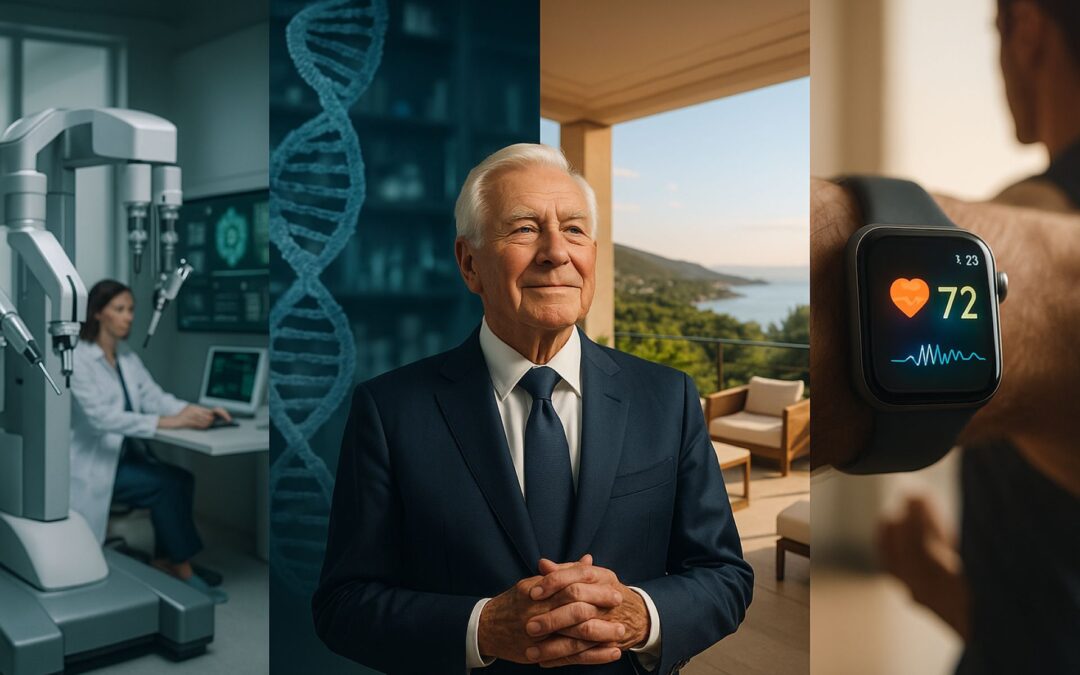
When your life looks exactly as you dreamed of, you want to live forever, which is exactly what the ultra-rich are trying to do. Well, forever might be a bit of a stretch, but not entirely excluded, as you’ll see later. So what if money could buy you luxury and comfort and extra years to your life?
This fascinating phenomenon is becoming increasingly prevalent among the wealthiest individuals in society. The question is how the ultra-rich manage to extend their lifespans and unlock the secrets of longevity. Well, this is how they do it. Welcome to a world where longevity is not just a wish but a way of life.
Personalized Healthcare: The Ultimate Privilege
For the ultra-wealthy, personalized healthcare is not merely a service—it’s an entire ecosystem meticulously crafted to anticipate, prevent, and treat health challenges before they arise. This approach stands in stark contrast to the conventional healthcare experience, which is typically reactive and episodic. Instead of waiting for symptoms to prompt a visit to the doctor, the ultra-rich engage in a continuous dialogue with their health, enabled by exhaustive diagnostic processes and a constellation of expert advisors.
At the heart of personalized healthcare lies comprehensive and sophisticated diagnostic technology. Whole-genome sequencing decodes an individual’s DNA, revealing susceptibilities to a host of hereditary conditions—cancers, cardiovascular diseases, autoimmune disorders, and neurodegenerative illnesses among them. This genetic roadmap provides the foundation for preventive strategies uniquely tailored to each person’s biological blueprint. Beyond genetics, metabolic profiling and advanced biomarker panels deliver granular insights into biochemical imbalances and physiological stressors. These insights empower practitioners to preemptively intervene, fine-tuning nutrition, exercise, and pharmacological regimens.
The ultra-rich often have a cadre of medical specialists, ranging from geneticists and endocrinologists to nutritionists and physiotherapists, working collaboratively to interpret data and devise holistic plans. This team-based model ensures that no aspect of health is siloed; instead, it is viewed through an integrated lens that balances immediate health needs with long-term vitality.
Technological innovation further elevates this healthcare model. The adoption of robotic-assisted surgery exemplifies the fusion of precision engineering and medicine. Robots augment surgeons’ capabilities, enabling minimally invasive procedures with unprecedented accuracy, reducing complications, and dramatically shortening recovery periods. The availability of such technology, often out of reach for average patients, transforms surgical interventions into highly predictable, low-risk events.
For those who seek the pinnacle of medical convenience and customization, personal health centers become private sanctuaries. Larry Ellison’s investment in building a state-of-the-art medical facility is a prime example. This center integrates research, diagnostics, and treatment under one roof, staffed with the finest clinicians and equipped with the latest technology. Such centers serve as hubs for experimental therapies, clinical trials, and longitudinal monitoring, allowing ultra-wealthy individuals to participate in the vanguard of medical science while maintaining privacy and comfort.
Crucially, insurance bureaucracy and cost constraints—which often limit access to specialized care—are irrelevant to this demographic. The ability to command immediate appointments with top experts, secure experimental treatments, and personalize every facet of care renders healthcare not just a necessity but a strategic tool in the pursuit of longevity. This model reframes health management from episodic firefighting into an ongoing, dynamic process optimized for the highest possible quality and length of life.
Anti-Aging Science: Billionaires Betting on Immortality
The fascination with aging among the ultra-wealthy transcends vanity; it is a calculated gamble on the frontier of science. Where most view aging as an immutable fact, billionaires see it as a complex biological process subject to intervention and manipulation. Their willingness to invest immense resources into anti-aging research fuels some of the most cutting-edge advancements in biotechnology.
Peter Thiel epitomizes this mindset. His investments in companies like Unity Biotechnology target the biological roots of aging at the cellular level. Unity’s work centers on senolytics—therapies designed to selectively eliminate senescent cells that accumulate with age and contribute to tissue dysfunction, chronic inflammation, and disease progression. By clearing these cellular “zombies,” the theory goes, tissues can regenerate more effectively, delaying age-related decline.
Beyond funding, Thiel actively experiments with therapies purported to slow aging. Human growth hormone (HGH) therapy is one such example; HGH stimulates tissue growth and regeneration, potentially restoring youthful vitality. Platelet-rich plasma (PRP) injections, derived from a person’s own blood, release growth factors that promote healing and rejuvenation. While these treatments remain contentious and not fully validated by large-scale clinical trials, their appeal lies in the promise of tangible, albeit incremental, biological restoration.
Cryonics embodies the ultra-wealthy’s willingness to embrace speculative science in the face of mortality. The prospect of freezing the body immediately after death with the hope that future technological breakthroughs may revive and cure them is a radical departure from traditional views of death. Thiel’s plans to undergo cryopreservation, despite skepticism about its efficacy, highlight a cultural shift among the ultra-rich—one that embraces high-risk, high-reward strategies in the race against time.
Magic Johnson’s story further illustrates how access to advanced medical treatment can rewrite narratives once considered fixed. Diagnosed with HIV in 1991, a time when the disease was nearly a death sentence, Johnson leveraged the best available antiretroviral therapies to not only survive but thrive for decades. His case underscores how the latest scientific developments, combined with immediate and continuous medical care, transform prognosis and quality of life.
The anti-aging quest also extends into genetic engineering, stem cell research, and epigenetic modifications. Billionaires funnel capital into companies exploring CRISPR gene-editing technologies aimed at repairing or reversing genetic damage linked to aging and disease. Stem cell therapies offer potential for regenerating damaged tissues, while epigenetic drugs seek to reset gene expression patterns disrupted by time.
Ultimately, the ultra-rich are betting on a future where aging is not a passive inevitability but a condition that can be modulated, delayed, or even reversed. Their investments and personal experimentation drive innovation, accelerating the translation of scientific discoveries from labs to therapies that may one day become mainstream, redefining what it means to age in the modern world.
Continuous Monitoring: Health as a 24/7 Operation
For the ultra-wealthy, health management transcends traditional episodic check-ups and evolves into an around-the-clock operation powered by relentless vigilance and sophisticated technology. Unlike the average person who may see a doctor once or twice a year, the ultra-rich benefit from continuous, real-time health monitoring that functions like a living, breathing feedback system.
This constant oversight begins with state-of-the-art wearable devices capable of tracking an array of physiological parameters with medical-grade accuracy. Devices monitor heart rate variability, blood oxygen saturation, glucose fluctuations, sleep quality, hydration levels, and even subtle markers of inflammation or hormonal imbalances. These metrics, recorded minute-by-minute, generate an enormous data stream that provides an intimate portrait of the individual’s ongoing health status.
But data alone is meaningless without expert interpretation. Dedicated medical teams sift through this torrent of information, identifying trends, deviations, and early warning signs that might escape conventional diagnostics. This team-based approach often includes primary care physicians, specialists, nutritionists, and health data scientists who collaborate closely to translate raw data into actionable interventions. Such responsiveness ensures that any minor irregularities—be it an abnormal heart rhythm, a dip in immune function, or emerging metabolic shifts—are addressed immediately, often before the individual experiences symptoms.
Telemedicine platforms integrate seamlessly into this ecosystem, enabling real-time consultations, remote diagnostics, and swift adjustments to treatment plans without the delays of traditional office visits. In some cases, personalized AI algorithms analyze the health data continuously, alerting clinicians and clients alike about changes that warrant attention.
This proactive, anticipatory model of healthcare drastically reduces the risk of acute crises, hospital admissions, and long-term complications. Chronic diseases are managed with dynamic precision, lifestyle adjustments are optimized for immediate effect, and recovery trajectories are monitored meticulously. The effect is a level of health maintenance that prioritizes longevity not by luck or chance, but by a deliberate, continuous investment in biological stability.
This 24/7 approach also extends to mental and emotional well-being, with mood and stress levels tracked via biometric proxies, allowing early intervention when psychological stressors threaten to undermine overall health. In essence, continuous monitoring crafts a hyper-responsive health shield that preserves and prolongs life through constant care and adjustment.
The Wellness Ecosystem: Mind, Body, and Spirit
Longevity for the ultra-rich is never just about physical health—it’s a holistic pursuit that embraces the interconnectedness of mind, body, and spirit. Recognizing that the human organism thrives best in harmony, elite wellness ecosystems cultivate environments and routines that nurture all dimensions of well-being simultaneously.
At the center of this holistic model are luxury wellness retreats, meticulously designed to be sanctuaries of restoration, personal growth, and profound rejuvenation. These retreats provide an immersive departure from the relentless pace and stress of high-powered lives, creating spaces where tranquility and healing are paramount. Far beyond spas or resorts, these venues integrate ancient healing traditions with contemporary scientific methods.
Guests are guided through personalized programs combining time-honored practices like meditation, yoga, and acupuncture with innovative therapies such as cryotherapy—exposing the body to ultra-low temperatures to reduce inflammation and stimulate cellular repair—and intravenous nutrient infusions that deliver tailored blends of vitamins, minerals, and antioxidants directly into the bloodstream for rapid effect.
Mental wellness is given equal emphasis. Mindfulness training teaches guests to cultivate present-moment awareness, dissolve anxiety, and sharpen cognitive clarity. Stress management is not an afterthought but a structured component, with expert coaches guiding relaxation techniques, breathwork, and emotional resilience strategies.
Physical fitness is customized to individual needs and goals. Personal trainers craft bespoke regimens ranging from strength and mobility training to endurance conditioning, often employing cutting-edge equipment and biomechanical analysis to optimize performance and prevent injury.
Nutrition is elevated to a precise science within these retreats. On-site nutritionists and chefs collaborate to produce meals that reflect the latest research on optimal nutrient density, bioavailability, and personalized dietary requirements. Ingredients are selected for purity, freshness, and functional benefits, ensuring that every bite supports cellular vitality and systemic health.
The environment itself plays a pivotal role—locations are chosen for their natural beauty, tranquility, and ability to promote psychological calm. Surrounded by pristine landscapes, guests experience a sensory reset that lowers cortisol levels and fosters a deep sense of peace. Architectural design, soundscapes, and air quality are curated meticulously to support holistic healing.
This wellness ecosystem extends beyond the retreat experience, often incorporating digital health platforms and follow-up coaching to maintain gains and reinforce positive lifestyle changes. The result is a sustainable model of longevity that harmonizes body, mind, and spirit—creating not just longer lives but richer, more vibrant ones.
Precision Nutrition: Fueling Life’s Longevity
In the realm of the ultra-wealthy, nutrition transcends mere sustenance—it becomes a highly specialized, data-driven science designed to optimize every cellular process and enhance longevity. Personalized nutrition harnesses an array of cutting-edge technologies and methodologies that enable dietary plans tailored not just to taste or convenience, but to the precise biochemical and genetic needs of the individual.
The journey begins with genomic analysis. By decoding the individual’s DNA, nutritionists can identify specific gene variants that influence how the body metabolizes macronutrients—fats, carbohydrates, proteins—and micronutrients like vitamins and minerals. For example, certain genetic markers may indicate a predisposition to lactose intolerance, gluten sensitivity, or variations in how efficiently vitamin D is processed. Understanding these nuances allows the creation of meal plans that avoid inflammatory foods, enhance nutrient absorption, and prevent deficiencies before they manifest clinically.
But genetics are only one piece of the puzzle. Real-time biometric data collected from wearable devices—such as continuous glucose monitors, sleep trackers, and heart rate variability sensors—provide insights into how specific foods impact energy levels, hormonal balance, and recovery. This feedback loop empowers dynamic adjustment of nutritional intake in response to daily fluctuations in metabolism, stress, and activity levels.
Personal chefs working closely with nutritionists prepare meals from the freshest, often organic and rare ingredients chosen for their phytonutrient density and bioactive compounds. These meals are crafted not only for optimal health benefits but also to delight the palate, ensuring that longevity-focused diets are both sustainable and enjoyable.
Moreover, nutritional regimens often incorporate functional foods and nutraceuticals—substances that offer therapeutic effects beyond basic nutrition. These might include antioxidants that neutralize free radicals, polyphenols that reduce inflammation, or probiotics that cultivate a healthy gut microbiome, which recent research links closely to immune function and mental health.
This rigorous, personalized approach yields tangible benefits: enhanced cognitive clarity, sustained energy throughout the day, bolstered immune defenses, and reduced risk of chronic illnesses such as diabetes, cardiovascular disease, and obesity. For the ultra-rich, nutrition is a foundational pillar in their arsenal against aging—fueling their bodies with precision-engineered sustenance that supports vitality, resilience, and longevity.
Mental Health: The Invisible Pillar of Longevity
Physical vitality cannot be disentangled from mental well-being, a truth well understood by those who pursue long, thriving lives. For the ultra-wealthy, mental health is as rigorously managed as physical health, recognizing that chronic stress, anxiety, and emotional imbalance are silent accelerants of cellular aging and systemic decline.
Mindfulness meditation stands as a cornerstone practice. Rooted in ancient traditions but validated by modern neuroscience, mindfulness cultivates present-moment awareness, reduces rumination, and mitigates the harmful effects of chronic stress. Regular meditation has been shown to lower cortisol—the body’s primary stress hormone—enhancing immune function, improving sleep quality, and preserving brain volume in regions associated with memory and emotional regulation.
Complementing mindfulness is the intentional cultivation of social bonds. The ultra-rich prioritize quality relationships, understanding that a robust social network acts as a buffer against psychological stress and loneliness—both linked to premature mortality. They often invest significant time nurturing family ties and close friendships, recognizing these connections provide emotional sustenance, a sense of purpose, and joy that materially improve quality of life.
Therapeutic support also plays a vital role. Many engage with top-tier mental health professionals—psychologists, psychiatrists, and life coaches—who provide tailored strategies to navigate the unique pressures accompanying wealth and influence. These experts help develop coping mechanisms for stress, manage emotional challenges, and foster growth-oriented mindsets.
Beyond conventional therapy, alternative modalities such as art therapy, music therapy, and equine-assisted therapy offer innovative pathways to emotional healing. Art therapy, for instance, enables expression and processing of unconscious emotions through creative outlets, while music therapy harnesses rhythm and melody to regulate mood and reduce anxiety. Equine-assisted therapy leverages the intuitive connection between humans and horses to build trust, emotional awareness, and resilience.
These multidimensional approaches create a mental health framework that supports psychological equilibrium and emotional richness—key ingredients in prolonging life and enhancing its quality. For the ultra-wealthy, mental fitness is not a luxury but an essential investment, as vital as any medical intervention in the quest for longevity.
Hyper-Optimized Fitness: Maximizing Performance
Fitness among the ultra-wealthy transcends conventional exercise routines, evolving into a sophisticated, technology-driven pursuit of peak physical performance and longevity. This hyper-optimized approach integrates emerging innovations with expert guidance to craft personalized fitness strategies that maximize benefits while minimizing risks.
One of the most transformative developments is the incorporation of virtual reality (VR) workouts. By immersing users in engaging, interactive environments—from serene forests to futuristic landscapes—VR transforms exercise from a mundane obligation into an exhilarating experience. This sensory immersion not only enhances motivation and adherence but also enables precise control over intensity and movement patterns, allowing users to target specific muscle groups or training goals with heightened focus.
Artificial intelligence (AI) further elevates fitness personalization. AI-powered platforms collect real-time biometric data—such as heart rate, oxygen consumption, movement efficiency, and fatigue levels—and analyze performance trends. Using this information, these systems dynamically adjust workout plans, suggesting modifications to intensity, duration, or exercise selection to optimize outcomes. This continuous feedback loop ensures workouts remain effective, prevent overtraining, and adapt to changing physiological states.
Wearable technology plays a pivotal role in this ecosystem. Advanced devices monitor sleep quality, recovery status, daily activity, and vital signs with remarkable precision. Such data allows users and trainers to fine-tune training schedules, ensuring optimal balance between exertion and rest—critical factors for injury prevention and sustained progress.
Personal trainers and coaches specializing in cutting-edge methods collaborate closely with clients, combining biomechanical assessments, movement analysis, and functional fitness principles. They craft bespoke programs focusing not only on aesthetics but on functional longevity: improving mobility, balance, muscular strength, cardiovascular endurance, and neuromuscular coordination. This holistic approach empowers the body to maintain resilience, independence, and vitality well into advanced age.
Underlying this regimen is the philosophy of “min-maxing”—a term borrowed from gaming that denotes minimizing weaknesses and maximizing strengths. Every aspect of physical health is scrutinized and optimized, from correcting muscular imbalances to enhancing metabolic efficiency. The goal is a finely tuned organism operating at peak capacity, capable of withstanding stressors and recovering swiftly.
This relentless pursuit of fitness excellence is not about vanity alone; it is a strategic investment in extending healthspan—the period of life spent free from chronic illness and disability—thereby amplifying both quantity and quality of life.
The New Luxury: Health and Peace of Mind
In an era where material wealth is abundant, the definition of luxury has evolved dramatically. For the ultra-rich, the ultimate status symbol is no longer just possessions or experiences, but the possession of robust health and unshakable peace of mind. This shift reflects a profound understanding that without physical vitality and mental equilibrium, all other forms of wealth pale in significance.
Health and peace of mind represent the highest form of freedom—the freedom to pursue passions, maintain meaningful relationships, and savor life’s moments without the constraints of illness or anxiety. Recognizing this, the ultra-wealthy channel significant resources into cultivating these states, making longevity a primary goal rather than a byproduct.
This new luxury entails a mindset of continuous self-investment. It demands openness to innovation, whether in emerging biotech therapies, holistic wellness practices, or cutting-edge fitness technologies. The elite understand that longevity requires adaptability—a willingness to integrate new discoveries and discard outdated paradigms.
Moreover, health and peace of mind foster resilience against the inevitable stresses of a complex, fast-paced world. They provide the internal stability necessary to navigate challenges with grace and clarity, enhancing both professional effectiveness and personal fulfillment.
While the full spectrum of elite longevity strategies may remain out of reach for most, the underlying principle is universal: the most valuable asset one can cultivate is oneself. Prioritizing health and mental well-being is not indulgence but necessity, laying the foundation for a life not only longer but richer in experience and purpose.
This redefinition of luxury serves as a powerful reminder that true wealth is measured not by what we accumulate but by the quality of our lived experience—anchored in vitality, serenity, and the freedom to live fully.
Conclusion
The ultra-rich have unlocked the secrets to longevity by prioritizing personalized healthcare, cutting-edge biotech, 24-hour medical monitoring, wellness retreats, personalized nutrition, mindfulness, strong social connections, and innovative fitness trends and technologies.
While not everyone can access these luxuries to the same extent, the message is clear: good health and peace of mind are the new luxuries. So, as you continue your journey toward better health and well-being, stay curious, be open to new ideas, and never stop seeking ways to improve yourself and live life to the fullest. After all, the greatest investment you can make is in yourself.