
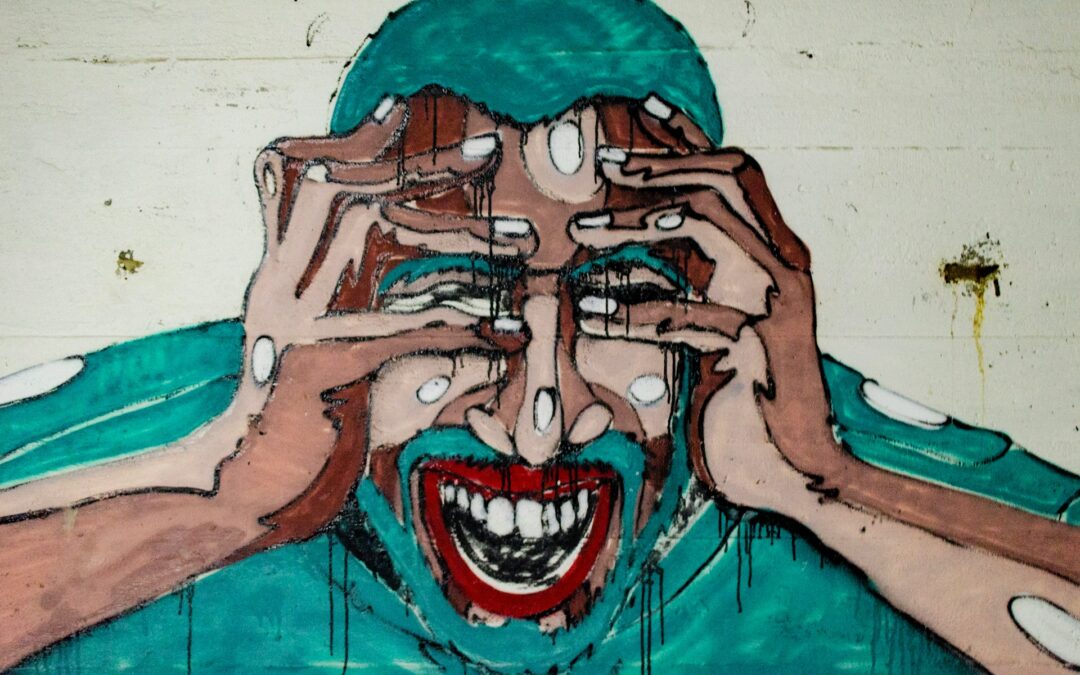
The Illusion We Grow Up With
When we’re young, the world feels like a story that’s already been written in our favor.
The narratives we absorb—through movies, stories, and the quiet assumptions of those around us—follow a comforting pattern. Good people are rewarded. Bad people are punished. No matter how chaotic things get, there’s always a resolution waiting at the end. A moment where everything makes sense again.
This isn’t just entertainment. It becomes a lens.
We grow up expecting life to follow a certain moral structure. That kindness will be recognized. That justice, even if delayed, will eventually prevail. That suffering is temporary, meaningful, and ultimately resolved. Even when we’re told that life is “not a fairy tale,” something deeper in us still holds on to that framework.
It shapes how we interpret everything.
When something goes wrong, we don’t just experience pain—we experience confusion. When injustice happens, it doesn’t just feel unfortunate—it feels wrong, as if reality itself has broken an unspoken agreement. There’s a subtle expectation that things should work out, not because we’ve reasoned it, but because we’ve internalized it.
And this expectation often survives longer than we think.
Even as adults, we carry traces of that early worldview. We assume that hard work will lead to success, that honesty will lead to trust, that love will lead to stability. These aren’t irrational beliefs—but they are incomplete. They leave out a crucial part of reality: that outcomes are not always aligned with effort, intention, or virtue.
For a while, this gap between expectation and reality remains small enough to ignore.
But eventually, something shifts.
Not all at once, but gradually—through exposure, experience, and awareness—we begin to notice things that don’t fit the narrative. And once we see them, it becomes difficult to unsee them.
The world no longer feels like a story moving toward resolution.
It starts to feel like something else entirely.
The Moment Reality Breaks the Illusion
The shift doesn’t usually happen in a single, dramatic moment.
It unfolds gradually—through things we see, hear, and experience. A news story that lingers longer than it should. An act of cruelty that feels unnecessary. The quiet realization that some people suffer not because of what they’ve done, but simply because of where they were born, or who they are.
At first, these moments feel like exceptions.
But over time, they begin to form a pattern.
We start noticing the scale of it all—violence that never quite stops, injustice that doesn’t correct itself, people struggling in silence while the world moves on as if nothing happened. It’s not just distant suffering either. It shows up closer to home. In strained relationships, in personal loss, in the quiet desperation that many carry without ever speaking about it.
And something inside us responds.
Not just intellectually, but emotionally.
There’s a weight that comes with seeing too much, too clearly. A kind of heaviness that doesn’t come from a single event, but from the accumulation of awareness. The more we understand, the harder it becomes to maintain the comforting illusions we once held.
This is where the dissonance begins.
Because part of us still clings to the idea that things should be better. That the world ought to be fair, or at least moving toward fairness. But the reality we’re confronted with doesn’t always reflect that. And the gap between what we expected and what we see creates a quiet, persistent tension.
It’s not just disappointment.
It’s something deeper—more existential.
A sense that the world is not only flawed, but fundamentally indifferent to our expectations of how it should be. And once this realization takes hold, it changes the way we see everything.
The innocence doesn’t disappear completely.
But it no longer defines our perception.
In its place, something heavier begins to emerge—something that doesn’t just observe the world, but feels its weight.
What Is Weltschmerz?
There’s a point where this emotional weight becomes difficult to ignore, yet equally difficult to name.
It isn’t quite depression. It isn’t exactly anxiety. It’s something more specific—more tied to how we perceive the world itself. A sadness that doesn’t come from personal failure or immediate circumstances, but from the realization that reality, as a whole, falls short of what it could be.
This is what Jean Paul described when he coined the term Weltschmerz.
Literally translated, it means “world pain.” But that translation doesn’t fully capture its depth. A more accurate interpretation might be “world-weariness”—a kind of exhaustion that comes from confronting the imperfections of existence over and over again, without resolution.
Weltschmerz is not just about noticing that suffering exists.
It’s about being deeply affected by it.
It reflects a heightened sensitivity to the moral and physical suffering of the world—the kind that makes it difficult to detach, to look away, or to simply accept things as they are. It’s the emotional response of someone who doesn’t just see the flaws of reality, but feels them as a kind of ongoing burden.
And in many cases, it’s not limited to the world “out there.”
It also turns inward.
Because along with recognizing the world’s inadequacies, we begin to notice our own. Our inability to fix things. Our participation, however small, in systems that perpetuate harm. The realization that we, too, are part of the same flawed human condition we’re struggling to come to terms with.
This creates a particular kind of sadness.
Not dramatic, not explosive—but persistent.
A quiet melancholia that lingers in the background. A sense that something is fundamentally off, not just in isolated situations, but in the structure of life itself. And unlike temporary emotional states, this one doesn’t easily fade, because it’s rooted in perception.
Once you see the world this way, it’s difficult to return to how you saw it before.
The Awakening: A Parallel with Siddhartha Gautama
Long before the term Weltschmerz was ever coined, its essence had already been lived.
Siddhartha Gautama’s early life was carefully constructed to protect him from the very realization that defines this state. Raised in luxury, surrounded by beauty, pleasure, and comfort, he was deliberately shielded from anything that might disturb his sense of the world. His father understood something crucial: that exposure to suffering doesn’t just inform—it transforms.
As long as Siddhartha remained within the walls of the palace, reality could be curated.
But that illusion couldn’t last forever.
Driven by a quiet restlessness, he eventually stepped outside the boundaries that had been set for him. What he encountered there was not a dramatic revelation in a single moment, but a series of undeniable truths—illness, old age, poverty, death. Things that had always existed, but had been kept out of sight.
And once seen, they could not be unseen.
This is the turning point.
Not just for Siddhartha, but as a universal pattern. The moment when reality breaks through the narrative we’ve been given, and replaces it with something far less comforting, but far more real. The world is no longer a place designed for our happiness—it becomes a place where suffering is not an exception, but a constant.
For Siddhartha, this realization didn’t just provoke sadness.
It created a profound inner conflict.
Returning to the palace after witnessing these realities, the life he once lived no longer felt the same. The pleasures that once satisfied him began to feel hollow. The comfort that once felt secure now seemed fragile, almost illusory. He had seen too much to fully participate in it again.
This is where Weltschmerz takes hold.
It’s not just the awareness of suffering—it’s the inability to reconcile that awareness with the life we’re living. A kind of weariness that arises when the world reveals itself to be fundamentally different from what we were led to believe.
Siddhartha’s response to this realization was radical.
He chose to walk away.
Not out of rejection, but out of necessity. The life he had known could no longer contain the questions that had emerged. And so, what began as disillusionment became the starting point of a deeper search—a search not for a better version of the world, but for a way to understand and live within it as it is.
In that sense, Weltschmerz is not just an ending.
It’s also a beginning.
Weltschmerz vs Angst vs Ennui
Once we begin to understand Weltschmerz, it becomes tempting to group it together with other familiar emotional states—anxiety, restlessness, dissatisfaction. On the surface, they can feel similar. They all carry a certain heaviness, a sense that something isn’t quite right.
But they don’t arise from the same place.
To understand Weltschmerz clearly, it helps to distinguish it from these closely related experiences.
Take Angst, for example, as described by Søren Kierkegaard. He referred to it as the “dizziness of freedom”—a kind of existential anxiety that emerges from the realization that we are free to choose, yet responsible for those choices. Unlike animals, we are not guided purely by instinct. We stand in front of countless possibilities, and that openness can be overwhelming.
Angst is inward-facing.
It’s rooted in our own condition—our freedom, our uncertainty, our confrontation with the unknown. It doesn’t necessarily require an awareness of the world’s suffering. A person can experience Angst even in a relatively stable and comfortable environment, simply by reflecting on their existence and the weight of their choices.
Weltschmerz, on the other hand, is outward-facing.
It arises from the perception of the world itself—its flaws, its injustices, its indifference. While Angst is about the anxiety of being, Weltschmerz is about the sorrow of seeing.
That said, the two can overlap.
Because once we become aware of the world’s suffering, it’s hard not to project that awareness into the future. The instability we observe “out there” begins to feel like something that could eventually reach us. Global tensions, economic uncertainty, social fragmentation—these aren’t just abstract concerns. They become personal possibilities.
And that’s where Angst begins to blend into Weltschmerz.
Then there’s ennui—a term often associated with boredom, but in a deeper sense, it reflects a kind of existential dissatisfaction. A feeling that nothing around us is stimulating or meaningful enough to engage with. It’s a weariness that arises not from suffering, but from a lack of fulfillment.
Ennui is more hedonistic in nature.
It emerges when the world fails to excite us, when our desires are left unmet, or when repetition drains life of its intensity. It’s less about the moral state of the world, and more about our inability to find pleasure within it.
And yet, even here, there’s a subtle connection.
Because when Weltschmerz becomes overwhelming—when the world feels too heavy, too broken, too indifferent—it can strip things of their appeal. The more we focus on what’s wrong, the harder it becomes to enjoy what’s right. Over time, this can lead to a kind of emotional numbness, where nothing feels particularly meaningful anymore.
In that sense, ennui can become a symptom of Weltschmerz.
But it’s not the same thing.
Where ennui is a loss of interest, Weltschmerz is a loss of illusion.
The Root of Weltschmerz: Ideal vs Reality
At the core of Weltschmerz lies a tension that is both simple and deeply unsettling.
The tension between how we believe the world should be, and how it actually is.
This “should” is rarely something we consciously construct. It’s absorbed over time—through culture, upbringing, stories, and our own emotional instincts. We develop a quiet expectation that life ought to be fair, that suffering should be limited, that people should act with a basic level of decency.
And when reality violates these expectations, it doesn’t just disappoint us.
It disturbs us.
Because what we’re confronting is not just an unpleasant situation, but a contradiction. A gap between our internal model of the world and the world as it presents itself. And the wider this gap becomes, the more intense the emotional response.
Weltschmerz emerges from this gap.
It’s the feeling that reality has failed to live up to something it was never obligated to fulfill. That the world has fallen short—not just occasionally, but structurally. And because we’re emotionally invested in our ideals, we experience this mismatch as a kind of loss.
But there’s something deeper at play here.
A subtle sense of entitlement.
Not in the crude sense of expecting luxury or comfort, but in the more fundamental belief that we are owed a certain kind of world. A world where suffering is justified, where justice is reliable, where good intentions lead to good outcomes.
When that expectation is violated, we struggle to process it.
We resist.
We question why things are the way they are. We feel that something is off, that reality itself is flawed. And in a way, that feeling is understandable. But it also traps us, because it keeps us anchored to an ideal that reality has never promised to meet.
The problem is not just that the world contains suffering.
It’s that we believe it shouldn’t.
And as long as that belief remains unexamined, every encounter with injustice, cruelty, or loss reinforces the same internal conflict. We don’t just witness pain—we react to it as something illegitimate, something that shouldn’t exist at all.
This is what gives Weltschmerz its intensity.
It’s not merely sadness about the world.
It’s resistance to it.
The Harsh Truth About Human Nature
At some point, the discomfort deepens into something harder to avoid.
It’s no longer just about isolated instances of suffering or injustice. It becomes a recognition that these things are not anomalies—they are patterns. And those patterns are tied to something far more unsettling: human nature itself.
We tend to think of cruelty, greed, and violence as deviations.
As flaws that could be corrected, if only the right systems were in place, or the right people were in charge. But history suggests otherwise. Across time, across cultures, across vastly different conditions, the same behaviors continue to emerge. Conflict, exploitation, domination—they don’t disappear. They adapt.
Which forces a difficult question.
What if these tendencies are not external to us, but part of us?
This is where Weltschmerz becomes more than just a reaction to the world—it becomes a confrontation with what we are. Because the suffering we observe is not produced by some abstract force. It is created, sustained, and repeated by human beings.
And that includes us.
Even if we don’t commit extreme acts, we exist within systems that do. We benefit, often unknowingly, from structures that disadvantage others. We make compromises. We ignore certain truths because fully confronting them would be too overwhelming. In subtle ways, we participate in the very reality that disturbs us.
That realization can be heavy.
Because it removes the distance between “us” and “the problem.” It challenges the comforting idea that the world is broken out there, while we remain separate from it. Instead, it reveals something more complex: that the same capacity for harm exists alongside our capacity for compassion.
This is the paradox.
Human beings are capable of remarkable kindness, empathy, and sacrifice. At the same time, they are capable of indifference, selfishness, and destruction. These are not contradictions to be resolved—they are coexisting traits.
And the world reflects that duality.
Every act of generosity exists alongside an act of cruelty. Every attempt at progress meets resistance. Every effort to reduce suffering is counterbalanced by forces that perpetuate it. Not because the world is malicious, but because it is made up of beings who carry both light and darkness within them.
The instinct, when faced with this, is to reject it.
To imagine a version of humanity that is purified of its darker aspects. But that vision, however appealing, is detached from reality. To remove the capacity for harm would require removing something fundamental about what it means to be human.
And that leaves us with a difficult conclusion.
If we cannot accept the darker aspects of human nature, we cannot fully accept the world as it is.
Why We Resist Reality
If the world has always been this way—imperfect, unpredictable, filled with both beauty and brutality—then the question becomes:
Why is it so difficult for us to accept it?
The answer lies less in the world itself, and more in how we relate to it.
We don’t just experience reality—we interpret it. And those interpretations are shaped by expectations, ideals, and deeply ingrained assumptions about how life is supposed to unfold. When reality aligns with those expectations, we feel at ease. But when it doesn’t, something in us pushes back.
That pushback is resistance.
Not always loud or obvious, but persistent. It shows up as frustration when things don’t go our way, as bitterness when we encounter injustice, as a quiet refusal to accept that suffering can exist without a clear purpose or resolution. We don’t just feel pain—we question its legitimacy.
We ask: Why is this happening? Why does the world have to be this way?
And beneath those questions is an unspoken belief—that things should be different.
This is where the tension of Weltschmerz intensifies.
Because the more we hold on to these ideals, the more reality appears to violate them. The gap widens, and with it, the emotional strain. We become caught between two worlds: the one we believe in, and the one we experience.
And the two don’t reconcile.
Part of the difficulty is that letting go of these ideals feels like giving something up. It can feel like surrendering hope, or accepting injustice, or becoming indifferent. So we hold on, even when it hurts. We continue to measure reality against a standard it doesn’t meet, and each mismatch reinforces the same sense of disappointment.
But acceptance is often misunderstood.
It doesn’t mean approving of suffering, or becoming passive in the face of it. It means recognizing that reality operates independently of our expectations. That the world is not structured around what we think is fair, or just, or desirable.
And once that recognition settles in, something shifts.
The resistance begins to loosen—not because the world has changed, but because our relationship to it has.
Philosophical Responses to Weltschmerz
When confronted with the weight of the world, people have always searched for ways to respond to it.
Not to eliminate suffering entirely—that has proven impossible—but to find a way of living that doesn’t collapse under its presence. Across different cultures and traditions, thinkers have approached this problem from very different angles. Yet, each offers a way to reconcile with the same underlying reality.
The Buddhist Path
One of the most direct responses comes from the tradition that began with Siddhartha Gautama.
At the heart of his teaching lies a simple but unsettling recognition: life is suffering.
Not in a pessimistic sense, but in an honest one. Birth, aging, illness, death, separation, disappointment—these are not anomalies. They are fundamental aspects of existence. The problem, according to this view, is not that suffering exists, but that we resist it, misunderstand it, and cling to the idea that life should be otherwise.
The path forward, then, is not to fix the world, but to understand it.
Through awareness, detachment, and the gradual letting go of attachment, one begins to see suffering not as something personal or unjust, but as something universal and inevitable. And in that shift, the emotional burden begins to change. Not disappear—but transform.
The Absurdism of Albert Camus
Where Buddhism finds resolution in understanding, Camus begins with a different premise.
That the universe itself is indifferent.
From this perspective, the discomfort we feel—the sense that life should have meaning, that suffering should make sense—comes from a mismatch between our desire for order and a reality that offers none. This is what Camus called the Absurd.
The question, then, is how to live with it.
His answer was not to escape it, nor to deny it, but to confront it directly. To recognize that meaning is not given, and to create it anyway. To continue living, acting, even enjoying, in full awareness of the lack of inherent purpose.
It’s not a comforting solution.
But it is a defiant one.
The Leap of Faith
Søren Kierkegaard approached the problem from yet another direction.
He agreed that existence, when examined closely, leads to a kind of despair. That rational thought alone cannot resolve the tension between what we experience and what we long for. But instead of accepting meaninglessness, he proposed something else:
A leap.
Not a logical conclusion, but a personal commitment. In his case, faith in God. A choice to embrace belief, not because it can be proven, but because it offers a way out of despair that reason cannot provide.
For many, this is where religion enters the picture.
Not as an explanation of the world’s flaws, but as a way to live with them.
The Stoic Perspective
The Stoics take a more practical approach.
They begin with a simple observation: we do not control what happens in the world, but we do have influence over how we interpret it. And much of our suffering, they argue, comes not from events themselves, but from the judgments we attach to them.
If we believe that something shouldn’t happen, we suffer when it does.
If we accept that it can happen, the emotional response changes.
This doesn’t mean becoming indifferent to injustice or pain. It means recognizing the limits of our control, and focusing on what lies within it—our actions, our responses, our character. Instead of trying to reshape the world into something it isn’t, the Stoic approach is to align ourselves with reality as it is.
And in doing so, reduce unnecessary suffering.
Each of these perspectives offers something different.
But they all point toward the same shift:
Away from resisting the nature of the world, and toward finding a way to live within it.
Making Peace with the World
At some point, the question is no longer why the world is the way it is.
It becomes: how do we live with it?
Because once the illusion has faded, there’s no real way to go back. You can’t unknow what you’ve seen. You can’t unsee suffering, or return to a version of reality that felt simpler and more reassuring. The only way forward is through a different relationship with what is.
And that begins with letting go.
Not of care, not of compassion—but of expectation.
The expectation that life should unfold in a way that aligns with our sense of fairness. The expectation that suffering should be minimal, meaningful, or evenly distributed. The expectation that the world owes us clarity, justice, or resolution.
When these expectations loosen, something subtle changes.
The world doesn’t become better.
But it becomes more bearable.
Because the constant friction—the resistance between what we think should be and what actually is—begins to dissolve. We stop measuring reality against an ideal it was never designed to meet, and instead start seeing it more clearly, more directly.
This clarity doesn’t remove pain.
But it changes its weight.
Suffering is no longer layered with confusion or indignation. It is still difficult, still uncomfortable—but it is no longer wrong in the same way. It becomes something that belongs to life, rather than something that violates it.
And from that place, a different kind of balance becomes possible.
One where awareness of the world’s darkness doesn’t erase its light.
Because even within a flawed reality, moments of meaning still exist. Acts of kindness still happen. Beauty still appears, often unexpectedly. These don’t cancel out suffering, but they coexist with it. And learning to hold both at once—to see the full spectrum without collapsing into despair—is part of what it means to make peace with the world.
It’s not a perfect resolution.
But it’s a workable one.
A way of living that doesn’t depend on the world being something it’s not.
Conclusion
Weltschmerz is not a flaw in your thinking.
It’s a consequence of seeing clearly.
To recognize the suffering in the world, to feel the weight of it, and to struggle with its presence—these are not signs of weakness or pessimism. They are signs that the illusion has worn off, that reality is no longer filtered through comforting assumptions.
And that can be difficult to carry.
But there’s something important to understand.
The goal is not to eliminate this awareness.
Nor is it to return to ignorance.
The task is to learn how to live with what you now see, without being consumed by it.
Because the world is not going to resolve itself into something neat and just. It has never operated that way. Suffering will remain, in different forms, across different times. Human nature will continue to reflect both compassion and cruelty. And the tension between what is and what could be will not disappear.
But your relationship to that tension can change.
You can stop expecting the world to align with your ideals.
You can accept that life includes both light and darkness, without needing one to cancel out the other.
And in doing so, something shifts.
The weight doesn’t vanish—but it becomes something you can carry.
Weltschmerz, then, is not just an endpoint.
It’s a threshold.
A moment where the world stops being what you hoped it was—and begins to reveal what it is. And while that revelation can feel heavy, it also opens the door to a different kind of peace.
Not the peace of a perfect world.
But the peace of no longer needing it to be one.