
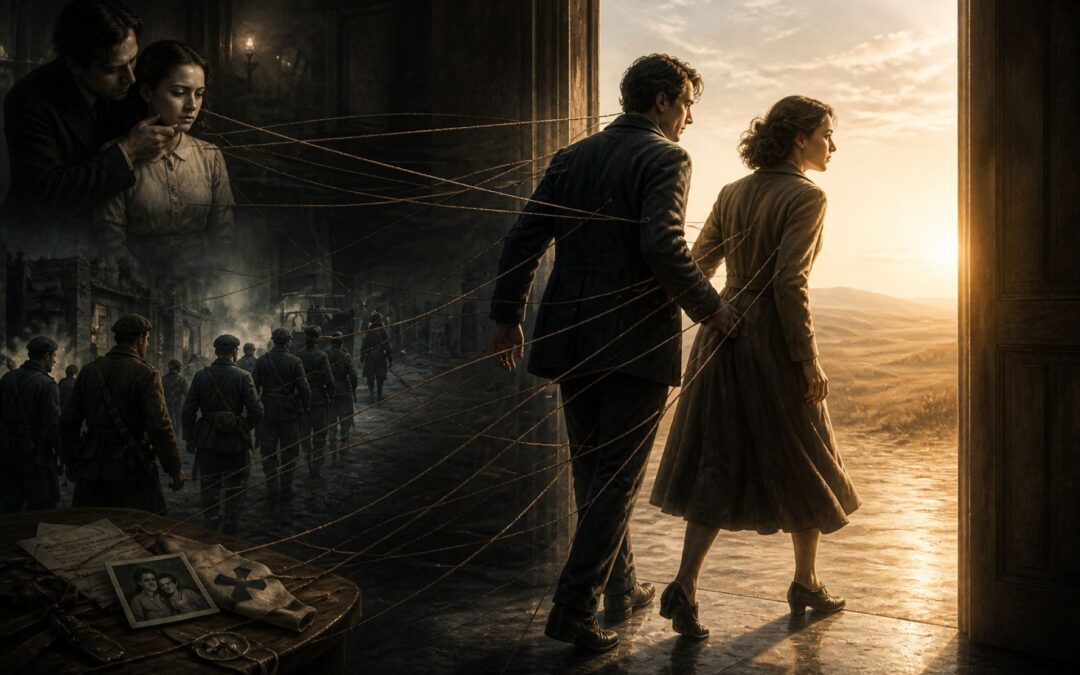
The Fantasy of Starting Over
What if you could begin again? Not metaphorically, not as a vague promise of self-improvement—but literally. A clean slate. A second life untouched by the mistakes, obligations, and consequences of the first.
It’s a fantasy almost everyone has entertained at some point. The idea that, given another chance, we would choose differently. Love better. Act more courageously. Avoid the traps we once walked into blindly. In this imagined reset, we become wiser versions of ourselves, finally free to live as we should have all along.
But beneath this appealing vision lies a difficult question—one that Jean-Paul Sartre forces us to confront: even if we were given another chance, would we actually live differently?
At first glance, the answer seems obvious. Of course we would. After all, we would carry the knowledge of our past failures. We would recognize danger sooner, resist temptation more firmly, and prioritize what truly matters. A second life, it seems, would naturally be a better one.
Yet this assumption rests on a deeper belief—that we are fundamentally free to detach ourselves from our past. That our mistakes are external things we can simply leave behind, rather than forces that have shaped who we are.
Sartre challenges this belief. Not by denying freedom, but by complicating it. Yes, we are free to choose. But our choices are never made in a vacuum. They emerge from a web of relationships, responsibilities, and prior commitments that we ourselves have helped create.
The more we live, the more we define ourselves. And the more we define ourselves, the harder it becomes to step outside that definition. What we call a “fresh start” may not be fresh at all—it may simply be a continuation of the same patterns, driven by the same attachments, now playing out in slightly different circumstances.
This is the tension at the heart of Sartre’s short novel Les Jeux Sont Faits. It takes the seductive idea of starting over and pushes it to its limits, asking not whether we want a second chance, but whether we are truly capable of using it.
Because if we are not—if we remain bound to the very things we believe we can escape—then the fantasy of starting over begins to unravel. And what remains is a more unsettling possibility: that freedom exists, but not in the way we imagine.
A Strange Afterlife: The World of the Dead
In Les Jeux Sont Faits, death does not bring silence or finality. Instead, it opens the door to a strange continuation—one that feels eerily close to life, yet fundamentally stripped of its essence.
The dead do not disappear. They remain among the living as ghosts, drifting through the same streets, the same homes, the same moments they once inhabited. They can see everything. Hear everything. Understand everything. But they cannot be seen, heard, or felt in return.
At first glance, this might seem like a kind of liberation. Freed from the limitations of the body, the dead are no longer bound by physical constraints. They can move wherever they wish, without resistance or consequence. No doors are closed to them. No space is inaccessible.
But this apparent freedom quickly reveals its emptiness.
Because what they lack is not movement—but impact.
They can witness a conversation but cannot join it. They can observe a tragedy unfolding but cannot intervene. They can stand beside the people they love, screaming warnings or confessions, yet remain completely unheard.
This is not freedom as we typically understand it. It is freedom without agency.
Sartre constructs a world where the dead possess total mobility but zero influence. And in doing so, he exposes something crucial: the ability to act—however limited—is far more essential to freedom than the ability to move without restriction.
In this afterlife, existence becomes passive. The dead are reduced to spectators, trapped in a role they cannot escape. They are present, but powerless. Aware, but irrelevant.
And perhaps most painfully, they are forced to watch the consequences of their lives unfold without them.
Mistakes continue to ripple outward. Betrayals deepen. Plans collapse. Lives change course. And yet, those who are most invested in these outcomes can do nothing but observe.
It is here that Sartre introduces a quiet but devastating paradox: the dead are free in every superficial sense, yet profoundly unfree in every meaningful one.
Because true freedom, as the living experience it, is not just about being able to go anywhere. It is about being able to do something once you get there.
Lives Cut Short by Betrayal
The stories of Ève and Pierre do not begin in the afterlife. They begin in the familiar chaos of human life—where choices are made under pressure, trust is fragile, and betrayal carries irreversible consequences.
Ève’s life is defined by quiet suffering. Gravely ill and confined by her condition, she is placed in a position of complete vulnerability. The person who should care for her—her husband André—becomes the very source of her destruction. Slowly, deliberately, he poisons her. Not out of desperation, but out of calculation.
His motives are disturbingly practical. Ève’s death would grant him her inheritance. And beyond that, it would clear the way for him to marry her younger sister, Lucette—a girl still young enough to trust him, still naïve enough to be manipulated. While Lucette mourns her sister’s declining health, André is already positioning himself for the life that will follow her death.
Ève is not just betrayed; she is erased. Her trust becomes the instrument of her undoing.
Pierre’s story unfolds in a different world, but the structure is the same. He is not confined or passive—he is a man of action, the leader of a resistance movement preparing to challenge political authority. His life is defined by purpose, by commitment to a cause larger than himself.
But even here, where loyalty is essential, betrayal finds its way in.
One of his own men, Lucien, breaks under pressure. Captured by the military, he reveals the details of their plan. When he later confronts Pierre, he does not deny what he has done. He asks for forgiveness.
Pierre refuses. He calls him what he is—a traitor.
Moments later, Lucien shoots him.
Both deaths are sudden, but neither is random. They are the direct result of human decisions—choices made by others, yes, but choices embedded in a network of relationships, trust, and moral responsibility.
This is important. Because in Sartre’s world, events are rarely isolated. They are the outcome of intertwined wills, each carrying its own history and consequence.
Ève and Pierre do not simply die. They are brought to death by the actions of those closest to them. And in that sense, their stories are not just about betrayal—they are about the fragile structures that hold human life together, and how easily they can collapse.
By the time they meet in the afterlife, they are already marked by what has happened to them. Their deaths are not clean breaks from the past. They are extensions of it.
Freedom Without Agency
When Ève and Pierre begin to navigate this strange afterlife, their first instinct is not to explore—it is to return.
They drift back toward the lives they have just lost, pulled not by curiosity, but by attachment. The unfinished nature of their stories draws them in. There are things left unresolved, people left unprotected, events still unfolding. Death, it seems, has not erased their concerns.
Ève goes back to her home, desperate to stop André from tightening his grip on Lucette. She sees exactly what is happening—his manipulation, his calculated charm, the slow redirection of affection from one sister to the other. She tries to intervene, to warn, to disrupt the course of events.
But nothing happens.
Her words do not land. Her presence does not register. She is there, fully aware, yet completely ineffective.
Pierre, too, is drawn back to the world he left behind. The rebellion he helped organize is still set to unfold, but now he knows something the others do not—that their plans have been exposed. The Regent is already prepared. What once looked like a bold uprising is now heading toward certain failure.
He tries to stop it. To alert his comrades. To change the outcome.
But like Ève, he cannot reach anyone.
What both of them encounter is not simply frustration—it is a fundamental collapse of what it means to act.
They can see consequences forming in real time. They can understand exactly what is at stake. And yet, they are denied the one thing that could make that understanding meaningful: the ability to influence the outcome.
This is where Sartre sharpens his idea of freedom.
Because what Ève and Pierre experience is, in a sense, a form of freedom. They are no longer constrained by physical limits. They can move effortlessly, observe everything, exist without resistance.
And yet, this “freedom” feels hollow—almost unbearable.
It reveals that freedom without agency is not freedom at all.
To be free is not merely to exist without obstacles. It is to participate, to engage, to leave a mark on the world—even if that mark is small, uncertain, or flawed.
Stripped of that ability, Ève and Pierre become something less than they were in life. Not because they lack awareness, but because their awareness has no outlet.
They are condemned to witness without intervention. To care without effect. To know without the possibility of action.
And in that sense, the afterlife is not a release from the limitations of life—it is a more refined form of imprisonment.
A Second Chance at Life
Just as Ève and Pierre begin to settle into this strange, powerless existence, something unexpected happens.
There has been a mistake.
In the vast, bureaucratic machinery that governs the realm of the dead, it is discovered that their lives did not unfold as they were meant to. They were destined for each other—meant to meet, to connect, to build something together while they were still alive. But circumstances intervened. Their paths never crossed in time.
And because of this error, they are granted something extraordinary: a second chance.
They are allowed to return to the world of the living. Not as ghosts, but as embodied beings once again. They can speak, touch, act. They can influence events. In short, they regain everything that once defined their freedom.
But this opportunity comes with a condition.
They have twenty-four hours.
Within that narrow window, they must prove that their love is real—strong enough to overcome everything that previously kept them apart. If they succeed, they will be allowed to remain among the living and build a life together. If they fail, they will return to the realm of the dead permanently.
On the surface, this seems like the perfect resolution to the problem Sartre has been building.
They now have what they lacked before: agency. They can act, intervene, change outcomes. They also possess knowledge that others do not—the awareness of how things will unfold if left unchecked. Combined with the urgency of their limited time, it appears they are in a uniquely powerful position to reshape their fate.
And yet, something more subtle begins to emerge.
Their return does not place them outside their previous lives. It drops them directly back into them.
The same people are still there. The same dangers are unfolding. The same emotional ties remain intact. Ève still cares about Lucette. Pierre still feels responsible for his comrades. The knowledge they gained in death does not dissolve these attachments—it intensifies them.
What was supposed to be a clean opportunity to start anew quickly becomes entangled with everything they left behind.
The clock is ticking, and they are faced with a choice that is far more complicated than it first appeared: should they devote themselves entirely to this newfound love, or should they try to prevent the disasters they now know are coming?
The second chance, instead of simplifying their situation, reveals just how complex freedom really is.
Why They Fail to Start Over
At first, it seems like Ève and Pierre have everything they need to succeed.
They have time—limited, but enough.
They have clarity—knowledge of what went wrong.
And most importantly, they have each other.
If the idea of starting over were ever going to work, it should work here.
But it doesn’t.
Not because they don’t feel anything. Not because their connection is weak. In fact, the opposite is true—their attraction is immediate, almost inevitable. There is a sense that something meaningful could grow between them, something that might justify this second chance.
And yet, they cannot fully commit to it.
Because their past does not stay in the past.
Ève cannot ignore Lucette. She has seen what will happen if she does nothing—how André will manipulate her sister, how innocence will be exploited in the absence of protection. That knowledge creates a moral weight she cannot simply set aside.
Pierre faces a similar pull. He knows the rebellion is doomed. He knows his comrades are walking into a trap. To turn away from that knowledge, to focus solely on his own chance at happiness, would mean accepting the consequences of their suffering.
And neither of them is willing to do that.
This is where the illusion of a “fresh start” begins to collapse.
Because starting over would require more than opportunity—it would require detachment. A willingness to sever ties with everything that came before. A readiness to accept that what happens to others, even those we care about, is no longer our concern.
But Ève and Pierre are not strangers to their lives. They are products of them. Their values, their loyalties, their sense of responsibility—these are not external burdens that can be discarded. They are part of who they are.
So even as they try to come together, they are constantly pulled apart.
They attempt to warn others, to intervene, to change outcomes. But their efforts create confusion. They cannot explain how they know what they know. Their urgency appears irrational. Their claims sound unbelievable.
Instead of gaining control, they lose it.
Time slips away. Their attention fractures. Their second chance becomes divided between two incompatible goals: building something new, and fixing what already exists.
And in trying to do both, they fail at both.
Their love never fully takes shape. Their interventions never fully succeed.
What remains is a quiet, tragic realization:
They were free to start over. But they were not free to become the kind of people who could.
The Illusion of a Blank Slate
The failure of Ève and Pierre is not accidental. It exposes a deeper misconception—the belief that a new beginning can ever be truly new.
We tend to imagine life as something we can reset. As if, given the right opportunity, we could step outside of everything we’ve done, everything we’ve felt, everything we’ve become—and begin again from zero.
But Sartre dismantles this idea.
A second chance does not erase the first life. It carries it forward.
Ève and Pierre return with full awareness of who they are and what they have lived through. Their memories are intact. Their emotional attachments remain. Their sense of right and wrong is unchanged—if anything, it is sharpened by hindsight.
This is crucial. Because it means they are not starting over as blank slates. They are starting over as the same people, now placed back into the same web of relationships and consequences.
And that web does not loosen just because time has been reset.
Every choice we make leaves a trace. It shapes how we think, what we value, and how we respond to situations. Over time, these traces accumulate into something more solid—an identity that guides our future decisions.
So when we imagine a fresh start, what we are really imagining is not a new self, but a different version of the same self placed into new circumstances.
But that difference is smaller than we think.
Because when faced with similar pressures, similar emotional stakes, and similar responsibilities, we tend to act in ways that are consistent with who we already are. Not out of necessity, but out of continuity.
This is exactly what happens to Ève and Pierre.
They do not fail because the opportunity is flawed. They fail because they remain faithful to their own character. Ève cannot ignore her sister because she is someone who cares. Pierre cannot abandon his comrades because he is someone who feels responsible.
To succeed, they would have to betray these parts of themselves.
And that is the real paradox:
A true fresh start would require us to become someone else entirely. But if we were someone else, it would no longer be our second chance.
So the idea of a blank slate collapses under its own weight.
We are always carrying something forward—our past, our values, our attachments. And these are not obstacles to freedom. They are the very conditions under which our freedom operates.
Entanglement: When the World Owns Us
If the idea of a blank slate is an illusion, then what replaces it is something far more complex—entanglement.
We do not move through life as isolated individuals making detached choices. We are constantly woven into a network of relationships, roles, and responsibilities. Over time, this network becomes so deeply embedded in us that it no longer feels external. It feels like who we are.
At first, this entanglement is something we actively create. We choose our relationships. We commit to people. We take on responsibilities. We invest our time, our energy, our care into the world around us.
But slowly, almost imperceptibly, the direction of control begins to shift.
What we once chose begins to shape us in return.
The people we care about begin to influence our decisions. The responsibilities we accept begin to limit our options. The values we adopt begin to guide—and constrain—our behavior.
This is not a loss of freedom in the obvious sense. No one is physically forcing us to act in a certain way. We still feel like we are choosing.
But the range of choices that feel possible starts to narrow.
Ève and Pierre are perfect examples of this dynamic. Even after death, even after being given a second chance, they cannot step outside the roles they once occupied. Not because they are physically trapped, but because they are emotionally and morally bound.
Ève is still a sister. Pierre is still a leader.
And those identities carry expectations—expectations they themselves accept.
This is where Sartre introduces a more unsettling idea:
The more we take ownership of the world, the more the world takes ownership of us.
Every commitment we make deepens our connection to the environment we inhabit. And with that connection comes a form of dependence. Not imposed from the outside, but grown from within.
This is why starting over is so difficult.
Because to truly detach from our past would mean severing these connections. It would mean abandoning the people and responsibilities that give our lives meaning. It would mean stepping outside the very structure that defines us.
And that is not just difficult—it is, for most people, unthinkable.
So even when presented with freedom in its purest form, Ève and Pierre remain bound. Not by chains, but by the invisible threads of their own lives.
Their entanglement is not a limitation imposed on them. It is something they carry with them, wherever they go.
The Burden of Responsibility
If entanglement explains why we remain tied to our lives, responsibility explains why we cannot simply walk away.
Every choice we make does more than define us—it produces consequences. Some are immediate and visible. Others unfold slowly, shaping the lives of people around us in ways we may not fully understand at the time.
But once those consequences exist, they cannot be undone by desire alone.
This is the weight that Ève and Pierre carry when they return to life. They are not just observers anymore—they are participants again. And with participation comes accountability.
Ève knows what will happen to Lucette if she does nothing. That knowledge transforms inaction into a decision. It is no longer a passive omission—it becomes a choice to allow harm.
Pierre faces the same dilemma. He understands that the rebellion is doomed. If he does not intervene, he is, in a sense, complicit in its failure.
This is where freedom becomes heavier than we expect.
Because we often think of freedom as the ability to choose what we want. But Sartre forces us to see that freedom also means being responsible for what follows from those choices—even when those outcomes extend beyond our control.
Ève and Pierre are free to ignore their past. They are free to focus entirely on each other, to embrace their second chance without looking back.
But doing so would not free them from responsibility. It would simply redefine it.
They would have to live with the knowledge that their happiness came at the cost of others’ suffering. That their decision to prioritize themselves allowed preventable harm to unfold.
And that is a burden they are unwilling to carry.
So their freedom does not liberate them—it confronts them.
It forces them to choose between two incompatible forms of responsibility: the responsibility to themselves, and the responsibility to others. And whichever path they take, something valuable must be sacrificed.
This is the deeper tension Sartre reveals.
We are not just free to act—we are bound to answer for the consequences of our actions. Even when those consequences ripple outward in ways we cannot fully control, they remain connected to us.
Freedom, in this sense, is inseparable from weight.
It is not just the power to choose. It is the obligation to bear what follows.
When the Chips are Down
It is easy to imagine freedom in calm conditions. When nothing is at stake, when choices feel reversible, when consequences seem distant, we like to believe we can shape our lives however we want.
But freedom reveals its true nature in moments of crisis.
This is where Sartre’s idea becomes most visible—not in abstract reflection, but in urgent, irreversible situations. Moments when something important is about to be lost, and a decision cannot be delayed.
For Ève and Pierre, this moment comes quickly.
Time is running out. Their chance to build something together is slipping away. And yet, the dangers they have foreseen are closing in just as fast. Lucette is still vulnerable. The rebellion is still heading toward disaster.
At this point, the conflict is no longer theoretical. It becomes immediate and unavoidable.
They must choose.
Not between good and bad, but between two competing goods. Between love and responsibility. Between personal happiness and moral obligation.
And this is where the idea of starting over collapses completely.
Because in a true fresh start, the past would no longer matter. It would have no claim on their decisions. But in this moment, the past asserts itself with full force. It demands to be acknowledged. It demands to be acted upon.
Ève cannot look at Lucette and pretend she does not know what is coming. Pierre cannot face his comrades and act as if their fate is not already sealed.
Their knowledge binds them. Their values guide them. Their relationships pull them back into the very lives they were supposed to leave behind.
And so, when the moment of crisis arrives, they do what they have always been shaped to do.
They return.
Not because they lack freedom, but because their freedom is inseparable from who they are.
This is the quiet truth Sartre reveals:
We do not discover who we are in moments of crisis—we demonstrate it.
What Sartre Really Says About Freedom
By the end of Les Jeux Sont Faits, the question is no longer whether Ève and Pierre were free.
They were.
They were given the ability to act, to choose, to shape their path in a way that most people never experience. They had clarity, urgency, and opportunity—all the elements we tend to associate with meaningful freedom.
And yet, they fail.
Not because freedom is an illusion, but because freedom is far more demanding than we assume.
Sartre does not deny that we are free. In fact, he insists on it. Human beings are not bound by fixed essences or predetermined roles. We are constantly creating ourselves through our choices.
But this freedom does not exist in isolation. It is always entangled with the world we have already shaped.
Every decision we make becomes part of the structure within which future decisions are made. Our past does not imprison us in a rigid sense—but it influences us, defines our priorities, and limits what feels possible.
So when we act, we are not acting from nowhere. We are acting as someone who has already chosen, already committed, already become.
This is why Ève and Pierre cannot simply rewrite their story.
Their love, however real, does not exist in a vacuum. It competes with everything else that defines them—their sense of duty, their attachments, their understanding of what matters. And in that competition, it does not win.
What Sartre ultimately reveals is not that freedom is absent, but that it is inseparable from consequence.
We are free to choose, but we are not free from what our choices mean.
We are free to act, but we are not free from the world that our past actions have created.
In this sense, freedom is not a clean, open space. It is a field shaped by everything that came before it.
And within that field, we continue to choose—knowing that each choice will, in turn, reshape the field itself.
Conclusion
The idea of starting over is comforting because it promises escape. Escape from mistakes, from regret, from the weight of decisions we wish we could undo. It suggests that somewhere, somehow, there exists a version of our lives untouched by everything that went wrong.
But Jean-Paul Sartre shows us that this version of life does not exist. Not because we lack freedom, but because our freedom is never separate from what we have already chosen.
Ève and Pierre are given what most people only imagine—a second chance. And yet, even with that chance, they cannot step outside the lives they have lived. Their past does not vanish. It follows them, shapes them, and ultimately guides their decisions.
This is not a failure of will. It is the reality of being human.
We are always moving forward, but never from zero. Every relationship we form, every responsibility we accept, every value we adopt becomes part of the structure through which we experience the world.
And so, when we are faced with difficult choices, we do not act as blank slates. We act as people already defined—by care, by loyalty, by responsibility.
This is why true freedom is not the ability to escape our past. It is the ability to confront it. To recognize that our choices matter, not just in the moment, but in how they shape everything that comes after.
There is no clean reset. No untouched beginning waiting for us somewhere ahead.
Only the ongoing task of choosing—again and again—within a life that we ourselves have helped create.