
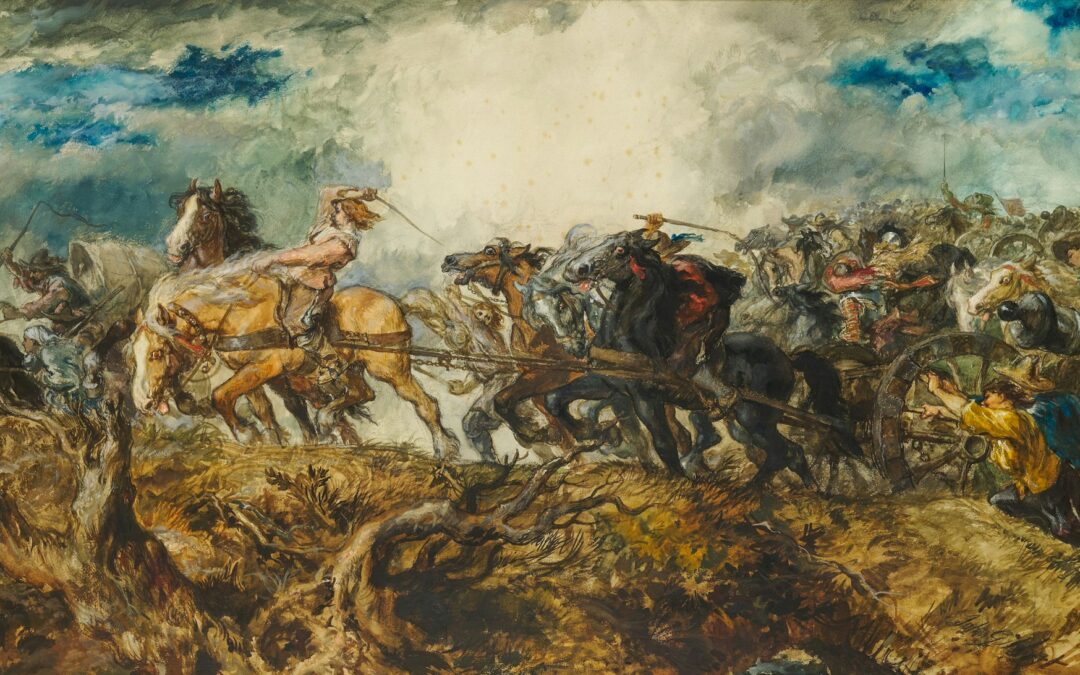
War has often been seen as a necessary evil, an unavoidable part of the human experience. Yet, from a Stoic perspective, war is nothing short of madness. The Stoics—philosophers who valued virtue, wisdom, and peace—warned against the destruction and chaos of war. They argued that it stems not from necessity, but from ignorance and selfishness. In this article, we explore the Stoic viewpoints on war, reflecting on the madness of human conflict and the deep moral questions it raises.
The Madness of War
War, through the lens of Stoic philosophy, is the ultimate expression of human madness. It is a paradox that stands at the heart of human history. Human beings, as the Stoics saw them, are naturally inclined toward gentleness and rationality. Yet, despite this, they regularly find themselves engaging in acts of profound violence. This tendency to turn to war, to kill and destroy in the name of power, resources, or national pride, is something that the Stoics could not reconcile with human nature.
The Stoic philosophers, including Seneca, Epictetus, and Marcus Aurelius, all grappled with the contradictions of human existence, especially when it came to war. They understood that, while animals engage in violent behavior to protect territory or secure food, their aggression is instinctual and often restrained. They do not embark on wars of conquest, nor do they massacre one another for the mere expansion of power or land. Humans, however, armed with the ability to reason and reflect, engage in organized violence on an incomprehensible scale. This is the central irony that the Stoics grappled with: humanity’s capacity for violence is disproportionate to its intellectual and moral abilities.
War is not merely a sporadic outburst of violence, but a social institution. In the ancient world, the practice of war was entwined with the expansion of empires, the defense of territories, and the preservation of power. The Romans, in particular, were masters of this system. They expanded their empire through force, conquering vast lands and bringing under their control peoples from every corner of the known world. Yet, the Stoics questioned whether this was a valid justification for war. The cost of conquest—human lives lost, cultures destroyed, and civilizations uprooted—far outweighed any political or territorial gain.
Even Marcus Aurelius, who was a Roman emperor and led numerous military campaigns, wrestled with the conflict between his duty as a ruler and his Stoic beliefs. He fought wars to protect the empire, but he was deeply aware of the inherent contradiction. On the one hand, he understood that as emperor, he was responsible for the defense of the empire. On the other hand, his Stoic principles urged him to live in harmony with nature, to avoid unnecessary violence, and to cultivate peace. Marcus Aurelius, though never overtly condemning war, made repeated efforts to temper his actions with wisdom and reflection.
In contrast, Seneca and Epictetus, both of whom had less direct involvement in politics, were much more vocal in their condemnation of war. For Seneca, the act of war was madness, a form of collective insanity that blinded human beings to their true nature. In his writings, Seneca challenges the accepted norms of war and questions the morality of violence. He condemns the glorification of generals and emperors who lead men into battle, arguing that those who wage war are not heroes but perpetrators of senseless destruction. His famous critique of war as “the much-vaunted crime of slaughtering whole peoples” captures the Stoic disdain for the glorification of violence. Seneca sees the institutionalization of murder, when sanctioned by states and governments, as a grave moral failure. What is considered a crime in everyday life becomes a celebrated act when carried out by a nation or a ruler, which is a clear sign of the moral decay that war induces.
Seneca further emphasizes the madness of war by noting that even the most ferocious creatures in the animal kingdom refrain from senseless slaughter. Wild beasts may fight for territory or food, but they do not engage in the wholesale destruction of one another for power or greed. In contrast, human beings, despite their reason and intellect, engage in wars that result in the loss of countless lives, with entire populations decimated for no justifiable reason other than the pursuit of power or resources. This madness, Seneca suggests, is not only a moral failing but a societal one, where the norms of violence become institutionalized and normalized.
The Contradictions of War and Moral Ambiguity
The contradictions inherent in war are not just philosophical quandaries but moral and ethical dilemmas that plague society. Seneca’s sharp critique exposes the profound inconsistency between how war is perceived and how individual violence is treated. In a world where murder is considered one of the gravest crimes, how is it that the killing of thousands in a war can be seen as an honorable pursuit? This contradiction lies at the heart of Seneca’s argument.
Consider the way in which society views murder. It is universally condemned as an act of moral depravity, deserving of severe punishment, whether it leads to a life sentence in prison or, in extreme cases, the death penalty. Society invests considerable energy into preventing murder, enacting laws, and ensuring that those who commit such acts are held accountable. In this context, the preservation of life is paramount, and human life is deemed valuable. However, when the same act of killing is carried out on a massive scale, as it often is during wartime, it is not condemned but celebrated. Generals and emperors are lauded for their ability to lead men into battle and conquer foreign lands, while those who take a single life are vilified.
This moral inconsistency is at the root of Seneca’s disdain for war. He challenges the prevailing wisdom of his time, urging society to reconsider its stance on violence and death. For Seneca, the public glorification of war represents a profound moral failure. While individuals are punished for committing murder, the state sanctions mass murder in the form of war. The same society that punishes an individual for killing in cold blood praises those who kill in the name of conquest, expansion, or political gain. This hypocrisy, Seneca argues, is the essence of madness. It reveals the moral decay of a civilization that values power over virtue and glorifies the destruction of life in the name of national interest.
Furthermore, the Stoics recognized the dangers of war not only from a moral perspective but also from a practical one. War is not simply a theoretical concept or philosophical argument; it is an institution that brings with it real consequences. The destruction of cities, the deaths of innocent civilians, and the destabilization of entire regions are the undeniable realities of war. Seneca criticizes the glorification of military leaders who, despite the heavy costs of war, are celebrated for their conquests. The toll of war is not just a theoretical loss but a very tangible one, felt by those who lose loved ones, livelihoods, and homes.
The Stoics were particularly concerned with the psychological and emotional consequences of war. They understood that the destruction wrought by war does not end with the physical death of soldiers and civilians but extends to the minds of those who are left behind. The trauma, the grief, and the anguish that war causes often lead to long-lasting psychological scars. These emotional tolls, the Stoics argued, cannot be justified by any fleeting political or territorial gain. The pursuit of power, land, or honor through war comes at an enormous price, a price that humanity continues to pay long after the war has ended.
By exposing these contradictions, the Stoics challenged not only the accepted norms of their time but also provided a timeless critique of the institution of war. Their reflections urge us to look beyond the surface glorification of military conflict and to question the true cost of war—not just in terms of lives lost but in terms of the moral and psychological damage it inflicts upon society as a whole.
Seneca and Epictetus: War as Self-Interest
Seneca and Epictetus, two of the most prominent Stoic philosophers, offer profound insights into the motivations that drive war. Their analyses delve into the psychological and moral factors that fuel human conflict, particularly the inherent selfishness that underpins the institution of war. The Stoics recognized that at the heart of every war is an individual or collective attachment to self-interest—whether it is a desire for power, wealth, or land. This selfishness, they argue, is the primary driver behind most human conflict, and it is a force that blinds people to the greater consequences of their actions.
Epictetus, in his teachings, presents the idea that all human conflict—including war—stems from individuals’ attachment to external goods and desires. These external goods, which include power, control, and material wealth, are viewed as essential to one’s sense of happiness and well-being. However, the Stoics understood that these desires are fundamentally flawed. They are not within our control and are fleeting by nature. By attaching ourselves to these external things, we set ourselves up for suffering, as they are unreliable and impermanent.
Epictetus uses a poignant example from Greek mythology to illustrate this point. The story of Eteocles and Polynices, two brothers who fought to the death over the throne of Thebes, serves as a clear example of how attachment to selfish desires leads to destruction. These brothers, who had once shared a bond of family, found themselves at odds over a trivial external gain: control of the throne. Despite their shared upbringing and common ancestry, they allowed their desire for power to drive them to violence, ultimately resulting in their mutual destruction. Epictetus argues that the desire for power, when placed above relationships, moral integrity, and the well-being of others, leads to catastrophic outcomes.
In the context of war, this selfish attachment manifests in the form of territorial expansion, resource acquisition, and the quest for honor. Nations and leaders who wage wars do so because they believe that such conflicts will bring them something of value—be it land, resources, or prestige. Yet, the Stoics highlight the futility of these pursuits. Power gained through violence is always temporary, and the destruction wrought in its pursuit is often irreversible. The true, lasting gains come from within—through the cultivation of wisdom, virtue, and inner peace—not from external conquest or material acquisition.
Seneca echoes these sentiments, emphasizing that war is driven by the greed and selfishness of rulers and nations. He critiques the idea that war is a noble endeavor, revealing it instead as a reflection of human corruption and moral decay. The Stoic critique of war challenges the notion that violent conquests are justified by political or economic gain. It reveals the fundamental flaw in this logic: the pursuit of external goods at the cost of human life and well-being is a pursuit that ultimately leads to moral and societal collapse.
Seneca’s reflections on war as self-interest highlight its destructive nature. Rather than focusing on the greater good or the collective well-being of society, war is driven by narrow, selfish ambitions that perpetuate suffering and chaos. The Stoics urge us to recognize the dangers of placing our desires for power, wealth, and control above the welfare of others. Instead of seeking these fleeting external rewards, they advocate for the pursuit of internal virtues—wisdom, justice, and moderation—which can lead to a more harmonious and meaningful existence.
An Insatiable Desire for Power
Epictetus’s argument against war can be boiled down to a fundamental question: why would anyone fight over things that, by their very nature, are unreliable and fleeting? The answer, according to the Stoics, lies in the insatiable human desire for power, control, and external validation. These desires are not inherently wrong, but when they become the driving forces of human behavior, they lead to madness, especially when the costs of pursuing them are so high.
The desire for power, as the Stoics explain, is rooted in the mistaken belief that it will bring lasting happiness and fulfillment. Throughout history, many of the greatest wars have been fought over land, resources, or political dominance. Empires rise and fall, and nations engage in bloody conflicts to acquire these tangible assets. Yet, from a Stoic perspective, these things are not worth fighting for. Power is transient, and even if it is gained through war, it is never truly under our control. It can be lost as quickly as it is acquired, often at a tremendous cost.
Epictetus uses the example of the Trojan War to illustrate the futility of fighting over external goods. The war, which was fought between the Greeks and Trojans over Helen of Troy, was sparked by a personal desire—Menelaus’s wish to reclaim his wife from Paris, the Trojan prince. The war caused the death of thousands, including warriors, civilians, and families torn apart by the conflict. Yet, at the heart of the conflict was something that could have been resolved through dialogue and compromise: a personal grievance that escalated into a war of massive proportions. Epictetus points out that the pursuit of such external desires—whether for a woman, territory, or riches—is ultimately unworthy of the destruction it causes.
The Stoics argue that the true value in life lies not in external possessions but in the cultivation of inner peace, virtue, and wisdom. Power, honor, and wealth are all external, and they are therefore beyond our control. What we can control, however, is how we respond to the world around us. Rather than fighting to acquire things that we cannot truly possess, the Stoics advocate for focusing on what is within our power: our character, our actions, and our relationships. By doing so, we can find fulfillment and meaning that is not dependent on the temporary and unreliable rewards of external conquest.
The madness of war, from the Stoic perspective, is rooted in this insatiable desire for power and control over things that are ultimately not within our grasp. Wars fought for these reasons are not only morally bankrupt but also irrational. The Stoics warn against this folly, urging us to seek fulfillment in the things that truly matter—virtue, wisdom, and the pursuit of inner peace—rather than in the fleeting rewards of war and conquest.
The Stoic Alternative: Peace Over Power
The Stoic alternative to war is not pacifism in the conventional sense but a philosophy that prioritizes peace, virtue, and wisdom over external conquest and conflict. The Stoics recognized that violence and war are not inevitable parts of the human condition. Rather, they are the result of misplaced desires and a failure to cultivate inner virtue. By focusing on what is within our control—our thoughts, our actions, and our responses to adversity—we can create a life that is not governed by the chaos of war but by the peace of wisdom and virtue.
Marcus Aurelius, in his Meditations, speaks frequently of the importance of maintaining inner tranquility amidst external turmoil. He advises against being swept up by the passions and desires that lead to conflict, instead encouraging his readers to focus on the things that they can control: their own responses to the world. For the Stoics, true strength is not found in military conquest or political power, but in the ability to control one’s own mind and to act with virtue in all circumstances.
Epictetus, too, advocates for a life of virtue and self-mastery. He teaches that the pursuit of external goods—land, wealth, and power—leads only to suffering and disillusionment. Instead, the Stoic philosopher should focus on cultivating virtues such as wisdom, justice, courage, and temperance. These virtues, unlike material goods, are within our control and can lead to a more peaceful and meaningful life. By focusing on inner peace and virtue, we can transcend the madness of war and live in harmony with both ourselves and the world around us.
The Stoic ideal of peace is not a passive avoidance of conflict but an active engagement in life based on reason, virtue, and wisdom. The Stoics argue that peace can only be achieved when individuals and societies turn their attention away from external desires and focus on cultivating the inner virtues that lead to harmony. This approach to life offers a powerful antidote to the madness of war, providing a path toward true fulfillment and lasting peace.
Conclusion: The Cost of War
War is not merely a political or military endeavor; it is a moral and philosophical crisis. The Stoics understood that the true cost of war is not measured in the bodies lost on the battlefield but in the degradation of the human soul. In the words of Seneca, “what can one call it but plain insanity to carry destruction in your train, to rush in anger against men you never saw?” The insanity of war, rooted in greed and selfishness, leads only to suffering and devastation.
As we look to the future, we must heed the Stoic warning: the pursuit of external gains through violence is madness. True strength lies in overcoming our desires for power and wealth and focusing instead on the things that are within our control—our character, our virtues, and our pursuit of peace. The madness of war is not inevitable, but it is a choice. Let us choose wisely.