
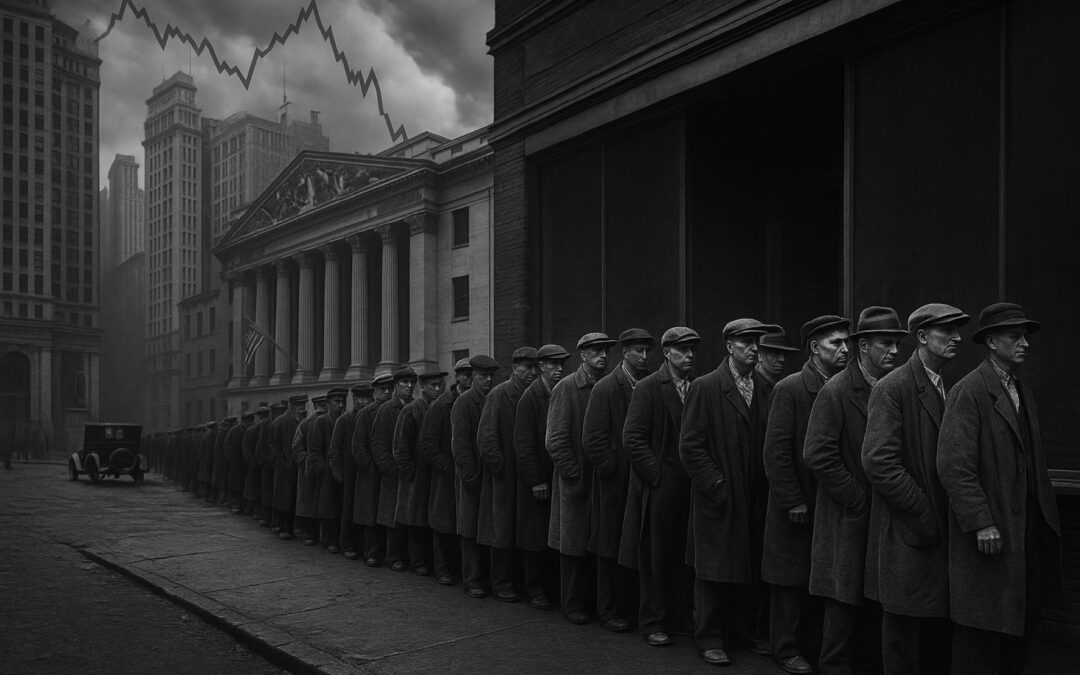
The Great Depression stands as the most catastrophic economic collapse in modern history. A whirlwind that transformed an era of jazz, opulence, and ceaseless optimism into one of despair, poverty, and uncertainty. Within a scant decade, the exuberance of the Roaring Twenties evaporated, replaced by long breadlines and shuttered factories, echoing far beyond America’s borders and setting the stage for global upheaval.
The Roaring Twenties: Boom, Innovation, and Boundless Optimism
The conclusion of World War I in 1918 marked not just the end of global conflict but the dawn of a seismic economic and social shift in the United States. Returning soldiers were greeted by a nation eager to rebuild and redefine itself. The war had irrevocably altered the workforce: women had taken on industrial and clerical roles en masse, proving their capability and challenging traditional social norms. Though many women were expected to return to domestic life after the war, the genie was out of the bottle—new freedoms and societal shifts were underway.
Economically, the country was riding an unprecedented wave of growth. Industrial production surged as companies retooled from wartime manufacturing to consumer goods. Innovations in technology and production efficiency laid the foundation for a modern consumer society. Central to this transformation was Henry Ford’s pioneering work with the moving assembly line, introduced in 1913 but perfected throughout the decade. By slicing complex manufacturing into discrete, repeatable tasks performed on a conveyor belt, Ford radically boosted production speed and lowered costs.
The impact was revolutionary. The Model T, once a luxury item, became affordable to the burgeoning middle class. By 1924, the price dropped to $290, a fraction of its earlier cost. This democratization of automobile ownership transformed American life: cities sprawled outward, commuting became feasible, and the very fabric of daily life shifted. The car was not merely transportation; it was a symbol of freedom, progress, and status.
Ford’s mass production philosophy rippled outward. Industries from radios to household appliances embraced assembly lines, enabling factories to flood the market with affordable, reliable products. Radios brought news and entertainment directly into living rooms, knitting together a shared cultural experience. Washing machines and vacuum cleaners revolutionized domestic labor, easing the burden of chores and promising modern convenience.
Advertising evolved alongside these changes. The radio became a powerful marketing platform, delivering persuasive messages that stoked desires for the newest goods. Consumerism took on a near-religious fervor, with the latest product embodying progress and social aspiration. Banks enthusiastically supported this climate, extending credit to consumers hungry to buy on installment plans or using borrowed money.
This potent mix of technological innovation, cultural transformation, and financial exuberance created the heady spirit of the Roaring Twenties. Jazz clubs thrived, speakeasies defied Prohibition, and social mores loosened. Wall Street glittered as stocks soared, reflecting and amplifying the era’s boundless optimism. The economy seemed to hum with unshakable confidence — a relentless ascent toward greater wealth and modernity.
The Illusion of Endless Prosperity and the Rise of Speculation
Yet beneath the surface of this shimmering prosperity lay subtle but dangerous fissures. While factories churned out products at an astonishing pace and banks fueled spending through easy credit, the economy’s growth was beginning to lose its balance.
Stock market participation exploded during this period. The dazzling returns of the 1920s attracted not only seasoned investors but also everyday citizens eager to share in the prosperity. Buying stocks on margin — a practice where investors paid only a fraction of a stock’s price upfront while borrowing the remainder — became widespread. This method dramatically amplified buying power but came with extreme risk. As prices climbed, confidence soared, and margin loans ballooned, creating a self-reinforcing bubble.
This speculative mania detached stock prices from the actual financial health of companies. Many stocks traded at valuations that no longer reflected earnings or tangible assets but were instead propelled by collective belief in the market’s perpetual rise. The market’s psychology shifted from rational investment to near-mythical optimism, fostering irrational exuberance and rampant risk-taking.
Meanwhile, the broader economy began showing signs of fatigue. Industrial overproduction led to mounting inventories as consumer demand slowed. The United States, flush with goods, faced challenges in exporting excess production. Europe’s postwar economies were fragile, still recovering from the devastation of World War I, and unable to purchase American goods at previous levels. Global trade stagnated, compounding economic tensions abroad.
Banks, intimately tied to the market’s fortunes through loans and investments, became increasingly vulnerable. Consumer debt swelled as households borrowed heavily to finance both consumer goods and stock purchases. The financial system became a precarious web of interconnected risks.
Yet public sentiment remained overwhelmingly positive. The cultural zeitgeist celebrated wealth, technological progress, and social liberation. The stock market was seen not just as an investment venue but as a national symbol of American exceptionalism and the endless promise of prosperity. This pervasive optimism blinded many to the precarious undercurrents threatening to upend the entire system.
Black Thursday and the Stock Market Crash: The Catalyst
The fragile bubble finally burst in late October 1929. On October 24, known thereafter as Black Thursday, a massive wave of selling overwhelmed the stock market. Investors, gripped by uncertainty and panic, rushed to liquidate holdings. The New York Stock Exchange recorded an unprecedented volume of 12.9 million shares traded in a single day — an overwhelming flood that strained trading systems and underscored the depth of the crisis.
Stock prices plunged sharply, falling 11% in a matter of hours. Attempts by leading bankers and investors to stem the panic — by buying blocks of shares to stabilize prices — provided only temporary respite. The very next week, on Black Tuesday, October 29, the market descended further into chaos. A staggering 16.4 million shares were traded, and prices fell another 12%, erasing a third of the market’s value in just two weeks.
The crash devastated investors, particularly those who had purchased stocks on margin. Margin calls forced investors to quickly raise cash to cover loans, often by selling other assets at depressed prices, exacerbating the downward spiral. Many individuals who had poured their life savings into stocks found themselves bankrupt overnight.
While the crash marked a dramatic turning point, it was the spark rather than the inferno. It revealed the fragility of an economy built on speculative excess, unstable credit, and unregulated banking. The catastrophe rippled beyond Wall Street, signaling the start of the Great Depression — a prolonged period of economic hardship that would engulf the nation and the world.
The stock market collapse shattered confidence and unleashed waves of fear. Yet, as severe as the crash was, it did not by itself cause the full economic collapse. Instead, it exposed deeper structural flaws — particularly in the banking system and monetary policy — that would precipitate the prolonged downturn to come.
Banking Collapse: The Real Engine of Disaster
While the stock market crash of 1929 shocked the world, the true engine that accelerated the Great Depression was the collapse of the banking system. The U.S. banking landscape at the time was a patchwork of thousands of small, locally operated banks, often with limited capitalization and little regulatory oversight. Many of these institutions had aggressively extended credit to speculators during the boom years, funneling depositors’ money into risky loans and stock market investments.
When the market plummeted, these loans turned sour. Banks found themselves holding massive amounts of worthless collateral while simultaneously facing mass withdrawals from terrified customers. With no federal deposit insurance to guarantee their savings, people who heard of bank failures rushed to pull their money out of other institutions — healthy or not — in a frenzy known as a bank run. These runs drained liquidity and forced banks to liquidate assets at fire-sale prices, further deepening financial distress.
One infamous case was the Bank of the United States in New York City. A baseless rumor that the bank had refused to honor a stock sale led over 25,000 people to swarm its doors in a single day, withdrawing nearly $3 million. This panic overwhelmed the bank’s reserves, leading to its closure. Shockwaves radiated through the financial system; the failure of this single bank accounted for a third of the $550 million in deposits lost during the early years of the Depression.
As panic spread, solvent banks scrambled to call in loans, sell assets, and hoard cash to meet withdrawal demands, tightening credit conditions for businesses and consumers alike. The result was a systemic credit freeze. Money that once circulated freely became trapped, strangling economic activity. The contraction of available credit deepened the economic malaise, turning a recession into a full-blown depression.
The Federal Reserve’s Fatal Inaction
At the heart of this financial maelstrom stood the Federal Reserve, the nation’s central bank, whose role was to stabilize the economy and ensure liquidity in times of crisis. Yet, during the darkest years of the early 1930s, the Fed’s response was widely viewed as inadequate, even disastrous.
Instead of expanding the money supply or providing emergency support to struggling banks, the Fed largely allowed the banking crisis to worsen. This reluctance was partly rooted in the Fed’s mandate to control inflation and maintain the gold standard, which constrained its flexibility. As banks failed and depositors withdrew funds en masse, the Fed chose not to aggressively inject liquidity into the system.
This decision led to a precipitous 31% contraction in the U.S. money supply between 1929 and 1933. Deflationary pressures mounted: prices and wages plummeted, consumer spending dried up, and businesses delayed investment. For borrowers, the real burden of debt soared as money became more valuable, making repayment even more onerous.
The Fed’s inaction thus amplified the downward economic spiral, turning what might have been a sharp but manageable recession into a decade-long depression. Historians and economists have since condemned the Fed for this passivity, recognizing it as one of the critical policy failures that exacerbated the crisis’s severity and duration.
Hoover’s Presidency and the Turn Toward Protectionism
Herbert Hoover, who assumed the presidency in 1929 just as the storm clouds gathered, initially projected confidence and faith in American resilience. He believed that voluntary cooperation between businesses and limited government intervention would be sufficient to weather the economic downturn. Early on, he resisted calls for direct relief, fearing it would undermine self-reliance and the moral fiber of the nation.
However, as the crisis deepened, Hoover adopted increasingly interventionist policies. One of the most consequential was the Smoot-Hawley Tariff Act of 1930, legislation aimed at shielding U.S. farmers and manufacturers from foreign competition by imposing steep tariffs on imported goods. The tariff hikes averaged about 20%, raising barriers to trade at a time when global economies desperately needed cooperation.
The international response was swift and punitive. More than 25 countries retaliated by erecting their own tariffs, triggering a global trade war. The volume of world trade collapsed by approximately 66% between 1929 and 1934, choking off vital export markets and deepening the worldwide economic slump.
Although foreign trade constituted a relatively small portion of the American economy compared to today, the tariff war had outsized psychological and diplomatic effects. It eroded confidence in international cooperation, heightened economic nationalism, and compounded the challenges facing global recovery.
Domestically, Hoover’s reluctance to provide direct aid and the negative fallout from protectionist policies fueled public discontent. The president became a scapegoat for the Depression’s prolonged misery, with many blaming him for policies perceived as ineffective or even harmful. His administration’s response underscored the limitations of traditional laissez-faire approaches when confronted with a crisis of unprecedented scale and complexity.
Societal Impact: Unemployment, Homelessness, and the Dust Bowl
The Great Depression was not just an economic crisis—it was a profound social catastrophe that reshaped the daily lives of millions. As factories shuttered and businesses failed, unemployment soared to staggering levels, peaking at nearly 25% of the American workforce by 1933. This meant that one in every four Americans capable of working was without a job. The loss of income devastated families, stripping away financial security and forcing many into poverty.
Homelessness became widespread. Shantytowns of makeshift huts and shacks sprang up on the outskirts of cities across the country, collectively dubbed “Hoovervilles” after the president who was widely blamed for the crisis. These settlements were grim testaments to desperation, lacking basic sanitation, and often overcrowded. Breadlines and soup kitchens, operated by charitable organizations and local governments, became a daily reality for millions, as hunger and malnutrition spread.
The plight of rural America was especially acute. The ecological disaster known as the Dust Bowl compounded the economic misery faced by farmers. Decades of intensive plowing, removal of native grasses, and drought created barren, dusty landscapes across the Great Plains. Fierce winds swept loose topsoil into massive dust storms, which blackened skies and destroyed crops. Entire farms were rendered unproductive, forcing thousands of families to abandon their land and migrate westward in search of work and survival.
The Dust Bowl was arguably the worst man-made ecological catastrophe in U.S. history. Its impact was not merely environmental but economic and human: it displaced vast populations and contributed heavily to the internal migration patterns of the 1930s. The social fabric frayed as millions struggled to survive amid unemployment, homelessness, and environmental devastation.
Roosevelt and the New Deal: Turning the Tide
In the midst of this widespread despair, Franklin D. Roosevelt’s election in 1932 marked a turning point. Roosevelt understood that traditional hands-off government approaches were insufficient for the crisis’s scale. His New Deal was a sweeping collection of programs designed to provide relief, recovery, and reform—aiming not only to alleviate immediate suffering but to prevent future collapses.
The New Deal introduced groundbreaking social safety nets. Programs established minimum wages and overtime pay, ensuring fairer compensation for workers. Unemployment insurance was created to provide temporary income support. The Social Security Act of 1935 laid the foundation for a permanent social welfare system, offering pensions for the elderly and aid to the disabled.
Banking reforms were central to stabilizing the economy. The Federal Deposit Insurance Corporation (FDIC) was created to insure bank deposits, restoring public trust and preventing future bank runs. The Securities and Exchange Commission (SEC) was formed to regulate stock markets, enforce transparency, and curb the speculative abuses that contributed to the crash.
Public works programs like the Works Progress Administration (WPA) and the Civilian Conservation Corps (CCC) put millions to work on infrastructure, conservation, and cultural projects, injecting desperately needed income into local economies while rebuilding the nation’s physical foundation.
While the New Deal did not end the Great Depression overnight, it fundamentally altered the relationship between government and citizens, embedding the principle that federal intervention could and should play a role in economic stability and social welfare. Roosevelt’s leadership rekindled hope and established a legacy of reform that shaped American policy for decades.
The Enduring Legacy: Lessons Still Relevant Today
The Great Depression’s shadow extended far beyond the 1930s, offering enduring lessons on economic policy, market psychology, and social responsibility. It was only with the massive industrial mobilization for World War II that unemployment fell significantly and economic activity surged, finally pulling the country fully out of depression.
Economists still debate the exact contributions of the New Deal and wartime spending to recovery, but there is consensus on several key insights. One is the vital role of moderate inflation: a small, stable rise in prices encourages consumers and businesses to spend and invest, rather than hoard cash. Another is the necessity of active government involvement during downturns to stabilize the economy, protect citizens, and restore confidence.
The Depression also underscored the dangers of unchecked speculation and financial bubbles. When exuberance detaches asset prices from underlying fundamentals, markets become vulnerable to catastrophic corrections. Regulation, transparency, and oversight are essential to prevent the kinds of excesses that precipitated the crash.
Beyond economics, the crisis revealed the human cost of systemic failure: the pain of unemployment, homelessness, and social dislocation. It emphasized the importance of social safety nets and the moral imperative for collective action in times of crisis.
The Great Depression remains a cautionary tale, a testament to how prosperity can unravel and how policy missteps can deepen disaster. Its legacy is a roadmap for vigilance, prudence, and resilience — essential tools for safeguarding future generations from repeating history’s darkest economic hours.