
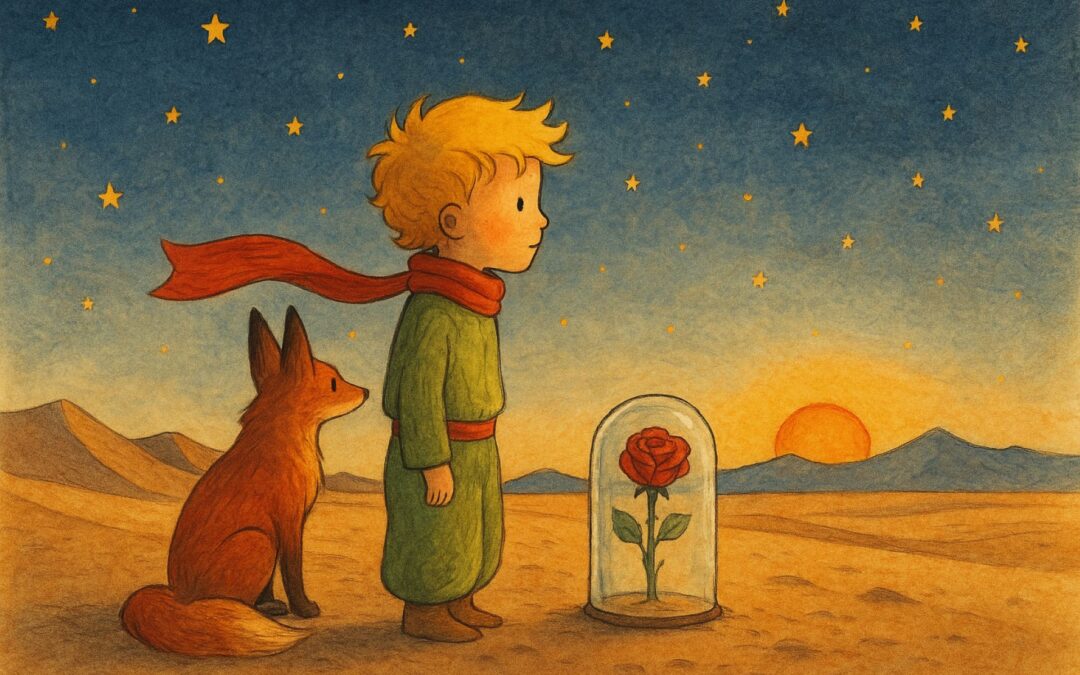
“All grown-ups were once children… but only a few of them remember it.” This enduring line, from The Little Prince, captures the essence of a book that celebrates the unfiltered curiosity and boundless imagination native to childhood. It stands in stark contrast to the dull rigidity, fixed ideas, and unimaginative perspectives that so often define adult life—what Saint-Exupéry termed the “Grand Personnes.” In The Little Prince, purity and simplicity are idealized, exposing the futility of much of modern adult existence across any age or culture.
Yet, beneath its whimsical narrative lies a meaning that has perplexed readers since its debut. Early audiences were bewildered, uncertain how to interpret its allegorical depth. Over time, however, this modest tale has blossomed into a beloved classic—an urgent parable of love, loss, and the search for meaning. Translated into 345 languages, The Little Prince ranks among the most widely read and translated books in history, a testament to its universal appeal and enduring wisdom.

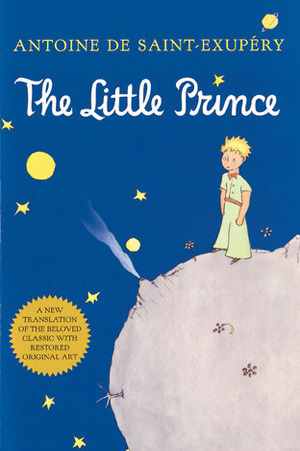
Antoine de Saint-Exupéry: The Man Behind the Prince
Antoine de Saint-Exupéry was born at the dawn of a new century—1900—in a France that was itself caught between tradition and modernity. Coming from an aristocratic family, his upbringing was marked by privilege, yet shadowed by fragility. The loss of his father when Antoine was just a toddler uprooted the family’s financial security, thrusting them into a precarious position that contrasted sharply with their noble lineage. This early encounter with impermanence and vulnerability would later infuse his writing with a profound sensitivity to loss and the transient nature of life.
Family tragedies continued to shape his emotional landscape. Perhaps none more so than the death of his younger brother, François. Antoine, only seventeen at the time, cared for François during his final battle with rheumatic fever—a heart-wrenching ordeal that left a lasting imprint on his psyche. Antoine’s poetic reflection on his brother’s passing—“He did not cry out — he fell as gently as a young tree falls”—captures a tender serenity amid tragedy. This same delicate imagery finds an echo in the death of the Little Prince, weaving personal grief into literary expression.
Saint-Exupéry’s early educational journey was uneven and fraught with challenges. Twice, he failed to gain admission to the Naval Academy, a setback that might have derailed a lesser spirit. Undeterred, he embarked on military service with a cavalry regiment, yet his heart was already captivated by the burgeoning world of aviation. The era’s rapid technological leaps had turned human flight from fantasy into reality, and Saint-Exupéry was determined to be part of this new frontier. His first airplane ride in 1912 ignited a passion that would dominate his life.
Transferring from cavalry to the Air Force, he began a lifelong obsession with flying, though it came with risk. His early years in the cockpit were marked by several crashes, underscoring the dangerous and unpredictable nature of early aviation. But these experiences only deepened his respect for the fragility and wonder of flight—a duality reflected in the poetic and philosophical tone of his later writings.
After leaving formal military service, Saint-Exupéry embarked on pioneering postal flights over uncharted territories in Africa and South America. These routes were perilous, often stretching the limits of the era’s aviation technology and human endurance. It was during these solitary, high-stakes journeys that he found the impetus to write. His 1931 novel Night Flight drew upon these adventures and was met with critical acclaim and commercial success, establishing his literary voice as one that melded technical knowledge with profound human insight.
Amidst this backdrop of flight and literature, Antoine married Consuelo Suncin, a Salvadoran writer and artist whose spirited personality and tumultuous relationship would profoundly influence him. Their passionate, often stormy marriage found expression in The Little Prince’s singular female character: the Rose. The Rose’s demanding, sometimes capricious nature mirrors the complexities of love and attachment, embodying both tenderness and challenge.
Through these intertwined experiences—loss, flight, love, and exploration—Saint-Exupéry crafted a worldview that celebrated innocence, responsibility, and the delicate balance between vulnerability and strength. His own life became a tapestry of the very themes that The Little Prince would come to immortalize.
Flight, Adventure, and Survival: The Desert Crash
The 1935 desert crash is more than a biographical episode; it is a crucible that forged Saint-Exupéry’s literary and existential vision. Attempting to push the boundaries of speed and endurance, he and his mechanic-navigator set out to shatter the Paris-Saigon record, a quest emblematic of human ambition and the daring spirit of the age. Yet, the unforgiving expanse of the Libyan Desert offered a stark reminder of nature’s indifference.
Their plane went down in an isolated stretch of sand and rock, leaving the two men marooned with minimal provisions: a few pieces of fruit, a flask of coffee, some chocolate, and a bottle of white wine—their tenuous lifeline amid the vast emptiness. For four days, dehydration, heat, and delirium assailed them. They wandered between moments of consciousness and hallucination, suspended between life and death. The desert, with its overwhelming silence and scale, became a metaphor for existential isolation and the thin line between survival and oblivion.
Their rescue by a passing Bedouin was as sudden as it was miraculous. The Bedouin’s gift of water and hospitality was a lifeline not just physically, but spiritually—a reaffirmation of human kindness in a harsh world. This encounter bridged worlds: the technological ambition of the aviator and the ancient rhythms of desert nomads, the modern and the timeless.
Saint-Exupéry would later weave this harrowing experience into the fabric of The Little Prince. The aviator’s crash landing in the Sahara and his serendipitous meeting with the mysterious boy form the story’s poignant opening, grounding a whimsical narrative in the stark realities of human vulnerability. The desert becomes a liminal space—both literal and metaphorical—where earthly concerns dissolve and profound truths about love, loss, and connection emerge.
This episode also captures the dual nature of flight itself: the exhilaration of exploration tempered by the ever-present shadow of danger and mortality. It encapsulates Saint-Exupéry’s lifelong meditation on the fragile beauty of life, the thin thread that separates existence from annihilation, and the transcendent moments that arise when we confront that boundary.
Through this blend of personal ordeal and literary imagination, the desert crash stands as a pivotal moment that illuminates The Little Prince’s deeper themes—an odyssey of survival, reflection, and the eternal search for meaning amid the vast unknown.
Exile, Creation, and a Story of Love and Loss
The upheaval of World War II uprooted Saint-Exupéry from the familiar comforts of home and thrust him into the alienation of exile. After France capitulated to Nazi Germany in 1940, the landscape of his world irrevocably changed. Facing the grim reality of occupation, Saint-Exupéry escaped through Portugal to North America, a land both promising and isolating. New York City, where he took refuge, was a bustling metropolis alive with displaced souls, dreamers, and refugees—yet it remained foreign territory for a man haunted by longing for a homeland lost to war.
It was in this crucible of displacement and anxiety that Saint-Exupéry penned The Little Prince. The book was written during 1942, a time marked by personal solitude and global turmoil. The story’s melancholy undercurrents reflect the author’s own feelings of exile, the pain of separation, and the yearning for connection and meaning. Both the aviator, stranded and vulnerable in the desert, and the Prince, wandering from planet to planet, become symbolic figures embodying the loneliness and quest for understanding that exile engenders.
The narrative resonates with themes of love and loss—most poignantly embodied in the relationship between the Prince and his Rose. The Rose’s demanding and sometimes capricious nature mirrors Saint-Exupéry’s tempestuous marriage to Consuelo Suncin, whose artistic spirit and strong will often challenged him. This singular female character is not merely a romantic figure but a complex representation of attachment, vulnerability, and the pains and joys inherent in human relationships. Through the Rose, the story explores the paradoxes of love—its beauty intertwined with jealousy, need, and sacrifice.
Despite his renown and literary success, Saint-Exupéry remained restless and deeply committed to the war effort. Though physical injuries and age rendered him initially ineligible for combat duty, he persistently petitioned to return to flying missions with the Free French Forces. His determination to serve was driven not only by patriotism but by a profound need to engage directly in the struggle against tyranny that had overtaken his homeland.
Finally, his requests were granted by General Dwight Eisenhower, allowing Saint-Exupéry to undertake reconnaissance flights that, while dangerous, connected him back to the aerial world he loved. His participation was also symbolically powerful, lending international visibility to the Free French cause given his fame. During this period, The Little Prince was published in the United States (April 1943), quickly becoming a sensation for its timeless message.
However, in occupied France, the book was banned by the Vichy regime—a government that collaborated with Nazi Germany—due to its subversive undertones. The allegorical Baobab trees, threatening the Prince’s planet, were read as symbols of fascist ideology, making the story a quiet act of resistance.
Saint-Exupéry’s exile and creative output during this period reveal a man grappling with loss, hope, and the urgency of bearing witness through art. The Little Prince emerges as a heartfelt parable born of a fractured world, offering solace and insight amid despair.
The Story and Its Characters: A Catalogue of Human Folly
At first glance, The Little Prince unfolds as a simple tale of a boy’s travels between tiny planets, yet beneath this simplicity lies a profound allegory dissecting the absurdities and contradictions of adult life. Each of the six miniature worlds visited by the Prince is inhabited by a character emblematic of a particular human failing or societal critique, forming a rich tapestry of commentary on the human condition.
The first is The King, who rules over an empty realm yet demands absolute obedience. His insistence on order and authority, despite lacking subjects, satirizes the hollow exercise of power divorced from responsibility or influence. His delusions underscore how some adults cling to status and control even when it is meaningless.
Next is The Conceited Man, obsessed with admiration and applause, living in solitude yet craving constant praise. His vanity blinds him to genuine connection, illustrating the emptiness of ego-driven existence.
The Drunkard inhabits the third planet, locked in a destructive loop of drinking to forget shame, which only deepens his despair. This poignant portrayal reveals the futility of escapism and self-destructive habits.
On the fourth planet resides The Businessman, compulsively counting and claiming ownership of stars. His obsession with possession, indifferent to their beauty or use, reflects the greed and materialism that can consume adults, blinding them to the intangible riches of life.
Then there is The Lamplighter, ceaselessly lighting and extinguishing his lamp every minute on a planet spinning too fast to rest. His tireless devotion to duty, without pause or purpose beyond routine, embodies the absurdity of mechanical labor and the human cost of mindless obligation.
Lastly, the Geographer records knowledge but never ventures out to verify it, relying on explorers to provide data. His detachment from reality highlights the limits of intellectualism that is divorced from experience or action.
Together, these characters form a comprehensive, though incomplete, catalog of adult folly—ego, power hunger, addiction, materialism, rote labor, and disconnected intellect. They stand as cautionary figures, warning of the ways adults lose their connection to what truly matters: imagination, relationships, and authentic understanding.
Through the eyes of the Little Prince, these figures are simultaneously absurd and tragic, inviting readers to question their own behaviors and the societal norms that foster such disconnection. This collection of encounters is less about caricature and more about profound human truths, exposing the emotional and spiritual poverty that can result from abandoning childlike wonder and openness.
The Metaphors of the Little Planet and the Rose
The Prince’s tiny asteroid, B612, is a delicate microcosm—an entire universe compressed into a small, fragile world that he nurtures with unwavering devotion. His daily rituals, such as sweeping the three volcanoes (two active and one extinct), symbolize a profound sense of responsibility and care. These acts, seemingly mundane, become sacred in their attentiveness, embodying stewardship and the intimate bond between caretaker and home. The volcanoes themselves represent both destructive and dormant forces, mirroring the duality of life’s potential for creation and ruin.
Yet, lurking beneath this idyllic routine are the invasive Baobab trees, whose roots threaten to tear apart the planet if left unchecked. These trees are no ordinary vegetation; they serve as potent metaphors for ideological threats—most notably Nazism and fascism—which Saint-Exupéry courageously critiqued through his allegory. The Baobabs’ unchecked growth symbolizes how destructive forces, if ignored, can overwhelm even the most carefully tended worlds. This metaphor was so politically charged that it contributed to the banning of The Little Prince by the Vichy regime.
The Rose, singular and striking, is the Prince’s most cherished—and most challenging—relationship. She is at once beautiful and demanding, delicate yet capricious. Her personality encapsulates the contradictions of love: possessiveness mingled with vulnerability, pride intertwined with neediness. The Rose represents not only romantic attachment but also the complexities of human relationships in general—the simultaneous joy and pain they bring.
This relationship propels the Prince’s journey; feeling misunderstood and hurt by the Rose’s behavior, he leaves his planet to explore others, searching for understanding beyond his small world. Yet, it is through the lessons learned on Earth, particularly from the Fox, that the Prince grasps the deeper truth of his attachment.
The Fox, arguably the story’s most philosophically resonant character aside from the Prince, imparts a crucial lesson about taming and relationships. “You become responsible, forever, for what you have tamed,” he tells the Prince, underscoring the mutual obligation and unique bond formed through love and care. The Fox reveals that the mass of ordinary roses on Earth does not diminish the Prince’s Rose’s value; rather, it is the time and affection he has invested that make her irreplaceable.
This insight—that the essential qualities of relationships and beauty are invisible to the eye and found in emotional investment—penetrates to the heart of the narrative. The Prince’s return to the Rose, now understood anew, speaks to the transformative power of love, responsibility, and perception. Through these metaphors, Saint-Exupéry explores the nature of care, loss, and the profound significance of seemingly small worlds and connections.
Life Lessons and The Modern World
When the Little Prince arrives on Earth, he encounters a vast, barren desert and a mysterious snake—the latter an enigmatic figure whose bite will later become both a symbol of death and transcendence. The desert landscape evokes feelings of isolation, existential emptiness, and the stark realities of human mortality. It contrasts with the miniature, lovingly tended worlds the Prince has previously visited, emphasizing the vastness and sometimes desolation of real life.
This part of the story also serves as a poignant critique of modern society’s values and the consequences of losing touch with essential human experiences. For example, the merchant selling pills that quench thirst without the need to drink water embodies an obsession with efficiency that sacrifices quality and fulfillment. The notion of saving time at the expense of living fully is portrayed as a misguided pursuit that diminishes the richness of life’s simple pleasures.
To the Little Prince, the joy found in routine, care, and the seemingly mundane tasks is vital. Unlike the adults obsessed with speed, possession, or mechanical tasks, he sees meaning in attentiveness and presence. The story subtly argues that life’s value lies not in time saved but in the quality and sincerity of engagement. In this, Saint-Exupéry critiques the modern impulse to automate, commodify, and streamline human existence, warning against the alienation and spiritual impoverishment that can follow.
Back in the desert, the Aviator’s mechanical troubles mirror human vulnerability and the need for help. Encouraged by the Prince, the Aviator ventures in search of water, symbolizing hope and renewal. Finding a well becomes a turning point—a literal and figurative source of sustenance, enabling survival and the continuation of the journey.
The Little Prince’s eventual decision to leave Earth through the snake’s bite is a complex and somber meditation on mortality and transcendence. He accepts the inevitability of death as a passage rather than an end, negotiating it with calm and purpose. This acceptance resonates deeply, reminding readers that some journeys require sacrifice and that physical departure does not negate spiritual presence or impact.
Through these elements, The Little Prince imparts profound life lessons: the importance of embracing vulnerability, the necessity of meaningful relationships, the courage to face mortality, and the value of living fully and attentively. It challenges modern assumptions about success and progress, urging a return to simplicity, wonder, and heartfelt connection.
The Farewell and Legacy
The conclusion of The Little Prince carries a haunting blend of melancholy and mystery that lingers long after the final page. Knowing that he cannot physically carry his fragile body beyond the confines of Earth, the Little Prince willingly accepts the bite of a venomous snake. This act is both a literal and symbolic negotiation—a passage through death that promises a return to his home among the stars. It is a quiet, profound acceptance of mortality, underscoring the story’s deeper meditation on life’s impermanence and the transcendence possible beyond physical existence.
The Aviator’s discovery the following day—that the Prince’s body has vanished—evokes a poignant sense of loss intertwined with hope. This disappearance blurs the boundaries between reality and allegory, suggesting that while the physical form may perish, the spirit, wisdom, and love endure. The narrative invites readers to reflect on the intangible legacies we leave behind and the enduring impact of meaningful connections.
This farewell is more than a narrative device; it embodies the ultimate act of self-sacrifice and the courage to embrace the unknown. It confronts readers with life’s fundamental truth: that departure is inevitable, but memory and meaning persist. The Aviator’s grief is tempered by gratitude and the enduring bond forged through shared vulnerability and insight.
Beyond its emotional resonance, The Little Prince defies conventional storytelling by refusing tidy resolutions or simplistic moralizing. It acknowledges life’s complexities, paradoxes, and sorrows without offering easy answers. Instead, it models a profound wisdom—one that embraces ambiguity, honors loss, and holds onto hope. The story becomes a meditation on the nature of existence itself, inviting readers of all ages to ponder the essential questions of what it means to love, to lose, and to live authentically.
The legacy of The Little Prince is inseparable from its emotional depth and philosophical richness. It remains a timeless fable that transcends cultural and generational boundaries, continuously inviting new readers to explore its layered meanings. Its themes of innocence, responsibility, and transcendence resonate universally, offering comfort and challenge in equal measure.
Why The Little Prince Endures
The enduring power of The Little Prince lies in its universal call to rediscover the clarity, wonder, and courage of childhood—a state of being often obscured by the pragmatism and cynicism of adult life. Saint-Exupéry’s narrative is an invitation to remember what adults have forgotten: the capacity to see with the heart, to value the invisible essentials, and to question the assumptions that confine us.
At its core, the book champions curiosity and self-reflection as vital human qualities. The Prince’s relentless questioning and exploration embody a fearless engagement with life’s mysteries, urging readers to cultivate openness and imagination. This message transcends time and culture, speaking to the human yearning for meaning in a complex and often confusing world.
Saint-Exupéry’s own life mirrors the themes of his creation. His exile during World War II, his passionate pursuit of flight, and his ultimate disappearance during a reconnaissance mission imbue the story with a poignant authenticity. The Little Prince is not just a fictional tale; it is a fragment of the author’s soul—a synthesis of his hopes, losses, and philosophical insights.
Moreover, the book’s simplicity belies its profound complexity. It operates simultaneously as a children’s story, a philosophical treatise, a political allegory, and a spiritual parable. This multifaceted nature allows it to speak to a broad audience, offering layered interpretations that evolve with each reading and reflect the reader’s own growth.
Its translation into over 345 languages and its status as one of the most widely read books in the world attest to its global resonance. The Little Prince’s gentle wisdom continues to inspire artists, thinkers, and dreamers, encouraging a return to essential values in an era often dominated by noise and distraction.
Ultimately, The Little Prince endures because it addresses the deepest human truths: the need for connection, the inevitability of loss, the beauty of love, and the courage to face life’s unknowns. It is a timeless reminder that the most important things are often invisible to the eye, accessible only through the heart.